
Are you tempted by ultra-low prices for popular vapes? These deals often hide scams and junk products, risking your money and reputation. It's a huge problem in the market.
To spot fakes, check for prices that are too good to be true, verify security codes on the official brand website, and inspect packaging quality. Authentic products use superior materials, offering better performance and safety, which counterfeit vapes completely lack.[^1]
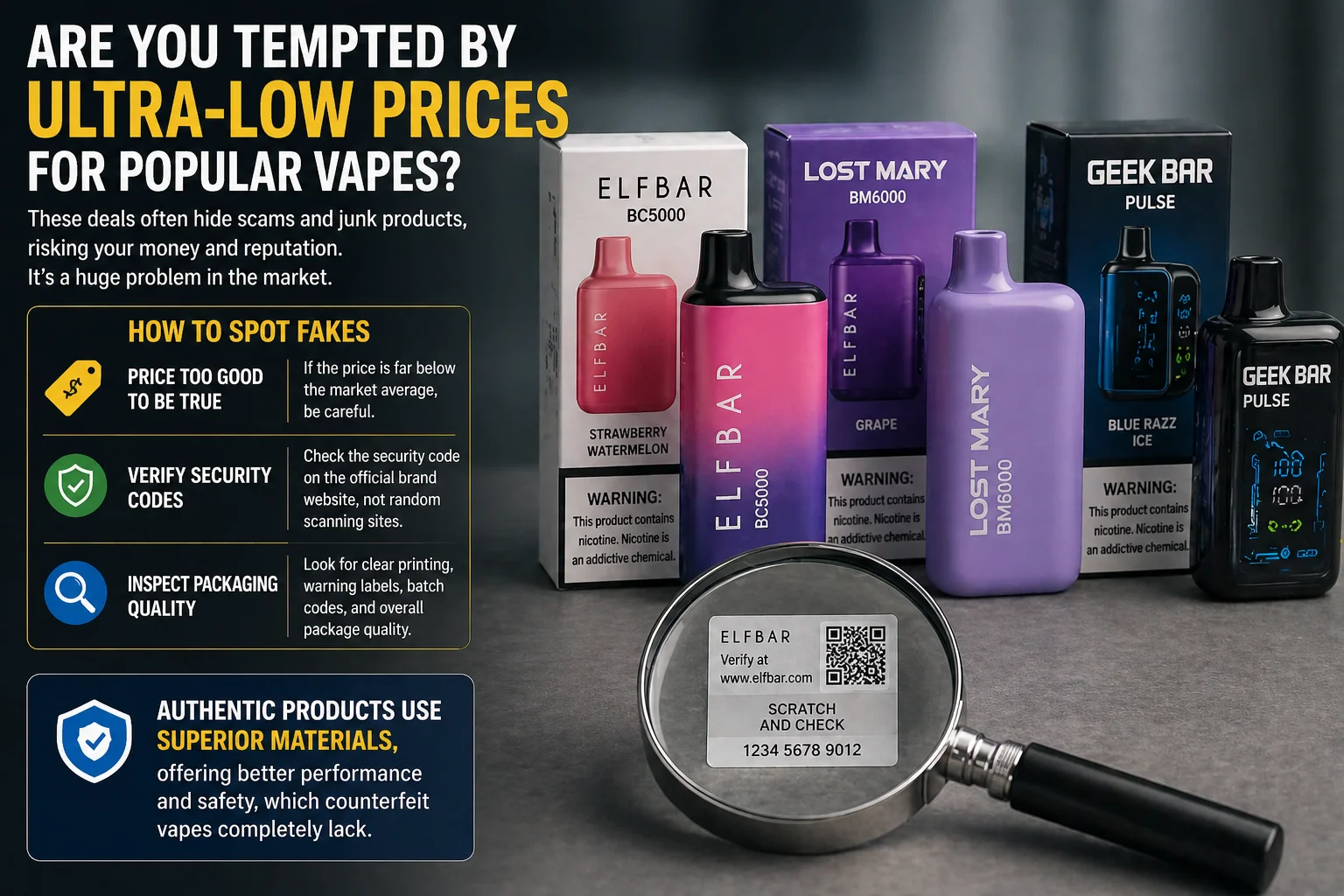
I've been in this export business since 2011. We've always stuck to one rule: only sell original, authentic products. We want to build a business that lasts, based on honesty. We're not here to make a quick buck and disappear. I've seen too many new buyers get burned by fakes and scams. Let's talk about the real differences and how you can protect your business from these traps.
Why are fake disposable vapes such a serious problem for wholesale buyers?
Stuck with a batch of vapes that won't sell? Fake products lead to customer complaints, damage your reputation, and can even be a total loss if you get scammed.[^2]
The biggest risk is losing your money entirely. You might pay a supplier who then gets arrested or simply vanishes. Even if you receive the goods, they are often unsellable junk that ruins your long-term credibility with customers.
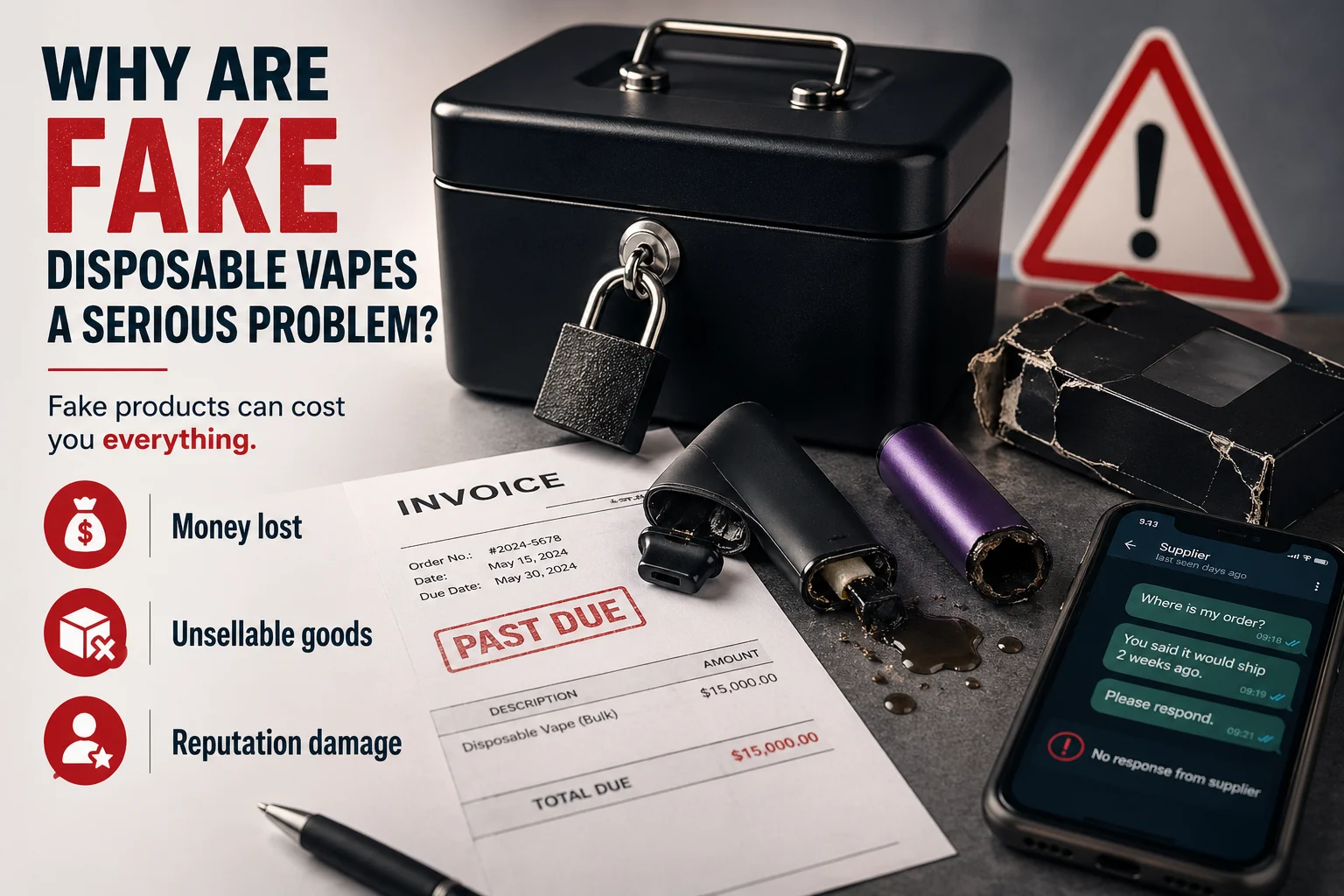
Let's be very direct about the risks here. First, there's the scam. We get messages all the time from people asking for help. They say, "I sent money to this person in China, and now they've blocked me. Can you help?" The answer is, we usually can't. Once the money is gone, it's gone. The biggest risk is that you find a supplier selling fakes, you pay them, and the next day they get shut down by the police. These are illegal operations. They don't have licenses. If they get arrested before shipping your order, you lose everything. Your money is gone, you can't contact them, and you have no products. This is the worst-case scenario, and it happens more than you think. You end up with nothing.
The Hidden Costs of "Cheap" Products
- Total Financial Loss: You pay, but the illegal workshop gets raided before shipping.
- Unsellable Inventory: You receive a box of junk that customers return immediately.
- Reputation Damage: Your customers don't blame the fake brand; they blame you.
- Legal Trouble: Selling counterfeit and unsafe products can lead to fines or worse.[^3]
Original vs fake vapes: what is the real difference?
Do you think the only difference between an original and a fake vape is the brand name? The reality is much worse. Fakes cut corners on everything, from the e-liquid you inhale to the battery.
The real difference is in the materials. Originals use quality-controlled e-liquid and safe, reliable lithium batteries. Fakes use unknown chemicals and cheap manganese batteries that perform poorly, taste bad, and can even be dangerous.[^4]
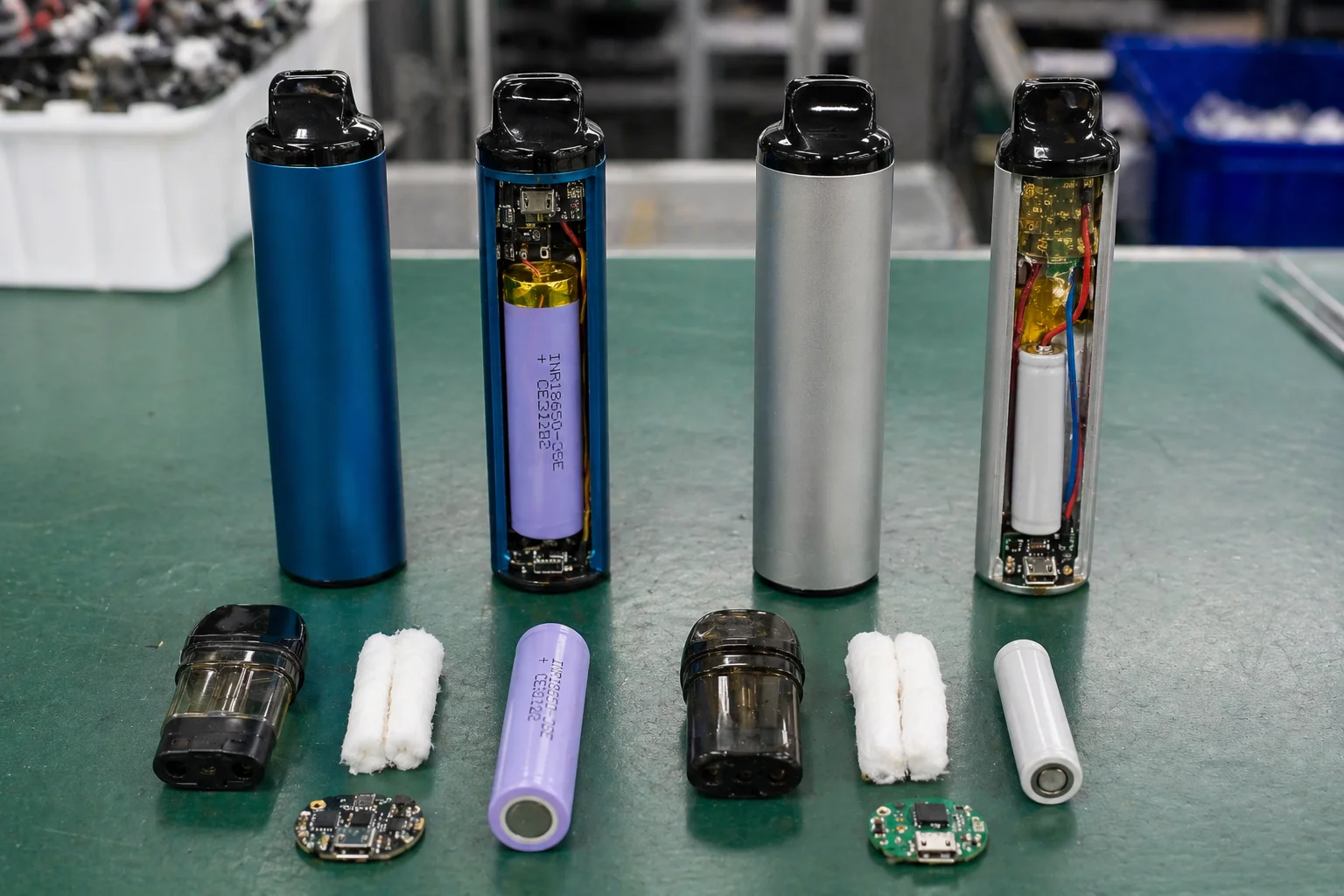
The problem with fakes goes way beyond a logo. It's about what's inside the device. These products go into people's mouths and lungs. Health and safety should be number one. But for a counterfeit factory, the only goal is to maximize profit. They don't care about their reputation or after-sales service. They don't even know if they'll be in business tomorrow.
So, what do they do?
E-liquid and Materials
They use the cheapest e-liquid they can find. You have no idea what chemicals are in it or if the nicotine level is accurate. The taste is inconsistent, and it can be harsh on the throat.
The Battery Problem
They will never use a good lithium battery. They use the cheapest alternative, often manganese batteries. What does this mean for the user?
- Terrible Performance: You charge it for hours, and it dies in five minutes.
- Short Lifespan: A lithium battery can be recharged hundreds of times. A cheap one might die after a few dozen charges.
- Doesn't Work in the Cold: In cold weather, these low-quality batteries might not even work at all.
- Safety Risks: Cheap batteries without proper protection circuits are a fire hazard. Years ago, stories of exploding vapes were common.[^5] This was because of manufacturers cutting corners on battery quality.
How can you identify fake disposable vapes before you buy?
It's hard to tell a fake from an original just from a photo. Scammers are good at making things look legitimate. But with a few simple checks, you can avoid most of the traps.
The most reliable way is to check multiple factors: an unusually low price, the security code on the brand's official website (not a site from a QR code), and the supplier's professionalism.[^6] If anything feels off, it probably is.
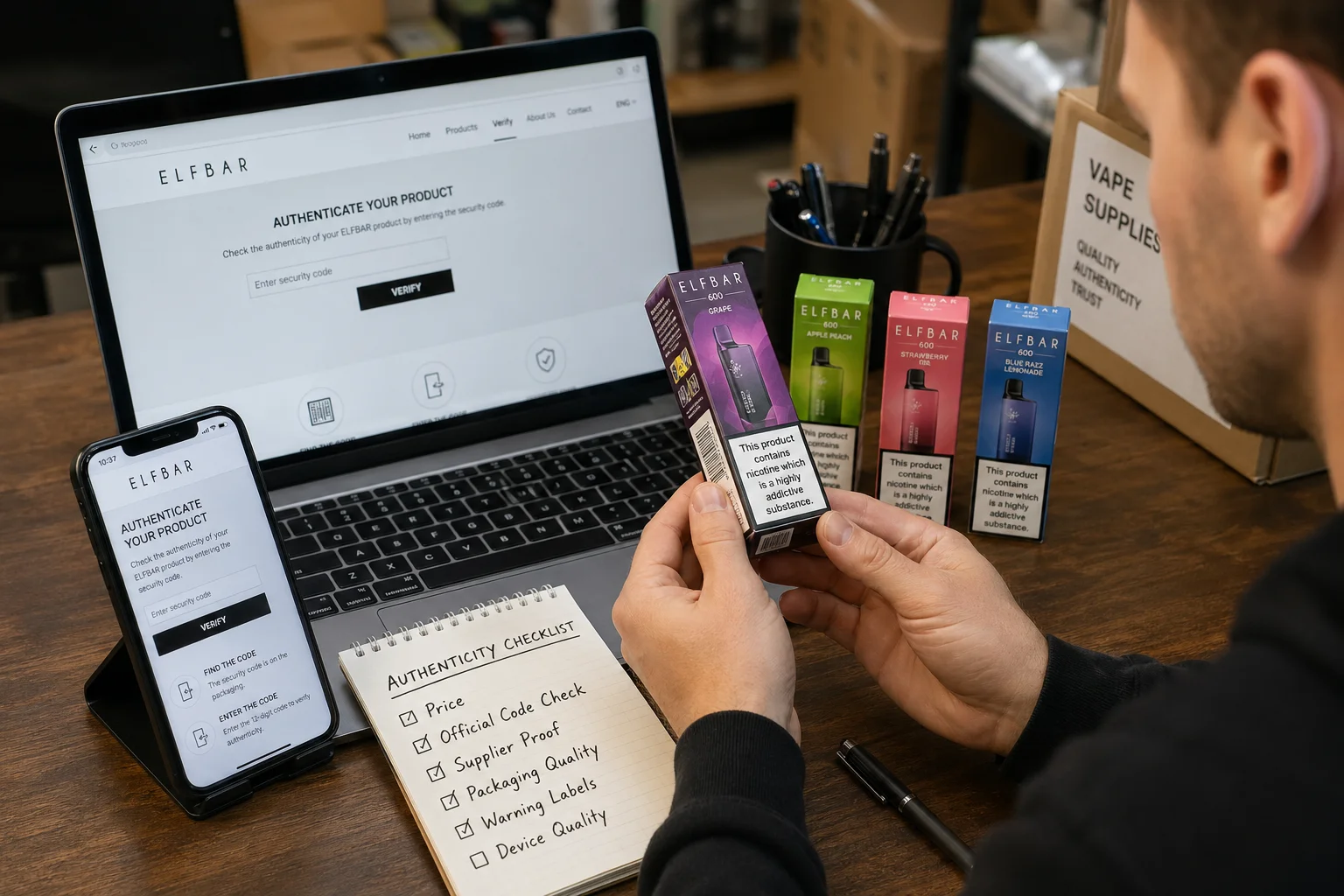
Over the years, we've learned to spot the red flags from a mile away. It's not about one single thing, but a combination of details. A professional seller focused on long-term business acts very differently from a scammer trying to make a quick score. You need to be a detective and look at the evidence. Here is a breakdown of what we check. You should treat this as your personal checklist before you ever send money to a new supplier. It will save you a lot of headaches and money.
1. Check if the price is too good to be true
For example, we know the factory price for an original JNR 16K vape is not less than 4 Euros. In France, the market is flooded with fakes, and we get inquiries from customers looking for a 2 Euro price. It's impossible. If someone offers you a price that is half of the reasonable market rate, you are not getting a good deal. You are walking into a trap. Greed is what scammers prey on.[^7] You think you've found a secret source, but you're actually their perfect target.
2. Verify the security code on the official brand website
This is a critical step. Most original products have a scratch-off security code. But here's the trick: fake products also have QR codes now. If you scan the fake QR code, it will take you to a fake website that they built, and it will say "Congratulations, this is an authentic product!" Don't fall for this. The correct way to verify is to manually type the official brand website (like elfbar.com) into your browser, find their verification page, and enter the code yourself. This is the only way to be sure.
3. Inspect the packaging, printing, and warning labels
Look closely at the box. Originals have crisp, high-quality printing. Fakes often have blurry text, slightly off colors, or spelling mistakes. The fonts might be inconsistent. The box material itself might feel flimsy and cheap. Also, check if the warning labels and legal information are correct for your region. Fakers often mess up these small details.
4. Compare the product build quality and details
If you can get a sample, hold it in your hand. An original product made with good materials has a certain weight and solid feel. A fake, made with cheap plastic and a low-quality battery, often feels light and flimsy. Check the seams, the charging port, and the mouthpiece. Are they clean and well-fitted, or are there rough edges and gaps? These details tell you a lot about the manufacturing quality.
5. Evaluate the supplier’s professionalism
This might be the most important tip. How does the supplier talk to you?
- A real partner will ask about your market, warn you about potential customs issues, and want to build a long-term relationship. They won't just push you to pay.
- A scammer or fake seller will almost always pressure you to pay quickly. Their only goal is to get your money. They don't care if you receive the goods or if you can sell them.
We have customers in countries with tough customs, like Denmark or Estonia. We always tell them the risks upfront. We might suggest shipping to a neighboring country like Germany and having them arrange transport from there. We want them to get their goods safely. A fake seller will just say "no problem," take your money, ship it, and if it gets seized, it's your problem.[^8]
6. Check if the invoice and bank account match
This is a classic scam tactic. A scammer might send you a Proforma Invoice (PI) with the logo of a famous B2B platform like Made-in-China, or even use the name of a real, legitimate vape company. This makes them look credible. But then you look at the bank details. The account holder name doesn't match the company name on the invoice, or it's a personal account. This is a massive red flag. Always verify that the company you are talking to is the same company you are paying.
Why is a "cheap is better" mindset so dangerous for your business?
Do you believe that the cheaper a product is, the more money you'll make? This is the biggest mistake a new business owner can make. It sounds logical, but it’s completely wrong.
Profit doesn't come from the lowest purchase price; it comes from the speed of your sales.[^9] A slightly more expensive, authentic product that sells out quickly is far more profitable than a cheap fake that sits on your shelf for months and generates complaints.
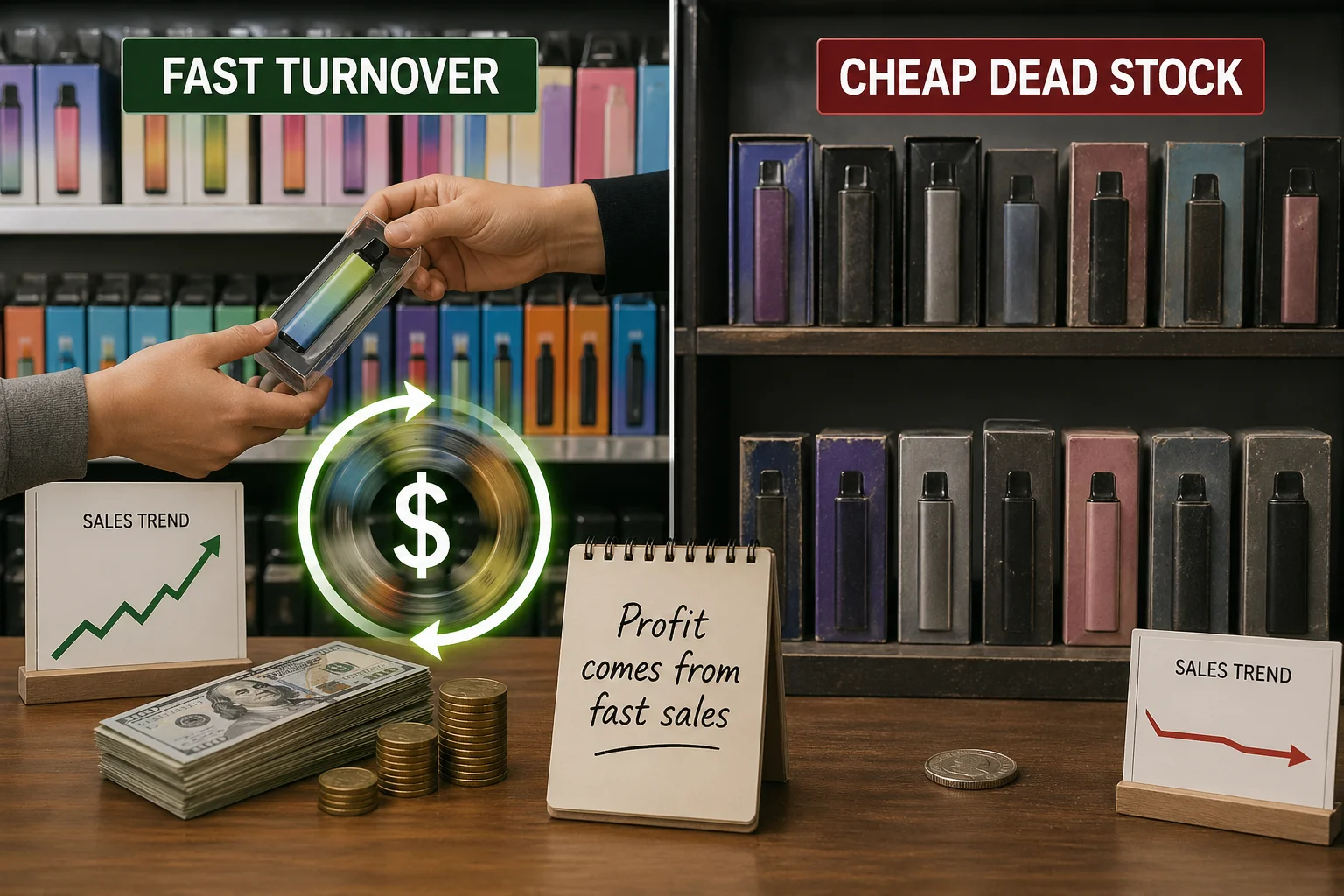
If the cheapest things sold the best and made the most money, then everyone would be selling plastic bags and rubber bands. But they aren't. Why can Apple sell expensive phones so well, while some cheap phones fail? It's about demand and quality, not just price. The real heart of business is capital turnover. Think about it this way:
| Business Model | Model A: Authentic Vapes | Model B: Fake Vapes |
|---|---|---|
| Purchase Price | 5€ per unit | 3€ per unit |
| Profit Margin | 20% (1€ profit per unit) | 40% (1.2€ profit per unit) |
| Capital Investment | 1000€ for 200 units | 1000€ for ~333 units |
| Sales Cycle | Sells out in 1 week (good product, high demand) | Sells out in 2 months (bad quality, complaints) |
| Profit per Year | 1000€ x 20% profit x 52 weeks = 10,400€ profit | 1000€ x 40% profit x 6 cycles/year = 2,400€ profit |
Even with a lower margin, the fast-selling authentic product makes you over four times more profit in a year on the same initial investment. You spend two months trying to get rid of the cheap fakes while the other guy has already re-invested his money eight times. This is the secret. Focus on products that move fast, not products that are just cheap.
What is the safest buying strategy for new and experienced sellers?
Are you just starting out and worried about losing money on a big order? Or are you an experienced buyer looking to optimize your costs? The right strategy depends on where you are in your business journey.
New sellers should start small with orders from a local or regional warehouse to minimize risk and test the market.[^10] Experienced wholesalers can buy larger quantities direct from China for better prices, but only after thoroughly vetting the supplier.[^11]
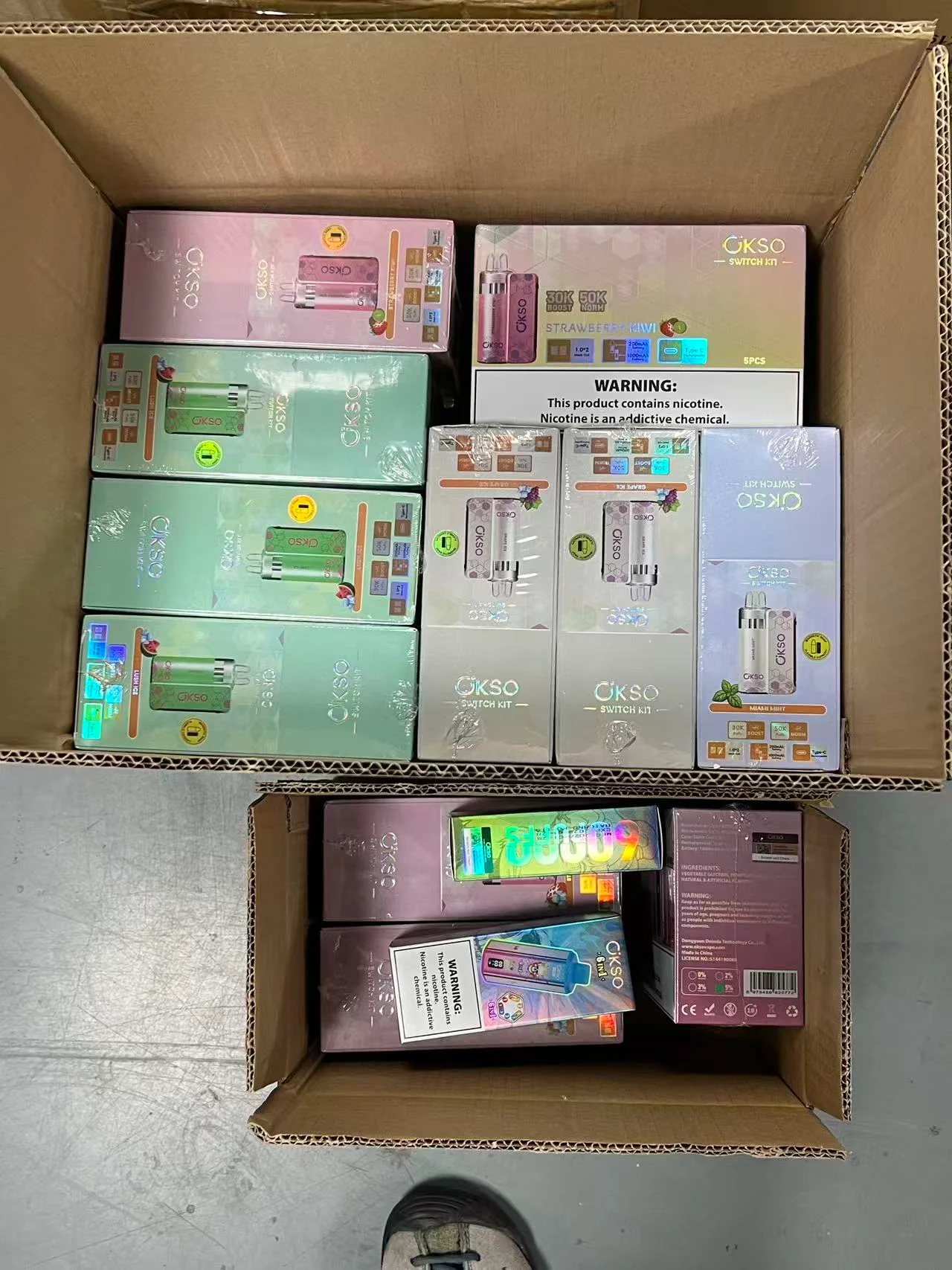
Your buying strategy should match your business needs and risk tolerance. There isn't one "best" way for everyone.
For New Sellers (or Testing New Products)
Don't place a huge order from China right away. The safest way to start is to find a reliable supplier with a warehouse in your region, like our warehouse in Germany for our European clients.
- Start Small: Order 50-100 units to test.
- Fast Delivery: You'll get your products in 3-5 days, not weeks.
- Low Risk: You don't have to worry about international shipping or customs.
- Test the Market: See what flavors and brands your customers actually want before committing to a large inventory. Your goal at the beginning is not to get the absolute lowest price. Your goal is to learn, validate your market, and build cash flow without risking all your capital on one big shipment that might get stuck or be unsellable.
For Experienced Wholesalers
If you are buying thousands of units at a time, ordering direct from China makes sense to get better pricing. But this only works if you have a trusted supply partner. Before placing a large order, you must do your homework. Verify the supplier's legitimacy, check product authenticity, clarify shipping terms, and understand the risks. For big orders, saving a little on the unit price is not worth the risk of working with a shady supplier. Stick with partners you know are committed to quality and long-term business.
Conclusion
Choosing authentic products isn't just about ethics; it's the only smart business strategy. Fakes promise savings but deliver risk, complaints, and ultimately, losses. Authentic products build trust and repeat customers.[^12]
Avoid Counterfeit and Supply Risk
For bulk vape orders, supplier verification protects your business from counterfeits and quality issues. Reach out to our team for factory audits and QC.
Related reading: What Should Small Wholesalers Ask Before Buying Disposable Vapes in Bulk?
[^1]: "Adult harm perceptions, purchase, and use related to synthetic vs ...", https://pmc.ncbi.nlm.nih.gov/articles/PMC10960099/. This source explains the material differences between authentic and counterfeit vapes, including their impact on performance and safety. Evidence role: mechanism; source type: research. Supports: Authentic products use superior materials, offering better performance and safety, which counterfeit vapes completely lack.. Scope note: The source may not cover all brands or types of vapes. [^2]: "Where to file a complaint about an online purchase | USAGov", https://www.usa.gov/online-purchase-complaints. This source provides examples and statistics on how counterfeit products affect businesses, including customer complaints and financial losses. Evidence role: case_reference; source type: institution. Supports: Fake products lead to customer complaints, damage your reputation, and can even be a total loss if you get scammed.. Scope note: The examples may not specifically focus on the vape industry. [^3]: "Statutes | CPSC.gov - Consumer Product Safety Commission", https://www.cpsc.gov/Regulations-Laws--Standards/Statutes. This source outlines legal consequences for selling counterfeit and unsafe products, including fines and other penalties. Evidence role: case_reference; source type: government. Supports: Selling counterfeit and unsafe products can lead to fines or worse.. Scope note: The legal consequences may vary by jurisdiction. [^4]: "Adolescents' Perceptions, Experiences, and Reactions to “Fake ...", https://pmc.ncbi.nlm.nih.gov/articles/PMC11812520/. This source discusses the use of low-quality materials like manganese batteries in counterfeit vapes and their associated risks. Evidence role: mechanism; source type: research. Supports: Fakes use unknown chemicals and cheap manganese batteries that perform poorly, taste bad, and can even be dangerous.. Scope note: The source may not address all types of counterfeit vapes. [^5]: "Tips to Help Avoid Vape Battery Fires or Explosions - FDA", https://www.fda.gov/tobacco-products/products-ingredients-components/tips-help-avoid-vape-battery-fires-or-explosions. This source provides historical context on incidents of exploding vapes and their causes, often linked to counterfeit products. Evidence role: historical_context; source type: encyclopedia. Supports: Years ago, stories of exploding vapes were common.. Scope note: The data may be outdated and not reflect current trends. [^6]: "Signs You've Bought a Fake Vape - Ecigwizard", https://www.ecigwizard.com/blogs/news/signs-youve-bought-a-fake-vape. This source outlines methods for identifying counterfeit products, including price checks and security code verification. Evidence role: mechanism; source type: education. Supports: The most reliable way is to check multiple factors: an unusually low price, the security code on the brand's official website (not a site from a QR code), and the supplier's professionalism.. Scope note: The methods may not apply universally to all brands. [^7]: "The psychology of a scam - Ohio Attorney General Dave Yost", https://www.ohioattorneygeneral.gov/Media/Newsletters/Consumer-Advocate/April-2025/The-psychology-of-a-scam. This source explains psychological tactics used by scammers, including exploiting greed. Evidence role: mechanism; source type: education. Supports: Greed is what scammers prey on.. Scope note: The source may not specifically focus on vape scams. [^8]: "How to Avoid Scammers and Win at Exporting", https://www.trade.gov/feature-article/how-avoid-scammers-and-win-exporting. This source provides examples of how fake sellers operate, including ignoring customs risks. Evidence role: case_reference; source type: institution. Supports: A fake seller will just say "no problem," take your money, ship it, and if it gets seized, it's your problem.. Scope note: The examples may not cover all types of scams. [^9]: "Why Online Retailers Have a 'Need for Speed'", https://knowledge.wharton.upenn.edu/podcast/knowledge-at-wharton-podcast/why-online-retailers-have-a-need-for-speed/. This source explains the relationship between sales speed and profitability in retail businesses. Evidence role: expert_consensus; source type: education. Supports: Profit doesn't come from the lowest purchase price; it comes from the speed of your sales.. Scope note: The source may focus on general retail and not specifically on the vape industry. [^10]: "5 Retail Business Strategies to Boost Wholesale Business Sales", https://www.repspark.com/blog/copy-these-5-retail-business-strategies-to-boost-wholesale-business-sales. This source discusses strategies for new sellers to minimize risk, including starting with small orders. Evidence role: expert_consensus; source type: education. Supports: New sellers should start small with orders from a local or regional warehouse to minimize risk and test the market.. Scope note: The strategies may not apply to all industries. [^11]: "How to Build a Direct Sourcing Strategy That Works | GEP Blogs", https://www.gep.com/blog/strategy/how-to-build-a-direct-sourcing-strategy-that-works. This source explains the benefits and risks of direct sourcing from China for experienced wholesalers. Evidence role: expert_consensus; source type: education. Supports: Experienced wholesalers can buy larger quantities direct from China for better prices, but only after thoroughly vetting the supplier.. Scope note: The advice may not apply to all types of products. [^12]: "Unpacking the effects of brand authenticity on consumer trust ... - PMC", https://pmc.ncbi.nlm.nih.gov/articles/PMC12827155/. This source discusses how product authenticity impacts customer trust and repeat business. Evidence role: expert_consensus; source type: education. Supports: Authentic products build trust and repeat customers.. Scope note: The source may not specifically address the vape industry.