
Struggling to pick vape brands for your business? Worried about getting stuck with inventory that nobody wants? You need a smarter way to buy without risking all your cash.
The best way to choose vape brands without overbuying is to start with a small, low-risk trial order from a local warehouse. This lets you test different products with real customers and see what sells fast before you commit to a large inventory purchase from overseas.
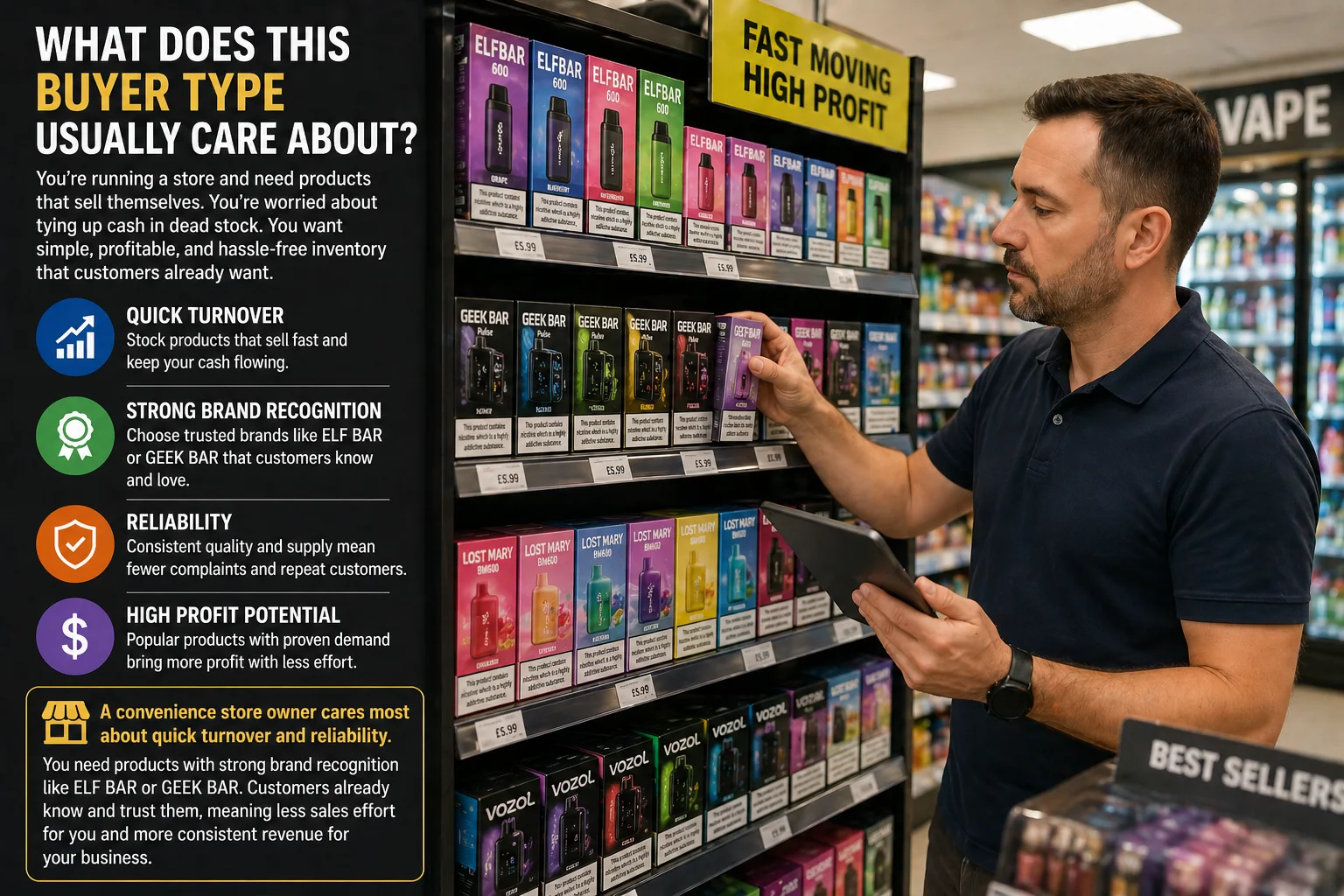
I've been in this business for over 15 years, and I've seen so many new wholesalers make the same costly mistakes. They get excited, order thousands of units from a factory in China to get a "good price," and then realize they've tied up all their money in products that are hard to sell or, even worse, are fake[^1]. It's a painful lesson. But what if I told you there's a way to avoid all that? A way to test the market, find winning products, and grow your business safely. Let's break down how you can do it.
Why do buyers search for this topic in wholesale?
Starting a business feels like walking a tightrope, right? You're scared of spending money on the wrong stock and watching it gather dust. That fear of failure is real.
Buyers search this topic because they are afraid of the high risks of wholesale. They worry about overbuying inventory that won't sell, tying up precious capital, and potentially losing their entire investment. They need a safe, low-risk strategy to get started.
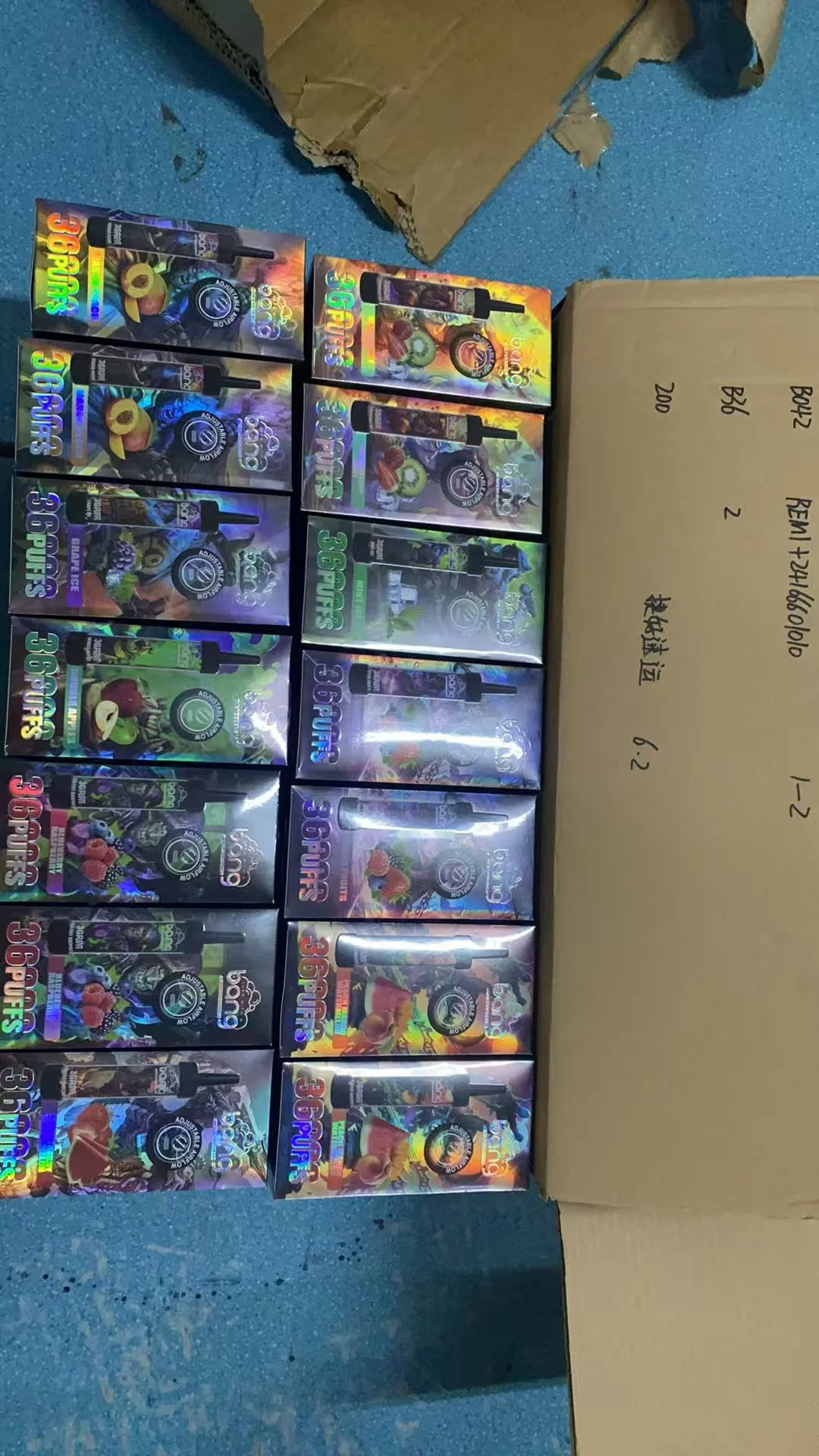
Let me tell you a common story. A new entrepreneur sees that brands like ELF BAR or RAZZ BAR are popular[^2]. They find a supplier online who promises a super low price if they order 5,000 units directly from China. It sounds like a great deal. They place the order, wire the money, and wait. But then the problems start. The shipment gets stuck in customs[^3]. Or worse, when it finally arrives, they find out the products are cheap fakes that nobody wants. Now, all their startup money is gone.
This is the exact nightmare scenario that people are trying to avoid when they search for this topic. They know the potential is huge, but the risk is terrifying. They understand that making a big, blind bet is not a business strategy; it's a gamble. They are looking for a method, a system to reduce that risk. They want to know how to test the waters without getting drowned.
How can you compare products or brands more practically?
Are you just comparing the price tags on different vapes? That's one of the biggest mistakes you can make. The real comparison isn't about what's cheapest to buy.
To compare practically, you must look beyond price. Focus on authenticity, supplier reliability, and real market demand. A product that sells quickly and keeps customers happy is always more profitable than a cheap one that causes problems.
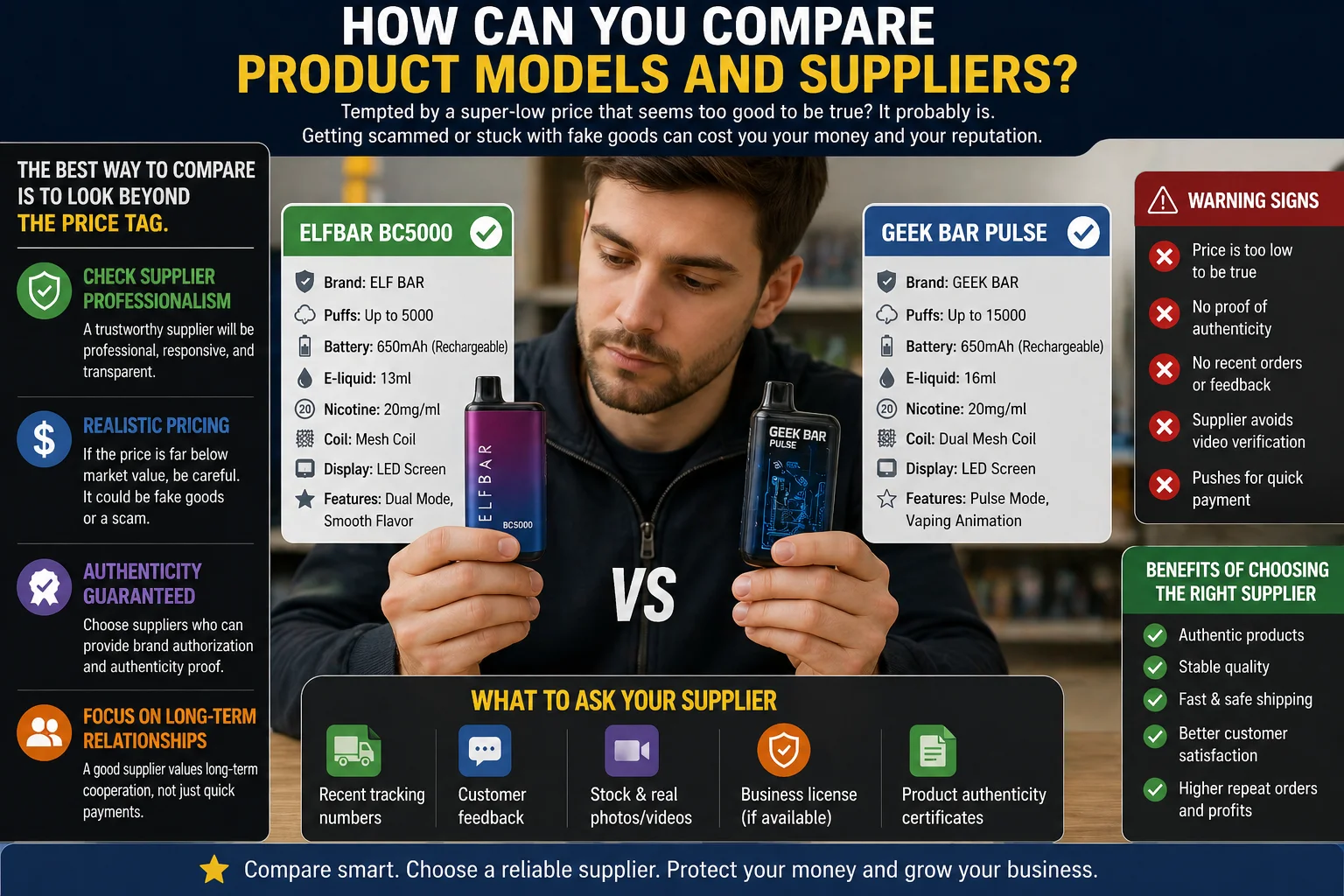
When you're starting out, it's easy to think all vapes are the same. But the difference between an authentic product and a fake one is massive, and it goes way beyond the brand name. It affects everything from customer safety to your long-term reputation.
The Real Difference: Authentic vs. Fake
Fakes are cheap for a reason. They cut corners on everything that matters. An authentic product from a top brand like GEEK BAR, VOZOL, or WASPE has gone through proper research and quality control. The technology in the vape industry is actually very stable now[^4]. A quality product from any reputable brand will taste good and work well. The problem is the fakes.
Here's a simple breakdown of what you're really comparing:
| Feature | Authentic Product | Fake Product |
|---|---|---|
| E-Liquid | Stable formula, consistent taste, safe ingredients. | Unknown source, bad taste, potential health risks[^5]. |
| Battery | High-quality lithium battery, reliable performance, long life. | Cheap manganese battery, dies quickly, won't work in cold[^6]. |
| Build Quality | Feels solid, good weight, no leaks or defects. | Feels light and cheap, often leaks, high failure rate. |
| Verification | QR code links to the official brand website for checking. | QR code links to a fake website that always says "authentic."[^7] |
Don't get stuck on one specific brand if it's hard to get. Many top brands use exclusive national agents[^8] and won't sell to smaller wholesalers. A good, authentic product from another reliable brand is a much better choice than a fake version of a popular one. The key is to sell a product that works well and brings customers back.
What should smaller wholesalers pay attention to first?
Feeling overwhelmed with all the options, prices, and brands? Stop focusing on getting the absolute lowest unit cost. Instead, you need to focus on what truly matters at the beginning.
Small wholesalers must prioritize speed and safety. This means focusing on fast capital turnover and low-risk purchasing. Your first goal is to validate demand with small, testable orders, not to build a massive inventory.
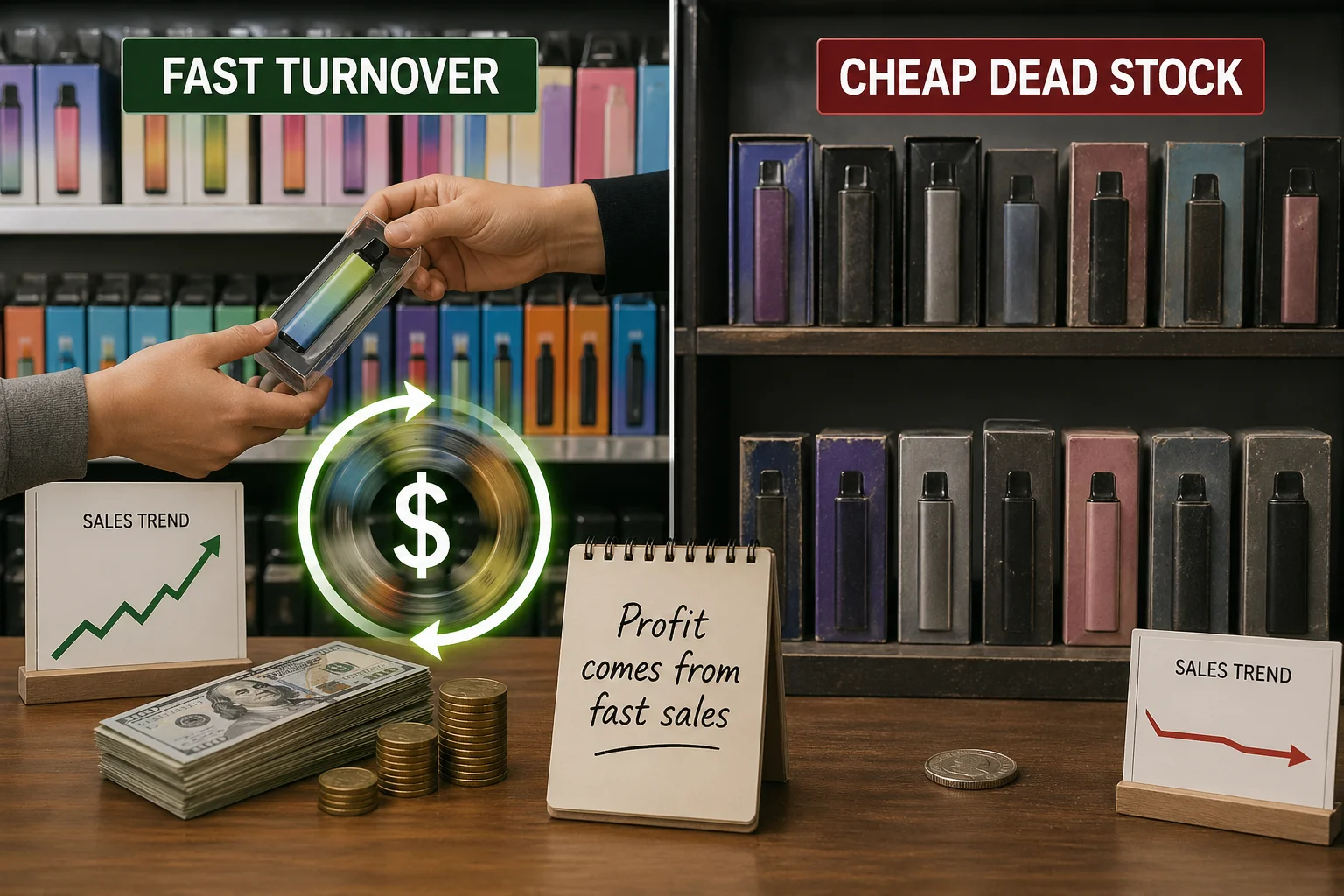
Here's the most important lesson I've learned about business: profit doesn't come from a high margin on one sale. It comes from the number of times you can reinvest your money.
The Myth of "The Cheapest is Best"
Let's say you buy a cheap product for $1. But nobody wants it. You bought 100 of them. Now you have $100 of dead stock you can't sell. That's a 100% loss. Now, let's say you buy a good, authentic product for $4 and sell it for $5, making a $1 profit. Because it's a good product, you sell all 100 in a week. You've made $100, and you can immediately reinvest that money to do it again next week.
The essence of business is the speed of your cash flow[^9].
- Slow Turnover: You buy cheap, maybe you can make 50% profit. But it takes you 6 months to find a supplier, ship it, and sell it. You make a profit twice a year. Total profit: 100%.
- Fast Turnover: You buy from our German warehouse and get the goods in 3-5 days. You make 20% profit, but you can do it twice a month. That’s 40% profit per month, or 480% a year. I’m making almost 5 times more money than you with the same initial investment.
This is the real secret. Your first priority isn't a huge profit margin. It's proving that you can sell something quickly.
What are the common mistakes and misleading assumptions?
Think you found a secret supplier selling original vapes for 2 euros? Let me stop you right there. You haven't found a goldmine; you've stumbled into a trap.
The most common mistake is believing that a price that's too good to be true is a good deal. It is almost always a sign of a fake product or an outright scam. Another huge error is ignoring the real risks of customs and local regulations.
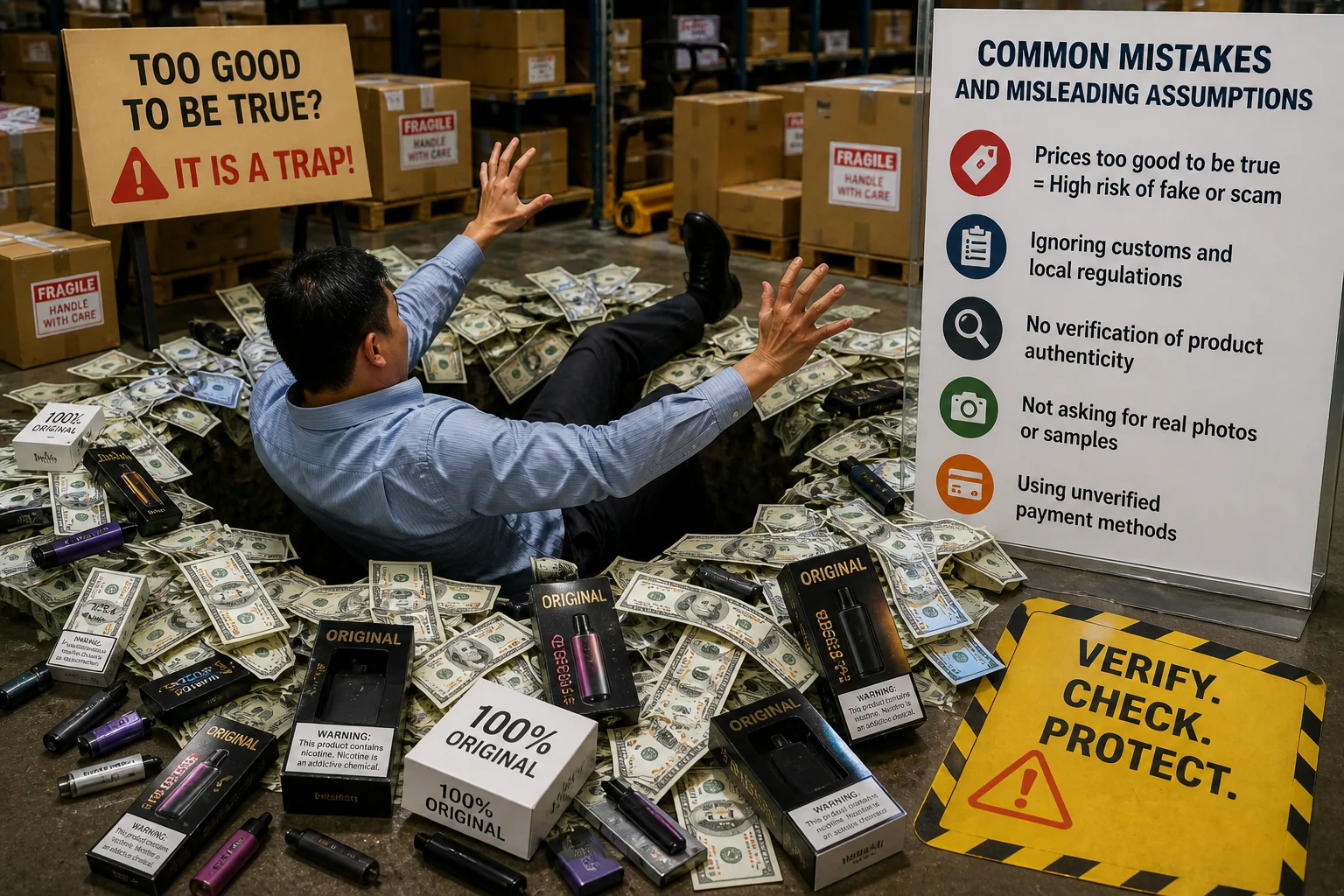
I see new buyers make these same painful mistakes over and over. They are driven by greed and a lack of experience, and it costs them everything.
Mistake #1: Chasing Impossible Prices
I've seen this happen so many times, especially with popular brands like JNR in France, where fakes are everywhere[^10]. A new buyer gets a quote for 2 euros a unit. They think they've hit the jackpot. But the real factory price for an original JNR is over 4 euros. How is that possible? It isn't. You transfer your 2,000 euros for 1,000 units, and the next day, the supplier is gone. Maybe his illegal workshop got shut down by the police, or maybe he was a scammer from the start. Either way, your money is gone, and you have no product. Don't be greedy. If a price is illogical, it's a lie.
Mistake #2: Ignoring Customs and Regulations
International shipping is complex. Some EU countries, like Denmark, Estonia, and Sweden, have "secondary clearance."[^11] This means even after your package clears customs entering the EU (e.g., in Germany), it can be inspected and seized again when it crosses into that specific country. A reliable supplier, someone who wants your long-term business, will warn you about this. They'll suggest shipping to a safer, neighboring country. A scammer will just say "no problem," take your money, and let you deal with the seizure. You lose your money and your goods.
Mistake #3: Thinking All Suppliers Are the Same
A scammer's only goal is to get your money. They will pressure you to pay quickly. A real business partner wants to build a long-term relationship. They will ask about your market, offer advice, and be transparent about risks. They will provide proof of their business, like recent tracking numbers, warehouse videos with your name on a piece of paper, and customer feedback. Always check if the company name on the invoice (PI) matches the bank account name. If they don't match, run.
How can you place a lower-risk trial order?
Want to test the market without betting the farm? The good news is you don't have to order a full container from China just to get started. There's a much smarter, safer way.
The absolute lowest-risk trial order is a small batch purchased from a local or regional warehouse. This strategy gives you a very low minimum order quantity (MOQ), lightning-fast delivery, and completely eliminates your customs risk.
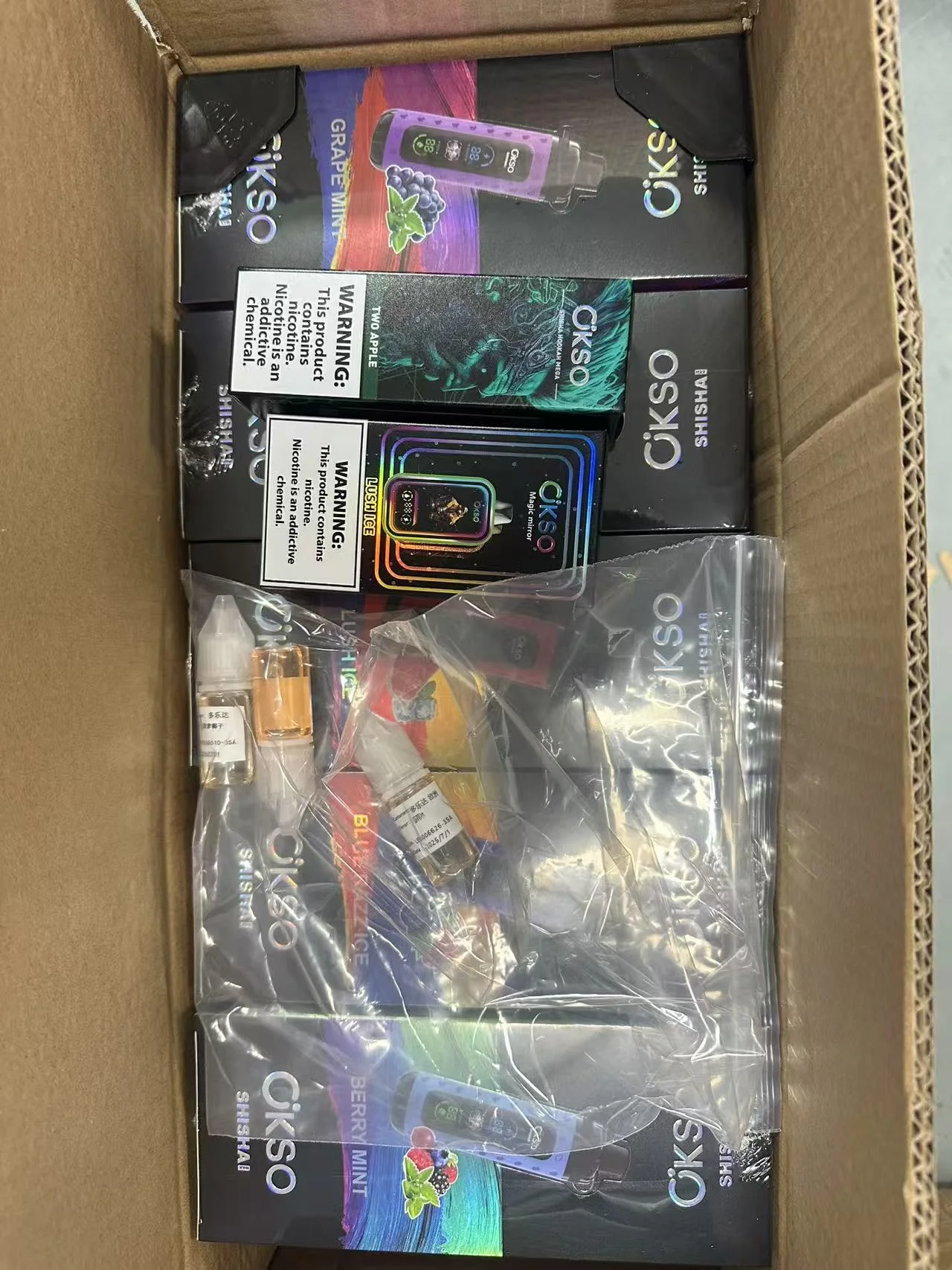
After helping hundreds of sellers grow from zero, we've perfected two clear paths. The right one for you depends on your size and experience.
Path 1: For New and Small Wholesalers (Orders < 2,000 units)
If you are just starting or your orders are small, using an overseas warehouse is, without a doubt, the best choice. This is the model we built specifically for you.
- Low Startup Cost: You can start with an order as small as 50 units. This means you can get into business for less than 400 euros.
- Fast Delivery: We ship from our warehouse in Germany. You'll get your order door-to-door in 1-2 days within Germany and 3-5 days for the rest of the EU.
- Zero Risk for You: We already handled the massive investment, the shipping from China, and the risky customs clearance. You just place a small, local order.
- Quickly Find Winners: This allows you to test multiple brands and flavors with a small budget, see what your customers actually buy, and then double down on the winners.
Path 2: For Experienced Wholesalers (Orders > 2,000 units)
If you are an established player and need better margins for larger quantities, ordering directly from China makes sense. You get access to more models and better pricing. However, you must manage the risk. When you work with us for a direct China shipment, we will be very clear: you must get full customs seizure insurance[^12]. It adds a small amount to the shipping cost, but it's critical. If your shipment is unfortunately seized by customs, the insurance covers it, and we will reship a brand-new batch to you at no extra cost. This is non-negotiable for protecting a large investment.
Conclusion
Choosing the right vape brands isn't about finding the cheapest price. It’s about finding a reliable partner and a smart strategy to grow safely and profitably. Start small, test fast, and prioritize authenticity.
[^1]: "Counterfeit Electronic Cigarette Products with Mislabeled Nicotine ...", https://pmc.ncbi.nlm.nih.gov/articles/PMC5937541/. Reports from intellectual property and law enforcement agencies frequently highlight the significant global market for counterfeit goods, including electronic cigarettes, which poses substantial financial and legal risks to unwitting importers. Evidence role: statistic; source type: institution. Supports: The source should provide data on the scale of the counterfeit vape market and the associated financial risks for importers.. [^2]: "Online Interest in Elf Bar in the United States: Google Health Trends ...", https://pmc.ncbi.nlm.nih.gov/articles/PMC11576596/. Market research reports on the vaping industry often list specific disposable brands, such as ELF BAR, as having a dominant market share in various regions, confirming their popularity among consumers. Evidence role: statistic; source type: research. Supports: The source should provide market data or sales statistics demonstrating the popularity and market share of brands like ELF BAR.. [^3]: "CBP, HHS Seize $86.5 Million Worth of Illegal E-Cigarettes in ...", https://www.cbp.gov/newsroom/local-media-release/cbp-hhs-seize-865-million-worth-illegal-e-cigarettes-largest-ever. National and international customs agencies publish guidelines and statistics regarding the inspection and seizure of regulated goods, including tobacco and vaping products, which often face heightened scrutiny for compliance with local laws on taxes, ingredients, and age restrictions. Evidence role: general_support; source type: government. Supports: The source should outline the regulations and potential for seizure of vaping products at the border.. [^4]: "The rise of e-cigarettes, pod mod devices, and JUUL among youth", https://pmc.ncbi.nlm.nih.gov/articles/PMC7183384/. Industry analyses suggest that while innovation in e-liquids and design continues, the core technology of vaping devices, such as heating coils and battery systems, has largely stabilized, leading to more consistent product performance across reputable manufacturers. Evidence role: expert_consensus; source type: research. Supports: The source should discuss the state of vape hardware technology, indicating that core components like coils and batteries have reached a mature stage with incremental rather than disruptive innovation.. Scope note: The source may also note ongoing innovation in specific areas like smart features or battery efficiency, which would add nuance to the claim of stability. [^5]: "Adolescents' Perceptions, Experiences, and Reactions ... - PMC", https://pmc.ncbi.nlm.nih.gov/articles/PMC11812520/. Studies analyzing the contents of counterfeit and unregulated e-cigarettes have identified the presence of contaminants, including heavy metals and undeclared chemicals, which are associated with various health risks. Evidence role: mechanism; source type: paper. Supports: The source should identify harmful or unknown substances found in counterfeit vape liquids and explain their potential health effects.. [^6]: "Safety and Quality Issues of Counterfeit Lithium-Ion Cells - PMC", https://pmc.ncbi.nlm.nih.gov/articles/PMC10262263/. Engineering and battery technology resources show that manganese-based batteries generally have lower energy density, a shorter cycle life, and significantly reduced performance in cold temperatures compared to the lithium-ion batteries typically used in quality consumer electronics. Evidence role: mechanism; source type: education. Supports: The source should explain the performance differences between manganese and lithium-ion batteries, particularly regarding energy density, cycle life, and functionality in low temperatures.. Scope note: This provides general support for the battery characteristics but may not specifically reference their use in counterfeit vapes. [^7]: "2 Big Disadvantages of Anti Counterfeiting Solutions using QR Code", https://chekkitapp.com/blog/2-big-disadvantages-of-anti-counterfeiting-solutions-using-qr-code/. Cybersecurity experts and brand protection agencies have documented the tactic of counterfeiters using QR codes that direct consumers to fraudulent websites designed to mimic official verification pages and falsely confirm a product's authenticity. Evidence role: case_reference; source type: other. Supports: The source should describe the mechanism of fake QR code verification systems used by counterfeiters.. [^8]: "EXCLUSIVE DISTRIBUTOR AGREEMENT - SEC.gov", https://www.sec.gov/Archives/edgar/data/1169394/000108503705001442/laseragt.htm. Industry analyses of fast-moving consumer goods, including vaping products, show that many major brands utilize a tiered distribution model, appointing exclusive national or regional agents to manage the supply chain and control brand presence, which can limit access for smaller, independent wholesalers. Evidence role: general_support; source type: research. Supports: The source should describe common distribution models in the consumer goods sector, including the use of exclusive national or regional distributors.. [^9]: "Word of the Week: Cash Conversion Cycle - HBS Online", https://online.hbs.edu/blog/post/word-of-the-week-cash-conversion-cycle. Financial and business principles emphasize the importance of the cash conversion cycle, which measures how quickly a company can convert its investments in inventory back into cash. A faster cycle, or higher velocity, is a key indicator of operational efficiency and profitability. Evidence role: definition; source type: encyclopedia. Supports: The source should define concepts like the cash conversion cycle or inventory turnover and explain their critical role in a company's profitability and liquidity.. [^10]: "zéro contrefaçon, que du vrai Le Lude – Les meilleurs prix Puff JNR ...", https://www.instagram.com/p/DQHFysLjAsA/. Reports from French media outlets and warnings on social media platforms have highlighted the significant problem of counterfeit JNR brand disposable vapes circulating in France, often sold at prices far below the legitimate product's cost. Evidence role: case_reference; source type: other. Supports: The source should provide evidence of the widespread counterfeiting of JNR brand vapes in the French market.. Scope note: Support for this claim may come from news or social media sources rather than official reports, reflecting the fast-moving nature of the issue. [^11]: "European Union Customs Union - Wikipedia", https://en.wikipedia.org/wiki/European_Union_Customs_Union. Under European Union law, while goods move freely within the single market, member states retain the right to carry out controls to enforce national legislation, particularly for excise goods like alcohol and tobacco products (a category that often includes vaping products), which can lead to further inspections after crossing an internal EU border. Evidence role: mechanism; source type: government. Supports: The source should explain that while the EU is a single market, member states can still enforce national laws and perform checks on specific regulated goods, like tobacco and vaping products, arriving from other EU countries.. [^12]: "Duty - Cost Insurance and Freight (CIF) - help.CBP.gov", https://www.help.cbp.gov/s/article/Article1126. While standard freight insurance policies typically exclude losses from customs seizures due to illegal goods or improper documentation, some specialized logistics providers or insurers may offer bespoke policies or guarantees for high-risk shipments, though this is not a standard industry-wide product. Evidence role: general_support; source type: other. Supports: The source should describe the types of shipping insurance available and their common exclusions.. Scope note: The source will likely clarify that such coverage is rare, expensive, and depends heavily on the specific goods and shipping lanes.