Sourcing wholesale vapes feels risky, right? Counterfeits can kill your profits and reputation. I'll show you how to spot fakes and secure only genuine, best-selling stock.
To avoid counterfeit vapes, always verify your supplier's authenticity. Ask for proof like recent shipping documents and customer feedback. Check product QR codes on the official brand website, not a redirected link. Never trust prices that seem too good to be true, as they usually indicate fakes.
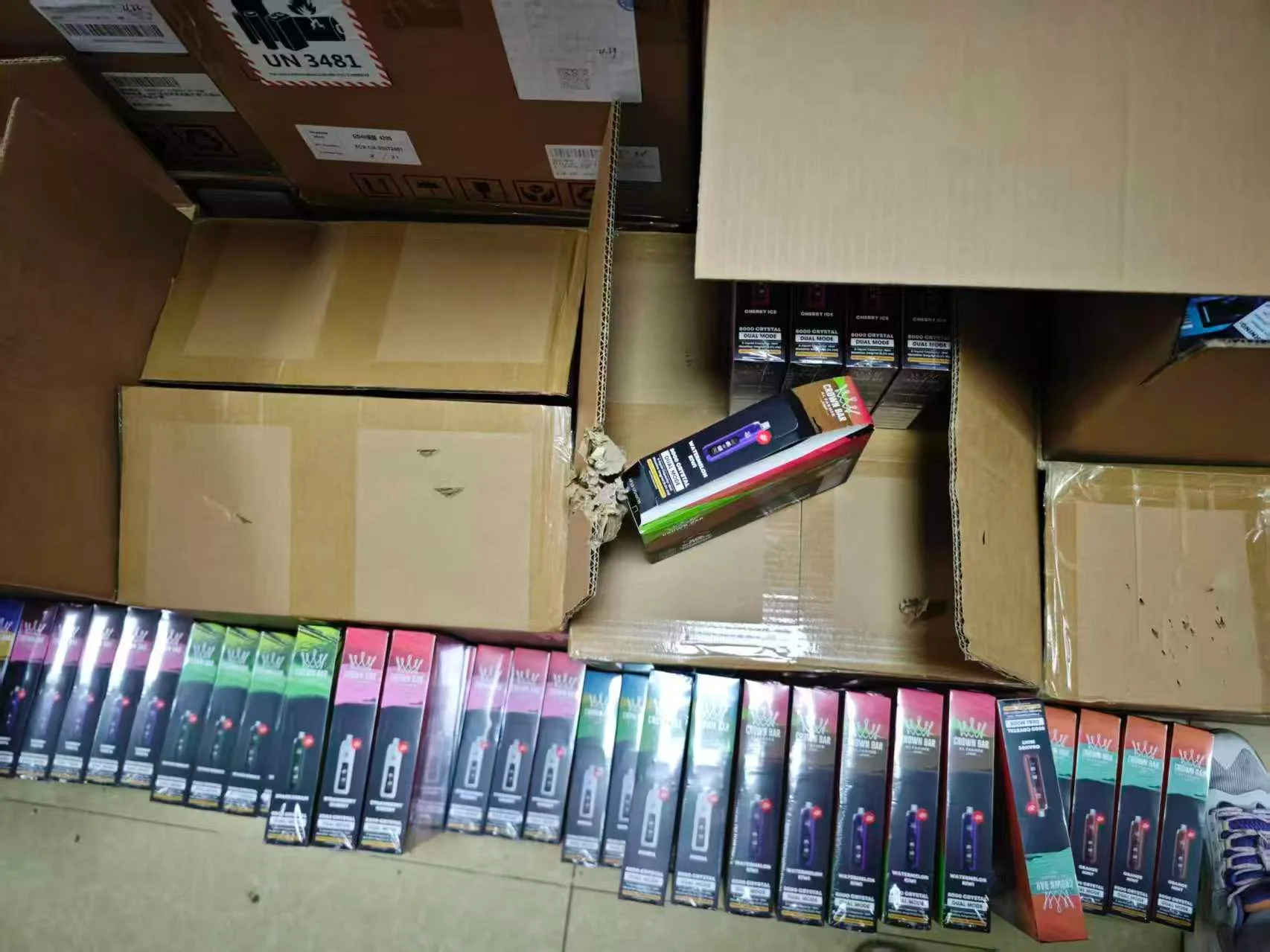
I've been in the export business since 2011, and I've seen everything. The vape market is growing incredibly fast, but so are the scams targeting newcomers. It's not just about losing money on one bad order; it's about protecting your entire business from financial loss and reputational damage. Let's break down exactly what you need to look for to keep your investment safe and your customers happy.
Why does this issue matter in wholesale?
Think a cheap vape deal is a big win? Those "bargains" are often fakes that can get your shipment seized by customs and completely ruin your business's name. Let's talk about the real cost.
In wholesale, counterfeit vapes are a huge liability. They risk your capital, as you could lose entire shipments and payments to fraudulent suppliers. Fakes also damage your reputation with customers, leading to lost sales and long-term business failure. It’s a risk you can’t afford to take.
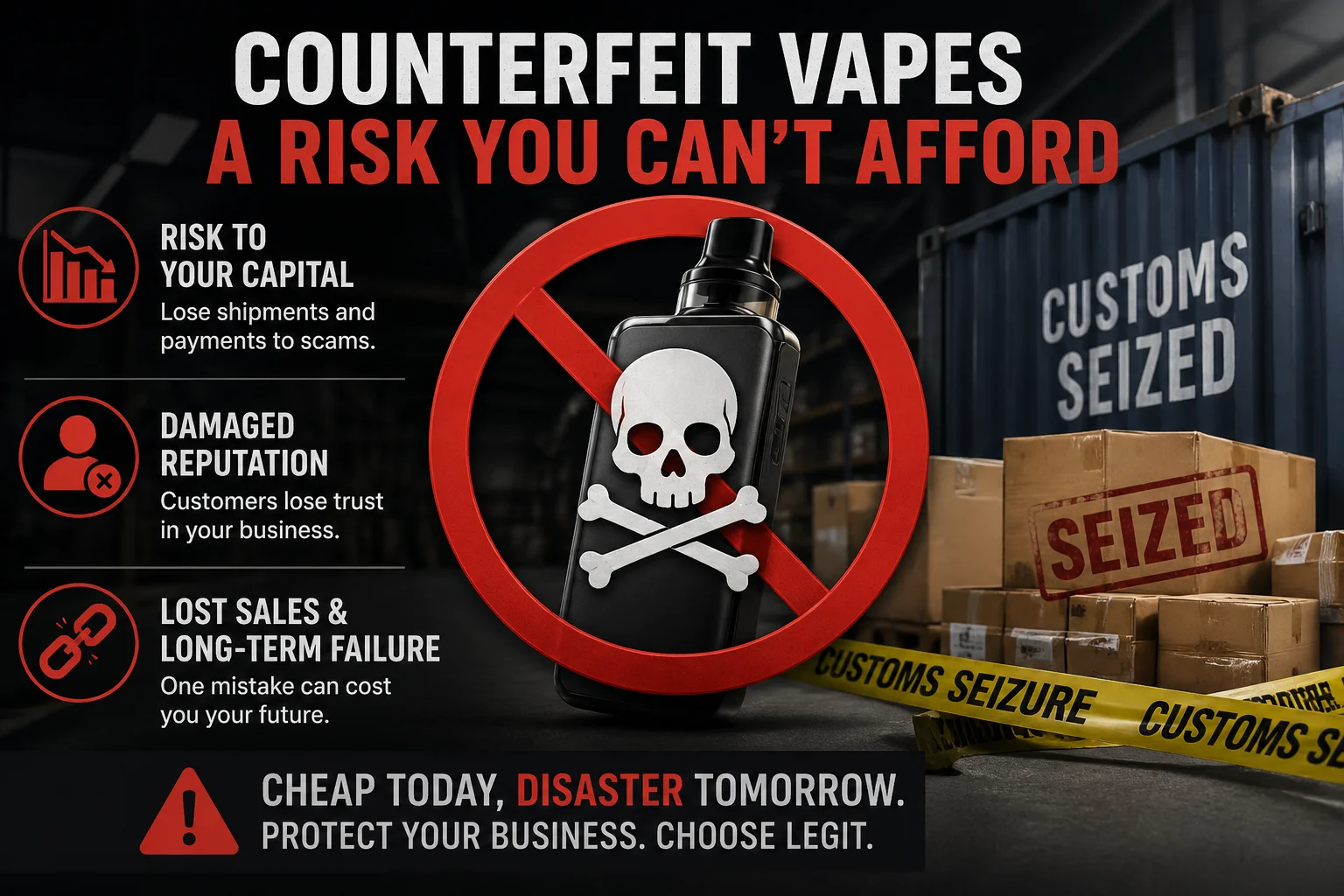
The problem with counterfeit vapes goes much deeper than just receiving a low-quality product. The risks you take on as a wholesaler are massive, and they can put you out of business before you even get started.
The Financial Trap of "Too Good to Be True"
The biggest red flag is an unbelievable price. For example, we see this a lot in France with the JNR brand. The market is flooded with fakes. We get inquiries from buyers looking for a 2-euro price point. But I know for a fact that the factory price for a genuine JNR is over 4 euros. It's simply not possible to sell a real one for 2 euros. If you see a price like that, you are dealing with a fake or a scammer. The greatest danger is that the supplier is operating illegally. These are often small, dirty workshops, not factories. They can be shut down by the police at any moment. Imagine you transfer 2,000 euros for an order. The next day, the supplier gets arrested. Your money is gone, you'll never get your products, and you can't contact them. You've lost everything.
Long-Term Damage to Your Business
Even if you do receive the fake goods, you now have a different problem. Selling counterfeits, even if you do it by accident, destroys the trust you have with your customers. They expect quality and safety. A fake product can taste bad, stop working, or even be dangerous. That customer will never buy from you again. A legitimate supplier wants to build a long-term partnership. We want you to succeed, sell your stock, and come back to order more. That's how we both grow. A scammer just wants your money once. They don't care if your business fails. We want a positive cycle where everyone wins.
What are the most common risks and mistakes?
Are you just starting to import vapes? Many newcomers make costly mistakes, falling for simple tricks and losing thousands of dollars. Here are the most common traps to watch out for.
The biggest mistake is chasing unrealistically low prices, which almost always leads to fakes or scams. Another common risk is ignoring customs issues, especially in countries with "secondary clearance." Paying a supplier who gets shut down by police is also a major, often overlooked, danger.
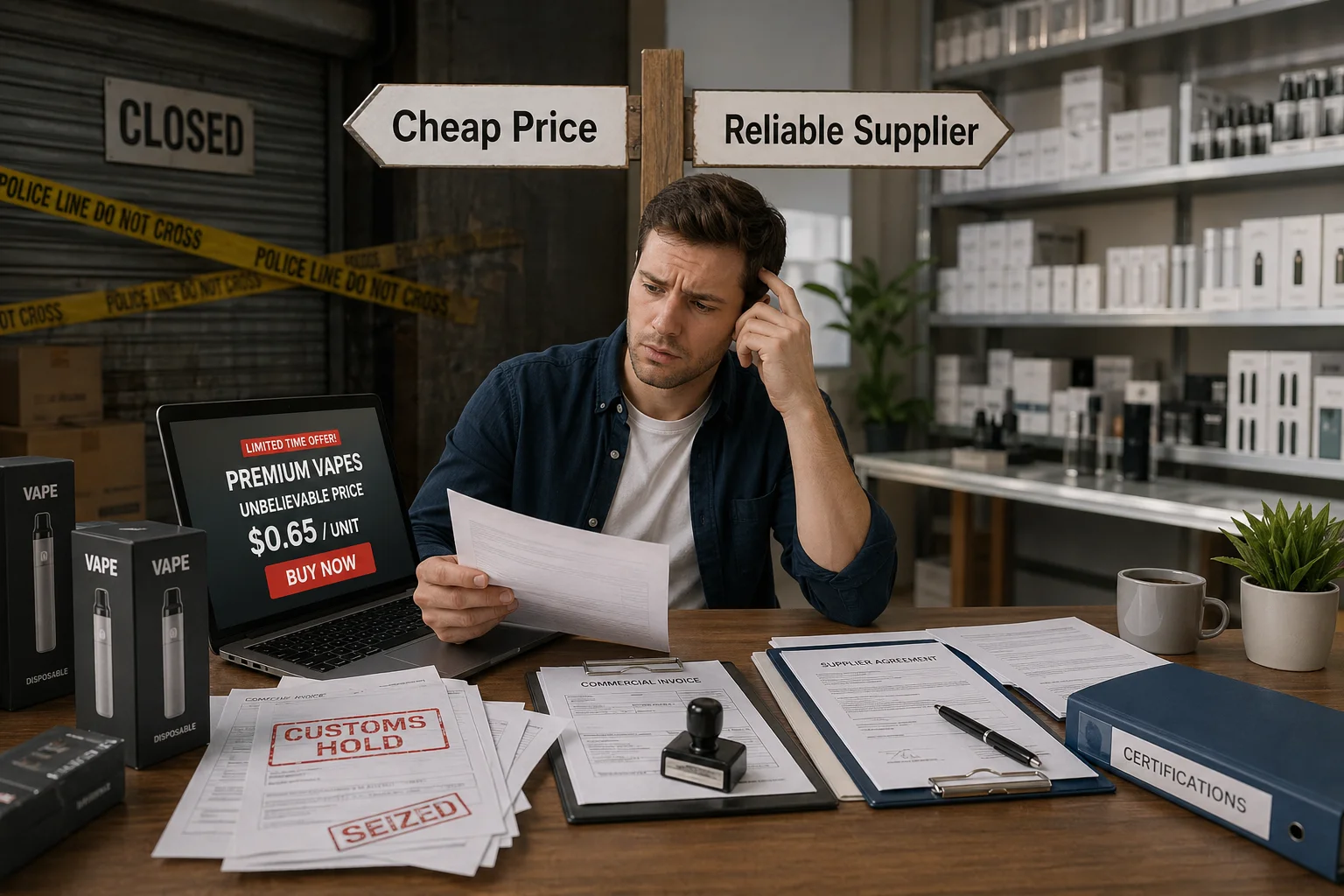
When you're new to business, it's easy to get fixated on one thing: price. But focusing only on finding the cheapest product is the single biggest mistake you can make, and it's a trap that many fall into.
The "Cheaper is Better" Myth
Many people believe that if they buy something for a very low price, it will be easy to sell and they'll make more money. This is a complete misunderstanding of how business works. If the cheapest things sold the best, then the most successful products in the world would be plastic bags and rubber bands. But they aren't. Why does Apple sell the iPhone for so much money and still sell more than many cheap phones? Because it's not about price; it's about demand. Business is about the speed at which your money moves. I'd rather make a 20% profit on a product I can sell every week than a 50% profit on a product that takes me six months to sell. Fast turnover is the key to profit. A cheap, fake vape that nobody wants is just dead money sitting on your shelf. An authentic, popular vape sells fast, and your cash starts working for you again.
Ignoring International Logistics and Customs
Another huge mistake is not understanding customs. Some countries have very strict customs, or what we call "secondary clearance," where shipments can get held up or seized. We have customers in places like Denmark and Estonia where this is a risk. A reliable supplier will tell you this upfront. We'll advise you, "Hey, shipping directly to your country is risky. It's safer to ship to a nearby country like Germany, and you can arrange to pick it up from there." We tell you this because we want you to actually get your goods. A scammer doesn't care. They will say "no problem," take your payment, ship the goods, and when customs seizes them, it's your problem. They already have your money. This is a huge pitfall in international trade.
How can you verify suppliers, stock, and authenticity?
So many suppliers look the same online. How can you tell the real ones from the fakes? Choosing the wrong one can be a disaster for your business. Here's how to investigate properly.
Verify suppliers by examining their professionalism and transparency. A reliable partner focuses on your needs, not just a quick payment. To verify stock, ask for videos. For authenticity, scan the product's QR code on the official brand website, not a fake one the code directs you to.
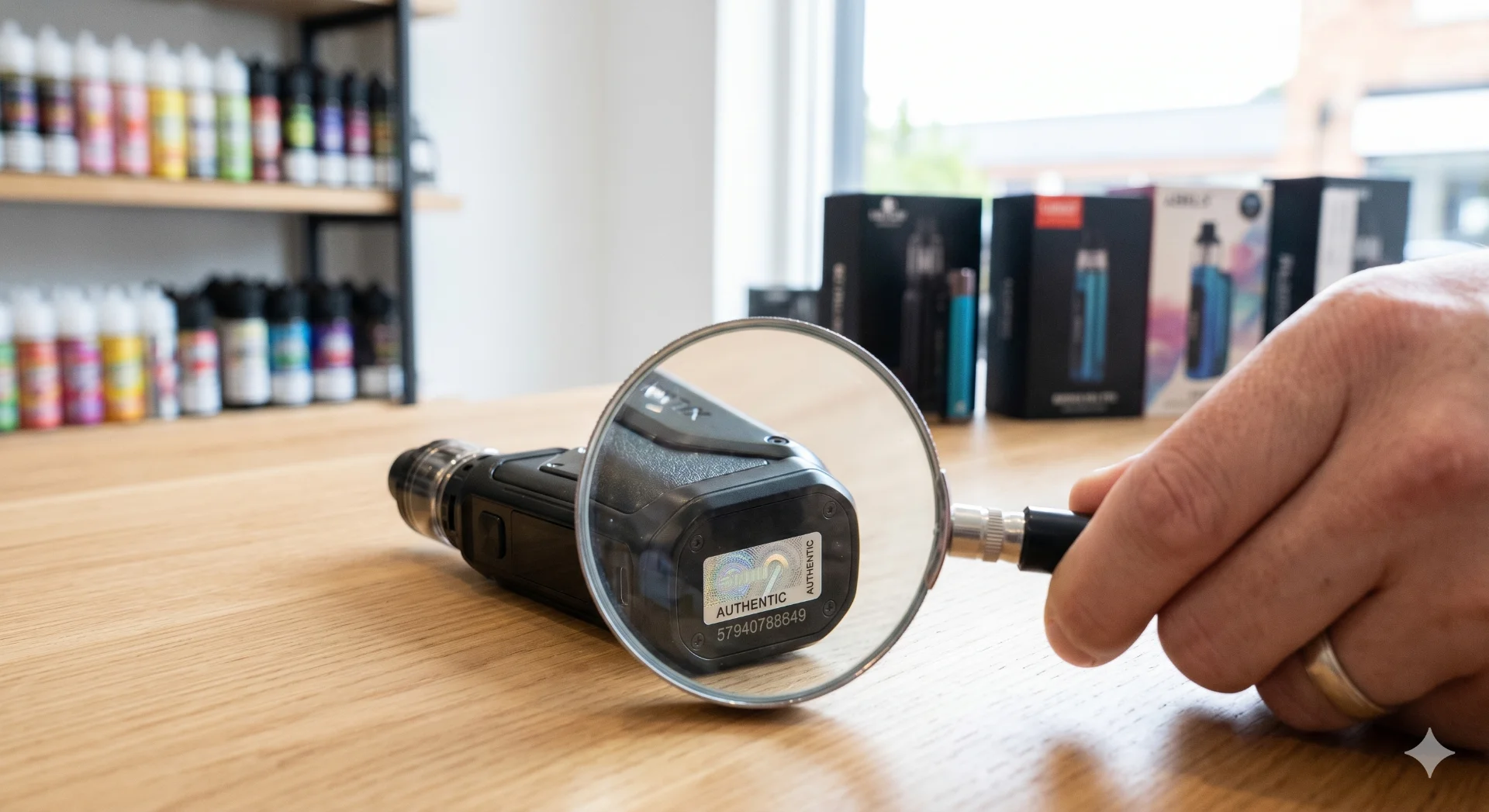
Verifying a supplier isn't just about looking at their website. You need to dig deeper and test them. You can learn a lot from how they communicate and what they are willing to provide as proof.
The QR Code Test (and Its Trap)
Most authentic vape products have a QR code for verification. But be careful. Scammers have gotten smart. They create fake QR codes that take you to a fake website they built. When you scan it, their fake site will say "Congratulations, this is an authentic product!" This is a trick. The only way to be sure is to ignore the link from the QR code. Instead, open your browser, go directly to the official brand website (like elfbar.com), find their verification page, and manually type in the code from the package. If the official site confirms it, then it's real. Never trust a website that a QR code automatically takes you to.
Gauging Supplier Professionalism
You can tell a lot about a supplier by how they talk to you. A scammer or a seller of fakes will almost always do one thing: pressure you to pay. Their main focus is getting your money as fast as possible. A professional, legitimate supplier acts more like a consultant. We want to understand your business and your market. We ask questions to give you good advice. We want a long-term relationship, so we are transparent about risks. If a supplier isn't asking you questions and is just sending payment links, that's a bad sign. A true partner wants you to succeed so you will come back and buy more. Their behavior will show you if they care about your business or just your wallet.
What proof should buyers ask for?
A supplier's website can look perfect, but words are cheap. How do you get real proof of their legitimacy before you send any money? Here are the essential documents and evidence you must request.
Always ask for tangible proof. Request recent, active shipping tracking numbers to verify they are shipping goods. Ask for videos of their current stock with your name on a piece of paper. Finally, ask for customer chat screenshots showing successful deliveries and positive feedback.
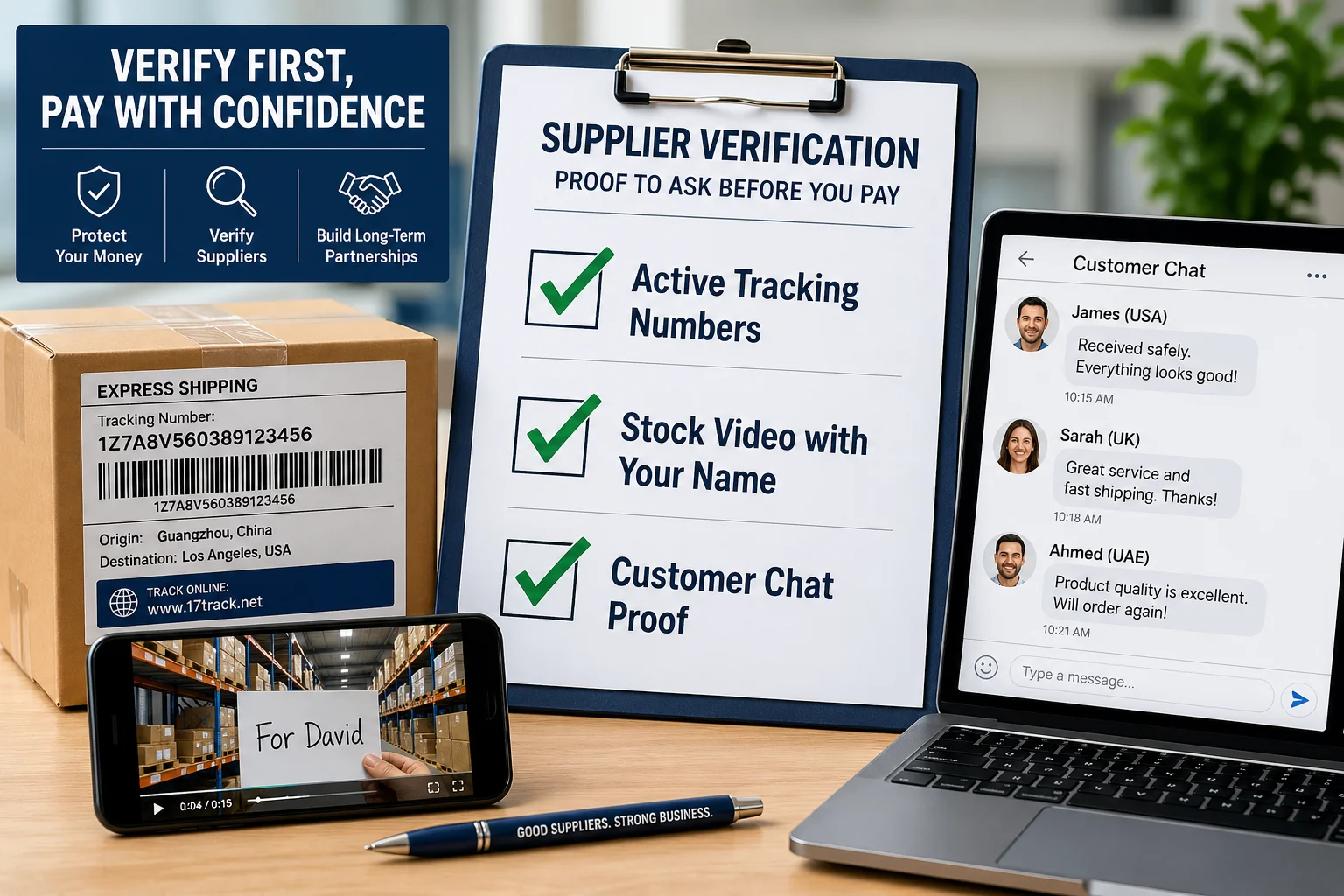
Don't just take a supplier's word for it. You need to see hard evidence that they are a real, active, and reliable business. If they hesitate to provide any of these things, it's a major red flag. A good supplier will be happy to show you they are legitimate.
Evidence of an Active Business
Here is a simple checklist of things you can ask for to prove a supplier is real.
| Type of Proof | What to Look For | Why It Matters |
|---|---|---|
| Tracking Numbers | Ask for several recent tracking numbers. Check them online to see they are active and delivering to real destinations. | This shows they are an active business currently shipping products to other customers. |
| Stock Videos | Request a video of the products you want to order. Ask them to write your name and the current date on a piece of paper and show it in the video. | This proves they physically have the stock they claim to have and aren't just using old photos. |
| Customer Feedback | Ask for screenshots of chat logs with other customers. Look for conversations showing delivery confirmation and satisfaction. | This provides social proof that other buyers have had a good experience with them. |
| Bank Account Details | A legitimate business should have a proper business bank account, not a personal one. We even set up local bank accounts in Germany, the US, and Africa to make payments easier and safer for our clients. | A professional setup indicates a serious, long-term business, not a fly-by-night scammer. |
Asking for this proof separates the real businesses from the fakes. A scammer can't provide these things. A real partner will have no problem showing you they are trustworthy.
How can you reduce risk before the first order?
Making that first big payment to a new supplier is stressful. What if something goes wrong? You could lose everything. Here’s a low-risk strategy for testing a new supplier without betting the farm.
To reduce risk, start with a small test order from an overseas warehouse if available. This offers a low MOQ, faster delivery, and no customs risk for you. For larger orders from China, insist on using a freight forwarder who offers full customs seizure insurance.
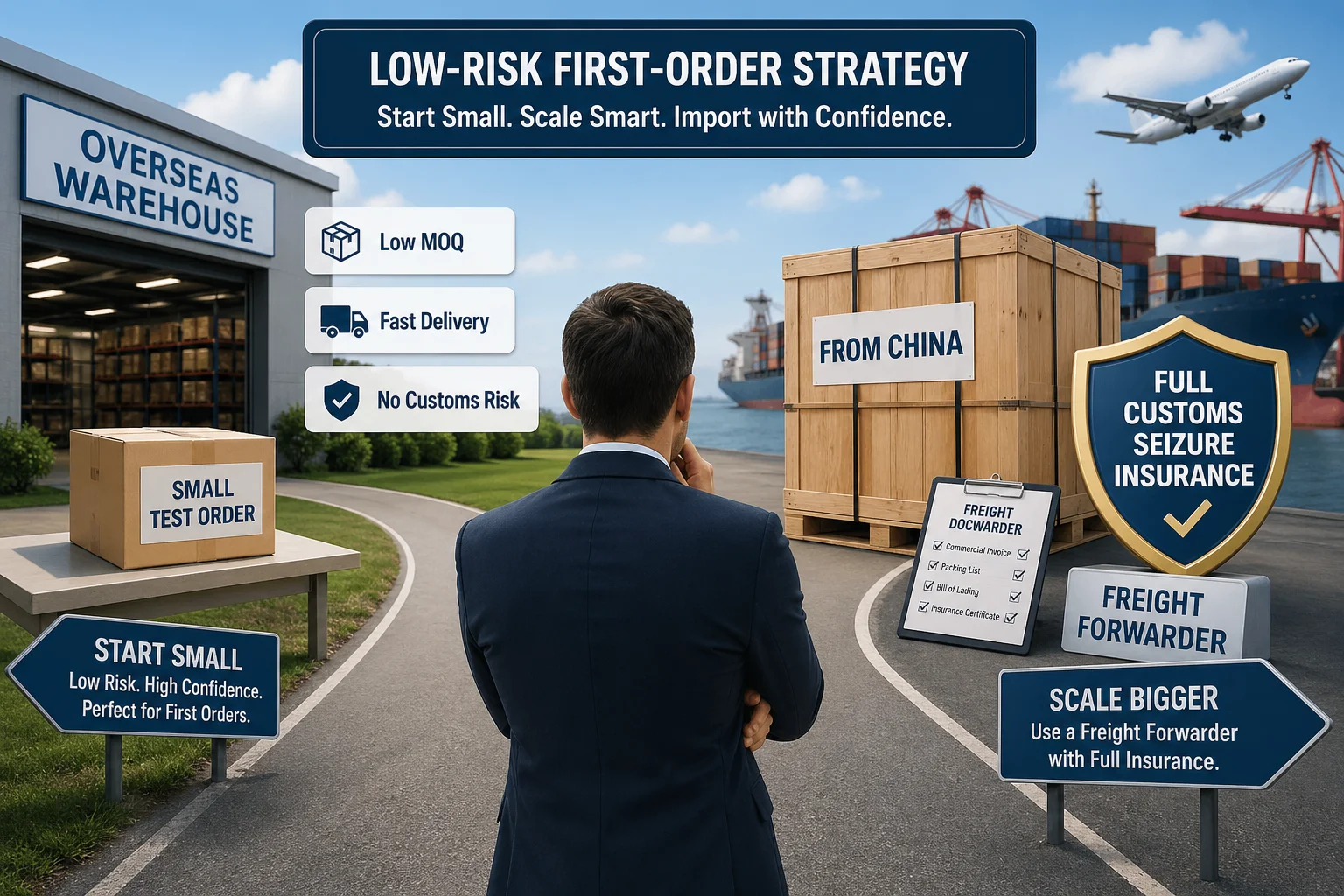
Your first order is always the riskiest. The best way to manage this risk depends on the size of your business and your order volume. There are two smart paths you can take to protect yourself.
Path 1: The Small-Scale Test (Under 2,000 Units)
If you are new to this business or want to place a smaller order, the safest and easiest way is to use a supplier with an overseas warehouse. For example, we set up a warehouse in Germany specifically for this reason. We take on all the big risks. We invest huge amounts of capital to buy stock in bulk (often 50,000+ units per model) to get the best price. We handle the risky international shipping, the customs clearance, and the warehousing costs. For you, the customer, it's simple. You can place an order with a very low Minimum Order Quantity (MOQ), like 50 pieces. Your startup cost is less than 400 euros. The product ships from Germany and arrives at your door in 1-5 days. There is no customs risk for you. This is the perfect way to test a product and a supplier without a big financial commitment.
Path 2: The Large-Scale Order (Over 2,000 Units)
If you are a more experienced wholesaler and need to order larger quantities to get a better price, then ordering directly from China makes sense. You get more selection and better margins. However, there is one rule you must never break: always buy full customs seizure insurance. Your supplier or your shipping agent must offer this. It will make your shipping cost a little higher per kilogram, but it is absolutely essential. The value of your goods is high. If your shipment gets randomly inspected and seized by customs, you could lose everything. With full insurance, if the goods are seized, the shipping company or supplier will send you a brand new, identical shipment at no extra cost. This is the only way to safely place large orders from China.
Conclusion
Stop chasing cheap fakes. Focus on finding a reliable partner, verifying authenticity, and using smart ordering strategies. This is how you build a profitable, long-term vape wholesale business.
Avoid Counterfeit and Supply Risk
For bulk vape orders, supplier verification protects your business from counterfeits and quality issues. Reach out to our team for factory audits and QC.
Related reading: How to Consolidate Multiple Vape Brands into One Lower-Risk Wholesale Orde