
Dead-stock protection can help vape buyers reduce cash-flow risk when products sell more slowly than expected, become difficult to resell, or no longer fit the market. I recommend negotiating conditional tools such as staged delivery, product exchange, stock transfer, and replenishment planning instead of assuming that every product qualifies for an unconditional supplier buyback.
When I speak with European and U.S. wholesalers, importers, distributors, vape shops, smoke shops, convenience-store suppliers, and gas-station suppliers, I often hear the same concern: a fast-moving product can become slow-moving before the buyer recovers the purchase cost. A practical vape distribution agreement should address that risk clearly while separating commercial inventory risk from product-quality responsibility.[3]
Quick Answer
- Negotiate conditional inventory measures, not an automatic return or buyback promise.
- Define separate rules for standard products, new products, and OEM/ODM products.
- Use overseas-warehouse purchasing, low MOQs, and frequent replenishment to reduce exposure for smaller buyers.
- Use staged delivery, demand planning, and coordinated replenishment for larger China imports.
- Put the time window, eligible quantities, product condition, transport cost, approval process, and replacement options in writing.
- Ask qualified legal and compliance professionals to review the agreement for the destination market.
What Does Dead-Stock Protection Mean in a Vape Distribution Agreement?
Dead-stock protection is a group of negotiated arrangements that can limit a buyer’s exposure when inventory does not sell within an agreed period.[1] It is not the same as a quality warranty[2], and it does not automatically mean that the supplier must refund, repurchase, or guarantee the sale of every product.
A practical definition
- Conditional product exchange
- Product switching within an agreed range
- Stock transfer to another buyer or sales channel
- Staged delivery against a purchase commitment
- Coordinated replenishment
- Replacement with approved standard products
- Commercial credit toward a future order
- Inventory review before the next shipment
A product may be slow because demand was overestimated. It may also become difficult to sell because a new model appears, a channel changes its product preferences, or local rules affect the buyer’s ability to market it. Those situations are different from a product that arrives defective.
Dead stock is different from defective stock
A defective product may fall under an after-sales or quality process. A product that works correctly but sells slowly is usually a commercial inventory issue. The agreement should address both subjects separately.
| Situation | Main issue | Possible contractual response |
|---|---|---|
| Product is defective on arrival | Quality and after-sales liability | Inspection, replacement, repair, credit, or another agreed remedy |
| Product works but sells slowly | Demand and inventory risk | Conditional exchange, stock transfer, staged delivery, or future-order credit |
| Product becomes outdated | Product life-cycle risk | Pre-agreed review process and limited switching options |
| Customized goods cannot be resold | Buyer-specific inventory exposure | Clear exclusion or specially negotiated solution |
| Shipment is delayed | Delivery and cash-flow risk | Delivery milestones, notice duties, and revised planning |
I have seen buyers focus heavily on after-sales promises while leaving slow-moving inventory unaddressed. That creates confusion later. A supplier may agree to support defective goods without agreeing to take back correctly manufactured products that did not sell.
The agreement should therefore define the commercial trigger. “Unsold” is often too vague.[4] The parties may need to specify whether protection applies after a certain number of days, after a product review, or only when the product remains in resalable condition.
Which Dead-Stock Protection Options Can Buyers Negotiate?
Buyers can negotiate several practical options, but each option needs limits. I usually recommend selecting the mechanism that matches the buyer’s actual distribution model rather than requesting a broad return clause that may be difficult to administer.
Conditional exchange
- Eligible product categories
- Minimum and maximum exchange quantities
- The exchange period
- Product condition requirements
- Any price difference
- Who pays transportation and handling costs
- Whether the replacement product must come from standard stock
- The supplier’s approval process
For example, an agreement may allow a buyer to request a product switch during a defined review period, subject to stock condition and availability. That is materially different from an unconditional return.
Product switching
Product switching can work when the buyer has access to several related products and the supplier has a broad catalogue. A buyer may switch from one standard item to another standard item with similar commercial characteristics. The parties should not assume that every item has equal value or equal resale potential.
I would also ask whether the replacement is based on the original invoice price, the current price, or a separately agreed valuation. Without that detail, a “switching” clause can become difficult to calculate.
Stock transfer
Stock transfer means that the supplier helps redirect eligible inventory to another buyer, warehouse, or channel. This approach may be useful for a large importer or distributor that serves several regions. It may also be possible when a supplier has visibility across multiple customer requirements.
- Who owns the goods during the transfer
- Who pays domestic or international freight
- Whether the original packaging remains acceptable
- Whether the new destination permits the product
- How payment and invoicing will be handled
- Whether the transfer creates a new warranty or documentation obligation
Future-order credit
Some buyers prefer a credit against a later order instead of a physical exchange. This can reduce reverse-logistics work, but the contract should state whether the credit expires and whether it applies to standard products only.
Staged delivery
Staged delivery is often one of the most useful protections for larger importers.[5] Instead of receiving the entire committed quantity at once, the buyer agrees to a commercial volume while the supplier releases goods in planned batches.
- Warehouse congestion
- Cash tied up in unopened stock
- Exposure to sudden demand changes
- The time between purchasing and selling
- The risk of receiving all units before the buyer validates demand
Staged delivery does not eliminate the buyer’s purchase commitment. It changes the timing of inventory exposure. The agreement should specify the release schedule, forecast process, notice periods, and consequences if the buyer changes its forecast.
Replenishment planning
Replenishment planning is especially useful when the buyer wants to test new products. The buyer can start with a smaller quantity, monitor sell-through, and place repeat orders after receiving market feedback.
I have found that this approach is more realistic than asking a supplier to guarantee that a new product will sell. Demand depends on the buyer’s market, sales channel, local competition, consumer response, and compliance position.[6] A well-planned replenishment cycle gives both parties better information before larger commitments are made.
How Should Protection Differ for Small and Large Vape Buyers?
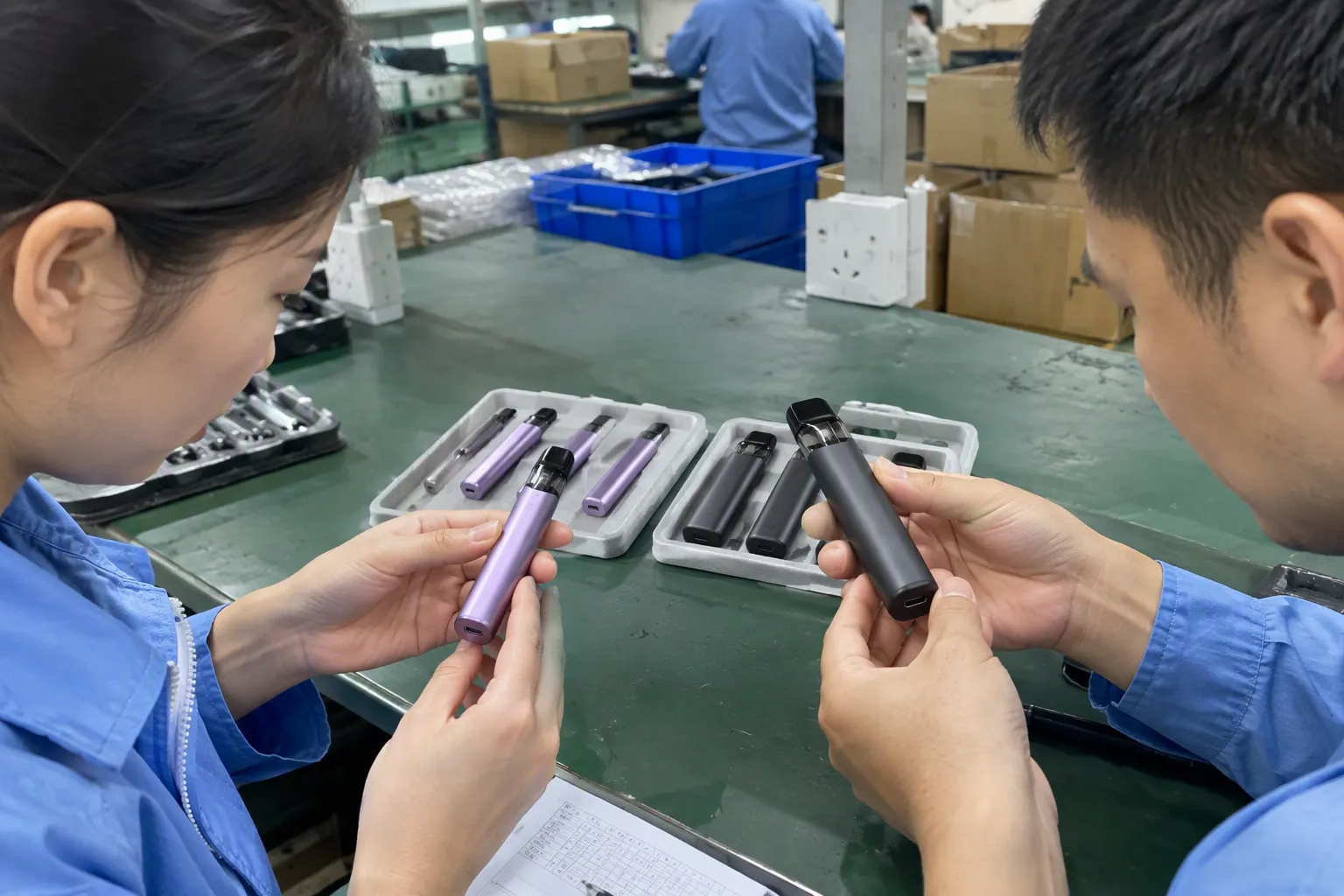
The best dead-stock protection model depends strongly on the buyer’s size and purchasing pattern. A small vape shop or regional wholesaler usually needs flexibility and low exposure. A large importer may need lower unit costs, production planning, and structured delivery for container-scale or repeated orders.
Smaller buyers: reduce exposure before ordering
For smaller wholesalers, vape shops, smoke shops, convenience stores, gas-station suppliers, and similar buyers, I generally see more value in reducing the initial commitment than in negotiating a complex buyback clause.
An overseas warehouse can support this model when suitable stock is already available.[8] In Europe, Kingfuji operates warehouse inventory in several locations, including Germany, Austria, Poland, and Belgium, according to the supplied business context. Buyers can discuss current availability, delivery options, and product eligibility directly before placing an order.
- Low minimum quantities for selected products
- Existing stock for some brands and categories
- Delivery within Europe through services such as DHL, DPD, UPS, or FedEx
- A stated delivery range of approximately 1–5 business days for suitable European orders
- Reduced exposure to long China-to-market transit times
- The option for smaller, more frequent purchases
Larger buyers: plan the whole inventory cycle
- Forecast ranges rather than one rigid quantity
- Staged production or delivery
- Partial shipment milestones
- Sample approval before mass production
- A defined replenishment review
- Product-switching rules for eligible standard goods
- Clear treatment of excess packaging or customized stock
- A process for changes in the buyer’s sales plan
A large order can be commercially sensible when the buyer already has reliable distribution and sufficient demand information. It becomes more risky when the buyer purchases a trend-driven product without a tested sales channel.
| Buyer type | Main inventory concern | More suitable risk-reduction approach |
|---|---|---|
| Individual vape shop | Cash tied up in excess units | Low MOQ and small replenishment orders |
| Regional wholesaler | Uneven demand across stores | Product mix review and stock transfer |
| Convenience-store supplier | Fast turnover and limited shelf space | Standard products and frequent replenishment |
| Large importer | High landed cost and long planning cycle | Staged delivery and forecast coordination |
| Private-label distributor | Customized stock may be hard to resell | Written approval, demand planning, and specific exclusions |
| Multi-region distributor | Demand differs by market | Regional allocation and inventory monitoring |
Why overseas warehouses can reduce commercial risk
When buyers import directly from China, they may face longer transit times, customs procedures, and capital tied up before the goods reach the sales channel.[7] When a suitable item is already in a nearby overseas warehouse, the buyer may purchase a smaller quantity and replenish more quickly.
That model can be helpful for buyers who want to test a new product without making a large upfront commitment. It does not remove compliance duties or guarantee sales. The buyer still needs to verify that the product is appropriate for its country, channel, and customer base.
Should Standard, New, and OEM/ODM Products Have Different Rules?
Standard products
Standard products are generally easier to compare, replace, transfer, or resell because they are not made exclusively for one buyer. A conditional exchange may be more workable if the goods remain unopened, undamaged, complete, and commercially acceptable.
New or trend-driven products
New products may attract attention, but demand can change quickly. A buyer that wants to be first in the market also accepts a higher forecasting challenge. A distribution agreement can reduce this exposure through:
- Trial quantities
- Shorter replenishment cycles
- Review points after initial sales
- A defined product information process
- Limits on the first bulk order
- Staged delivery
- Conditional exchange into approved standard items
I have communicated with buyers who want the newest products immediately because they believe early availability will create an advantage. That goal can be reasonable, but the buyer should not confuse novelty with proven demand. The agreement should reflect that uncertainty.
OEM/ODM and private-label products
Customized goods present a different problem. A product with the buyer’s logo, packaging, flavor, mold, color, or other exclusive specification may be difficult for the supplier to resell to another customer. That is why OEM/ODM goods should not automatically qualify for return, repurchase, or product switching.
- Who owns the artwork and packaging files
- Who approves the final sample
- What quantity is reserved for the buyer
- Whether excess materials can be reused
- Whether the supplier may sell the product elsewhere
- What happens if the buyer changes its forecast
- Which defects qualify for a remedy
- Which commercial changes do not qualify
Kingfuji has a 5,000-square-meter factory, OEM/ODM experience, and a stated maximum capacity of up to 5 million units per month in the supplied business context. Those capabilities may support custom development and larger projects, but they do not make customized inventory automatically returnable. The buyer and supplier still need a project-specific agreement.
| Product category | Resale flexibility | Recommended negotiation focus |
|---|---|---|
| Standard catalogue item | Usually higher | Conditional exchange, time window, condition |
| New standard product | Medium or uncertain | Trial order, staged delivery, review point |
| Trend-based item | Variable | Limited first order and replenishment planning |
| Private-label packaging | Lower | Forecast, approval, excess-material responsibility |
| Custom mold or specification | Often low | Project terms, ownership, cancellation, quality remedies |
Product quality remains a separate issue
A customized item can be correctly manufactured but still sell slowly. A quality claim requires evidence about specifications, samples, inspection, and actual product condition. A dead-stock claim concerns demand and resale. The agreement should avoid combining these two claims under one broad phrase such as “unsatisfactory goods.”
What Contract Questions Should Buyers Ask Before Signing?
A buyer can turn a vague protection request into useful commercial terms by asking specific questions. I recommend placing the answers in the distribution agreement, purchase order, annex, or another document that both parties accept.
Eligibility and timing
- Which products qualify?
- Does protection apply to standard products only?
- Does it apply to unopened inventory?
- How many days does the buyer have to request support?
- Does the period begin at shipment, delivery, or acceptance?
- Is there a minimum remaining shelf or market period?
- Are products with changed packaging eligible?
Quantity and valuation
- Is there a maximum percentage of the order?
- Is protection calculated by units or invoice value?
- Does it apply to the whole order or only an approved portion?
- How are price differences calculated?
- Are discounts, promotional units, and shipping charges included?
- Does a credit expire?
Condition and evidence
- Must the products remain sealed?
- Are opened cartons acceptable?
- Who checks the condition?
- What photos, videos, serial numbers, or inventory records are required?
- How quickly must the supplier respond?
- Who pays inspection, repacking, and transport costs?
The supplied business context states that video verification can be provided for goods and that after-sales support is available through the company. Buyers should confirm the exact process for their order instead of assuming that every inventory issue qualifies for the same support.
Replacement and logistics
- Can the buyer choose the replacement product?
- Must the replacement come from current stock?
- Can the supplier propose an alternative?
- Who arranges collection?
- Who bears international freight, duties, and local delivery costs?
- What happens if the replacement product is unavailable?
Policy and market changes
I do not present any country-specific rule as universal. Buyers should verify current requirements with qualified local advisers and official authorities. In the United States, buyers can consult the U.S. Food and Drug Administration tobacco products resources. In the European Union, buyers can review the European Commission’s health policy information and then obtain country-specific advice.
A negotiation checklist
| Contract point | Buyer should obtain |
|---|---|
| Eligible goods | A written product list or category definition |
| Trigger | A clear slow-moving inventory review condition |
| Time window | Start date and expiry date |
| Quantity limit | Maximum units or value covered |
| Product condition | Sealed, unused, complete, and documented requirements |
| Remedy | Exchange, transfer, credit, staged release, or another option |
| Costs | Freight, duties, handling, inspection, and repacking responsibility |
| Approval | Contact, documents, response time, and decision process |
| Customized stock | Express inclusion or exclusion |
| Regulation | Local verification responsibility and change process |
How Can Buyers Reduce Dead Stock Before It Happens?
Start with a controlled test
A first order should provide enough units to test the sales channel without creating unnecessary exposure. A vape shop may test a limited selection. A regional wholesaler may allocate a small quantity to several stores and compare results.
Use a replenishment trigger
A buyer can define a reorder point based on actual stock. For example, the buyer may review inventory when a product reaches a particular remaining quantity or sales period. The number should reflect the buyer’s own lead time and storage capacity rather than a generic rule.
- Receive and inspect the shipment.
- Allocate products to specific channels.
- Record weekly sales.
- Compare actual sales with the forecast.
- Pause or reduce replenishment when demand weakens.
- Discuss exchange or transfer options before the stock becomes unusable.
Match the product to the channel
A product that performs well in one channel may not perform well in another. A tourist-area shop, a regional wholesale route, and a large convenience-store network can have different purchasing patterns. Buyers should avoid assuming that a product’s popularity in one market guarantees comparable demand elsewhere.
I also recommend that buyers prepare clear product information for their own downstream customers. The supplied customer profiles show a practical concern: end users may misuse a product when the seller does not explain its operation or limitations properly. Better product communication can reduce avoidable complaints, although it does not eliminate commercial inventory risk.
Use a product portfolio, not one speculative item
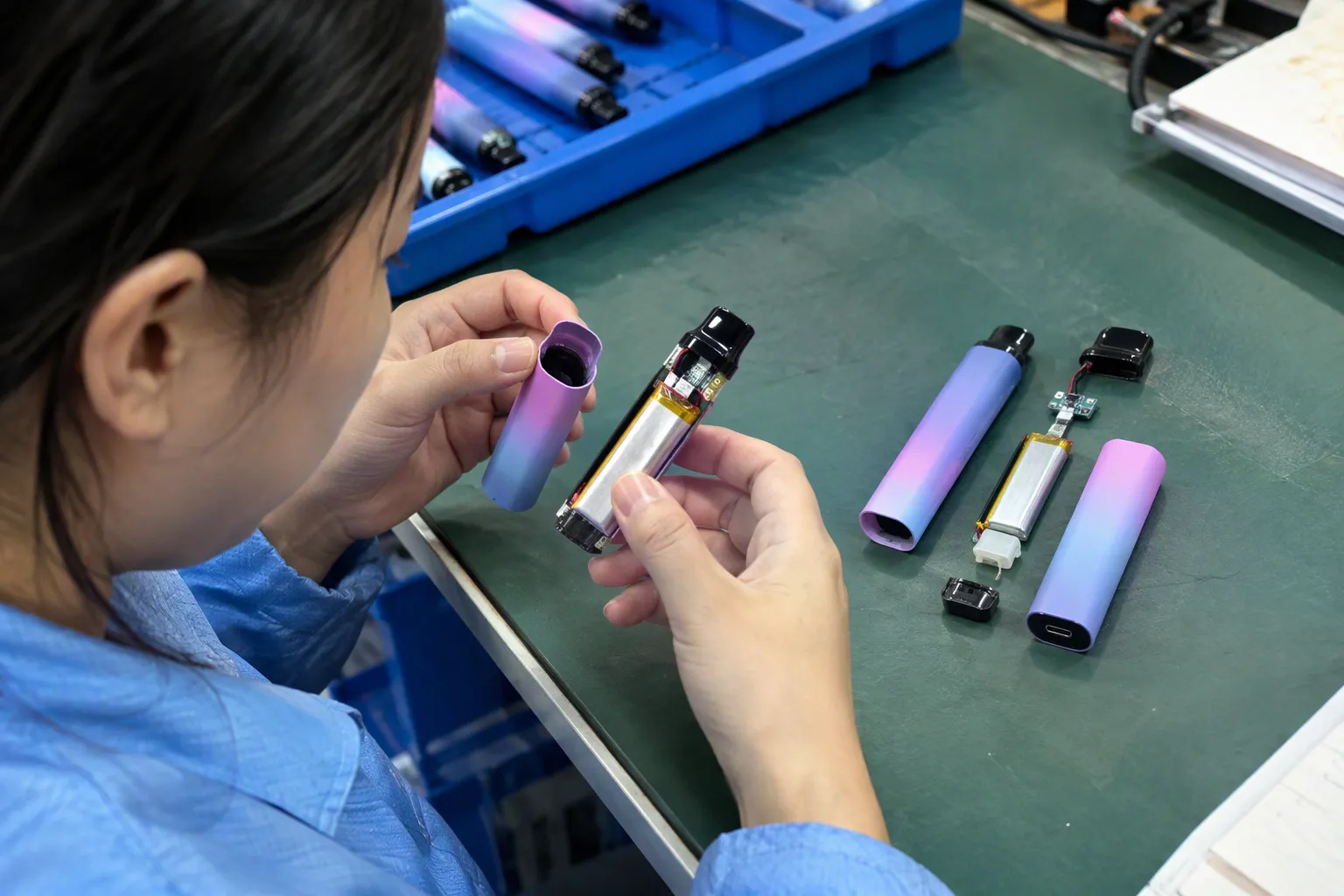
A portfolio can reduce dependence on one trend. Buyers may combine established standard products with a limited number of new products. They can then reserve more of the purchasing budget for items with observed demand.
Work with a supplier that can support different order sizes
A supplier relationship may be more useful when it supports both small replenishment and larger OEM/ODM projects. Kingfuji’s stated business model includes brand distribution, sourcing support, new-product development, mold development when appropriate, overseas warehouses, and factory-based OEM/ODM coordination. Buyers should still evaluate each service, price, timeline, document, and remedy under a specific order.
Buyers can review related purchasing considerations through Kingfuji’s vape product range and should request current product, stock, shipping, and agreement information directly.
What Should a Vape Distribution Agreement Exclude or Limit?
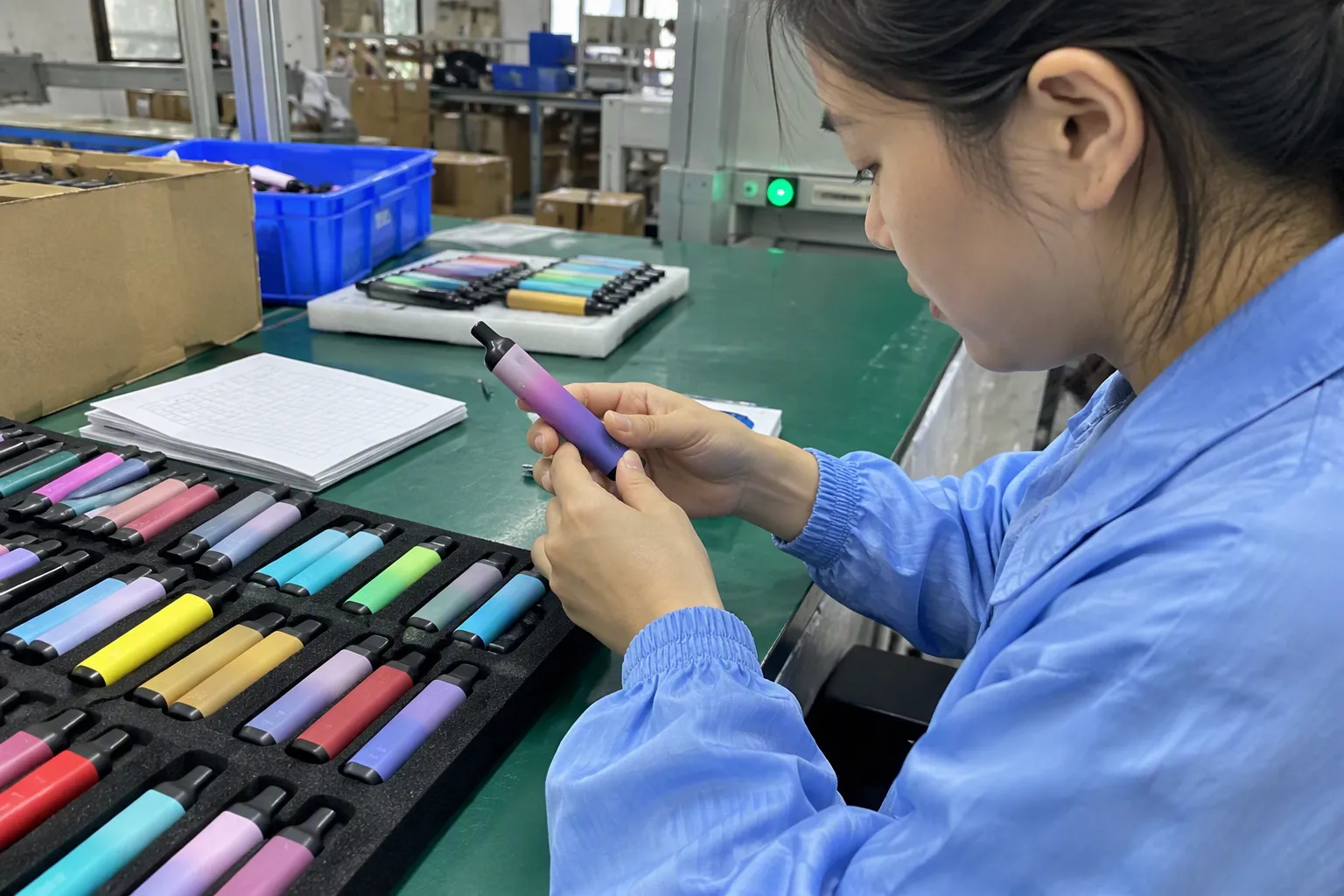
Common exclusions to discuss
- Customized products
- Products with buyer-specific packaging
- Used, opened, or damaged units
- Products missing components or documentation
- Goods stored outside the agreed conditions
- Products altered by the buyer
- Products purchased outside the approved channel
- Goods affected by an unverified local compliance issue
- Inventory sold through an unauthorized market
- Orders that exceed the agreed forecast without approval
Do not promise guaranteed sell-through
A supplier can support product selection, supply planning, and replenishment. A supplier cannot responsibly promise that every item will sell through in every market unless the parties have a very specific, legally reviewed arrangement. Even then, the buyer should understand the conditions and limits.
Separate logistics support from inventory protection
Kingfuji’s supplied business context includes door-to-door delivery options, delivery to a buyer’s nominated freight forwarder, video verification, and stated compensation or after-sales arrangements in certain situations. Buyers should confirm the scope and written terms for their actual shipment.
Delivery support does not automatically mean slow-moving products are eligible for return. A customs or transport issue also requires separate documentation and contractual treatment. Buyers should ask which party bears each risk and when responsibility transfers.
Frequently Asked Questions
Is dead-stock protection the same as a vape product warranty?
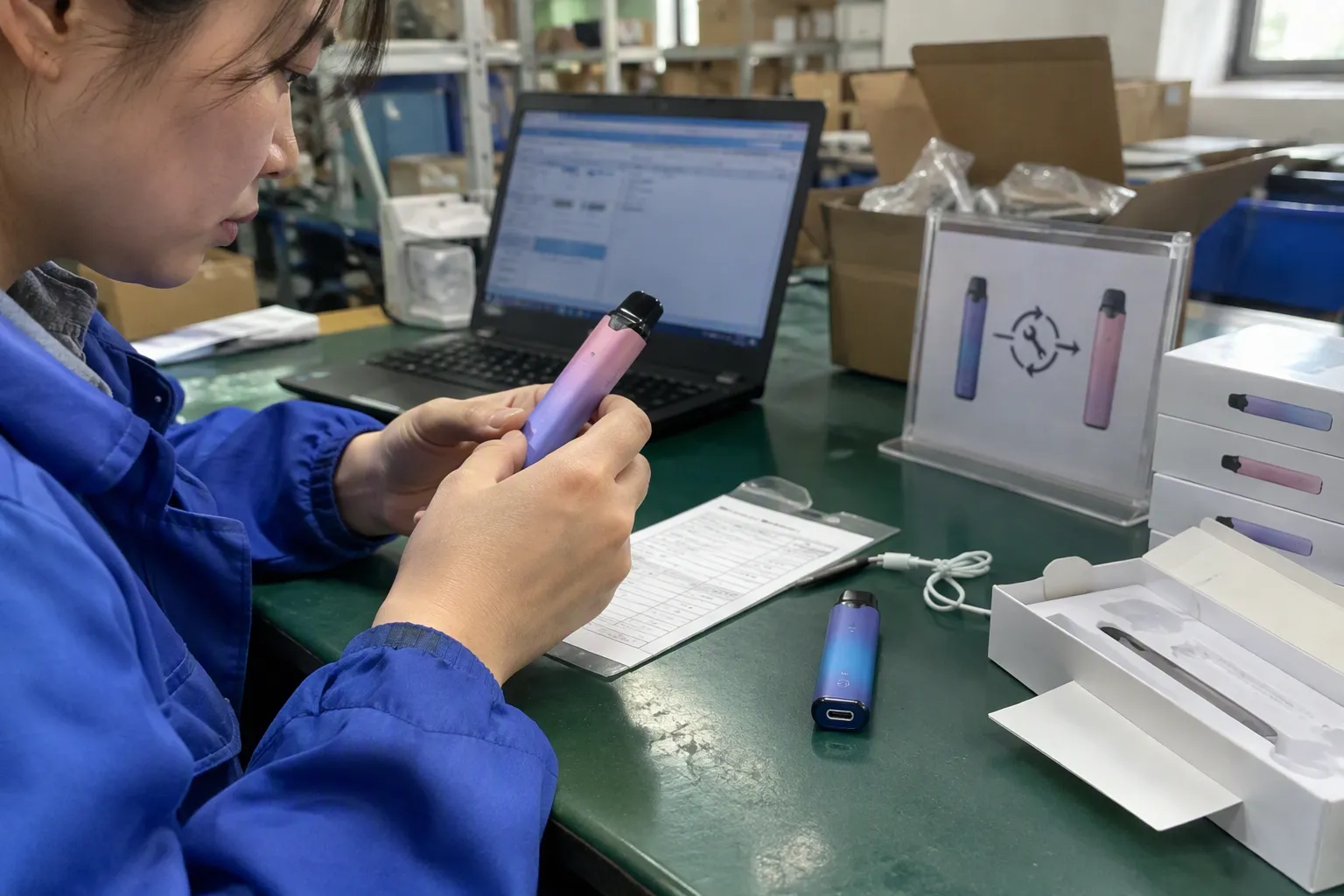
No. A warranty or after-sales process generally concerns defects, nonconformity, or product performance under agreed conditions. Dead-stock protection concerns goods that may be correctly manufactured but sell slowly. The distribution agreement should define these obligations separately.
Can a buyer negotiate an unconditional vape inventory buyback?
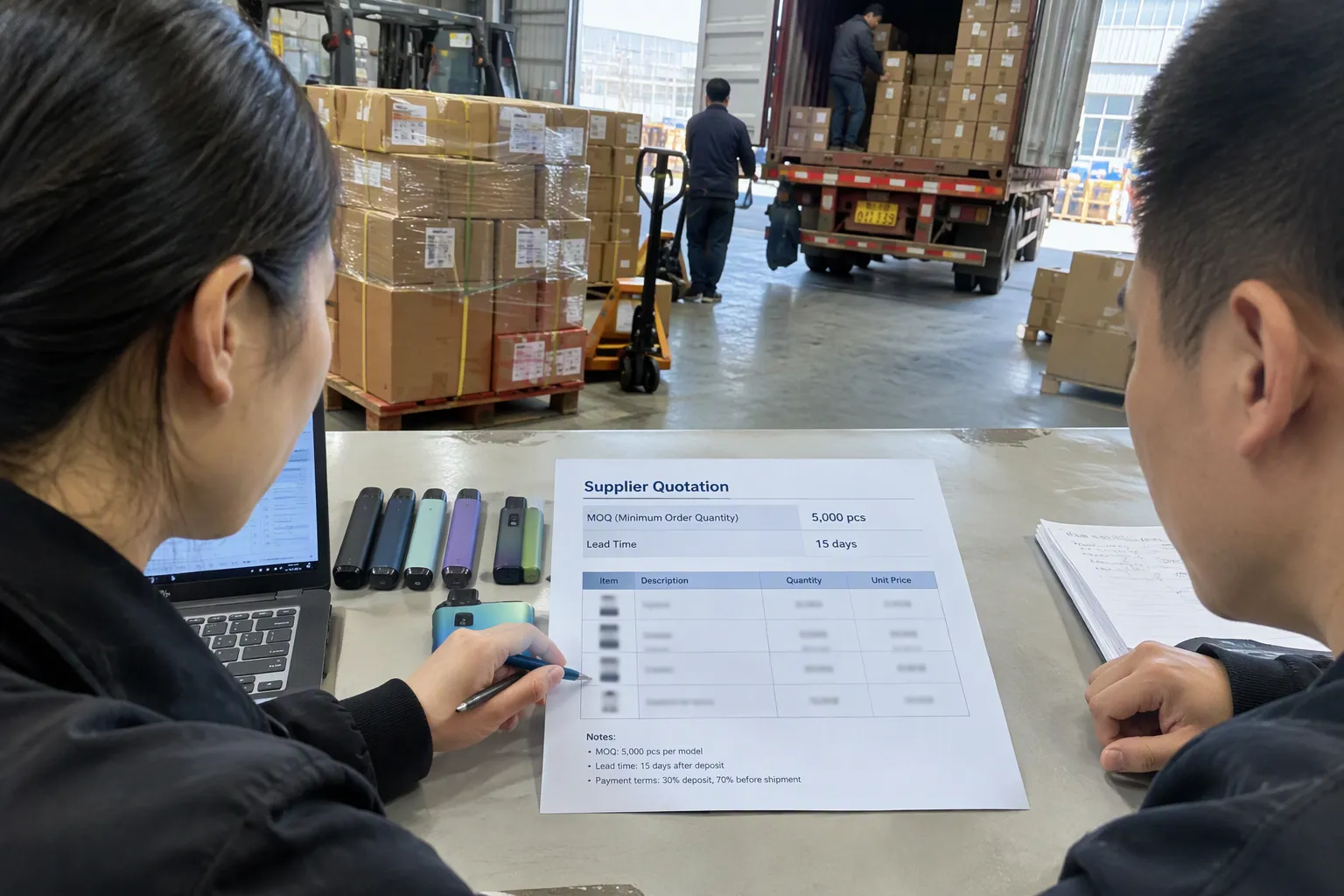
A buyer can request one, but an unconditional buyback is not a standard assumption and may be commercially unsuitable, especially for customized goods. Conditional exchange, future-order credit, staged delivery, or stock transfer may be more practical. A lawyer should review the final wording.
Which buyers benefit most from overseas-warehouse purchasing?
Smaller wholesalers, vape shops, smoke shops, convenience-store suppliers, and regional distributors may benefit when they need low MOQs and fast replenishment. The buyer should confirm actual stock, destination eligibility, delivery time, and applicable local requirements for each product.
Should OEM/ODM products receive dead-stock protection?
OEM/ODM products usually require separate treatment because customized packaging, molds, artwork, or specifications can make the goods difficult to resell. The parties should negotiate forecast responsibility, sample approval, cancellation terms, excess materials, and remedies for verified quality problems.
What information should a buyer send before negotiating protection?
The buyer should provide the product list, expected order quantity, sales channels, destination markets, purchasing schedule, packaging requirements, forecast range, and preferred remedy. More specific information allows the supplier to discuss a realistic arrangement instead of giving a vague general promise.
Conclusion
Dead-stock protection in a vape distribution agreement should be negotiated as a practical inventory-risk system, not as an automatic supplier guarantee. I recommend matching the solution to the buyer’s size and purchasing model: low-MOQ overseas-warehouse replenishment for smaller buyers, and staged delivery, forecasting, and coordinated replenishment for larger importers. Standard, new, and OEM/ODM products also need different rules. I invite wholesalers, importers, distributors, and retail-channel buyers to contact Kingfuji at info@kingvapecig.com or +86 13928420527 to discuss product selection, inventory planning, OEM/ODM requirements, and a suitable commercial structure.
Sources
- Dead Stock: A Hidden Challenge in Logistics", A supply-chain management source defines dead or obsolete stock as inventory that remains unsold or no longer generates expected demand, supporting the article’s use of the term as a commercial inventory-risk concept
- § 2-714. Buyer's Damages for Breach in Regard to Accepted ...", Official commercial-law materials distinguish obligations concerning conformity or defects in delivered goods from separately negotiated commercial terms governing resale, returns, or inventory allocation
- Supply and Distribution Agreement", Contracting scholarship treats product conformity and allocation of commercial or inventory risk as separate matters that should be expressed through identifiable contractual obligations and remedies
- Best Practices for Performance-Based Contracting", Contract-drafting authorities emphasize that operational rights and obligations are more reliably administered when triggering conditions, deadlines, and measurement standards are stated with objective precision
- Supply chain resilience: A review from the inventory ... - PMC", Supply-chain research indicates that coordinating delivery timing and lot releases with demand information can reduce the amount of inventory held before consumption or sale, thereby limiting exposure to uncertain demand
- The impact of AI adoption on market dynamics", Marketing and demand-forecasting literature identifies market conditions, distribution channels, competitive intensity, consumer response, and institutional constraints as factors that can affect product demand
- Trade Facilitation, Logistics & Connectivity", International trade and logistics research describes transport and border-processing lead times as factors that keep goods and associated capital committed before inventory becomes available to downstream markets
- How to Manage Supply Chain Delivery", Distribution research supports the proposition that positioning inventory closer to demand can shorten fulfillment lead times and permit more responsive replenishment than relying solely on upstream shipment cycles
Related reading: