Quick Answer
Vape tank compatibility creates avoidable problems when buyers focus only on a familiar brand, visible dimensions, or a matching connection. I have seen compatibility questions become leakage complaints, incorrect shipments, and slow-moving inventory. I reduce that risk by checking the exact model, version, sealing structure, operating conditions, and spare-part supply before I recommend a purchase.
I check vape tank compatibility by confirming the exact device model and version, comparing the connection and dimensions, reviewing the seal and airflow structure, and requesting samples when necessary. I also verify the availability, identification, replenishment MOQ, and lead time of matching glass, coils, seals, and other replacement parts before purchasing inventory.
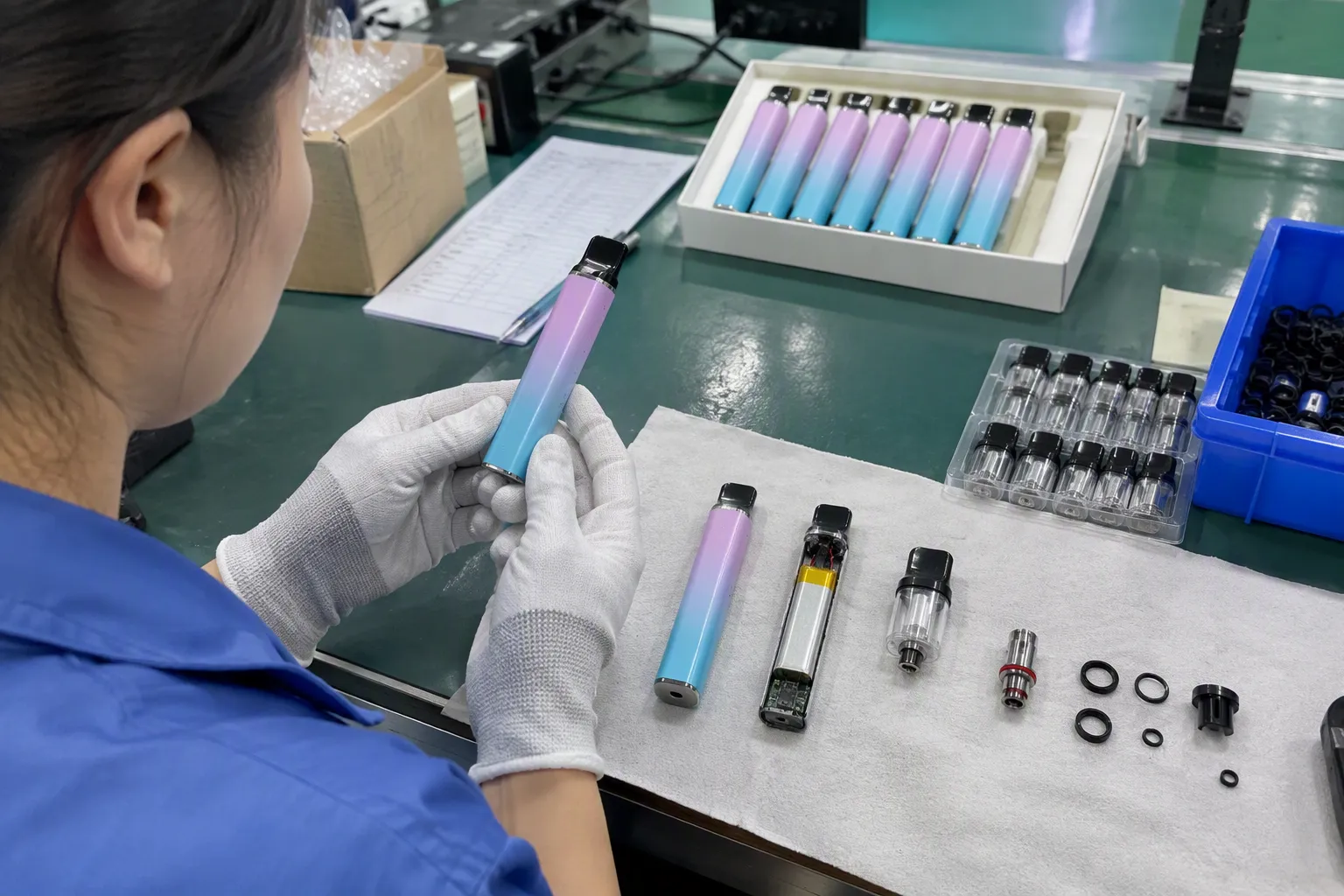
A tank that physically attaches to a device may still perform poorly or create service problems. I therefore treat compatibility as a complete purchasing evaluation rather than a simple measurement exercise. The following process helps importers, wholesalers, vape shops, smoke shops, and other resellers make a more reliable decision.
How Can I Check Vape Tank Compatibility, Seals, and Spare-Part Availability?
A wrong tank can create more than a technical inconvenience. It can produce returns, customer complaints, dead stock, and pressure on cash flow. I start with product identification, then compare construction and operating details before I discuss price or delivery.
I check vape tank compatibility through five steps: identify the exact device and tank version, compare the complete specifications, inspect the sealing and airflow structure, confirm matching spare parts, and evaluate the supplier’s replenishment ability. I use photographs and written specifications first, but I request samples when documents do not remove uncertainty.
Why Does a Physical Connection Not Prove Compatibility?
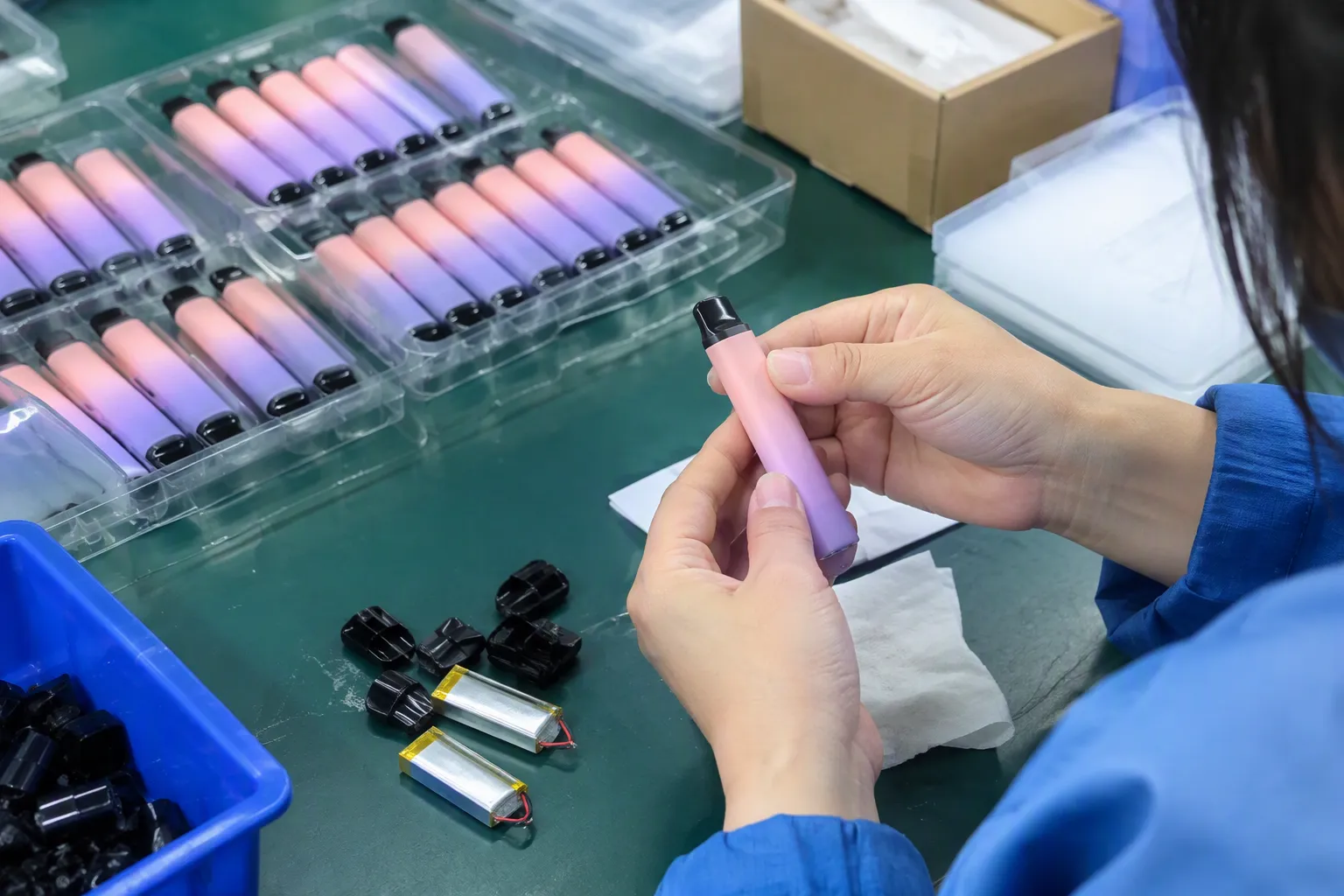
A matching connection is only one part of the evaluation.[1] Threads, interfaces, dimensions, and appearance can suggest that two products may work together, but they do not prove that the tank will seal correctly, sit at the right height, receive the correct airflow, or work with the intended version.
I often explain this point when customers ask whether a tank is “universal.” The word may describe a marketing position rather than a verified technical result.[3] I ask the buyer and supplier to define exactly what the claim includes.
I normally compare the following information:
- Complete device model name and model number
- Tank model and version number
- Connection type and relevant interface details
- Overall dimensions and contact position
- Glass or reservoir shape
- Coil or heating-component compatibility
- Airflow arrangement
- Top and bottom sealing structure
- Intended operating conditions
- Available replacement components
A tank may attach to a device but still have a mismatch in one of these areas.[2] For example, the connection may align while the base does not create the correct seal. A glass section may appear similar but have a different height or edge profile. A coil may fit into the chamber but fail to match the intended airflow or liquid path.
I do not describe these possibilities as confirmed failures without checking the product. I use them as reasons to ask better questions before the purchase. This distinction matters because B2B buyers need evidence that applies to the exact model and version they plan to sell.
What Information Should I Request Before Purchasing?
I ask for a complete product file instead of relying on a product title or a short message. The file does not need to be complicated, but it should allow me to compare the product in a controlled way.
| Information to confirm | Why I check it |
|---|---|
| Exact model and version | Prevents mixing visually similar products |
| Product drawings or dimensions | Helps compare fit and assembly points |
| Component list | Shows which parts belong to the product |
| Seal and gasket details | Helps assess replacement and service needs |
| Coil or heating-part reference | Reduces incorrect accessory orders |
| Glass or reservoir reference | Supports future replenishment |
| Product photos from several angles | Helps identify structure and version differences |
| Sample availability | Allows physical comparison when documents are unclear |
| Packaging and labeling | Supports warehouse identification |
| Spare-part MOQ and lead time | Helps plan repeat purchasing |
I also ask whether the specifications apply to the current production version. A supplier may have older photographs, while the factory has changed a base, seal, glass profile, or package. I want the product file, sample, and future shipment to refer to the same version.
When a customer sends me a photograph, I treat it as a useful starting point, not final proof. Similar tanks may appear across different brands or product generations. I ask for a clear photo of the device, the existing tank, the base, and any markings. If the question remains uncertain, I recommend comparing a sample before placing a larger order.
How Should I Evaluate Seals and Leakage Risk?
Seals are small components, but they can have a large effect on customer experience.[5] I check where the seals sit, whether the supplier can identify them correctly, and whether the replacement parts remain available for the product version.
I avoid making a laboratory claim about leakage unless a qualified party has completed an appropriate evaluation. My purchasing approach is more practical: I verify the assembly structure, request the supplier’s documented information, compare samples when needed, and make sure the buyer understands the conditions that can influence service issues.
I ask questions such as:
- Which seals are included with the tank?
- Are the seals pre-installed or supplied separately?
- Does the replacement seal have a distinct part reference?
- Does the same seal fit every version?
- Can the supplier provide additional seals separately?
- Are glass, coils, and other replaceable parts assigned to the same model?
- What is the replenishment MOQ?
- What is the usual production lead time for spare parts?
- How will the supplier label different versions in the warehouse?
- What after-sales process applies if the buyer receives a mismatched component?
The buyer should also consider the real conditions of storage, transportation, assembly, and use. Temperature changes, handling, installation, and incorrect replacement can affect the customer’s experience.[4] I do not use these factors to blame the end user. I use them to decide whether the product needs clearer instructions, more replacement stock, or better component identification.
A supplier’s ability to provide seals is valuable only if the parts are correctly matched and consistently supplied. A bag of unmarked seals may not solve a service problem if the warehouse cannot identify which version they fit.
Are Spare Parts Part of the Initial Product Decision?
I consider spare parts part of the product, not an afterthought.[6] A tank may have an attractive unit price, but the commercial result can become poor if the buyer cannot support replacements after the first shipment.
For a repeatable product line, I normally review:
- Replacement glass or reservoir sections
- Coils or compatible heating components
- Base assemblies
- Gaskets and O-rings
- Mouthpieces or drip tips, where applicable
- Airflow-related parts
- Charging or connection-related accessories, where relevant to the product
- Packaging, labels, and instructions
- Version-specific service items
Not every tank requires every item on this list. I use the list as a control tool so that I do not overlook a small component that customers may later request.
I also compare the cost of replacement parts with the cost of replacing the complete tank. If a glass section is inexpensive and regularly available, a shop may be able to resolve a simple service request efficiently.[7] If only the complete tank is available, the buyer may need to hold more finished stock and accept more waste.
The spare-part plan should match the buyer’s sales model. A small vape shop may need a limited quantity of common replacement parts. A regional wholesaler may need a broader assortment and stable replenishment. A large importer may want a written component list, packaging control, and a repeat-order plan before launching a private-label or OEM/ODM product.
How Do I Control Model and Version Confusion?
Version control becomes important when a supplier offers similar products under several names. I ask the supplier to distinguish each version by a model code, label, photograph, or component reference. I do not want a warehouse worker to select a part based only on appearance.
I recommend that buyers create a simple compatibility record for every SKU:
- Buyer’s internal SKU
- Supplier model code
- Brand or customer-brand reference
- Compatible device or tank version
- Main replacement parts
- Photos of the assembled and disassembled product
- Purchase date and shipment reference
- Approved sample reference
- Spare-part stock level
- Reorder MOQ and lead time
This record supports purchasing and customer service at the same time.[8] It helps a sales employee answer a shop’s question without guessing. It also helps the buyer compare a new supplier’s offer against an existing product.
I have found that clear communication is often more useful than a long technical description. A supplier should be able to answer, “Which exact version does this seal fit?” If the answer remains vague, I treat the product as requiring further verification.
How Should I Compare the True Cost of a Vape Tank?
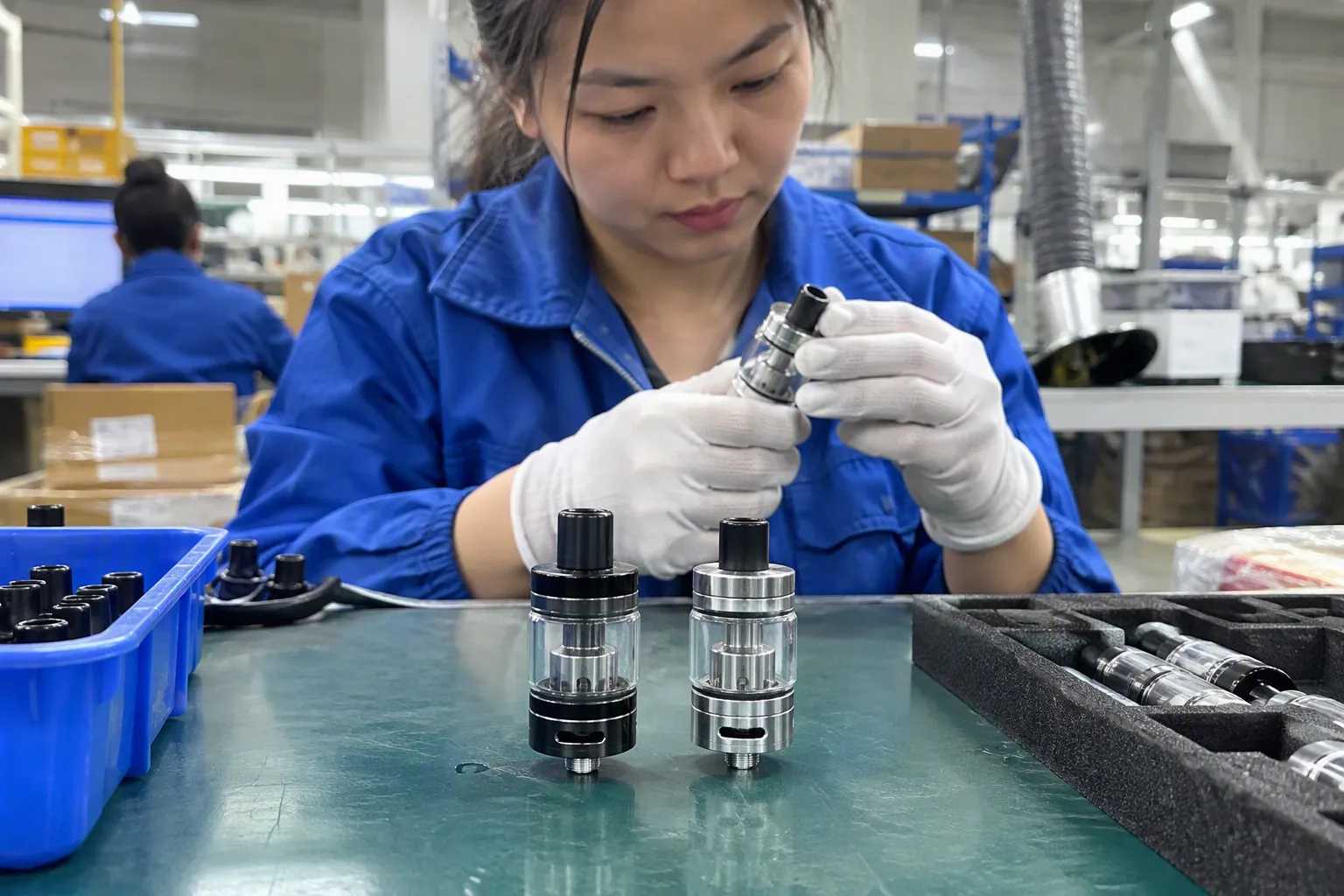
I do not compare offers by unit price alone. The first price is easy to see, but the cost of mis-shipment, returns, spare-part shortages, and dead stock may appear later.
I use this broader purchasing view:
| Cost or risk area | Questions I ask |
|---|---|
| Initial unit price | What is included in the quoted product? |
| Compatibility risk | Has the exact version been verified? |
| Spare-part cost | Can the buyer order matching parts separately? |
| Return exposure | What happens if a customer receives a wrong part? |
| Dead stock | Could a version change make inventory difficult to sell? |
| Replenishment | What are the MOQ and lead time? |
| Warehouse handling | Can staff identify each version quickly? |
| Customer support | Can the buyer explain replacement choices clearly? |
| Cash flow | Does the order size match the sales cycle? |
This approach is especially relevant to buyers who want fast-moving products and quick capital turnover. A low-priced tank that generates repeated questions may use more time than expected. A product with clearer compatibility records and available replacements may create better long-term value, even if its initial quotation is not the lowest.
I also separate different purchasing needs. A small customer may prefer low MOQ and fast delivery from an overseas warehouse when suitable stock is available. A larger importer or distributor may prefer bulk purchasing from China to pursue price advantages and OEM/ODM options. In both cases, compatibility records, seal support, and spare-part planning remain necessary.
What Should I Ask a Supplier Before I Approve the Order?
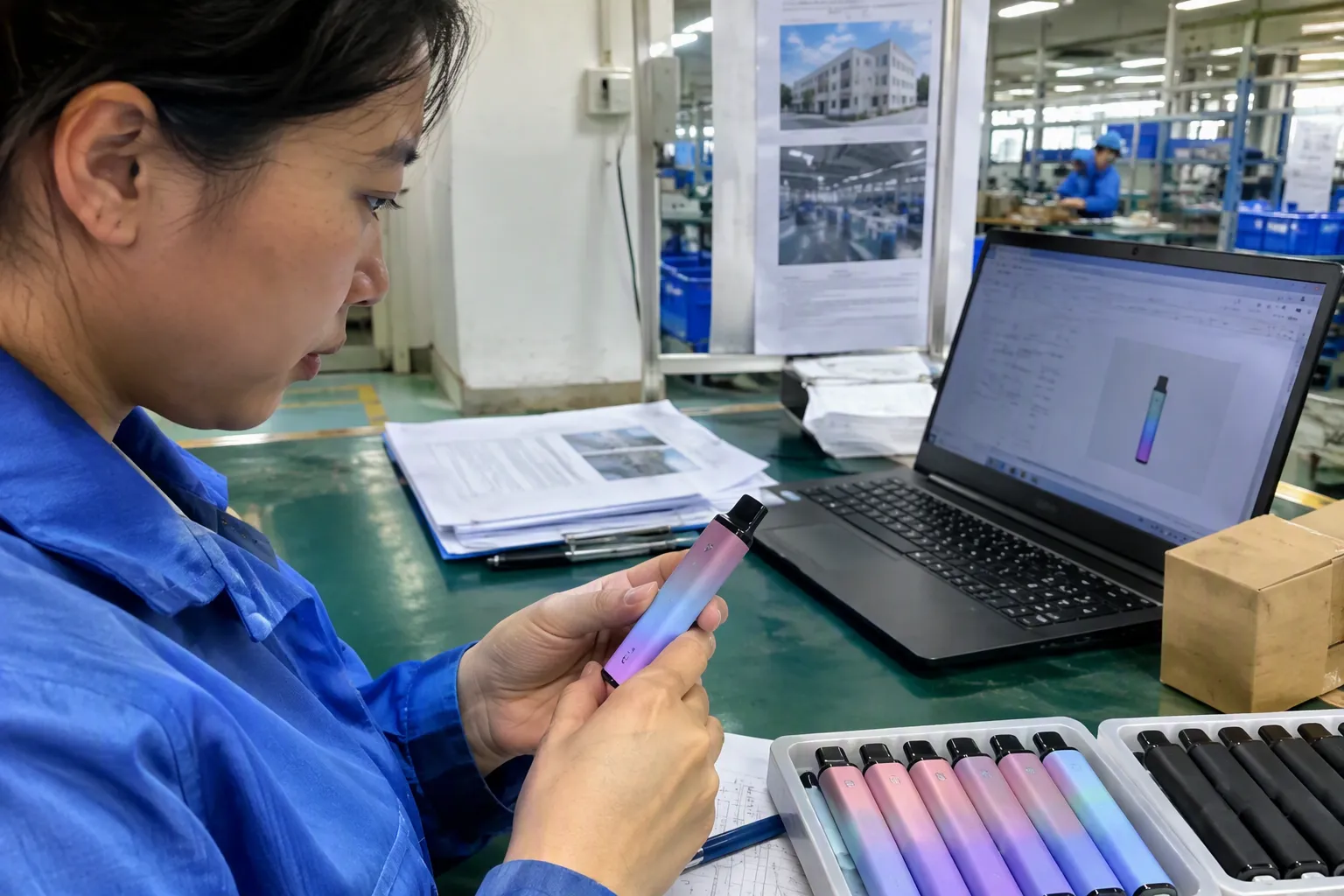
I prepare questions in writing so that both sides have the same reference. I normally ask the supplier to confirm:
“Please confirm the exact device and tank versions, the matching seals, the available replacement parts, the replenishment MOQ, the lead time, and the identification method for each version.”
I also ask for a sample when the product will become a regular inventory item. A sample cannot answer every question about long-term supply, but it can reveal whether the buyer and supplier are discussing the same product.
For a larger order, I want the approved sample, product photographs, model code, packaging reference, and component list to remain connected to the purchase order. This process helps reduce the chance that a similar but different version enters the shipment.
I do not promise that documentation removes every commercial risk. I view it as a way to make the risk visible and manageable. Buyers should also arrange qualified professional evaluation where application-specific technical, safety, or regulatory decisions require it. Supplier documents and certifications should be checked against the actual product and market requirements rather than accepted without review.
How Can Different Buyer Types Use This Process?
I see similar purchasing concerns among European and American importers, regional wholesalers, vape shops, smoke shops, convenience stores, gas stations, and distributors that supply these businesses. Their order sizes and logistics may differ, but their basic need is similar: they want products that can be sold, supported, and replenished without avoidable disruption.
For smaller buyers, I would focus on:
- Low MOQ for replacement parts
- Clear model identification
- Fast access to suitable stock
- A manageable number of versions
- Simple after-sales communication
- A realistic reorder plan
For larger importers and distributors, I would add:
- Bulk cost comparison
- OEM/ODM feasibility
- Private-label component control
- Production capacity and scheduling
- Packaging and labeling consistency
- Spare-part forecasting
- Version change notification
- Shipment inspection and documentation
In my own supply work, I support a range of electronic cigarette and traditional smoking-accessory products, including tanks, batteries, vaporizers, disposable vapes, grinders, and glass pipes. I also work with a factory operation that develops new products and supports OEM/ODM projects. However, I still ask buyers to verify the exact product information for each project. A broad product range does not remove the need for model-level checking.
For European customers, suitable products may be supplied through overseas warehouse arrangements when stock and destination conditions allow. For larger orders, customers may choose direct shipment from China. I present these as different purchasing routes, not as a substitute for compatibility review. Fast delivery is useful only when the delivered product is the correct version and the buyer can support it after the sale.
Frequently Asked Questions
Is a tank compatible if the connection fits?
Not necessarily. A matching connection is only one compatibility factor. I also check the exact device and tank version, dimensions, sealing structure, airflow arrangement, and replacement components. I ask the supplier to verify the complete combination rather than relying on the appearance or interface alone.
What spare parts should I purchase with a vape tank?
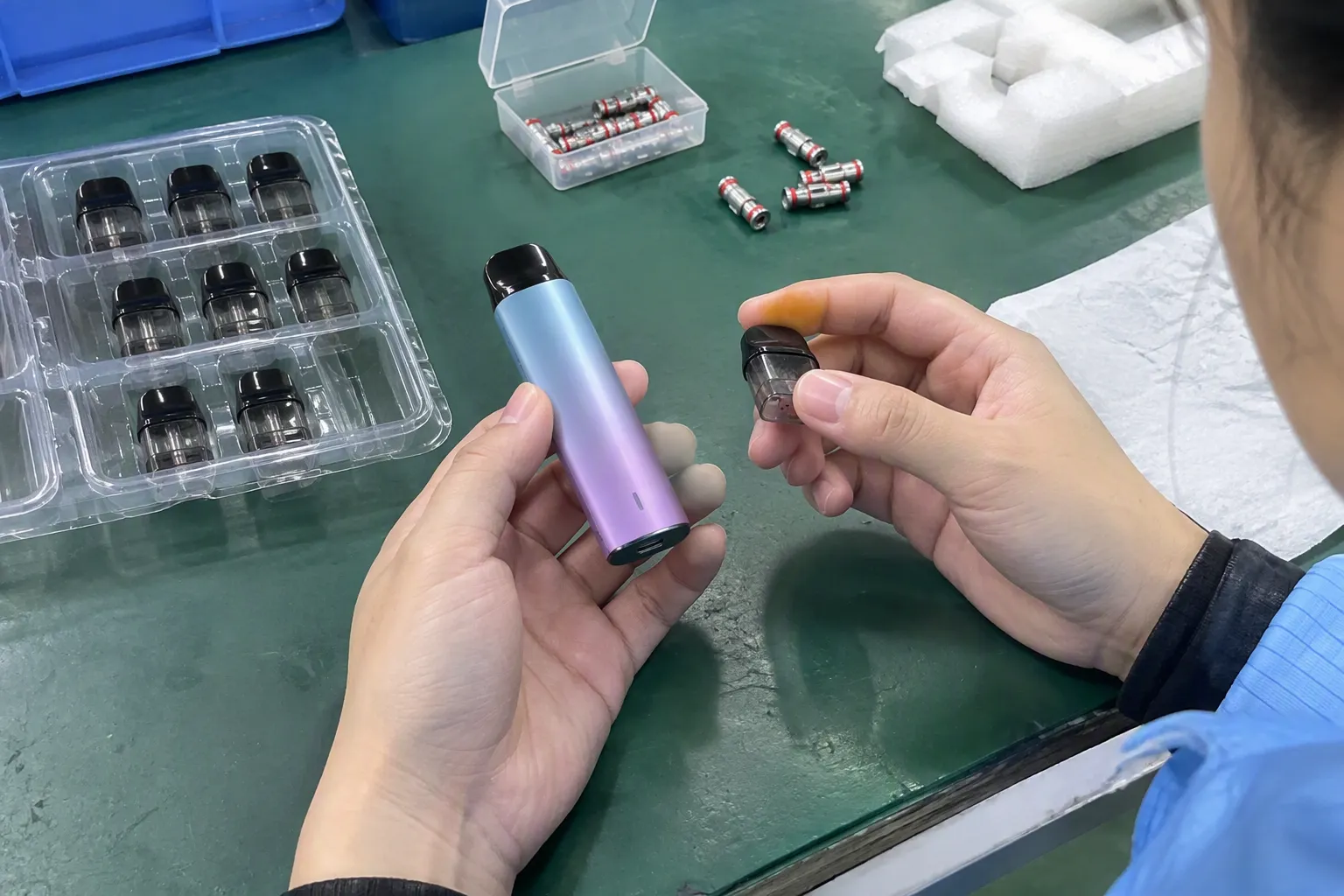
The correct list depends on the tank design and sales model. I commonly review replacement glass, coils, seals, gaskets, bases, and other model-specific components. I confirm which parts are replaceable, whether they have clear references, and whether the supplier can replenish them at a practical MOQ and lead time.
Should I trust a supplier that describes a tank as universal?
I treat “universal” as a claim to verify. I ask the supplier to provide the exact compatible models, versions, specifications, and component references. If the product will become regular inventory, I prefer to compare a sample and keep an approved compatibility record before ordering a larger quantity.
How can wholesalers reduce returns caused by incorrect tank selection?
I recommend using model codes, clear product photos, component lists, and a compatibility chart that staff can understand. Wholesalers should also train sales teams to ask for the customer’s exact device version. They should keep matching spare parts clearly separated and confirm uncertain orders before dispatch.
Is the cheapest tank the best purchasing choice?
I do not assume that it is. I compare the initial price with compatibility risk, return handling, spare-part availability, replenishment cost, lead time, and possible dead stock. A slightly different unit price may produce better value if the product is easier to identify, support, reorder, and sell repeatedly.
Conclusion
Vape tank compatibility is a purchasing and after-sales decision, not only a question of whether two parts connect. I recommend confirming the exact model and version, comparing the complete structure, checking seals and replacement components, and documenting replenishment terms before ordering. Smaller buyers can focus on low MOQ and accessible stock, while larger importers can consider bulk purchasing and OEM/ODM development. Contact Kingfuji Tech. at info@kingvapecig.com or +86 13928420527 to discuss product matching, spare-part planning, and a supply option that fits your sales model.
Sources
- Design Features in Multiple Generations of Electronic ... - PMC", The cited engineering or experimental literature supports evaluating electronic-cigarette tank compatibility through multiple interacting interface and operating characteristics rather than connector fit alone
- Insights on electronic cigarette products from reviews ... - PMC", Research on electronic-cigarette atomizer construction indicates that tank performance depends on coordinated geometry, sealing, airflow, and heating-component arrangements, so attachment alone is not a complete functional test
- Advertising FAQ's: A Guide for Small Business", Advertising guidance generally treats broad compatibility descriptions as claims requiring adequate substantiation rather than as independent proof that a product works with every potentially relevant device
- The Impact of the Storage Conditions and Type of ... - PMC", Experimental studies of electronic-cigarette devices support the relevance of temperature, assembly, and operating conditions to device behavior and potential leakage or performance outcomes
- Study: Lead and Other Toxic Metals Found in E-Cigarette ...", Studies of electronic-cigarette leakage mechanisms identify sealing interfaces and related assembly conditions as relevant contributors to liquid leakage and device performance
- Linking product design and durability: A review and research ...", Product-lifecycle and maintenance research treats replacement-part availability and maintainability as factors that influence continued service, repairability, and lifecycle outcomes
- Examining the 'Consumer Repair Journey' and Business ...", Repairability research supports the view that accessible component replacement can reduce the need to replace an entire product when the failed component is separately serviceable
- Service Quality Dimensions and Customer Satisfaction in ...", Research on configuration and inventory information management supports the use of consistent product identifiers and component records for improving operational accuracy and service communication