
Quick Answer
Variable-voltage cartridge batteries can look almost identical in a wholesale catalog, yet the wrong choice can create cartridge complaints, confused retail staff, slow-moving stock, and avoidable after-sales work. I help wholesale buyers compare these products by looking beyond voltage range and focusing on cartridge matching, user simplicity, batch consistency, and supplier support. **The best variable-voltage cartridge batteries for wholesale are not necessarily the models with the highest voltage or the most settings.
The right battery is the one that fits the intended cartridge, oil characteristics, retail customer habits, and your acceptable level of after-sales risk. I recommend comparing voltage options, activation method, controls, cartridge fit, sample performance, batch consistency, and supplier support before making a larger purchase.**

When I speak with vape wholesalers, smoke shop distributors, and importers, I often hear the same question: “Which battery has the best voltage?” In practice, that question is too narrow. A better question is: Which battery will be easiest for my customers to sell, explain, and reorder with fewer complaints?
For a small buyer using European warehouse stock, a simple SKU with a low minimum order may reduce cash-flow pressure. For a larger importer buying directly from China, the same decision may involve OEM branding, packaging, production planning, and long-term assortment strategy. In both cases, the goal is the same: select variable-voltage cartridge batteries that support a stable wholesale business rather than create unnecessary after-sales work.
Wholesale Buyers Should Not Compare Variable-Voltage Cartridge Batteries by Voltage Range or Number of Settings Alone
A broad voltage range and several adjustable settings may sound attractive, but extra options can also make a product harder to explain and easier to misuse. When retail customers do not understand the settings, wholesalers may receive performance complaints that are actually compatibility or user-operation issues.
Wholesale buyers should compare variable-voltage cartridge batteries by how well the settings match the intended cartridge and customer use case, not by the highest voltage or the number of voltage levels. A battery should be evaluated for cartridge compatibility, ease of use, expected retail user needs, batch consistency, and supplier after-sales support.

Why a higher voltage setting is not automatically better
I see many buyers treat higher voltage as a simple product upgrade. It is understandable. A higher number looks more powerful on a product listing, and retailers often ask for products with more features. However, voltage is only one part of the end-user experience.
Different cartridges can behave differently because of factors such as:[1]
- Coil resistance
- Cartridge design
- Airflow structure
- Oil viscosity
- Oil formulation
- Filling level
- Storage temperature
- User inhalation habits
A battery may physically connect to a cartridge through a 510 thread, but that does not mean the two products will deliver the same experience across all settings. A 510 connection confirms physical connectivity. It does not prove vapor consistency, stability, flavor quality, or user satisfaction.[2]
For wholesale procurement, this difference matters. A customer may buy a battery because it fits their cartridge, then use an unsuitable voltage setting and experience harsh vapor, weak output, overheating concerns, or inconsistent draws.[3] The customer may blame the battery, the cartridge, the oil, or the shop. In many cases, the shop then contacts the distributor, and the distributor contacts the supplier.
This is why I encourage buyers to turn a technical specification into a commercial question:
“Will this setting range help my customers use their existing cartridge products more easily, or will it create more opportunities for confusion and complaints?”
A battery with fewer but clearer settings can be a stronger wholesale product than a battery with many settings that most retail users do not understand.
Compare the retail use case before comparing the specification sheet
The same variable-voltage cartridge batteries may suit one retail channel and perform poorly in another. The buyer should first define where and how the product will be sold.
For example, vape shops with experienced staff may be able to explain adjustable settings to repeat customers. A smoke shop, convenience store, gas station, or general merchandise retailer may have less time for product education. In those channels, simple operation can be more valuable than a longer feature list.[4]
I suggest that wholesalers identify the intended buyer profile before selecting a battery SKU.
| Retail situation | Buyer priority | Battery features to evaluate |
|---|---|---|
| Vape shop with informed staff | Product choice and cartridge matching | Adjustable range, preheat function, display clarity, control logic |
| Smoke shop | Easy explanation and fast sales | Simple button operation, clear indicators, durable construction |
| Convenience store or gas station | Low staff training burden | Straightforward settings, visible charge status, easy packaging information |
| Distributor selling multiple cartridge types | Broad assortment compatibility | Sample testing with target cartridges, consistent connection, clear voltage documentation |
| Private-label or OEM program | Brand differentiation and repeat orders | Housing options, logo placement, packaging, production consistency, after-sales process |
This framework does not mean that one style is always better. It means that the battery should match the sales environment. A feature-rich model may have value when staff can explain it. A simpler model may have value when the retail counter needs fast transactions and minimal support questions.
Based on recurring sourcing discussions, many wholesale buyers improve their selection process when they stop asking, “Which one has more functions?” and start asking, “Which one will be easiest for my customer to use correctly?”
Evaluate voltage adjustment as a control system, not a marketing feature
A voltage adjustment system should be judged by its usability. The buyer should look at how the end user changes settings, how clearly the battery communicates the selected level, and whether retail staff can explain it in a few seconds.
Common adjustment approaches may include:
- Button-click voltage changes
- Color-indicator voltage levels
- Small digital displays
- Dial or wheel controls
- Auto-draw models with limited adjustment
- Preheat functions combined with voltage selection
Each approach has a different commercial consequence.
A color-indicator battery may be simple and compact, but users may forget what each color means if the packaging or instructions are unclear.[5] A display battery may give more information, but it can also add cost and may require more explanation. A button-operated model may be familiar to experienced users, but accidental button presses can create confusion if the control sequence is not intuitive.
For this reason, I recommend that buyers ask suppliers for clear product instructions before placing a larger order. The instructions should explain:
- How to turn the battery on and off
- How to change the voltage setting
- How users identify the selected setting
- Whether the battery has a preheat mode
- How charging works
- What indicator lights or display messages mean
- Which cartridge styles the supplier recommends for evaluation
This information does not replace your own product assessment. It helps your purchasing team and sales team understand whether the product can be sold with confidence.
Translate cartridge compatibility into wholesale risk
Compatibility is where many purchasing decisions become more complex. Buyers often focus on whether the battery fits a standard 510 cartridge. That is an important starting point, but it is not the end of the evaluation.
A practical wholesale review should consider both physical fit and functional fit.
| Comparison point | What buyers should check | Wholesale consequence |
|---|---|---|
| Thread connection | Does the cartridge screw in securely? | Loose connections may lead to customer complaints |
| Cartridge diameter | Does the battery body fit common cartridge sizes? | Poor fit can affect appearance or prevent use |
| Cartridge height | Does the design leave enough clearance? | Certain tank shapes may not sit correctly |
| Contact pin behavior | Does the connection engage reliably during normal use? | Inconsistent contact can be reported as a battery issue |
| Airflow access | Does the battery body block or restrict airflow? | Restricted airflow can affect the user experience |
| Voltage options | Are the options suitable for the target cartridge range? | Poor matching can increase user confusion and dissatisfaction |
| Preheat function | Is it useful for the intended cartridge and oil type? | It may help some users but can also require explanation |
I do not recommend assuming compatibility based only on product photos or a thread description. Product-specific claims should be verified through supplier specifications and sample testing with the cartridges you intend to sell.[6]
For a wholesaler, sample testing is not only a technical step. It is a way to reduce commercial uncertainty before stock arrives. A small sample order can help you check:
- The physical appearance of the assembled battery and cartridge
- The ease of screwing cartridges in and out
- The clarity of the voltage controls
- The user instructions included with the product
- The perceived build consistency across several units
- The suitability of the product for your retail channel
- The type of questions your sales staff may receive
I recommend involving the people who will actually handle customer questions. This may include your purchasing manager, warehouse team, sales representatives, or key retail customers. Their feedback can reveal practical problems that a specification sheet does not show.
Consider the cost of customer confusion
A low unit price does not always create the lowest total cost.[7] Wholesale buyers should also consider the hidden cost of confusion after the product reaches retailers.
If a battery has unclear controls, too many settings, or weak instructions, your team may spend more time answering basic questions. Your retail customers may need to explain the product repeatedly. End users may return products that function normally but were used incorrectly or paired with a cartridge outside the intended application.
The commercial impact can include:
- More messages to your sales team
- More staff time spent on basic product explanations
- More pressure on retail partners
- More returns or replacement requests
- More uncertainty around product quality
- Slower reorders from shops
- Reduced confidence in your assortment
A distributor serving hundreds of small shops may prefer a battery that staff can describe in one sentence: “Charge it, connect the cartridge, choose the setting, and follow the included instructions.” That approach may be more commercially useful than a model that requires a long explanation of multiple modes.
For larger importers and established vape distributors, the opportunity can be different. They may have stronger sales teams, more technical product knowledge, and customers who actively request adjustable features. In that case, a wider product selection may make sense. The buyer should still define which battery is intended for which cartridge line and retail audience.
Batch consistency matters more than one good sample

A single sample can help with product selection, but wholesale success depends on consistency across a batch. This is especially important for importers purchasing in larger quantities from China or building an OEM/ODM program.
When I support sourcing discussions, I encourage buyers to ask questions that go beyond a product’s headline functions:
- Is the voltage adjustment method consistent across the production batch?
- Is the LED color sequence or display logic documented?
- Is the charging port specification clear?
- Is packaging consistent with the selected version?
- Will logo placement, color, and packaging be confirmed before production?
- How will the supplier handle reported quality issues?
- What information should the buyer provide if an after-sales issue occurs?
A serious procurement review should include product confirmation, packaging confirmation, and after-sales expectations. Buyers should keep approved photos, agreed specifications, and order records. This creates a clearer reference point if there is a later question about product configuration.
For OEM or ODM battery projects, I recommend separating the process into stages:
- Confirm the target retail market and customer profile
- Select a battery design suitable for that market
- Review samples with target cartridges
- Confirm branding, colors, packaging, and instructions
- Document the approved version
- Place production order only after key details are confirmed
- Check production and packing information before shipment
- Maintain a clear after-sales communication process
This process may feel slower at the beginning, but it can reduce costly misunderstandings later. For wholesalers, a controlled first order is often more valuable than a large order based only on a popular-looking product photo.
Compare suppliers by the support behind the battery
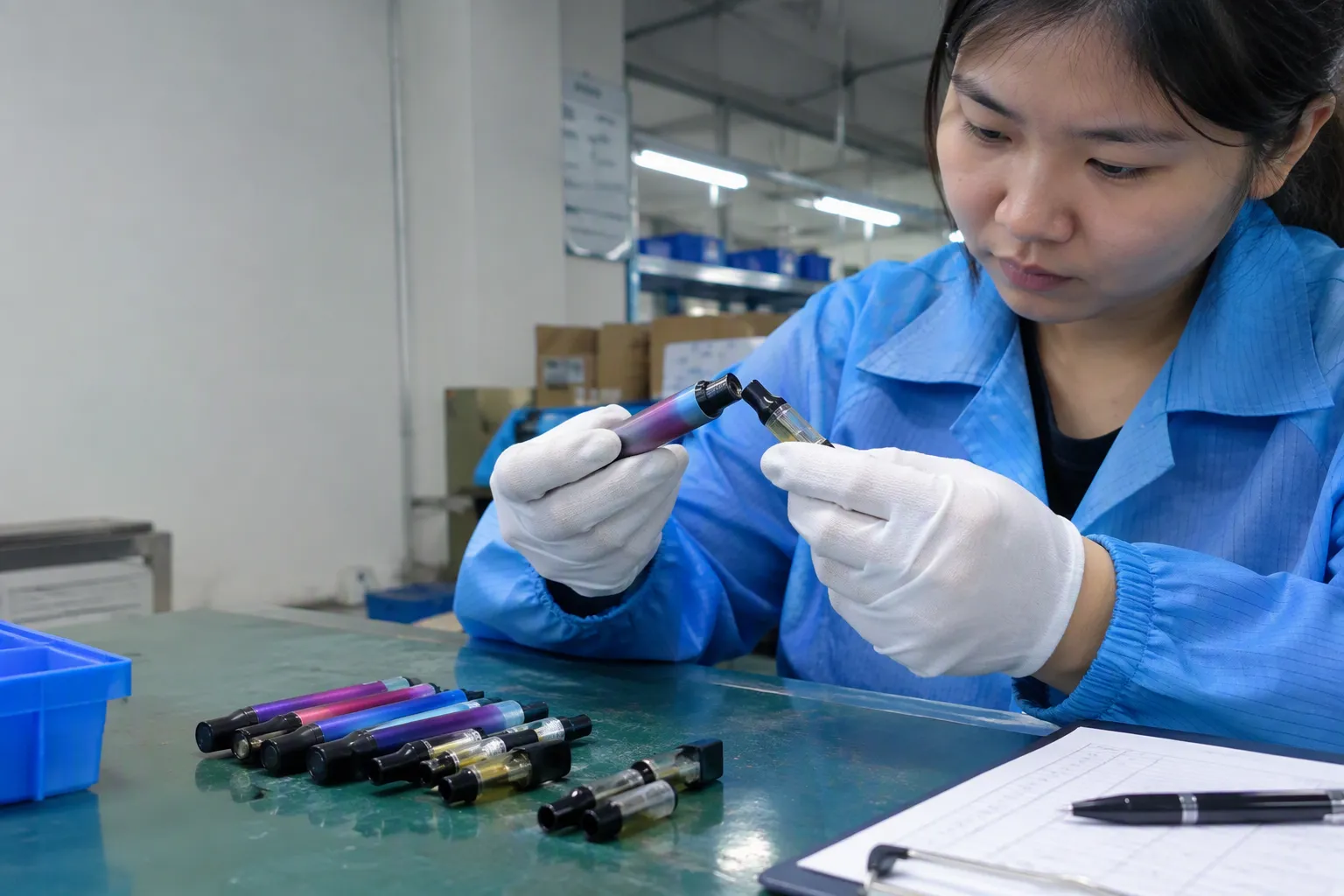
Variable-voltage cartridge batteries are not only hardware products. They are also after-sales products. When a retailer has a question, the distributor needs answers quickly. When a product concern is reported, the buyer needs a supplier who can help identify whether the issue relates to the battery, cartridge, charging method, user operation, or another factor.
At Shenzhen Kingfuji Tech. Co., Ltd., I focus on helping buyers simplify sourcing across electronic cigarettes, disposable vapes, atomizers, 510 batteries, CBD batteries, grinders, glass pipes, vaporizers, and related smoking accessories. This can help buyers avoid spending time contacting multiple suppliers for different categories.
For smaller European wholesalers and retailers, available overseas warehouse stock can support lower starting quantities for selected products. This model may suit buyers who want to test demand, reduce upfront inventory pressure, and replenish faster. Buyers should still confirm current stock, product versions, shipping arrangements, and local requirements before ordering.
For medium and larger importers, direct China sourcing may offer stronger pricing options for larger quantities, as well as OEM or ODM development discussions. Our Shenzhen location connects us with the wider vape and smoking-accessory supply chain, while our own factory operations support branded product development and ongoing new product work. However, each buyer should evaluate product suitability, commercial terms, documentation, and application-specific requirements independently.
The most useful supplier questions are often simple:
- Can you provide clear product specifications?
- Can you provide samples for our intended cartridge type?
- Can you explain the voltage controls and indicator system?
- Can you support custom logo or packaging requirements?
- Can you confirm the final product version before production?
- What after-sales information do you need if an issue is reported?
- Can you consolidate related products in one order?
- Can you support delivery to our nominated freight forwarder if needed?
A supplier’s answers will tell you more than a product’s maximum voltage number.
Frequently Asked Questions
What is the most important factor when choosing variable-voltage cartridge batteries for wholesale?
The most important factor is the match between the battery, intended cartridge, oil characteristics, and retail user scenario. I recommend evaluating the product as a complete retail solution, including ease of operation, instructions, physical fit, sample performance, batch consistency, and expected after-sales workload.
Does a 510 thread mean every cartridge will work well with a battery?
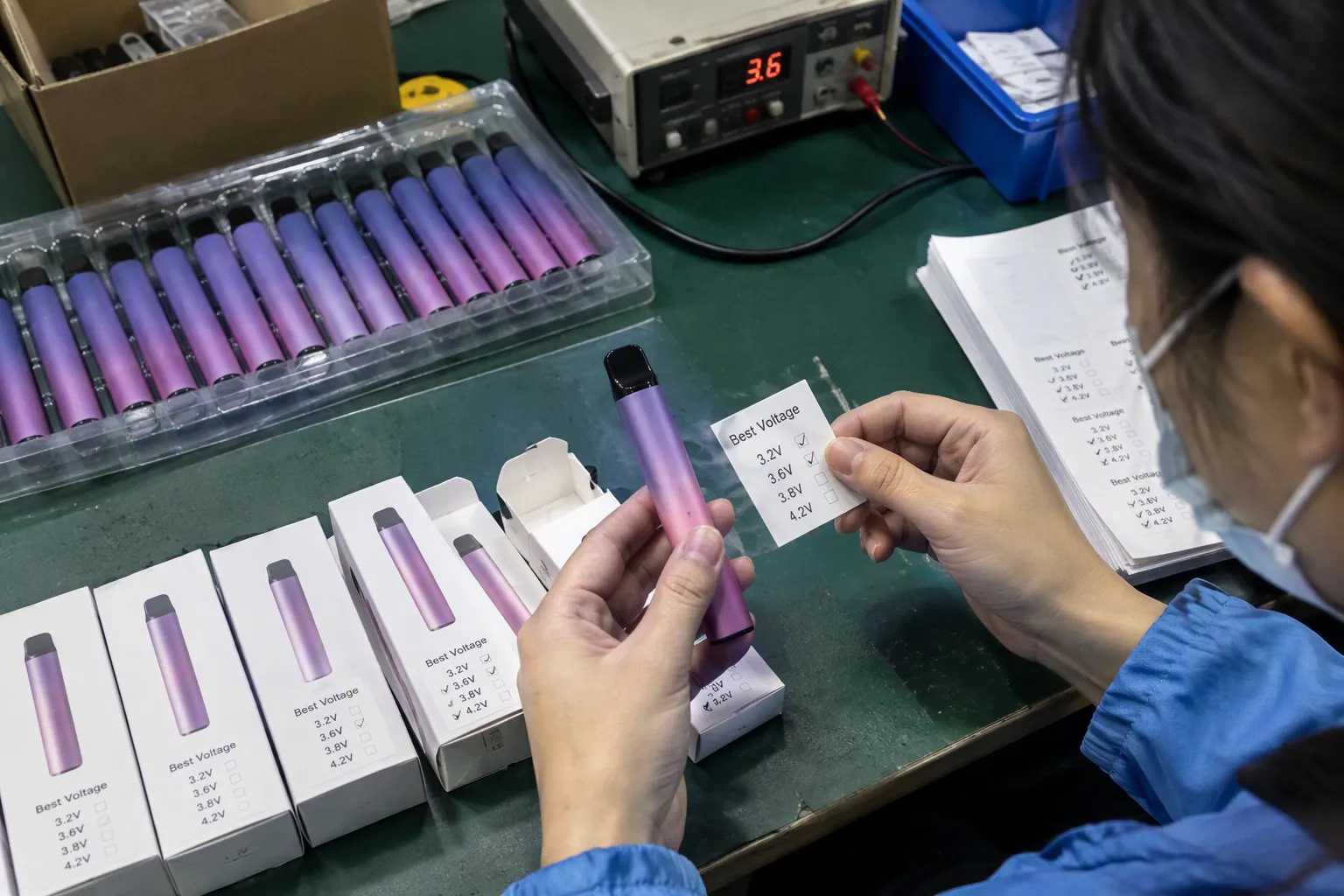
No. A 510 thread generally indicates that the battery and cartridge can connect physically. It does not guarantee consistent vapor performance, electrical behavior, airflow, stability, or end-user satisfaction. Buyers should review supplier information and test samples with their intended cartridge products before placing larger orders.
Are more voltage settings better for wholesale customers?
Not always. More settings may appeal to experienced users, but they can also increase customer confusion and staff explanation time. I suggest choosing the number of settings based on your retail channel, product positioning, and the ability of your customers to understand and use the controls correctly.
Should wholesalers test samples before ordering cartridge batteries in bulk?
Yes. Sample testing can help buyers review physical fit, control simplicity, packaging, charging method, and the overall suitability of variable-voltage cartridge batteries for their target cartridge line. Samples do not guarantee every production outcome, but they can reduce uncertainty before a larger purchase.
Can I order branded variable-voltage cartridge batteries for my own market?
For buyers with suitable order conditions, OEM and ODM discussions may be possible for battery branding, colors, packaging, and related product development. I recommend beginning with a clear target market, expected order quantity, cartridge type, branding requirements, and sample review process.
Conclusion
Wholesale buyers should compare variable-voltage cartridge batteries as part of a complete product and supply-chain decision, not as a simple voltage comparison. The best choice depends on cartridge matching, user simplicity, retail channel needs, batch consistency, and after-sales expectations. A battery that is easy to explain and appropriate for the intended cartridge can support smoother sales and more stable reorders. If you are sourcing 510 batteries, vape hardware, or a wider smoking-accessory range, contact me at info@kingvapecig.com to discuss suitable wholesale, overseas warehouse, OEM, or ODM options.
Sources
- Carbonyl Emissions in E-cigarette Aerosol: A Systematic Review ...", Experimental studies of electronic-cigarette devices report that aerosol production and chemical emissions vary with electrical power, coil characteristics, e-liquid composition, airflow, and puffing conditions
- Vape Cartridge & 510 Battery Explained | Beginner's Guide", A common threaded connector may permit physical assembly, but vaporizer performance remains dependent on the battery’s electrical output and the cartridge’s coil, airflow, and liquid-delivery design
- Aldehydes in Exhaled Breath during E-Cigarette Vaping - PMC - NIH", Laboratory studies indicate that increasing electrical power can alter coil temperature, aerosol output, and the formation of thermal-degradation compounds, making operating conditions material to perceived and chemical aerosol characteristics
- IUSR Overview - NIST", Human-factors guidance identifies interface simplicity, clear feedback, and intuitive controls as factors that can reduce user error and the need for instruction
- Customer Experience Considerations - NIST Pages", Human-factors guidance notes that color-coded displays should use consistent, readily distinguishable meanings and should not be the sole source of critical information when users may misinterpret the signal
- [PDF] Use of quality assurance systems in the fastener industry", Quality-management practice treats supplier information as an input to purchasing decisions and calls for verification of purchased products against defined requirements where the buyer needs assurance of conformity
- [PDF] EVALUATING BIDS AND PROPOSALS - Public Documents", Procurement frameworks commonly distinguish purchase price from total cost of ownership, which may include quality, maintenance, administrative, service, and failure-related costs over the product’s use cycle
- (PDF) User Interface Design's Return on Investment - Academia.edu", Usability research generally finds that interfaces designed to be understandable and error-tolerant can reduce the instruction, training, and assistance required for successful operation