Quick Answer
Leak tests for vape wholesale orders matter because a leaking shipment can tie up cash, trigger customer complaints, and damage your local reputation. The problem is that “leak tested” often sounds more complete than it really is. I help buyers turn that vague claim into specific questions about what was checked, under which conditions, and what risk remains.
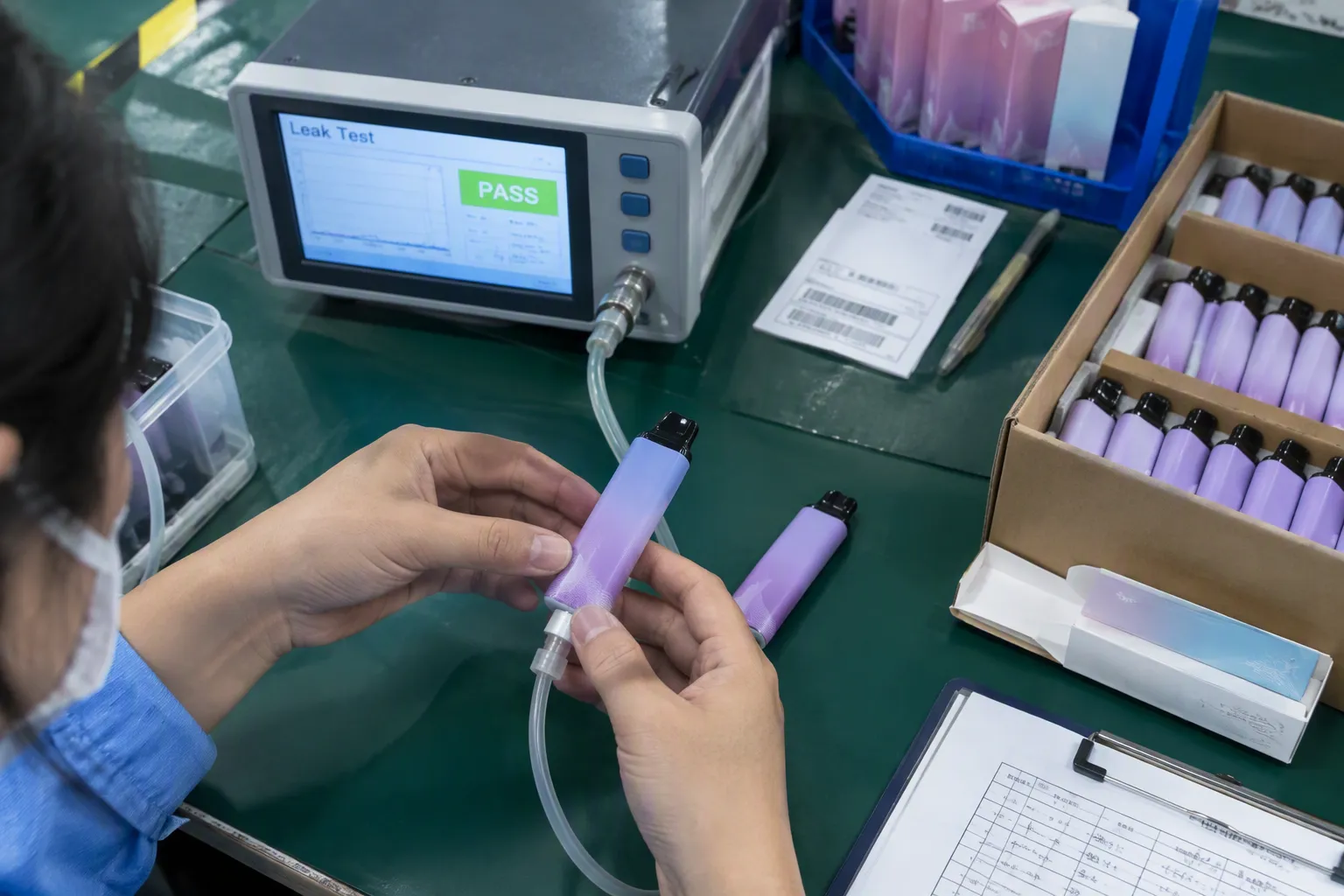
A leak test can be useful for identifying certain sealing defects in vape wholesale orders, especially obvious leaks found during finished-product resting or inverted-position checks. However, no single test can prove that every unit in a shipment will remain leak-free through storage, cross-border shipping, warehouse handling, retail display, and end-user use[1]. Buyers should verify the test method, sample size, conditions, duration, pass/fail standard, timing, and available records before ordering.
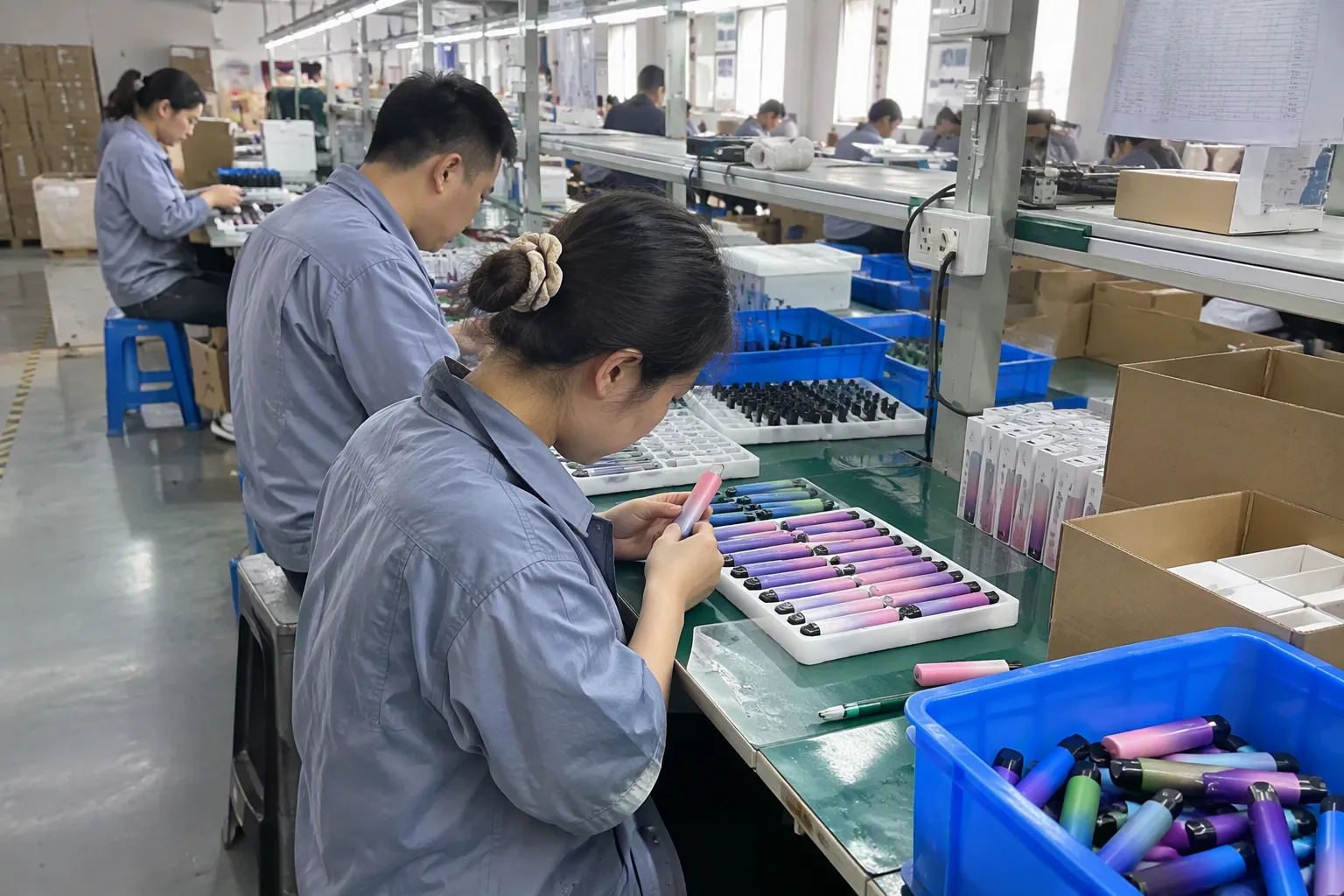
A passed factory check is still valuable. I do not suggest that buyers ignore it. I suggest that buyers treat it as one piece of a wider quality-control and supplier-evaluation process. The right questions can help you reduce avoidable risk before your stock is packed, shipped, and sold.
Which Leak Tests for Vape Wholesale Orders Are Useful—and What Do They Miss?
When a supplier says a product has passed a leak test, buyers may assume the entire order is protected from leakage-related problems. That assumption can create expensive misunderstandings. A test may identify one type of failure under one set of conditions, while a wholesale order will face many conditions after it leaves the factory.
Useful leak tests for vape wholesale orders include defined finished-product resting checks and inverted-position checks because they can screen for visible liquid escape or obvious sealing failures[2]. However, these tests do not automatically confirm batch consistency, resistance to transport damage, long-term storage performance, changing temperatures, pressure changes, or customer handling after delivery.
Start With the Failure Mode, Not the Claim
In my experience handling leakage-related after-sales discussions, the most important first step is simple: do not stop at the words “leak tested.” Ask what the test was designed to find.
A vape can show a leakage complaint for different reasons[3]. Depending on the product design and situation, the issue may involve the tank or cartridge seal, filling area, mouthpiece connection, airflow path, packaging damage, physical impact, storage position, or handling after delivery. I do not treat leakage as one universal problem with one universal cause.
That is why I encourage importers and wholesalers to replace this question:
“Has this product passed a leak test?”
With this set of questions:
“What failure mode was the test intended to screen for?”
“What condition did the product experience during the test?”
“How many units were checked?”
“How long were they observed?”
“What counted as a failure?”
“Can you provide a record or inspection summary?”
This approach helps you compare suppliers more clearly. It also helps your purchasing team avoid assuming that a general factory statement covers risks that were never actually tested.
Why Finished-Product Resting Checks Are Useful
A finished-product resting check is often a practical first-line screen. In a basic form, finished units are kept under a defined position and observed for signs of visible leakage over a stated period. The value of this check is not that it proves every future outcome. Its value is that it may expose obvious assembly or sealing issues before products are packed for shipment.
For a buyer, the key point is that the method must be defined. “We checked it” is not the same as a documented inspection process.
I recommend asking suppliers to clarify:
- Whether the test was performed on a finished assembled product or only on a component.
- Whether the product was filled, partially filled, or empty during the check.
- Whether the unit rested upright, sideways, or in another stated position.
- How long the unit was held and observed.
- Whether visual inspection was used.
- Whether packaging was applied before or after the check.
- Whether the inspection covered samples, all units, or another basis that the supplier can explain.
- What the supplier defined as a failed result.
- Whether the supplier can share internal QC records, photos, videos, or a batch inspection summary.
A resting check can be especially relevant when you buy ready-to-sell disposable vapes, prefilled devices, pods, cartridges, or atomizers. These products arrive as finished goods, so the buyer needs confidence that basic visible leakage screening happened before export packing.
Still, the limits are important. A product that appears stable during a short, defined resting period may later be exposed to conditions that the factory check did not include[4]. It may travel through multiple warehouses, be loaded and unloaded several times, sit in different orientations, or experience handling impacts that were not part of the original inspection.
I have seen that wholesale buyers benefit when they treat a passed resting check as evidence of a limited screening activity, not as a blanket warranty about every unit’s full journey.
Why Inverted-Position Checks Can Add Value
An inverted-position check can also be useful because it places the device in a position that may challenge certain seals or connections differently from normal upright storage. If a product has an obvious weak point around a mouthpiece, filling area, pod connection, or another upper section, an inverted check may reveal visible liquid escape that an upright resting check does not show[5].
However, the test only has meaning when the condition is clear. Buyers should avoid comparing one supplier’s “inverted test” with another supplier’s claim unless both sides explain the process.
For example, buyers should ask whether the unit was:
- Fully assembled before the test.
- Filled to the normal intended level or another stated level.
- Kept inverted for a defined period.
- Inspected before and after testing.
- Checked individually or on a stated sample basis.
- Evaluated with a written pass/fail standard.
I do not recommend assuming that an inverted-position check simulates all real transport conditions. It does not necessarily reproduce carton compression, repeated vibration, accidental drops, extended storage, fluctuating temperatures, or every orientation that may occur during domestic delivery and international logistics.
The test is still useful because it can help screen for a particular category of visible sealing failure. The responsible procurement decision is to understand exactly what it screens for and what it does not.
Compare Leak-Test Claims Without Guesswork
When several factories offer similar vape products, leakage claims can sound identical even when their quality-control processes are very different. A buyer can reduce confusion by requesting the same information from every supplier.
| Buyer verification point | What to ask the supplier | Why it matters |
|---|---|---|
| Test method | “What exact leak test did you perform?” | A general claim does not show the failure mode being screened. |
| Product condition | “Was the unit assembled, filled, packaged, or unpackaged?” | Test results depend on the condition of the product. |
| Product position | “Was it upright, inverted, sideways, or handled another way?” | Position may affect which seals or connections are stressed. |
| Test duration | “How long was each unit held or observed?” | A result without a time period is difficult to evaluate. |
| Sample basis | “How many units were tested from this batch or production run?” | A small sample does not automatically represent the full shipment[6]. |
| Pass/fail standard | “What visible condition counts as a failure?” | Buyers need a shared definition before discussing claims. |
| Test timing | “Was this checked before packing, after packing, or at another stage?” | Timing helps identify what the check can reasonably cover. |
| Available records | “Can you provide inspection records, photos, or video?” | Records create a clearer basis for supplier communication. |
| Corrective action | “What happens if a sample fails?” | Buyers need to know whether the supplier isolates, reworks, or investigates affected goods. |
This table does not replace professional quality inspection or product-specific technical evaluation. It gives purchasing teams a structured way to evaluate supplier answers before they commit capital to a wholesale order.
A Factory Pass Is Not the Same as a Trouble-Free Delivered Order
This is the distinction I consider most important for importers. A factory leak test and a trouble-free delivered order are related, but they are not the same thing.
A factory check occurs at one stage in the supply chain. Your actual commercial risk continues after that stage. Your stock may be transported from the production site to a forwarder, loaded into export cartons, moved through hubs, held in customs processes, delivered to your warehouse, redistributed to retailers, and finally handled by end users.
At each stage, conditions can differ.
Risks that may exist after a factory check
A passed leak test may not automatically cover:
- Batch-to-batch consistency: One checked sample may not represent every production variation.
- Packaging integrity: A sound device can still face problems if external packaging is damaged.
- Long-distance logistics: International shipping can involve delays, stacking, movement, and changing storage conditions[7].
- Warehouse storage: Stock may remain in a warehouse longer than expected.
- Temperature exposure: Conditions may vary during transport or storage. Buyers should evaluate this risk for their own route and product type.
- Handling damage: Goods may be dropped, compressed, or handled roughly after they leave the factory[8].
- Retail handling: Shops may display, move, or store products in ways that differ from factory assumptions.
- End-user use: Incorrect use, product modification, or user handling may create complaints that are not identical to a factory defect.
I am careful not to use this list as an excuse for poor quality or weak after-sales support. A supplier should still take reasonable responsibility for verified product defects within agreed terms. At the same time, buyers should set realistic expectations. No honest supplier can prove that every future complaint in every destination market comes from one cause or can be predicted by one check.
A stronger purchasing process separates these questions:
- What did the supplier inspect before shipment?
- What risks may still occur after shipment?
- What evidence will be needed if a claim arises?
- What after-sales process has both sides agreed to in writing?
This separation protects both the importer and the supplier from vague disputes later.
Build Leak Risk Into Your Pre-Order Approval Process
For regional wholesalers, vape shop suppliers, smoke shop distributors, convenience-store suppliers, and importers, leakage risk should be discussed before payment—not only after a complaint appears.
I recommend creating a simple pre-order approval checklist for each product model. This is especially useful when you are buying a new disposable vape, changing a cartridge design, launching a private-label item, or sourcing from a factory you have not used before.
A practical pre-order checklist
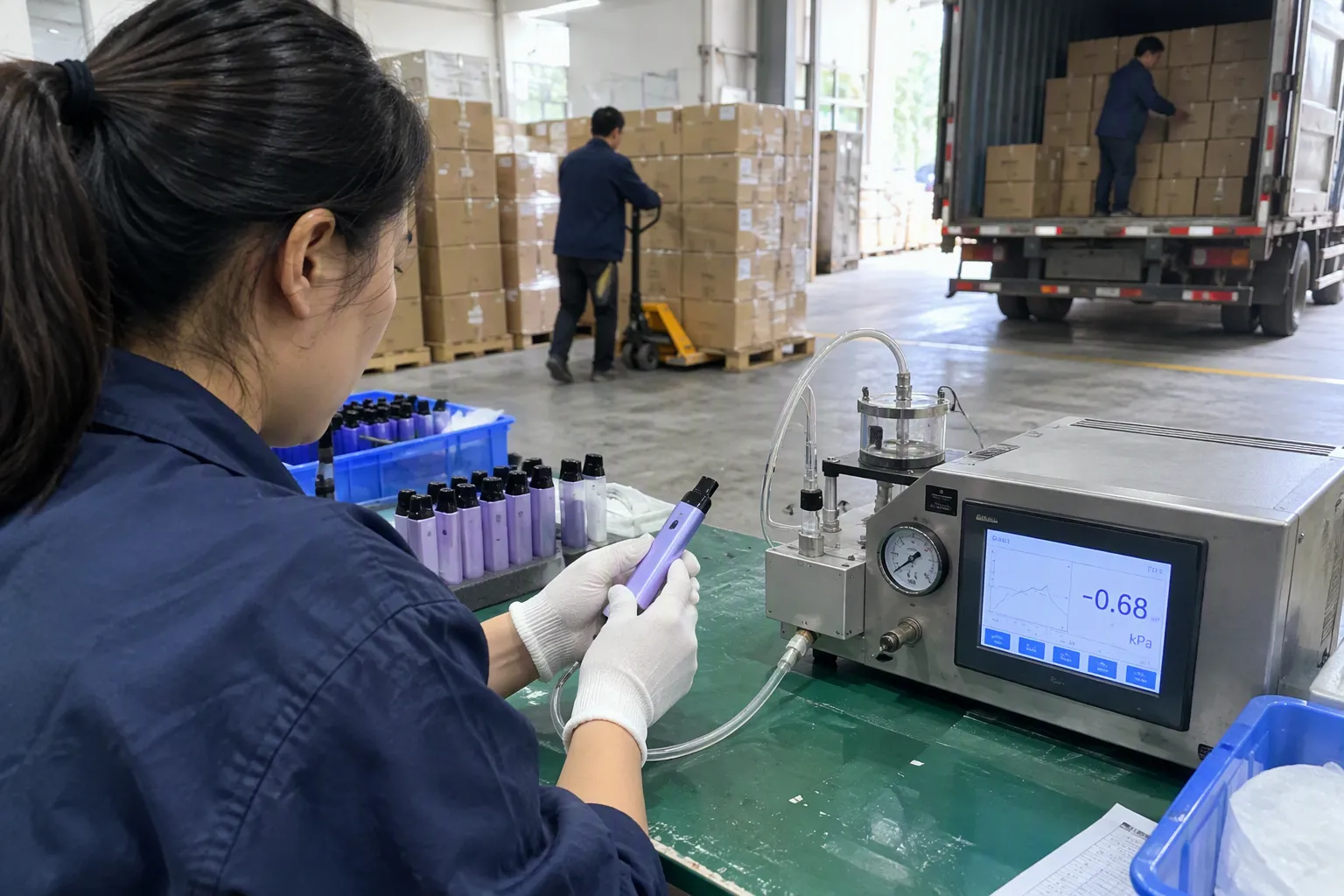
Before you confirm an order, ask for:
- Product model name and version.
- Product photos or current production samples where available.
- A clear explanation of the leak-test method.
- The product condition during testing.
- Test position and duration.
- Sampling basis and inspection timing.
- Defined pass/fail criteria.
- Available QC records or video evidence.
- Packaging details relevant to your shipment.
- A written agreement on defect reporting and after-sales handling.
- Clarification of what evidence you should provide for a claim, such as photos, videos, carton labels, batch information, and quantities.
- Confirmation of whether the supplier can support pre-shipment third-party inspection if you require it.
For larger import orders, I believe qualified third-party inspection can be worth considering, particularly when your order value, launch risk, or retailer commitments are significant. A professional inspection provider can work from an agreed checklist, but buyers should confirm the scope in advance. An inspection can only verify the points included in the inspection plan. It cannot guarantee every future transport or end-user outcome.
For smaller buyers, the process can still be practical. You may not need a complex inspection program for every order. You can begin with clear supplier communication, current product photos, defined test information, video verification where appropriate, and a written understanding of the after-sales process.
Match Your Sourcing Route to Your Risk and Cash-Flow Needs
Importers do not all buy in the same way. A regional wholesaler placing larger container-level or bulk orders from China faces a different risk profile from a smaller distributor testing a fast-moving product line.
For buyers who need fast replenishment and lower opening quantities, European warehouse stock can reduce some delivery-time and import-handling uncertainty compared with importing each smaller order directly from China. According to our current business model, we maintain stock for selected brands and products in European warehouses, and we can ship within the EU through carriers such as DHL, DPD, UPS, and FedEx. Buyers should verify current stock availability, shipping coverage, transit expectations, and commercial terms for their destination before ordering.
For importers with larger and more stable demand, direct sourcing from China may offer stronger pricing flexibility, broader product selection, and more room for OEM or ODM discussions. However, larger direct-import orders also require more disciplined supplier evaluation, quality documentation, shipping planning, and claim procedures.
| Buyer situation | Typical sourcing approach | Key leak-risk focus |
|---|---|---|
| Small wholesaler testing a new line | Lower-quantity stock from a regional warehouse where available | Confirm stock condition, product version, and after-sales process. |
| Fast-moving local distributor | Frequent replenishment with controlled order size | Monitor recurring complaints and preserve batch traceability. |
| Established importer | Direct bulk purchase from China | Define QC scope, sample basis, shipment terms, and claim evidence before production. |
| Private-label buyer | OEM/ODM development and larger production planning | Approve samples, document product version, and agree on inspection points before mass production. |
In my work with wholesale orders, I have learned that the best sourcing route is not simply the one with the lowest unit price. The right route is the one that matches your sales speed, available cash, risk tolerance, warehouse capacity, and ability to handle quality follow-up.
Make After-Sales Evidence Easier to Review
A leakage complaint can become difficult when neither side has enough information. The retailer may say “many units are leaking,” while the importer may not know the batch, the storage condition, the time of discovery, or whether outer cartons were damaged.
I recommend that wholesalers create a basic internal complaint process before they start selling a new product.
Ask your warehouse and retail customers to record:
- Product name and version.
- Batch number or traceability code, if available.
- Number of units affected.
- Clear photos of the device and packaging.
- Short videos when liquid leakage is visible.
- Outer-carton condition, especially if shipping damage is suspected.
- Date the issue was found.
- Whether the unit was unopened, stored, displayed, or already used.
- Storage context that may be relevant, without assuming it proves the cause.
This information helps you communicate with a supplier in a factual way. It also helps you identify whether the problem appears isolated, repeated, linked to a specific batch, or connected to a particular delivery event.
I prefer a documented discussion over emotional accusations. A supplier should review evidence and follow the agreed after-sales terms. A buyer should provide enough information for the supplier to investigate responsibly. This process is more likely to protect your time, customer relationships, and working capital.
Use Supplier Answers to Judge Supplier Reliability
The quality of a supplier’s answer can be as important as the initial claim. A reliable supplier may not promise impossible outcomes, but the supplier should be able to explain the process clearly and provide reasonable supporting information.
Be cautious if a supplier:
- Says only “no leak” without defining the test.
- Cannot explain whether products were finished, filled, or packaged during inspection.
- Cannot state a sample basis.
- Avoids discussing pass/fail standards.
- Refuses to discuss after-sales responsibilities before payment.
- Makes absolute promises such as “zero leakage” or “100% leak-proof.”
- Gives different answers at different times without clarification.
A more useful supplier response is specific and balanced. It explains what was checked, what records are available, what the supplier can support after delivery, and what conditions need to be verified by the buyer.
At Shenzhen Kingfuji Tech. Co., Ltd., I focus on helping buyers simplify multi-brand and multi-category sourcing while keeping supplier communication practical. For buyers who need items beyond a current catalog, I can also help source suitable products or discuss new product development when the commercial conditions fit. However, I believe every buyer should evaluate the product, records, shipping arrangement, and after-sales terms for the specific order—not rely on broad promises.
Frequently Asked Questions
What is the most useful leak test for vape wholesale orders?
A defined finished-product resting check and an inverted-position check can both be useful first-line screens for visible leakage or certain sealing failures. Neither test is universally “best” for every product. Buyers should ask what failure mode the test covers, how it was conducted, and what limitations remain.
Does a passed leak test mean the whole vape shipment will be leak-free?
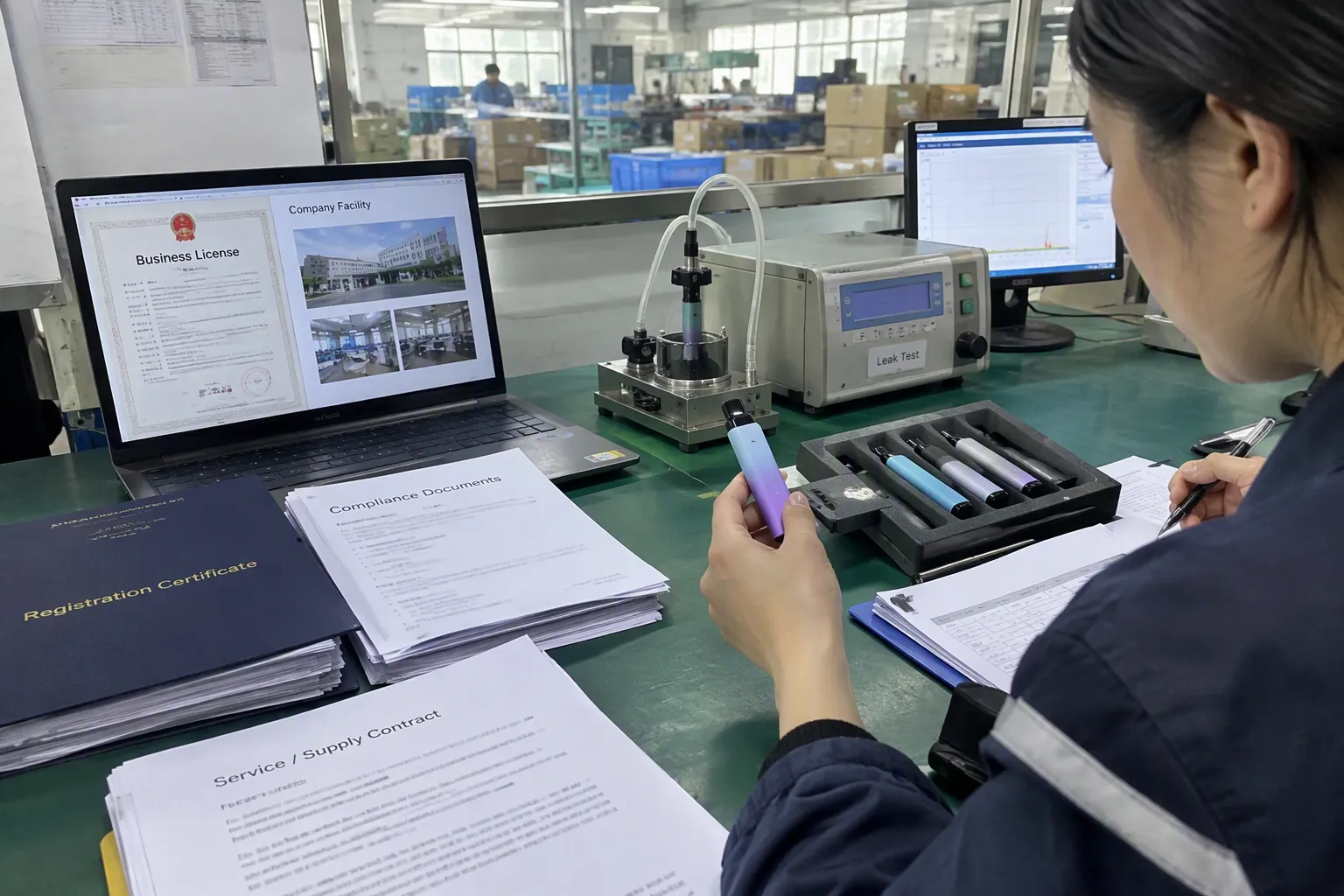
No. A passed leak test can show that products met a stated inspection condition, but it does not prove that every unit will remain leak-free during storage, international transport, warehouse handling, retail display, or end-user use. Batch consistency and logistics conditions still matter.
What leak-test documents should I request from a vape supplier?
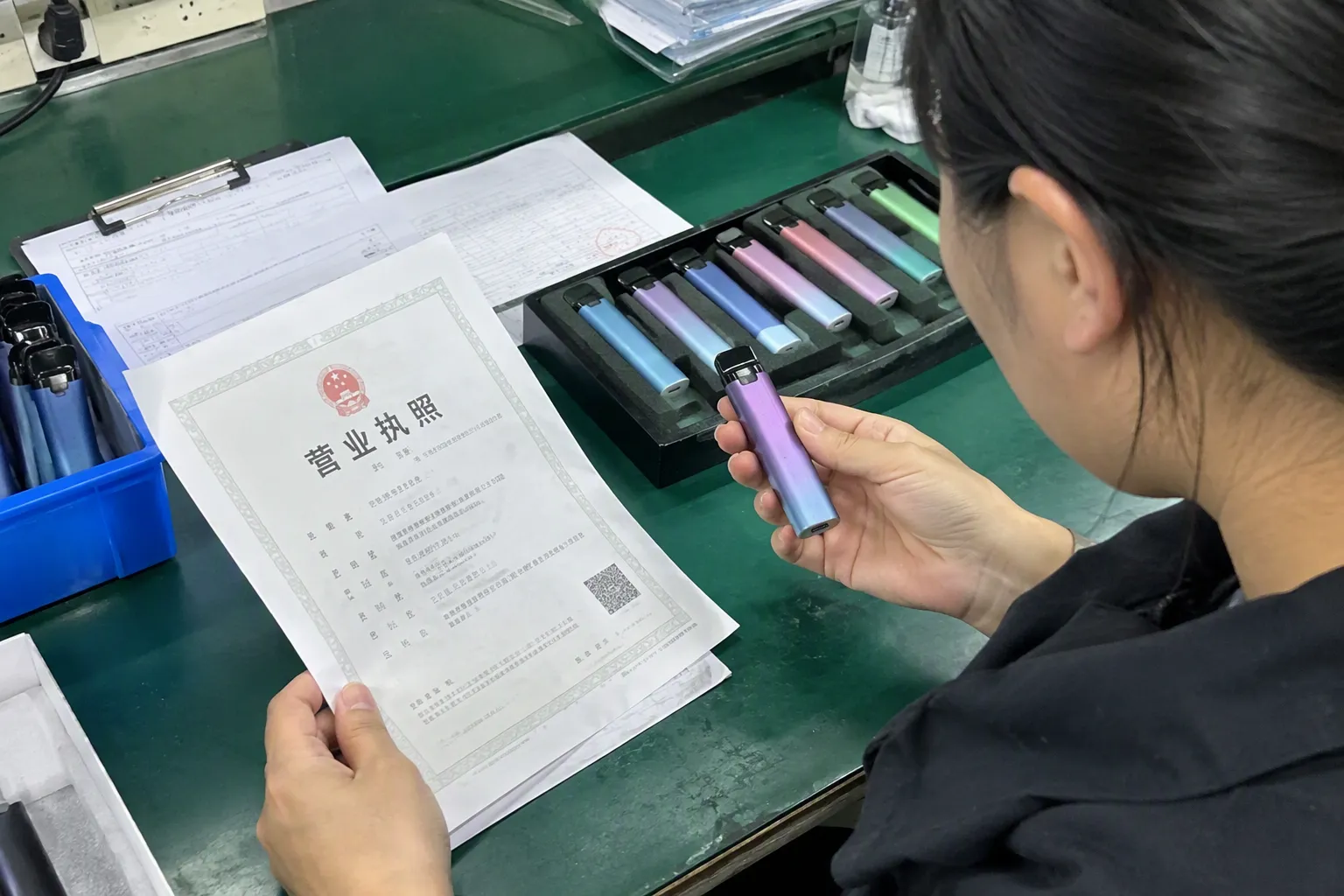
I recommend requesting the test method, tested product condition, product position, duration, sample basis, pass/fail standard, inspection timing, and any available QC record. You can also ask for photos or video verification where appropriate. Buyers should verify that records relate to the product and order being discussed.
Should I use a third-party inspection for vape wholesale orders?
A third-party inspection may be useful for larger orders, new suppliers, private-label projects, or higher-risk launches. Buyers should define the inspection scope in advance. An inspection can verify agreed checkpoints, but it cannot guarantee performance under every future shipping, storage, or end-user condition.
How can I handle leakage complaints from my retail customers?
I recommend collecting product photos, videos, batch information, affected quantities, purchase dates, and packaging condition before contacting the supplier. Clear evidence supports a more efficient review. You should also agree on defect-reporting and after-sales terms before placing the order.
Conclusion
Useful leak tests for vape wholesale orders can help buyers screen for specific visible leakage and sealing problems, but they should never be treated as proof that an entire shipment will perform perfectly in every real-world condition. I recommend asking suppliers for defined test methods, sample information, pass/fail standards, timing, records, and clear after-sales terms. If you are sourcing vapes, atomizers, batteries, or related smoke-shop products from China or European stock, contact me at info@kingvapecig.com to discuss a practical sourcing and verification process for your order.
Sources
- What kinds of Lot Acceptance Sampling Plans (LASPs) are there?", Acceptance-sampling guidance explains that inspection of a sample is used to make a lot-acceptance decision and does not constitute a guarantee of the condition or future performance of every individual item
- [PDF] Visual Inspection of Injectable Products - FDA", Regulatory guidance on container-closure assessment recognizes visual inspection as a means of detecting observable leakage and apparent seal or packaging defects under specified conditions
- Electronic nicotine delivery systems: a research agenda - PMC", Technical literature on e-cigarette liquid containment describes leakage as a multi-factor failure outcome involving component interfaces, sealing arrangements, filling features, and handling or damage conditions
- Metrological Traceability: Frequently Asked Questions and NIST Policy", Reliability and conformance-testing principles state that test results apply to the specified test conditions; untested environmental and handling conditions require separate consideration
- Generation of Electronic Cigarette Aerosol by a Third ... - PMC", Studies of liquid-containing packages indicate that orientation changes the liquid's contact with closure interfaces and can expose leakage pathways not stressed in an upright condition
- [PDF] Intended to Strengthen Use of Forensic Science Evidence", Acceptance-sampling methodology shows that inferences about a production lot depend on the prescribed sample size and decision rule, with smaller samples providing less discriminatory information about lot quality
- Getting Started with Design & Testing", Distribution-testing guidance identifies handling, vibration, compression, and variable environmental exposure as common hazards encountered by packaged products during transport and distribution
- [PDF] 3L 2 - International Safe Transit Association", Package-distribution test protocols include drop, impact, and compression exposures to represent mechanical hazards that can occur during handling and transit