Quick Answer
USB-C charging current often creates confusion for vape importers and wholesalers because many buyers assume a USB-C port automatically means faster charging or a better product. That shortcut can lead to unclear product claims, avoidable customer questions, and after-sales disputes. I recommend treating charging current as one practical screening signal within a broader supplier and product review.
USB-C identifies the physical connector, not the overall charging quality.[1] Charging current can help buyers understand part of a vape product’s charging design, but it cannot prove charging speed, reliability, safety, or product quality by itself.[2] I believe wholesalers should also review battery capacity, instructions, cable and adapter compatibility, charging-management information, batch consistency, supplier communication, and after-sales support before making a purchasing decision.
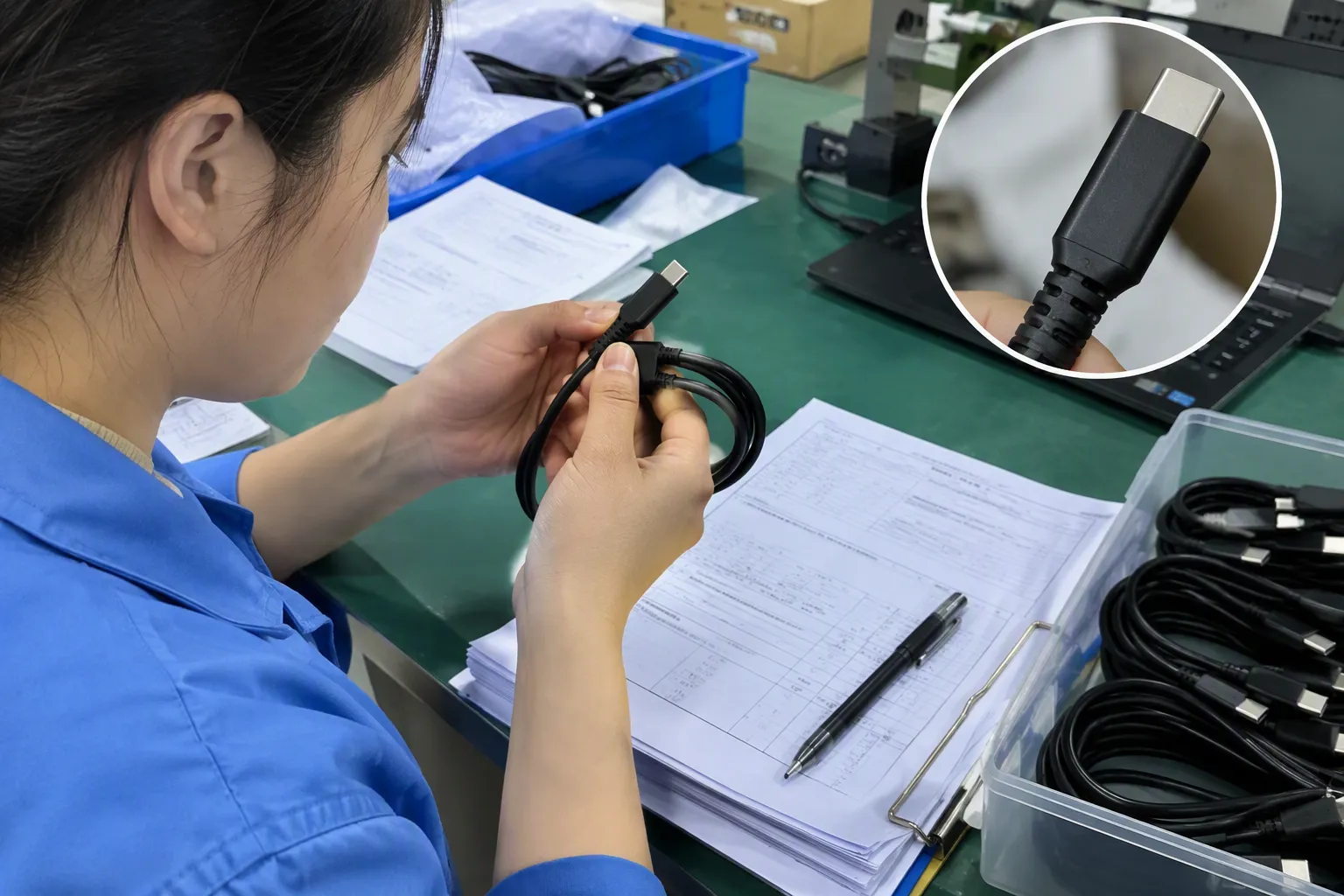
When I speak with importers, vape wholesalers, smoke-shop suppliers, and convenience-store distributors, I often hear the same question: “Does it have USB-C fast charging?” I understand why buyers ask. A simple answer makes purchasing easier. However, a responsible sourcing decision needs more than a connector label or one current figure.
USB-C Identifies the Connector, Not Charging Quality: Charging Current Is Only One Clue in a Broader Review
I see many buyers use USB-C as a quick quality shortcut because the connector is familiar and convenient for end users. The problem is that this shortcut can create expectations that the product information does not support. When retailers repeat unclear claims, customer confusion can become a return, complaint, or reputation issue.
USB-C tells a buyer which connector format the product uses, while charging current describes only part of how the charging system may operate. I treat both details as useful questions for supplier discussions, not as standalone proof of charging performance. A buyer should request clear, consistent specifications and evaluate whether the product suits the intended sales channel and after-sales risk tolerance.
I Separate the Port Type From the Charging Behavior
In my day-to-day sourcing conversations, I find that buyers sometimes combine several different questions into one sentence:
- Does the vape have a USB-C port?
- Does it charge quickly?
- Does it work with common cables?
- Is it more premium than a product with another connector?
- Will customers understand how to charge it?
- Will it create fewer after-sales questions?
These are related questions, but they are not the same question.
A USB-C port describes the connector interface. It does not automatically explain the charging-management design inside the device.[3] It also does not confirm the current the product will draw in every situation.[4] A charging current figure, if a supplier provides one, should be discussed together with the product’s documentation and intended use.
I do not position USB-C as a fast-charging guarantee. I also do not position a higher stated charging current as proof that one vape product is better than another. In practical wholesale purchasing, the more useful issue is whether a supplier can explain the product clearly enough for a buyer to train sales staff, write product listings, and answer retailer questions without guessing.
I consider unclear specifications more risky than a modest specification that a supplier can explain consistently.
For example, a retailer may ask a wholesaler which cable or power source a customer should use. If the wholesaler has no clear product instructions, no matching packaging information, and no reliable supplier response, the discussion can become difficult. The original issue may not be the USB-C connector at all. The issue may be that the product was not properly documented for the channel.
I Treat Charging Current as a Design Trade-Off, Not a Product Score
Charging current is often discussed as if it were a simple ranking system: higher is better, lower is worse. I do not think this is a useful B2B sourcing method.
A vape product is a combination of parts, product positioning, manufacturing choices, packaging, instructions, and supplier support. Charging behavior can be influenced by many elements within that broader design.[5] I cannot make engineering conclusions without qualified technical testing, and I do not claim laboratory authority. Still, from a sourcing and buyer-communication perspective, I believe the following factors are worth clarifying.
| Review area | Why I believe it matters to buyers | Useful supplier question |
|---|---|---|
| Battery capacity | Buyers need product information that matches the product’s expected positioning and customer expectations. | “What battery-capacity information is shown in the product documentation?” |
| Stated charging current | This can provide one reference point, but it should not be treated as a guarantee of real-world charging behavior. | “What charging-current specification do you provide, and where is it documented?” |
| Charging-management information | Clear information helps a buyer understand what the supplier is claiming and how consistently it is communicated. | “Can you provide the product manual or technical sheet?” |
| Cable and adapter compatibility | End users may use different cables and power sources, so vague guidance can create questions for retailers. | “What charging accessories or usage guidance do you recommend?” |
| Product instructions | Clear instructions reduce the need for retailers to invent their own explanations. | “Is the same charging guidance printed on packaging, manuals, and product listings?” |
| Batch consistency | A sample is useful, but wholesalers also need consistent information for repeat orders. | “How do you keep specifications and packaging information consistent across orders?” |
| Warranty handling | Buyers need a clear route when retailers report a problem. | “What is the process for charging-related customer complaints?” |
I use the phrase practical screening signal because that is what charging current can be in a purchase review. It can help a buyer identify questions that deserve a closer look. It is not a substitute for product testing, qualified technical evaluation, or compliance review for the destination market.
I Look for Documentation That Retailers Can Actually Use
A buyer may receive a short specification sheet with a USB-C icon and a charging-current figure. That is a starting point, but I encourage buyers to go further.
I usually suggest checking whether the supplier’s information is clear across all materials that the customer may see:
-
Product packaging
I look for whether charging information is present, readable, and consistent with the supplier’s stated specification. -
User instructions
I check whether the manual gives practical charging guidance in language appropriate for the destination market and sales channel. -
Sales listing content
I compare catalog information, product photos, online descriptions, and sales-team explanations. If each source says something different, a wholesaler may later face disputes. -
Supplier answers in writing
I prefer buyers to keep key specification explanations in writing. This makes internal purchasing records clearer and reduces misunderstandings when teams change. -
Sample-to-order consistency
I encourage importers to ask whether the production order will match the reviewed sample in connector type, packaging, instructions, and stated specifications.
For a distributor selling to vape shops, smoke shops, gas stations, convenience stores, or mixed retail channels, simple communication matters. Store staff may not have time to explain technical details. They need information that is easy to repeat accurately.
A product can be commercially suitable when the supplier provides simple, consistent explanations. In contrast, a product can create unnecessary pressure when its claimed features are difficult to verify or explain.
I Ask Whether the Product Fits the Buyer’s Actual Channel
I have learned that a product can look attractive on a catalog page but still be a poor fit for a buyer’s channel. USB-C charging current is one small part of this bigger question.
For example, a buyer supplying specialist vape shops may have staff who can explain product features in more detail. A buyer supplying convenience stores or tourist-area retailers may need a much simpler product story. In that environment, ambiguous feature claims can create friction quickly.
I recommend that wholesalers consider the following channel-fit questions:
- Will store staff understand the product’s charging information?
- Can the buyer describe the charging feature without exaggerating it?
- Does the packaging support the retailer’s explanation?
- Does the supplier provide a stable answer when the buyer asks technical questions?
- Is the product positioned for informed vape users, general retail customers, or impulse buyers?
- Does the buyer have a clear process for handling a charging-related complaint?
- Can the buyer obtain replacement or after-sales support if a retailer reports an issue?
I do not believe every product needs the most complex feature set. Many buyers make better commercial decisions when they choose products that match the knowledge level of their retail network and the support capacity of their own team.
I Avoid “Fast Charging” Claims Unless the Supplier Can Support Them Clearly
In wholesale sales, words can travel very quickly. A factory sales representative may use a broad phrase. A distributor may repeat it in a catalog. A local retailer may then tell an end user something more specific. By the time the message reaches the customer, the original claim may have become much stronger than the available product information supports.
This is why I advise buyers to be careful with terms such as:
- “Fast charging”
- “Quick charging”
- “High-speed charging”
- “Premium charging”
- “Universal compatibility”
- “Works with every USB-C charger”
I do not say these phrases are always inappropriate. I say they should be supported by product documentation and used carefully. If the supplier cannot explain what the phrase means for that specific product, I believe the buyer should avoid using it as a major selling point.
A safer commercial approach is often more straightforward:
- “USB-C charging port”
- “Charging information is included with the product”
- “Please follow the supplied instructions”
- “Confirm accessory and compatibility details with the supplier before ordering”
This wording may sound less exciting, but it can help protect the buyer’s credibility. In my experience, importers and wholesalers build stronger long-term customer relationships when they avoid promises that are difficult to support later.
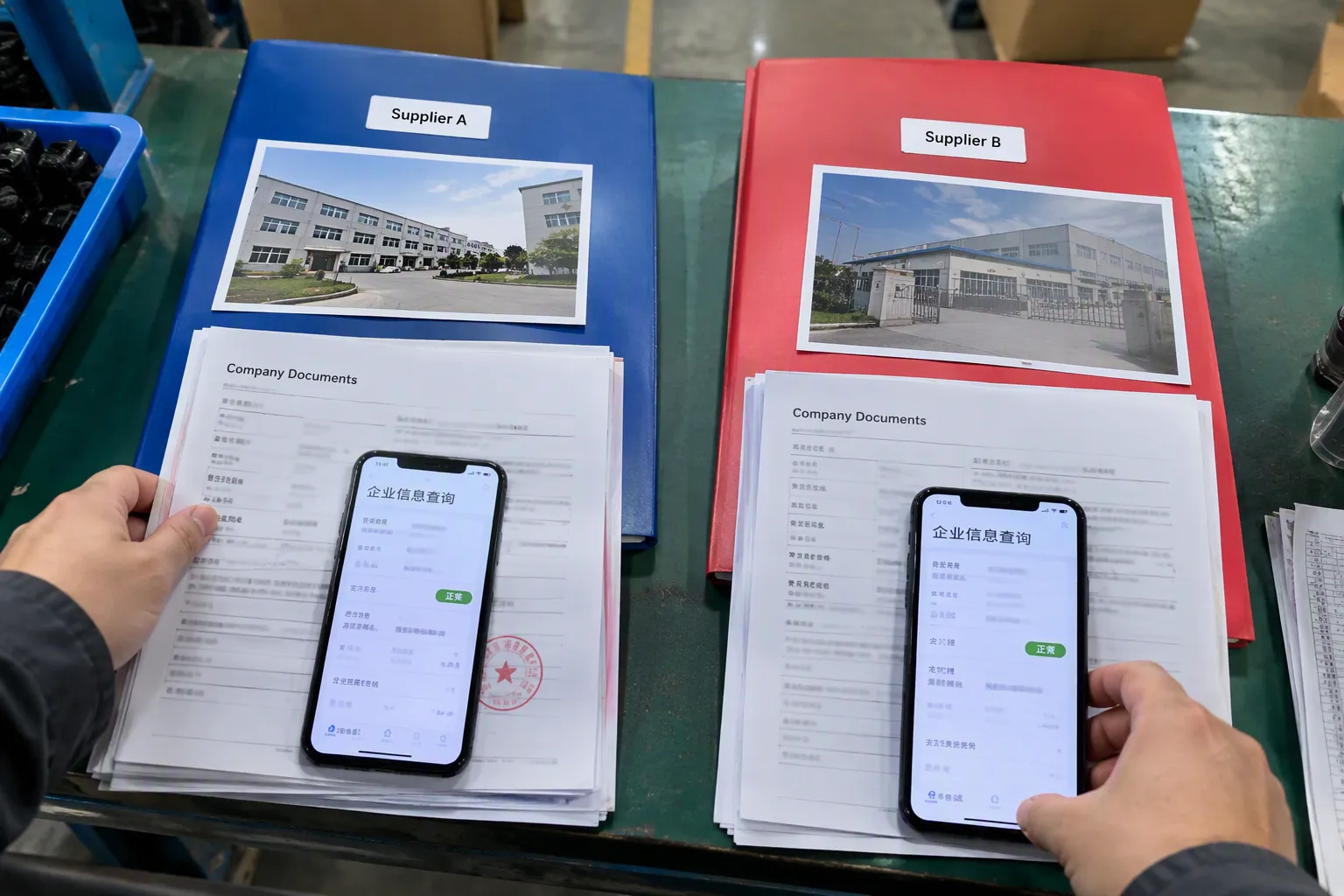
I Compare Supplier Communication Before I Compare a Single Specification
When buyers ask me how to screen products, I often say that the quality of the supplier’s answers matters almost as much as the answer itself.
A supplier does not need to use complicated technical language. In fact, unclear technical language can make a buyer less confident. What I look for is whether the supplier can answer basic questions consistently and provide documents that align with the answer.
Here is a practical comparison framework I recommend.
| Supplier response | What I would take from it |
|---|---|
| The supplier only says “USB-C means fast charging.” | I would treat this as incomplete and ask for more specific documentation. |
| The supplier gives a current figure but cannot explain where it appears in the product materials. | I would ask for packaging, manual, or specification-sheet confirmation. |
| The supplier provides clear product information but avoids unsupported claims. | I would view this as a more responsible communication approach. |
| The supplier gives different answers through sales staff, catalog content, and packaging. | I would see a higher risk of downstream customer confusion. |
| The supplier explains warranty handling and complaint procedures. | I would consider this relevant to after-sales planning, not proof of product quality. |
| The supplier supports sample review and confirms order specifications in writing. | I would see this as useful for procurement control. |
I believe a buyer should judge responsiveness over several questions, not one message. A reliable sourcing process often becomes clearer when the buyer asks for information step by step.
For example, I would ask about the connector, then the stated charging specification, then the manual, then the packaging, then the warranty process. If answers remain consistent, the buyer has a better basis for evaluation. If answers become vague or contradictory, the buyer has identified a risk before placing a larger order.
I Use Samples as a Procurement Tool, Not as Final Proof
A product sample can help an importer or wholesaler review physical details such as the USB-C port, packaging, included accessories, basic instructions, and product presentation. However, I do not consider a sample a complete substitute for qualified product testing or production-quality control.[6]
A sample can still be useful when buyers use it with the right expectations. I suggest that buyers record what they are reviewing and what remains to be confirmed.
A practical sample-review checklist
- Confirm the connector type matches the supplier’s description.
- Compare the packaging information with the catalog information.
- Read the charging-related instructions for clarity.
- Check whether the product includes or excludes a cable, and ensure this is stated clearly.
- Ask the supplier to explain any unclear terms in writing.
- Confirm whether the same packaging and instructions will be used in production.
- Review the supplier’s warranty and replacement process before ordering.
- Consider independent or qualified evaluation when the buyer needs application-specific technical confirmation.
I would also encourage buyers to separate commercial validation from technical validation.
Commercial validation asks whether the product can be sold clearly through the buyer’s channel. Technical validation asks whether the product meets the buyer’s specific technical, regulatory, and quality-control requirements.[7] These are different tasks, and both matter.
For larger importers, a more formal purchase process may include approved specifications, signed sample confirmation, packaging approval, pre-shipment checks, and documented after-sales terms. For smaller wholesalers, the process may be simpler, but the principle remains the same: confirm what is being purchased before making claims to retailers.
I Consider Batch Consistency and After-Sales Planning Before Scaling an Order
Many sourcing problems do not appear during the first conversation. They appear after the buyer has supplied retailers, created sales materials, and received the next production batch.
That is why I consider batch consistency important. A buyer needs confidence that the connector format, stated specifications, packaging language, and included accessories will remain aligned with what was approved.
I do not claim that any supplier can eliminate all product issues. Every product category carries some level of commercial risk. However, I believe suppliers can reduce avoidable disputes by being clear about specifications, confirming order details, and providing a practical after-sales process.
Before scaling an order, I suggest buyers clarify:
- What product information will be included with each batch?
- Will there be any packaging, component, or instruction changes?
- Who will respond if a retailer asks about charging behavior?
- What evidence is needed for an after-sales claim?
- What replacement, credit, or other support process applies if an issue is confirmed?
- How quickly can the supplier provide photos, videos, or documentation when the buyer needs to answer a downstream customer?
- Who is responsible for market-specific compliance and labeling review?
For regulated nicotine, vape, CBD, and related product categories, I also recommend that buyers verify applicable laws, product requirements, labeling rules, and import obligations in their destination market.[8] A supplier’s commercial statement should not replace a buyer’s own compliance assessment or qualified professional advice.
I Help Buyers Move Beyond the “USB-C Equals Better” Shortcut

At Shenzhen Kingfuji Tech. Co., Ltd., I focus on helping buyers source vape and smoking-accessory products in a way that supports their actual commercial model. Some customers need smaller quantities and faster inventory movement through European warehouse options. Other importers, distributors, and wholesalers need larger China-based orders, stronger price planning, or OEM/ODM development discussions.
In both situations, I believe the best product decision starts with the buyer’s sales channel, customer expectations, and after-sales capacity. A USB-C charging current figure may be relevant, but it is only one part of the conversation.
For buyers who sell fast-moving products, the goal is not simply to buy a product with the most impressive-looking feature list. The goal is to buy products that can be explained clearly, supplied consistently, and supported responsibly after sale.
That approach can help wholesalers reduce several common problems:
- Retail staff making unsupported claims
- Customers misunderstanding charging features
- Catalog descriptions that do not match packaging
- Delays caused by unclear supplier communication
- Disputes over what was promised before purchase
- Reputation damage from avoidable product-information confusion
I believe a well-managed product specification is a commercial advantage. It helps the buyer sell with more confidence and gives retailers a clearer story to share with end users.
Frequently Asked Questions
Does USB-C mean a vape charges faster?
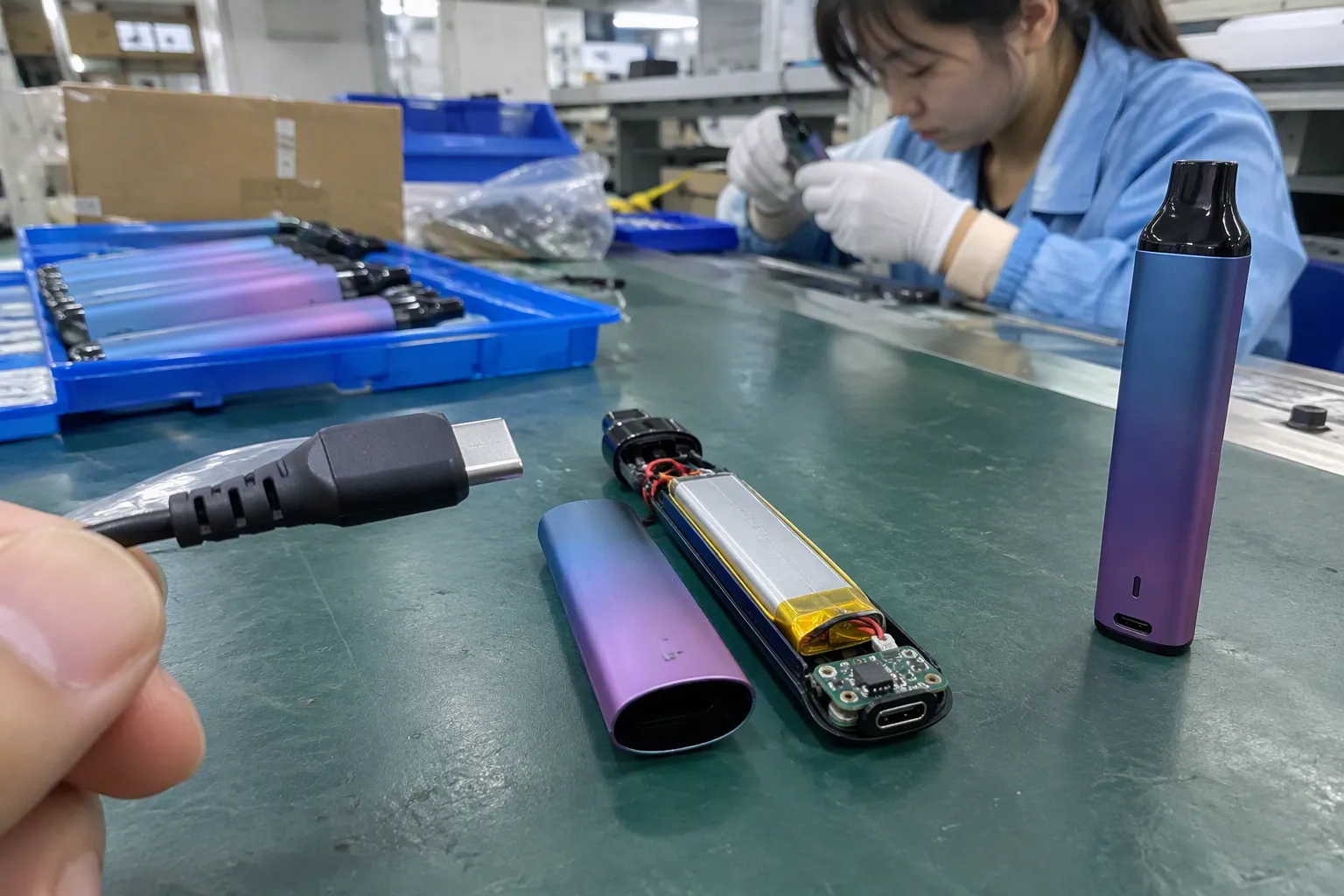
No. USB-C identifies the connector format, not a guaranteed charging speed. I recommend that buyers ask for product documentation covering the stated charging specification, instructions, and compatibility guidance. A USB-C port alone is not proof of fast charging or overall product quality.
Is a higher USB-C charging current always better for vape products?
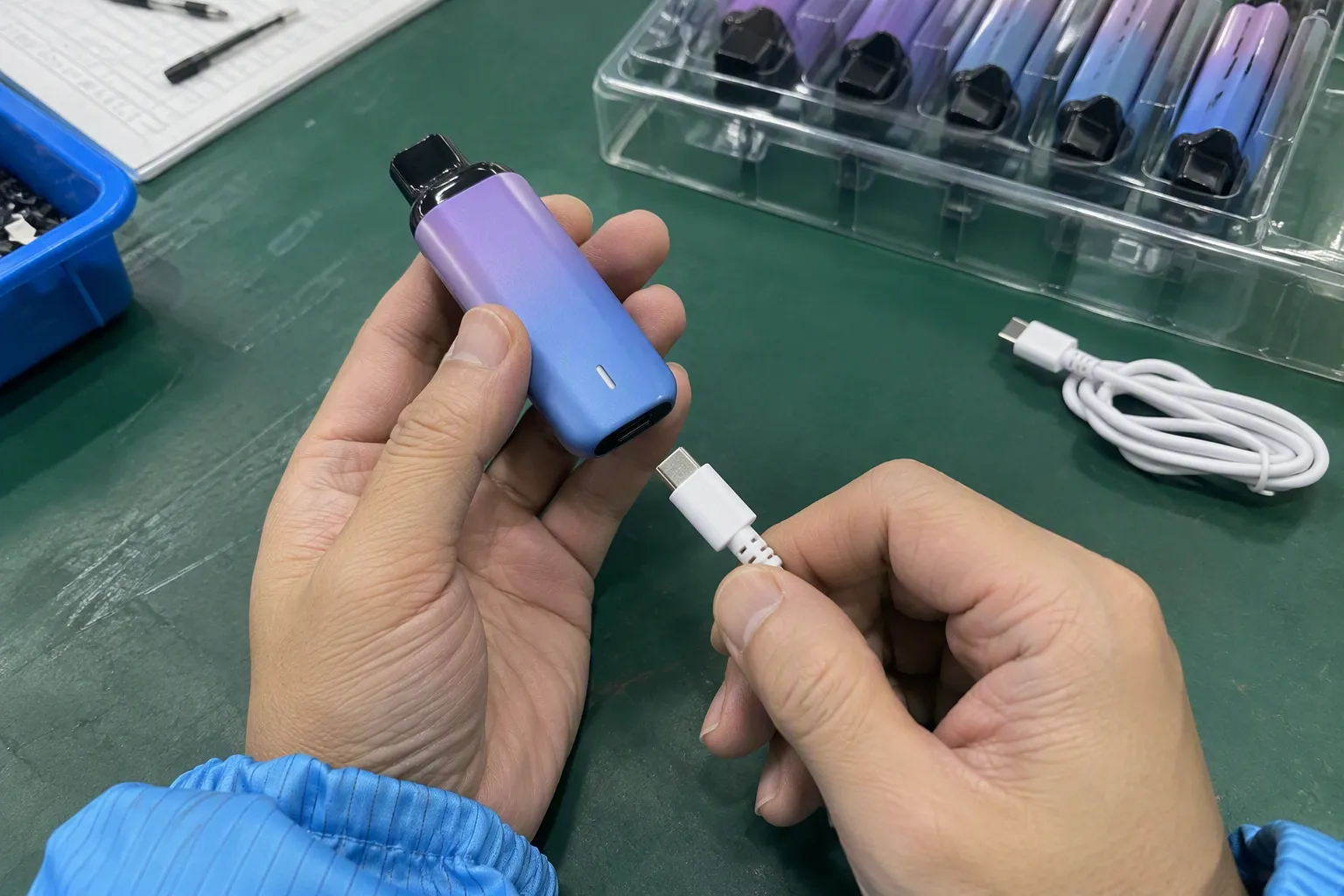
No. I do not treat a higher charging-current figure as an automatic quality score. Buyers should consider it alongside battery capacity, charging-management information, instructions, production consistency, supplier responsiveness, and the needs of their retail channel. Product testing remains important for application-specific decisions.
What should a vape wholesaler ask a supplier about USB-C charging current?
I suggest asking for the stated charging-current specification, product manual, packaging details, included-accessory information, compatibility guidance, batch-consistency confirmation, and warranty process. I also recommend keeping key answers in writing so purchasing, sales, and after-sales teams can use consistent product information.
Can a sample confirm that a USB-C vape product is suitable for a large order?
A sample can help a buyer review the connector, packaging, instructions, and overall presentation. However, I do not consider it final proof of production consistency, technical performance, or regulatory suitability. Larger buyers should use documented specifications, quality-control procedures, and qualified evaluation where needed.
Why does supplier communication matter when evaluating USB-C vape products?
Supplier communication matters because wholesalers need clear information to train staff, prepare product listings, and answer retailer questions. I see unclear or inconsistent specifications as an avoidable after-sales risk. A supplier who provides consistent documents and practical support gives buyers a better basis for responsible purchasing.
Conclusion: What USB-C Charging Current Should Tell Buyers
USB-C charging current should prompt better sourcing questions, not quick assumptions. I treat USB-C as a connector format and charging current as one useful detail within a much larger product review. Importers and wholesalers should assess documentation, product instructions, supplier communication, batch consistency, warranty handling, and channel fit before they make charging claims. If you are sourcing vapes, batteries, atomizers, or related smoking accessories, I invite you to contact Shenzhen Kingfuji Tech. Co., Ltd. for product information, sourcing support, and a clearer purchasing discussion.
Sources
- Cables and Connectors", The USB Implementers Forum describes USB Type-C as a connector and cable specification; available charging power depends on the supported USB power-delivery implementation and device design
- Review—Thermal Safety Management in Li-Ion Batteries", Research on lithium-ion charging shows that charge rate is only one operating parameter: charging time, degradation, and safety also depend on cell characteristics, temperature, voltage limits, and charging-control methods
- USB Type-C Charging Connectors: Design, Optimization ...", Technical literature on USB-C charging architectures distinguishes the connector interface from the separate charger and power-management circuitry that controls battery charging
- Temperature and voltage effects on the charge and health of ...", USB power-delivery specifications provide for negotiated source–sink power contracts, while battery-charging practice commonly varies current with charging phase and operating conditions
- Temperature and voltage effects on the charge and health of ...", Reviews of lithium-ion battery charging identify cell properties, temperature, state of charge, voltage thresholds, and control strategy as interacting determinants of charging behavior
- 6.2.1. What is Acceptance Sampling?", Acceptance-sampling principles show that sample inspection provides probabilistic evidence about a production lot rather than proof of every unit’s conformity, so it does not replace appropriate testing and process quality controls
- Conformity assessment", Conformity-assessment frameworks define technical evaluation as demonstrating fulfilment of specified requirements; commercial suitability, by contrast, concerns a buyer’s market and distribution judgment
- E-Cigarettes, Vapes, and other Electronic Nicotine Delivery ...", Government regulatory authorities impose jurisdiction-specific requirements on electronic nicotine-delivery products that may include product standards, labeling, notification or authorization, and import-related obligations