
Quick Answer
Types of e-cigarettes and vape kits can be confusing for importers because products that look similar may create very different inventory, repeat-order, and after-sales demands. A poor category choice can leave a distributor with slow-moving stock, incompatible replacement parts, or unnecessary support work. I help buyers separate the main formats so they can build a more practical assortment for their retail channel.
The main types of e-cigarettes and vape kits are disposable vapes, prefilled pod systems, and refillable pod devices.[1] Disposable vapes are ready-to-use all-in-one products, prefilled pod systems use a reusable device with replacement pods, and refillable devices require e-liquid or refillable cartridges. The best choice depends on the target retail channel, adult customer demand, replenishment model, product support capacity, and local legal requirements.
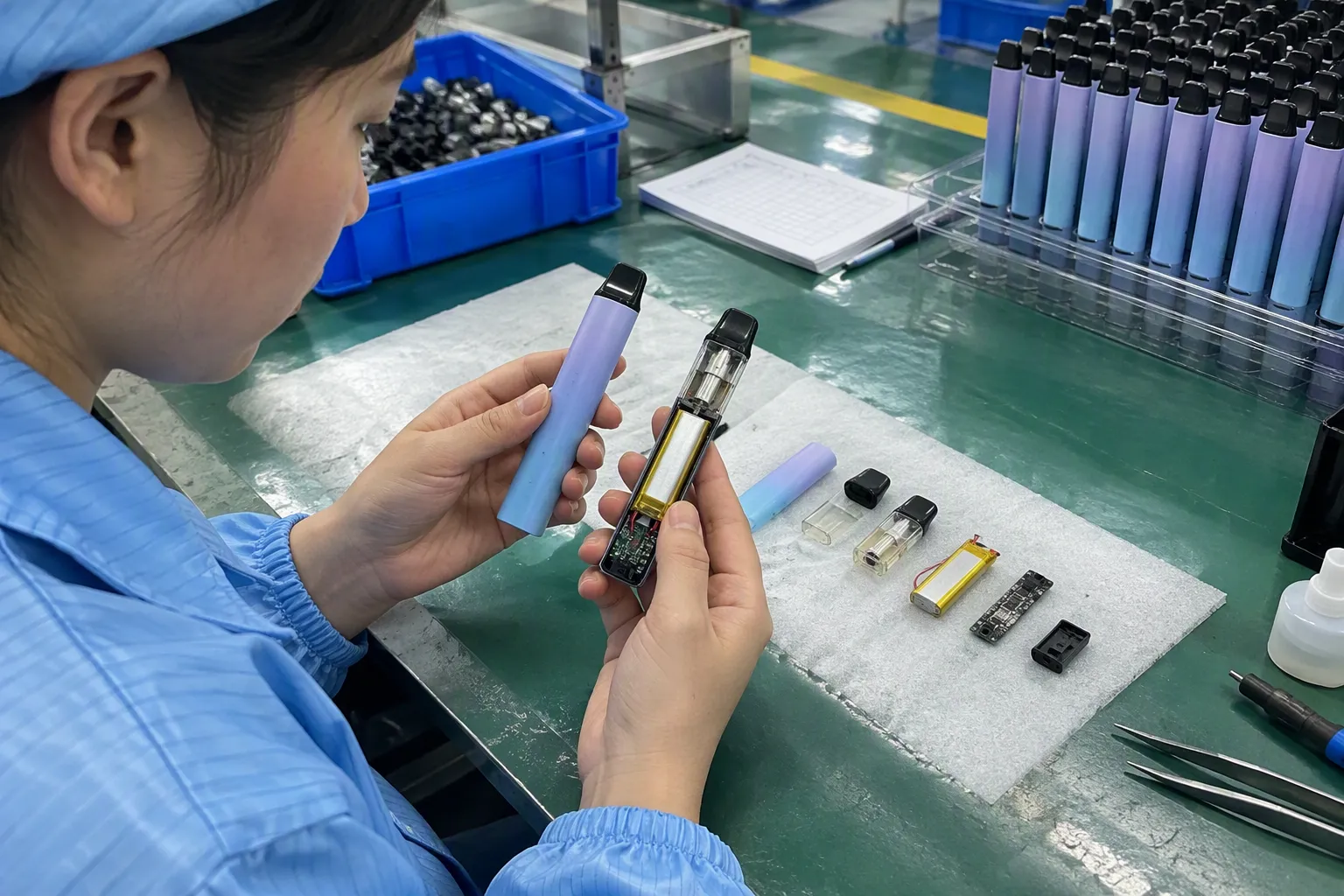
I have worked in Shenzhen’s e-cigarette supply chain since 2011, where product development, manufacturing, accessories, packaging, and global logistics are closely connected. In product-matching discussions, I often see buyers focus first on appearance, flavor names, or unit price. Those details matter, but the commercial model behind each product type matters even more.
Why Should E-Cigarette Types Not Be Treated as a Simple Product List?
When importers treat types of e-cigarettes and vape kits as a simple list, they can select products that do not fit their sales channel. A convenience-store buyer may need a different range from a specialist vape distributor. If the product mix is wrong, stock may move slowly and the customer-service workload may rise.
I recommend that buyers compare vape categories by how the product is sold, replenished, supported, and reordered—not only by its design. Disposable vapes can support quick turnover, prefilled pod systems can create recurring replacement-pod demand, and refillable pod devices can suit customers who want more choice. Each category has different compatibility, inventory, and after-sales requirements.
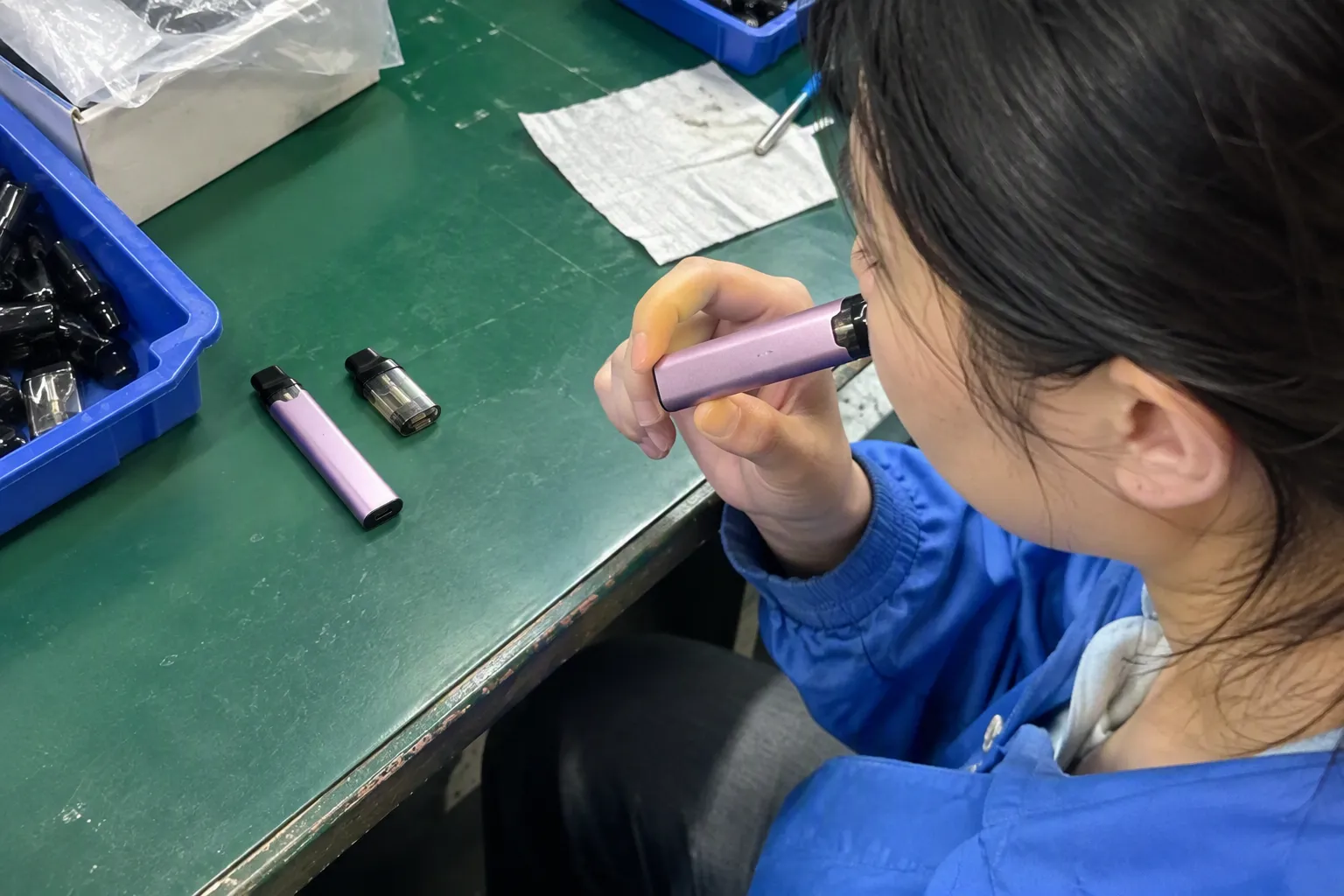
The terms “vape,” “e-cigarette,” “vape kit,” “pod,” “atomizer,” and “battery” are often used loosely. For B2B purchasing, I believe buyers need a clearer category map. A disposable product is not simply a pod system without extra parts. A refillable device is not automatically a better version of a disposable. Each format was developed around a different user routine and a different sales model.
In my experience, the most useful starting point is to ask a practical question:
What does your retail customer need to sell easily, replenish reliably, and support without creating unnecessary complexity?
For a small smoke shop, gas station, convenience store, or local reseller, the answer may be a compact range of familiar, easy-to-explain products. For an established importer, warehouse wholesaler, or regional distributor, the answer may include a broader portfolio with private-label opportunities, replacement products, and selected accessories.
A Practical Category Map for Buyers
I usually group the main types of e-cigarettes and vape kits into three commercial categories:
| Product category | Basic format | Typical replenishment model | Main B2B consideration |
|---|---|---|---|
| Disposable vapes | All-in-one, ready-to-use device | Buyer reorders complete units | Fast-moving assortment, trend management, regulatory verification |
| Prefilled pod systems | Reusable device plus sealed replacement pods | Buyer reorders pod packs and devices | Pod compatibility, brand continuity, recurring consumable stock |
| Refillable pod devices | Rechargeable device with refillable pod or tank | Buyer sells device, compatible parts, and permitted e-liquid products | More education, parts planning, and support requirements |
I also treat batteries, atomizers, 510-thread accessories, chargers, glass products, grinders, and other smoking accessories as separate product groups. They may complement a vape range, but they are not interchangeable with complete e-cigarette systems.
This distinction helps wholesalers avoid a common sourcing problem: ordering products that appear similar in a catalog but require very different stock planning after arrival.
Disposable Vapes: The All-in-One, Quick-Turnover Format
Disposable vapes are complete, self-contained products. In general product-development terms, the device, power source, heating component, and prefilled contents are designed as one unit.[4] The adult end customer does not need to choose a separate battery, coil, pod, or refill bottle for basic use.
For many distribution models, this simplicity is the main commercial advantage. A retailer can place the product on the shelf with a clear price and a limited explanation. The buyer can also test a market with a controlled number of SKUs rather than building a full device-and-consumables ecosystem.
However, I do not advise buyers to assume that every disposable vape will sell quickly in every market. Product demand can change. Local restrictions can differ by country, state, or city.[2] Packaging, nicotine-related rules, product registration, labeling, import documentation, and sales restrictions should always be checked with qualified local compliance professionals before ordering.[3]
From a purchasing perspective, I suggest evaluating disposable vapes through these questions:
- Does the device format fit the local adult retail channel?
- Is the product range too broad for the retailer’s shelf space?
- Does the buyer understand the supplier’s quality-control process and after-sales procedure?
- Can the supplier provide consistent stock for repeat orders?
- Does the buyer have a plan for handling product defects or customer questions?
- Have all local regulatory and import requirements been verified independently?
For smaller buyers in Europe, our overseas warehouse model may be useful where suitable products are available. Our European inventory is held across locations including Germany, Austria, Poland, and Belgium, and eligible buyers can purchase from a lower starting quantity of 50 units per model. This can reduce the need for a large upfront order and may support faster stock replenishment in the EU through carriers such as DHL, DPD, UPS, or FedEx.
I still encourage every buyer to verify the product status, destination requirements, and applicable sales rules before placing an order. A fast delivery route does not replace legal and compliance due diligence.
Prefilled Pod Systems: Device Sales Plus Recurring Pod Demand
Prefilled pod systems have a different commercial structure.[5] The customer buys or keeps a rechargeable device and later purchases compatible prefilled pods. This model can create repeat-purchase opportunities because the consumable product is separate from the battery device.
For distributors, this can be attractive because the first sale is not the final sale. A retailer may need regular replacement-pod stock, and adult customers may return for compatible pod packs. Yet this category requires more disciplined inventory planning than disposable products.
The central issue is compatibility.
A replacement pod must match the correct device platform.[6] Similar-looking pods are not necessarily interchangeable. If a buyer sells the device but does not maintain enough matching pods, the retail customer may lose confidence in the product line. If the buyer carries too many device platforms, the warehouse may end up with fragmented pod inventory.
In OEM and ODM conversations, I often advise importers to reduce unnecessary platform complexity. A focused system with clear packaging and reliable ongoing supply can be easier to manage than a large collection of unrelated devices.
A buyer evaluating a prefilled pod range should consider:
-
Device-to-pod continuity
I recommend confirming that replacement pods will remain available for the intended sales cycle. Buyers should ask about product lifecycle planning, not only the current shipment. -
SKU discipline
Each additional device family can require its own pod range, packaging, and reorder forecast. More choices can sometimes create more dead stock. -
Clear retail communication
Retail staff should be able to explain which pods work with which device. Clear labeling can reduce avoidable returns and complaints. -
Brand and channel fit
Established brands may provide familiarity in some channels, while own-brand projects may offer differentiation for qualified buyers. The best route depends on the buyer’s market position and budget. -
After-sales responsibility
Buyers should define who handles device faults, pod-related complaints, shipping damage, and packaging issues. A supplier’s process should be discussed before the first order.
For wholesalers supplying vape shops and smoke shops, a pod-system range can be commercially useful when the local retailer has staff who understand the category and can maintain replacement-pod stock. For a general convenience channel with limited shelf space and limited product knowledge, a highly complex pod portfolio may create more work than value.
Refillable Pod Devices: More Flexibility, More Operational Demands
Refillable pod devices usually involve a rechargeable device and refillable pod or cartridge.[7] Depending on the destination market and lawful product range, the adult end customer may use compatible e-liquid products or replacement components.
This category can appeal to customers who value device choice, refill options, accessories, and a more involved product experience. It can also create multiple related sales opportunities, including devices, replacement pods, coils where applicable, batteries, chargers, and permitted e-liquid products.
However, refillable products require more careful procurement evaluation. I do not see them as a “premium upgrade” for every distributor. They require a retailer and end-user base that can understand the product system. They can also require more support when customers need help with filling, charging, replacing parts, or identifying compatible accessories.
A refillable range may create challenges such as:
- More product education at retail level
- More components to forecast and reorder
- Higher risk of buying incompatible parts
- More potential questions about leakage, charging, pods, coils, or device settings[8]
- Greater need for accurate packaging and instructions
- More market-specific compliance checks for e-liquid-related products
I recommend that importers assess the real capacity of their channel before adding a large refillable range. A specialist vape distributor may have trained sales staff, repeat customers, and a good understanding of accessories. A general wholesaler serving convenience stores may prefer a narrower assortment with lower support requirements.
The Commercial Model Matters More Than the Product Name
The types of e-cigarettes and vape kits that work for one importer may create problems for another. I have seen buyers focus on a popular-looking device but overlook what happens after the first shipment. They may not plan replacement stock, compatible accessories, packaging revisions, or retailer education.
A buyer should compare categories through the full sales cycle:
| Buyer question | Disposable vapes | Prefilled pod systems | Refillable pod devices |
|---|---|---|---|
| Is the product easy for retailers to explain? | Usually simpler | Moderate | Often requires more explanation |
| Does it create repeat consumable demand? | Complete-unit reorder | Replacement pod reorder | Pods, components, and permitted refill products |
| Is compatibility a major issue? | Usually limited | Important | Very important |
| Is inventory planning simple? | Relatively simple, but trend-sensitive | Requires device and pod balance | Requires multiple compatible components |
| Is after-sales support likely to be limited? | Often lower, but quality checks still matter | Moderate | Often higher |
| Can it suit a small initial assortment? | Often yes, subject to legal verification | Yes, if kept focused | Yes, but only with clear support planning |
I use this type of comparison because the cheapest unit price does not always create the best purchasing result. A product that causes repeated customer complaints, missed replacement sales, or slow-moving stock can cost more than a product with a slightly higher initial price.
How I Suggest Building a First Vape Product Assortment
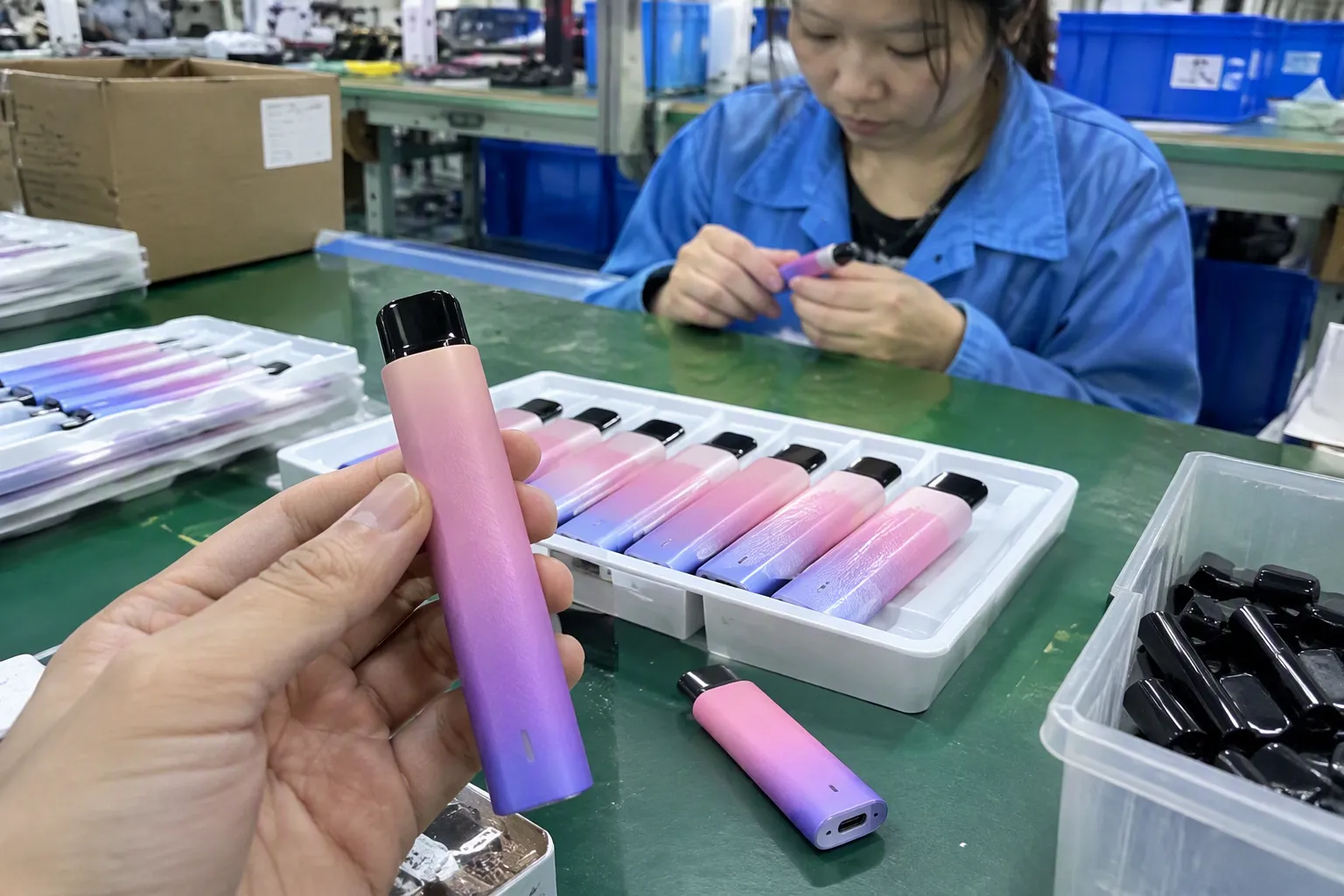
For many new importers and regional wholesalers, I suggest starting with channel fit rather than trying to carry every category at once. A balanced first order should be manageable for the warehouse, retail partners, and after-sales team.
A practical starting approach may look like this:
1. Identify the Retail Channel First
I ask buyers to define where the products will be sold:
- Vape shops
- Smoke shops
- Convenience stores
- Gas stations
- Grocery or general retail outlets
- Local wholesalers
- Cash-and-carry warehouses
- Online stores serving lawful adult customers
- Regional distributors supplying independent retailers
A vape shop may support more product education and a wider range of refillable systems. A convenience store may need a simpler, faster-moving selection. A wholesaler serving many store types may need separate product groups for different accounts.
2. Choose the Core Sales Model
The buyer should decide whether the main objective is:
- Quick turnover from complete-unit sales
- Repeat business from replacement pods
- A longer-term device-and-accessories ecosystem
- A mixed portfolio with controlled complexity
- An own-brand range for differentiation
- A multi-brand selection for one-stop purchasing
For example, a distributor may choose a focused disposable range for fast-moving retail accounts, then add one carefully selected pod system for shops that can support replacement-pod sales. This can create a more balanced offer without overwhelming the sales team.
3. Keep the First SKU Count Under Control
I do not recommend launching too many models simply because a supplier catalog is large. More SKUs can mean more colors, packaging versions, replacement parts, and slow-moving inventory.
A controlled first assortment allows the buyer to learn:
- Which formats receive repeat orders
- Which price levels match the channel
- Which retailers can support pod or refillable systems
- Which products create customer questions
- Which packaging and display formats work best
- Which items deserve larger repeat orders
This is especially important for buyers who are new to vape sourcing or who are entering a new local market.
4. Match the Supply Route to the Buyer’s Size
Smaller and medium-sized buyers may prefer available European warehouse stock when appropriate products are in inventory. This option can reduce the order threshold and shorten the delivery time for EU destinations. It may also help buyers test a smaller range before making a larger procurement commitment.
Medium and larger importers, wholesalers, and distributors may prefer direct purchasing from China when they need larger quantities, more pricing flexibility, customized packaging, or OEM/ODM development. Our Shenzhen operation includes a 5,000-square-meter factory, and our stated maximum production capacity is up to 5 million units per month. We also maintain a new-product development schedule of approximately five to ten new products each month.
I encourage larger buyers to treat these capabilities as a starting point for supplier evaluation, not as a substitute for their own audit. Buyers should verify production capacity, quality-control procedures, product samples, timelines, compliance documentation, and contract terms for their specific project.
Supplier Selection Should Include After-Sales Planning
A vape product can be commercially attractive on paper but still create a difficult business if after-sales responsibility is unclear. This is one reason I believe product category selection and supplier selection should happen together.
For our customers, we aim to provide a one-stop sourcing service across e-cigarettes, disposable vapes, vape devices, atomizers, 510 batteries, CBD batteries, grinders, glass pipes, vaporizers, and related accessories. We can also help buyers source products that are not currently in the catalog, and qualified customers may discuss custom development, tooling, OEM, or ODM projects.
From the buyer’s perspective, the value is not simply “more products.” The value is reducing the need to coordinate with multiple factories, brands, and after-sales contacts.
Before choosing any supplier, I suggest buyers ask these questions:
- Who is responsible for defective-product claims?
- What evidence is required for a quality complaint?
- How are replacement or compensation terms documented?
- Can the supplier provide videos or other agreed verification before shipment?
- Is inventory available for repeat orders?
- Can the supplier support mixed-brand or mixed-category purchasing?
- What is the lead time for standard products versus OEM/ODM projects?
- Can the supplier deliver to the buyer’s appointed freight forwarder?
- What documents must the buyer verify for the destination market?
- How will packaging, labeling, and brand ownership be handled?
Our business model includes arranging door-to-door logistics services where agreed, or delivering goods to a customer’s established freight forwarder. We also discuss shipment and after-sales terms with customers before the order is confirmed. Buyers should always review the exact written terms for their order, because shipping conditions, destination rules, and product requirements can vary.
Frequently Asked Questions
What are the three main types of e-cigarettes and vape kits?
The three main categories are disposable vapes, prefilled pod systems, and refillable pod devices. Disposable vapes are complete ready-to-use units. Prefilled systems use a rechargeable device with replacement pods. Refillable devices use refillable pods or cartridges and usually require more component planning and customer support.
Which e-cigarette type is best for a vape wholesaler?
No single format is best for every wholesaler. I recommend choosing based on the retailer base, local adult-market regulations, shelf space, staff knowledge, and repeat-order strategy. Many wholesalers build a controlled mix of fast-moving disposable products and selected pod or refillable systems.
Are disposable vapes easier to sell than refillable vape kits?
Disposable vapes can be easier for some retail channels because they are all-in-one products with fewer compatibility questions. However, demand, legal requirements, and sell-through vary by market. Refillable vape kits may suit specialist stores that can provide product guidance and manage accessories or replacement components.
Why is pod compatibility important for distributors?
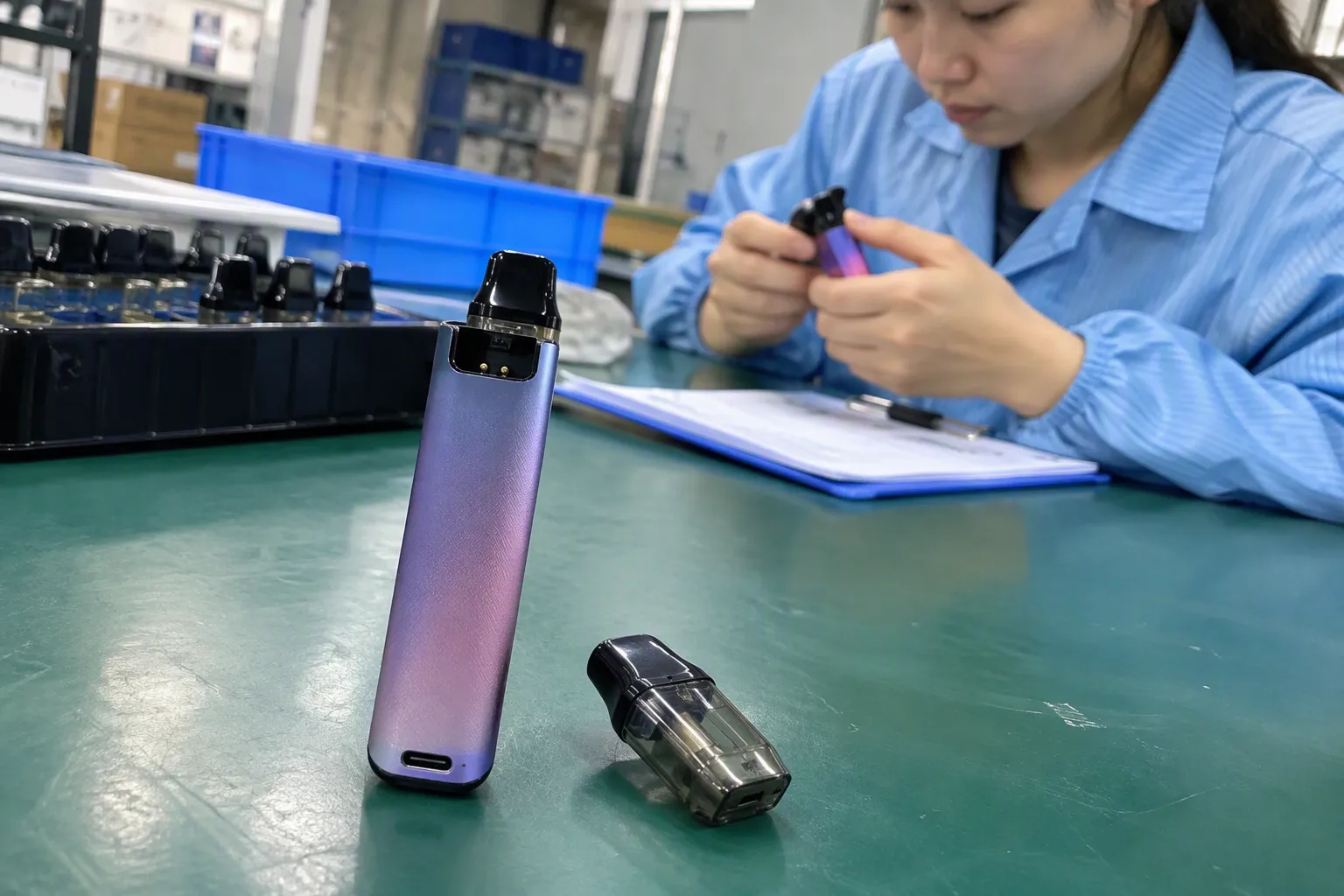
Pod compatibility matters because a reusable pod device depends on matching replacement pods. If a distributor sells devices without maintaining compatible pod inventory, retailers may face customer complaints and missed repeat sales. I recommend confirming the product lifecycle and replacement-pod supply plan before purchasing.
Can I order vape products from a European warehouse or directly from China?
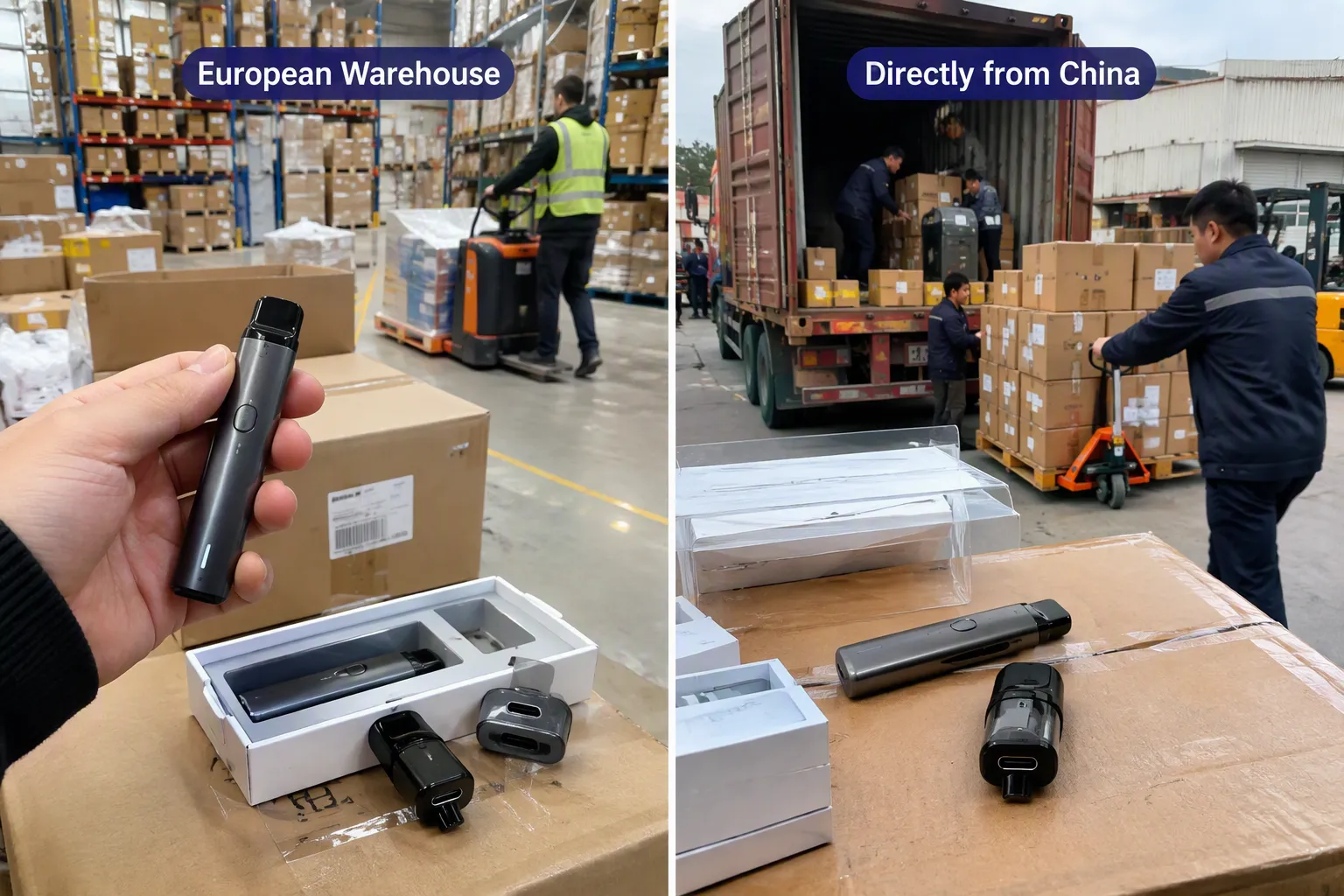
Eligible small and medium buyers may purchase available products from our European warehouse stock, with a starting quantity of 50 units per model. Larger importers may prefer direct China orders for volume purchasing, broader selection, or OEM/ODM projects. Buyers should verify destination requirements before ordering.
Conclusion
The types of e-cigarettes and vape kits should be evaluated as different business models, not as a simple product list. Disposable vapes can support straightforward complete-unit sales, prefilled pod systems can create recurring pod demand, and refillable devices can offer flexibility but require stronger inventory and support planning. I recommend that importers begin with channel fit, legal verification, manageable SKU counts, and clear after-sales terms. If you are sourcing for vape shops, smoke shops, convenience stores, or wholesale channels, contact Shenzhen Kingfuji Tech. Co., Ltd. at info@kingvapecig.com to discuss a practical product mix, available stock, or OEM/ODM options.
Sources
- Tobacco: E-cigarettes - World Health Organization (WHO)", Public-health guidance and device-taxonomy research distinguish disposable e-cigarettes from rechargeable devices using prefilled cartridges or pods and from refillable systems, while recognizing that product classifications can overlap as designs evolve
- Strengthening enforcement of e-cigarette regulations in Rio de Janeiro", International regulatory reviews document substantial variation in e-cigarette controls across jurisdictions, including differences in product authorization, sales, advertising, and use restrictions
- Importing Tobacco Products - FDA", Regulatory frameworks for electronic cigarettes commonly address nicotine-related product characteristics, labeling and packaging, product notification or authorization, and conditions for lawful marketing or importation
- The Ultimate Guide To Understanding Disposable Nicotine ...", Technical descriptions of disposable e-cigarettes characterize them as self-contained devices in which the battery, heating element, and e-liquid reservoir are incorporated into a unit intended to be discarded after use
- Use of electronic nicotine delivery system (ENDS) devices among ...", Research descriptions of pod-based e-cigarettes identify a rechargeable battery device used with replaceable pods or cartridges that contain e-liquid and the aerosol-generating components
- Youth and Young Adult Use of Pod-Based Electronic ... - PMC", Studies of pod-based e-cigarette designs report that pods and cartridges are generally engineered for particular battery platforms, with product-specific mechanical and electrical interfaces limiting cross-device interchangeability
- E-Cigarette, or Vaping, Products Visual Dictionary", E-cigarette device classifications describe refillable systems as rechargeable devices used with refillable tanks, pods, or cartridges that users replenish with e-liquid
- Review of Health Consequences of Electronic Cigarettes and the ...", Consumer-use studies and safety guidance identify e-liquid leakage, battery and charging concerns, and component replacement as recurring practical issues associated with some reusable e-cigarette devices