
Quick Answer
Vape charging time can become a costly receiving-inspection issue when a product takes much longer to charge than the packaging or manual states. A single slow unit may create concern about quality, returns, and customer complaints. I recommend treating the claim as a controlled procurement check, not as a fixed promise under every charger, cable, temperature, and battery condition.
A vape’s real charging time should be tested under the same conditions stated in its manual or specification sheet: compatible charger, suitable cable, defined starting battery state, and documented full-charge indicator. Buyers should test multiple samples and compare the result range. If results differ, they should first rule out test-condition differences, then document the evidence and ask the supplier to investigate possible unit or batch issues.
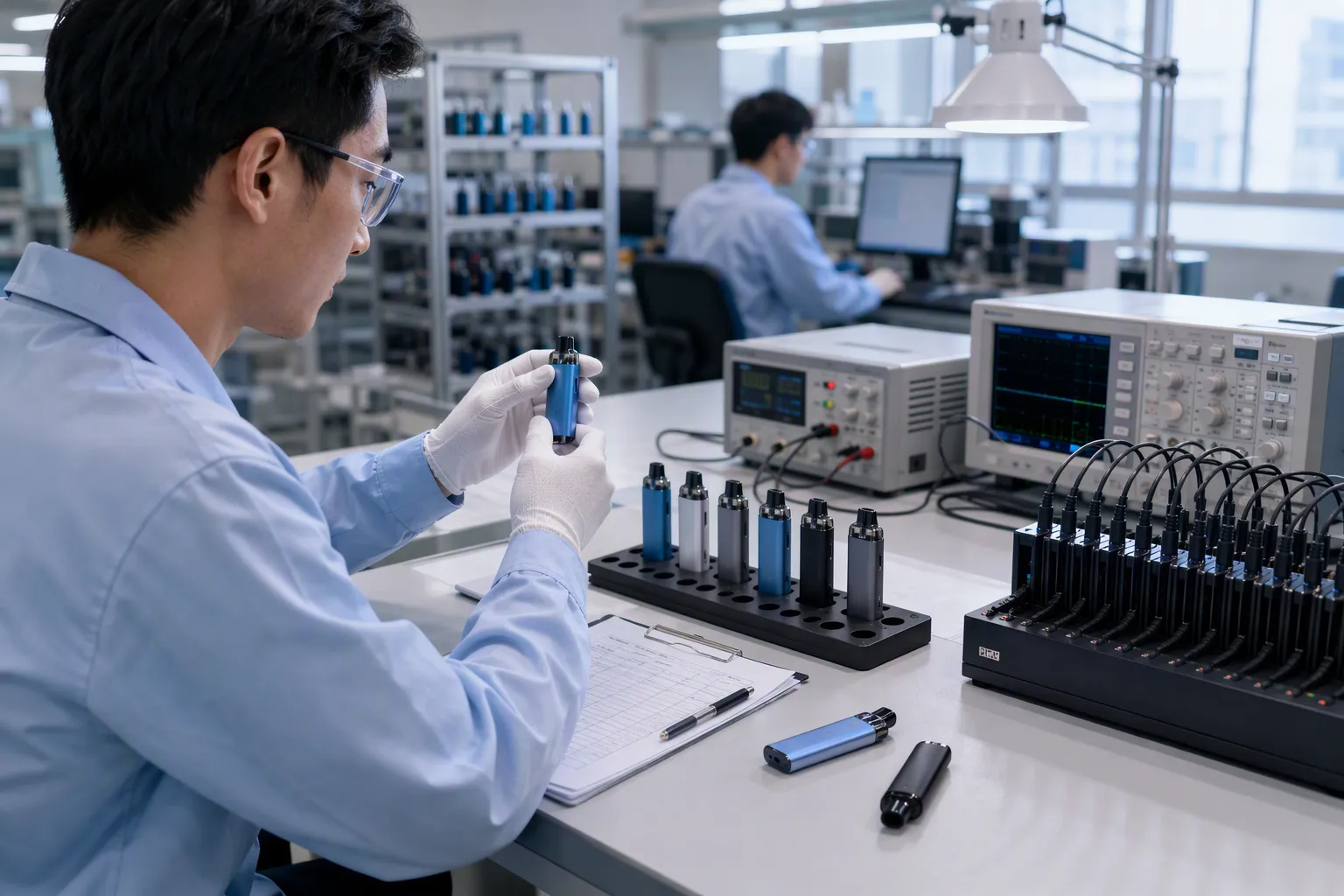
For importers, wholesalers, vape shops, and smoke-shop supply companies, charging time is not only a technical detail. It can affect customer satisfaction, return rates, inventory acceptance, and payment decisions. I have seen in routine product-development and pre-shipment checks that a clear process prevents many unnecessary disputes between buyers and suppliers.
Why Is a Vape’s Claimed Charging Time Not a Fixed Promise for Every Device Under Every Condition?
A buyer may see a charging-time claim on a box and expect every unit to reach full charge at exactly the same minute. That expectation can create confusion when one device finishes earlier or later. The better solution is to identify the conditions behind the claim before deciding that the product or batch has failed.
A claimed vape charging time normally applies only under defined test conditions[1], such as a specified input source, compatible cable, starting battery level, ambient environment, and documented full-charge indication. A different charger, cable, battery state, or test method can change the observed result.[2] Buyers should verify the stated conditions before treating a timing difference as a quality defect.
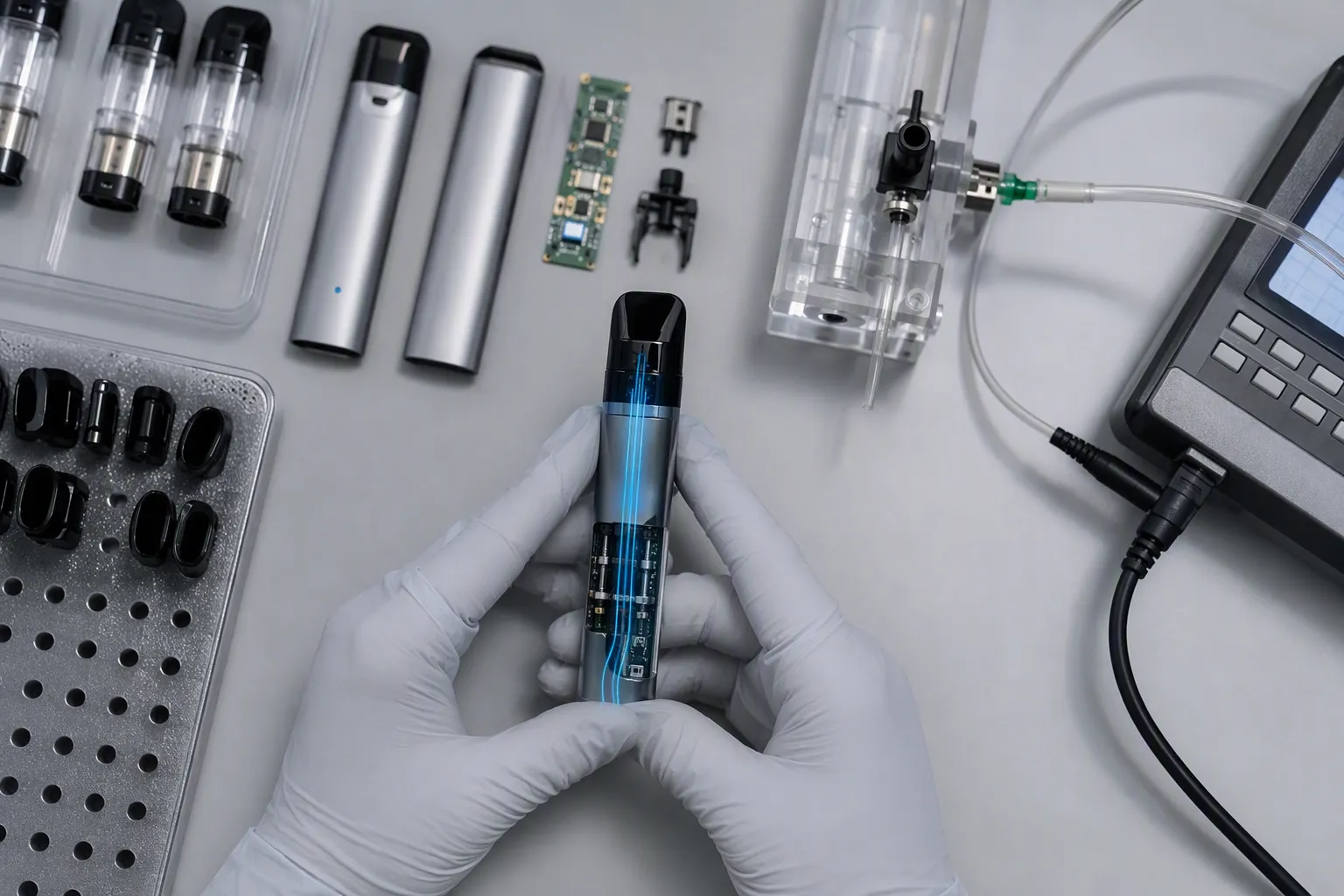
Start With the Product Documentation
The first question should not be, “Why did this vape take longer than the claim?” The first question should be, “What exactly does the supplier claim, and under what conditions?”
Before beginning a vape charging time test, I recommend collecting the available documents for the exact model or SKU:
- Product manual or user guide
- Packaging information
- Specification sheet
- Charging-port description
- Recommended charger or input rating
- Cable requirements, if stated
- Description of the charging indicator
- Description of the full-charge indication
- Any stated testing assumptions
Some vape products show one light while charging and another light when the battery reaches the documented full-charge state. Other products may use a screen icon, flashing pattern, or color change. Buyers should not assume that “the light changed” always means “fully charged” unless the product documentation says so.
Likewise, a device that can take a few puffs again is not automatically at full charge[3]. It may simply have reached a minimum usable battery level. That difference matters if you are evaluating whether the vape charging time matches a supplier’s stated specification.
Why Test Conditions Matter
A charging claim can be affected by ordinary variables. These variables do not automatically mean that a device has a defect. They simply mean that the test must be comparable.
| Test variable | Why it matters for vape charging time | Buyer action |
|---|---|---|
| Charger or power source | The input available to the device may differ from the stated test setup | Use the recommended compatible charger where available |
| USB cable | Cable condition and compatibility can affect the test setup | Use the supplied or verified compatible cable |
| Starting battery state | A partly charged device may finish sooner than a deeply discharged device | Define and record the starting condition |
| Ambient conditions | Temperature and surroundings may affect observed charging behavior[4] | Record relevant conditions if results are questioned |
| Full-charge indicator | Different users may stop timing at different points | Follow the manual’s documented full-charge signal |
| Product SKU or revision | Similar-looking products may have different specifications | Confirm the exact SKU before comparing results |
For procurement teams, this is important because a test without a controlled setup is difficult to use in a supplier claim. A supplier may reasonably ask what charger was used, what cable was used, whether the unit was fully depleted, and what indication was used to stop the timer.
That does not mean the buyer should accept unclear answers. It means the buyer should build evidence that is strong enough to support a fair decision.
A good receiving test does not try to prove a problem quickly. It tries to separate normal variation from a real quality risk.
When I work with product checks, I prefer to see a test record that another person can repeat. That record helps the buyer, the sales team, the warehouse team, and the supplier discuss the same facts instead of relying on memory or assumptions.
How Should Buyers Set Up a Repeatable Vape Charging Time Test?
A buyer may test a device casually at a desk, with an unknown cable and a random wall adapter, then receive a different result from the supplier. That can lead to wasted time and arguments. A simple, repeatable vape charging time test gives both sides a clearer basis for evaluating the product.
To test vape charging time fairly, buyers should use the documented compatible charger and cable, define the starting battery condition, begin timing when charging starts, and stop only when the product’s manual-defined full-charge indicator appears. They should record the model, sample number, charger details, cable, start time, finish time, and any unusual behavior.
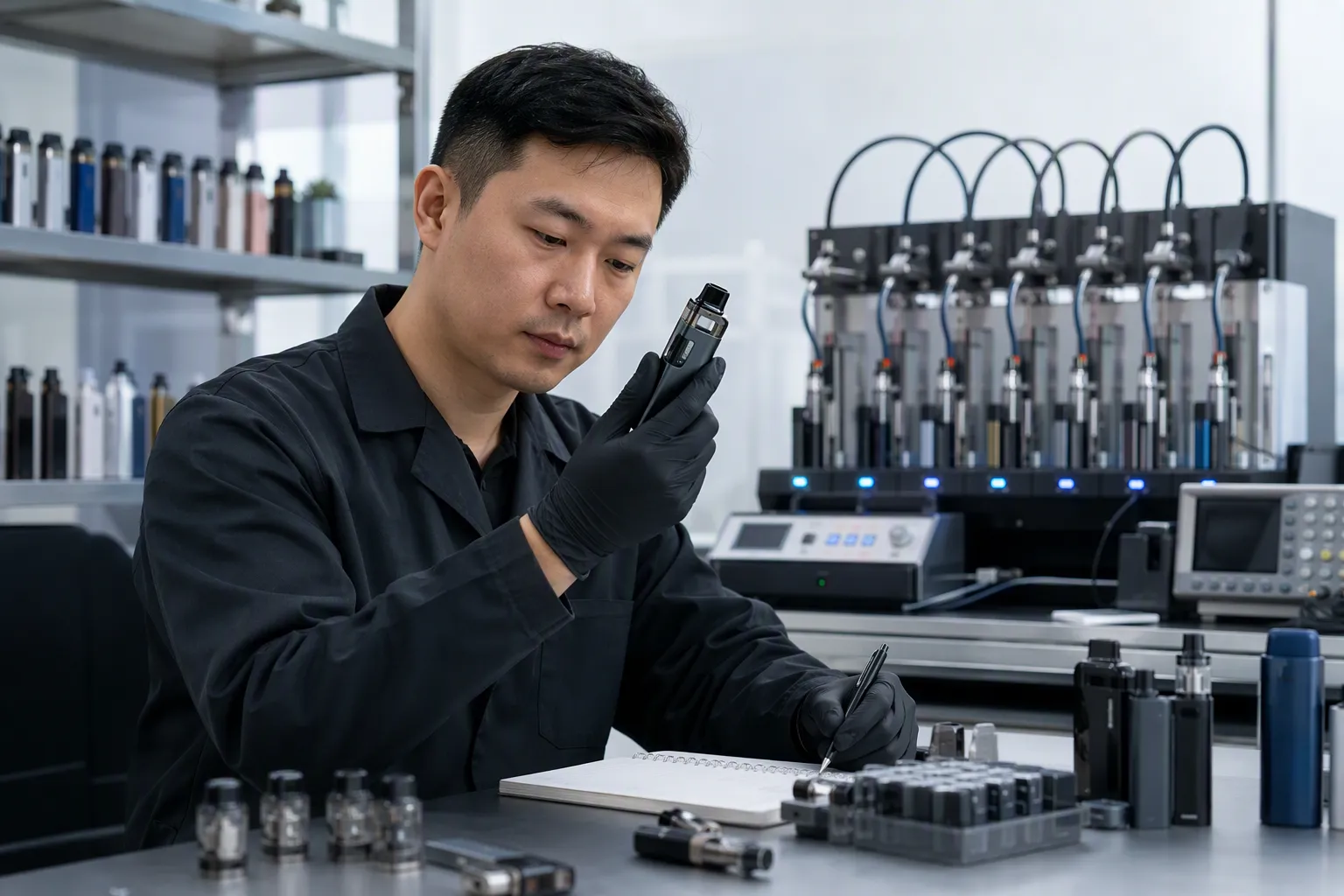
Build a Basic Receiving-Inspection Procedure
The goal is not to create a laboratory test. The goal is to create a practical procedure that a wholesaler, importer, or warehouse team can repeat before accepting a larger shipment.
I suggest using a simple written checklist. The same checklist should be used every time the team evaluates the same vape model.
Step 1: Confirm the Exact Product
Record the information that identifies the unit:
- Brand and model name
- SKU
- Color or variant, if relevant
- Batch or production information, if available
- Packaging version
- Date received
- Purchase order number
- Sample number, such as Sample 1, Sample 2, or Sample 3
This matters because a supplier may have similar products with different battery specifications, charging ports, or indicator behavior. A disagreement about vape charging time becomes difficult to resolve if the buyer cannot identify the exact item tested.
Step 2: Check the Documentation
Read the product manual before charging the device. Confirm:
- The recommended charging method
- The stated charger input or compatible power requirement
- The intended cable type
- The documented charging indication
- The documented full-charge indication
- Any warnings or restrictions stated by the manufacturer
If the product documents do not clearly explain these points, buyers should ask the supplier for clarification before making a quality judgment. A vague charging claim is itself something worth discussing during supplier evaluation.
Step 3: Define the Starting State
A repeatable test needs a defined starting condition. Buyers should not compare one nearly empty device with another device that was already partly charged unless the goal is specifically to test those separate conditions.
The supplier’s documentation may state how a starting condition should be prepared. If it does not, the buyer should describe exactly what they did. For example, a record could say:
- “Unit was received with no confirmed battery-state information.”
- “Unit was used until the product showed its documented low-battery indication.”
- “Unit was tested from the condition in which it arrived.”
The point is not to invent a universal method. The point is to make the condition visible and repeatable.
Step 4: Begin Timing and Observe Safely
Start timing when the device is connected and the documented charging process begins. Watch for the correct indicator behavior described in the manual.
Buyers should never leave charging tests unattended.[5] They should also avoid trying unsupported high-power chargers, bypassing device protections, opening the product, or attempting to modify charging components.
Stop the test immediately if you notice any of the following:
- Unusual heat[6]
- Unusual odor
- Swelling
- Port damage
- Loose connection
- Unstable or abnormal charging indication
- Intermittent charging behavior not described in the manual
If any of these conditions appear, do not continue testing to “see what happens.” Isolate the unit according to your internal process and contact the supplier with photos or video evidence.
Use a Simple Test Record
A clear record makes communication much easier. Buyers can use a table like this:
| Item | What to record |
|---|---|
| Product | Brand, model, SKU, and variant |
| Sample ID | Sample 1, 2, 3, and so on |
| Date and location | Date, warehouse, office, or inspection area |
| Charger | Type and stated output, if available |
| Cable | Supplied cable or verified compatible cable |
| Starting state | As received, documented low battery, or other stated condition |
| Charging start time | Exact time charging began |
| Full-charge time | Exact time of the manual-defined full-charge indicator |
| Total vape charging time | Measured duration |
| Observations | Indicator behavior, interruptions, heat, damage, or other notes |
| Evidence | Photos, video, packaging image, and specification sheet |
This approach protects buyers who want reliable evidence. It also helps responsible suppliers identify whether the issue is related to a test-condition mismatch, a unit-level problem, or a possible batch-level concern.
How Many Samples Should Be Tested Before a Buyer Questions Vape Charging Time?
One slow-charging sample can make a buyer worry about a whole shipment. However, one unit rarely provides enough evidence to judge an entire batch. A more useful approach is to test multiple units under matched conditions and compare the range of observed vape charging time results.
Buyers should test multiple vape samples rather than relying on one unit. They should use the same charger, cable, starting condition, and timing method for each sample, then compare the result range. Consistent differences across several units deserve supplier escalation, while one unusual unit may require separate investigation or after-sales handling.

Why One Unit Is Not Enough
In a wholesale environment, one device can be affected by handling, shipping, storage, incomplete initial charging, cable condition, or an isolated product issue. A single observation may be useful, but it should not automatically become a batch conclusion.
For example, a buyer may receive a sample that appears to charge more slowly than expected. Before telling the supplier that the whole order has a defect, the buyer should ask:
- Was the charger consistent with the product documentation?
- Was the cable consistent across all tests?
- Was the starting condition comparable?
- Did the buyer wait for the documented full-charge indication?
- Did other samples show the same pattern?
- Did the product show any abnormal behavior?
This method is especially useful for importers receiving mixed cartons, retailers checking new suppliers, and wholesalers preparing to distribute products to vape shops, smoke shops, convenience stores, gas stations, or regional distributors.
Compare a Range, Not Identical Minutes[7]
A responsible inspection process should not demand that every device finishes charging at the exact same minute and second. The better question is whether the results form a reasonable pattern under the same documented setup.
Buyers can organize the results in a simple table:
| Sample | Test setup | Measured vape charging time | Full-charge indication observed | Notes |
|---|---|---|---|---|
| Sample 1 | Same documented setup | Record actual result | Yes/No | Record observations |
| Sample 2 | Same documented setup | Record actual result | Yes/No | Record observations |
| Sample 3 | Same documented setup | Record actual result | Yes/No | Record observations |
| Sample 4 | Same documented setup | Record actual result | Yes/No | Record observations |
| Sample 5 | Same documented setup | Record actual result | Yes/No | Record observations |
I do not recommend inventing a universal “acceptable” number of minutes or a universal tolerance for unspecified vape models. That type of conclusion should come from the supplier’s authorized product specifications and the manufacturer’s verification process.
Instead, buyers should focus on patterns:
- Do several units show a similar result?
- Do results differ widely under the same setup?
- Does one unit behave differently from all others?
- Does any unit show a safety-related warning sign?
- Does the supplier’s documentation explain the observed result?
Match Sample Size to the Commercial Risk
A buyer evaluating a small initial order may use a practical sample check before placing a larger order. A larger importer or distributor may need a more formal incoming-quality-control plan based on order value, customer commitments, and after-sales exposure.
For smaller buyers, a practical check may support a faster decision. This is relevant for customers who need quick-moving inventory and want to reduce cash-flow pressure. For larger buyers importing directly from China, a more structured sample plan can support purchase-order acceptance, supplier accountability, and future OEM or ODM cooperation.
The important point is consistency. If the buyer changes the charger, cable, starting state, or endpoint from sample to sample, the vape charging time comparison becomes much less useful.
What Should Buyers Do When Actual Vape Charging Time Differs From the Claim?
A difference between the observed and claimed charging time can create immediate pressure. A buyer may fear returns, delayed stock release, or damage to local customer trust. The right next step is not to argue based on a short message. The right step is to separate test-condition differences from possible product abnormalities with documented evidence.
When real vape charging time differs from a claim, buyers should first verify the test setup against the manual or specification sheet. They should then test additional samples under matched conditions and send the supplier a complete record. If unusual heat, odor, swelling, port damage, or abnormal charging behavior occurs, buyers should stop testing immediately and request supplier guidance.
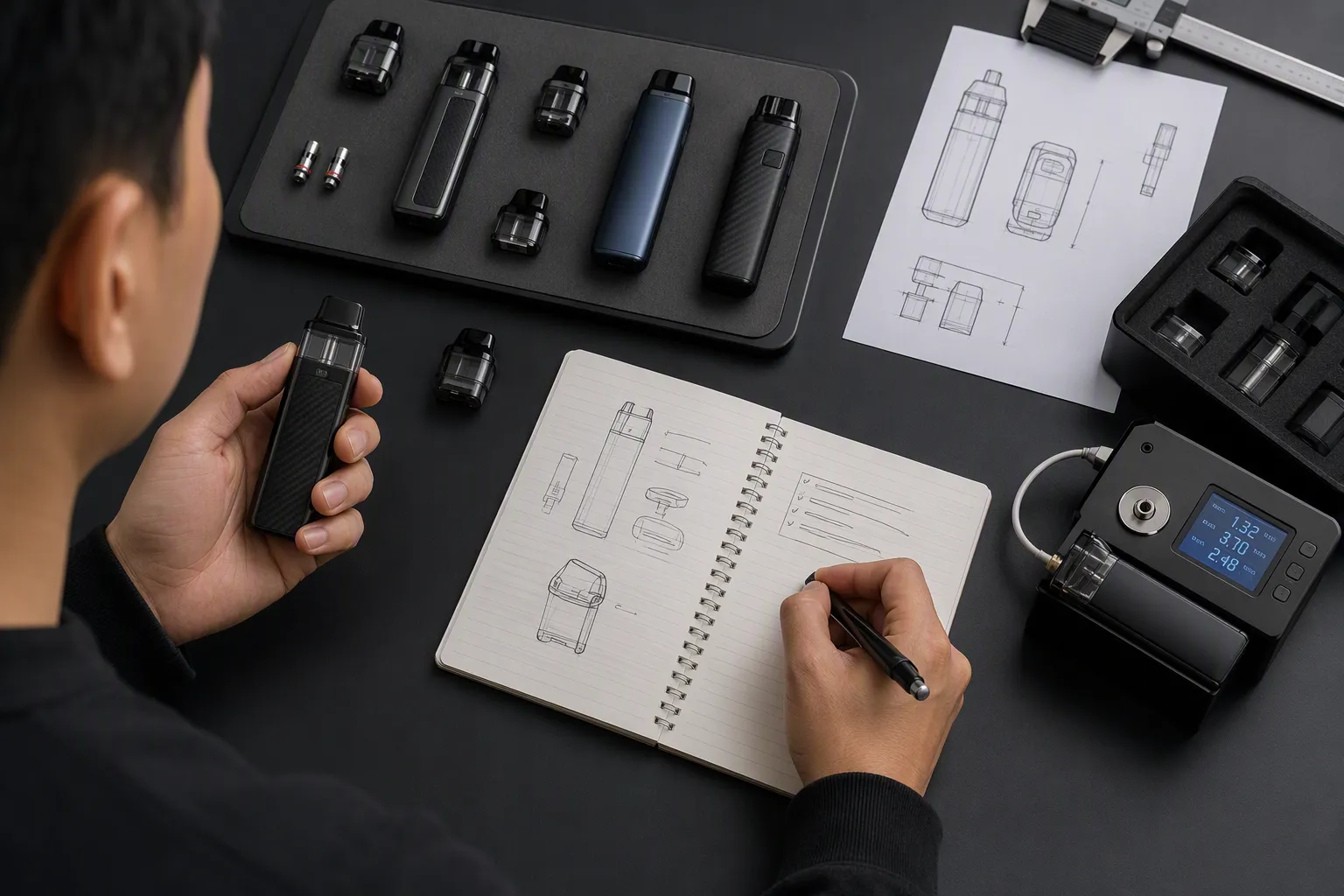
Separate a Test Mismatch From a Product Issue
A buyer should review the basics before escalating:
- Confirm the SKU. Make sure the packaging, product, and specification sheet refer to the same model.
- Confirm the charger and cable. Check whether the test used the documented compatible setup.
- Confirm the starting condition. A different battery state can affect the observed timing.
- Confirm the endpoint. Stop timing only at the manual-defined full-charge indication.
- Repeat the test. Use multiple samples and the same conditions.
- Review observations. Note abnormal heat, damage, interrupted charging, or inconsistent indicators.
This process helps buyers avoid two expensive mistakes. The first mistake is rejecting usable inventory because the test method was inconsistent. The second mistake is accepting a possible batch problem because the buyer only checked one unit.
Send the Supplier an Evidence-Based Report
When buyers contact a supplier, they should send enough information for the supplier to review the case properly. A message saying only “charging is too slow” is difficult to investigate. A structured report is much stronger.
Include:
- Purchase order number
- Product model and SKU
- Batch or carton information, if available
- Number of samples tested
- Charger and cable used
- Starting condition for each sample
- Measured vape charging time for each sample
- Description of the charging and full-charge indicators
- Photos and video where useful
- Any abnormal behavior or visible damage
- A copy or photo of the relevant manual or packaging claim
A practical supplier message could say:
“We tested five units of SKU [model] using the documented compatible setup. We recorded the starting condition, charging duration, and full-charge indicator for each unit. The attached table shows the results. Please confirm whether these conditions match your stated test method and advise whether you recommend further inspection, replacement handling, or batch review.”
This communication style is direct but fair. It gives the supplier a chance to verify the claim against the correct conditions. It also creates a record that buyers can use internally when deciding whether to accept goods, hold inventory, request after-sales support, or adjust future supplier selection.
Use Charging Checks in Supplier Evaluation
Charging time should not be the only quality-control point. Buyers should assess the complete supplier process, especially when they plan larger imports or private-label projects.
During supplier evaluation, I recommend asking:
- Can the supplier provide an authorized manual and specification sheet?
- Can the supplier explain the documented charging test conditions?
- Can the supplier identify the full-charge indicator clearly?
- Does the supplier support pre-shipment checks?
- Can the supplier provide a clear after-sales process for confirmed abnormalities?
- Can the supplier trace the SKU, batch, and order details?
- Can the supplier communicate quickly when a buyer sends evidence?
At Shenzhen Kingfuji Tech. Co., Ltd., we work with buyers who need one-stop sourcing across vape and smoking-accessory categories, as well as customers seeking factory-based OEM and ODM cooperation. For buyers who need lower-MOQ, faster European delivery, our overseas stock options may suit certain products and markets. For larger importers, direct China sourcing may offer more room for price planning, product development, and larger-volume purchasing.
However, buyers should always verify current product specifications, stock availability, market requirements, and any applicable compliance documents before making an application-specific purchasing decision.
Frequently Asked Questions
Does every vape need to match the claimed charging time exactly?
No. A claimed vape charging time should be assessed under the conditions stated in the product documentation. Charger type, cable, starting battery state, environment, and the documented full-charge indicator can affect the observed result. Buyers should compare multiple samples under the same setup.
What charger should I use for a vape charging time test?
You should use the charger and cable recommended or documented for the exact product model. Do not use unsupported high-power chargers or try to modify the charging setup. If the manual does not provide clear information, ask the supplier for written clarification before testing.
How many vape samples should a wholesaler test?
The appropriate number depends on the order size, commercial risk, and your internal quality process.[8] The key point is that buyers should test more than one unit and use matched conditions. A single unit can indicate a concern, but it should not automatically define the whole batch.
Does a changed light always mean the vape is fully charged?
No. Buyers should only treat an indicator as a confirmed full-charge signal if the product manual or supplier documentation defines it that way. Some indicators may show that charging has started, paused, or reached a different battery state rather than full charge.
What should I do if a vape becomes unusually hot while charging?
You should stop the test immediately. Do not continue charging or leave the product unattended. Record the model, sample number, charger, cable, and observed behavior, then contact the supplier for guidance. Buyers should treat unusual heat, odor, swelling, or port damage as a priority inspection issue.
Conclusion
A reliable vape charging time check is not about demanding identical results from every device in every situation. It is about using the right documentation, compatible equipment, defined starting conditions, multiple samples, and clear records. This process helps importers and wholesalers distinguish ordinary test differences from isolated unit issues or possible batch-level risks. If you are sourcing vapes, disposable vapes, batteries, atomizers, or smoking accessories, contact me at info@kingvapecig.com to discuss product selection, documented pre-shipment checks, OEM/ODM options, and one-stop supply support.
Sources
- Accounting for Lithium-Ion Battery Degradation in Electric Vehicle ...", Battery-charging duration is contingent on the initial state of charge, the applied charging protocol, and temperature; consequently, a published charge-time value is meaningful only in the conditions under which it was determined
- [PDF] Practical applications of the earth-current meter.", Battery charge time depends on the current delivered to the cell and on its initial state of charge; resistance in the charging path can reduce delivered voltage or current under load
- [PDF] A Unified Open-Circuit-Voltage Model of Lithium-ion Batteries for ...", A lithium-ion battery can operate before it reaches full state of charge; restoration of device operation therefore does not by itself demonstrate completion of the full charging cycle
- [PDF] Heat Generation Concerns associated with extreme fast charging", Lithium-ion battery charging behavior is temperature-dependent, because cell impedance, electrochemical reaction rates, and charging limits change across operating temperatures
- Learn more about lithium-ion batteries fires and what you can do to ...", Consumer and fire-safety authorities advise users to follow manufacturer charging instructions and to avoid leaving lithium-ion battery charging unattended because battery failures can create fire hazards
- More than One Million Anker Power Banks Recalled Due to Fire and ...", Safety guidance identifies excessive heat, swelling, unusual odor, and visible damage as warning signs of a potentially failing lithium-ion battery and advises discontinuing use or charging when such signs occur
- 2.4.4. Analysis of variability - Information Technology Laboratory", Measurement science recognizes that repeated observations made under specified conditions have a distribution or dispersion rather than necessarily identical values; repeatability should therefore be evaluated with documented test conditions and observed variation
- What kinds of Lot Acceptance Sampling Plans (LASPs) are there?", Lot-inspection sampling standards structure sample selection around lot size, inspection level, and specified quality-risk parameters, rather than prescribing one universal sample count for all procurements