
Quick Answer
Cold weather can change vape battery response, e-liquid viscosity, and draw performance at the same time. When a customer reports weak vapor, a tight draw, or a device that seems slow to activate, I do not immediately classify it as a product defect. I first look at the product, exposure conditions, storage, and the exact symptom so I can recommend a fair next step.
Cold weather can temporarily reduce available vape battery performance[1], make e-liquid thicker[2], and restrict wicking or airflow[3]. These effects do not automatically prove a manufacturing defect.[4] Buyers should identify the device type, battery specification, liquid formulation, temperature exposure, and symptom duration before deciding whether the issue needs customer guidance, further testing, or formal after-sales evaluation.
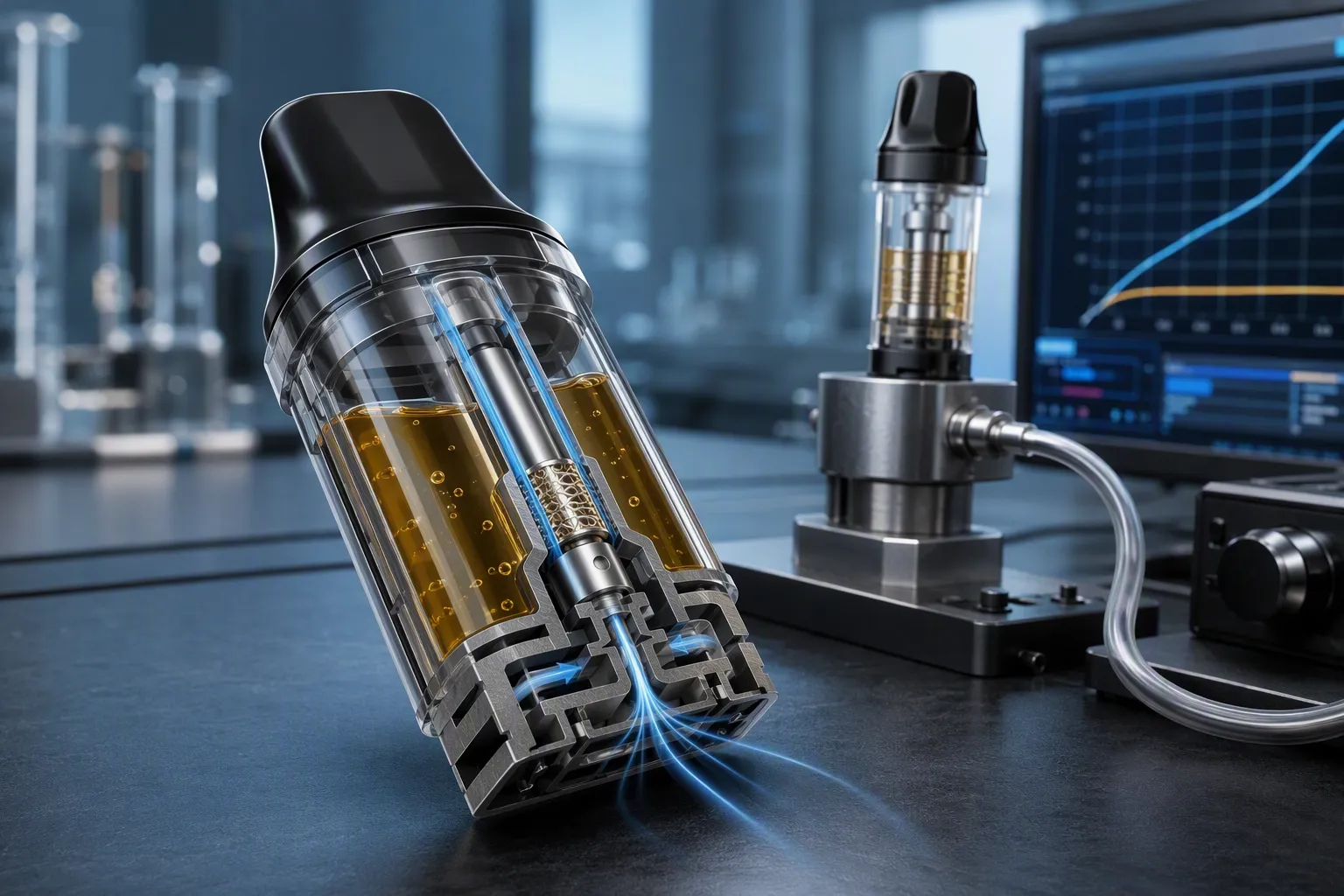
Many European and North American buyers deal with these questions during winter. A product may leave a warehouse in good condition but travel through cold logistics environments, remain in a delivery vehicle, or be stored near a shop entrance. The final user may then compare its performance with a device kept indoors. I find that separating the different mechanisms helps importers and retailers avoid unnecessary disputes while still identifying genuine quality concerns.
How Does Cold Weather Affect Vape Battery, Viscosity and Draw Performance?
Cold weather can influence a vape in several different ways. A battery may feel less responsive, while colder e-liquid may flow more slowly through the wick. The device structure, airflow design, battery specification, liquid formulation, and time spent in the cold all affect the result. I therefore evaluate the full operating context rather than one symptom alone.
The most useful first step is to separate three questions:
- Is the battery responding normally after the device returns to a suitable indoor environment?
- Is the e-liquid moving through the coil and wick as expected?
- Is the draw problem caused by liquid flow, airflow structure, condensation, or a genuine component issue?
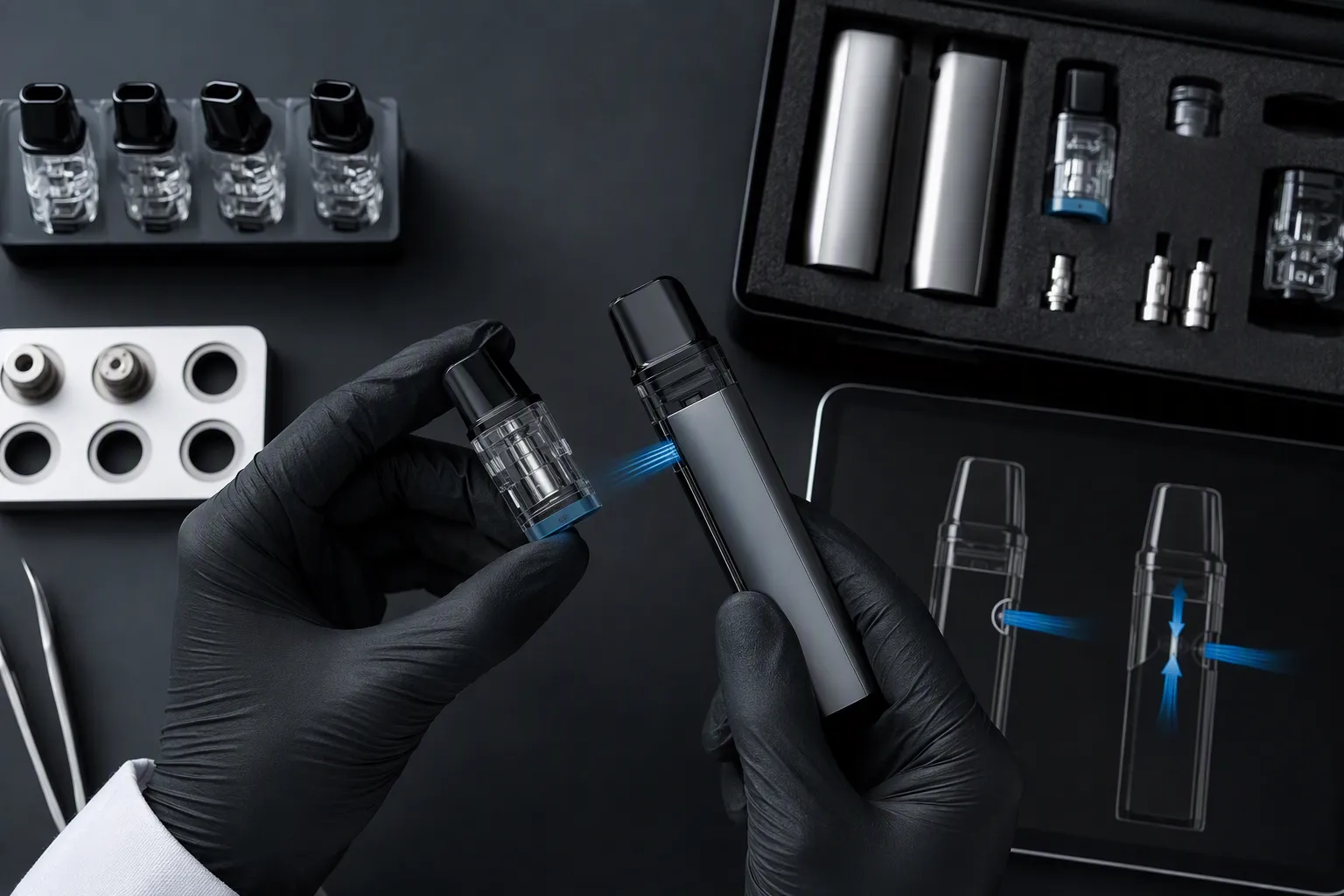
When I discuss winter performance with B2B buyers, I usually begin with the product category. A disposable vape, a refillable pod, a 510 battery, a CBD battery, and a larger vaporizer may not react in the same way. Their battery capacities, control boards, heating elements, reservoirs, airflow paths, and liquid types can differ substantially.
Battery response is only one part of the problem
Cold exposure can affect how a battery delivers available power. A user may notice slower activation, weaker heating, or a shorter apparent runtime[5] until the device reaches a more suitable operating condition. However, I avoid assigning a universal temperature limit or fixed percentage of performance loss because the actual response depends on the battery design, cell specification, electronic controls, charge level, and product documentation.
For procurement teams, the practical point is simple: a cold-weather complaint should be documented before it is classified.
I recommend recording:
- Product model and batch information
- Battery type and stated capacity
- Whether the product is disposable, rechargeable, or replaceable-battery
- Charge level when the symptom appeared
- Whether the device was transported or stored outdoors
- Approximate duration of cold exposure
- Whether the device improved after gradual indoor acclimatization
- Whether the problem affects one unit or a wider batch
- Any unusual heat, physical damage, leakage, odor, or visible swelling
A single unit that behaves differently after being left in a cold vehicle may require a different response from a group of units showing the same persistent fault in a controlled indoor environment.
Why cold e-liquid can create a tight or weak draw
I often see buyers connect a tight draw directly to battery quality. That connection is not always correct. E-liquid becomes more viscous when it is colder. In practical terms, it flows more slowly through the reservoir, wick, and coil area.
That change may produce several symptoms:
- Slower wicking
- Less consistent liquid supply
- A weaker or delayed vapor output
- More noticeable draw resistance
- A dry or under-supplied taste if the user continues drawing repeatedly
- A temporary difference between the first puff and later puffs
The liquid formulation also matters. Different ratios, flavor systems, additives, and product designs can produce different cold-weather behavior. I do not treat all e-liquids or vape products as identical, and I do not recommend using a general rule for every model.
The draw itself also depends on the airflow path. A narrow airflow channel, condensation, a partially blocked mouthpiece, or liquid movement near the inlet can change the user’s experience.[6] In some products, the battery may be working correctly even though the user feels that the device is difficult to draw.
A practical symptom comparison
| Reported symptom | Possible cold-related influence | What I would check first |
|---|---|---|
| Device activates slowly | Battery response or control behavior | Charge level, exposure history, model specification |
| Vapor feels weaker | Battery output, slower wicking, or both | Whether the issue changes indoors and whether liquid reaches the coil |
| Draw feels tight | Viscosity, condensation, mouthpiece, or airflow path | Airflow opening, visible moisture, liquid condition |
| Device seems empty sooner | Temporary output change or user puff pattern | Actual usage, charge state, liquid level, and comparison units |
| Dry or harsh taste | Insufficient wicking or repeated draws | Liquid movement, coil condition, and user instructions |
| No response at all | Battery, connection, control, or physical fault | Safety inspection and formal product evaluation |
This table does not diagnose a product. It gives a buyer a sensible screening structure. I always recommend that application-specific or safety-related decisions be handled by qualified technical professionals and supported by the supplier’s confirmed documentation.
What should a buyer ask the supplier?
A serious procurement review should include more than a product photograph and a nominal battery capacity. I suggest asking for the relevant product specification and operating information, such as:
- Battery type and rated capacity
- Charging requirements, where applicable
- Recommended storage and operating information stated by the manufacturer
- E-liquid or cartridge specifications, where relevant
- Coil or heating-element details
- Airflow structure or product drawings when available
- Batch identification method
- Inspection process and quality records
- After-sales procedure for confirmed defects
- Packaging and transport considerations
I use supplier documentation as the starting point, not as a substitute for professional verification. Buyers should check that the documents match the actual model and batch. They should also confirm whether the specification applies to the finished product or only to an individual component.
Why transport and warehousing deserve attention
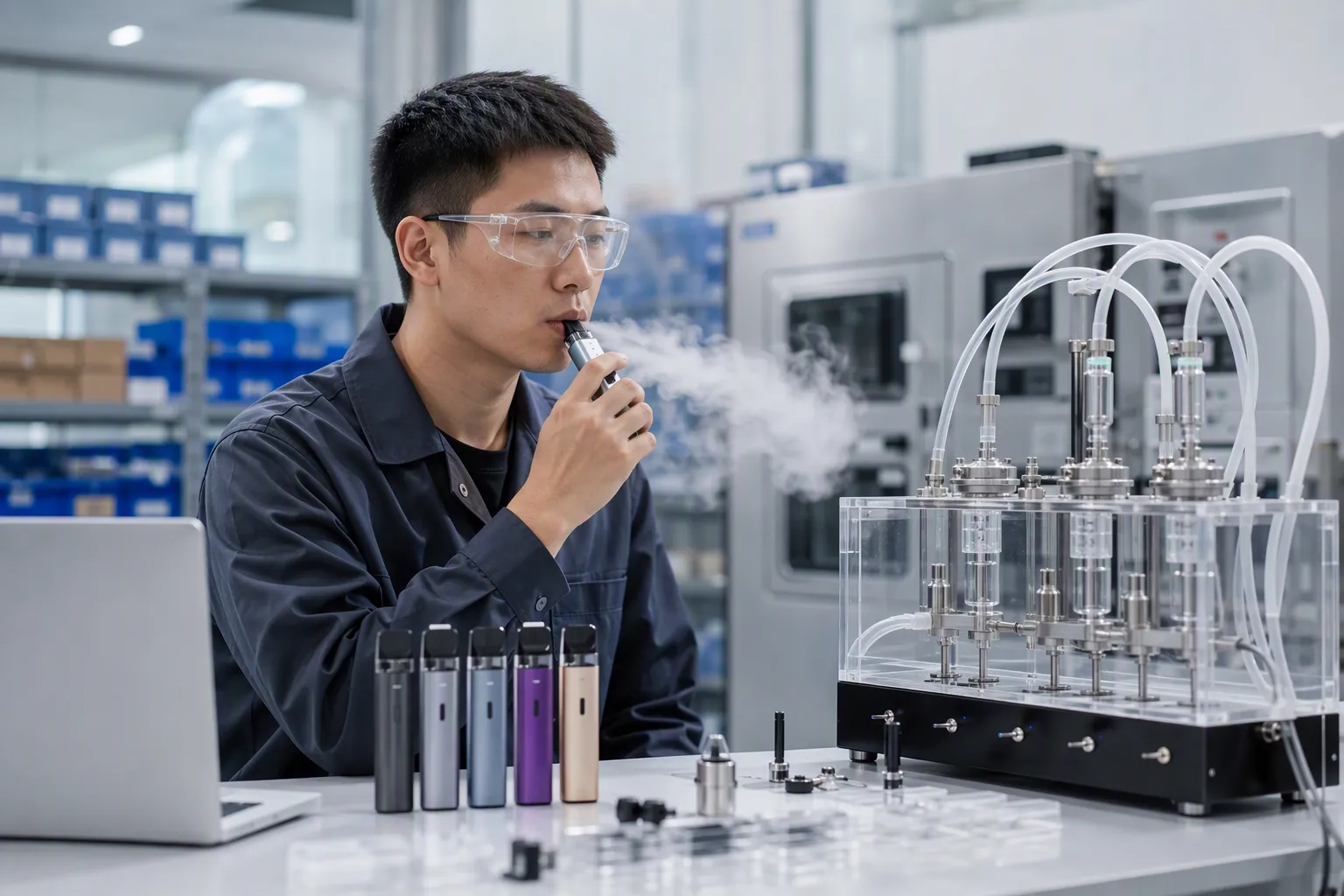
A buyer may evaluate a product at room temperature but sell it during a cold season. That gap can create confusion. The product may experience several different environments before reaching the end user:
- Factory or supplier warehouse
- Domestic transport
- Export handling
- Air, road, or sea freight
- Import warehouse
- Local delivery vehicle
- Retail storage
- Customer’s pocket, car, or outdoor environment
The duration and sequence of exposure matter. A short cold period followed by indoor storage may create a temporary symptom. Repeated temperature changes may also increase condensation around openings or mouthpieces.[7] I do not claim that every temperature change creates a defect, but I do consider it part of a responsible supply-chain review.
For smaller wholesalers and vape shops, low-volume purchasing from a nearby regional warehouse can reduce the time between dispatch and retail sale. For larger importers, direct shipments may offer stronger unit economics and OEM or ODM flexibility, but the buyer should plan seasonal storage, delivery timing, and customer support in advance. The correct choice depends on sales volume, cash-flow needs, inventory planning, and the product category.
How I separate a temporary response from a likely defect
I use a simple escalation path. It helps protect both the buyer and the supplier.
Step 1: Record the complaint accurately
“Not working in the cold” is too broad for a useful investigation. I ask whether the device fails to activate, produces less vapor, feels difficult to draw, leaks, tastes dry, or shows a visible safety concern.
Step 2: Identify the exposure
I ask where the product was stored, how long it remained there, whether it was inside a vehicle, and whether the complaint affects one unit or many units. I also ask whether the package was opened and used immediately after cold exposure.
Step 3: Check the product documentation
I compare the product model, battery details, liquid information, and supplier instructions. I do not apply specifications from one model to another simply because the products look similar.
Step 4: Allow suitable acclimatization
If the product has been exposed to cold, I advise following the manufacturer’s documented handling guidance and allowing it to return gradually to an appropriate indoor condition. I do not recommend extreme heating, placing a device on a radiator, or using an improvised method to warm it quickly.[8]
Step 5: Look for persistent abnormal behavior
If the symptom remains under normal documented conditions, or if several units from the same batch show the same issue, I treat the complaint more seriously. The supplier may need to inspect samples, compare batch data, and review production or quality records.
Step 6: Escalate safety-related signs
A device with swelling, unusual heat, damage, leakage, burning odor, or other abnormal physical signs should not be treated as a routine performance complaint. I recommend stopping use and seeking qualified technical guidance. Buyers should follow applicable safety procedures and the product’s documentation.
How this helps wholesalers and retailers
A wholesaler often sits between the manufacturer and many smaller shops. If every winter complaint becomes an automatic return, logistics costs rise and useful inventory may be removed from sale unnecessarily. If every complaint is dismissed as “just cold weather,” the wholesaler may overlook a real batch or component problem.
A documented decision process creates a better balance. It allows the buyer to explain that:
Cold exposure can temporarily change performance, but persistent or safety-related abnormalities still require proper investigation.
This approach also helps retail staff give clearer instructions. They can ask what happened before the problem appeared and avoid making unsupported promises about runtime, temperature tolerance, or guaranteed performance.
Product selection questions for winter markets
Before placing a seasonal order, I encourage buyers to ask questions that connect product design with their sales environment:
- Will the product be sold in a cold climate or mostly indoors?
- Will the units remain in local inventory for weeks or months?
- Does the target customer use the product outdoors?
- Does the product contain prefilled liquid, a cartridge, or a refillable reservoir?
- Does the supplier provide clear model-specific documentation?
- Can the supplier identify batches during after-sales handling?
- Can the buyer purchase a reasonable initial quantity for market testing?
- Does the sales channel need fast regional replenishment?
- Will the buyer provide usage information to downstream shops?
These questions are valuable for both small and large B2B buyers. A small retailer may prioritize low MOQ and quick replenishment because cash flow matters. A larger importer may prioritize container planning, price structure, private labeling, and production coordination. Neither buyer should treat cold-weather behavior as an isolated specification.
Why customer education can reduce avoidable returns
Some users expect a vape to perform exactly the same after being stored outdoors as it does after being kept indoors. That expectation may not match the product’s documented operating conditions. A short, accurate explanation can prevent confusion:
- Keep the product according to the manufacturer’s storage guidance.
- Avoid rapid or extreme heating.
- Check that the mouthpiece and airflow opening are clear.
- Do not continue using a device that shows unusual heat, swelling, damage, or leakage.
- Contact the retailer with the model, purchase information, and a clear description of the symptom.
- Do not assume that weak vapor always means low battery quality.
I prefer instructions that explain the reason behind the action. When customers understand that battery response and liquid flow are separate factors, they can describe the issue more accurately. Better descriptions help retailers and suppliers make fairer after-sales decisions.
What my supply-chain experience teaches me
In my work with vape products, atomizers, 510 batteries, CBD batteries, disposable vapes, and related devices, customer questions often begin with a simple symptom. The useful answer usually requires a wider view. I need to understand the model, the product documents, the sales environment, the shipping route, and the customer’s intended use.
I have found that procurement decisions improve when buyers compare suppliers on more than price. They should consider:
| Evaluation area | Questions for the buyer |
|---|---|
| Product fit | Does the design match the local market and intended use? |
| Documentation | Can the supplier provide model-specific information for verification? |
| Manufacturing capability | Can the supplier support stable repeat orders and product development? |
| Quality handling | Can the supplier identify and investigate batch concerns? |
| Logistics | Is regional stock or direct import more suitable for the buyer’s cash flow? |
| MOQ | Can the buyer test demand before committing excessive capital? |
| After-sales | Is there one clear process for reporting and resolving confirmed problems? |
| Communication | Can the supplier explain technical symptoms in practical language? |
My company operates in Shenzhen, where I work with a broad electronic cigarette and smoking-accessory supply chain. We also support factory production, OEM/ODM coordination, and product sourcing. I mention this context because it shapes how I approach complaints: I look at the complete route from product design and documentation to shipment, storage, retail handling, and end-user guidance.
That experience does not allow me to claim that every cold-weather issue has one cause. It gives me a practical reason to ask better questions before reaching a conclusion.
Frequently Asked Questions
Does cold weather permanently damage a vape battery?
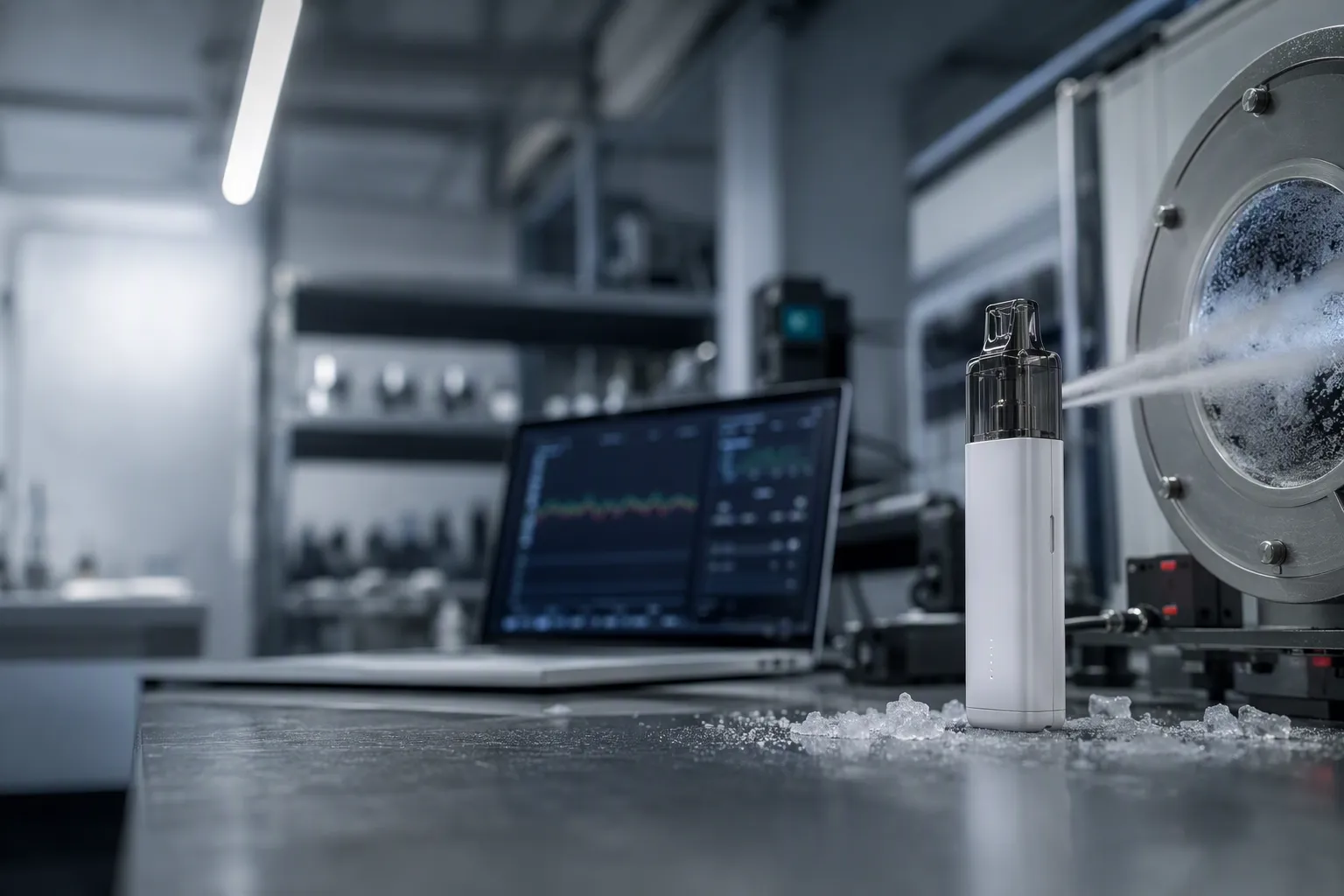
Cold exposure does not automatically mean that a vape battery has permanent damage. Performance can change temporarily, depending on the product design, battery condition, charge level, and exposure. A device that shows persistent abnormal behavior, physical damage, unusual heat, or other safety signs should be removed from use and assessed through the appropriate technical or after-sales process.
Why does vape liquid become thicker in cold weather?
Vape liquid can become more viscous when it is colder, so it may move more slowly through a reservoir, wick, or coil. This change can affect vapor production, wicking, and draw feel. The result varies by formulation and device structure, so buyers should not apply one universal expectation to every product.
Can cold weather cause a tight draw?
Cold weather can contribute to a tight draw when thicker liquid, condensation, or liquid movement affects the airflow or mouthpiece area. However, a tight draw may also result from the device structure, blockage, assembly, or another issue. I recommend checking the product model and physical airflow path before identifying the cause.
Should wholesalers automatically accept winter-related returns?
Wholesalers should avoid both automatic rejection and automatic acceptance. They can first document the symptom, exposure conditions, model, batch, and number of affected units. Temporary behavior may improve after suitable acclimatization, while persistent or safety-related problems require formal investigation and appropriate after-sales handling.
What should importers ask before buying vape products for a cold climate?
Importers should ask for confirmed product specifications, model-specific storage information, battery details, liquid or cartridge information, quality procedures, batch identification, and after-sales terms. They should also plan winter transport, warehouse conditions, customer education, and replenishment timing. A qualified professional should evaluate application-specific safety and compliance questions.
Conclusion
Cold weather can influence vape battery response, e-liquid viscosity, wicking, airflow, and draw performance, but these effects should not be treated as one universal product-quality problem. I recommend that importers, wholesalers, and retailers document the product, exposure, symptom, and batch before deciding on returns or supplier claims. Buyers should use confirmed specifications, practical customer guidance, and a clear escalation process. If you are evaluating vape products for winter sales, contact Kingfuji Tech at info@kingvapecig.com or +86 13928420527 to discuss product documentation, sourcing, OEM/ODM options, and a supply plan suited to your market.
Sources
- Batteries for Electric Vehicles - Alternative Fuels Data Center", Low temperatures can increase lithium-ion cell resistance and reduce available power or capacity until the cell returns to an appropriate operating temperature
- Rheological characterization of topical carbomer gels neutralized to ...", Measurements of propylene glycol and glycerol show that their viscosity increases as temperature decreases, supporting the expectation that liquids containing these constituents may flow more slowly in cold conditions
- Elemental composition of vaping and smoking aerosols - PMC", Research on e-cigarette liquid transport indicates that e-liquid viscosity can influence capillary wicking and aerosol-generation conditions in wick-and-coil devices
- Batteries for Electric Vehicles - Alternative Fuels Data Center", Battery-safety and energy guidance recognizes that ambient temperature can affect battery performance, so a temperature-related symptom alone is not sufficient evidence of a manufacturing defect
- Lithium-Ion Batteries under Low-Temperature Environment", Low-temperature lithium-ion testing shows reduced voltage and power capability under load, effects that can appear in electrically heated devices as weaker output or shorter apparent runtime
- Chronic airway inflammatory diseases and e-cigarette use", Studies of electronic-cigarette airflow indicate that pressure drop and draw resistance depend on airway geometry and can be altered when liquid or condensate affects the flow path
- What Is Humidity? | NESDIS - NOAA", Meteorological guidance explains that condensation forms when moist air is cooled to its dew point or contacts a surface below that temperature, providing a mechanism by which temperature transitions can create moisture around openings
- Lithium-ion Battery Safety", Lithium-ion battery safety guidance advises avoiding excessive heat and following manufacturer instructions, supporting the avoidance of radiators and improvised warming methods