
Your global vape page isn't working. It's confusing buyers and attracting the wrong leads. Creating market-specific pages is the key to building trust, ensuring compliance, and boosting wholesale orders.
Yes, market-specific pages work better because they directly address local regulations, search keywords, and buyer concerns. This builds trust with wholesale buyers, improves SEO, and ensures the products you display are actually legal to sell in their specific country, leading to higher-quality inquiries and sales.
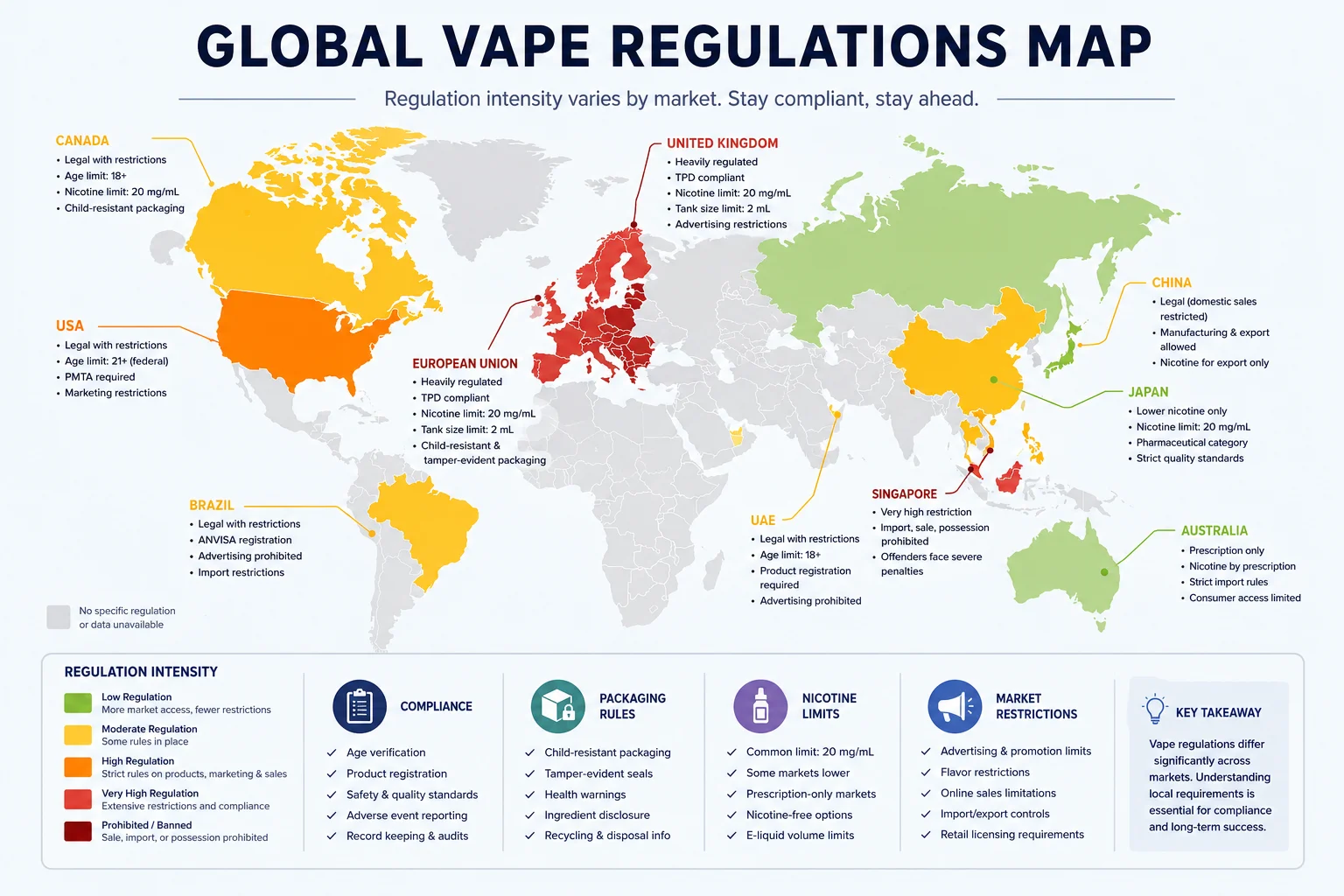
Selling vapes online to a global audience feels like a great idea. You build one website, list all your products, and wait for orders to roll in from everywhere. But in my 15 years in this business, I've learned that this approach is a recipe for failure, especially in a heavily regulated industry like vaping. A single, one-size-fits-all page creates confusion for your buyers and can put both of you at legal risk. The real path to growth is to get specific. It's time to stop thinking globally and start acting locally with your web pages.
Why Can't One Global Vape Page Serve Every Market?
You're trying to sell to everyone with a single page. But buyers from the UK, Germany, and the US have completely different rules. This mismatch wastes everyone's time.
A single global vape page fails because regulations are not universal. Translating content isn't enough when product legality, nicotine limits, and packaging requirements differ drastically between countries like the UK, EU, and US. This approach creates confusion and compliance risks for serious buyers.
When I first started, we had one big product page. We thought it was efficient. The reality was a mess. We’d get inquiries from UK wholesalers asking for 50mg nicotine products they saw on our site, which are completely illegal there. It created a ton of back-and-forth emails, just to end with "Sorry, we can't sell you that." It made us look unprofessional.
The core problem is that each market is its own world with its own set of rules. A simple translation doesn’t fix this. You need to show the right product, with the right information, to the right buyer.
Key Regulatory Differences by Market
| Regulation Area | United States (Varies by State) | European Union (TPD) | United Kingdom (TRPR) |
|---|---|---|---|
| Permitted Products | Requires PMTA marketing order from FDA. | Requires notification via EU-CEG portal. | Requires notification via MHRA portal. |
| Nicotine Limit | No federal limit, but state laws vary. | 20 mg/mL maximum. | 20 mg/mL maximum. |
| Container Size | No federal limit for disposables. | 2 mL max for tanks/pods, 10 mL for refills. | 2 mL max for tanks/pods, 10 mL for refills. |
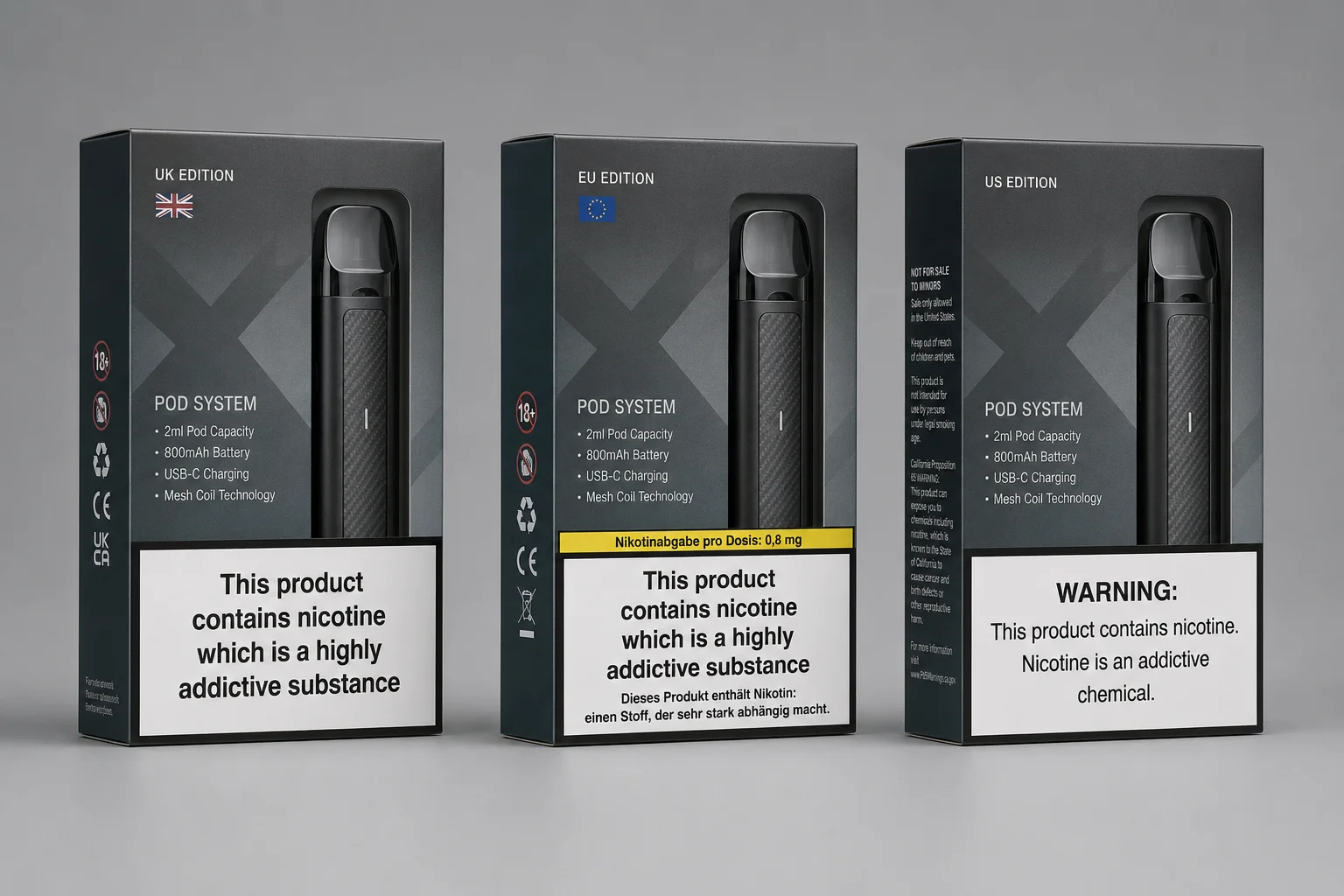
| Warning Labels | FDA-mandated nicotine addiction warning. | Standardized text and pictogram covering 30% of the pack. | Standardized text covering 30% of the pack. |
| Advertising Rules | Heavily restricted, especially youth-focused marketing. | Banned in most media forms. | Banned in most media forms. |
This table only scratches the surface. A buyer in Germany needs to see products that are TPD-compliant and notified for the German market. A buyer in the US needs to know if a product has a marketing granted order from the FDA. A single global page can't communicate this clearly. It forces the buyer to do the research, and most won't bother. They’ll just find a supplier who makes it easy for them.
Do Market-Specific Pages Match Local Search Intent More Accurately?
Your broad "vape wholesale" keyword is attracting window shoppers. Serious buyers search for specific, compliance-related terms. A targeted page is needed to capture their attention and business.
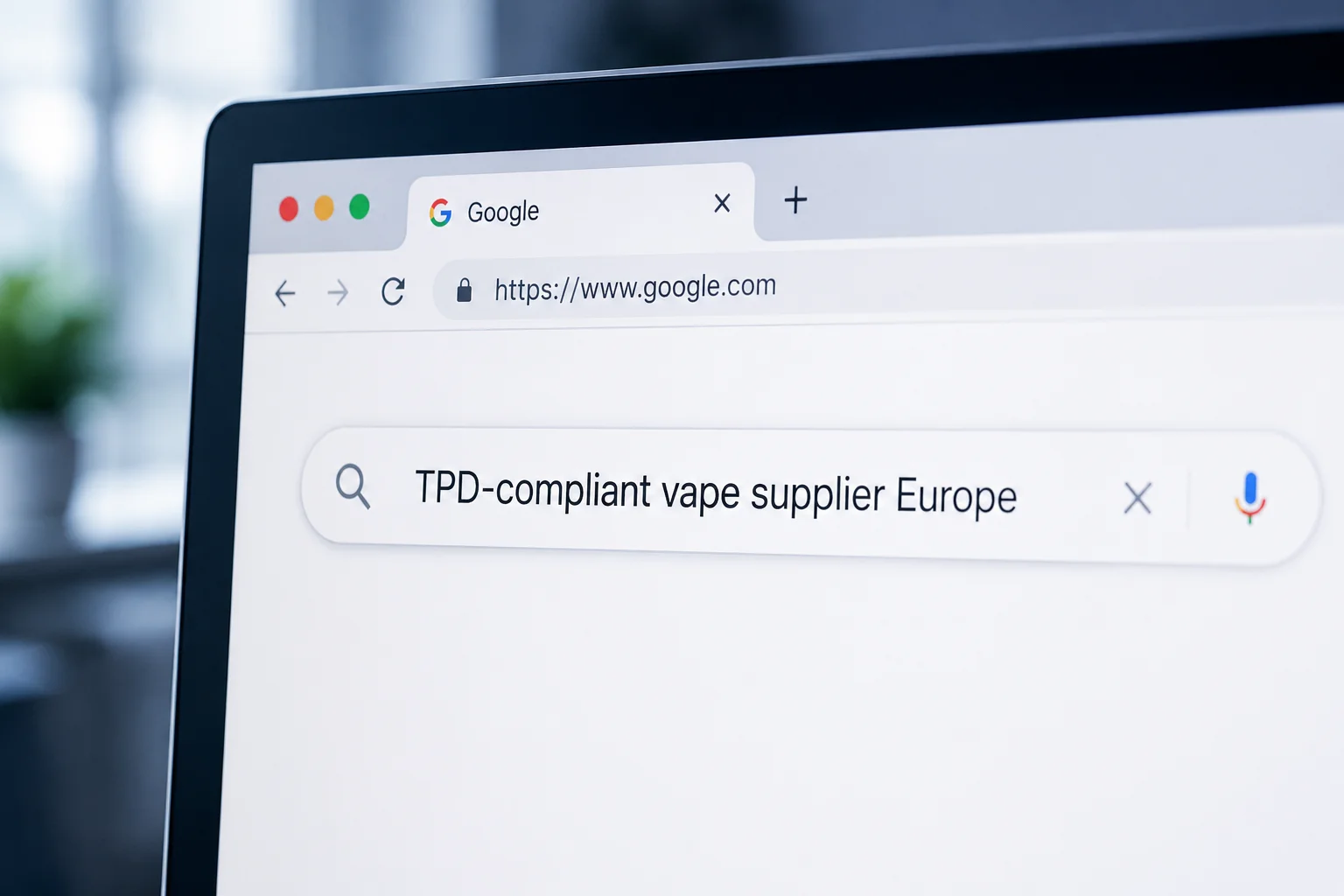
Yes, market-specific pages match local search intent perfectly. Buyers don't search for "vape wholesale." They search for "TPD compliant vape supplier Europe" or "UK disposable vape alternatives." Creating content around these local terms attracts qualified leads who are ready to buy.
We used to spend a lot of money trying to rank for "vape wholesale." We got a lot of traffic, but very few were actual B2B buyers from our target regions. The traffic was from all over the world, and most were just curious individuals, not businesses.
Then we looked at our analytics and saw the long-tail keywords that did convert. They were queries like "reusable vape wholesale UK" and "EU 20 mg vape distributor." These weren't just searches; they were business requirements typed into a search box. That's when we had our "aha!" moment. We stopped chasing the generic term and started building pages specifically for these buyers. For example, we created a /uk-vape-wholesale/ page. The result? Our bounce rate for UK traffic dropped by over 50%, and qualified leads from the UK tripled within three months.
Local Search Terms Tell You What the Buyer Needs
A global page can't effectively target these different needs. A market-specific page can be built from the ground up to answer the exact question a local buyer is asking.
| Buyer Location | Potential Search Query | What They're Really Asking |
|---|---|---|
| United Kingdom | UK reusable vape wholesale |
"I need a supplier of legal, reusable vapes for the UK market." |
| European Union | TPD-compliant vape supplier Europe |
"I need products that meet the 2mL/20mg limit and are notified." |
| United States | FDA-authorized e-cigarette products |
"Show me only products that have a marketing order from the FDA." |
| Germany | EU 20 mg vape distributor |
"I need a distributor who can ship 20mg vapes legally to Germany." |
| France | JNR alternative wholesale |
"JNR is full of fakes in my market. What's a reliable alternative brand?" |
By creating a page for each of these queries, you're not just doing SEO. You're pre-qualifying your leads. When a UK buyer lands on a page titled "Wholesale TPD & TRPR Compliant Vapes for the UK Market," they know they're in the right place.
How Do Local Regulations Change Which Products You Should Display?
You're showing US-only products to EU buyers. This creates false hope and frustration, making your business look clueless about the markets you claim to serve.
You must only display SKUs that are legal and available for the target market. This means showing the correct product model, nicotine strength, e-liquid capacity, and packaging version for that specific country. Never mix US, EU, and UK versions in one catalog.
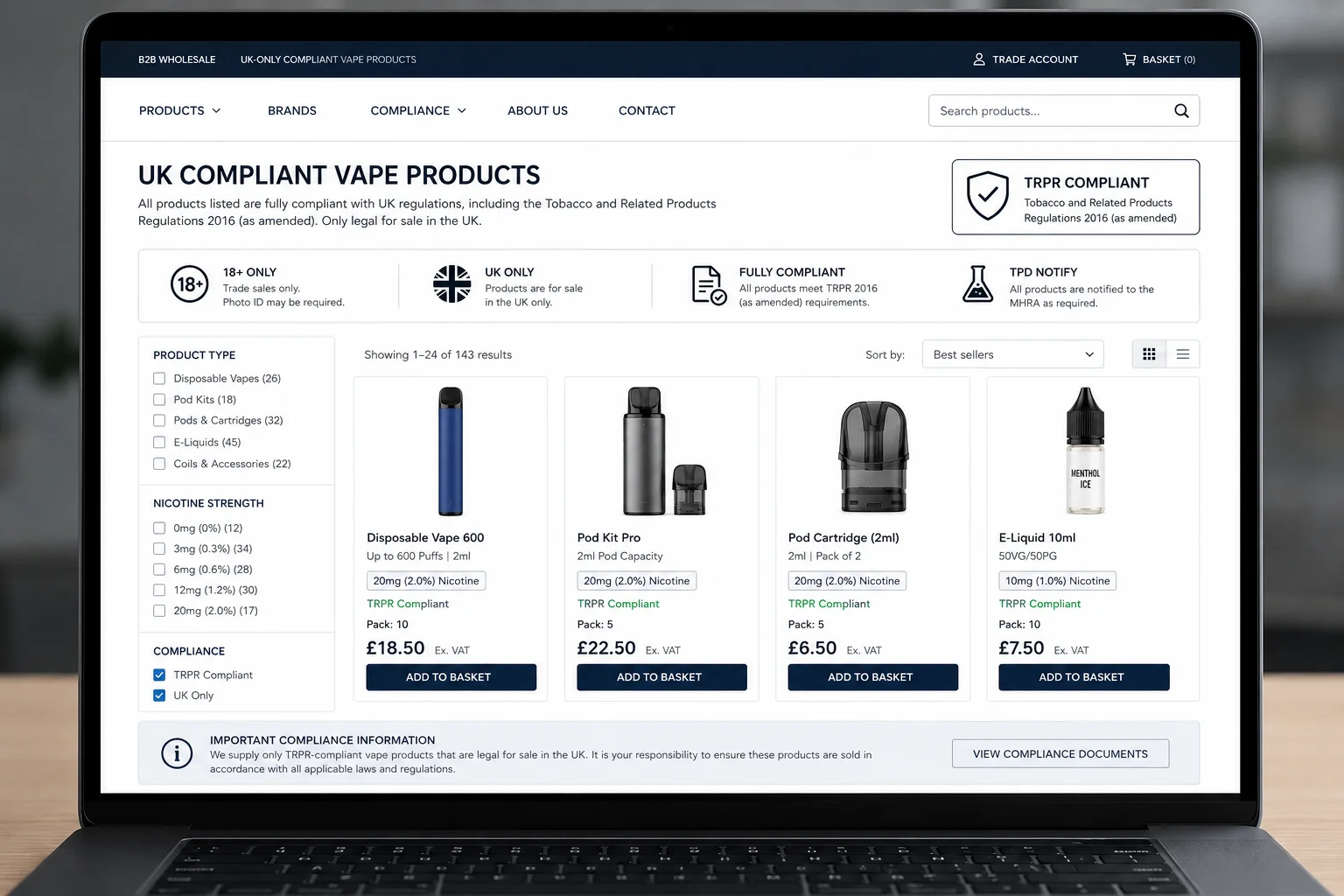
This goes beyond just having different pages; it's about inventory management and honesty. I run a warehouse in Germany specifically for our European clients. The products in that warehouse are only EU-compliant SKUs. We have a separate inventory for the UK, and another for the US. Our website reflects this physical reality. If a product isn't physically available and compliant for the EU market, it will not appear on our /eu-vape-wholesale/ page.
This prevents a classic mistake: a buyer from France gets excited about a 15,000-puff vape they see on your site, only to be told it can't be shipped to them. That's a lost customer and a damaged reputation. Your website should be a mirror of what you can actually deliver to their door.
Product Specification Checklist for a Market-Specific Page
Before you list a product on a country page, you must verify it's the correct version. One product model can have many variations.
| Specification | Example: UK Version | Example: US Version | Example: EU Version |
|---|---|---|---|
| Product Model | Brand X Model Y | Brand X Model Y | Brand X Model Y |
| Nicotine Strength | 20 mg/mL (2%) | 50 mg/mL (5%) | 20 mg/mL (2%) |
| E-liquid Capacity | 2 mL | 18 mL | 2 mL |
| Puff Count (Claimed) | 600 puffs | 10,000 puffs | 800 puffs |
| Notification Status | Notified with MHRA | Marketing Order from FDA | Notified in DE, FR, IT |
| Packaging | TRPR Warnings | FDA Nicotine Warning | TPD Warnings |
| Availability | In UK / DE Warehouse | In US Warehouse | In DE Warehouse |
A single product catalog with dropdown menus for "region" doesn't work. It's confusing. A dedicated page that only shows products meeting the UK column's criteria is the only way to be clear and build trust.
Why Must Page Messaging Change With Each Market?
You're using vague terms like "fully compliant" on your global site. This means nothing to a serious buyer and can even be legally inaccurate in their country.
Your messaging must be precise and factual for each market. Avoid generic promises. For the US, state the product's marketing authorization status. For the EU, clearly show nicotine concentration, capacity, and which member states it's notified in. Vague claims destroy credibility.
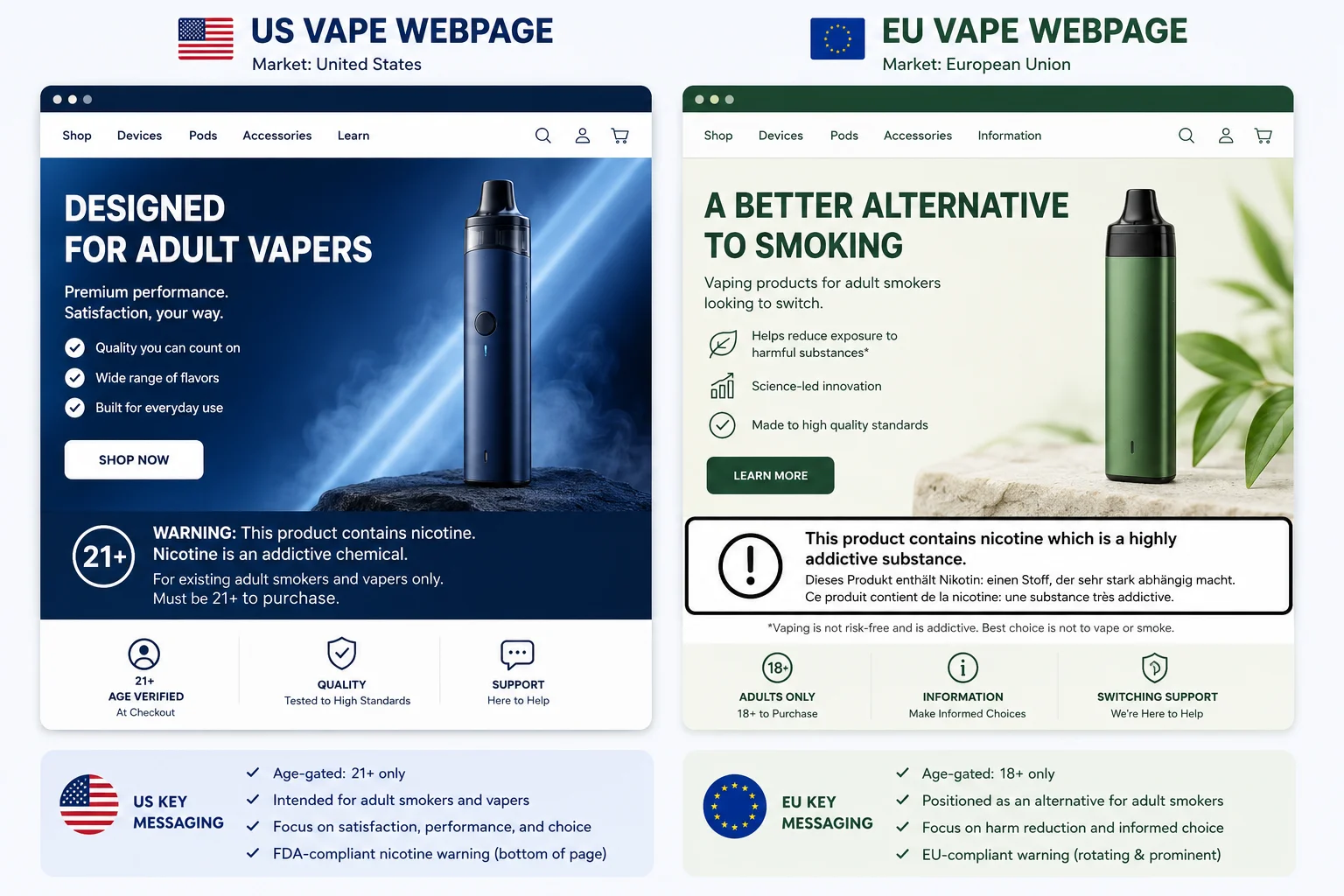
Language is a minefield in this industry. A single wrong word can get you in trouble. For example, you can never say a product is "FDA approved." That term is reserved for medical devices. The correct language is that a product has received a "marketing granted order" from the FDA. A B2B buyer in the US knows this distinction. Using the wrong term instantly tells them you're an amateur.
We had to train our entire team on this. Our US-facing pages use carefully vetted language. Our EU pages are just as precise. We don't just say "legal in Europe." That's a meaningless and often false statement. Instead, we say, "Notified and compliant for sale in Germany, France, and Italy." This shows the buyer we've done our homework and are a serious, reliable partner.
Tailoring Your Compliance Message
Your promises must be verifiable. Replace broad, sweeping statements with specific, factual information that a professional buyer can check.
-
For the United States Page:
- Don't Say: "FDA Approved Vapes!"
- Do Say: "This product has received a marketing granted order from the U.S. Food and Drug Administration."
- Why? "Approved" is legally incorrect and misleading. "Marketing granted order" is the precise term that builds trust with informed buyers.
-
For the European Union Page:
- Don't Say: "Legal across Europe."
- Do Say: "TPD-compliant (20mg/mL, 2mL). Notified in Germany, France, Spain. Check local regulations for other member states."
- Why? "Europe" is not one market. Compliance in one EU country doesn't guarantee it in another. Listing the specific countries shows you understand the notification process.
-
For the United Kingdom Page:
- Don't Say: "New reusable vape."
- Do Say: "This TRPR-compliant reusable device features a rechargeable battery and is designed for use with our 10mL TPD-notified e-liquid bottles."
- Why? The distinction between single-use and reusable systems is critical under UK law. Explaining the structure precisely helps buyers understand its compliance status.
This level of detail tells the buyer you're not just a trader; you're a compliance partner.
How Do Market-Specific Pages Improve Wholesale Buyer Confidence?
Your generic contact form is flooded with basic questions. "Can you ship to Germany?" "What nicotine strengths do you have?" You're wasting time answering questions a good website should have already answered.
Market-specific pages build confidence by answering a local buyer's most urgent questions upfront. This filters out irrelevant inquiries and proves you understand their specific business needs, leading to more qualified, ready-to-buy leads.
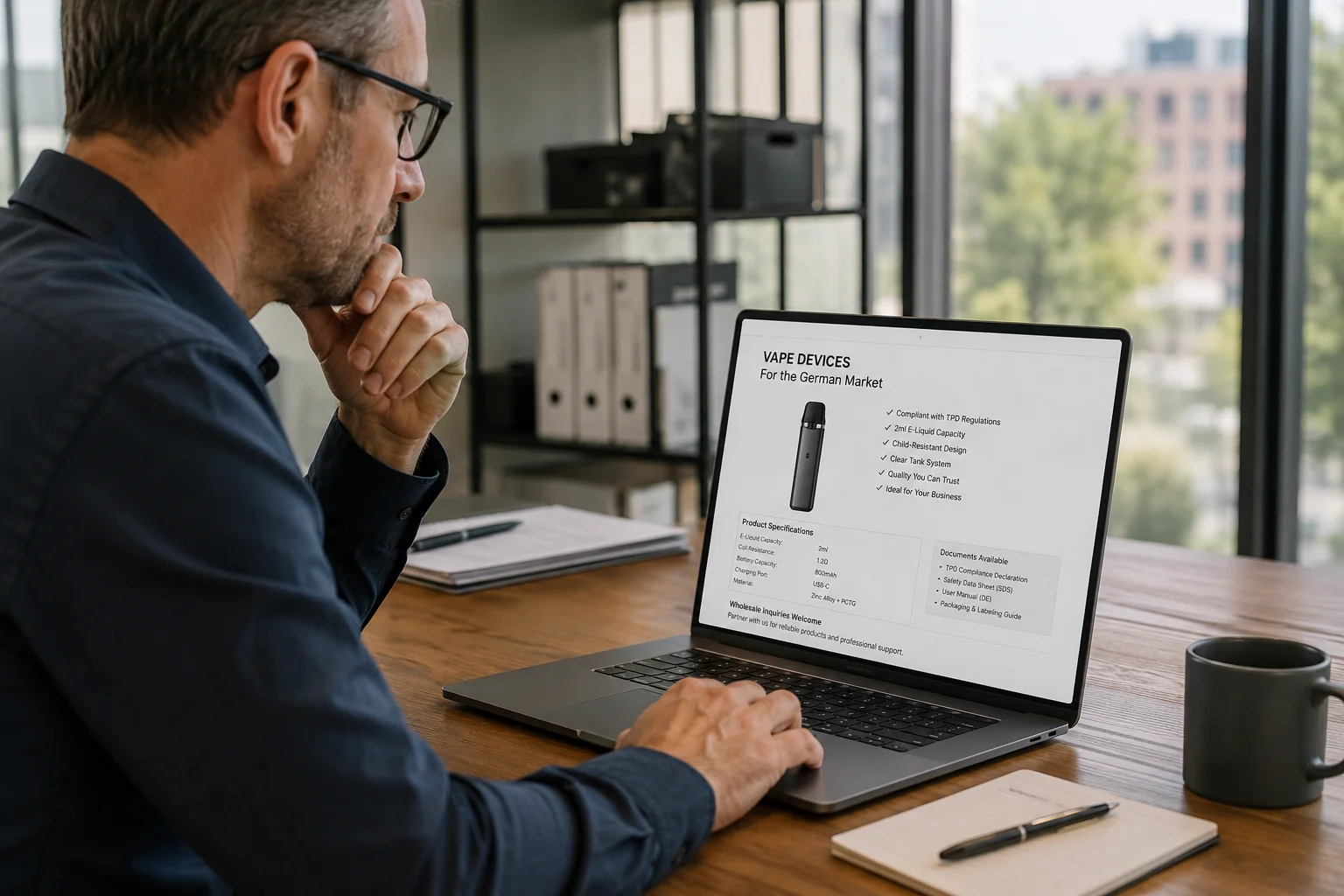
I see our market-specific pages as a crucial part of our sales team. They work 24/7 to answer the most common questions from buyers in each region. We essentially built a massive FAQ into each page. Before a German buyer even contacts us, they already know the nicotine strengths available, the packaging options for their market, the MOQ from our German warehouse, and who is responsible for product notification.
This accomplishes two things. First, it saves my sales team countless hours. They don't have to repeat the same basic information over and over. Second, it builds incredible trust. The buyer sees that we've already thought about their problems. We've done the hard work of sourcing, importing, and verifying compliance for them. As I often tell my clients, "We handled the risky parts, so you can focus on the profitable part: selling."
Top Questions Your Market-Specific Page Must Answer
| Buyer's Question | Why It's Important | How to Answer on Your Page |
|---|---|---|
| Can this exact SKU be sold in my country? | The most critical question. A "yes" or "no" determines if a conversation can even start. | Have a clear "For Sale in [Country]" statement. List only compliant SKUs. |
| Is the packaging ready for my market? | Packaging with the wrong language or warnings can be seized at customs. | Show photos of the actual market-specific packaging, including warning labels. |
| What is the case quantity and MOQ? | Buyers need this for business planning and to see if they meet your minimums. | Clearly state "Case Quantity: 100 units" and "MOQ from DE Warehouse: 50 units." |
| Are compliance documents available? | Serious distributors need to see proof of compliance for their records. | Mention that "Certificates of conformity and notification reports are available upon request for qualified buyers." |
| Can you separate market-specific inventory? | They need to know you won't accidentally ship them non-compliant stock. | Explain your warehouse system. "All EU orders ship from our German warehouse, which stocks only TPD-compliant products." |
Answering these questions on the page transforms it from a simple product listing into a powerful B2B sales tool. It filters out unqualified leads and starts the conversation with serious buyers on the right foot.
How Do Market Pages Reduce SEO and Compliance Conflicts?
Your global page is a mess of conflicting information. The title says "20mg Vapes," but the page shows 50mg products. Google is confused, and so are your customers.
Separate market pages prevent conflicts. They ensure the page title, meta description, product listings, and technical SEO (like schema markup) are all consistent and accurate for a single market. This avoids confusing search engines and misleading potential customers.
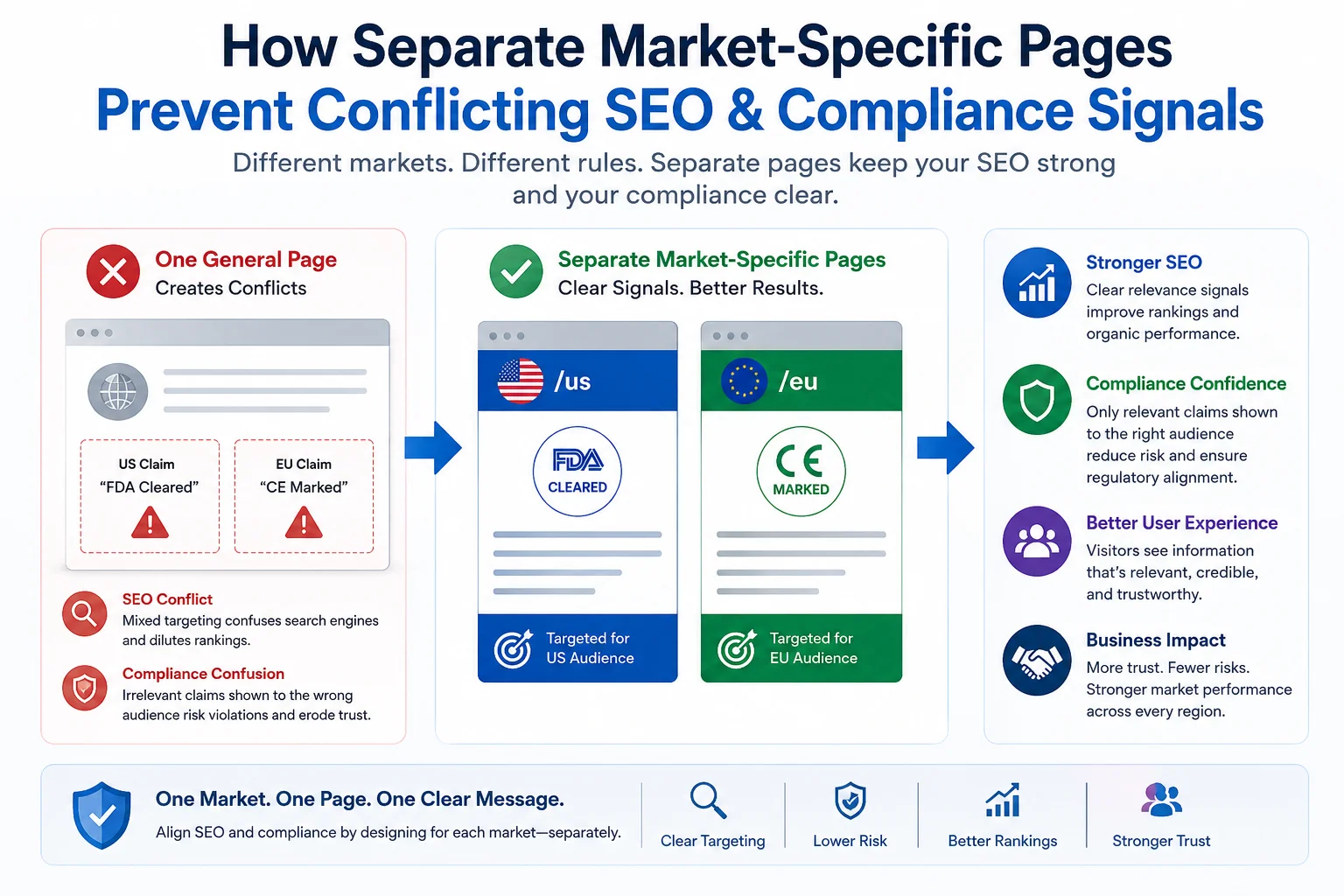
I remember a nightmare scenario we faced. Our global page was ranking for a term in the UK. Google created a featured snippet that pulled a sentence about our "popular 50mg disposables." We immediately got angry emails from UK distributors accusing us of promoting illegal products. The information was on the page, but it was intended for our US audience. For the UK user, it was completely wrong and damaging to our reputation.
That's when we committed to a full separation. A dedicated page for one market means everything is in alignment. The page says "UK Compliant Vapes." The products shown are all 2mL/20mg. The meta description talks about TRPR compliance. The FAQ section answers UK-specific questions. There is zero conflicting information. This is not only better for the user, but it also sends crystal-clear signals to Google about what the page is for, helping you rank for the right terms in the right country.
Common Conflicts Caused by a Global Page
A single page trying to serve multiple regulated markets will inevitably create contradictions that harm both SEO and user trust.
- Conflicting Product Details: Simultaneously showing 20mg and 50mg nicotine strengths on the same page.
- Inaccurate Labels: Using a generic "Compliant" badge that doesn't apply to all products or regions shown.
- Title Mismatch: The page title promises "TPD Vapes," but the page is full of large-capacity products not legal in the EU.
- Incorrect Structured Data: Using Schema markup that incorrectly flags a product for a market where it is not compliant.
- Misleading Search Snippets: Google's summary shows a promise (e.g., "10,000 puffs") that is irrelevant or illegal for the searcher's region.
- User Confusion: A buyer lands on the page and cannot confirm which products are actually available to them.
- Difficult Updates: A regulation changes in France, and you risk breaking information for Germany while trying to edit the shared page.
Separate pages solve all of these problems by creating a clean, consistent, and truthful experience for each target market.
How Should You Structure Market-Specific Vape Pages?
You know you need separate pages, but you're not sure how to organize them. A messy site structure can be just as confusing as a single global page.
Adopt a clean URL structure and use a consistent template for each market page. For example, use /uk-vape-wholesale/ and /eu-vape-wholesale/. Each page should contain a market overview, compliant product categories, wholesale specs, and a country-specific FAQ.
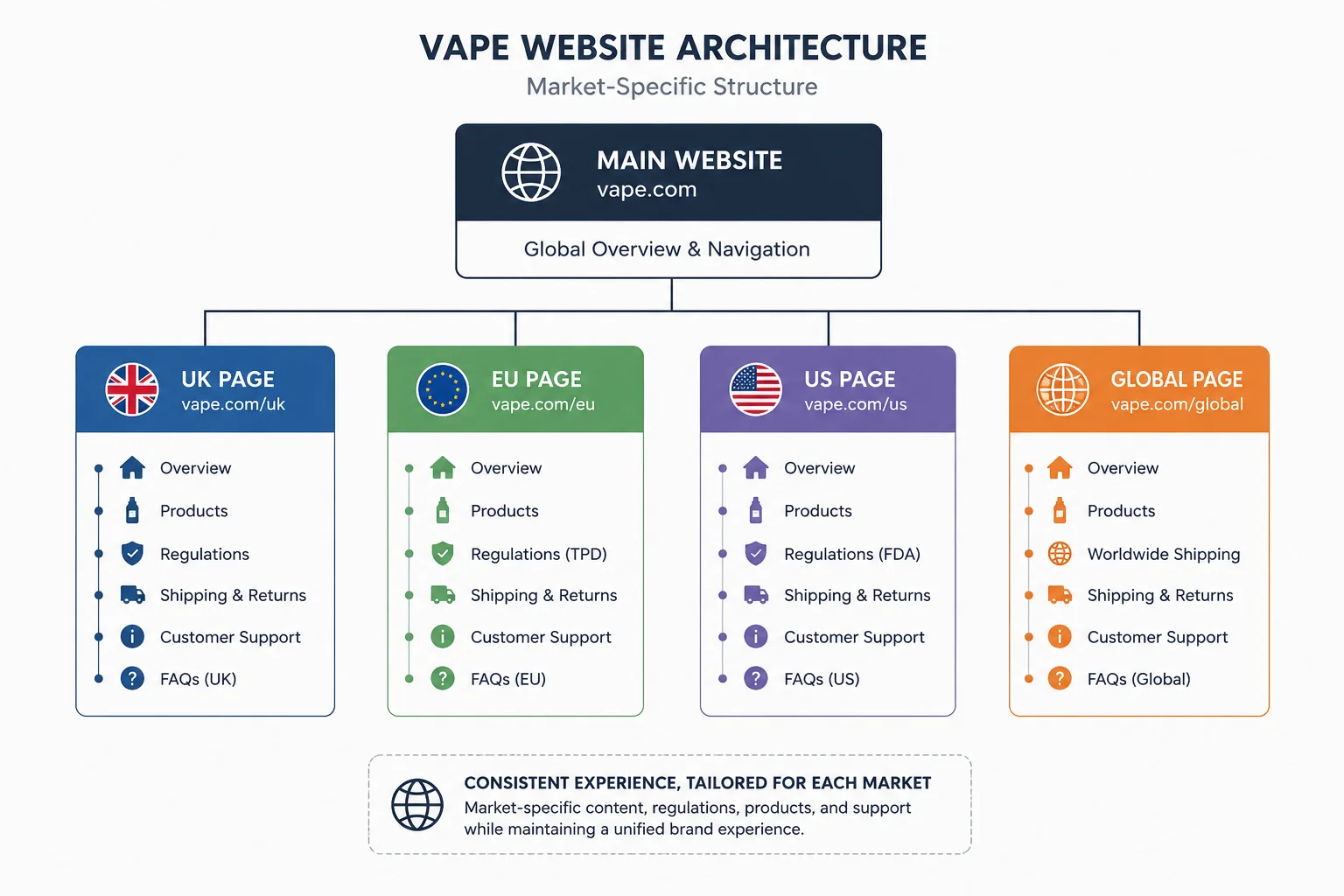
After years of trial and error, we've developed a blueprint that works. Our website architecture is clean and logical, both for users and for search engines. It's not just about creating the pages; it's about how they connect and present information. Each market page is a self-contained hub for a buyer from that region.
We also use technical SEO to support this structure. We use hreflang tags to tell Google, "This page is for users in Germany, and this other page is the equivalent for users in France." This helps prevent Google from seeing them as duplicate content and ensures the correct page is shown to the correct user in search results. Clear internal links also guide users, for example, a banner on our EU page might say "Looking for UK-compliant products? Click here."
A Proven Blueprint for Market-Specific Pages
URL Structure:
yourwebsite.com/uk-vape-wholesale/yourwebsite.com/eu-vape-wholesale/yourwebsite.com/us-vape-compliance/yourwebsite.com/germany-vape-distributor/yourwebsite.com/france-vape-wholesale/
Essential On-Page Elements for Each Market:
| Section | Purpose |
|---|---|
| Market Overview | A brief intro acknowledging the local regulations (e.g., "Sourcing TRPR-compliant vapes for the UK market..."). |
| Applicable Product Categories | Showcasing only the product types legal in that market (e.g., "Disposables (2mL)," "10mL E-liquids"). |
| Available Nicotine Strengths | State the legal strengths you offer (e.g., "Available in 10mg and 20mg"). |
| Packaging Options | Show photos of the market-specific packaging with correct warnings. |
| Authorization Information | Precisely state the compliance status (e.g., "MHRA Notified," "PMTA Pending"). |
| Wholesale Specifications | MOQ, case quantity, pricing tiers. |
| Compliance Document Process | Explain how qualified buyers can request compliance documents. |
| Country-Specific FAQ | Answer questions like "Do you handle customs for Germany?" or "What are the rules for Sweden?" |
| Last Regulatory Review Date | A simple line like "Page information reviewed: October 2023" builds immense trust. |
| Qualified Buyer Contact Route | A specific form or email for wholesale inquiries to filter them from retail customers. |
This structure turns a simple webpage into a comprehensive resource and a powerful lead-generation tool.
What's on a Market-Specific Vape Page Publishing Checklist?
You've built your new market-specific page. Before you hit "publish," you need a final check. One small error can undermine all your hard work and create new problems.
Before any market-specific page goes live, run it through a rigorous checklist. Verify that the target country, displayed SKUs, nicotine figures, product photos, and compliance language are all 100% accurate for that specific market. This is your final quality control.
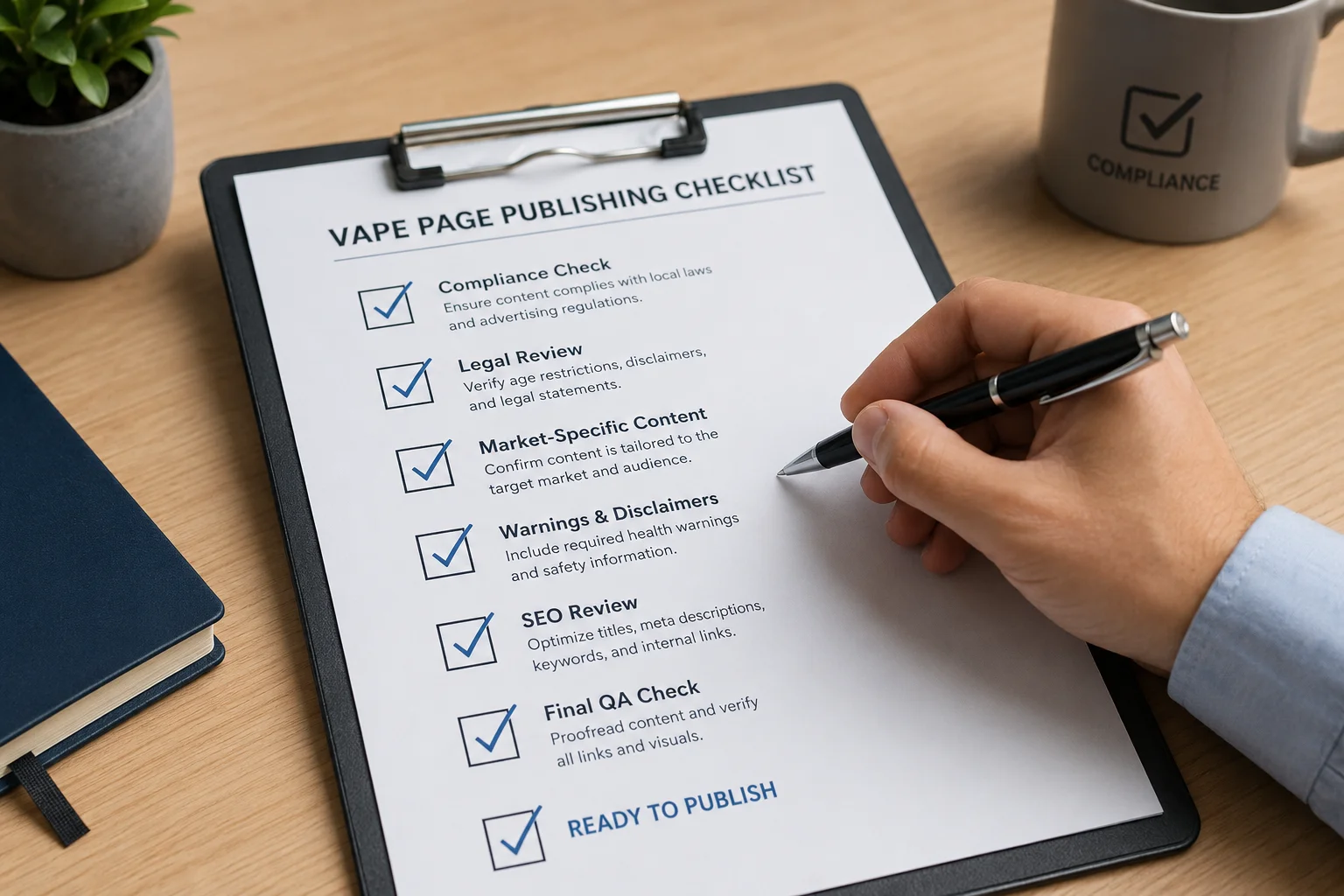
This checklist is our final line of defense. My team and I go through it for every single market page we launch or update. It might look tedious, but I can tell you from experience, it’s saved us from countless costly mistakes. I remember one time, early on, we almost launched a UK page using photos of the EU packaging. The warning labels are different. If a shipment had gone out based on that, it could have been stopped at customs.
This process isn't just about making the page look good. It's about risk management. Every item on this list is a lesson we've learned, often the hard way. It protects our business, and more importantly, it protects our customers' businesses. When a buyer places an order based on information from our site, they need to be 100% confident that what they see is what they'll get, and that it will be legal to sell.
Pre-Launch Quality Control Checklist
Content & Compliance Accuracy:
- [ ] Target Country is Clearly Identified: Is it obvious this page is for the UK, Germany, etc.?
- [ ] Displayed SKUs are Suitable: Are all products shown legal and available for this market?
- [ ] Nicotine & Capacity Figures are Accurate: Are all nicotine strengths and e-liquid volumes correct for the market's laws?
- [ ] Product Photos Match Market Version: Do the photos show the correct packaging, warnings, and device model?
- [ ] Required Warnings Have Been Reviewed: Are the warning texts and pictograms compliant with local law?
- [ ] Authorization Language is Precise: Is "PMTA marketing granted" or "MHRA notified" used correctly? No "FDA approved."
- [ ] Unsupported Claims Removed: Have all health, safety, or "better than smoking" claims been removed?
- [ ] Youth-Oriented Content Removed: Is all wording and imagery professional and adult-focused?
SEO & User Experience:
- [ ] Local Terminology Used Naturally: Does the page use terms like "TRPR" for the UK or "TPD" for the EU?
- [ ] Title & Meta Description Match Page: Do they accurately reflect the content for that specific market?
- [ ] Country-Specific FAQ Included: Have you answered the most likely questions from a buyer in this region?
- [ ] Internal Links are Correct: Do links point to other relevant pages for the same market, not global pages?
- [ ] Duplicate Global Content Rewritten: Is the content unique enough to not be penalized by Google?
- [ ] Compliance Sources & Review Dates Recorded: Is it clear where the information comes from and when it was last checked?
- [ ] Legal/Regulatory Review Completed: Has a qualified person reviewed the page for compliance, if necessary?
Only after every box is ticked should the page go live.
Conclusion
Market-specific pages are not optional in the vape industry. They are essential for building trust, ensuring compliance, and attracting the right wholesale buyers for long-term, sustainable business growth.