
A low unit price looks great, but hidden costs can destroy your profits. You need to look at the full picture. That’s how you find a real deal.
The best way to compare vape wholesale offers is to calculate the total landed cost per unit. This includes the product price, shipping, taxes, customs fees, and any compliance costs. Focusing only on the unit price is a common and expensive mistake for new importers.
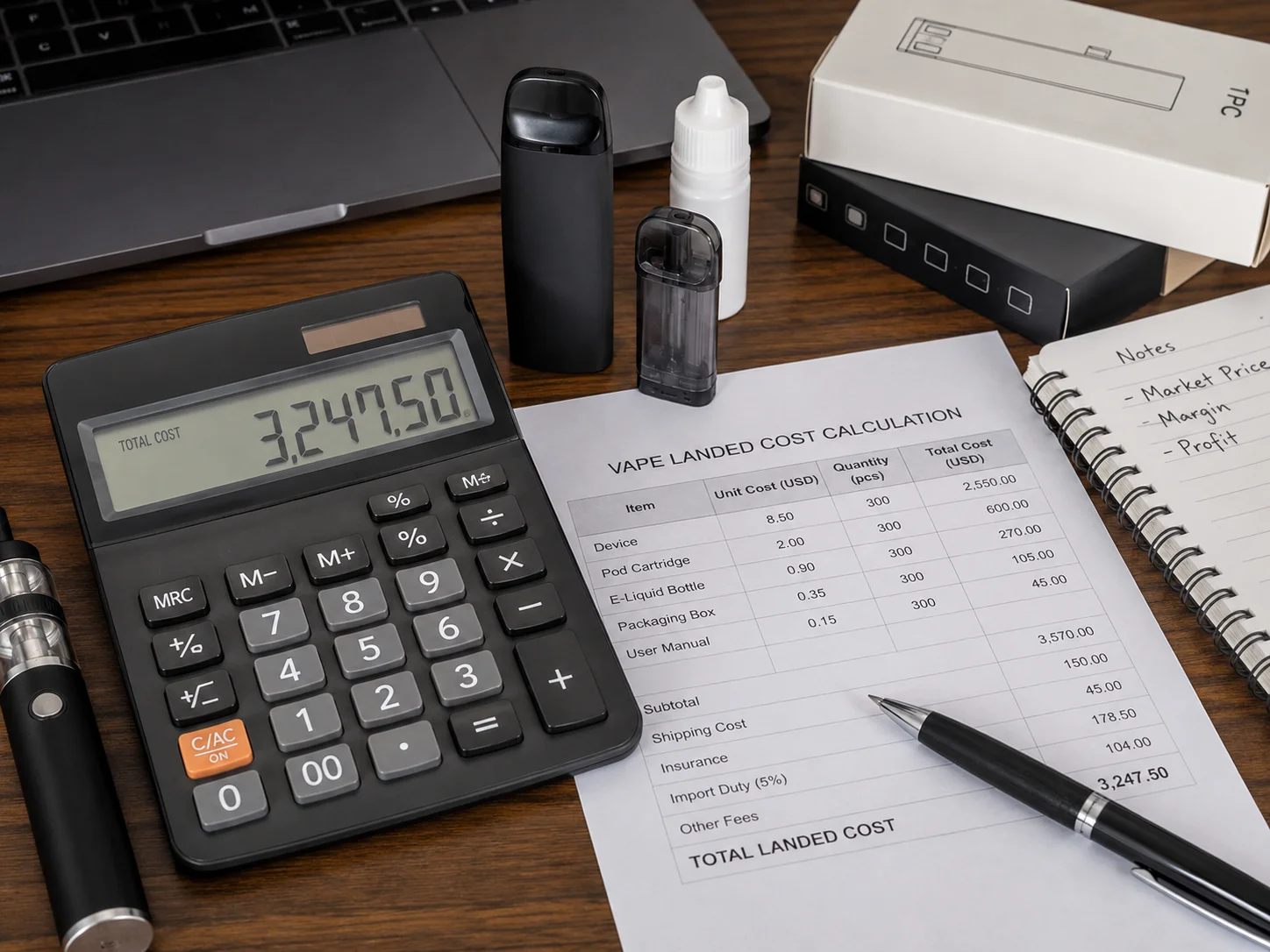
I’ve been exporting electronics from Shenzhen for over 15 years. Every day, I talk to buyers from Europe and the US. A common question I get is about price. Everyone wants the best price. But the "best price" isn't always the lowest number on a price list. The real price is what it costs to get that product into your warehouse, ready to sell. Many new buyers learn this lesson the hard way. They get a great unit price, but then get hit with unexpected shipping fees, customs charges, or find out half the shipment is defective. Suddenly, their "cheap" order is the most expensive one they've ever placed. Let’s break down how to avoid this, so you can make smart buying decisions and actually protect your profit.
Why the Lowest Unit Price Can Become the Most Expensive Order?
That 2-euro vape seems like a steal, right? But what if half of them are fakes that break in a week? Suddenly, your real cost just doubled to 4 euros.
The lowest unit price often hides huge risks like counterfeit products, poor quality, and high defect rates.[^1] These issues lead to customer complaints, returns, and damage to your reputation, making the order far more expensive in the long run than a quality-assured product.
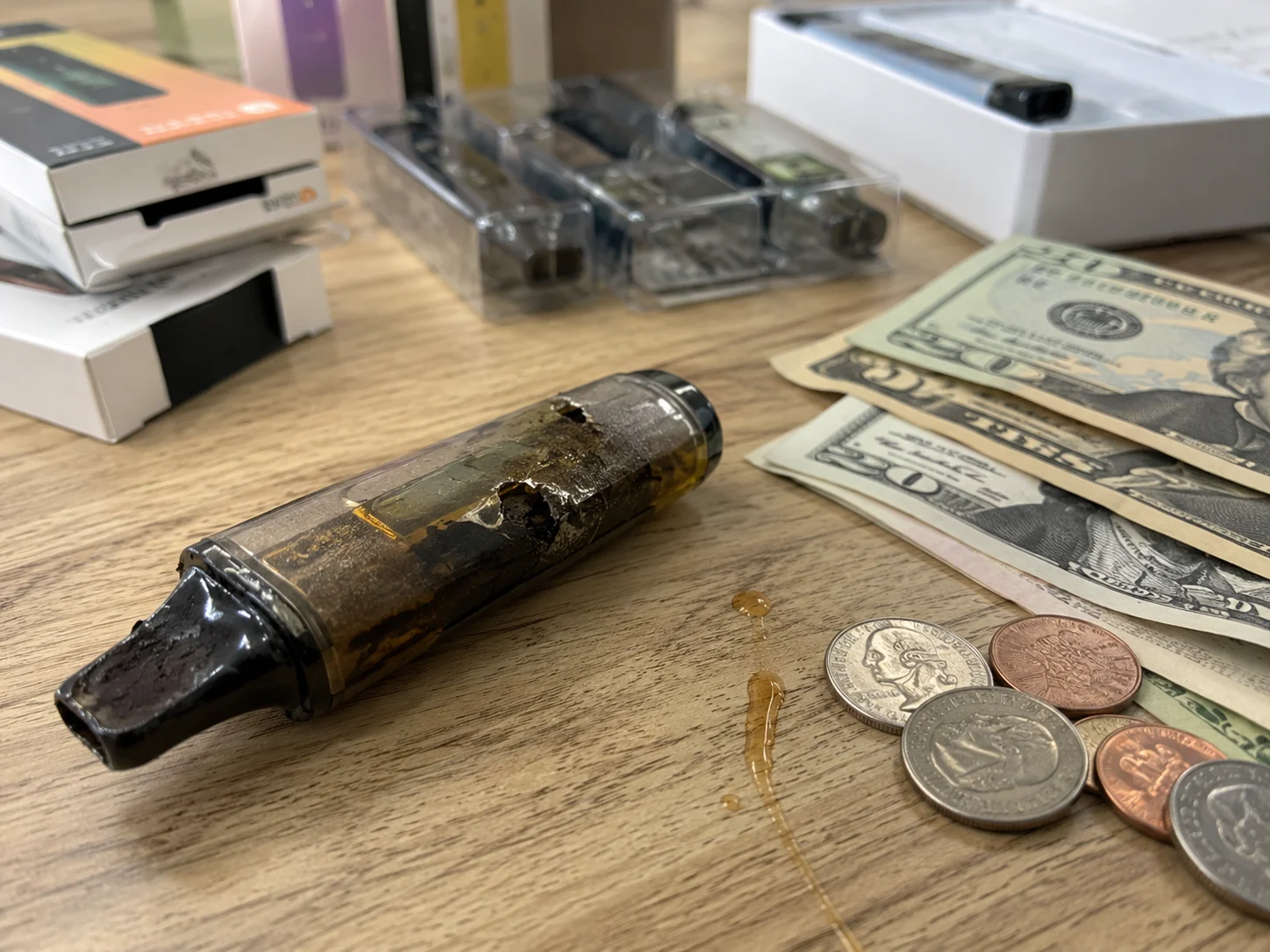
In my experience, an unbelievably low price is the number one red flag. I see it all the time, especially with popular brands like JNR in France, where fakes are everywhere. A buyer comes to me and says they can get a JNR for 2 euros. But I know the real factory price isn't lower than 4 euros. So what's happening? They're being offered a fake.
Here’s the real cost of that "cheap" fake product:
- You get scammed. You pay the 2,000 euros for 1,000 units, and the supplier disappears. This happens more than you think. The supplier's workshop gets shut down by the police, and your money is gone forever.[^2] You have no product and no money.
- You get garbage. The supplier actually ships the product. But the batteries are cheap manganese cells that die in five minutes, even after hours of charging. The e-liquid is made from unknown, unsanitary ingredients in a dirty workshop. The atomizers burn out, giving a horrible taste.
- Your reputation is ruined. You sell this garbage to your customers. They come back angry. You have to handle refunds and complaints. Your hard-earned trust is gone. Getting that trust back is much more expensive than buying genuine products in the first place.
So, that 2-euro vape isn't really 2 euros. It’s 2 euros plus the risk of losing everything, plus the cost of angry customers, plus the damage to your business's future. The genuine 4-euro product starts to look a lot cheaper now, doesn't it?
What Is Landed Cost in Vape Wholesale?
Are you confused by terms like FOB, EXW, and DDP? Don't worry. What you really need to know is your final cost per item when it arrives at your door.
Landed cost is the total, all-inclusive price you pay to get a product from the supplier's factory to your warehouse.[^3] It’s the unit price plus all other expenses like shipping, customs duties, taxes, and insurance. It's the only number that tells you your true cost.
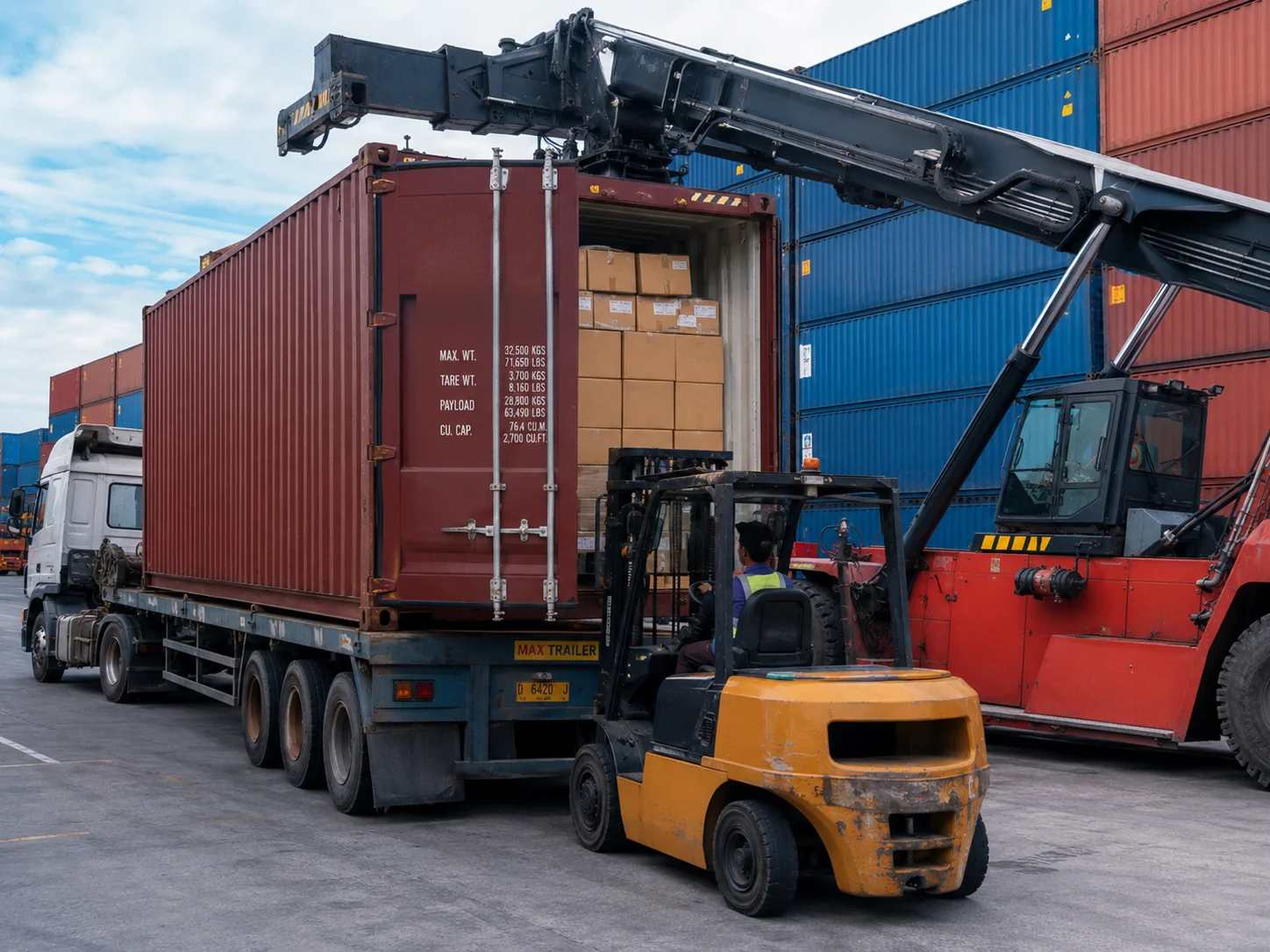
Think of it like ordering a pizza. The price on the menu is the unit price. But you also have to pay a delivery fee and a tip. The landed cost is the total amount you pay to get that pizza to your mouth. In vape wholesale, it's the same idea, just with more steps.
For 15 years, I've helped clients navigate this. The biggest mistake I see is getting a factory price (EXW or FOB) and thinking that's the main cost. It's not. That price just covers the product itself, sitting in a factory in China.
Your real, or "landed," cost includes:
- Product Cost: The price per unit times the number of units.
- Shipping & Freight: The cost to transport goods from the factory in China to your country. This can be by air or sea.
- Insurance: Protects you if the goods are lost or damaged during transit.
- Customs Duties[^4] & Taxes: Fees your government charges to import the goods. This varies wildly by country.
- Customs Brokerage Fees: The cost to hire someone to handle the customs paperwork.
- Local Delivery: The cost to get the goods from the port or airport to your final warehouse.
Only when you add all these up do you get the true cost of your inventory.
Key Cost Items to Include: Product, Shipping, Tax, Customs, and Compliance?
Forgetting a single cost item can erase your profit margin. You need a checklist to make sure you've covered everything before you place an order.
A complete landed cost calculation must include the product cost, international shipping, customs duties, local taxes (like VAT), customs brokerage fees, and crucial compliance costs like tax stamps or specific certifications (TPD/PMTA).
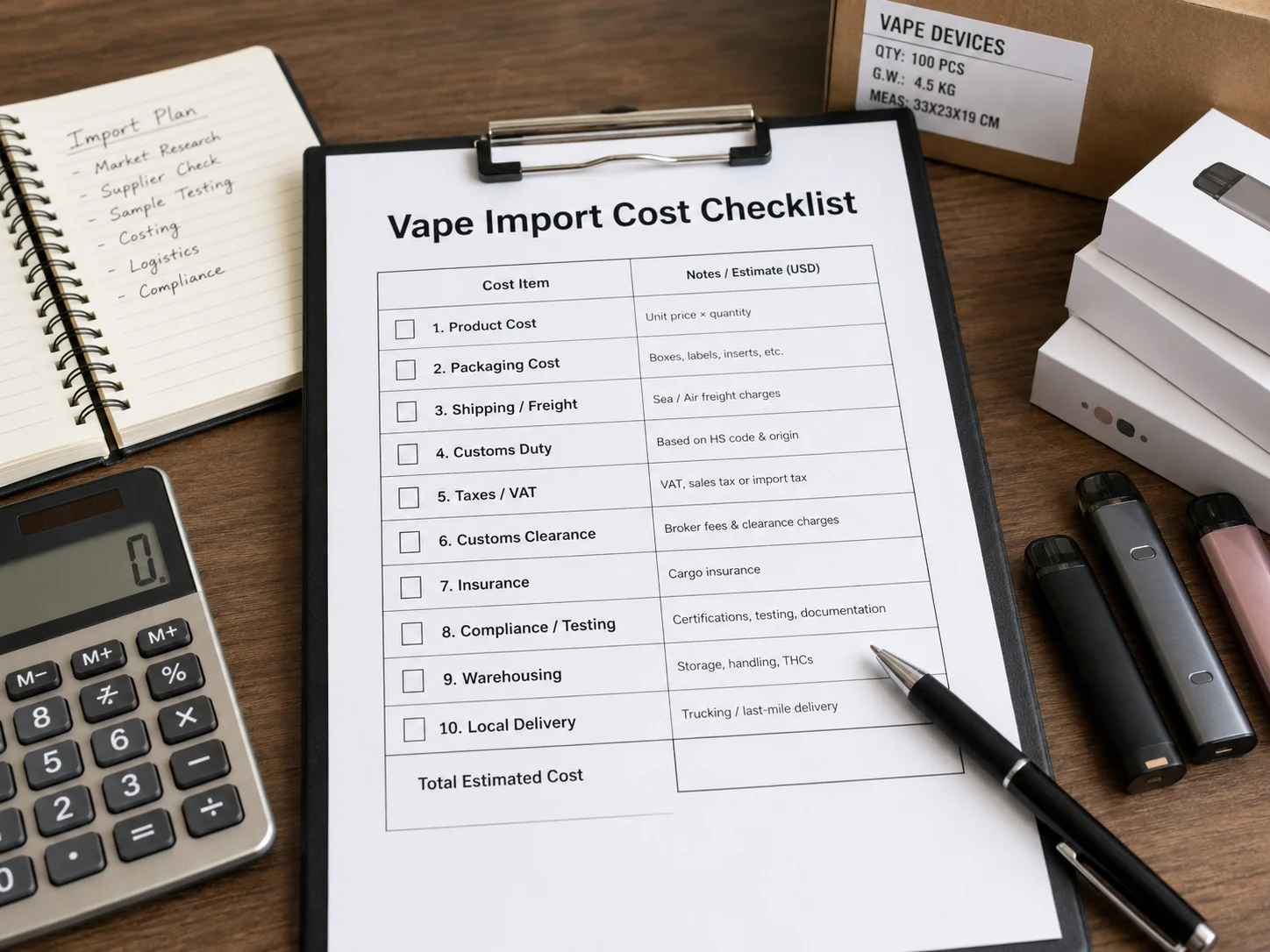
Let's dive deeper into these costs, because the details matter. When a client in Europe asks me for a quote, we don't just talk about the price of the vape. We talk about the whole journey.
Shipping: Air freight is fast but expensive. Sea freight is slow but cheaper for large volumes. The choice depends on how quickly you need the stock. Also, you need to decide on full insurance. For high-value vape shipments, I always tell my clients to get the full customs seizure insurance. It costs a bit more per kilo, but if customs seizes your shipment, the shipping company will re-send a brand-new shipment for free. It’s a lifesaver.
Tax & Customs: This is the big variable. Every country is different. In the UK, you have TPD rules.[^5] In the US, you have PMTA and state-level regulations.[^6] You need to know these rules. A good supplier will ask you about them. A scammer won't care.
Compliance: This is a hidden cost for many. For example, to sell legally in some European countries, you need to apply for and affix a tax stamp to each package before it's imported. This means you need to register a company, get the tax stamps, mail them to us in China, and we put them on during production. It's a process, but it's how you build a legal, long-term business.
A special note on "Secondary Clearance": For some EU countries like Denmark, Sweden, and Finland, there's a huge risk. Even if your shipment clears customs in Germany or the Netherlands (the first clearance), it might get checked and seized again by local customs when it crosses the border into your country (the second clearance). Insurance does not cover this second seizure.[^7] A good supplier will warn you about this. We often advise clients in these countries to ship to a friend in Germany and arrange their own transport across the border. It's a risk, but that's business. Doing things the right way protects you.
How Packaging, Battery, Puff Count, and Defect Rate Affect Real Cost?
You think you are buying a 10,000-puff vape for a low price. But what if the battery dies at 2,000 puffs? Your real cost just went up 5x.
The "soft" specs dramatically affect your true cost. A cheap battery means poor performance and returns. An inflated puff count misleads customers. And a high defect rate means you're paying for units you can't even sell, destroying your profit margin.
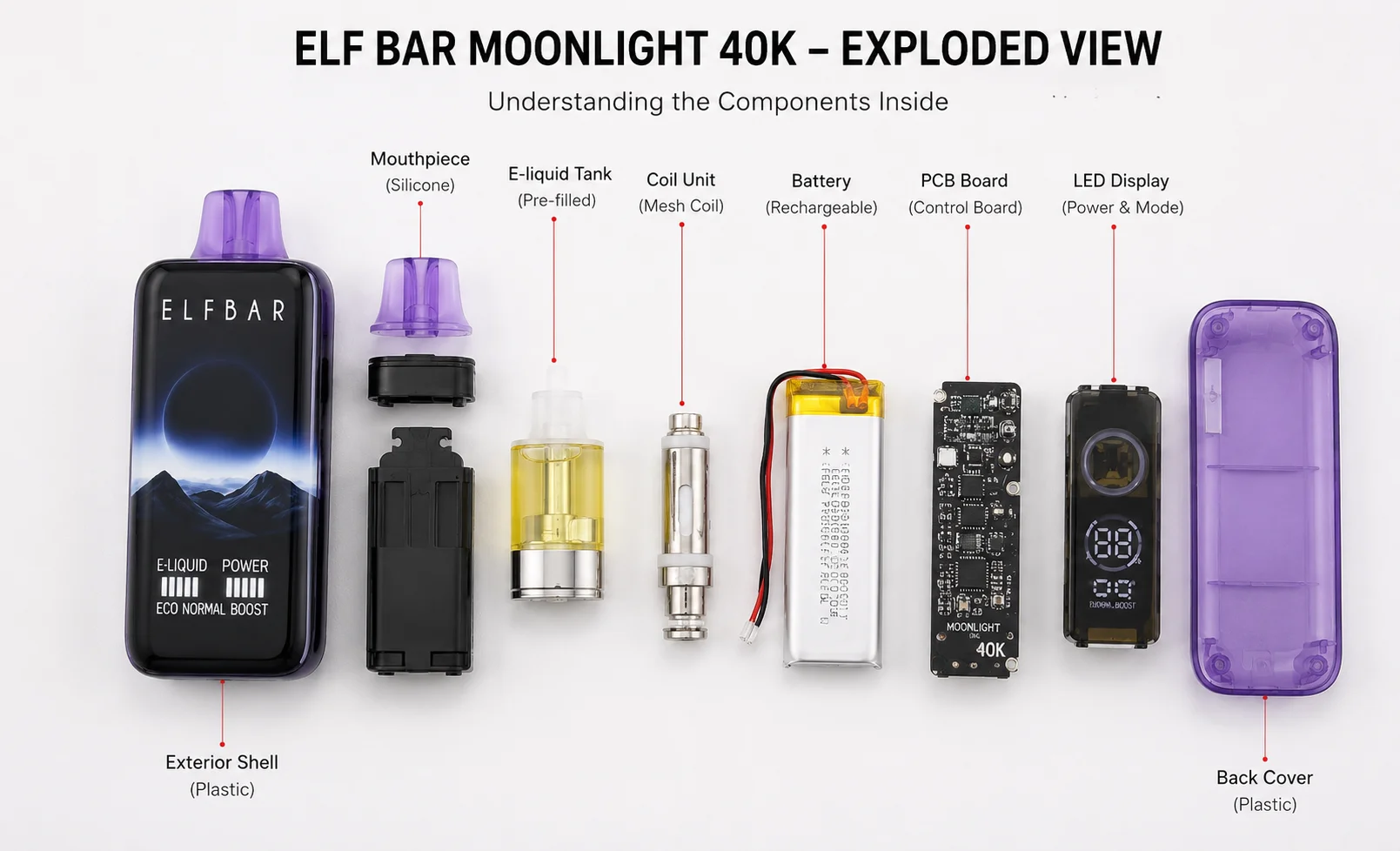
The unit price is just a number. The real value is in the quality of the components. This is where a cheap product really costs you.
Battery: This is a huge one. Reputable brands use quality rechargeable lithium batteries. They hold a charge, work in the cold, and last for hundreds of recharge cycles. Cheap fakes use terrible manganese or cobalt cells.[^8] They might die after a few puffs, or not work at all when it gets cold. You charge it for hours, take a few drags, and it’s dead again. Your customer is not going to be happy.
Puff Count: The puff count war is insane. I've seen vapes advertised with 300,000 puffs! It's a complete fantasy. Here’s the simple math: 1ml of e-liquid gives you about 200-300 puffs.[^9] A disposable vape can only hold so much liquid, maybe 20-25ml at most. So the absolute maximum real puff count is around 5,000-7,000. Anything more is just a number printed on a box. A professional looks at the e-liquid volume (in ml), not the advertised puffs.
Defect Rate: Let's say Supplier A sells a vape for $4 with a 1% defect rate. Supplier B sells a similar-looking vape for $3.50 with a 15% defect rate.
- With Supplier A: You buy 1000 units for $4000. 10 are bad. Your real cost per good unit is $4000 / 990 = $4.04.
- With Supplier B: You buy 1000 units for $3500. 150 are bad. Your real cost per good unit is $3500 / 850 = $4.12. The "cheaper" supplier is actually more expensive, and that's before you factor in the time and money spent dealing with 150 angry customers.
Door-to-Door Shipping vs. Factory Price: Which Quote Is More Useful?
You see a factory price of $3 and a door-to-door price of $5. Which is better? It depends entirely on who you are and how much risk you want to handle.
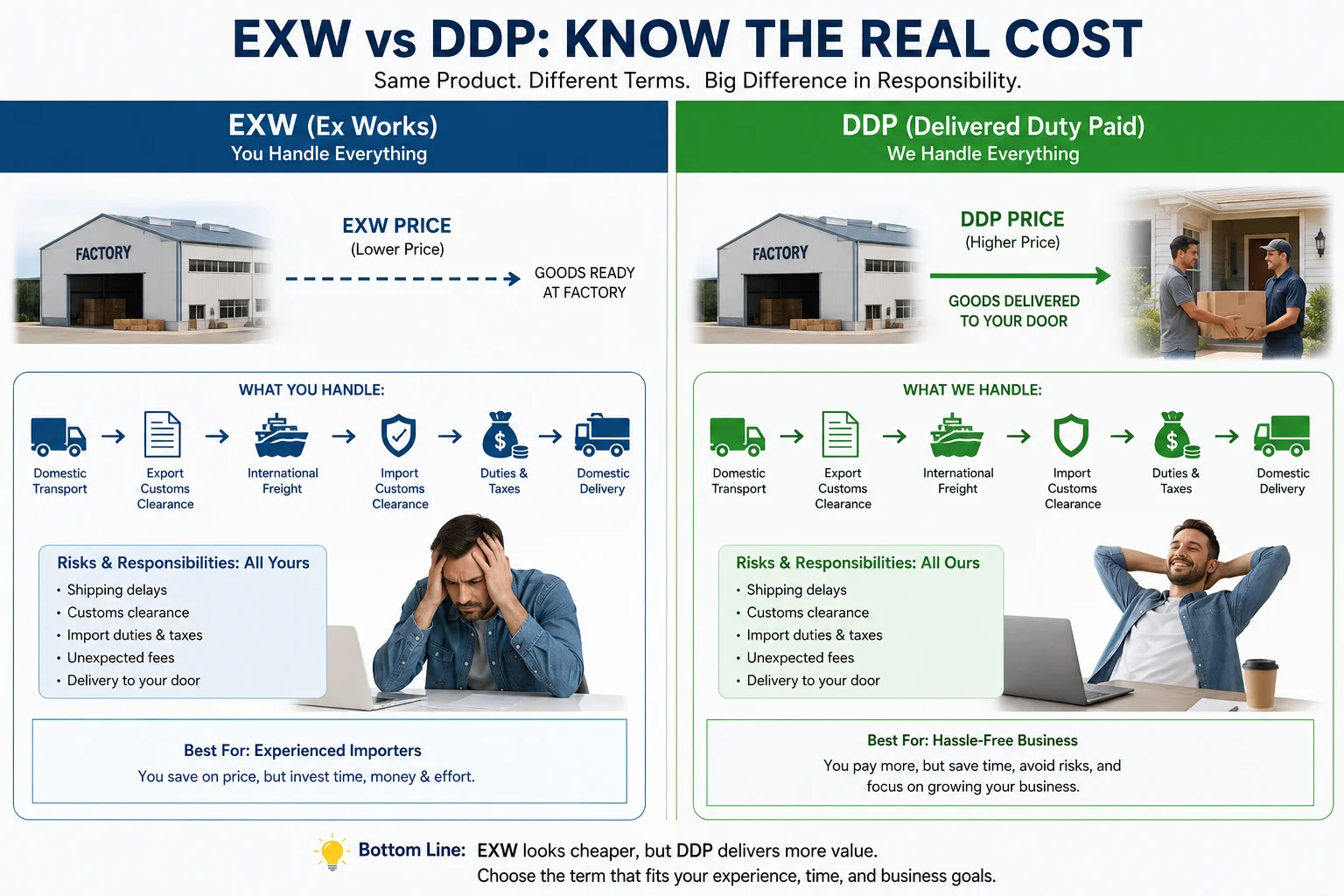
I explain this choice to new clients almost every day. It’s about who takes on the work and the risk.
Factory Price (EXW - Ex Works): This is the price for the product sitting at our factory door. It’s the lowest number you will see. But from that point on, everything is your problem. You have to arrange a truck to pick it up. You have to handle export customs clearance in China. You have to book the air or sea freight. You have to handle import customs in your country, pay the duties, and arrange the final delivery. If you are a huge company with a dedicated logistics department, this is fine. If you are a small or medium-sized business, this is a nightmare waiting to happen.
Door-to-Door Price (DDP - Delivered Duty Paid): This price is higher, but it includes everything. We handle all the shipping, all the customs paperwork, and all the taxes. The price we quote is the price you pay to have the boxes arrive at your address. There are no surprise fees. For most of our clients, especially those using our overseas warehouses in Germany or the US, this is the only way to go. We take on all the hard and risky parts. The customer just has to focus on what they do best: selling.
So, if you are new to importing, or if you value your time and peace of mind, always ask for a Door-to-Door (DDP) price. It's the only quote that gives you a clear picture of your real costs.
Simple Landed Cost Formula for Vape Importers and Wholesalers?
You don't need a complex accounting degree to figure this out. A simple formula and a bit of homework can save you thousands of dollars.
The basic formula is: Landed Cost Per Unit = (Total Product Cost + Total Shipping & Insurance + All Taxes & Duties) / Total Number of Units. This gives you the true cost of each item, ready for sale.
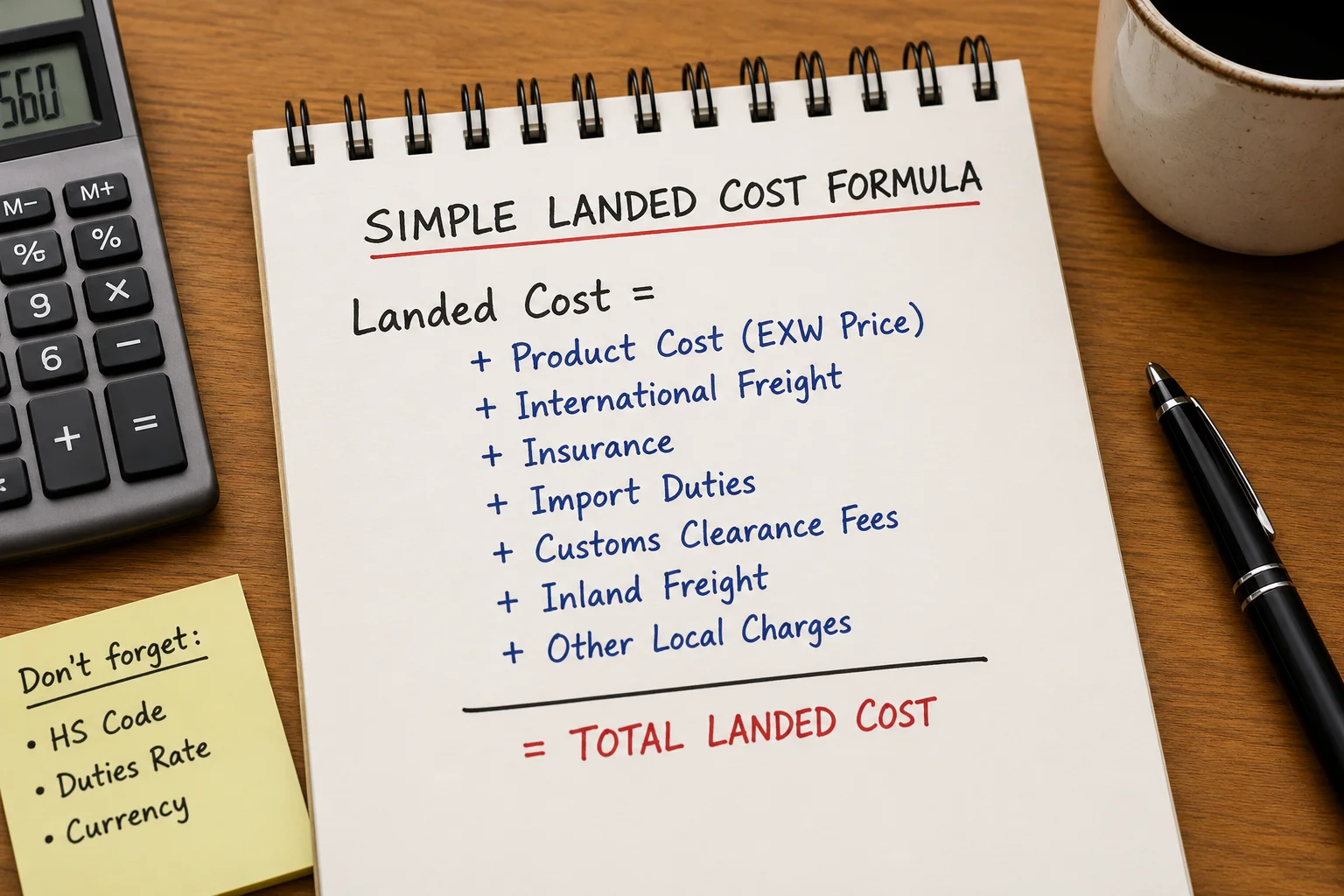
Let's make this super practical. Before you place your next big order from China, use this simple worksheet. Get real quotes from your supplier and a shipping agent (a freight forwarder).
Here's an example for an order of 2,000 vapes:
| Cost Item | Calculation | Estimated Cost |
|---|---|---|
| A. Total Product Cost | 2,000 units x $4.00/unit | $8,000 |
| B. Shipping & Insurance | Air freight quote + insurance | $2,500 |
| C. Customs Duties | 3% of (A + B) | $315 |
| D. Local Taxes (VAT) | 20% of (A + B + C) | $2,163 |
| E. Other Fees | Brokerage, handling, etc. | $150 |
| Total Landed Cost | A + B + C + D + E | $13,128 |
| Landed Cost Per Unit | Total / 2,000 units | $6.56 |
Look at that. The vape with a $4.00 factory price actually costs you $6.56 to get into your warehouse. Now you know the real number you need to use to calculate your selling price and profit margin. If you had based your business plan on a $4.00 cost, you would be losing money on every sale. This simple exercise is probably the most valuable five minutes you can spend before sending any money overseas. Don't skip it.
Final Advice: Compare Total Cost, Risk, and Sell-Through Speed Together?
The cheapest product sitting in your warehouse for three months is not a good deal. The most profitable product is the one you can sell quickly, over and over again.
The true goal isn't the lowest cost, but the fastest capital turnover.[^11] A slightly more expensive product that you can get in 5 days and sell out in a week is infinitely more profitable than a cheap product that takes 3 months to arrive.
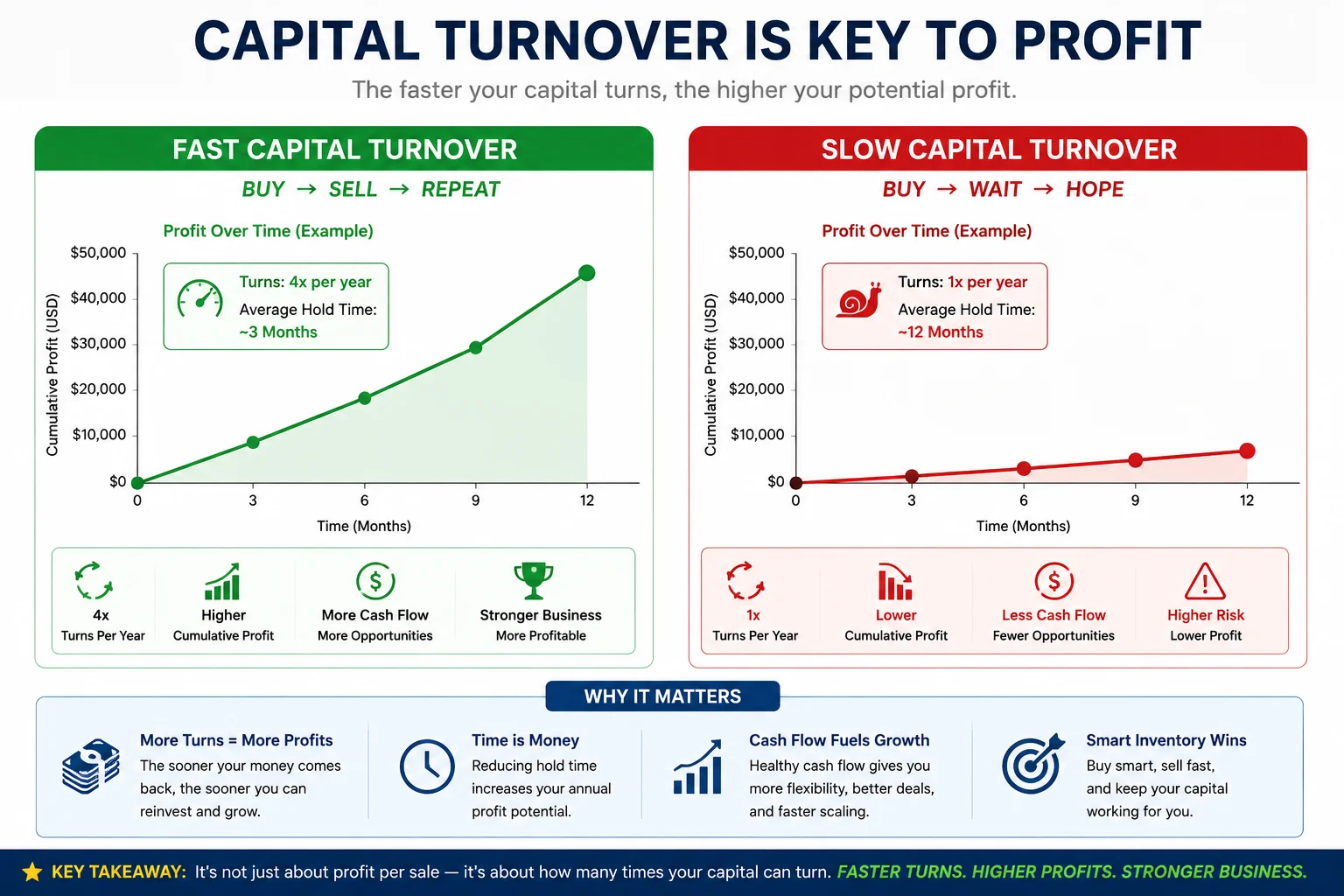
This is the most important lesson I can share from my 15 years in this business. The essence of a successful import business is not margin, it's cash flow. It's the speed at which you can turn your money into product, then back into more money.
Let’s compare two scenarios. You have $10,000 to invest.
Scenario A: The "Cheap" Route
- You spend a month finding the "cheapest" supplier in China.
- You place an order and wait two months for it to arrive by sea to save on shipping.
- Total time until stock is ready to sell: 3 months.
- Maybe you get a great 50% profit margin on this one shipment.
- You can do this maybe three times a year. Your annual return on your capital is 150%. Not bad.
Scenario B: The "Smart" Route
- You order from our German warehouse. The unit price is higher. Your profit margin is only 20%.
- But the product arrives at your door in 3-5 days.
- You sell out in two weeks and place another order.
- You can turn over your capital maybe 20 times a year.
- Your annual return is 20% profit * 20 turnovers = 400% return on your capital.
Which business would you rather have? The slow one that makes a bit more per sale, or the fast one that makes way more money over the year? The answer is obvious. Don't just look at the price tag. Look at the whole business model. Compare the total landed cost, the risks involved, and most importantly, the speed at which you can sell the product and get your money back to do it all again. That is the real secret to winning in wholesale.
Conclusion
Stop chasing the lowest unit price. Calculate your full landed cost, factor in the risks, and prioritize speed. This is how you build a real, profitable, long-term vape business.
---

[^1]: "HHS, CBP Seize $86.5 Million Worth of Illegal E-Cigarettes in ... - FDA", https://www.fda.gov/news-events/press-announcements/hhs-cbp-seize-865-million-worth-illegal-e-cigarettes-largest-ever-operation. Reports from public health bodies or market analysis firms can provide evidence on the scale of the counterfeit e-cigarette market, often highlighting issues such as non-compliant ingredients, poor manufacturing standards, and inaccurate nicotine labeling, which are common in illicitly produced, low-cost products. Evidence role: general_support; source type: research. Supports: The link between low-priced vapes and the risks of counterfeiting, poor quality, and potential health hazards..
[^2]: "Stopping China's Illegal Vapes - Congressman Zach Nunn", https://nunn.house.gov/2026/03/12/%F0%9F%9A%AB-stopping-chinas-illegal-vapes/. News reports from international or local Chinese media outlets have documented instances of police raids on unregulated workshops producing counterfeit and illegal vape products, particularly in manufacturing hubs like Shenzhen. These reports often detail the seizure of goods and the dismantling of production lines, illustrating the real risk of supplier disappearance for buyers engaged with such operations. Evidence role: case_reference; source type: other. Supports: The occurrence of police raids and shutdowns of illegal e-cigarette manufacturing operations..
[^3]: "Landed Cost: Meaning, Formula & Examples for You | DHL Global", https://www.dhl.com/discover/en-global/logistics-advice/essential-guides/landed-cost-meaning-formula-calculation. A source from a business encyclopedia or logistics guide can confirm that landed cost, also known as total landed cost, represents the complete price of a product once it has arrived at the buyer's doorstep, encompassing the original price, transportation fees, customs, duties, taxes, insurance, and currency conversion. Evidence role: definition; source type: encyclopedia. Supports: The definition of 'landed cost' as the total cost of a product, including shipping, duties, taxes, and other fees, to get it to the buyer's location..
[^4]: "Harmonized Tariff Schedule", https://hts.usitc.gov/. Official government tariff databases, such as the U.S. Harmonized Tariff Schedule (HTS) or the EU's TARIC system, allow importers to look up the specific duty rate for a product based on its classification code. These resources show that duty rates are not arbitrary but are set by law and vary widely by product type and country of origin. Evidence role: case_reference; source type: government. Supports: The method for determining the specific customs duty rate for an imported product.. Scope note: The source provides the tool to find the rate, not a confirmation of the 3% rate used in the article's example, which is illustrative.
[^5]: "Achieving appropriate regulations for electronic cigarettes - PMC - NIH", https://pmc.ncbi.nlm.nih.gov/articles/PMC3926346/. Official guidance from the UK government or its Medicines and Healthcare products Regulatory Agency (MHRA) outlines the rules for e-cigarettes, which are based on the EU's Tobacco Products Directive (TPD) and cover aspects like nicotine strength, tank size, labeling, and notification requirements. Evidence role: general_support; source type: government. Supports: The existence and key requirements of the Tobacco Products Directive (TPD) regulations for e-cigarettes and vape products in the United Kingdom.. Scope note: The source would confirm the existence and nature of the rules, but not the specific challenges importers face in complying with them.
[^6]: "Premarket Tobacco Product Applications - FDA", https://www.fda.gov/tobacco-products/market-and-distribute-tobacco-product/premarket-tobacco-product-applications. Information from the U.S. Food and Drug Administration (FDA) explains that the Premarket Tobacco Product Application (PMTA) is the regulatory pathway through which manufacturers must demonstrate to the agency that a new tobacco product is appropriate for the protection of public health in order to receive marketing authorization. Evidence role: definition; source type: government. Supports: The definition and requirements of the Premarket Tobacco Product Application (PMTA) process for vape products in the United States..
[^7]: "Denmark–Sweden border - Wikipedia", https://en.wikipedia.org/wiki/Denmark%E2%80%93Sweden_border. Information from international freight forwarders or marine insurance specialists can clarify the terms of cargo insurance policies. These sources may confirm that while some policies cover seizure at the initial point of entry into a customs union like the EU, they often exclude subsequent seizures by national authorities during intra-community transit, which is considered a separate risk. Evidence role: general_support; source type: other. Supports: The existence of 'secondary clearance' or intra-community customs checks within the EU and the typical exclusions in cargo insurance policies regarding customs seizures.. Scope note: Finding a single source that explicitly links 'secondary clearance' in specific Nordic countries to this insurance exclusion may be difficult; the evidence may need to be pieced together from sources on EU customs and insurance policy language.
[^8]: "Used Lithium-Ion Batteries | US EPA", https://www.epa.gov/recycle/used-lithium-ion-batteries. Educational or technical resources on battery technology explain the different performance characteristics of various cell chemistries. For instance, they can show that while manganese dioxide cells are inexpensive, they typically offer lower energy density and poorer performance under high-drain conditions compared to the rechargeable lithium-ion cells used in higher-quality electronics, leading to shorter device life. Evidence role: mechanism; source type: education. Supports: The performance and cost differences between various battery chemistries, such as lithium-ion and manganese dioxide.. Scope note: The source would explain the general properties of the batteries, not specifically their use in counterfeit vapes.
[^9]: "Disposable E-Juice Capacity & Puff Count - The Vapr Room", https://www.thevaprroom.com/blogs/tvrblog/disposable-e-juice-capacity-puff-count/. Industry analysis or product testing reports can provide data on the typical number of puffs that can be obtained from 1ml of e-liquid. While this can vary based on device, user behavior, and testing protocol, sources often cite a range that can be used to evaluate the plausibility of advertised puff counts on disposable vapes. Evidence role: statistic; source type: research. Supports: The generally accepted industry ratio for converting milliliters of e-liquid to an approximate number of puffs.. Scope note: The exact number of puffs can vary significantly based on puff duration, device power, and coil design, so any cited figure is an approximation rather than a fixed standard.
[^10]: "Know Your Incoterms - International Trade Administration", https://www.trade.gov/know-your-incoterms. Resources from the International Chamber of Commerce (ICC) or international trade institutions define Incoterms like EXW and DDP. These definitions clarify that under EXW, the buyer assumes nearly all risk and cost from the seller's premises, whereas under DDP, the seller is responsible for delivering the goods to the destination, including all costs and duties, supporting the article's advice regarding their suitability for different types of importers. Evidence role: definition; source type: institution. Supports: The official definitions of Ex Works (EXW) and Delivered Duty Paid (DDP) Incoterms, which outline the distinct obligations, risks, and costs for the buyer and seller..
[^11]: "Capital Turnover | Formula + Calculator - Wall Street Prep", https://www.wallstreetprep.com/knowledge/capital-turnover/. Business finance and accounting resources define capital turnover as a measure of how efficiently a company is using its capital to generate sales. A higher ratio indicates greater efficiency, as it means the company can convert its investments in inventory back into cash more quickly, which is a key driver of overall annual profitability. Evidence role: definition; source type: education. Supports: The definition and importance of capital turnover (or working capital turnover) in business profitability and cash flow management..