
Struggling with long shipping times, customs headaches, and high MOQs? This ties up your cash and makes you miss sales. Using a U.S. warehouse can turn these problems into your advantage.
Yes, U.S. warehouse stock is a powerful tool when speed, low risk, and agility matter more than the absolute lowest unit cost. It lets you test products, restock fast, and avoid customs delays. This ultimately boosts your cash flow and builds trust with your customers.
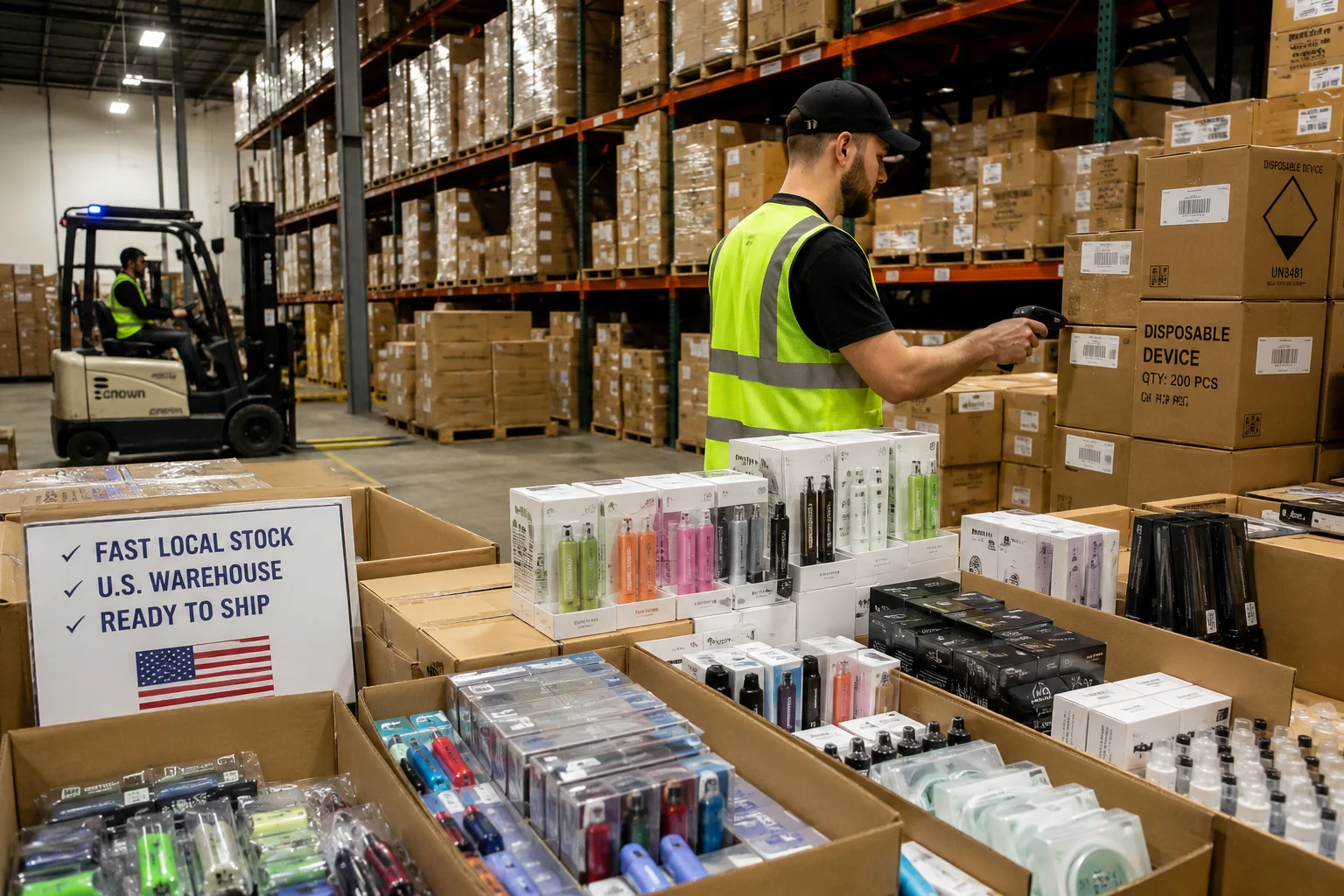
I've been in the export business for 15 years, and I talk to vape wholesalers every single day. A common question I get is, "Should I buy from your U.S. warehouse or order direct from China?" The answer isn't about which is "cheaper." It's about which model matches your business goals and what risks you can afford to take. Thinking about it this way is the key to making more money. Let's break down the specific times when using a U.S. warehouse is the smart move.
When Does U.S. Warehouse Stock Reduce Delivery Risk?
Worried your vape shipment will get stuck in customs or lost in transit? This delay can kill your profits. Shipping from a U.S. warehouse removes these international headaches for you.
Using a U.S. warehouse completely eliminates your international shipping and customs risk. We handle the bulk import, clear customs, and pay duties. You just place a domestic order and receive it in days, door-to-door, without worrying about your entire investment getting seized or delayed for weeks.
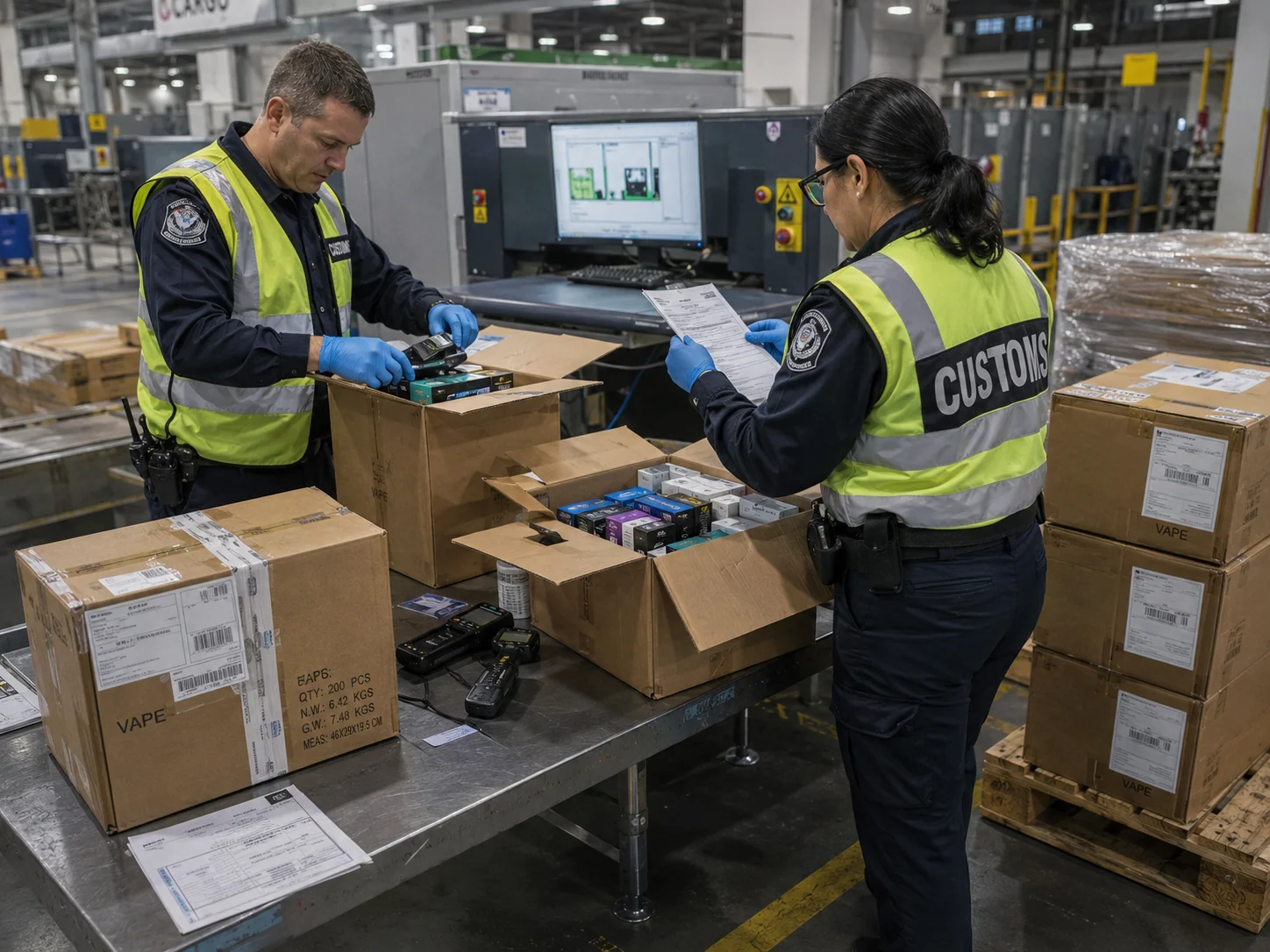
When you order directly from China, you become the importer. That means you take on all the risks. First, there's the big one: customs seizure. Vape regulations are tricky and can change[^1]. We've seen entire containers get held up or seized, and if you haven't paid for full customs insurance, you could lose everything. We, as the warehouse operator, take on this massive financial risk by importing hundreds of thousands of units at a time. We deal with the paperwork, the inspections, and the potential losses.
Even if your shipment isn't seized, delays are common. A random inspection can add weeks to your delivery time[^2]. By using our U.S. warehouse, you're buying products that are already past this hurdle. The risk is gone. The delivery is now a simple domestic shipment, like ordering from Amazon. It typically arrives in 3-5 business days, not 3-5 weeks[^3]. This allows you to promise your customers a delivery date and actually meet it, which is crucial for building a reliable business. You're not just buying vapes; you're buying certainty.
When Do Fast Reorders Matter More Than Lowest Unit Cost?
Is your cash tied up for months in a single large order from overseas? This slow cash flow cripples your ability to grow. What if you could turn over your capital every week instead?
Fast reorders from a U.S. warehouse are for businesses that understand cash flow is king[^4]. Selling out and restocking weekly with a 20% margin makes you far more money over a year than waiting two months for a sea shipment that has a 40% margin. The speed of your money is more important than the margin on a single unit.

Many new business owners fall into the "cheapest price" trap. They spend a month finding a supplier who is 50 cents cheaper, then wait two months for sea freight to save on shipping. Their money is tied up for three months before they see a single dollar in return. They might make two or three of these cycles a year.
Now, consider the warehouse model. You buy a smaller batch of inventory on Monday. It arrives by Friday. You sell it over the next week or two. You've already made your profit and can reinvest it immediately. Let's do some simple math.
| Business Model | Order Cycle | Profit Margin | Annual Capital Turns | Annual Profit (on $1000) |
|---|---|---|---|---|
| China Direct (Slow) | 3 Months | 40% | 4 | $1,600 |
| U.S. Warehouse (Fast) | 2 Weeks | 20% | 26 | $5,200 |
As you can see, the business that turns its money over 26 times a year with a smaller margin makes over three times more profit[^5] than the "smart" buyer who got the cheapest price. Business isn't about finding the cheapest thing; it's about the circulation speed of your money. A U.S. warehouse lets you cycle your cash incredibly fast, which is the real secret to growing your wholesale business.
How Do You Test New Vape SKUs in Small Quantities?
Do you want to offer the newest vape flavors but fear getting stuck with thousands of unsold units? Committing to a large factory order is a huge gamble. There's a safer way to test the market.
A U.S. warehouse is your perfect testing ground. Instead of ordering 2,000 pieces of one flavor from a factory, you can buy a mix-and-match box of 50 units across ten different flavors. This lets you discover what your customers actually want to buy, with minimal financial risk.
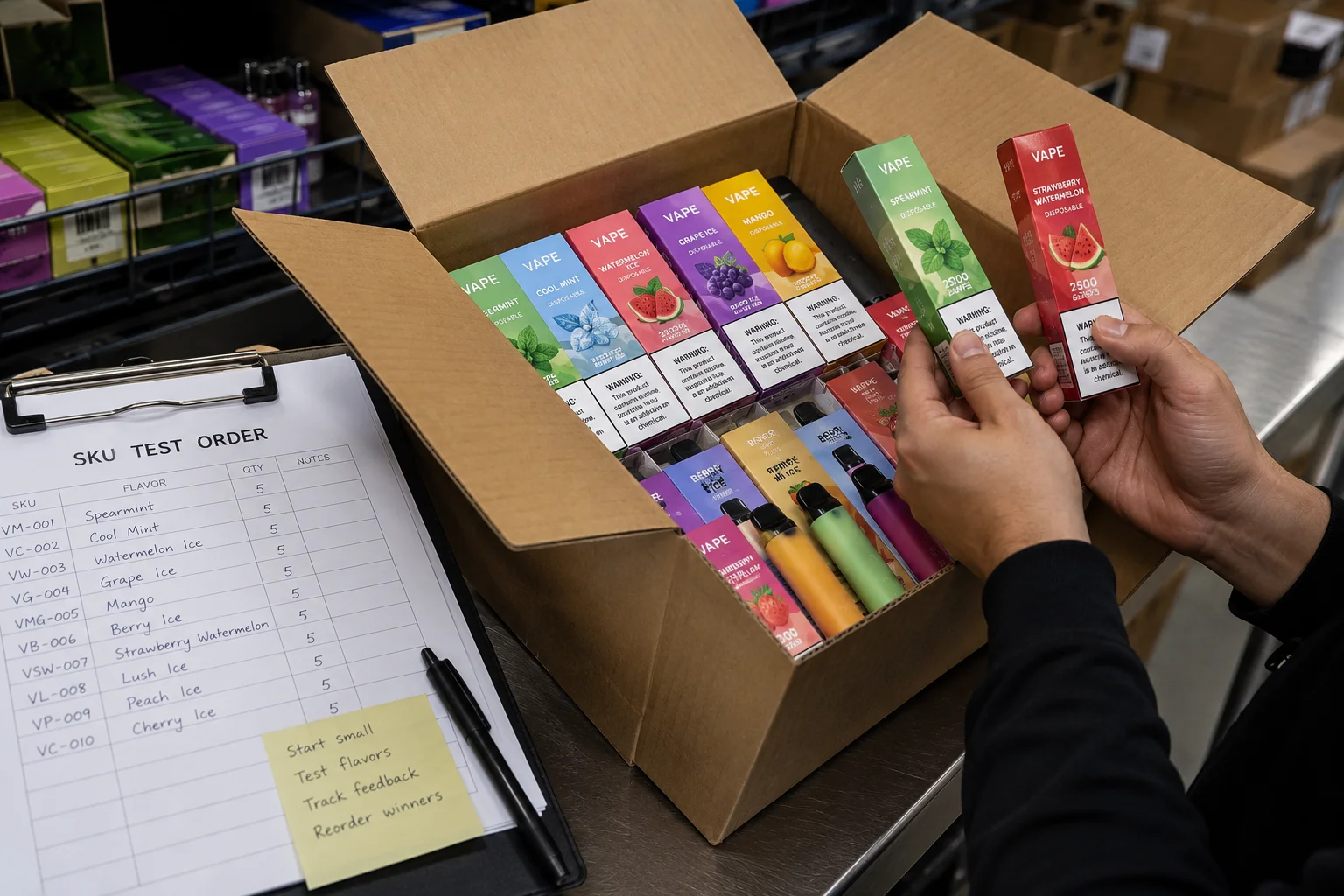
The vape market moves fast[^6]. A flavor that's hot today could be old news next month. As a business owner, your job is to find the winners, but you don't want to go broke doing it. When you order directly from a factory in China, the minimum order quantity (MOQ) for a custom flavor or even a standard one can be 2,000 pieces or more[^7]. If that flavor doesn't sell, you've just tied up thousands of dollars in dead stock.
This is where the warehouse strategy shines. We break down the massive factory MOQs for you. You can log on, see dozens of SKUs from brands like Elf Bar, Vozol, and Fumot, and build a small test order for under $400. Maybe you buy five units of Blue Razz, five of Watermelon Ice, five of a new flavor you've never heard of. You put them in your store or on your website and see what sells out first. The data you get from this small investment is priceless. It tells you exactly what to reorder in larger quantities. You're using real sales data, not guesswork, to build your inventory.
What If Retailers Need Emergency Restocking?
Has a popular product suddenly sold out, leaving your shelves empty and customers disappointed? Waiting weeks for a restock from overseas means losing sales to competitors. You need a faster solution.
A U.S. warehouse acts as your emergency backup inventory. When a vape suddenly goes viral or you have an unexpected sales surge, you can place an order and have it restocked in 3-5 days. This agility means you capture the demand instead of watching your competitors do it.
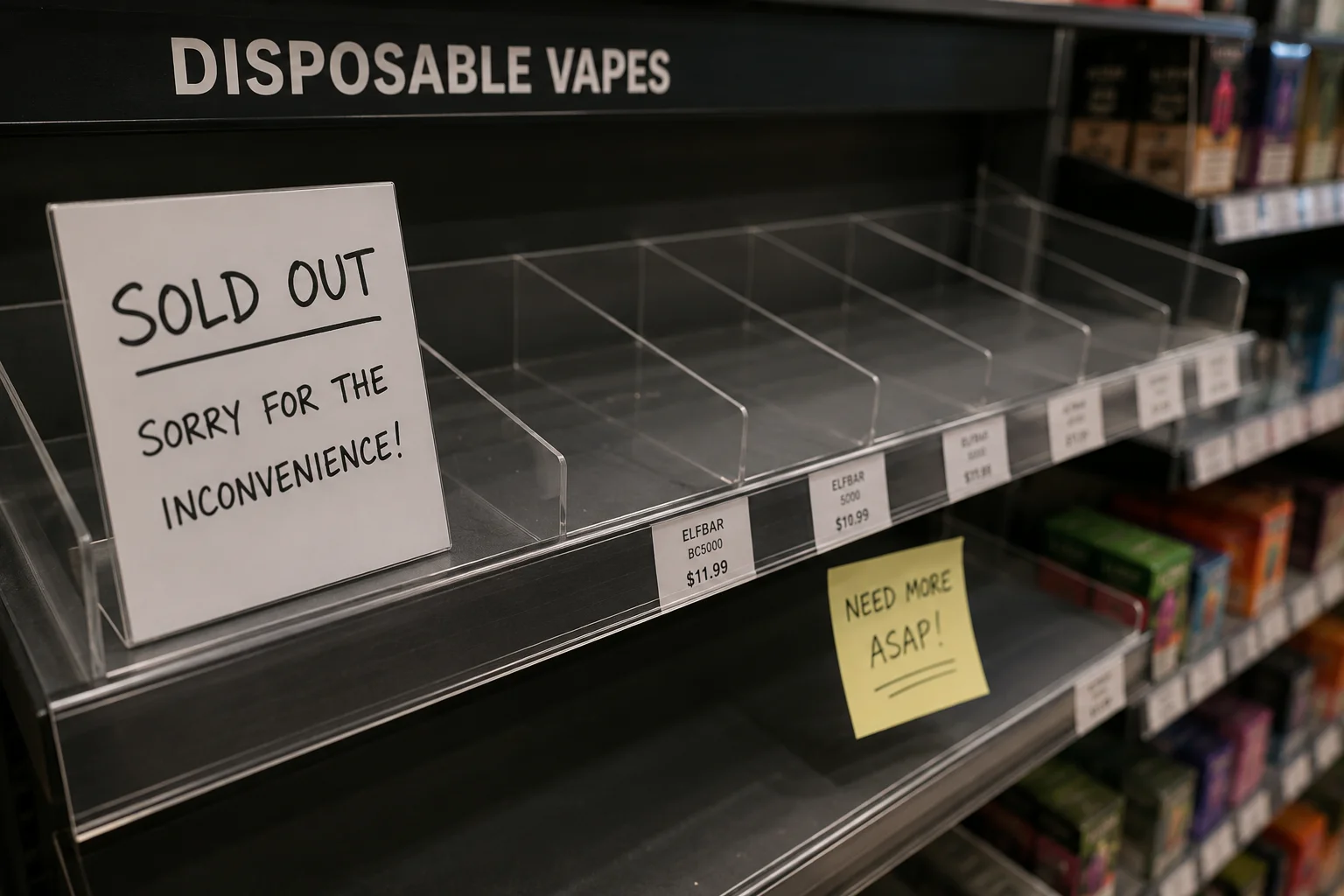
Imagine this scenario. A TikTok influencer posts a video about a specific Razz Bar flavor. Suddenly, everyone wants it.[^8] Your entire stock sells out in one afternoon. If your supply chain relies on China, you're looking at a 4 to 6-week lead time, at best. By the time your shipment arrives, the hype is over, and your customers have already bought from someone else.
With a U.S. warehouse, the story is different. You see the sales spike on Friday. You place a restock order from our warehouse that same day. The new inventory ships out on Monday and arrives at your store by Wednesday. You've been out of stock for only a few days, not a few months. You capture the wave of demand, make a great profit, and keep your customers happy. This "just-in-time" capability is a massive competitive advantage. It allows you to be nimble and responsive in a market that changes daily. It turns potential disasters (stockouts) into massive opportunities.
When Is Seasonal Demand Hard to Forecast?
Struggling to guess how much inventory you'll need for summer festivals, holidays, or back-to-school? Ordering too much leaves you with dead stock, and ordering too little means lost sales.
U.S. warehouse stock is the perfect solution for unpredictable seasonal demand. Instead of placing one huge, risky order months in advance, you can place smaller, more frequent orders throughout the season. This allows you to react to real-time sales data and avoid costly forecasting errors.
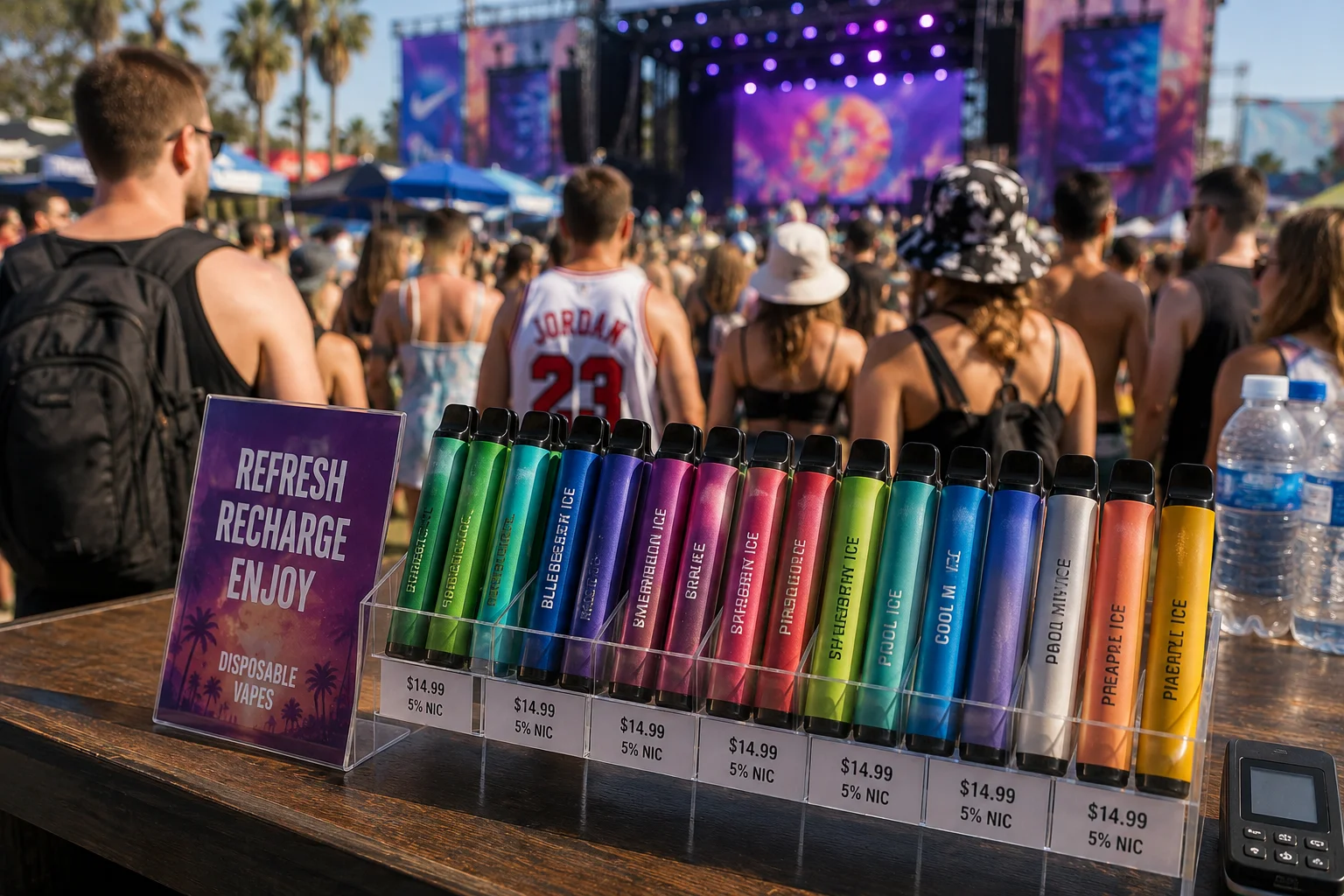
Seasonal sales are a double-edged sword. Let's say there's a big music festival coming to your town. You know demand for vapes will spike, but by how much? If you order a sea container's worth of product and it rains all weekend, you're stuck with a mountain of inventory. If you're too cautious and under-order, you sell out on the first day and miss a massive profit opportunity. Forecasting is a gamble.
A U.S. warehouse changes the game. You can start the season with a modest amount of inventory. As you see how fast things are selling, you can place weekly or even daily restock orders. If a particular flavor is flying off the shelves, you order more of that one. If another is sitting there, you stop ordering it. You're not guessing what will happen in three months; you're reacting to what happened yesterday. This approach shifts the inventory risk from you to us. We hold the massive seasonal stock, and you pull from it exactly as you need it, maximizing your sales and minimizing your risk.
Do Customs Delays Hurt Your Sales Window?
Are you tired of your carefully planned product launch being ruined by a random customs inspection? Unpredictable shipping delays can destroy your marketing efforts and cause you to miss key selling seasons.
Yes, and a U.S. warehouse completely insulates you from this problem. The products are already on U.S. soil, past customs, and ready for domestic shipping. You trade a slightly higher unit price for the guarantee that your inventory will be available when you need it, not when a customs agent decides to release it.
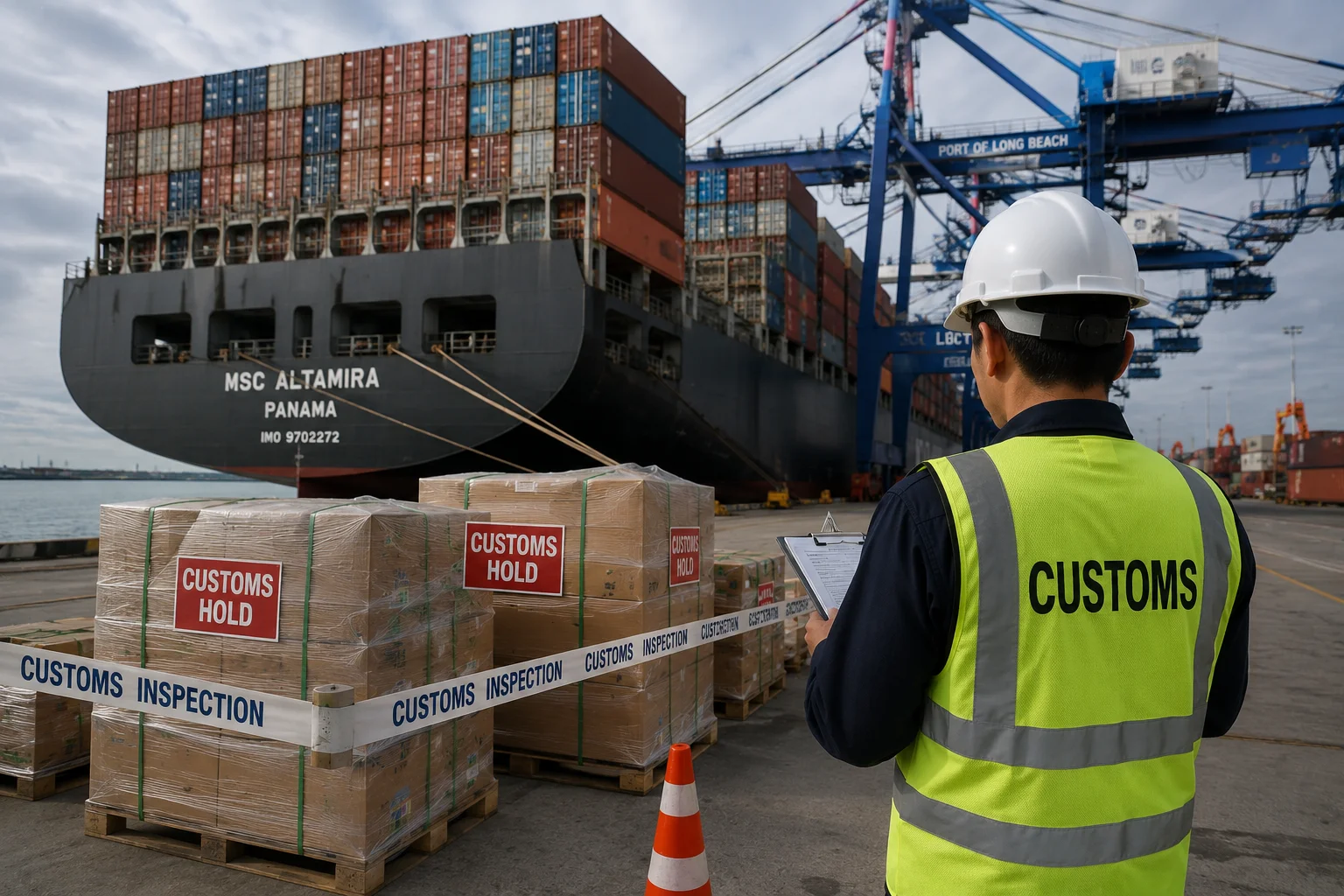
When importing from China, you are at the mercy of global logistics and government agencies. Your container might be selected for a random X-ray. There could be new paperwork requirements you didn't know about. The port could be congested due to labor shortages.[^9] Any of these things can add weeks or even months to your timeline.
I've seen clients plan a huge Black Friday promotion, only to have their shipment arrive in mid-December. The sales window was missed, the marketing budget was wasted, and they had to discount the products heavily just to move them. This is a catastrophic, but common, risk of direct importing. By purchasing from a U.S. warehouse, you are effectively paying a small premium to offload that entire risk. The price you see includes the "insurance" against all those international shipping nightmares. You can plan your promotions with confidence, knowing that your stock is a predictable 3-5 day UPS or DHL shipment away, not an unpredictable ocean voyage away.
Can U.S. Stock Help Build Buyer Trust?
As a new buyer, does sending thousands of dollars to an unknown overseas company make you nervous? The fear of scams and communication issues is real and can prevent you from starting your business.
Absolutely. A supplier with an established U.S. warehouse signals reliability and commitment to the market. It provides a safer, lower-risk way to start a business relationship. You can place a small, domestic order first to verify the supplier and product quality before committing to larger international deals.

Let's be honest, there are a lot of scams in international trade[^10]. I get messages from buyers every week who got burned. They sent money and the supplier disappeared. Or they received a shipment of fake, low-quality junk. This is a huge fear, especially for first-time importers.
When you see that a supplier has invested the significant capital required to set up and stock a U.S. warehouse, it's a powerful signal. It shows they are a serious, established company, not a temporary scammer. It proves they are committed to the U.S. market for the long term. For you as a buyer, it creates a much safer entry point. You don't have to start with a risky $10,000 wire transfer to China. You can start with a $300 credit card payment for a small order from the U.S. warehouse. You can test our products, our shipping speed, and our customer service with minimal risk. This process builds trust. Once you know we are a reliable partner, you'll feel much more confident placing larger orders in the future.
Can U.S. Warehouse Inventory Become a Cash Flow Trap?
Is buying from a U.S. warehouse always the best option? While it offers many benefits, there's a point where it can actually hurt your profits. It's important to know when to switch your strategy.
Yes, for high-volume wholesalers moving thousands of units of a single SKU, the higher unit cost of warehouse stock can become a trap. At a certain scale, the savings from direct importing outweigh the benefits of warehouse agility. The warehouse is a tool, not the only solution.

I believe in being honest with my clients. The U.S. warehouse is not for everyone, for every order. It is a strategic tool. If you are a large-scale distributor and you know for a fact that you will sell 5,000 units of Elf Bar BC5000 in Blue Razz Ice every single month, you should probably be importing that SKU directly from China in container-load quantities. At that volume, the cents you save on each unit by buying direct add up to thousands of dollars in extra profit. You have the sales history to justify the inventory risk and the capital to manage the longer cash cycle.
For these large players, the U.S. warehouse serves a different purpose. It's your emergency backup, not your primary source. It's where you go when your container is delayed, or when you want to test a new, unproven SKU without committing to 10,000 units. The smart wholesaler uses both strategies[^11]. They use direct importing for their proven, high-volume "A-stock" and the U.S. warehouse for testing, for emergencies, and for their "B-stock" and "C-stock" items.
Conclusion
Using a U.S. warehouse is a strategic decision. It's the right choice when you prioritize speed, low risk, and cash flow over the absolute rock-bottom unit price.
[^1]: "Enforcement Actions Against Industry for Unauthorized Tobacco ...", https://www.fda.gov/tobacco-products/compliance-enforcement-training/advisory-and-enforcement-actions-against-industry-unauthorized-tobacco-products. The U.S. Food and Drug Administration (FDA) maintains and updates regulations for Electronic Nicotine Delivery Systems (ENDS), issuing warning letters and import alerts for products marketed without authorization, which demonstrates the active and changing regulatory landscape. Evidence role: case_reference; source type: government. Supports: That vape regulations are complex and actively enforced, leading to potential import disruptions.. [^2]: "Pending intensive exam - help.CBP.gov", https://cbpcomplaints.cbp.gov/s/article/Article-1268?language=en_US. According to U.S. Customs and Border Protection (CBP), while many examinations are resolved within days, more intensive exams can result in merchandise being held for extended periods, potentially lasting several weeks. Evidence role: general_support; source type: government. Supports: That customs inspections can cause significant delays measured in days or weeks.. Scope note: The source provides general information on customs delays and does not offer specific data limited to vape product shipments. [^3]: "Latest Supply Chain and Freight Indicators", https://www.bts.gov/freight-indicators. Logistics industry data shows that standard sea freight from major Chinese ports to the U.S. West Coast typically takes 20-30 days for ocean transit alone, with total door-to-door time often exceeding a month after factoring in customs and inland transport. Evidence role: statistic; source type: other. Supports: The typical transit time for sea freight from China to the U.S. is several weeks.. Scope note: Shipping times are highly variable and subject to change based on port congestion, carrier performance, and season. [^4]: "A Cash Flow Perspective on the Small Business Sector", https://www.jpmorganchase.com/institute/all-topics/business-growth-and-entrepreneurship/a-cash-flow-perspective-on-the-small-business-sector. Financial management principles state that positive cash flow is essential for a company's solvency, as it represents the liquid funds available to meet short-term obligations. A business can be profitable on paper but fail due to a lack of cash. Evidence role: definition; source type: education. Supports: The principle that managing cash flow is critical for business survival and growth, often more so than reported profit.. [^5]: "Inventory Turnover Ratio: What It Is, How It Works, and Formula", https://www.investopedia.com/terms/i/inventoryturnover.asp. The inventory turnover ratio is a key metric of operational efficiency. A higher ratio indicates that a company is selling and restocking its goods quickly, which can lead to a higher return on investment by allowing capital to be reinvested more frequently throughout the year. Evidence role: mechanism; source type: education. Supports: The business principle that increasing the velocity of inventory turnover can lead to higher annual profits, even with lower per-unit margins.. Scope note: The source explains the financial principle, while the specific figures and profit calculations in the article's table remain hypothetical. [^6]: "The Reshaping of the E-Cigarette Retail Environment - PMC - NIH", https://pmc.ncbi.nlm.nih.gov/articles/PMC9319677/. Market analysis of the e-cigarette industry frequently highlights the rapid pace of product innovation and shifting consumer preferences for flavors and device types as key market characteristics, particularly in the disposable sector. Evidence role: general_support; source type: research. Supports: The vape market is characterized by rapidly changing consumer preferences and short product life cycles.. Scope note: Full market research reports may be proprietary, but summaries and industry news articles often confirm this trend. [^7]: "What is a typical Minimum Order Quantity (MOQ) for low ... - Orbit", https://orbit-kb.mit.edu/hc/en-us/articles/360039224292-What-is-a-typical-Minimum-Order-Quantity-MOQ-for-low-volume-manufacturing-in-China. Guides on international sourcing explain that Minimum Order Quantities (MOQs) are a standard practice for manufacturers to cover fixed costs of production setup. These MOQs often require purchasing thousands of units per order. Evidence role: general_support; source type: other. Supports: That manufacturers, particularly overseas, often impose high Minimum Order Quantities (MOQs) to ensure production runs are profitable.. Scope note: The exact MOQ varies significantly by factory and product, so the 2,000-unit figure is an illustrative example rather than a universal standard. [^8]: ""The Impact of Tik Tok Marketing on Consumer Behavior in the ...", https://digitalcommons.lindenwood.edu/theses/1401/. Marketing research has documented the 'TikTok Made Me Buy It' phenomenon, where products featured in viral videos experience sudden, dramatic increases in demand that can rapidly lead to stockouts for retailers. Evidence role: mechanism; source type: paper. Supports: The phenomenon where products can go viral on social media platforms like TikTok, causing sudden and massive spikes in consumer demand.. [^9]: "[PDF] U.S. Container Port Congestion and Related International Supply ...", https://www.fmc.gov/wp-content/uploads/2019/04/PortForumReport_FINALwebAll.pdf. Reports from institutions like the Federal Reserve and maritime authorities have documented how events such as labor negotiations and demand surges have led to significant congestion at major U.S. ports, causing widespread delays in the global supply chain. Evidence role: historical_context; source type: government. Supports: That port congestion and labor issues have been a significant and documented cause of shipping delays in the U.S.. Scope note: The severity of port congestion fluctuates, but it remains a recurring risk factor in international logistics. [^10]: "Exploring the puzzle of trade discrepancies in international trade ...", https://blogs.worldbank.org/en/developmenttalk/exploring-puzzle-trade-discrepancies-international-trade-statistics. The FBI's Internet Crime Complaint Center (IC3) regularly reports on business email compromise (BEC) scams, which often target companies engaged in international trade and result in billions of dollars in reported losses annually. Evidence role: statistic; source type: government. Supports: The prevalence and financial impact of scams and fraud in international trade.. Scope note: The source confirms the general and significant risk of fraud in B2B transactions, though it may not provide data specific to the vape industry. [^11]: "ABC analysis - Wikipedia", https://en.wikipedia.org/wiki/ABC_analysis. This hybrid approach aligns with the principle of ABC analysis, a widely used inventory categorization method. In this system, 'A' items (high-value, fast-moving) are managed tightly, while 'B' and 'C' items (lower-value, slower-moving) are managed with less stringent controls. Evidence role: mechanism; source type: education. Supports: The inventory management principle of classifying items based on their value and sales volume and applying different management strategies to each class..