
Quick Answer
Weeks of supply can decide whether a vape wholesaler keeps products available or ties up cash in slow-moving stock. I often see buyers focus on getting the lowest unit price, while overlooking demand changes, customs delays, product lifecycle, and after-sales exposure. I believe the safer solution is to set inventory by SKU, sales speed, supply route, and cash-flow capacity—not by one universal number. **A vape wholesaler should not hold a fixed number of weeks of supply for every product.
The right level depends on each SKU’s sales velocity, product lifecycle, replenishment lead time, logistics and customs uncertainty, minimum order quantity, and inventory cost.[1] Established fast-moving products may justify deeper coverage, while new or trend-driven products usually need smaller test orders and faster review.**
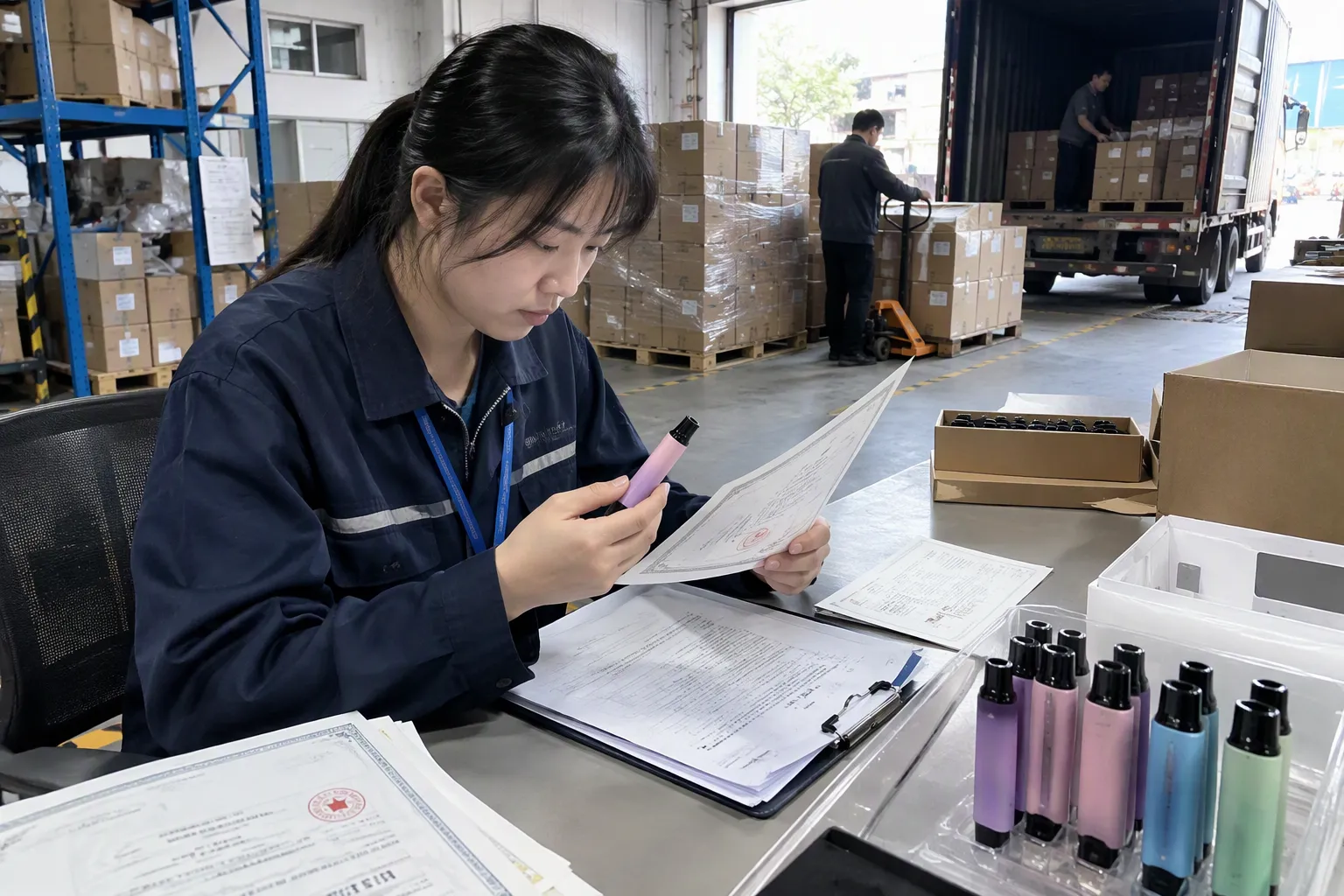
The practical question is not simply, “How many weeks should I buy?” I would ask, “How quickly can I sell this SKU, how quickly can I replenish it, and what will happen if demand changes?” That change in thinking helps wholesalers protect availability without sacrificing working capital.
How Many Weeks of Supply Should a Vape Wholesaler Hold?
A vape wholesaler should calculate coverage at the SKU level and balance demand risk against supply risk. I would normally separate established products, seasonal items, new launches, and customized products before discussing an inventory target. A product with predictable weekly movement may support more coverage than a new item with uncertain demand, even when both have similar purchase prices.
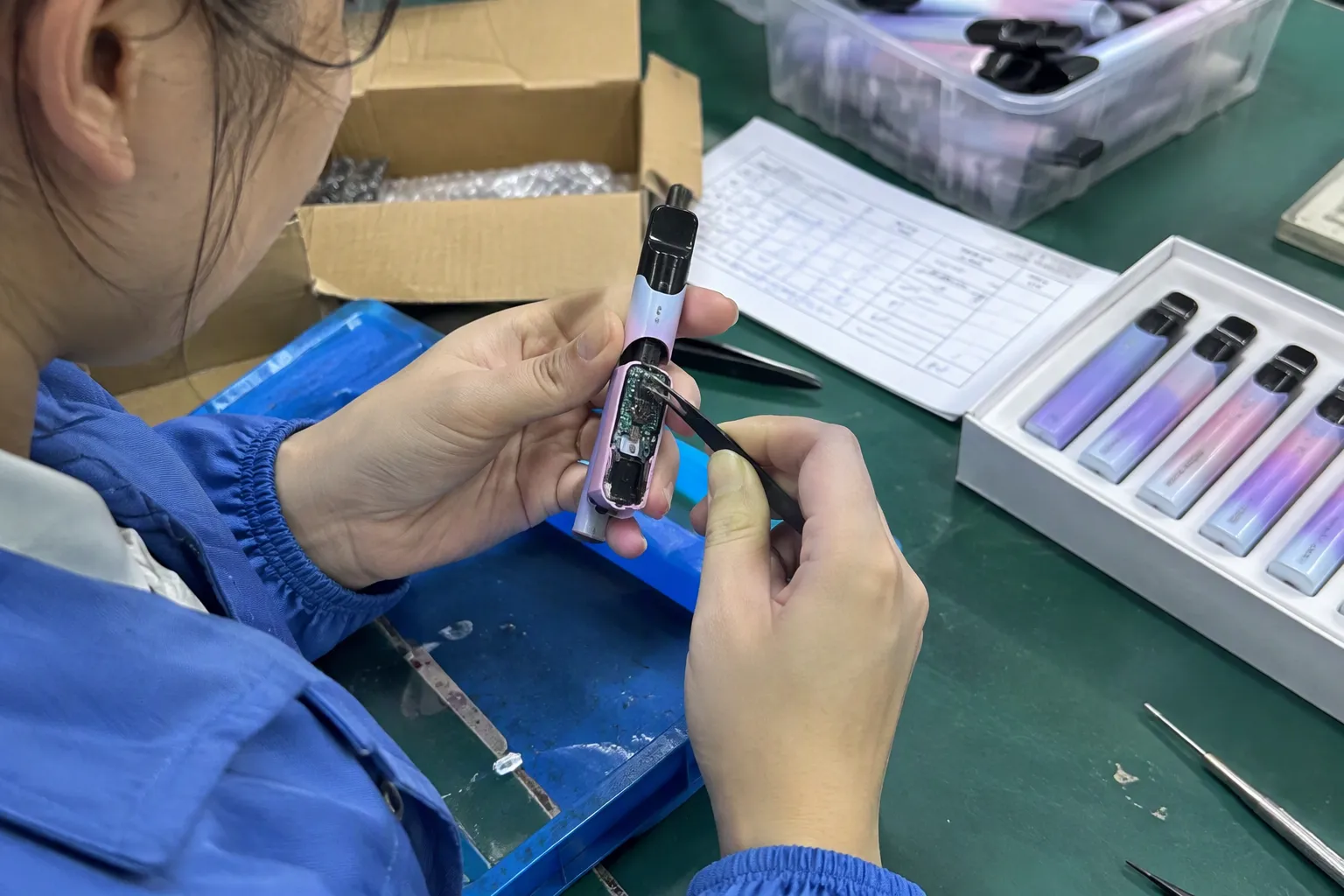
Why a fixed inventory number often fails
A fixed rule such as “always keep four weeks” or “always import eight weeks” sounds simple, but it can create two different problems:
- Understocking: A popular SKU becomes unavailable before the next shipment arrives.
- Overstocking: A slower or outdated product consumes cash and warehouse space.
- Poor product selection: A buyer commits heavily to a new trend before confirming repeat demand.
- Cash-flow pressure: The buyer pays for inventory long before the local customer pays for the goods.
- After-sales exposure: A larger purchase also creates a larger potential quality and service obligation.
I have discussed purchasing and replenishment with wholesalers and importers in Europe and the United States. In those conversations, I find that buyers rarely need one answer for the whole catalogue. They usually need a different replenishment approach for each group of products.
Start with weekly sales velocity
The first useful measurement is the average number of units sold per week for one SKU. I would use recent sales records rather than a general market assumption. If sales vary significantly, I would also record the highest normal sales period and the lowest normal period.
A simple coverage calculation is:
Weeks of supply = Sellable inventory ÷ average weekly sales[2]
For example, if a wholesaler has 600 sellable units and normally sells 150 units per week, the current coverage is approximately four weeks. This calculation does not decide whether four weeks is correct. It only shows the current position.
I would also separate sellable stock from total physical stock. Damaged units, reserved orders, samples, quality-hold units, and products that cannot legally or commercially be sold should not be counted as available inventory.
Segment the catalogue before setting a target
I recommend dividing products into practical groups:
| Product group | Typical demand pattern | Purchasing approach |
|---|---|---|
| Established fast-moving SKU | Repeat demand is easier to observe | Review frequently and consider deeper coverage when replenishment is slow |
| Stable accessory or hardware item | Demand may be steady but margin and replacement patterns differ | Compare sales speed with MOQ and storage cost |
| New launch or trend-driven product | Demand is uncertain and may change quickly | Test with a smaller commitment and monitor reorder behavior |
| Seasonal or event-related item | Sales may concentrate in a limited period | Plan around the selling window, not annual average demand |
| Customized OEM/ODM product | Reordering may require production planning | Confirm demand, artwork, specifications, and cash capacity before commitment |
| Slow-moving or aging product | Capital remains tied up for longer | Reduce future purchasing and create a controlled clearance plan |
This approach helps me focus on the buyer’s commercial result. A low factory price does not help if the product sits in the warehouse for months. A slightly higher landed cost may be more practical if it supports smaller purchases, faster replenishment, or lower stock risk.
Separate demand risk from supply risk
I see two separate questions in every inventory discussion.
Demand risk asks whether the market will buy the product at the expected speed. This risk is higher when the product is new, heavily trend-driven, difficult to explain, or affected by changing local preferences.
Supply risk asks whether the wholesaler can receive replacement stock when needed. This risk may increase when the order requires factory production, international transport, customs processing, or a higher MOQ.
The two risks should not be confused. A buyer may face long replenishment time but still have slow sales. In that situation, placing a very large order only because supply is slow can create excess inventory. I would first verify whether the demand is strong enough to justify the commitment.
Use a reorder point instead of guessing
A reorder point can make purchasing more disciplined. The basic idea is:
Reorder point = expected demand during replenishment time + a carefully considered buffer[3]
I would not present this as a universal formula because the inputs change by market and product. A buyer should consider:
- Average weekly sales
- Expected sales growth or decline
- Confirmed supplier production time
- Transport method and route
- Customs and import uncertainty
- Minimum order quantity
- Available cash
- Product shelf and market lifecycle
- The cost of a stockout compared with the cost of excess stock
A buffer can protect against uncertainty[4], but it should have a reason. If a buyer adds a large buffer to every SKU without reviewing actual sales, the business may gradually accumulate products that no longer match customer demand.
Product lifecycle matters more than many buyers expect
A new vape product may receive strong attention at launch, but early interest does not always become repeat wholesale demand[5]. I would treat the first order as a learning stage unless the buyer already has reliable purchase commitments from downstream customers.
For an established product, historical reorder behavior gives the buyer more confidence. For a new product, I would examine:
- How many customers have requested it?
- Are they asking for samples, small trial quantities, or repeat supply?
- Can the supplier replenish it without a large new commitment?
- Does the product require special packaging, labeling, or documentation?
- What happens if the product is replaced by a newer model?
- Can the product be sold through the buyer’s existing channels?
This is especially important for importers and distributors that supply vape shops, smoke shops, convenience stores, gas stations, and smaller regional wholesalers. Their customers may want new products quickly, but they also need reliable sell-through.
The lowest unit price is not always the lowest business cost
I encourage buyers to compare total inventory cost, not only the supplier quotation. Total cost may include:[6]
- Product purchase price
- International freight
- Customs-related expenses
- Local delivery
- Warehouse handling
- Payment and financing cost
- Stock damage or quality-control cost
- Discounting or clearance cost
- Customer service and after-sales handling
- The opportunity cost of cash held in inventory
A large China bulk order may produce a strong unit price. It may also require more cash, more warehouse space, and greater demand certainty. An overseas-warehouse order may have a higher unit price but allow a smaller MOQ and faster local replenishment. Neither route is automatically better. I would choose according to the buyer’s sales pattern and business model.
Match the supply route to the buyer’s scale
I usually see three practical supply routes.
1. Small-batch or overseas-warehouse replenishment
This route can suit smaller wholesalers, local distributors, and buyers testing new products. Kingfuji has overseas warehouse stock in Europe, including locations in Germany, Austria, Poland, and Belgium. Available products can be shipped through carriers such as DHL, DPD, UPS, or FedEx, subject to stock availability and the specific order.
The business value for a smaller buyer is not only speed. A lower MOQ can reduce the amount of cash committed before the product is sold. The buyer can also avoid making every purchase a large international import from China. Our stated European warehouse MOQ can be as low as 50 pieces per model for available products, but buyers should confirm current stock, destination, product eligibility, and commercial terms before ordering.
This route still requires careful evaluation. Overseas stock may have a different price from a factory bulk order. The buyer should confirm the available models, packaging, warranty process, and replenishment plan.
2. Direct China bulk purchasing
Larger importers, distributors, and national or multi-region wholesalers may prefer direct China orders when their sales volume can support the commitment. This route can provide stronger pricing potential, broader product selection, and more room for OEM or ODM development.
Kingfuji operates as a China-based factory and trading-integrated supplier. The company has a 5,000-square-meter factory, OEM/ODM experience, and stated production capacity of up to 5 million units per month. The company also reports adding approximately 5–10 new products each month. These details should be discussed against the buyer’s required product category, quality-control process, specifications, and actual production schedule. Capacity is not the same as guaranteed availability for every product.
Direct importing may be suitable when the buyer has:
- Repeat demand across several customers or regions
- Adequate working capital
- A clear product specification
- A realistic sales forecast
- The ability to manage import documentation and local requirements
- Enough volume to justify the MOQ and freight arrangement
3. A mixed inventory strategy
Many buyers can use both routes. They may import established high-volume SKUs from China while using overseas stock for urgent replenishment, small test orders, or products with uncertain demand.
A mixed strategy can reduce dependence on one purchasing pattern. It can also help a wholesaler protect customer relationships when a large shipment is still in production or transit. However, the buyer should compare the total cost of both routes and avoid treating the overseas warehouse as an unlimited emergency source.
Consider the cost of a stockout
A stockout can create more than a missed sale.[7] A vape shop or convenience-store supplier may lose shelf space, customer confidence, and reorder momentum if a popular item is repeatedly unavailable. A downstream retailer may replace the missing product with another brand or another wholesaler.
I would ask the buyer to identify the SKUs where availability matters most. The answer may include:
- Products ordered repeatedly by the same wholesale customers
- Products that support a wider customer basket
- Products with limited local alternatives
- Products linked to planned promotions
- Products that take longer to reproduce or replenish
- Products that customers expect the wholesaler to keep available
The buyer can then prioritize these products instead of holding excessive inventory across the entire catalogue.
Consider the cost of excess inventory
Excess stock can be less visible than a stockout, but it can damage cash flow for a longer period.[8] The risk becomes greater when the product is trend-sensitive, has packaging that may become outdated, or depends on changing customer preferences.
I would monitor:
- Days since the last sale
- Units sold in the last four or eight weeks
- Reorder frequency
- Gross margin after discounts
- Number of customers still requesting the product
- Units held by model, flavor, color, or specification
- Quality complaints or return patterns
- The amount of cash tied up in the item
I would not wait until the warehouse is full before taking action. A controlled reorder reduction, bundle, customer-specific offer, or supplier discussion may protect more value than a late clearance sale. Any promotion must also follow the buyer’s local commercial and legal requirements.
Quality control belongs inside the inventory decision
A large inventory order magnifies the impact of a quality problem. Before a buyer increases coverage, I recommend confirming the supplier’s quality-control process, product specifications, inspection arrangements, packaging details, and after-sales procedure.
For example, the buyer can agree on:
- Pre-production or specification confirmation
- Production sample approval where appropriate
- Quantity and appearance checks
- Functional inspection based on the product type
- Packaging and labeling review
- Defect classification
- Evidence required for a claim
- Replacement, credit, or refund terms
- A responsible after-sales contact
I do not treat a certificate, test report, or compliance document as proof that every shipment is automatically suitable. Buyers should verify documents, product requirements, and local rules with qualified professionals. Electronic cigarettes, batteries, atomizers, CBD-related products, and other smoking accessories may face different requirements in different markets.
A dependable after-sales process can create value because the buyer spends less time coordinating with multiple factories. At Kingfuji, products purchased through the company are handled through one after-sales channel. The buyer should still confirm the exact written terms for each order and product category.
A practical review rhythm
I would review fast-moving and new products more often than slow-moving established accessories. A simple review process can include:
- Record opening inventory.
- Add confirmed inbound stock.
- Subtract reserved and unsellable units.
- Record weekly sales.
- Calculate current weeks of supply.
- Compare actual sales with the forecast.
- Check the next realistic replenishment date.
- Review cash available for the next order.
- Decide whether to reorder, hold, reduce, test, or discontinue.
- Record the reason for the decision.
This method creates a purchasing history. Over time, the buyer can see which products justify deeper coverage and which products should remain on a small-batch model.
Questions I ask before recommending a purchasing route
I prefer to ask practical questions rather than promise a fixed inventory number:
- Which products sell every week?
- Which products are new or untested?
- What is the actual average weekly sales volume?
- Does the buyer have confirmed customer orders?
- Is the product available from an overseas warehouse?
- What MOQ applies to the required model?
- Does the buyer need standard products or private-label development?
- What is the acceptable waiting time for replenishment?
- How much cash can remain invested in stock?
- What local import, labeling, product, and marketing rules apply?
- What after-sales support does the buyer expect?
These questions help me distinguish between a Spanish regional wholesaler serving tourist-area shops, a United States distributor supplying several states, and a smaller buyer who needs a low-commitment test. The product category may be similar, but the correct supply structure can be very different.
How Kingfuji can support different buyer profiles
I work with Shenzhen Kingfuji Tech. Co., Ltd., founded in 2011 in Shenzhen, Guangdong, a major electronics and vape manufacturing and supply-chain center in China. The company supplies electronic cigarettes, disposable vapes, atomizers, 510 batteries, CBD batteries, vaporizers, grinders, glass pipes, and related smoking products.
For buyers who want one purchasing contact, the company provides a broad brand and product sourcing model. It represents many brands and product categories, and some regular products are held in stock. This can help an importer, distributor, vape shop supplier, smoke-shop supplier, or convenience-store wholesaler reduce the work of contacting several factories for separate quotations.
The buyer can use this model to:
- Consolidate multiple product categories into one purchasing discussion
- Compare standard products before making a larger commitment
- Ask for alternative products when a catalogue item does not fit
- Discuss new product development or mold development when suitable
- Receive one after-sales contact for products purchased through the company
- Use the buyer’s own freight forwarder when preferred
- Discuss door-to-door delivery options and shipment arrangements
I would not describe one route as suitable for every customer. A small buyer may benefit from lower-MOQ European warehouse stock. A larger importer may benefit from direct China purchasing, broader product selection, and OEM/ODM options. A growing distributor may combine both.
I also tell buyers to confirm all commercial protections in writing. Kingfuji states that it can provide video verification, support door-to-door delivery, and offer compensation arrangements for certain customs or after-sales situations. The exact scope depends on the order, destination, product, shipping arrangement, and agreed terms. Buyers should request the applicable written terms before payment.
A decision table for inventory planning
| Buyer situation | Main risk | More suitable starting approach |
|---|---|---|
| Small wholesaler testing a new SKU | Demand may be uncertain | Small quantity from available stock, then review sell-through |
| Regional distributor with repeat demand | Stockout may interrupt customer supply | Planned replenishment with a measured buffer |
| Large importer with stable volume | Cash and excess-stock exposure | China bulk order after validating forecast and specifications |
| Private-label buyer | Production and customization commitment | Confirm samples, artwork, MOQ, lead time, and demand before production |
| Buyer facing urgent replenishment | Customer orders may be lost during transit | Check available overseas stock before placing a new bulk order |
| Buyer with slow-moving inventory | Cash is locked in products | Pause or reduce reordering and review customer demand |
| Buyer serving regulated markets | Documentation and legal risk | Obtain qualified local and product-specific compliance advice |
This table is a starting framework, not a promise of delivery time or a universal purchasing formula. I believe the buyer gets the most value when the supplier explains the trade-offs clearly instead of pushing the largest possible order.
Frequently Asked Questions
Is four weeks of supply enough for a vape wholesaler?
Four weeks may be enough for one product and insufficient for another. I would compare current sellable stock with actual weekly sales, replenishment time, supply uncertainty, MOQ, and product lifecycle. A wholesaler should set coverage by SKU and review it when sales or supply conditions change.
Should a vape wholesaler buy more to obtain a lower unit price?
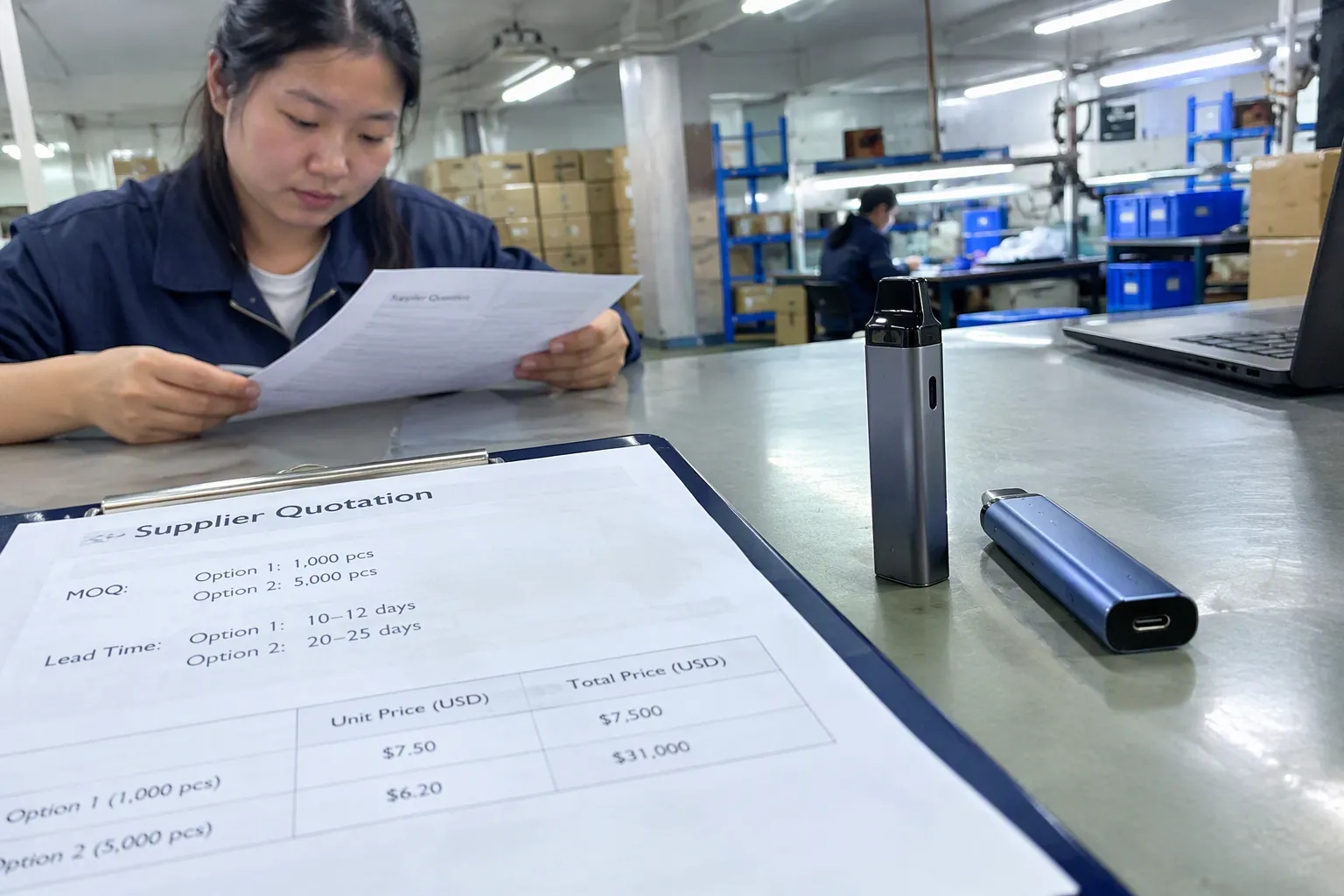
A lower unit price can be useful when the buyer has stable demand, enough cash, and a realistic plan to sell the quantity. It can become expensive when stock moves slowly, the product becomes outdated, or the buyer must discount it. I recommend comparing landed cost and total inventory cost rather than unit price alone.
Is an overseas warehouse better than importing from China?
An overseas warehouse can help a smaller buyer reduce commitment size and replenish available products more quickly. Direct China importing may offer stronger bulk pricing and OEM/ODM flexibility for larger buyers. I would compare stock availability, MOQ, landed cost, customization needs, cash flow, and local requirements before choosing.
How should a wholesaler handle a new vape product?
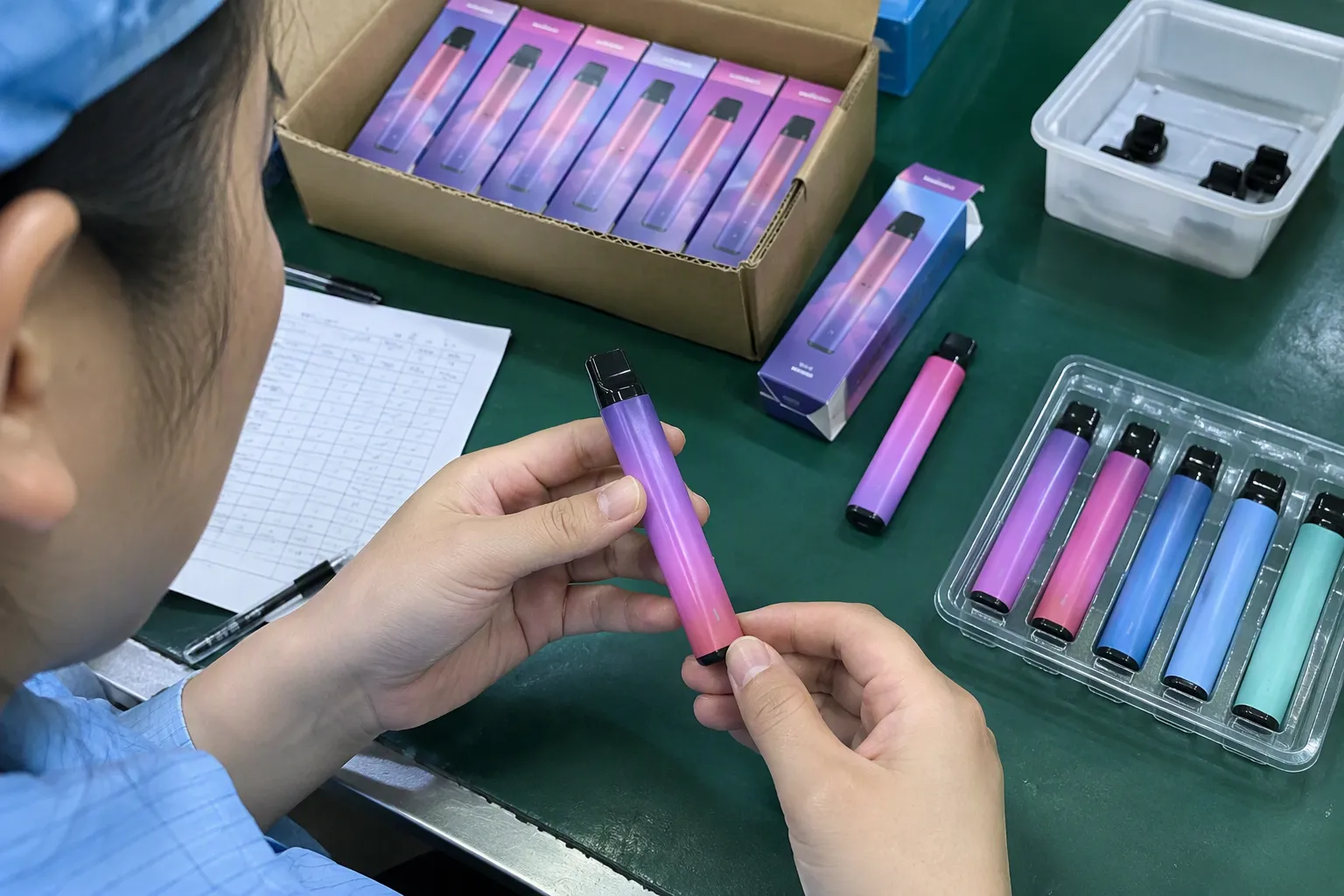
I would begin with a controlled test unless the buyer has strong confirmed demand. The buyer should track sales by SKU, customer feedback, reorder behavior, quality issues, and the supplier’s ability to replenish. A first order should create useful demand information, not simply fill warehouse space.
What should a buyer verify before placing a large vape order?
The buyer should verify product specifications, samples where appropriate, packaging, labeling, quality-control arrangements, MOQ, production schedule, shipping terms, documentation, after-sales terms, and destination-market requirements. Buyers should also obtain qualified professional advice for application-specific legal, safety, customs, and regulatory decisions.
Conclusion
The right weeks of supply for a vape wholesaler depends on the product, not on a universal rule. I recommend reviewing SKU-level sales velocity, product lifecycle, replenishment risk, MOQ, total inventory cost, cash flow, quality exposure, and local requirements. Smaller buyers can consider available overseas stock and lower-MOQ purchasing, while larger importers may use China bulk orders and OEM/ODM development when demand supports the commitment. I welcome importers, distributors, wholesalers, vape shops, smoke shops, and convenience-store suppliers to contact Kingfuji for a product, stock, and supply-route discussion at info@kingvapecig.com or +86 13928420527.
Sources
- Operations research models and methods for safety stock ...", Operations-management literature describes inventory policy as a function of demand behavior, replenishment lead time, service objectives, ordering constraints, and holding costs, rather than as a single fixed coverage rule
- Weeks of Supply: A Quick and Dirty Calculation Guide", Supply-chain references define inventory coverage as the amount of available inventory expressed relative to the expected rate of demand, commonly reported in days or weeks of supply
- Operations research models and methods for safety stock ...", Inventory-control models generally place the reorder point at expected demand during replenishment lead time plus safety stock intended to protect against demand or supply variation
- Operations research models and methods for safety stock ...", Research on safety-stock policies shows that additional buffer inventory can reduce stockout risk when demand or replenishment lead time is uncertain, while increasing inventory carrying requirements
- How uncertain rewards spur repeat purchases", Research on new-product adoption distinguishes initial trial or adoption from later repeat purchase, indicating that early attention or trial is not conclusive evidence of sustained demand
- Total Landed Cost Model", Supply-chain costing frameworks evaluate purchasing decisions using total acquisition and ownership costs, which may include transportation, handling, financing, storage, quality, obsolescence, and disposal-related costs in addition to the quoted price
- The Impact of Stockouts on Customer Loyalty to Lean Retailers", Retail stockout studies report that unavailability can lead to immediate lost sales, product substitution, delayed purchases, or changes in store and supplier preferences, extending the impact beyond the unavailable transaction
- A comparison of inventory carrying cost in literature and in ...", Inventory-finance research treats excess stock as a use of working capital that can generate continuing storage, financing, markdown, and obsolescence costs until the goods are sold or written down