
Quick Answer
Price vapes correctly, and I can protect both margin and cash flow. Price them from supplier cost alone, and I can create hidden losses through shipping, defects, slow inventory, or delayed payment recovery. I use total landed cost, sales channel, turnover expectations, and sourcing risk to build a more practical quotation.
To price vapes for margin and volume, I first calculate the realistic landed cost, then adjust the selling price for the channel, expected turnover, inventory risk, service requirements, and compliance costs. A higher markup does not always create higher profit.[1] The best price protects achievable margin while helping the product sell, generate repeat orders, and convert inventory back into cash.
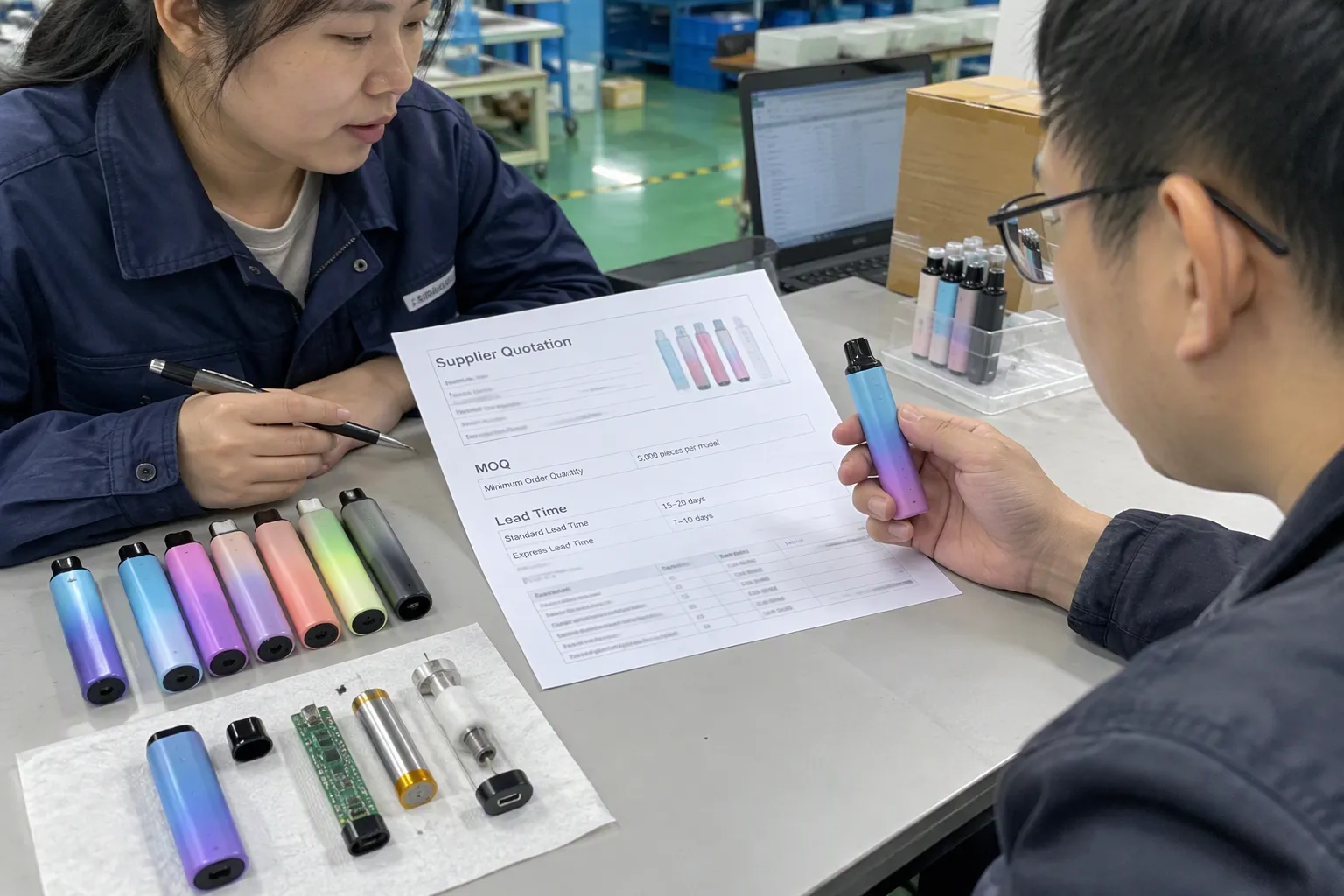
When I discuss quotations with importers, wholesalers, vape shops, smoke shops, convenience-store distributors, and gas-station suppliers, I find that the difficult question is rarely “What is the factory price?” The more useful question is, “What amount can I recover after the full buying and selling process?” That difference changes the entire pricing decision.
How Can I Price Vapes for Margin and Volume?
A simple markup can make a quotation look profitable while hiding freight, customs uncertainty, defects, after-sales work, and slow-moving stock. I price vapes more carefully by separating the product cost from the full operating cost. I then compare the expected unit margin with sales speed, reorder potential, and the amount of capital tied up in inventory.
What is the best way to price vapes?
I recommend a five-step approach:
- Calculate the verified total landed cost.
- Estimate the realistic selling price for the specific channel.
- Compare expected margin with sales velocity and inventory risk.
- Choose between overseas warehouse stock, bulk China import, or OEM/ODM development.
- Review compliance, logistics, quality, and after-sales conditions before confirming the price.
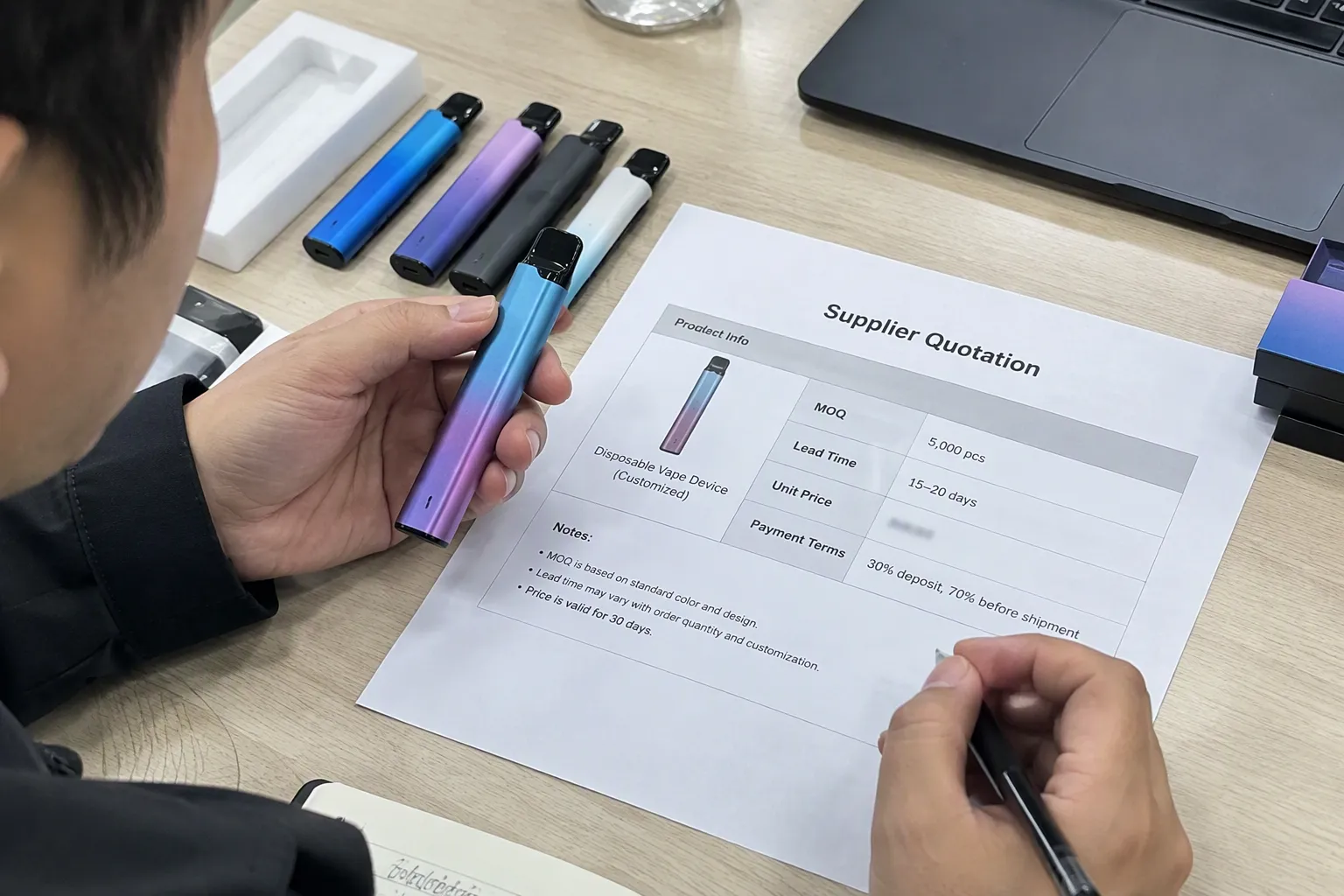
Start with total landed cost, not supplier price
When I receive a supplier quotation, I do not treat the unit price as the final cost. I separate the quotation into several cost categories:
| Cost area | What I review before pricing |
|---|---|
| Product purchase cost | Model, configuration, packaging, included accessories, and quantity |
| Inland and international logistics | Delivery method, destination, shipment size, and delivery terms |
| Customs and import charges | Market-specific duties, taxes, procedures, and possible inspection costs |
| Compliance-related costs | Destination-market documentation and professional verification where required |
| Quality exposure | Expected defect handling, inspection arrangements, and replacement terms |
| Inventory cost | Storage, aging stock, discounting risk, and capital tied up in goods |
| Sales and service cost | Local delivery, customer support, returns, and after-sales handling |
| Payment and currency risk | Payment timing, exchange-rate movement, and financing pressure |
I do not use one universal tax, duty, or shipping number for Europe or the United States. Rules and charges can vary by country, product category, shipment method, and commercial arrangement.[3] I ask the buyer or a qualified customs and compliance professional to verify the applicable conditions for the destination market.
A practical pricing worksheet can look like this:
This is not a substitute for a professional tax or customs calculation. It is a purchasing framework that helps me avoid comparing an all-in cost with an incomplete supplier price.
Why the same vape should have different prices in different channels
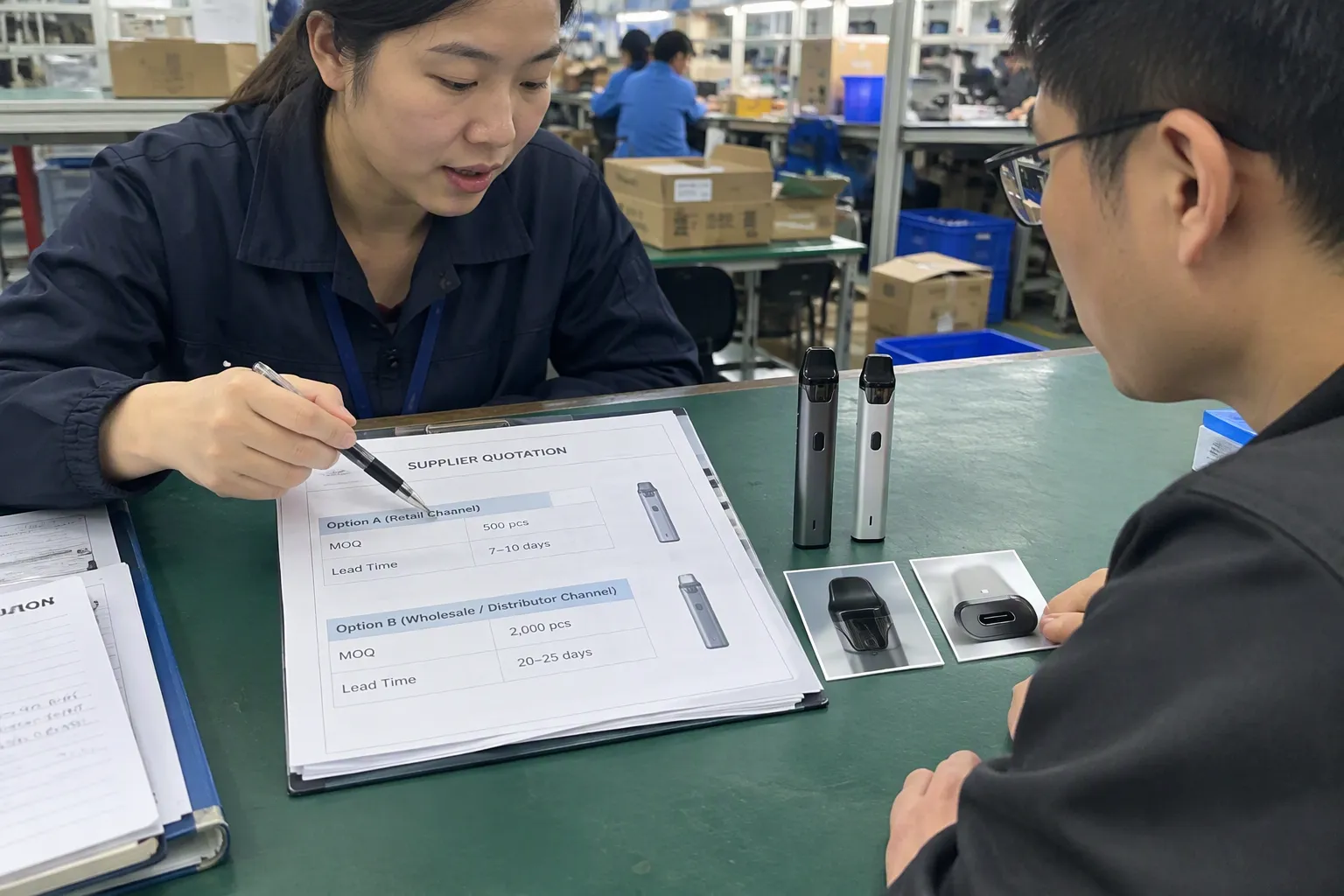
I do not expect one selling price to work equally well for every customer. An importer purchasing a large shipment from China has a different cost structure from a small reseller buying 50 units from a European warehouse.
A regional distributor may need room for:
- Its own warehouse and staff costs
- Delivery to several states or countries
- Credit terms for downstream stores
- Sales representatives or account management
- Product education and after-sales support
- Promotional pricing for retail customers
A vape shop may focus more on product presentation, customer explanation, shelf space, and sell-through. A convenience store or gas station may prioritize quick replenishment, simple product selection, and dependable delivery. A smaller reseller may value low MOQ and fast cash conversion more than the lowest possible unit cost.
I therefore ask several questions before recommending a price:
- Who is the next customer in the sales chain?
- What retail or wholesale price range is realistic for comparable products?
- How quickly does the buyer expect to sell the stock?
- Will the buyer reorder small quantities or import larger batches?
- What level of support, replacement, or delivery service does the buyer need?
- Which destination-market requirements must the buyer verify?
I only compare competitor prices when the products, brand position, packaging, market, compliance status, delivery method, and service level are genuinely comparable. A lower online price may exclude local delivery, support, taxes, or dependable replacement handling.
Margin is only useful when the product sells
I often see buyers focus on the highest percentage margin. I understand why. A large margin looks attractive on a spreadsheet. However, a product that sells slowly can produce less total profit than a product with a more moderate margin and faster turnover.
I use these measures together:
| Measure | What it tells me |
|---|---|
| Unit margin | What remains from one completed sale after defined costs |
| Gross margin percentage | How much of the selling price remains before other operating expenses |
| Sell-through speed | How quickly the buyer converts inventory into sales |
| Reorder potential | Whether the product can create repeat purchasing |
| Inventory aging | Whether stock may require discounts or become difficult to sell |
| Cash conversion | How quickly the original buying capital returns |
| After-sales exposure | How much cost and time may follow the sale |
For example, an anonymized buyer may compare two products. Product A offers a higher nominal margin but requires a large initial shipment and has uncertain local demand. Product B offers a smaller unit margin but can be purchased in a lower quantity, delivered quickly, and reordered after actual sales data becomes available. I would not call Product A automatically better. I would compare the expected contribution after inventory risk and cash-flow pressure.
I also avoid promising that a lower price will automatically increase sales. Price affects demand, but product fit, legality, packaging, brand recognition, retailer confidence, and local competition also matter.[4] A low price can even create concern if buyers associate it with weak quality or poor support.
Choose the purchasing model that matches the buyer’s cash flow
I work with buyers who normally face three sourcing choices.
Option 1: European warehouse stock for smaller orders
For a smaller European wholesaler, reseller, or retail-oriented buyer, overseas warehouse stock can reduce the need to commit to a large shipment from China. At Kingfuji, I can offer access to available products through warehouses in parts of Europe, including Germany, Austria, Poland, and Belgium, subject to current stock and delivery conditions.
This model may help a buyer[6]:
- Start with a lower MOQ, sometimes around 50 units per model when stock is available
- Receive goods faster within the stated delivery arrangement
- Reduce exposure to international customs delays on each small order
- Test sell-through before making a larger purchasing decision
- Protect cash flow by avoiding excessive initial inventory
I present this as a risk-and-return choice, not a guarantee. The buyer still needs to confirm product suitability, destination rules, stock availability, shipping charges, and final delivery terms.
Option 2: Larger shipments from China
A larger importer, distributor, or established wholesaler may prefer to purchase directly from China. Larger quantities can create better unit economics because production, packaging, and freight costs may be spread across more units.[5] However, this model usually creates greater exposure to:
- Larger upfront payment
- Longer planning and transport time
- Customs and import procedures
- Forecasting errors
- Stock aging
- Quality inspection and after-sales coordination
I help buyers compare the lower unit cost with the additional capital and operational responsibility. The lowest ex-factory price is not necessarily the lowest business cost.
Option 3: OEM/ODM development
An importer or distributor with an established sales network may consider OEM or ODM. A buyer can use this route to develop packaging, product presentation, or a brand concept that is less directly comparable with every generic listing.
OEM/ODM can support differentiation, but I do not present it as an immediate profit solution. It can involve[7]:
- Design and sampling time
- Minimum order requirements
- Packaging and tooling decisions
- Product testing and documentation review
- Longer planning cycles
- Greater responsibility for forecasting and market acceptance
At Kingfuji, I operate as a Shenzhen-based manufacturer and trading-integrated supplier. My company has a 5,000-square-meter factory, OEM/ODM experience, and a stated production capacity of up to 5 million units per month. I treat those capabilities as supply options for qualified buyers, not as proof that a particular product will sell or generate a specific margin.
Use quality and after-sales support as pricing factors
I do not describe quality only as a technical feature. I connect it with the buyer’s commercial risk. If a product creates frequent complaints, the buyer may lose staff time, retailer trust, repeat orders, and delivery capacity.[8] A dependable quality-control process and clear replacement arrangement can therefore affect the real cost of the product.
Before I confirm a quotation, I encourage buyers to clarify:
- Product specifications and approved samples
- Packaging and labeling requirements
- Inspection expectations before shipment
- Defect definitions and evidence requirements
- Replacement, refund, or compensation conditions
- Responsibility for local customer communication
- Warranty or after-sales limitations
- Destination-market compliance documentation
I can provide business documents and available product information for buyer review. I do not ask buyers to treat a certification, test report, or supplier statement as automatic proof. The buyer should verify whether each document is genuine, current, relevant to the exact model, and accepted in the intended market.
At Kingfuji, I provide centralized after-sales handling for products purchased through my supply service. I also offer shipment support, video verification where appropriate, and stated assistance for certain customs and defective-goods situations under the agreed order terms. I put these terms in writing because a verbal assumption can become a costly disagreement later.
Build a practical wholesale pricing ladder
I usually find it clearer to create different quotation levels instead of forcing one price onto every customer.
| Buyer situation | Suitable pricing approach |
|---|---|
| Small reseller testing demand | Lower commitment, warehouse availability, fast replenishment |
| Vape or smoke shop supplier | Price based on local sell-through, service, and retailer margin |
| Regional wholesaler | Volume pricing with delivery, support, and reorder planning |
| Large importer | China bulk quotation with verified logistics and import costs |
| Established distributor | Bulk purchasing plus possible OEM/ODM development |
| Brand-focused buyer | Customized packaging, product planning, and longer lead-time evaluation |
This structure lets me discuss value without hiding cost. A buyer can see why a warehouse order, a bulk import, and a customized project cannot use the same unit price.
I also separate trial pricing from repeat-order pricing. A first order may involve sampling, document review, packaging confirmation, and smaller quantities. A repeat order may become more efficient after the buyer has sales data and a proven replenishment pattern. I do not promise a future price before confirming material, freight, currency, and production conditions.
Protect cash flow when pricing vapes
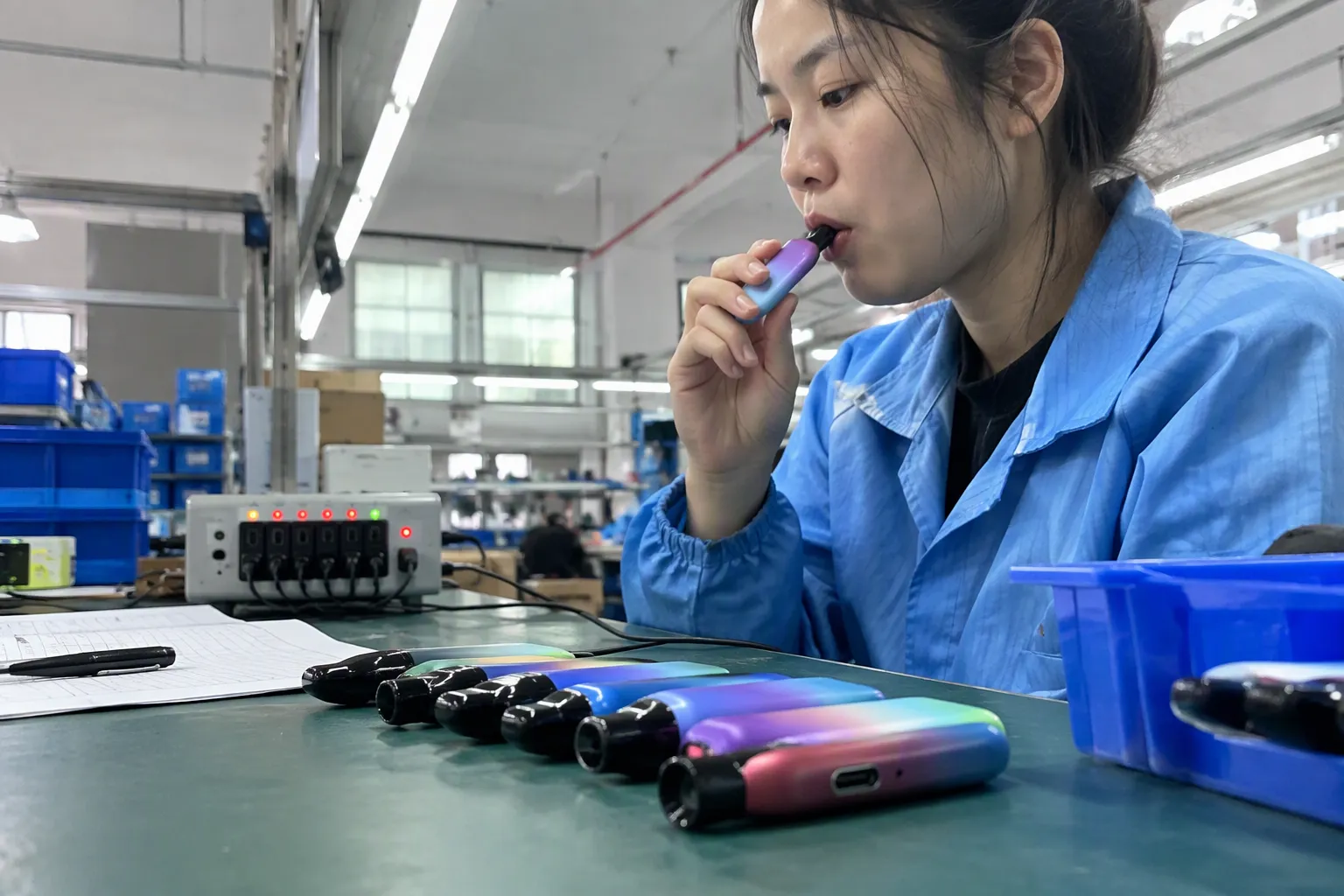
Many of the buyers I speak with are not only looking for a high percentage margin. They want products that move quickly, generate fewer after-sales problems, and do not trap working capital. I use a simple cash-flow review:
- How much cash does the first order require?
- How long will the buyer hold the stock?
- When will the buyer receive payment from downstream customers?
- What happens if the product sells 30% more slowly than expected?
- Can the buyer reorder without overstocking?
- Can the buyer reduce risk with a smaller warehouse order?
- Does a larger shipment create enough unit-cost improvement to justify the extra exposure?
I also recommend separating “expected case” from “stress case.” The expected case uses the buyer’s reasonable sales estimate. The stress case considers slower sell-through, higher logistics cost, a delay, a defect allowance, or a necessary discount.
A simple internal comparison can be useful:
| Scenario | Main advantage | Main risk |
|---|---|---|
| Small warehouse purchase | Lower commitment and faster testing | Higher unit cost or limited stock |
| Medium replenishment | Better balance between cost and flexibility | Requires reasonably stable demand |
| Large China import | Potentially stronger unit economics | More cash, logistics, and inventory exposure |
| OEM/ODM project | Greater differentiation opportunity | Longer development and forecasting risk |
I do not use this table to select a universal winner. I use it to match the buying model to the customer’s actual business.
My sourcing approach for international B2B buyers
I am based in Shenzhen, where vape and smoking-accessory manufacturing, component supply, and international logistics are concentrated. Since establishing Shenzhen Kingfuji Tech. Co., Ltd. in 2011, I have worked around products such as electronic cigarettes, disposable vapes, atomizers, 510 batteries, CBD batteries, vaporizers, grinders, glass pipes, and related smoking accessories.
My customers can use one of two broad approaches. They can source multiple brands and product categories through a one-stop supply arrangement, or they can discuss a specific product search, new-product development, mold development, OEM, or ODM project. I also represent a range of brand products through authorized agency relationships where applicable, while my own manufacturing and development capability supports customized programs.
The value for the buyer is not simply “more products.” I try to reduce procurement friction:
- One supplier can coordinate several product categories.
- The buyer can reduce repeated quotation and after-sales communication.
- Available stock may support faster dispatch.
- China bulk sourcing can support larger purchasing programs.
- OEM/ODM can support a buyer’s longer-term brand plan.
- A buyer can use its own familiar freight forwarder when preferred.
- I can coordinate door-to-door delivery arrangements when agreed.
I do not claim that one-stop sourcing removes every business risk. I use it to make the risks easier to identify, document, and manage.
Frequently Asked Questions
What is the most important cost when I price vapes?
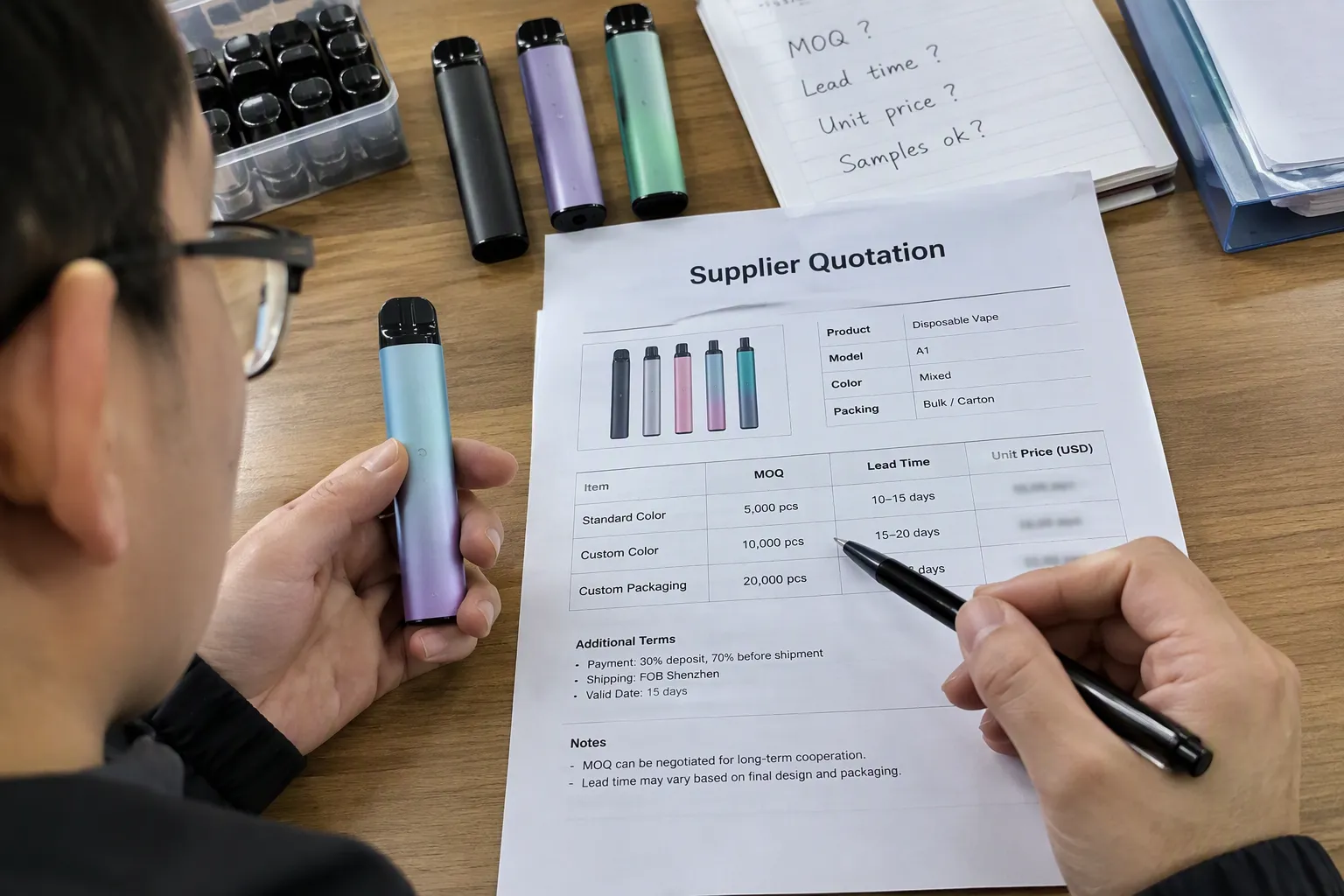
I start with total landed cost rather than the supplier’s unit price. I include verified freight, applicable import charges, compliance-related expenses, quality and after-sales exposure, inventory holding cost, and payment or currency considerations. I verify destination-specific figures before I finalize a commercial quotation.
Should I use the same vape price for every customer?
I do not recommend it. An importer, regional wholesaler, vape shop, convenience store supplier, and small reseller have different costs, volumes, service requirements, and cash-flow constraints. I adjust the quotation according to the channel, purchase quantity, delivery model, and expected reorder pattern.
Is a lower vape price always better for profit?
No. A lower price may reduce unit margin, and it may not create stronger demand if the product, market position, or compliance conditions are unsuitable. I compare price with sell-through, inventory aging, after-sales exposure, reorder potential, and the speed at which the buyer can recover working capital.
When should I buy from a European warehouse instead of importing from China?
I usually consider a European warehouse when the buyer values lower MOQ, faster delivery, and lower initial inventory exposure. I consider direct China importing when the buyer has stable demand, suitable import capability, and enough volume to justify a larger commitment. I verify stock, delivery terms, and destination requirements for each order.
Can OEM or ODM improve my vape margin?
OEM or ODM may create differentiation and support a longer-term brand strategy, but it does not guarantee higher margin. I review development time, MOQ, packaging, documentation, quality control, market demand, and cash-flow requirements before recommending a customized project.
Conclusion
To price vapes responsibly, I look beyond the supplier quotation. I calculate realistic landed cost, match the price to the sales channel, compare margin with turnover, and select a sourcing model that fits the buyer’s cash flow. Small European buyers may value warehouse flexibility, while larger importers and distributors may prefer China bulk purchasing or OEM/ODM development. I invite importers, wholesalers, vape shops, smoke shops, convenience-store suppliers, and gas-station distributors to contact Kingfuji for a product and sourcing discussion based on their market, quantity, and delivery needs.
Sources
- Contribution Margin Explained: Definition and Calculation ...", A managerial-accounting treatment supports the distinction between markup and total profit by showing that contribution depends on both unit margin and sales volume after relevant costs are considered
- Landed Cost Accounting for Distributors: Complete Guide ...", Supply-chain costing literature defines landed cost as the acquisition cost of imported goods together with relevant transportation, customs, and handling charges, while broader decision models may add carrying or risk allowances
- Tariff Classification", Customs guidance establishes that applicable duties and import procedures depend on factors including tariff classification, customs value, origin, destination, and the conditions of shipment
- The Influence of Price on Purchase Intentions - PMC", Marketing and demand research treats price as one component of consumer choice and identifies product attributes, perceived quality, brand information, availability, and competitive context as additional influences on demand
- The effects of quantity discounts on supply chain performance", Operations-management theory supports the possibility of lower average cost at higher volumes when fixed or setup costs are distributed across more units, while variable costs and capacity constraints remain relevant
- The Importance of Inventory Management for Supply Chain ...", Supply-chain research indicates that positioning inventory closer to the customer can reduce transport lead time and improve responsiveness, although the result depends on stock availability and the distribution design
- The Implications of Contract Manufacturing for a Company's ...", Product-development literature describes customized manufacturing as involving iterative design, prototyping, validation, documentation, production planning, and commitment decisions that can extend lead times and increase upfront costs
- Factors affecting repurchase intentions in retail shopping - PMC", Quality-management research supports the view that product failures generate internal and external failure costs and may reduce satisfaction, trust, and repurchase intentions when complaints are not effectively resolved