
Quick Answer
Vape specification sheets often look simple, but small differences can create large purchasing problems[1]. I regularly see buyers compare capacity, puff count, battery data, and dimensions as if every supplier uses the same definitions. When the definitions differ, I believe a structured document check is the safest way to reduce inventory, after-sales, delivery, and cash-flow risk.
To compare two vape specification sheets accurately, I first check whether both documents use the same units, definitions, testing conditions, and product scope[2]. I then compare capacity, battery, liquid volume, puff claims, charging details, dimensions, packaging, and compliance documents. Finally, I confirm unclear information with the supplier in writing and cross-check the answers against samples, packaging, catalogs, and the purchasing contract.
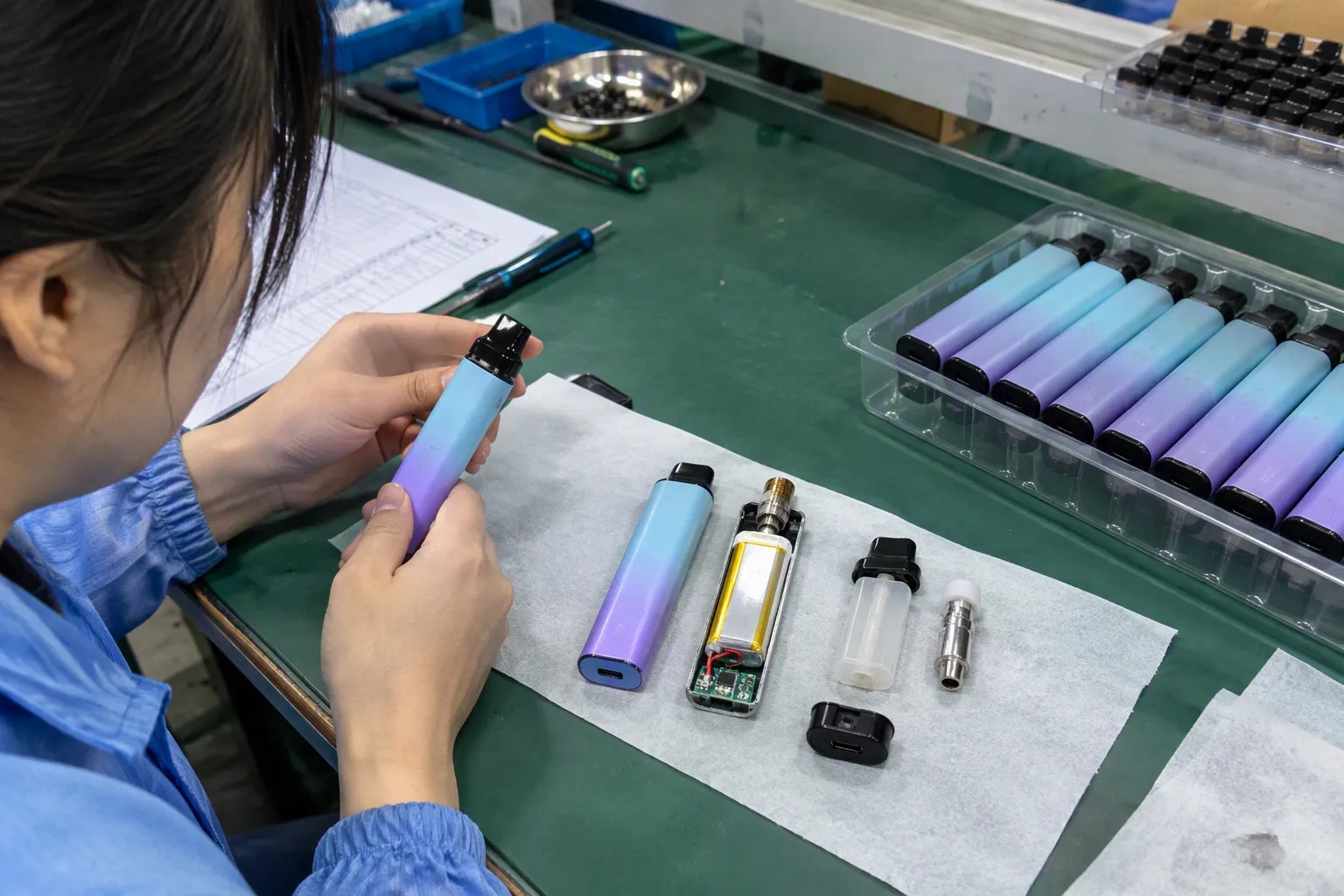
A specification sheet should support a purchasing decision, not replace professional product evaluation. I treat it as one part of the evidence. The catalog, product sample, packaging, written supplier confirmation, and applicable market requirements should also agree before I recommend a product for a customer’s sales channel.
How Should I Start Comparing Vape Specification Sheets?
A quick comparison can miss the most important issue: whether both sheets describe the products in the same way. I start with document control before I study the headline numbers. This step helps me avoid comparing one product’s tested data with another product’s marketing estimate.
I start by recording the document version, product model, brand, date, market, and supplier contact. Then I place matching fields side by side and mark each field as confirmed, different, unclear, or missing. I do not treat a blank field as evidence that the two products have identical performance or construction[3].

When I handle customer inquiries, I first want to know exactly which two products are being compared. A similar product name is not enough. A single brand may have several versions with different batteries, liquid volumes, charging systems, flavors, packaging configurations, or production batches.
| Field | Product A | Product B | What I check |
|---|---|---|---|
| Brand and model | Exact spelling and model code | ||
| Product category | Disposable, rechargeable, pod, battery, or atomizer | ||
| Document version | Date, revision, and issuing company | ||
| Intended market | Country or sales region | ||
| Supplier contact | Person responsible for confirmation | ||
| Sample status | Whether the sheet matches the sample | ||
| Packaging version | Retail box, master carton, and labels |
This table may look basic, but it prevents a common procurement mistake. A buyer may receive a specification sheet for a new version while the quotation, photos, or sample relate to an earlier version. If I do not identify that mismatch, I may compare documents that do not describe the same item.
- Supplier-stated: information printed or written by the supplier.
- Document-confirmed: information repeated consistently in the specification sheet and catalog.
- Sample-checked: information observed or measured during a buyer’s sample review.
- Pending confirmation: information that needs a written answer.
- Application-dependent: information that changes with usage conditions.
This separation matters because a specification sheet is not automatically an independent laboratory report[4]. I should not convert a supplier-stated puff figure, battery capacity, or liquid volume into a guaranteed result. I also should not describe a supplier document as proof of regulatory compliance without checking the relevant documents for the intended market.
In my experience with international buyers, this distinction makes conversations clearer. A wholesaler usually wants to know whether the product will create returns or customer complaints. A vape shop may care about the retail explanation. A distributor may need consistent cartons and replenishment. The same technical field can have a different commercial meaning for each buyer.
I check units carefully. Capacity may appear in milliliters, milligrams, milliampere-hours, or another unit depending on the field. Dimensions may be shown in millimeters or inches. Weight may describe the device only, the device with packaging, or the entire retail unit.
- Nominal or minimum.
- Typical or maximum.
- Measured before or after assembly.
- Measured at room temperature or another condition.
- Based on a single sample or a production specification.
- Rounded for marketing or recorded from a technical test.
If I find two numbers that look similar, I do not assume that they are equivalent. I first ask, “What exactly does this number measure?”
Which Vape Specification Sheets Fields Need the Closest Review?
The most visible fields are often the easiest to misunderstand. Puff count, liquid capacity, battery capacity, resistance, charging time, and dimensions can influence purchasing decisions, but each field needs context. I translate every technical difference into a possible effect on stock planning, sales conversations, after-sales handling, and delivery.
The fields I review most carefully are liquid volume, battery capacity, puff-count methodology, coil or resistance information, charging design, device dimensions, weight, packaging, and production scope. I compare not only the number but also the definition, test condition, tolerance, and commercial consequence of each field.
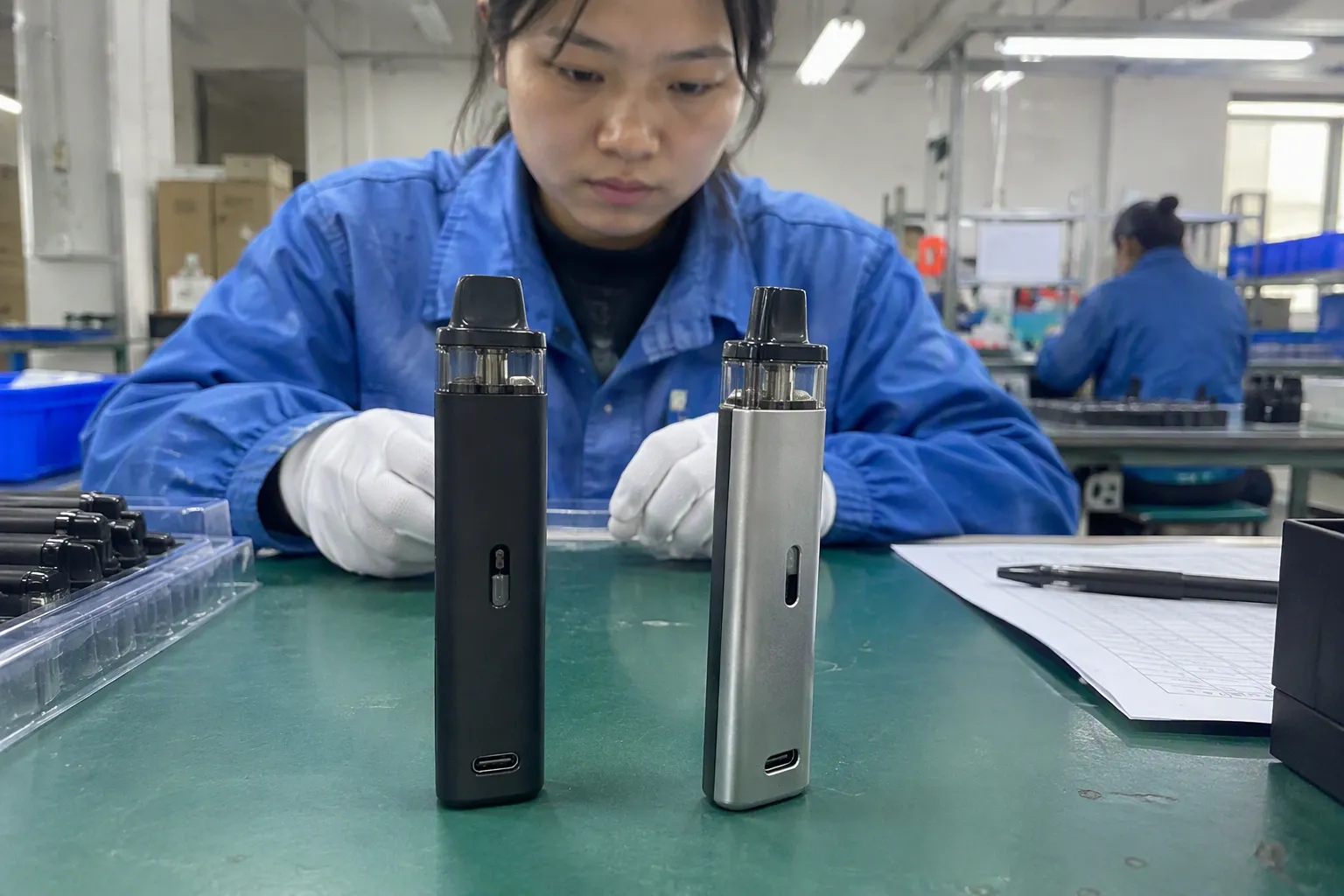
A sheet may list liquid capacity, but the number alone does not explain how a product will be used or perceived by an end customer. The result can be influenced by airflow, coil design, activation method, power behavior, draw duration, and other product characteristics. I therefore treat liquid volume as a physical specification, not as a direct promise of usage duration[5].
- Does the stated volume refer to filled liquid, usable liquid, or nominal internal capacity?
- Is the figure the same across all flavors and batches?
- Does the packaging use the same unit as the technical sheet?
- Is the value subject to a stated tolerance?
- Does the product configuration match the sample?
A small difference can affect stock calculations. If a distributor orders by carton and expects a certain product positioning, a different actual volume may influence the retail explanation, product comparison, and replenishment schedule. It may also affect the buyer’s evaluation of value, although I would not predict sales performance from this field alone.
Battery information can be especially confusing. A sheet may state a capacity without explaining whether it is nominal, rated, or measured under a particular condition. A rechargeable product may also list charging information separately from battery capacity[6].
- Battery chemistry or battery type, where supplied.
- Stated capacity and unit.
- Nominal or rated capacity.
- Charging interface.
- Input information.
- Charging protection information, if applicable.
- Whether the battery specification applies to the exact model.
- Whether the battery information appears on the product, packaging, and sheet.
I do not treat a larger battery number as automatic proof of better commercial performance. A larger battery can affect size, weight, charging expectations, shipping documentation, and product positioning[7]. The buyer should confirm whether the complete design fits the intended retail channel.
For example, a compact product intended for convenience-store counters may be evaluated differently from a rechargeable device intended for specialist vape shops. I would compare the technical data with the buyer’s storage, display, customer education, and replenishment requirements.
Puff count is one of the most misunderstood fields in vape specification sheets. A stated figure may depend on draw duration, airflow, power behavior, activation method, and the point at which the test ends. If two suppliers use different test conditions, their puff figures are not directly comparable[8].
- Draw duration used in the test.
- Interval between draws.
- Airflow or activation condition.
- End point of the test.
- Whether the result is typical, estimated, or maximum.
- Number of samples tested.
- Whether the result applies to every flavor and batch.
- Whether the test relates to liquid depletion, battery depletion, or another endpoint.
If this information is missing, I mark the figure as not directly comparable. I do not use a larger puff number alone to select a product or make a retail promise.
Dimensions seem objective, but I still check whether the figures include the mouthpiece, button, protective cap, or other parts. Weight may refer to the device, filled device, retail package, or master carton. These differences can affect carton planning, warehouse shelving, freight estimates, and display fit.
- Product dimensions.
- Retail box dimensions.
- Inner-box quantity.
- Master-carton quantity.
- Gross and net weight.
- Carton dimensions.
- Pallet information, if relevant.
- Packaging protection and labeling.
A product that fits a small retail display may have a different commercial advantage from a larger product, even if the specifications appear similar. I would connect the data to the buyer’s real operation rather than declaring one design universally better.
What Hidden Differences Are Usually Missing From Vape Specification Sheets?
A missing field is itself useful information. It tells me that I need clarification before I compare the products or calculate an order. I do not treat incomplete information as proof that a product is lower quality, but I do treat it as an unresolved purchasing risk.
The most important hidden differences may involve tolerances, test methods, batch scope, packaging versions, component changes, quality records, and after-sales responsibilities. I identify the missing information, ask focused questions, and retain the supplier’s written answers before I approve a purchase.

- One model only.
- One flavor or color.
- One production batch.
- A product family.
- A standard configuration.
- A customized OEM version.
- A sample that is not yet the final production version.
I ask the supplier to state the scope clearly. This point becomes more important when a buyer orders several flavors, private-label packaging, or a large quantity. The buyer should know whether the confirmed specifications apply to the complete order.
I also compare the sheet with the product catalog. If the catalog, photos, packaging, and technical sheet use different model codes, I pause the comparison. I then request a corrected version or written confirmation of which document controls the order.
A specification sheet may not show the information that a distributor needs when a customer reports a problem. I ask about the supplier’s process for:
- Defective units.
- Evidence required for a claim.
- Replacement or compensation terms.
- Batch identification.
- Packaging damage.
- Delivery shortages.
- Customer-use questions.
- Technical support.
This information does not prove product performance, but it helps me evaluate supplier risk. My business context includes centralized after-sales support for products purchased through our supply service. That arrangement can reduce the buyer’s need to contact several brands or factories separately, but the buyer should still confirm the exact commercial terms for the order.
A specification sheet and a certification document serve different purposes. A buyer should verify the document name, issuing organization, product scope, date, model, and market relevance. I do not present a certification as valid merely because a supplier mentions it in a product description.
I recommend requesting the documents that apply to the intended market and product configuration. The buyer should then use qualified professional or regulatory advice where necessary. Product requirements can vary by country, product type, ingredients, labeling, battery design, and sales channel.
Two devices can show similar capacity and dimensions while using different internal configurations. The sheet may not fully describe every component or supplier. I ask whether the coil, battery, charging board, mouthpiece, shell, and other relevant parts are fixed or subject to approved substitutions.
I do not assume that a component change is automatically unacceptable. I ask whether the change affects the confirmed specification, sample, packaging, or customer instructions. I also ask how the supplier records and communicates changes. A controlled change process can help a buyer manage repeat orders and avoid unexpected differences in stock.
How Can I Turn a Specification Difference Into a Purchasing Decision?
Technical comparison becomes useful only when it supports a commercial decision. I translate each difference into a question about inventory, customer expectations, delivery, cash flow, or after-sales workload. This approach helps me avoid choosing a product simply because one sheet contains larger figures.
I evaluate a specification difference by asking whether it changes the product’s sales position, carton planning, customer explanation, order cost, delivery requirements, or after-sales exposure. I then decide whether to accept the difference, request clarification, test samples, negotiate terms, or remove the product from consideration.
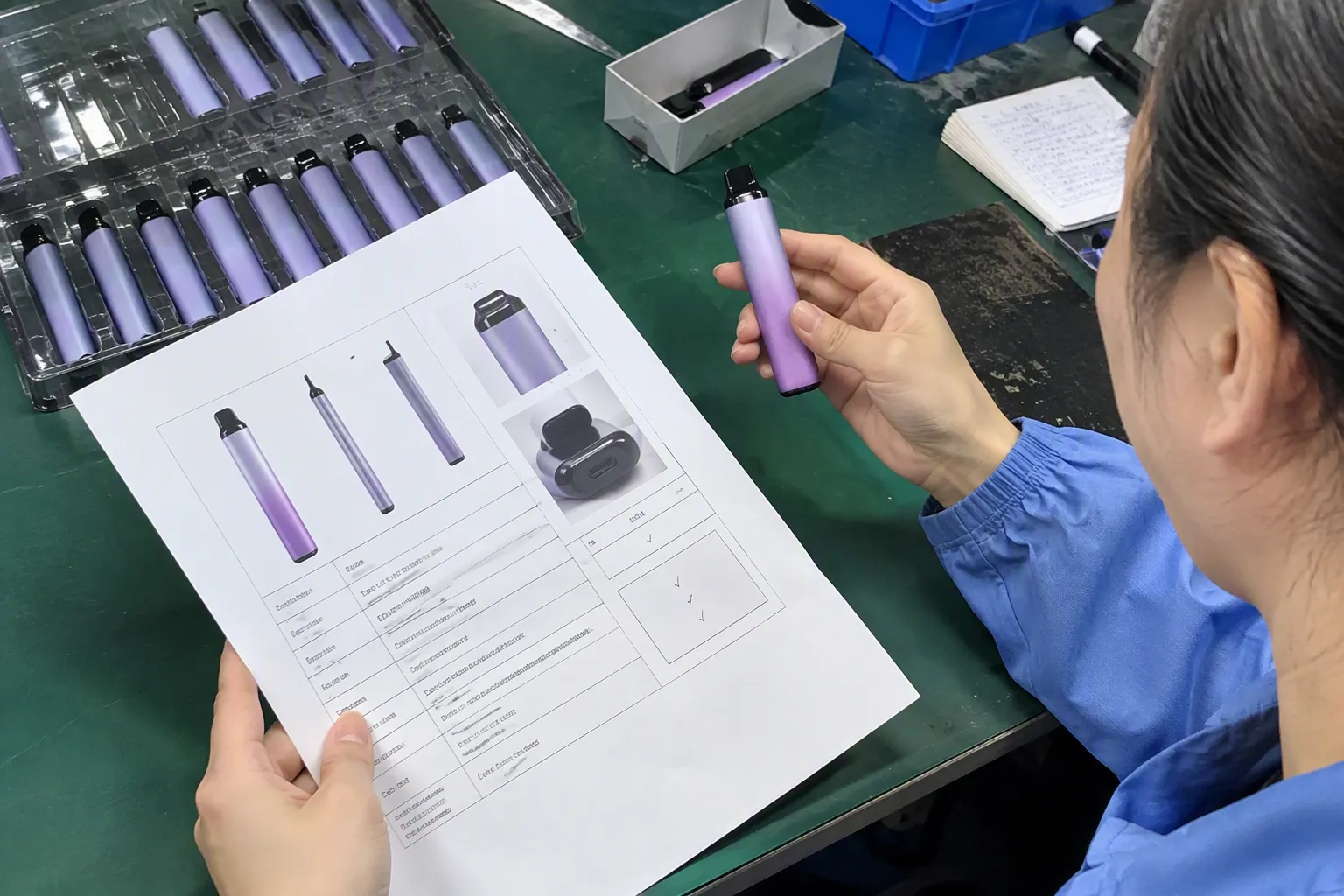
I often find a matrix more useful than a simple “better or worse” ranking:
| Comparison area | Possible difference | Commercial question | Recommended action |
|---|---|---|---|
| Liquid volume | Different stated amounts | Will retail positioning or stock planning change? | Confirm definition and tolerance |
| Puff count | Different test conditions | Can I communicate the figure responsibly? | Request method and end point |
| Battery | Nominal versus rated data | Does the design fit charging and sales expectations? | Request complete battery details |
| Dimensions | Device-only versus assembled size | Will display or carton planning change? | Measure the sample and carton |
| Packaging | Different version or quantity | Will labels and inventory records match? | Approve final artwork and carton data |
| Quality documents | Different scope or model | Do the documents apply to this exact product? | Verify with the issuing source |
| After-sales | Different claim terms | Who handles defects and what evidence is needed? | Confirm written procedure |
This matrix helps me discuss the product with different types of buyers. A small vape shop may prioritize low minimum order quantity and quick replenishment. A larger importer may prioritize container planning, stable repeat production, price structure, and OEM or ODM coordination. Neither buyer should ignore technical evidence, but the commercial weighting will differ.
I ask whether the buyer is testing a product, replenishing regular stock, or placing a large import order. The appropriate evidence level changes with the order size.
For a small buyer, a low minimum order quantity can reduce the risk of tying up cash in untested stock. Our European warehouse service is designed for this type of purchasing route, with selected brand inventory and small order quantities stated in our business information. Buyers should confirm available models, quantities, shipping terms, and delivery timing before ordering.
For a larger importer or distributor, direct shipment from China may offer more room for volume pricing, OEM or ODM development, and customized packaging. Our company operates as a factory and trading business with a 5,000-square-meter facility, reported monthly capacity of up to 5 million units, and OEM/ODM experience. I present those facts as business information for buyers to verify through their own due diligence, samples, records, and contracts.
Some technical differences create a communication issue rather than a manufacturing issue. If a retail worker receives a product with a different charging design, activation method, or usage instruction, the store may need updated training and product information.
- Instructions on the package.
- Product behavior shown in the sample.
- Retail description.
- Charging and storage information.
- Flavor or configuration naming.
- Customer support contact.
- Language requirements for the destination market.
A buyer should not rely on a specification sheet to replace proper user instructions. Application-specific and market-specific decisions may require qualified professional evaluation.
A product comparison also affects when the buyer can sell the stock. Large imports from China may involve production scheduling, freight planning, and customs procedures. A European warehouse can offer a different replenishment route for eligible products, while the buyer’s own freight forwarder may remain the preferred option.
Our business provides door-to-door delivery options and can also deliver to a customer’s nominated freight forwarder. We also describe European warehouse locations and courier options in our business information. I would still confirm stock, destination, service level, customs responsibility, and delivery terms for each order rather than treating a general service description as a guarantee.
How Do I Confirm Vape Specification Sheets Before Ordering?
A careful comparison ends with written confirmation. I do not rely only on a sales chat, an old catalog, or a photo. I want the final product identity and important specifications connected to the actual quotation, sample, packaging, and order.
Before ordering, I request a final specification sheet, confirm all unresolved fields in writing, compare the document with a sample and packaging, and record the approved model and batch information. I also confirm quality, delivery, after-sales, and document responsibilities in the quotation or purchase agreement.
-
Collect both original specification sheets.
I record the supplier, date, model, revision, and intended market. -
Normalize the units.
I convert dimensions and weights into consistent units without changing the original values in the record. -
Highlight unclear fields.
I mark missing definitions, test conditions, tolerances, and product scope. -
Request written answers.
I ask focused questions instead of sending a general request for “more details.” -
Compare the sample.
I check the model code, appearance, dimensions, charging interface, packaging, and other relevant features. -
Check the commercial documents.
I compare the confirmed data with the quotation, pro forma invoice, packaging artwork, and purchase order. -
Set an approval point.
I define which version the buyer approves and how changes will be handled. -
Retain the records.
I save the confirmed documents, written answers, sample photos, and batch information.
A focused question is easier for a supplier to answer accurately. I may ask:
- “Does the stated liquid volume describe the filled amount or nominal capacity?”
- “What draw duration and end point support the puff-count figure?”
- “Does the battery figure state nominal or rated capacity?”
- “Does this specification apply to all flavors in the quotation?”
- “Does the weight include the retail packaging?”
- “Will the production unit match this sample and packaging version?”
- “What document identifies the production batch?”
- “What is the procedure if delivered units do not match the confirmed specification?”
These questions create a written record. They also show whether the supplier can explain its own product information clearly.
I compare suppliers on more than the lowest quoted price. I consider:
- Accuracy and consistency of product documents.
- Ability to provide samples.
- Response quality to technical questions.
- OEM/ODM development capability.
- Inventory availability.
- Minimum order quantity.
- Delivery options.
- After-sales process.
- Ability to consolidate brands and product categories.
- Clarity of payment and compensation terms.
Our one-stop supply model covers electronic cigarettes, disposable vapes, atomizers, 510 batteries, CBD batteries, grinders, glass pipes, vaporizers, and related products. For buyers that already source several brands, one coordinated supplier may reduce the time spent on separate inquiries and after-sales contacts. I still recommend that buyers evaluate each product and brand individually because consolidation does not remove the need for product-specific verification.
My practical rule is simple: if a specification difference can change what the buyer orders, sells, explains, stores, or claims, I ask for written clarification before approving the purchase.
Are two vape specification sheets comparable if the numbers are the same?
Not necessarily. The numbers may use different units, definitions, test conditions, or product scopes. I compare the supporting explanations, document versions, samples, packaging, and written supplier confirmation before treating the specifications as equivalent.
Which vape specification fields should I check first?
I start with the exact model, liquid capacity, battery information, puff-count method, dimensions, weight, charging design, packaging quantity, and quality-document scope. I then connect each field to inventory planning, customer communication, delivery, and after-sales responsibilities.
Can a higher puff count prove that one vape is better?
No. A higher puff count may reflect a different test method, draw duration, airflow, power setting, or end point. I request the testing conditions and treat the figure as supplier-stated information unless the buyer has suitable independent evidence.
Should I compare the specification sheet with a product sample?
Yes. I compare the sheet with the physical sample, product catalog, packaging, quotation, and purchase order. A mismatch may indicate a version, customization, or document-control issue that needs clarification before production or shipment.
Can a specification sheet prove regulatory compliance?
No. A specification sheet alone does not prove compliance for a particular market. I recommend verifying applicable documents, product scope, labeling, ingredients, battery information, and other requirements with qualified professional or regulatory advisers.
Vape specification sheets become useful procurement tools when I compare the definitions behind the numbers, not just the numbers themselves. I check model identity, units, testing conditions, tolerances, product scope, packaging, samples, quality documents, and after-sales terms. I then translate each difference into a commercial question about inventory, customer expectations, delivery, or cash flow. If you need help comparing products or arranging one-stop vape sourcing, OEM/ODM development, China shipment, or eligible European warehouse stock, contact Kingfuji at info@kingvapecig.com or +86 13928420527.
Sources
- An Empirical Procurement Risk Management Framework ...", Studies of supply-chain information quality report that inaccurate, incomplete, or inconsistent supplier data can impair purchasing, inventory, and fulfillment decisions
- Metrological Traceability: Frequently Asked Questions and ...", Metrology guidance treats comparable measurements as dependent on a defined measurand, consistent units, and sufficiently comparable measurement procedures and conditions
- Principled missing data methods for researchers - PMC - NIH", Methodological guidance distinguishes missing observations from measured agreement; an omitted field supplies no positive evidence that the corresponding attributes are equal
- Compliance FAQs: NIST IT Security Validation Program", Conformity-assessment guidance distinguishes a manufacturer's or supplier's technical declaration from test results issued under the competence and impartiality requirements applicable to an independent laboratory
- Puffing Topography: A Tool to Evaluate Vaping Behavior and ...", Experimental studies of electronic-cigarette emissions show that aerosol and liquid consumption vary with puff duration, power, airflow, and device configuration; nominal liquid volume therefore does not by itself determine use duration
- Battery Charging Systems Program Requirements Version ...", Battery engineering references distinguish a cell's stated capacity from charging voltage, charging current, interface, and protection characteristics, which describe different aspects of a rechargeable system
- Battery Testing, Analysis and Design", Battery engineering relates available capacity and energy to cell design and system mass, while transport rules classify and document lithium batteries partly by their rated energy and configuration
- Puffing Topography: A Tool to Evaluate Vaping Behavior and ...", Electronic-cigarette testing methods specify puff duration, interval, volume, airflow, and termination criteria because changes in these parameters can alter measured aerosol yield and apparent puff count