
Quick Answer
A reusable vape sample can look attractive during a short product demonstration, but a weak battery or unstable charging system can create returns, complaints, and lost customer trust after bulk delivery. I do not treat one supplier’s cycle claim as a final answer. I first connect recharge cycles with the intended market, usage pattern, acceptance standard, and batch-control plan.
There is no universal number of recharge cycles for every reusable vape sample.[1] I recommend setting a test target according to the product’s expected use, charging frequency, acceptable performance loss, and after-sales risk. Buyers should also verify the charging conditions, discharge method, end-of-test criteria, sample quantity, and production-batch consistency before approving a product for bulk purchasing.
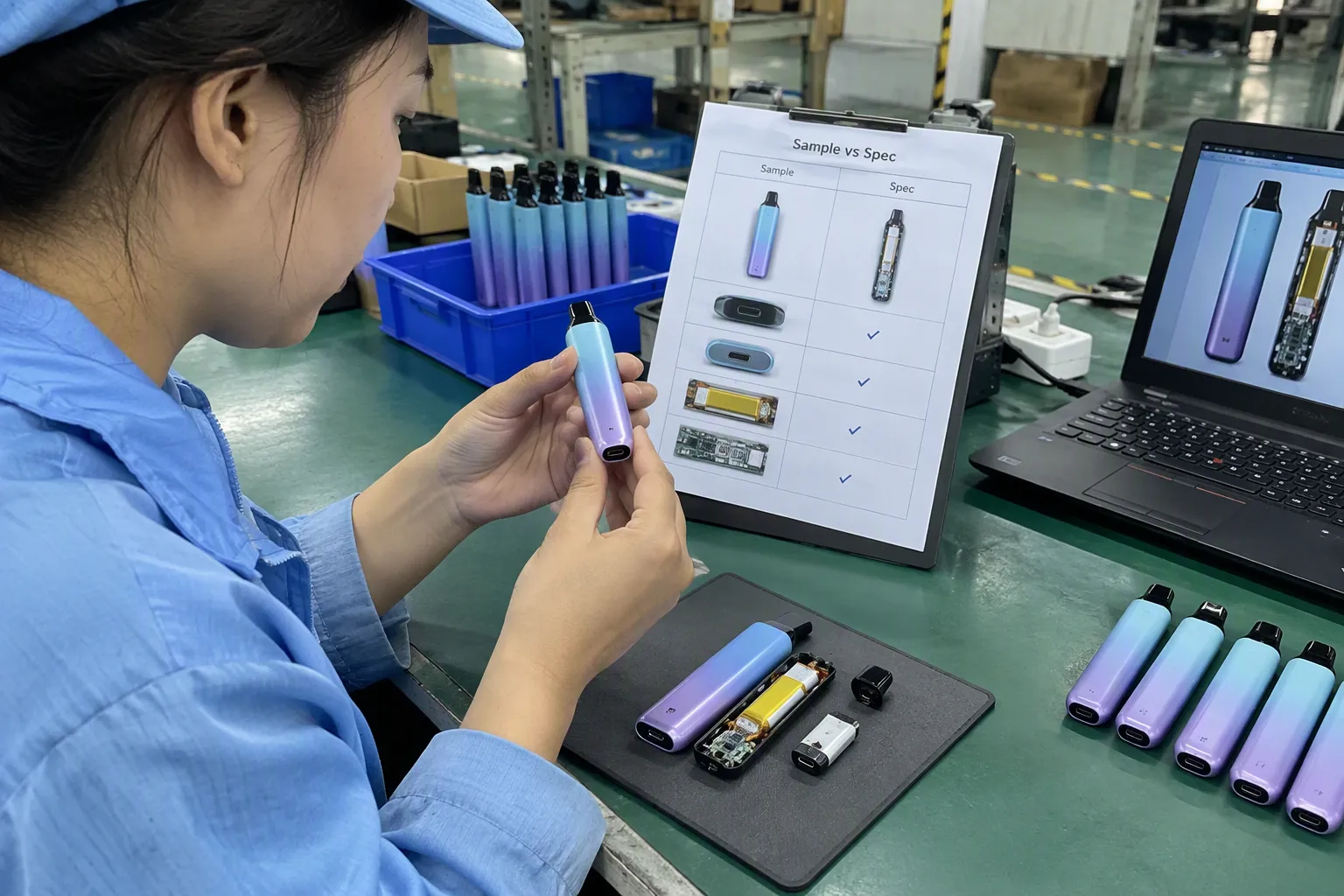
I have worked with vape procurement, supplier communication, sample evaluation, and order coordination, so I understand why buyers want one simple number. However, a cycle result only becomes useful when I know what the supplier actually tested and what the result means for the finished device. The following framework helps importers, wholesalers, distributors, vape shops, and private-label buyers make a more practical decision.
How Many Recharge Cycles Should a Reusable Vape Sample Be Tested For?
Many buyers ask for a fixed cycle count because they need a quick comparison between products. The problem is that the same number can represent different test conditions, battery capacities, performance limits, and quality risks. I recommend treating the test target as a purchasing requirement rather than accepting a general marketing statement.
A reusable vape sample should be tested for enough recharge cycles to represent its intended service expectation and to expose meaningful performance decline. The buyer should define the number together with the supplier, based on charging conditions, usage intensity, acceptable capacity or output loss, safety checks, and the number of samples tested. A single verbal cycle claim is not sufficient evidence for bulk approval.[2]
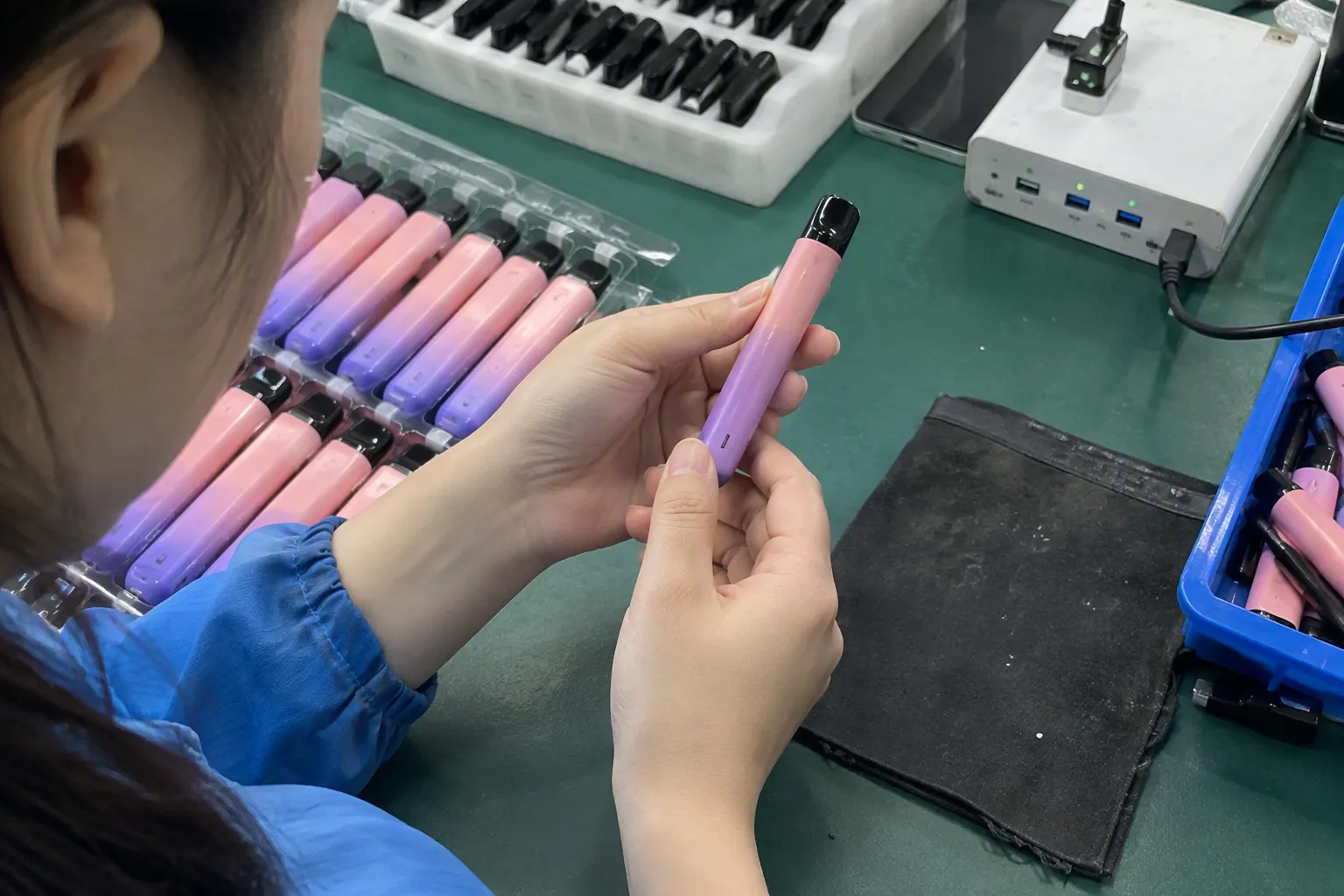
Why a Single Cycle Number Can Mislead Buyers
The phrase “tested for 500 cycles” sounds precise, but it does not explain enough.[3] I would ask several questions before using that figure in a purchase decision:
- What battery capacity did the sample have?
- How much charge remained before each recharge?
- What charging current and voltage did the test use?
- How long did each charge and discharge cycle take?
- What load or operating pattern was applied?
- Did the test stop when capacity fell to a defined percentage?
- Did the device still produce acceptable vapor and flavor at the end?
- Did the sample pass leakage, charging, and activation checks?
- How many samples were tested?
- Did the samples come from one prototype batch or normal production?
Without these details, two suppliers may report the same number while testing very different products. One supplier may define the end of life as a reduction in battery capacity. Another may stop only when the device no longer activates. A third supplier may report a theoretical battery specification that does not represent the complete vape device.
This distinction matters because a buyer usually sells a finished product, not an isolated battery cell. The customer experiences the complete device. The customer notices weak vapor, longer charging, inconsistent activation, poor flavor delivery, leakage, damaged charging ports, or a device that stops working unexpectedly. A battery cycle number cannot automatically prove that all these functions will remain acceptable.[4]
I Separate Battery-Cycle Performance From Total Device Life
I do not use battery-cycle performance as a substitute for a complete product-life evaluation. A rechargeable battery can retain some usable capacity while another part of the reusable vape becomes the actual failure point.
A practical evaluation should consider at least five areas:
| Evaluation area | What I would examine | Why it matters to the buyer |
|---|---|---|
| Battery performance | Capacity retention, charging behavior, discharge stability | It affects usable runtime and customer satisfaction |
| Vapor output | Output consistency at the beginning, middle, and end of testing | Weak output can increase complaints and returns |
| Flavor delivery | Noticeable flavor change or burnt taste | It affects repeat purchase and brand reputation |
| Physical reliability | Port condition, button or sensor operation, seals, and body condition | Small mechanical problems can make a usable battery irrelevant |
| Safety and abnormal behavior | Excessive heating, swelling, charging interruption, or unusual odor | These issues require immediate professional review and supplier action |
I also distinguish between cycle life, calendar life, and total device life. Cycle life refers to repeated charging and discharging. Calendar life refers to how the battery and device behave while stored or used over time. Total device life includes the battery, coil or atomizer, charging board, seals, mouthpiece, housing, and user handling.
A product may pass a battery-cycle test but still perform poorly when it is stored in a hot warehouse[5], transported for a long period, exposed to moisture, or used with an unsuitable charger. I would not make a long-term product promise based only on the number printed in a supplier quotation.
How I Set a Practical Test Target
I start with the intended sales model. A small European retailer buying from an overseas warehouse may need a low-MOQ product that can be replenished quickly. A large importer or distributor may need stronger documentation, more samples, a production inspection plan, and a written after-sales arrangement.
I then estimate the expected customer usage pattern:
- Expected charging frequency: Will the end user charge the device every day, every few days, or only occasionally?
- Expected sales period: Will the product move quickly, or may it remain in stock for several months?
- Performance tolerance: How much reduction in output or runtime can the buyer accept?
- Product positioning: Is the item a value-focused product, a premium reusable vape, or a private-label product where complaints directly affect the buyer’s brand?
- Replacement and return policy: What cost will the buyer carry if a customer reports early failure?
- Market and channel: Will the product be sold through a specialist vape shop with product guidance or through a convenience channel with limited explanation?
This process does not create a universal answer, but it creates a defensible requirement. For example, I might ask a supplier to test a defined number of cycles under a documented charging and discharge method, then inspect the samples at set intervals. I might also request a lower limit for remaining capacity or output and a list of failures that automatically reject the sample.
I would avoid writing an unsupported promise such as “the device lasts for X days.” Recharge cycles do not convert directly into days because customers use different puff durations, charging habits, temperatures, and storage conditions. A cycle count can support procurement evaluation, but it cannot predict every user’s experience.
What Evidence Should I Request From a Supplier?
I ask suppliers to separate supplier-provided specifications from independently verified evidence. These two categories should not be presented as equal.
Supplier information may include:
- A product specification sheet
- Battery nominal capacity
- Recommended charging input
- Internal test method
- Claimed cycle target
- Sample test records
- Production quality-control procedures
- Available inspection or certification documents
I treat these documents as information to review, not as automatic proof. Buyers should verify the authenticity, scope, issuing organization, product model, date, and applicable test conditions of any certification or laboratory document. A document for a battery component may not cover the complete assembled vape.[8] A report for one model may not cover a later revision or a private-label version.
For a meaningful cycle report, I would like to see:
| Information to request | Procurement question |
|---|---|
| Test sample quantity | Was the result based on one sample or several samples? |
| Sample source | Did the samples come from normal production or a special prototype? |
| Charge method | What charger, input, current, and cutoff conditions were used? |
| Discharge method | What load and operating pattern were applied? |
| Cycle definition | What exactly counted as one complete cycle? |
| End-of-test rule | What capacity, output, or failure condition stopped the test? |
| Inspection intervals | Were samples checked throughout testing or only at the end? |
| Failure record | Were heating, leakage, port damage, or activation failures recorded? |
| Batch reference | Can the result be connected to a production batch or component lot? |
| Corrective action | What will the supplier do if a batch fails the agreed standard? |
If a supplier cannot answer these questions, I would keep the claim in the “unverified supplier statement” category. I would not use it as the main reason to place a large order.
Why Sample Quantity Changes the Risk
One sample can show that one device survived one test. It cannot show that a production batch will perform consistently.[6] This is especially important when the buyer plans to import a large quantity, launch a private-label product, or distribute through multiple retail channels.
I normally think in layers:
- Initial sample screening: I check appearance, charging, activation, output, leakage, and basic user experience.
- Extended sample testing: I test several units under a defined use and charging pattern.
- Pre-production approval: I compare approved samples with the final production specification.
- Mass-production inspection: I check the finished batch against agreed quality requirements.
- After-sales review: I record failure reasons and compare complaints with the approved standard.
The exact sampling plan should be selected by a qualified quality professional or inspection organization for the buyer’s risk level. I do not present a personal sample check as laboratory validation. My role is to help buyers ask clearer questions, compare suppliers, and connect technical information with purchasing risk.
A buyer should also record serial numbers, batch codes, test dates, and component changes where available. If the factory changes the battery, charging board, coil, housing, or firmware, the buyer should request a review before treating the previous test result as fully applicable.[7]
What Acceptance Criteria Should I Put in Writing?
The cycle target becomes much more valuable when I write the acceptance criteria into the quotation, purchase order, product specification, or quality agreement. I would avoid relying on a conversation such as “the battery is good for many cycles.”
A written requirement may cover:
- The test method and charging conditions
- The minimum number of cycles
- The acceptable capacity or output reduction
- Charging-time limits
- Activation and vapor-output requirements
- Leakage and physical-damage checks
- Abnormal heating or swelling criteria
- The number of failed units allowed in the test group
- The documents supplied with the order
- The procedure for handling nonconforming goods
- Replacement, refund, or compensation terms where agreed
I would also define what happens when the product passes the sample test but the production batch generates abnormal complaints. A supplier’s responsibility should not remain vague. The buyer should ask whether the supplier will investigate, provide replacement goods, support technical analysis, or compensate according to the agreed commercial terms.
At Kingfuji, I use supplier communication and order coordination to help customers make these requirements clearer before shipment. Our business combines a 5,000-square-meter factory, OEM/ODM experience, brand and product sourcing, and one-stop order support. However, I still separate our own business information from independently verified technical evidence. Buyers should review product documents and obtain qualified professional evaluation for application-specific decisions.
How Does the Test Affect Different Buyer Types?
A small buyer and a large importer may evaluate the same reusable vape differently because their commercial risks are different.
| Buyer type | Main concern | More suitable evaluation approach |
|---|---|---|
| Small retailer or local wholesaler | Fast turnover, low investment, low return risk | Review sample performance, supplier documents, small trial order, and clear replacement terms |
| Regional distributor | Consistent replenishment and retailer satisfaction | Test multiple samples, confirm production controls, and monitor early complaint rates |
| Large importer | Batch consistency, landed cost, reputation, and liability exposure | Use documented specifications, larger sample review, pre-shipment inspection, and written corrective-action terms |
| Private-label buyer | Brand reputation and repeat purchase | Approve a controlled reference sample, define acceptance criteria, and revalidate design or component changes |
| Overseas-warehouse buyer | Speed and low MOQ | Use available-stock information, check batch identity, and confirm that fast dispatch does not replace quality review |
I understand why some European buyers prefer overseas warehouse supply for short, fast-moving orders. Our European warehouses in Germany, Austria, Poland, and Belgium can support quicker delivery through services such as DHL, DPD, UPS, and FedEx, with typical delivery planning discussed according to destination and stock. The stated model includes low minimum quantities for some stocked products, which can help small businesses reduce upfront inventory risk.
For larger importers and distributors, direct China supply may provide stronger volume pricing and more OEM/ODM flexibility. Our factory reports a maximum monthly capacity of up to 5 million units and regularly develops new products, but buyers should still confirm the exact model, capacity allocation, lead time, and quality requirements for each project. A high production capacity does not remove the need for product-specific testing.
How Can I Connect Testing With After-Sales Risk?
A reusable vape sample test should answer a commercial question: What risk will remain after I approve this product? The buyer’s concern is not only whether one unit works after repeated charging. The buyer also wants to reduce premature failures, customer complaints, returns, retailer dissatisfaction, and unclear supplier responsibility.
I recommend tracking early field information by failure type:
- Device does not charge
- Device charges but does not activate
- Charging port becomes loose or damaged
- Vapor output decreases too quickly
- Flavor changes during normal use
- Device leaks
- Body, mouthpiece, or seal becomes damaged
- Device becomes unusually hot
- Packaging or instructions create user confusion
This record helps the buyer distinguish a battery problem from a coil problem, a charging problem, a transport problem, or a user-instruction problem. It also helps the supplier improve the product instead of simply replacing random units.
I have seen how important one-stop after-sales communication can be for buyers who source several brands and product categories. When one supplier coordinates the order and after-sales process, the buyer may spend less time contacting different factories. Kingfuji supplies electronic cigarettes, disposable vapes, atomizers, 510 batteries, CBD batteries, vaporizers, grinders, glass pipes, and related smoking products. We also help customers source products that are not in the current catalogue and discuss new-product development or mold development when the project conditions are suitable.
That service does not replace technical verification. It gives the buyer one clearer point of contact for questions, documentation, shipment coordination, and agreed after-sales handling.
What Should I Do Before Approving a Reusable Vape Sample?
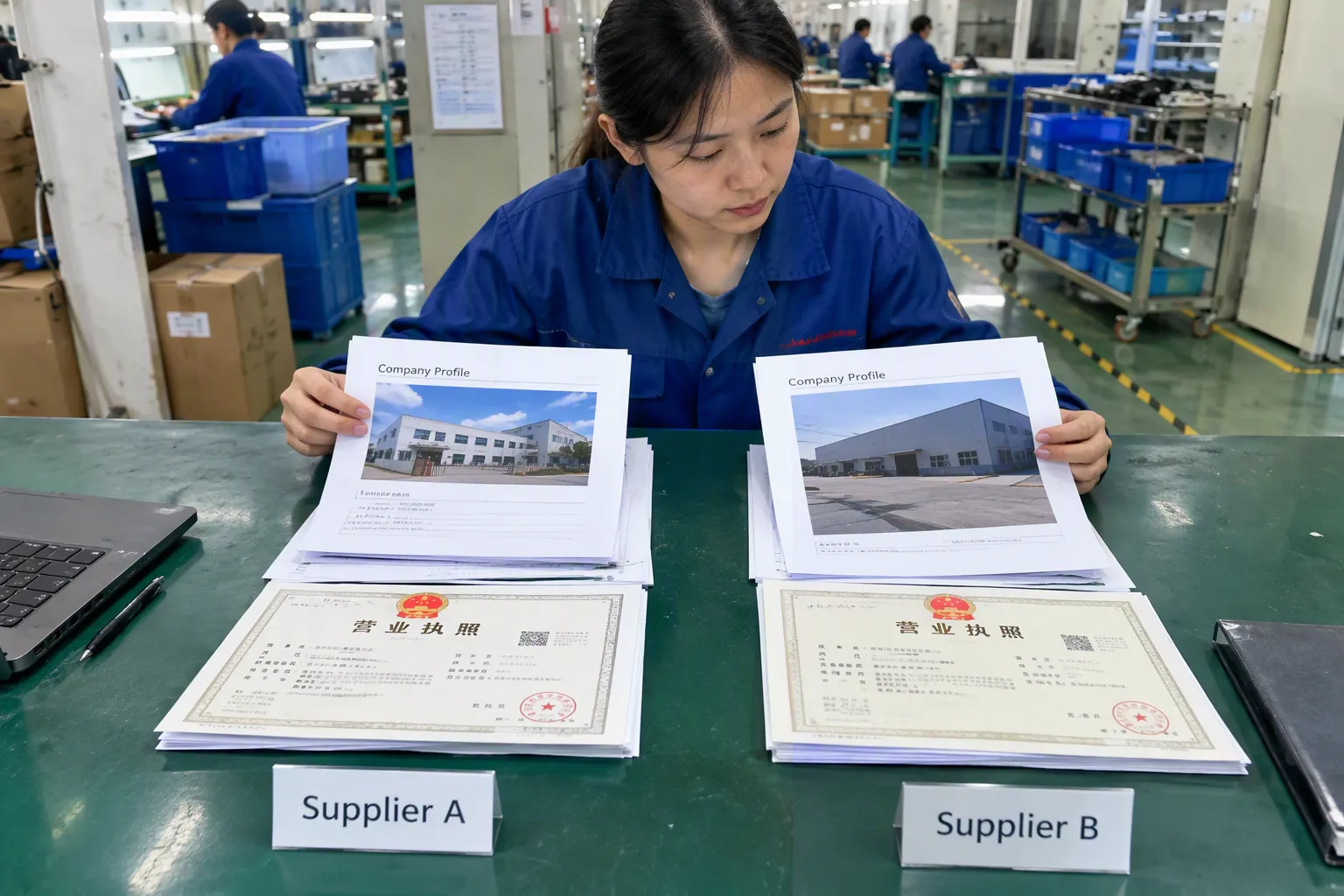
I use a staged approval process instead of making a decision from one supplier message.
Stage 1: Define the commercial purpose
I record the destination market, sales channel, expected customer, price position, expected turnover, and whether the order is standard stock, private label, or OEM/ODM.
Stage 2: Define the technical requirement
I ask for the battery capacity, charging input, product dimensions, operating instructions, recommended charger information, and claimed recharge-cycle conditions. I also identify which performance changes would be unacceptable.
Stage 3: Review the sample
I inspect several samples when possible. I record charging behavior, activation, output, flavor, leakage, physical condition, and any unusual heating. I use the same test approach for every supplier so that the comparison remains fair.
Stage 4: Challenge the supplier claim
I ask for written supporting information. I do not accept an unsupported number as an independently verified result. I ask whether the tested sample represents the production configuration.
Stage 5: Link approval to the order
I place the approved model, component details, packaging, instructions, and quality requirements into the purchase documentation. I request notification before material or design changes.
Stage 6: Control the first batch
I use pre-shipment inspection or another qualified inspection method when the order value and market risk justify it. I compare the production goods with the approved sample.
Stage 7: Monitor real sales
I ask distributors and retailers to report failure patterns. I review replacement rates and complaints instead of assuming that a successful sample automatically predicts long-term performance.
This process may take more effort at the beginning, but it can reduce the cost of unclear expectations later. I would rather spend time defining a test and responsibility than argue about a cycle claim after goods arrive.
My practical rule: I do not ask only, “How many recharge cycles did the sample survive?” I ask, “Under what conditions, with what remaining performance, across how many samples, and with what responsibility if production does not match?”
Frequently Asked Questions
Is there one universal recharge-cycle target for reusable vape samples?
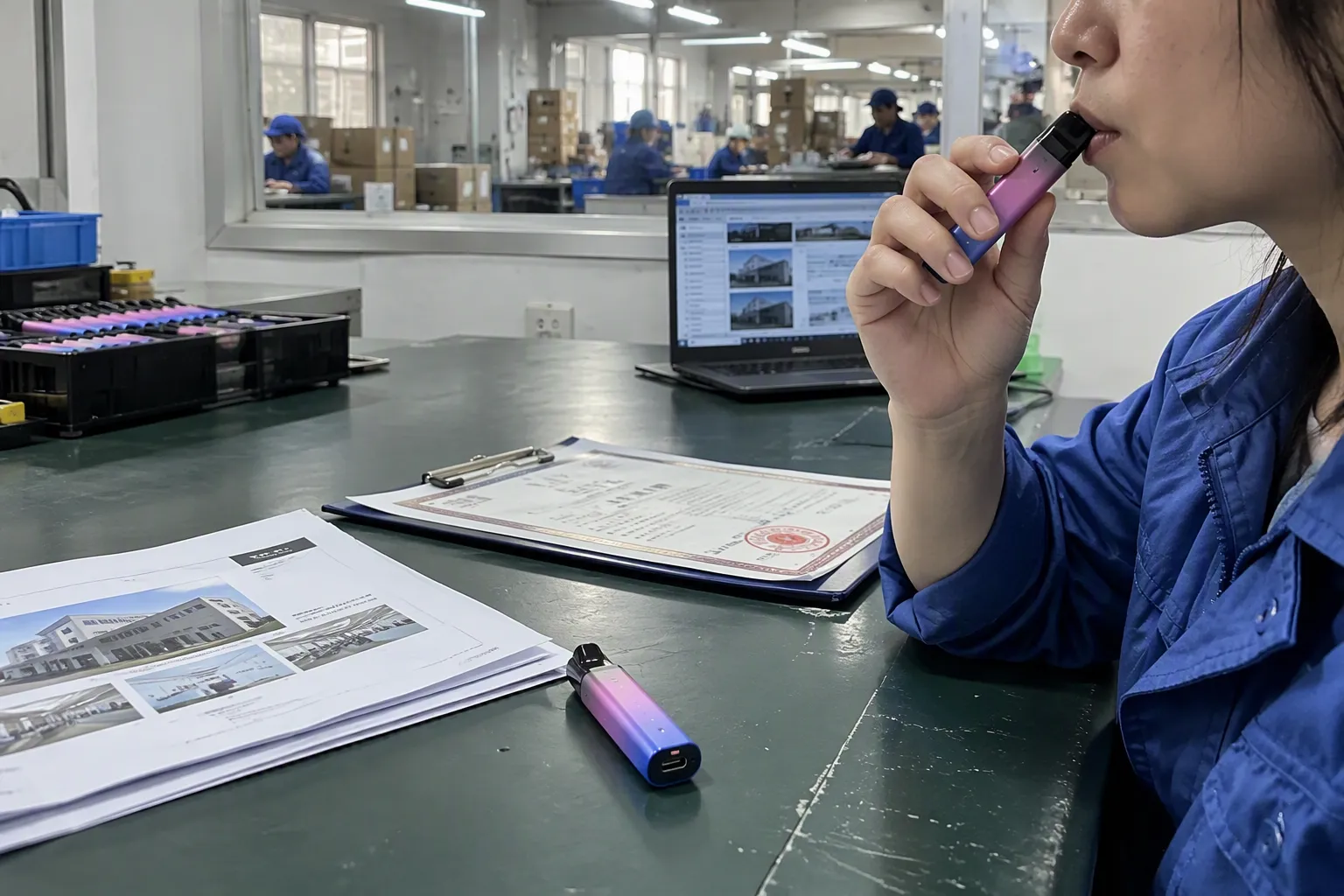
No. The correct target depends on expected charging frequency, product design, market positioning, acceptable performance loss, and after-sales risk. Buyers should define the test conditions and end-of-test criteria with the supplier instead of selecting one number for every reusable vape.
Does a battery cycle count prove the full reusable vape will last?
No. A battery-cycle result does not automatically prove that the charging port, coil or atomizer, seals, activation system, housing, vapor output, or flavor performance will remain acceptable. Buyers should evaluate the complete device and record failures during extended testing.
What should I ask when a supplier claims a high cycle life?
I would ask for the battery capacity, charge and discharge conditions, cycle definition, end-of-test standard, sample quantity, test duration, failure records, and batch reference. I would also ask whether the evidence comes from normal production or a special prototype. A verbal claim alone is not enough.
Should small buyers test a reusable vape sample differently from large importers?
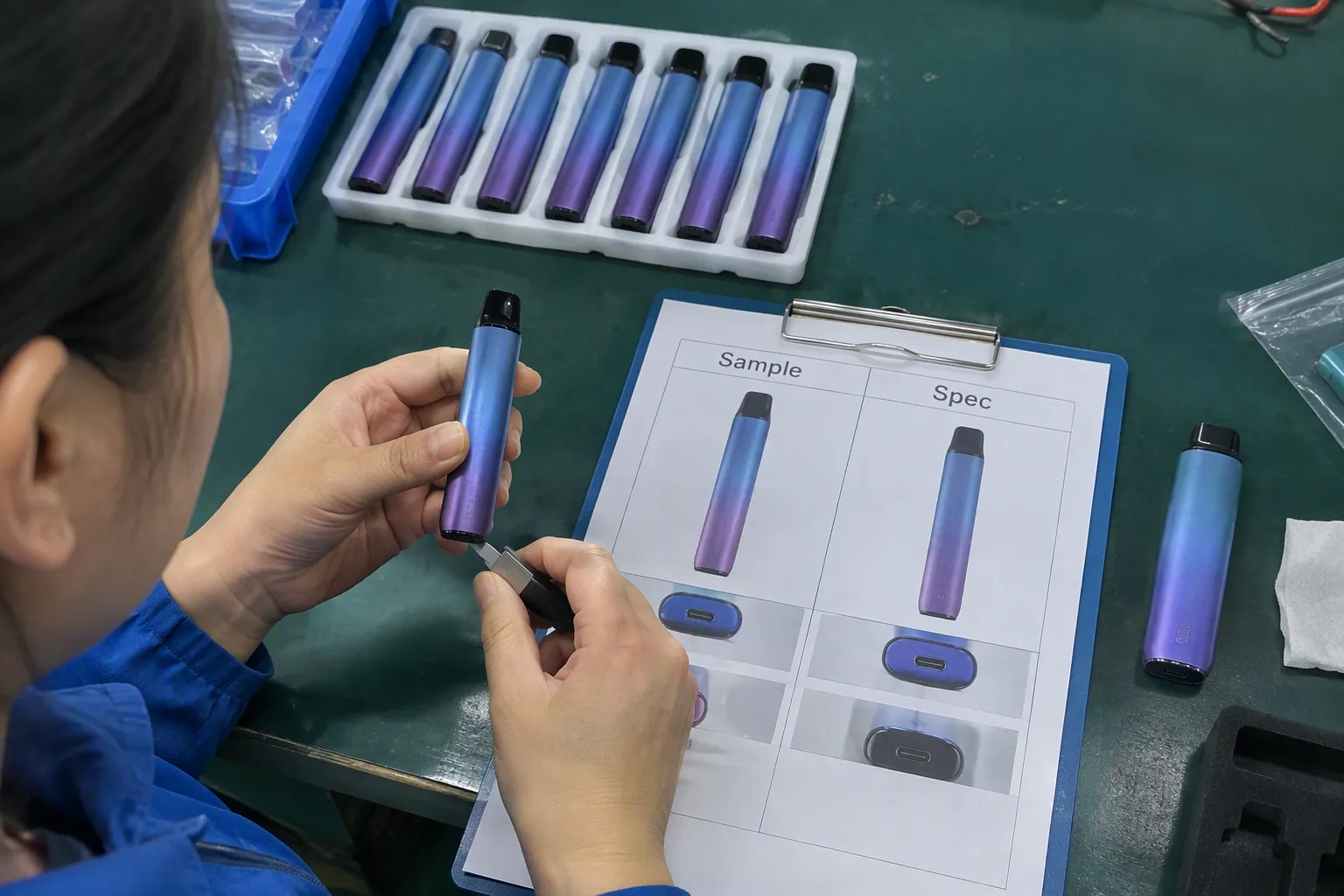
The basic questions remain similar, but the depth of evaluation can differ. A small buyer may start with several samples and a controlled trial order. A large importer or private-label buyer should consider documented specifications, multiple samples, production inspection, change control, and written after-sales responsibilities.
Can overseas warehouse stock avoid the need for product testing?
No. Overseas warehouse stock can reduce delivery time, customs exposure, and upfront inventory pressure, but it does not replace product evaluation. Buyers should confirm the model, batch, storage history where available, and supplier support before purchasing, even when the MOQ is relatively low.
Conclusion
A reusable vape sample should not be approved because a supplier mentions one impressive recharge-cycle number. I recommend connecting the test target with intended use, charging conditions, acceptable performance loss, sample quantity, batch consistency, and after-sales responsibility. I also separate battery-cycle results from total device life and supplier-provided information from independently verified evidence. Kingfuji supports product sourcing, OEM/ODM development, factory coordination, overseas-warehouse supply, shipping, and after-sales communication for global B2B buyers. Contact King at info@kingvapecig.com or +86 13928420527 to discuss a documented sample and purchasing plan for your market.
Sources
- [PDF] Procedure for Assessing the Suitability of Battery Second Life ...", Battery cycle-life measurements depend on factors including depth of discharge, temperature, charge rate, discharge rate, and the definition of end of life, so a cycle count is not inherently transferable across all products or test protocols
- [PDF] Use of quality assurance systems in the fastener industry", Quality-assurance frameworks generally treat supplier declarations as evidence requiring verification against documented specifications, test methods, and acceptance criteria before production approval
- Extending the electric vehicle battery first life - PMC - NIH", Rechargeable-battery cycle-life results are interpretable only in relation to the specified charge and discharge procedure, test environment, measured performance variable, and end-of-life threshold
- [PDF] Prognostics and Health Monitoring in Li-ion Batteries and ...", The reliability of a rechargeable electronic product is determined by interacting component and usage failure modes; battery capacity retention therefore does not by itself demonstrate continued reliability of the complete device
- Degradation of Commercial Lithium-Ion Cells as a Function of ... - OSTI", Elevated-temperature storage accelerates several lithium-ion battery aging processes and can reduce retained capacity or alter impedance independently of the number of subsequent charge–discharge cycles
- What kinds of Lot Acceptance Sampling Plans (LASPs) are there?", Statistical inspection guidance treats conclusions about a production lot as dependent on an appropriate sampling plan; observation of one conforming unit does not quantify lot-wide variability or defect risk
- [PDF] Design Controls - FDA", Configuration-control and design-assurance practices require changes affecting product characteristics to be assessed for their impact on prior verification, validation, and conformity evidence
- [PDF] INTRODUCTION TO CONFORMITY ASESSMENT AND ...", Conformity documentation is limited by the identified product, configuration, applicable requirements, and assessment scope; certification of a component does not automatically demonstrate conformity of the final assembled device