
Quick Answer
UK Vaping Duty Stamp Scheme 2026 is not simply a packaging change for importers and wholesalers. I believe buyers should review product eligibility, supplier documents, packaging, stock already held, goods in transit, customs timing, and written responsibility arrangements before products arrive or are sold after 1 October 2026. **From 1 October 2026, UK vape importers and wholesalers should treat the vaping duty stamp deadline as a full supply-chain review point.[1] Buyers should confirm the official rules for covered products, obtain the required evidence from suppliers, c
A duty stamp alone does not prove complete UK compliance.[2]**
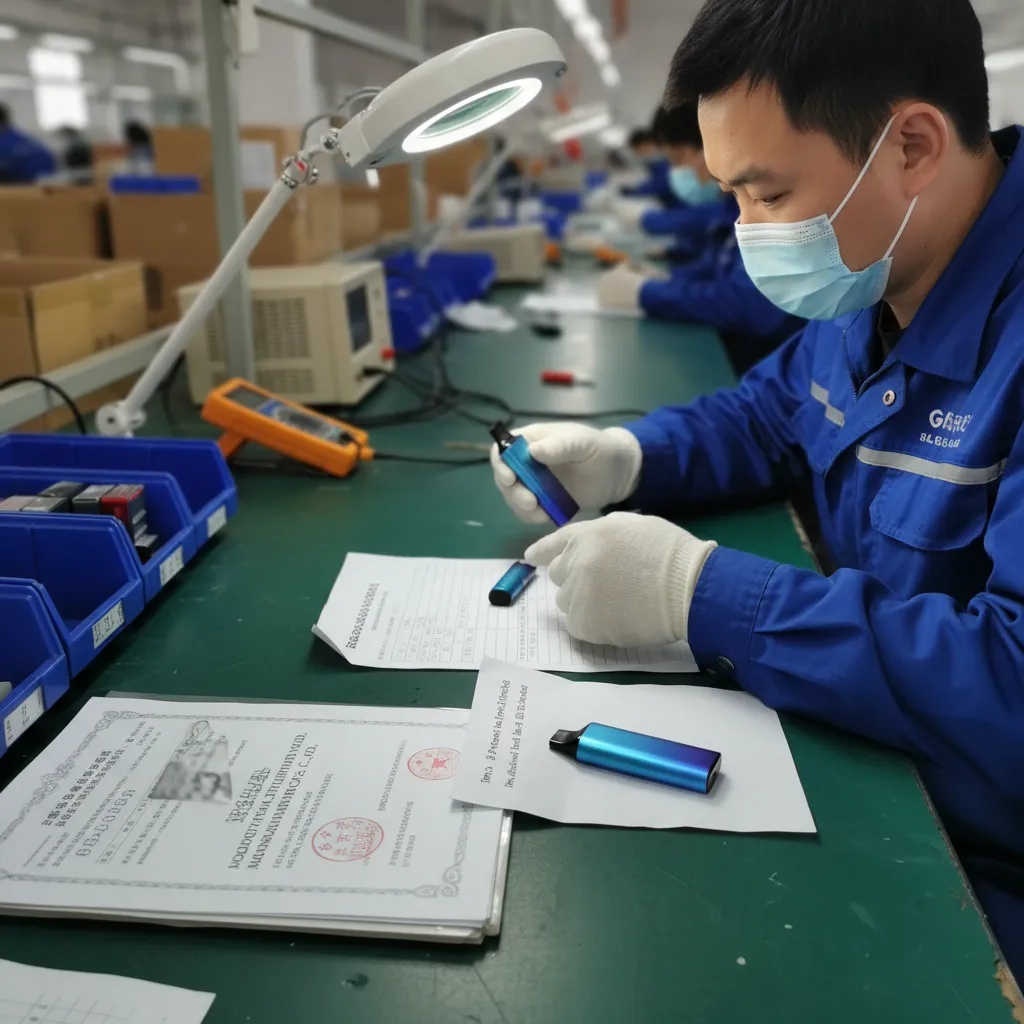
I regularly communicate with international buyers about vape sourcing, product documents, packaging, delivery timing, and supplier responsibilities. In these conversations, the same misunderstanding appears often: a buyer sees one new marking requirement and assumes that the supplier or freight forwarder has solved every compliance issue. The safer approach is to use the 1 October date as a purchasing and inventory checkpoint.
What Should Wholesalers Review Before the UK Vaping Duty Stamp Scheme 2026 Deadline?
A new duty-marking requirement can create problems when buyers review it too late. An order may already be in production, goods may be moving through the supply chain, or packaging may have been printed without the information needed for the UK market. I recommend that wholesalers begin with a product-by-product review rather than relying on a general supplier statement.
Before ordering or replenishing UK vape stock, wholesalers should verify whether each product is covered, identify the responsible party for the duty-stamp process, confirm the required evidence, and review stock status from production through sale. Buyers should also obtain current guidance from official UK sources because rates, procedures, transitional treatment, and enforcement details must not be assumed.

Why a Duty Stamp Does Not Equal Full Compliance
I want to make this distinction clear because it affects procurement decisions. A duty stamp, tax mark, or similar indication may relate to a specific duty or tax obligation. It does not automatically confirm that the product satisfies every other requirement connected with importing and selling vaping products in the United Kingdom.
A buyer may still need to consider several separate areas:
- Product eligibility for the UK market
- Product notification or registration requirements where applicable[3]
- Packaging and labelling rules[4]
- Ingredient, nicotine, or presentation information where applicable[5]
- Import and customs documentation[6]
- Product safety and quality records
- Advertising and sales restrictions
- Age-restricted retail controls[7]
- Waste, environmental, or packaging obligations[8]
- Warehouse records and traceability
- The treatment of stock imported or released before and after the deadline
I do not present a duty stamp as a guarantee of legal sale. I present it as one part of a broader compliance and purchasing process. The exact role of the stamp, the products it covers, and the date on which it must be present should come from the relevant UK government guidance and official notices.
What Does “Before 1 October” Mean in Practice?
Many purchasing discussions use “before the deadline” as if it referred only to the order date. That approach can be risky. A commercial order usually passes through several stages:
- The buyer places the purchase order.
- The supplier confirms the product and packaging.
- The factory produces or packs the goods.
- The supplier dispatches the shipment.
- The goods travel internationally.
- Customs processes the shipment.
- The goods enter the importer’s warehouse.
- The wholesaler distributes or sells the goods.
The official rules may treat one or more of these events as important. I cannot safely tell a buyer that an order placed before 1 October is automatically unaffected. The buyer should verify whether the relevant trigger is linked to manufacture, importation, release for free circulation, warehouse movement, sale, or another legally defined event.
The following table shows the questions I would place into a procurement review:
| Supply-chain stage | Questions for the buyer | Evidence to request |
|---|---|---|
| Product selection | Is this exact product covered by the official duty-stamp rules? | Product description, SKU list, official classification review |
| Packaging | Does the packaging require a specific mark, statement, or format? | Final artwork, packaging specification, approval record |
| Production | Has the factory already produced or packed the goods? | Production status, batch information, photographs where appropriate |
| Dispatch | Will the goods leave China before or after the deadline? | Commercial invoice, packing list, shipping booking |
| Customs | Which event determines the applicable treatment? | Customs broker or official guidance confirmation |
| Inventory | Will the stock be held, transferred, or sold after 1 October? | Warehouse inventory report and batch records |
| Supplier responsibility | What will the supplier provide, and what remains with the importer? | Written responsibility matrix |
| Documentation | Can the buyer match documents to each SKU and shipment? | Document pack and purchase-order references |
This process does not replace professional UK tax, customs, or regulatory advice. It helps me and my customers identify questions early enough to obtain that advice.
Existing Stock Requires Its Own Review
I would not limit the review to new purchase orders. A wholesaler may have stock in a UK warehouse, stock waiting for dispatch, stock on a vessel or aircraft, or goods that have arrived but are waiting for customs processing. Each group may require a different review under the official transitional and enforcement rules.
I suggest dividing inventory into at least four groups:
- Stock already received and recorded in the UK
- Stock dispatched but not yet imported
- Stock produced or packed but not yet dispatched
- Stock that has not yet entered production
For each group, I would record the SKU, batch, quantity, packaging version, purchase date, production date, dispatch date, estimated arrival date, customs status, and intended sale channel. This information allows the importer to ask a precise question instead of asking a supplier, “Is everything compliant?”
A useful internal report might look like this:
| Inventory group | Main risk to investigate | Immediate action |
|---|---|---|
| UK warehouse stock | Whether it may continue to be held or sold | Confirm official transitional treatment |
| In-transit goods | Whether arrival or customs timing changes treatment | Ask customs adviser and carrier for written guidance |
| Packed stock overseas | Whether old packaging can be used | Hold dispatch until documentation is reviewed |
| Future production | Whether the factory must change packaging or process | Approve new artwork and written specifications |
I have found that buyers often discover the largest information gaps in this stage. They know the product name and quantity, but they cannot immediately show the batch, packaging version, or shipping status. That gap can delay a decision when the deadline is close.
Put Supplier Responsibilities in Writing
A supplier may help coordinate documents, packaging, shipping, and product information. However, the UK importer should not assume that the supplier automatically assumes the importer’s legal responsibility. A freight forwarder also does not automatically become responsible for the buyer’s compliance simply because it arranges transport or customs support.
Before I accept a UK order, I would encourage the buyer and supplier to record the following points:
- The exact product name and model
- The product category used for the compliance review
- The destination market and sales channel
- The packaging version approved for the UK
- The information the supplier will provide
- The duty-stamp or tax-mark task assigned to each party
- The documents that will accompany the shipment
- The planned production and dispatch dates
- The customs broker or importer responsible for entry
- The treatment of rejected, delayed, or incomplete documentation
- The procedure for changes to product, packaging, or batch
- The process for holding or replacing affected stock
I do not recommend accepting a vague promise such as “We will handle UK compliance.” I would ask what “handle” means, which document will be supplied, who will issue it, and when the buyer will receive it.
Product and Packaging Controls Matter at the Same Time
A wholesaler may focus on the duty stamp while overlooking an older packaging problem. That is why I prefer a combined product and packaging approval process.
For each SKU, I would compare:
- The physical product
- The retail box
- The outer carton
- The commercial invoice
- The packing list
- The product photographs
- The product description used for customs
- The documents supplied by the manufacturer
- The information used on the buyer’s website or catalogue
The descriptions should be consistent enough for the buyer and relevant authorities to understand what is being imported. A mismatch between the invoice, carton, and product can create questions even when the buyer believes the product itself is unchanged.
I also recommend controlling artwork versions. A factory may have several packaging files for different countries. The buyer should identify the approved UK version, record its revision date, and confirm that production uses that version. If the supplier changes a label, box, nicotine information, warning, or tax-related marking, the buyer should review the change before mass production.
For buyers working with several suppliers, a central SKU register can reduce confusion. I would include one row per product and columns for:
- Supplier
- Manufacturer
- Brand
- Model
- Batch
- Packaging revision
- Required documents
- Duty-stamp status
- Production status
- Shipping status
- UK approval status
- Buyer decision
This system is especially useful for wholesalers carrying disposable vapes, refillable devices, atomizers, 510 batteries, CBD batteries, vaporizers, glass pipes, grinders, and related accessories. Not every item will receive the same regulatory treatment, so I would avoid applying one assumption to the entire catalogue.
Choose a Supply Route That Matches the Buyer’s Size
The 1 October deadline also affects how buyers plan stock. A small vape shop, smoke shop, convenience retailer, or regional reseller may not need the same purchasing method as a national distributor. I work with customers who have different cash-flow needs, warehouse capacity, and order volumes, so I normally separate the supply discussion into two routes.
| Buyer profile | Practical supply route | Main purchasing focus |
|---|---|---|
| Small or medium UK/EU reseller | Lower-MOQ stock from an available warehouse where suitable | Product availability, documentation, delivery timing, and stock status |
| Regional wholesaler | Consolidated replenishment and planned inventory | SKU control, batch traceability, landed cost, and repeat supply |
| Large importer | Bulk shipment from China | Product classification, packaging approval, customs planning, and document control |
| Brand owner | OEM/ODM production | Product development, artwork approval, quality controls, and market-specific documentation |
Our company operates from Shenzhen, an important global electronics and vape manufacturing centre. We are a factory and trading company with a 5,000-square-metre facility, OEM and ODM capability, and a product development schedule that normally adds several new products each month. I use that manufacturing access to help buyers compare available products, coordinate factory information, and plan larger orders.
For smaller buyers, our European warehouse network can be useful when suitable stock is already available. We have warehouses in several European locations, including Germany, Austria, Poland, and Belgium, and we work with delivery services such as DHL, DPD, UPS, and FedEx. Typical delivery may be around 1–5 working days within relevant European routes, but the buyer should confirm destination, stock, carrier, and current service conditions before ordering. A low minimum order, such as 50 units per model where available, can reduce the need for a large upfront investment.
That route does not remove the buyer’s responsibility to check whether the products are suitable for the UK market. It only changes the logistics and inventory position. I would still ask for the product documents and confirm the duty-stamp treatment before purchase.
For larger UK importers and distributors, direct China sourcing may provide more product choice, bulk pricing, and OEM/ODM options. However, the buyer must allow time for production, packaging approval, shipping, customs, and possible delays. I would not recommend planning a deadline-sensitive order on the fastest possible transit estimate.
Use a Pre-Order Supplier Checklist

I use a simple checklist because procurement mistakes often happen when several small details are spread across emails and messaging applications. I would ask the supplier to answer these questions for every UK-bound product:
Product information
- What is the exact product and model?
- Which factory produces it?
- Is it a standard product or a customer-specific version?
- Does the product contain nicotine, e-liquid, a battery, or another regulated component?
- Which product information is available for the UK buyer’s review?
- Has the product or packaging changed since the last order?
Packaging information
- Which packaging artwork is approved?
- Does the artwork identify the correct product and market?
- Does the package require a duty stamp, tax mark, or other official indication?
- Who approves the final artwork?
- Can the supplier provide photographs of the production packaging?
- How will obsolete packaging be controlled?
Duty and documentation
- Is the product covered by the UK vaping duty stamp rules?
- What does the official guidance say about the relevant date?
- Who performs the required process?
- What evidence will accompany the shipment?
- Can the evidence be matched to the SKU, batch, and invoice?
- Which points remain the UK importer’s responsibility?
Logistics
- When will production finish?
- When will the goods be dispatched?
- What is the estimated arrival date?
- Which customs broker will be used?
- What happens if customs timing changes?
- Does the shipping plan allow time to resolve missing documents?
Commercial protection
- What happens if the agreed packaging cannot be used?
- Can the buyer delay dispatch while documents are reviewed?
- What happens if products arrive with incorrect packaging?
- Is replacement or compensation agreed in writing?
- Does the supplier’s after-sales policy cover defects, or does it also cover regulatory documentation errors?
Our business provides one point of contact for products purchased through us, which can simplify after-sales communication compared with coordinating several factories. We can also help buyers source products outside our regular catalogue and discuss new product development or mould development when the commercial conditions are suitable. I present this as supply-chain support, not as a promise that we can replace a UK tax adviser, customs broker, laboratory, or regulator.
Questions I Would Ask Official UK Sources or Advisers
Some questions should not be answered by a sales quotation. I would ask a qualified UK adviser or consult the relevant official government guidance when the answer could change the purchase decision.
Important questions include:
- Which exact products are covered?
- What legal event makes the duty or stamp requirement applicable?
- Does the rule apply differently to domestic manufacture, importation, warehousing, or sale?
- What is the treatment of goods already in the UK?
- What is the treatment of goods in transit on 1 October?
- Are there transitional arrangements?
- What records must the importer keep?
- What evidence must accompany the product or shipment?
- Are there penalties or seizure powers for non-compliance?
- Does the requirement apply to products that are not vape devices but are sold through vape channels?
- What changes apply to OEM products with private-label packaging?
- Which party must register, apply, account for, or verify the relevant duty process?
I would mark any unanswered item as subject to official verification. That label is useful internally because it prevents an estimate or supplier assumption from becoming an accidental business policy.
Build a Deadline Plan, Not a Last-Minute Order
I encourage importers to work backwards from the intended warehouse and sale date. A basic plan may include:
- Immediate review: list every UK product and supplier.
- Document request: obtain current product, packaging, and shipment information.
- Official verification: confirm the covered products and deadline treatment.
- Artwork approval: approve the UK packaging version before production.
- Inventory mapping: separate UK stock, in-transit stock, and overseas stock.
- Shipping decision: select a route that allows time for customs and document questions.
- Receiving control: check packaging, quantities, batch references, and documents on arrival.
- Post-arrival record: retain the evidence needed for future sales and audits.
I would also set a clear internal cut-off earlier than 1 October. The exact date depends on production time, shipping route, customs conditions, and the buyer’s stock level. A business that waits until 30 September may have very little room to correct a packaging or documentation problem.
Our China-based supply service can support buyers with product selection, factory communication, consolidated purchasing, OEM/ODM coordination, and logistics planning. Our European warehouse can support suitable low-MOQ replenishment where the relevant stock is available. In either case, I recommend that the buyer confirms the UK requirements independently and keeps the final responsibility map in writing.
Frequently Asked Questions
Does a UK vaping duty stamp prove that a product is legal to sell?
No. A duty stamp may address a specific tax or duty requirement, but it does not automatically prove compliance with every UK product, packaging, customs, safety, notification, advertising, or retail rule. I recommend treating the stamp as one part of a complete compliance review.
Does an order placed before 1 October 2026 avoid the new requirements?
A buyer should not assume that it does. The official rules may distinguish between order date, production, dispatch, importation, customs processing, warehouse entry, and sale. I recommend checking the relevant UK guidance and reviewing all goods that may cross the deadline.
Is the Chinese supplier responsible for the UK importer’s compliance?
Not automatically. The supplier may provide product information, packaging, and shipping documents, but the UK importer may retain important legal and tax responsibilities. I recommend creating a written responsibility matrix before production and confirming uncertain points with a qualified UK adviser.
Can small wholesalers buy from a European warehouse instead of importing from China?

A European warehouse may offer a faster and lower-MOQ purchasing route when suitable stock is available. However, the buyer should still confirm that the products and documentation are appropriate for the UK market. Warehouse location alone does not prove that every UK requirement has been met.
What documents should a wholesaler request from a vape supplier?
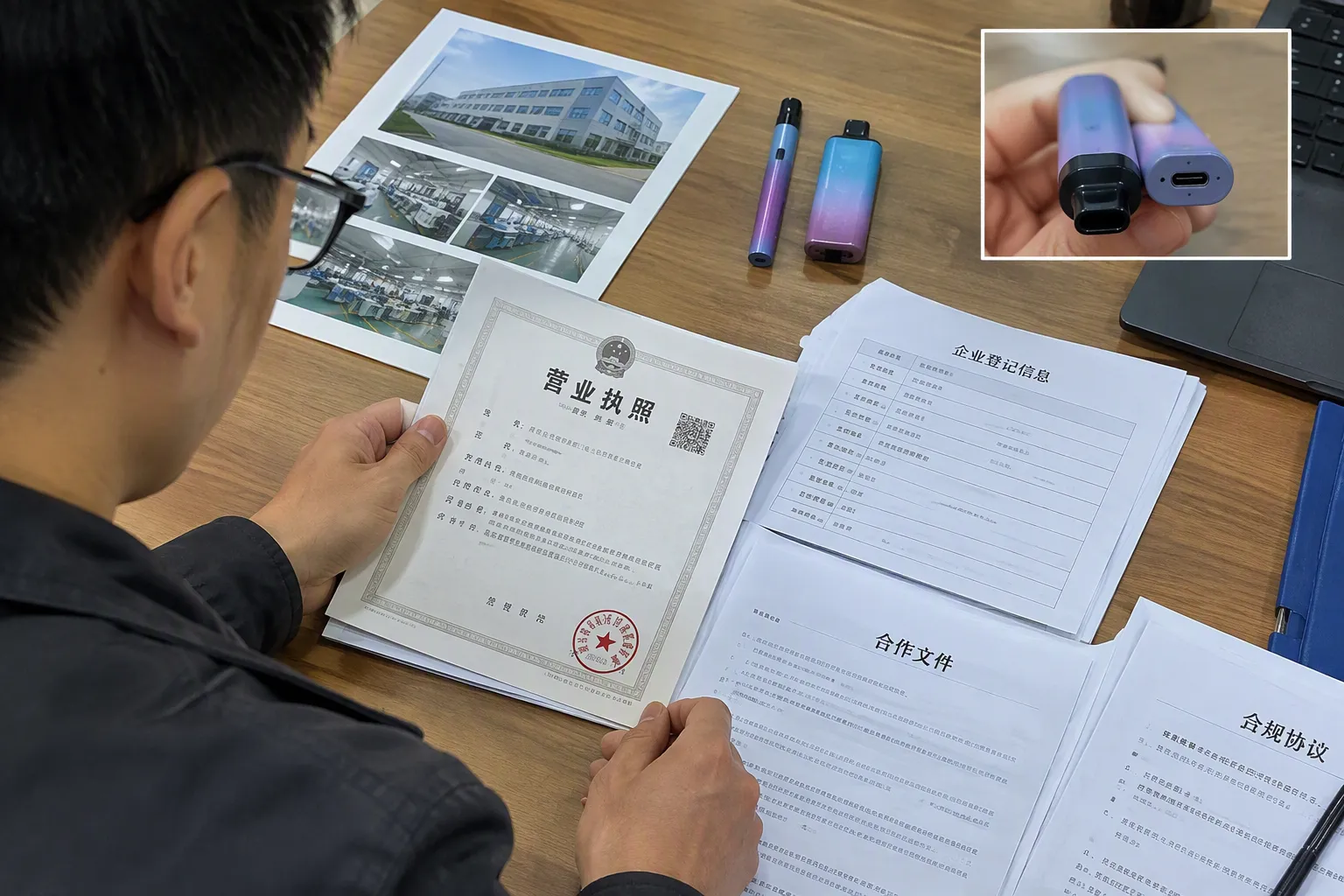
I recommend requesting the product and model details, manufacturer information, packaging artwork, batch information, commercial invoice, packing list, shipping details, and any duty-related evidence required under official UK guidance. The buyer should ensure that the documents match the exact products and quantities ordered.
Conclusion
The UK Vaping Duty Stamp Scheme 2026 should become part of a wider purchasing review, not a single label check. I recommend that importers and wholesalers verify covered products, examine existing and in-transit inventory, approve packaging carefully, request shipment evidence, and assign responsibilities in writing. Small buyers may consider suitable European warehouse stock for faster, lower-MOQ replenishment, while larger distributors may use direct China sourcing and OEM/ODM production with longer planning. I can help UK buyers coordinate product sourcing, factory communication, documents, and logistics through Kingfuji Tech. Contact me at info@kingvapecig.com or +86 13928420527 to discuss your purchasing checklist.
Sources
- One month until Vaping Products Duty and the Vaping Duty Stamps ...", An HMRC or other official UK government publication should be cited for the statutory basis, commencement date, and scope of the proposed vaping-products duty-marking requirement
- E-cigarettes: regulations for consumer products - GOV.UK", UK regulatory guidance treats excise or tax obligations as distinct from the separate product, packaging, safety, notification, advertising, customs, and age-of-sale rules that may apply to vaping products
- E-cigarettes: regulations for consumer products - GOV.UK", The UK notification regime requires manufacturers and importers of specified electronic cigarettes and refill containers to submit prescribed product information to the Medicines and Healthcare products Regulatory Agency before the products are placed on the market
- Labelling of electronic cigarettes: regulations and current ...", The Tobacco and Related Products Regulations prescribe specified packaging and labelling information for regulated electronic cigarettes and refill containers placed on the UK market
- Characterising vaping products in the United Kingdom", UK rules for regulated electronic cigarettes and refill containers prescribe limits and disclosure requirements concerning nicotine content, ingredients, and product presentation
- Import goods into the UK: step by step - GOV.UK", UK customs guidance requires importers to provide information supporting customs declarations and to retain relevant commercial and import records for the prescribed period
- Selling vaping and nicotine products - GOV.UK", UK law prohibits the sale of specified nicotine-inhaling products to persons below the statutory minimum age and places associated responsibilities on retailers
- a framing analysis of the UK 'disposable' e-cigarette ban - PMC", UK environmental regimes can impose producer or importer obligations for electrical equipment, batteries, and packaging, including registration, reporting, financing, or take-back requirements where their scope conditions are met