Quick Answer
Australia's prescription-only vape model creates a difficult purchasing question for importers: a product may be available from an overseas supplier, yet still be unsuitable for a particular Australian buyer, recipient, or sales channel. I have seen Australian customers ask about pharmacy supply, prescription access, wholesale eligibility, and import documentation. The safest answer begins with pathway verification, not price.
Australia's prescription-only vape model in 2026[1] means that buyers should confirm their eligibility, intended product use, recipient, import requirements, documentation, and distribution channel before placing an order. Pharmacy supply, wholesale activity, and ordinary retail are not automatically interchangeable.[2] Importers should verify current requirements with Australian official authorities, such as the Therapeutic Goods Administration, Australian Border Force, the Department of Health and Aged Care, and qualified local advisers.
The commercial risk is clear. An importer can spend money on inventory before discovering that the product documentation, proposed recipient, packaging, or intended channel does not fit the applicable Australian requirements. I therefore encourage buyers to separate the legal pathway from the supplier discussion. After that, they can evaluate specifications, MOQ, delivery time, OEM/ODM possibilities, and total landed cost with better information.
Australia's Prescription-Only Vape Model 2026: Import, Pharmacy and Wholesale — Which Pathway Fits Your Business
Many Australian buyers approach the market with a simple question: “Can I import this vape?” That question is understandable, but it is incomplete. The answer may depend on who the buyer is, why the product is being imported, who will receive it, how it will be supplied, and which current Australian rules apply.
What should an Australian buyer confirm before purchasing?
An Australian buyer should first identify the intended legal pathway. Pharmacy supply, prescription-related supply, wholesale distribution, personal use, and ordinary consumer retail may involve different responsibilities. The buyer should then confirm current import permissions[5], product requirements, packaging and labelling expectations, recipient eligibility, record-keeping obligations, and any restrictions applying to the proposed transaction. A supplier’s export experience does not establish Australian market eligibility.[4]
Why pathway separation matters
In my discussions with Australian customers, I have noticed that many questions begin with product details:
- What is the unit price?
- What is the MOQ?
- Can you provide a sample?
- Can you add a private label?
- How quickly can you ship?
- Can you send stock to a pharmacy or distributor?
Those are useful procurement questions, but they should not be the first questions. The first questions should identify the buyer and the intended route.
| Buyer question | Why it matters |
|---|---|
| Who is importing the goods? | The importer may carry responsibility for documentation, declarations, records, and compliance decisions. |
| What is the intended use? | A product intended for a specific regulated pathway may not be suitable for another channel. |
| Who will receive or supply the product? | A pharmacy, healthcare-related recipient, distributor, and ordinary retailer may not have the same role. |
| What product category applies? | The applicable requirements may depend on the product’s composition, presentation, device features, and intended use. |
| Where will the goods go after import? | Storage, distribution, supply, and retail plans can affect the buyer’s obligations and commercial risk. |
| Which Australian rule is being relied upon? | Buyers need current official confirmation rather than informal interpretations or outdated supplier statements. |
I do not present this table as a legal test. I use it as a procurement screen. It helps a buyer decide which questions must be answered before discussing a large order.
“Prescription-only” does not mean “open wholesale”
A common misunderstanding is that a prescription-only model automatically creates a broad wholesale opportunity. I would not make that assumption. The phrase describes a regulatory status or supply context[3], but it does not by itself confirm that every importer, distributor, shop, or online seller can purchase and resell the product.
A buyer should avoid statements such as:
“The product is prescription-only, so any Australian business can import it for resale.”
That conclusion may be wrong because the buyer’s status, supply channel, product documentation, intended use, or local obligations may not align with the applicable requirements. The buyer should obtain current confirmation from the relevant Australian authority or a qualified Australian professional before committing funds.
A practical pre-purchase qualification process
I recommend that Australian importers complete the following sequence.
1. Define the proposed pathway
The buyer should write down the intended route in plain language:
- Who will import the goods?
- Who will receive them?
- Will the goods go to a pharmacy, distributor, healthcare-related business, warehouse, or another location?
- Will the buyer supply them under a specific prescription-related process?
- Will the buyer conduct wholesale activity?
- Will the buyer sell directly to consumers?
- Will the buyer use an existing local partner?
This written description prevents the supplier and buyer from discussing different transactions under the same word, such as “wholesale” or “pharmacy supply.”
2. Confirm the current Australian position
The buyer should check current information from sources such as:
- The Therapeutic Goods Administration (TGA) for applicable therapeutic goods, vaping product, product, supply, and regulatory information.
- Australian Border Force for border, customs, import, and clearance considerations.
- The Australian Department of Health and Aged Care for relevant national health policy and official guidance.
- State and territory authorities where local pharmacy, health, retail, storage, or distribution issues may apply.
- A qualified Australian regulatory adviser, customs professional, or lawyer when the transaction is commercially significant.
I recommend that buyers save the relevant webpage, document title, publication date, and date of review. Requirements can change[6], and an old email or social media post is not a reliable basis for a new purchase.
3. Ask the supplier for a controlled document package
A supplier should be able to provide accurate product and shipment information for buyer review. Depending on the product and proposed pathway, the buyer may need to request:
- Full product name and model reference.
- Device specifications and component description.
- Battery information and charging details where applicable.
- Ingredient or composition information for relevant products.
- Batch or lot identification method.
- Manufacturing and packaging information.
- Product photographs and proposed labels.
- User instructions and warnings.
- Test reports or other supporting documents that genuinely relate to the supplied product.
- Commercial invoice and packing-list information.
- Carton dimensions, quantities, and shipping weight.
- Production lead time and expected dispatch time.
- After-sales and defective-product procedures.
- OEM/ODM artwork, approval, and change-control arrangements.
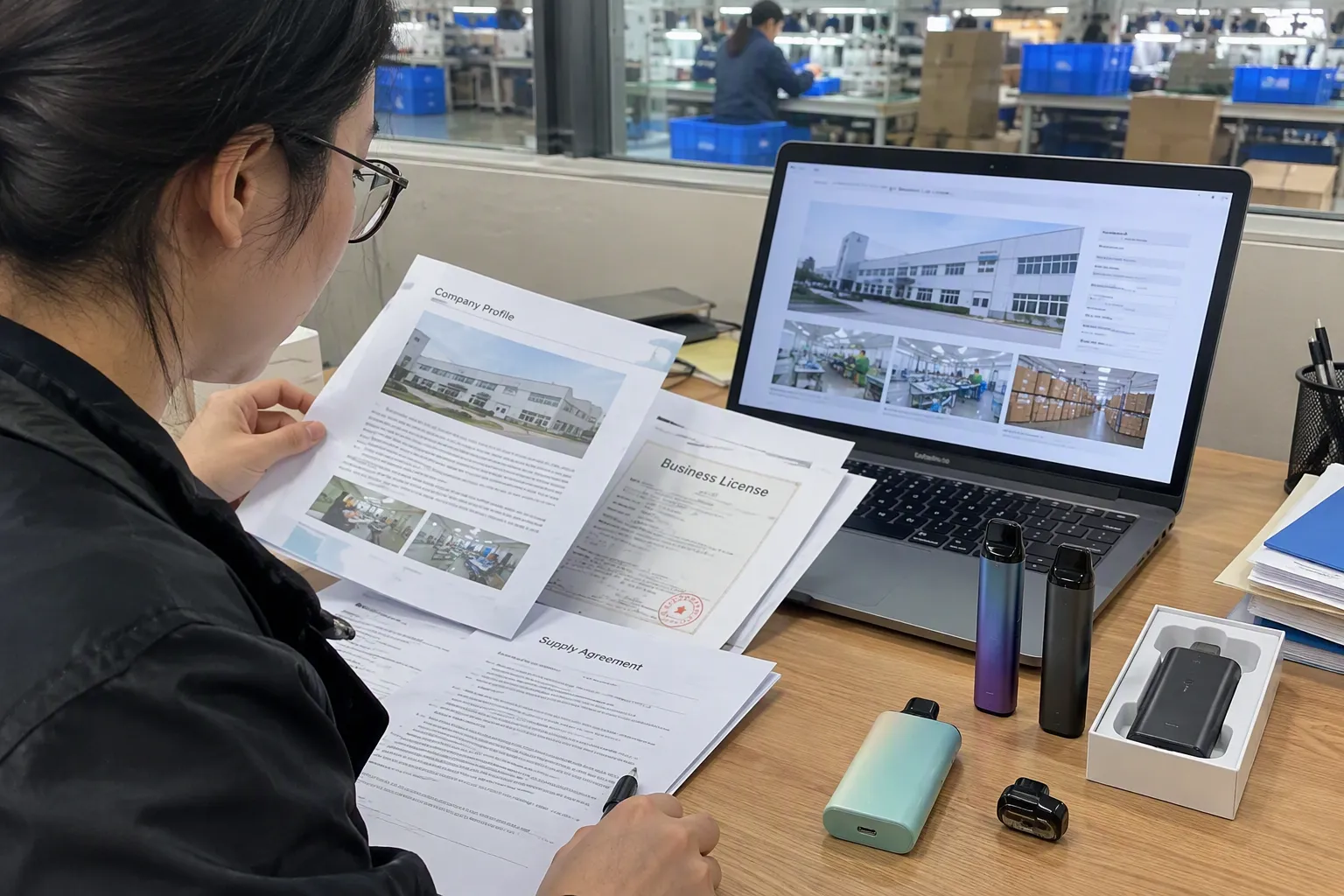
I would not treat a document merely because it has a logo or certification symbol as proof that the goods are suitable for Australia. The buyer should verify the issuing organization, scope, product reference, dates, and whether the document applies to the exact model and batch.
4. Match the documents to the physical product
A frequent procurement problem occurs when the buyer receives documents for one model while ordering another. This problem can arise with similar product names, revised batteries, different liquid capacities, changed packaging, or private-label versions.
Before placing an order, I suggest comparing:
| Item to compare | Buyer should check |
|---|---|
| Model number | The model on the quotation matches the model on the documents and packaging. |
| Product configuration | Battery, cartridge, atomizer, charging method, and other components are consistent. |
| Label and artwork | The approved artwork reflects the actual product and intended channel. |
| Batch identification | The supplier can explain how batches or lots are recorded. |
| Quantity | Carton quantities and total units match the commercial documents. |
| Product changes | The supplier will notify the buyer before changing components or specifications. |
| Private label | Brand ownership, artwork approval, warnings, and responsibility for local review are clear. |
This process does not replace Australian legal review. It reduces avoidable procurement errors before the buyer pays for production.
How the import decision affects inventory risk
An incorrect compliance interpretation can create more than a customs problem.[7] It can create unsuitable inventory that cannot be moved through the buyer’s planned channel. That inventory may occupy warehouse space, tie up cash, and require relabelling, return, disposal, or a new regulatory assessment.
For a small distributor, a low MOQ can reduce exposure, but it does not make a non-compliant product acceptable. For a larger importer, a lower unit price can become expensive if the goods remain blocked or cannot be distributed as planned.
I therefore suggest that buyers calculate the following before approving a purchase:
- Product cost.
- Packaging and labelling cost.
- Testing or documentation cost.
- Freight and insurance.
- Customs and brokerage charges.
- Warehouse and handling cost.
- Possible inspection or delay cost.
- Cost of relabelling or rework.
- Replacement or warranty exposure.
- Working capital held during the full purchasing cycle.
The lowest factory price is not always the lowest commercial cost. A product that arrives quickly but cannot enter the intended channel may produce a higher loss than a more carefully reviewed product with a longer lead time.
How an overseas supplier can support the buyer without making local promises
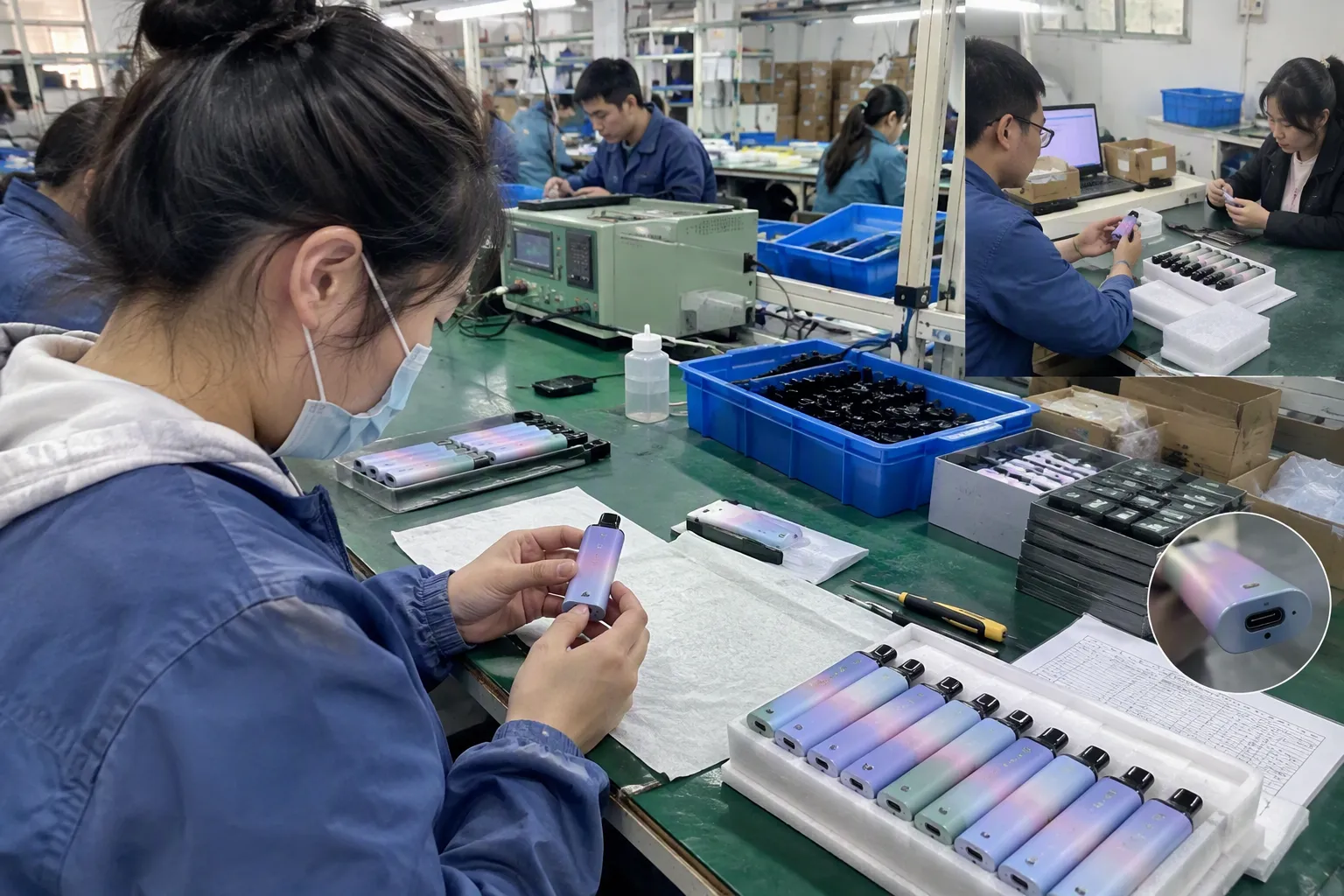
From a China-based manufacturing and supply-chain perspective, I can help buyers prepare product information, clarify specifications, organize documents, confirm packaging details, and coordinate production or delivery discussions. Our company, Shenzhen Kingfuji Tech. CO., Ltd., was established in Shenzhen in 2011. We operate as a factory and trading-integrated supplier, with a 5,000-square-metre facility, OEM/ODM experience, and an ongoing product-development program.
Those capabilities can support procurement, but they do not replace Australian buyer responsibilities. I cannot responsibly tell a buyer that Chinese manufacture, export paperwork, or a supplier’s shipping history automatically makes a product legal for Australia. The Australian importer and the relevant local professionals must verify the local position.
My role is practical:
- I can help identify the exact product model.
- I can provide available product and packaging information.
- I can explain production lead times and MOQ.
- I can discuss private-label development.
- I can separate standard stock from customized production.
- I can coordinate document requests with the factory.
- I can help the buyer compare a small trial order with a larger import plan.
- I can communicate clearly when a question requires Australian regulatory confirmation.
This division of responsibility protects both sides. It also prevents a sales conversation from becoming an unsupported legal assurance.
What should small and large buyers consider?
Different Australian buyers may need different procurement approaches. I do not recommend treating a small pharmacy-related buyer and a national importer as the same customer.
Smaller buyers and local distributors
A smaller business may prioritize:
- Lower MOQ.
- Faster delivery.
- Less money tied up in stock.
- Clear product information.
- A manageable number of models.
- A local or qualified partner who can confirm the intended channel.
A small order can reduce inventory exposure, but it still needs pathway verification. The buyer should not assume that a 50-unit or sample order avoids import, product, or supply requirements.
Larger importers, wholesalers, and distributors
A larger buyer may need:
- Stable monthly supply.
- Batch-level records.
- Consistent specifications.
- Forecast planning.
- OEM/ODM development.
- Packaging and artwork control.
- A documented defective-product process.
- Clear responsibility for product changes.
- A realistic customs and warehouse plan.
Our factory can discuss higher-volume production, custom development, and supply planning with qualified importers and distributors. However, I would expect the buyer to complete local regulatory and channel checks before approving mass production.
When should buyers discuss MOQ, price, and OEM/ODM?
The right time to discuss price is after the buyer has confirmed that the proposed product and route are worth evaluating. This does not mean the buyer must complete every legal step before requesting a quotation. It means the buyer should avoid treating a quotation as permission to import or distribute.
I normally suggest this order:
- Identify the product and intended use.
- Identify the buyer, recipient, and proposed channel.
- Check current Australian official information.
- Request a product and document package.
- Ask qualified local advisers to review uncertain points.
- Request a quotation for the confirmed configuration.
- Compare MOQ, lead time, freight, and total landed cost.
- Approve samples or documentation before mass production.
- Confirm final artwork and product configuration.
- Place the order only when the commercial and compliance assumptions are recorded.
This sequence can feel slower at the beginning. In practice, it may protect the buyer from much greater delays later.
Questions I commonly receive from Australian customers
Australian customers have asked me whether a product can be sent directly to a pharmacy, whether a wholesale company can purchase it, and whether a private label changes the answer. I treat each question as a separate assessment rather than giving a universal yes or no.
A pharmacy address alone does not prove that the transaction is acceptable. A wholesale company’s existing business does not automatically establish eligibility for every regulated product. A private label can create additional questions about packaging, product identity, responsibilities, and documentation. These points require current Australian confirmation.
I also receive questions about customs risk. I explain that accurate commercial documents and careful shipping coordination are important, but they do not guarantee clearance. Customs treatment depends on the goods, documentation, declarations, applicable rules, and the decision of the relevant authorities.[8]
What should a buyer include in an inquiry to a supplier?
A clear inquiry helps me give a more useful supply-chain response. I recommend including:
- Australian business name and buyer role.
- Intended product category and exact use.
- Proposed recipient and distribution channel.
- Estimated monthly or initial quantity.
- Standard product or private-label requirement.
- Required packaging and language.
- Requested delivery location.
- Desired delivery date.
- Any local adviser or authority guidance already received.
- Specific documents the buyer needs reviewed.
- Whether the buyer wants factory production, standard stock, or OEM/ODM development.
A detailed inquiry also helps reveal whether the buyer is ready to purchase or is still checking basic eligibility. Both stages are normal. I would rather clarify the pathway before quoting a large order than encourage a purchase that later creates a channel problem.
How I would recommend reducing procurement risk
I would use a staged approach:
Stage 1: Eligibility screening
I would confirm the intended route, buyer status, recipient, and use. I would ask the buyer to verify the current Australian position.
Stage 2: Product review
I would match the proposed model, components, packaging, labels, and documents. I would record any unresolved points.
Stage 3: Commercial review
I would compare standard stock, small-volume supply, factory production, and OEM/ODM options. I would calculate the likely landed cost rather than focusing only on the unit price.
Stage 4: Controlled order
I would recommend proceeding only after the buyer has reviewed the relevant information and obtained qualified local advice where necessary. The buyer should keep the approved product reference and artwork for future orders.
Stage 5: Ongoing control
The buyer should monitor product changes, batch information, packaging revisions, official rule updates, and customer or channel feedback. A product that was accepted under one set of conditions should not be assumed to remain suitable after a change.
Frequently Asked Questions
Is every vape product available from an overseas supplier eligible for import into Australia?
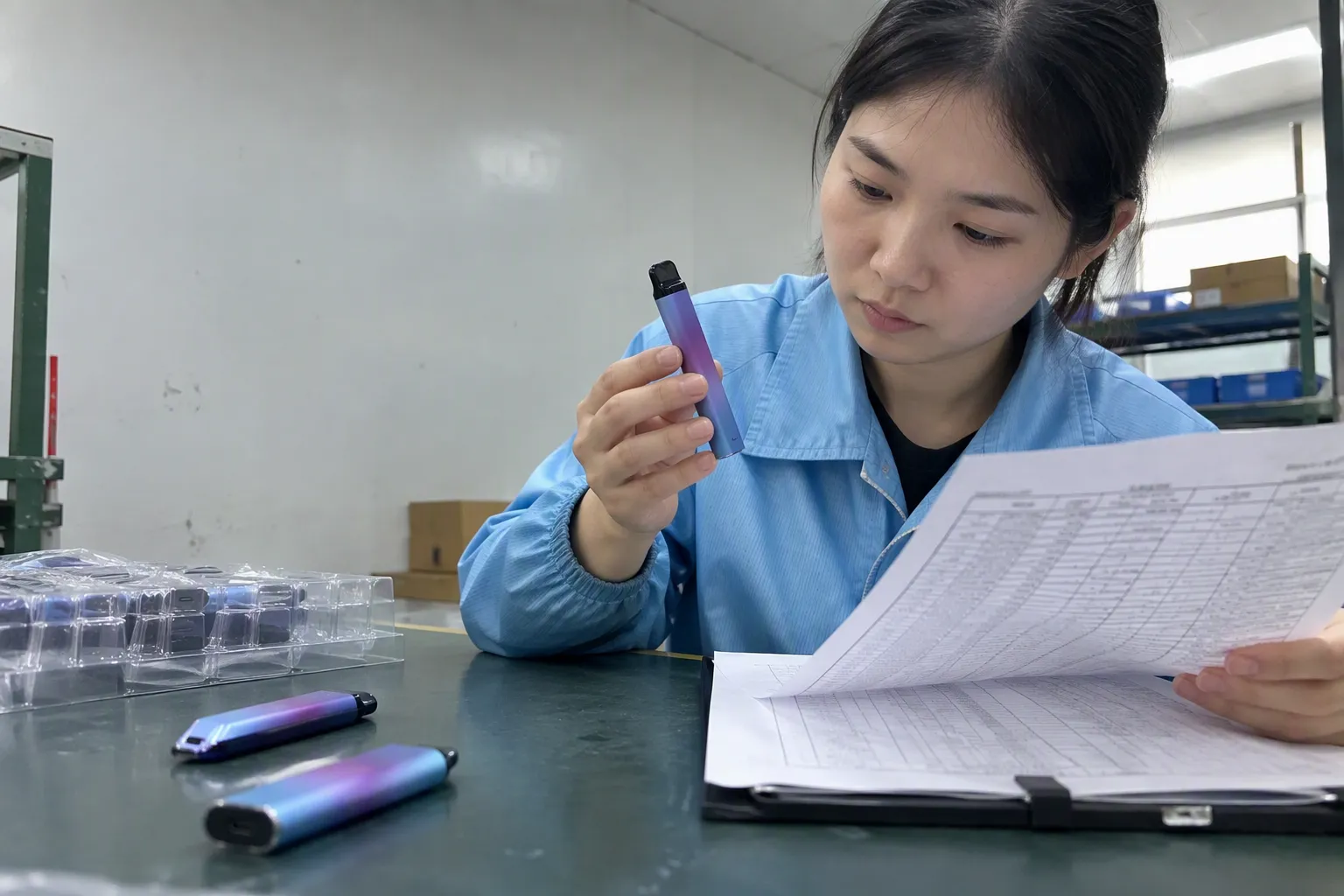
No. Overseas availability, Chinese manufacture, export documentation, or a supplier’s previous shipping experience does not prove Australian eligibility. The buyer should verify the current product, import, recipient, and distribution requirements through Australian official sources and qualified local advice.
Can a wholesale business automatically supply prescription-only vape products?
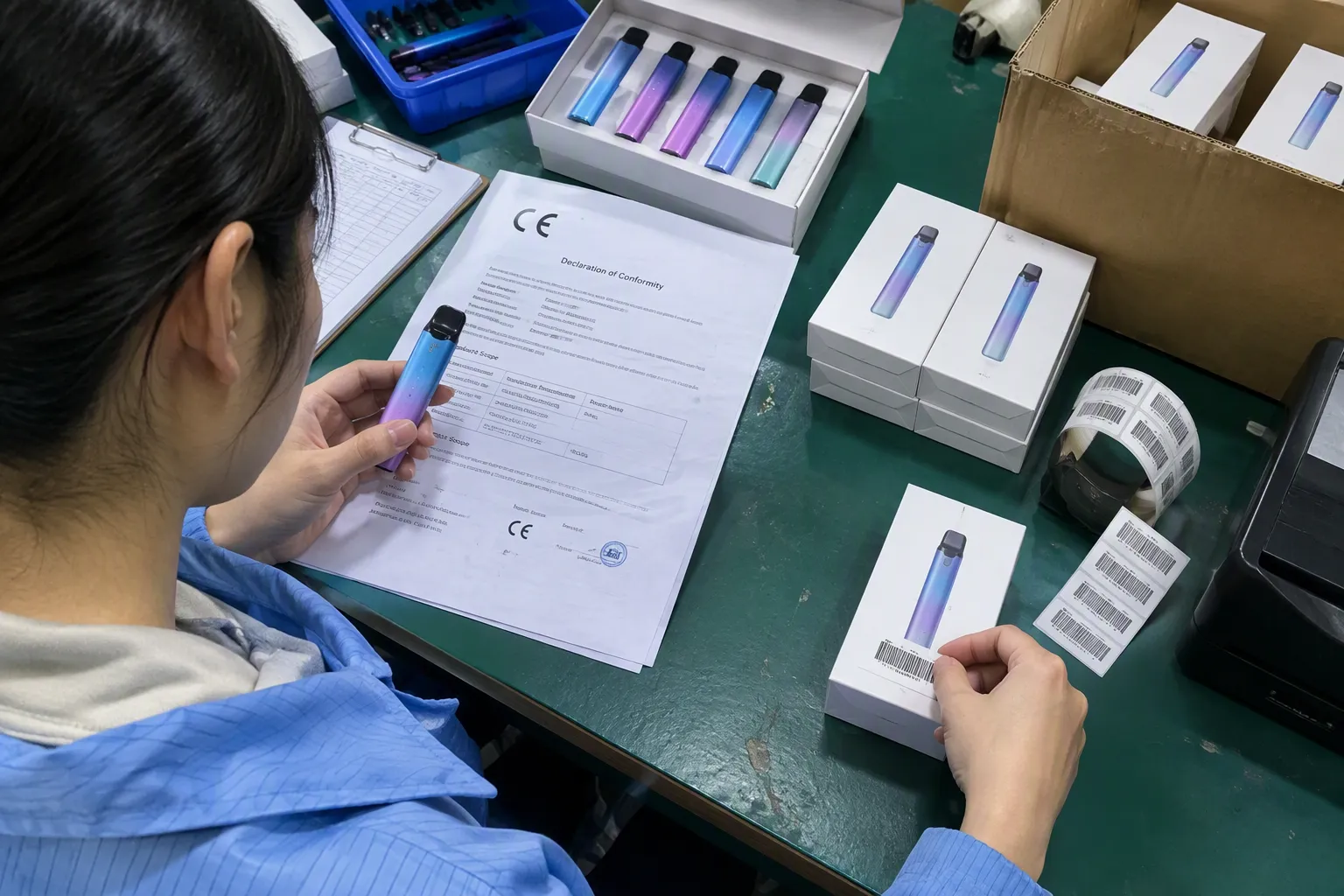
No automatic assumption is safe. Wholesale activity may depend on the buyer’s role, the product category, intended use, recipient, documentation, and applicable Australian requirements. A wholesale licence or existing retail business should not be treated as universal permission for every product or channel.
Can a supplier send prescription-only vape products directly to a pharmacy?
The pharmacy address alone does not establish that a shipment is acceptable. The buyer should confirm the pharmacy’s role, the proposed supply pathway, product requirements, import conditions, and documentation before arranging delivery. I can help prepare supply information, but I cannot replace Australian regulatory or professional confirmation.
Does OEM or private-label packaging change the compliance position?
It may create additional review points. A private-label product can involve different labels, product identity, warnings, instructions, brand responsibilities, and document matching. The buyer should obtain local advice before approving artwork or mass production, especially when the product is intended for a regulated pathway.
What documents should an Australian importer request first?
The importer should start with the exact model reference, specifications, composition information where relevant, batch method, packaging and label files, instructions, available test or supporting documents, commercial invoice details, packing information, lead time, and after-sales terms. The buyer should verify that every document applies to the exact supplied product.
Conclusion
Australia's prescription-only vape model requires buyers to qualify the pathway before they qualify the product. Pharmacy supply, prescription-related supply, wholesale activity, and ordinary retail should not be treated as the same route. I can support Australian buyers with product specifications, document preparation, factory communication, standard stock, and OEM/ODM discussions, but local eligibility must be confirmed through current Australian official sources or qualified advice. If you are evaluating a product, send me the intended channel, product details, quantity, and delivery plan at info@kingvapecig.com or +86 13928420527 so I can help organize the supply-side information for your review.
Sources
- Prescribing and dispensing of prescription only therapeutic vaping ...", The Therapeutic Goods Administration describes the Australian regulatory framework governing the supply and access of vaping products, including prescription-related requirements
- Vapes: information for pharmacists", Australian therapeutic-goods legislation and regulatory guidance distinguish among regulated supply roles and channels rather than treating pharmacy, wholesale, and retail transactions as universally equivalent
- Prescription medicines | Therapeutic Goods Administration (TGA)", Australian regulatory materials define prescription-only status in relation to controlled supply conditions and do not present that status as a general authorization for unrestricted commercial importation or resale
- Requirements to import goods - Australian Border Force", Australian import guidance places compliance with Australian customs and product requirements on the relevant import transaction, so a supplier’s prior export experience is not, by itself, evidence of Australian eligibility
- Vapes: information for sponsors, importers and manufacturers", Australian government guidance requires importers to assess the applicable product and border requirements before bringing regulated goods into Australia
- Possessing and supplying vaping goods in Australia", Australian government publications record successive changes to the regulation and guidance governing vaping products, indicating that the applicable position must be checked against current materials
- Identification of key drivers for improving inventory ... - PMC", Studies of product-regulatory compliance describe how non-compliant goods may be detained, withdrawn, relabelled, reworked, or disposed of, creating operational and financial consequences beyond the initial border event
- Form I-9 Acceptable Documents - USCIS", Australian Border Force procedures assess imported goods through information such as the goods’ description, classification, declarations, and supporting documentation under the applicable customs rules