
Quick Answer
Vape supplier test records can look reassuring on paper, yet many buyers still struggle when a complaint appears after goods reach their warehouse. A generic “passed” document may not show which materials, production date, carton quantities, or shipment were involved. I recommend using connected lot records that help buyers trace, isolate, and respond to a specific production lot quickly.
A vape supplier should keep per-lot test records that connect the finished-goods lot number to incoming material lots, production dates, in-process checks, finished-product inspection results, release status, carton labels, quantities, and shipment details. These internal QC records are not the same as third-party laboratory reports or market-specific compliance documents, but they can help buyers investigate complaints, quarantine affected inventory, and identify where the relevant goods were distributed.
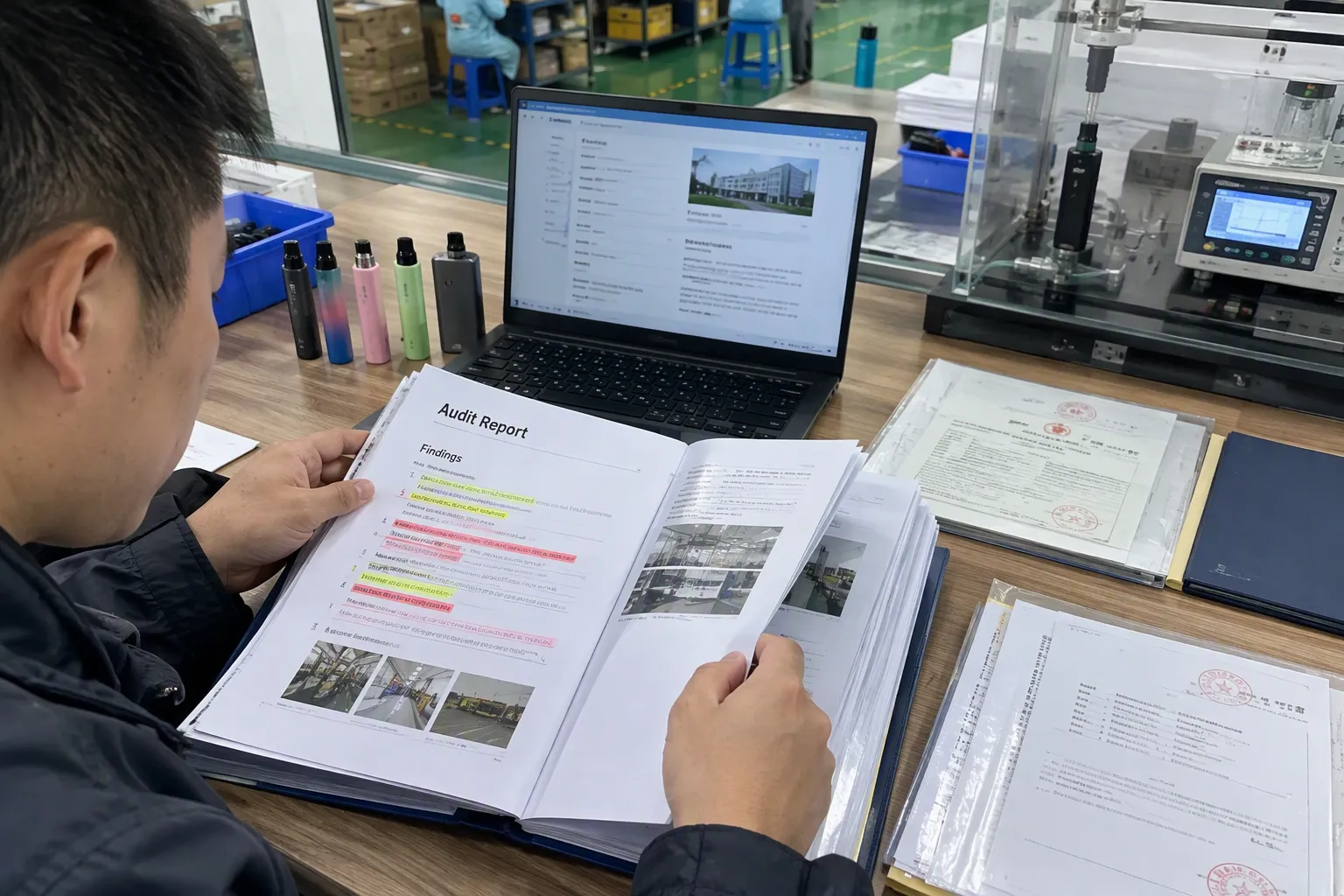
For importers, wholesalers, private-label buyers, and vape shop distributors, the real question is not whether a supplier can send a report. The question is whether the documents can connect to the physical products in your warehouse. In my experience reviewing lot records and release decisions, that connection is what makes traceability useful after shipment.
Why Should Vape Supplier Test Records Not Be Treated as a Standalone “Pass Report”?
A buyer can receive a clean-looking report and still have no practical way to investigate a field complaint. This becomes expensive when cartons have already been split across several customers, stores, or countries. Vape supplier test records should support fast identification and control, not simply provide a reassuring document at the time of purchase.
A per-lot record should not be treated as a standalone pass report because a result only becomes useful when it is linked to a specific finished-goods lot, its materials, production activity, inspection records, release decision, and shipment destination.[1] A connected record helps a buyer determine whether an issue may be isolated, which inventory should be held, and which customers may need notice.

When I review production-lot documentation, I do not start by asking whether a page says “pass.” I start by asking a more practical question:
If a buyer sends us a carton code and a complaint photo tomorrow, can we identify the relevant lot and follow the record chain without guessing?
That is the working standard that matters in supplier evaluation.
A complete traceability chain does not guarantee zero defects, zero complaints, or zero market actions.[2] Manufacturing always involves risk. However, a usable record system can reduce uncertainty. It gives the buyer and supplier a shared way to identify the scope of a problem instead of treating every complaint as either a single random case or a reason to question the entire shipment.
A Product Test Report Is Different From a Production-Lot Release Record
One of the most common misunderstandings in vape procurement is the difference between product-development validation[3] and production-lot release control.
A supplier may have documents for a model that was tested during development, early sampling, or a previous production period. Those documents can be relevant during product evaluation. They may help a buyer understand the product design, materials, performance claims, or market documentation that may be needed for a specific destination.
I encourage buyers to separate these questions:
| Buyer Question | Document Type That May Help | What It Does Not Prove |
|---|---|---|
| Is this product model suitable for my target market? | Product documents, third-party reports, market-specific compliance files where applicable | That the current shipment came from a particular controlled lot |
| Was this specific lot produced and inspected? | Internal production, QC, and release records | That the product is approved for every market |
| Can I investigate a complaint from a specific carton? | Lot code, carton label, inspection record, shipment record | That there will be no defects |
| Can I identify affected downstream customers? | Dispatch list, invoice, packing list, destination record | That all distributors retained the same lot separation |
This distinction is especially important for importers who manage multiple brands, product categories, or channels. A buyer may source disposable vapes, atomizers, 510 batteries, CBD batteries, vaporizers, or traditional smoking accessories from several suppliers. If records are generic, undated, or disconnected from shipment information, the buyer may face a difficult investigation later.
What Should the Finished-Goods Lot Number Connect To?
The finished-goods lot number should be the center of the record chain.[5] It should appear in a form that can be matched to the products received. Depending on the product and packaging arrangement, it may be shown on a master carton, inner box, label, product packaging, or a related packing document.
The important point is not one universal coding format. Different factories and products may use different systems. The important point is that the code can lead somewhere meaningful.
For practical purchasing control, I recommend that buyers ask whether the finished-goods lot can be linked to the following categories of information:
-
Production identification
- Finished-goods lot number
- Product model or SKU
- Production date or production period
- Production quantity
- Relevant production line or work order reference, where the supplier uses one
-
Incoming-material traceability
- Relevant incoming lots for key components or materials
- Receiving or incoming inspection reference
- Supplier or component identification where appropriate
- Material status before use
-
In-process control
- Relevant in-process inspection or QC log references
- Inspection date or stage
- Handling of identified abnormalities, if any
- Rework or disposition references when applicable
-
Finished-product inspection
- Finished-goods sampling or inspection record
- Quantity checked and result summary
- Visual, functional, packaging, or other checks that the supplier has defined internally
- Nonconforming quantity or disposition record where applicable
-
Release and distribution
- Internal release status
- Release date or responsible approval reference
- Carton count and quantity
- Packing list, invoice, or shipment reference
- Shipment destination or buyer order reference
I use the word relevant deliberately. Not every part of a vape product has the same risk profile, and suppliers may have different internal control processes. Buyers should avoid demanding meaningless paperwork just to create a thicker file. Instead, they should ask whether the records provide a usable path from finished product back to the materials and production activity that matter for investigation.
How Buyers Can Match Documents to Physical Goods
A record is only useful if your receiving team can match it to the products that arrived.[6]
This is where many procurement processes become weak. A buyer may receive a PDF called “inspection report,” but the document may have no lot number, no quantity, no production date, no carton reference, and no link to the commercial shipment. It may be a general template rather than a lot-specific document.
For buyers, I suggest checking the following points before accepting records as evidence of lot control:
- Does the document show the same product model or SKU that you purchased?
- Does it show a finished-goods lot number?
- Can that lot number be found on the carton, packaging, or a clear packing reference?
- Does the quantity make sense against the purchase order, packing list, or shipment?
- Does the production date or release date fit the order timeline?
- Does the document identify whether the lot was released, held, reworked, or otherwise controlled?
- Can the supplier identify where the lot was shipped if it was split between buyers or destinations?
For example, imagine that a wholesaler receives 200 cartons of a disposable vape SKU. Several weeks later, one retail customer reports a repeated packaging issue from a small number of units. The wholesaler should be able to identify the carton code, check whether those cartons came from one finished-goods lot, and ask the supplier whether that lot was shipped only to that wholesaler or also to other buyers.
Without lot linkage, the buyer may have only two uncomfortable choices:
- Treat the complaint as a single isolated case without evidence; or
- Hold all inventory of that model, including stock that may have come from different production lots.
Neither option is ideal. Good vape supplier test records help the buyer make a more proportionate decision.
Why Incoming Material Lots Matter in Complaint Investigation
Finished products do not appear from nowhere. They are assembled from materials and components that were received, checked, stored, and used in production. For a vape device, relevant materials may vary by product design and order arrangement. A supplier should be able to explain which incoming records are connected to a finished lot where traceability is part of the agreed quality process.
The buyer does not need to become a factory engineer. However, the buyer should understand why material traceability matters.
If several complaints are linked to one finished-goods lot, internal records may help the supplier check whether the issue is associated with:
- A particular incoming component lot;
- A specific packaging material batch;
- A defined production period;
- A documented in-process abnormality;
- A finished-goods inspection observation;
- A storage, packing, or shipment handling issue.
This does not mean that a document will immediately prove root cause. Complaint investigation often requires physical samples, photos, returned goods, buyer feedback, and further review. Still, traceability narrows the search area.[7]
In my operational view, this is the commercial value of recordkeeping. It supports a faster and more disciplined conversation when there is a problem. It also helps avoid broad assumptions that can damage a buyer’s cash flow, customer relationships, and inventory planning.
Internal QC Documents Are Not Third-Party Certification

Buyers should keep document categories separate. This protects both sides from misunderstandings.
An internal QC log, production inspection record, or release document reflects the supplier’s own quality-control process for a particular lot. It may be valuable for traceability and supplier accountability. However, it is not automatically a third-party laboratory report, a certification, a regulatory approval, or evidence that a product can legally enter every market.
Third-party test reports and market-specific compliance documents may be relevant depending on:
- The destination country;
- The product category;
- Whether the item contains nicotine or other regulated substances;
- Local labeling, packaging, notification, tax, import, or product-safety rules;
- The buyer’s role as importer, distributor, private-label owner, or retailer.
Requirements vary by market and can change.[8] I recommend that buyers verify current obligations with qualified local compliance, legal, customs, and product professionals before placing an order or selling a product in a target market.
A practical supplier discussion should therefore distinguish three layers:
| Layer | Main Purpose | Typical Buyer Use |
|---|---|---|
| Internal production and QC records | Lot traceability and release control | Complaint investigation, inventory isolation, supplier follow-up |
| Third-party laboratory reports | Independent testing within the scope stated by the report | Product evaluation and market documentation review |
| Market-specific compliance documents | Support for a particular jurisdiction or product category | Import, distribution, labeling, notification, or regulatory planning |
A supplier that mixes these categories may create confusion. A buyer who understands the difference can ask better questions and avoid relying on the wrong document for the wrong purpose.
What Happens When a Complaint Is Received?
The value of per-lot documentation becomes most visible after goods have been shipped. Before a complaint, records may feel like routine factory paperwork. After a complaint, they become a practical decision tool.
A disciplined complaint process usually starts with identification, not blame. I would normally ask the buyer for clear information that can connect the complaint to physical goods:
- Product model, flavor or variant where relevant, and quantity involved;
- Photos or video of the product, carton, label, and issue;
- Finished-goods lot code, carton code, or packaging reference;
- Date received, date sold, and customer location if known;
- Whether the issue appears isolated or repeated;
- Whether the buyer still has inventory from the same carton or lot.
The supplier can then review the connected vape supplier test records and associated production information. Depending on the evidence available, the buyer and supplier may decide to:
- Hold or quarantine remaining stock from the identified lot;
- Check whether other cartons share the same lot code;
- Review whether the lot was distributed to other downstream customers;
- Request retained samples or additional physical samples if available;
- Check related incoming-material and in-process records;
- Decide on a proportionate commercial response under the agreed after-sales terms.
This process does not promise that every issue will have a simple answer. It does create a better starting point. For wholesalers supplying vape shops, smoke shops, convenience stores, gas stations, and regional distributors, that can be important. A fast response may help protect relationships with retail accounts while avoiding unnecessary disruption to unaffected inventory.
Questions to Ask Before You Place a Large Order
For smaller buyers, speed and low minimum order quantity may be the priority. For example, some European buyers may prefer available stock from an overseas warehouse so they can receive goods faster and reduce upfront inventory exposure. For larger importers and distributors, direct shipments from China, pricing structure, packaging control, and OEM/ODM options may be more important.
In both cases, lot control should be part of supplier qualification.
Before a substantial purchase, I recommend asking a supplier these practical questions:
- How is the finished-goods lot number shown on cartons or packaging?
- Can you provide a sample of a lot-specific internal QC or release record with confidential details removed?
- Which information connects the finished lot to incoming materials and production dates?
- How do you distinguish an internal release record from a third-party test report?
- Can your packing list identify carton quantities and lot references?
- If one lot is split into several shipments, how do you record the destinations?
- If a complaint is reported, what information do you need from us to begin review?
- Who is responsible for after-sales coordination when products from multiple brands or factories are purchased in one order?
- What documents can you provide for our target market, and which documents must we independently verify with local professionals?
These questions are not meant to create unnecessary friction. They help buyers compare suppliers based on operational readiness, not only price or product images.
How I Would Evaluate a Supplier’s Record System
When I evaluate whether a record system is useful, I look for consistency rather than impressive language. A simple, repeatable system that connects physical goods to records is often more valuable than a complex report that cannot be verified.
A buyer can use this short evaluation framework:
| Evaluation Area | Strong Buyer Signal | Warning Sign |
|---|---|---|
| Lot identification | Lot code appears on goods and documents | No lot code or code cannot be matched |
| Document timing | Production and release dates align with the order | Undated documents or unclear production period |
| Material linkage | Relevant incoming lots can be traced | No connection between materials and finished goods |
| Inspection evidence | Lot-specific record identifies what was checked | Generic “pass certificate” for all shipments |
| Shipment linkage | Quantities and destination can be matched | Record has no relation to packing list or shipment |
| Complaint response | Supplier can explain investigation steps | Supplier can only request vague photos or deny responsibility |
| Document categories | Internal QC and third-party reports are clearly separated | Internal forms are presented as external certification |
For OEM and private-label projects, I would add another question: can the supplier keep packaging, product version, and buyer-specific order information connected to the correct lot? A brand owner may need to know not only the product lot, but also which label version, artwork revision, or customer order received it.
Recordkeeping Supports Better Commercial Decisions
Traceability is not only a quality department subject. It affects purchasing, sales, warehouse operations, and cash flow.
For a regional wholesaler, a vague complaint can create uncertainty across hundreds or thousands of units. If the buyer cannot identify the relevant lot, the buyer may need to pause sales of a whole SKU. That can tie up capital and leave retail customers waiting.
For an importer with several warehouse locations, poor lot separation can make stock transfers difficult to investigate. For a private-label buyer, weak records can make it harder to protect brand reputation when retailers ask direct questions. For a supplier, incomplete records can make a fair after-sales decision harder because there is no reliable evidence of what was produced and shipped.
This is why I see vape supplier test records as part of a wider supplier-accountability system. The documents should help both parties act on facts.
At Shenzhen Kingfuji Tech. Co., Ltd., I focus on helping buyers simplify multi-product sourcing while keeping the commercial process clear. Buyers may need products from different brands, factory-developed items, or OEM/ODM projects. In those situations, I believe it is especially important to clarify which supplier is responsible for which goods, what lot information is available, and how after-sales communication will be handled if a problem occurs.
A buyer should not assume that a lower price, fast shipping option, or broad catalog automatically means strong lot control. At the same time, buyers should not assume that more paperwork automatically means better control. The useful test is simple: can the supplier connect the record to the exact goods you received and support a structured response if an issue is reported?
Frequently Asked Questions
What are vape supplier test records?
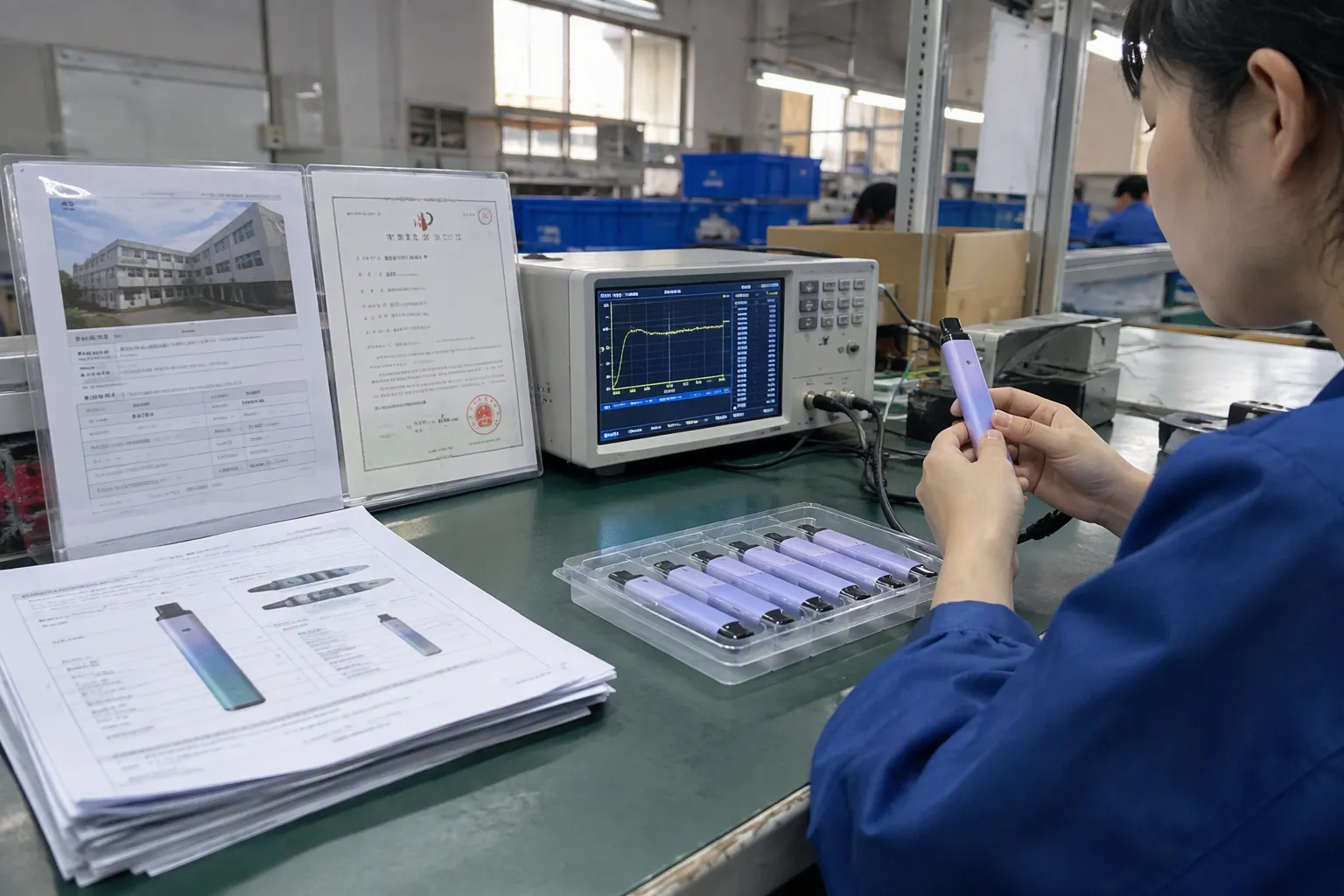
Vape supplier test records are documents that show how a specific production lot was identified, checked, and released internally. Useful records connect the finished-goods lot to production information, relevant materials, inspection activity, release status, and shipment details. They are different from third-party laboratory reports or regulatory documents.
Can a general product test report prove that every production lot is acceptable?
No. A general product report may support product evaluation, but it does not by itself prove that each later production lot used the same materials, followed the same controls, or passed a lot-specific release process. Buyers should request lot-linked records for shipment traceability.
What should I check on a carton label?
I recommend checking for a product identifier, quantity, and a lot or batch reference that can be matched to the supplier’s packing and QC records. The exact label format may vary, but the code should allow the supplier to identify the related finished-goods production lot.
Are internal QC records the same as third-party test reports?
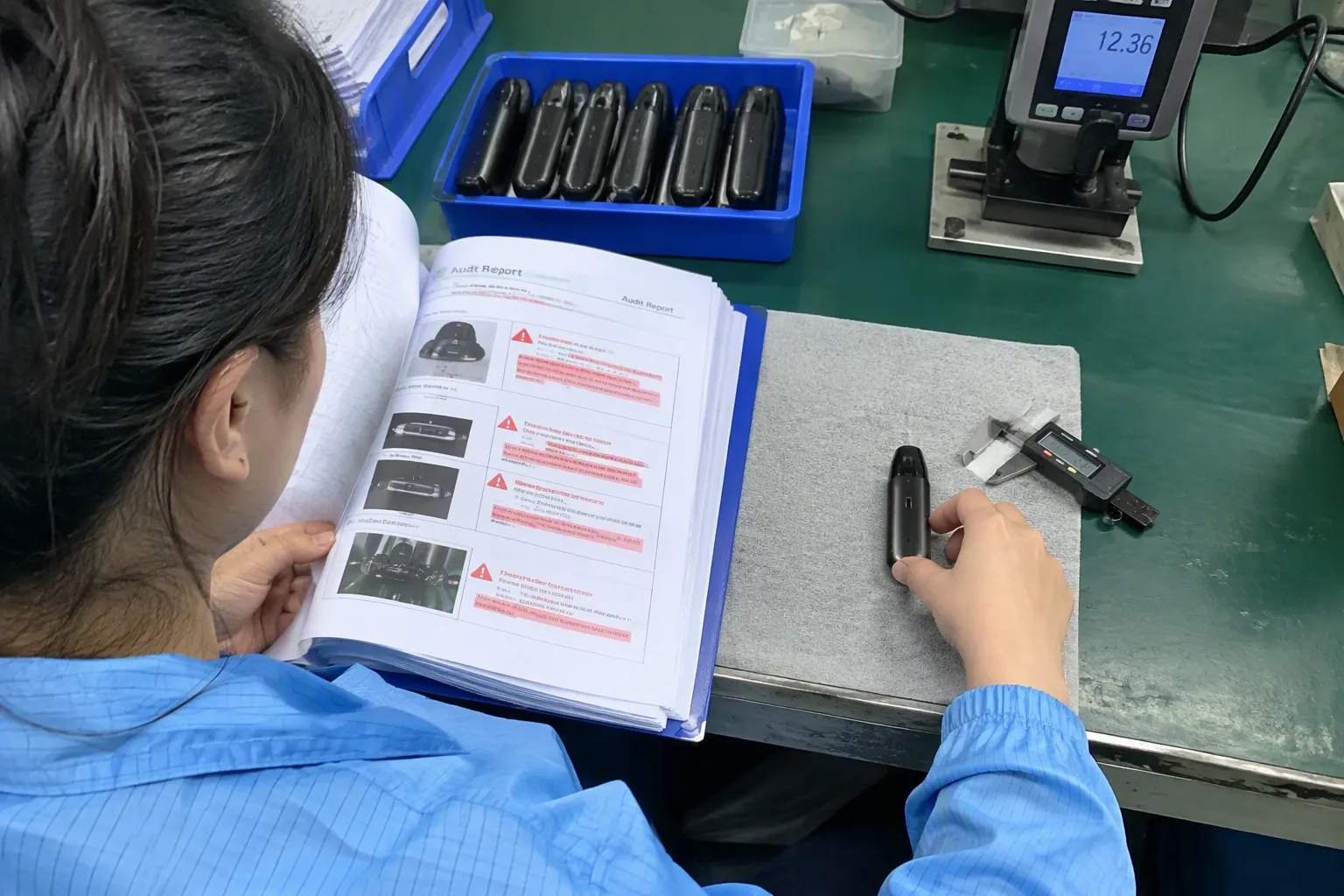
No. Internal QC records are supplier-generated documents used for production control, inspection, and lot release. Third-party reports are issued by an independent laboratory within a defined scope. Buyers should also verify market-specific compliance requirements separately for their destination country and product category.
What should I send a supplier when I report a product complaint?
Send the product model, quantity affected, photos or video, carton and product lot codes, purchase or shipment reference, date received, and a clear description of the issue. This information helps the supplier identify the relevant lot and begin a more focused review.
Conclusion
Vape supplier test records are most valuable when they create a verifiable link between the physical goods in your warehouse and the supplier’s production, inspection, release, and shipment information. A standalone “pass report” may look useful, but it cannot support fast inventory isolation or complaint investigation if it is not tied to a specific lot. If you are sourcing vapes, smoking accessories, or OEM/private-label products, I invite you to discuss your lot-traceability, documentation, shipment, and after-sales expectations with Shenzhen Kingfuji Tech. Co., Ltd. before you place your next order.
Sources
- FSMA Final Rule on Requirements for Additional ...", Quality-management and traceability frameworks describe product identification and retained records as mechanisms for linking manufactured goods to relevant production, control, and distribution information
- FSMA Final Rule on Requirements for Additional ...", Traceability systems are used to identify and manage affected products during investigations and corrective actions, rather than to guarantee that manufacturing defects or market incidents cannot occur
- Process Validation: General Principles and Practices", Quality-system guidance distinguishes validation of a product design or manufacturing process from routine review and release of individual production batches or lots
- FAQs - Certification and Third Party Testing", Laboratory results are ordinarily limited to the identified sample and testing scope; records for an individual production lot are needed to document how that lot was manufactured, controlled, and released
- Documentation and Records: Harmonized GMP Requirements", Manufacturing traceability systems use batch or lot identifiers to connect finished products with associated production, quality-control, and distribution records
- FSMA Final Rule on Requirements for Additional ...", Traceability depends on maintaining product identifiers and records that permit received and distributed goods to be associated with the relevant lot and source information
- FSMA Final Rule on Requirements for Additional ...", Traceability records can help identify implicated batches and distribution routes, allowing investigations and corrective actions to focus on potentially affected goods
- Electronic Nicotine Delivery Systems - PMC - NIH", International and national regulatory sources show that requirements for electronic nicotine-delivery products differ across jurisdictions and may change as laws, rules, and implementation policies are updated