
Quick Answer
A genuinely reusable vape can be difficult to identify because many products look similar on a shelf and may use the same charging language. A buyer may assume that a USB port means long-term use, then face customer complaints when the pod, coil, or reservoir is not designed for continued use[3]. I recommend checking the complete product system before buying or stocking it.
A vape is genuinely reusable only when its battery, consumable components, refill or replacement method, and stated care limits are designed to support continued use together. A charging port alone only confirms that the battery may be rechargeable.[1] UK buyers should inspect the physical device, read the instructions, compare the packaging with the product specification, and request written supplier confirmation of what can be reused, replaced, or refilled.

In my product-development work, I see that confusion usually starts when buyers use one word to describe several different designs. “Rechargeable,” “refillable,” “replaceable pod,” and “reusable” can overlap, but they do not mean the same thing.[2] A clearer buying process helps vape shops, smoke shops, convenience stores, importers, and consumers choose products that match the claim being made.
Is a Vape Genuinely Reusable Because It Charges or Has a “Reusable” Label?
A buyer may see a charging port or a “reusable” statement and believe that the whole device is meant to last through repeated cycles of use. That assumption can create avoidable returns, unclear staff explanations, and disappointed customers. I believe buyers need to separate the rechargeable battery from every other part of the vape before deciding whether it is genuinely reusable.
A genuinely reusable vape is not proven by a USB charging port or packaging language alone. Buyers should confirm whether the pod, cartridge, coil, reservoir, seals, mouthpiece, and other working parts can be replaced, refilled, cleaned, or used repeatedly as intended. The product instructions and supplier’s written specification should clearly state which parts remain consumable and what limits apply.
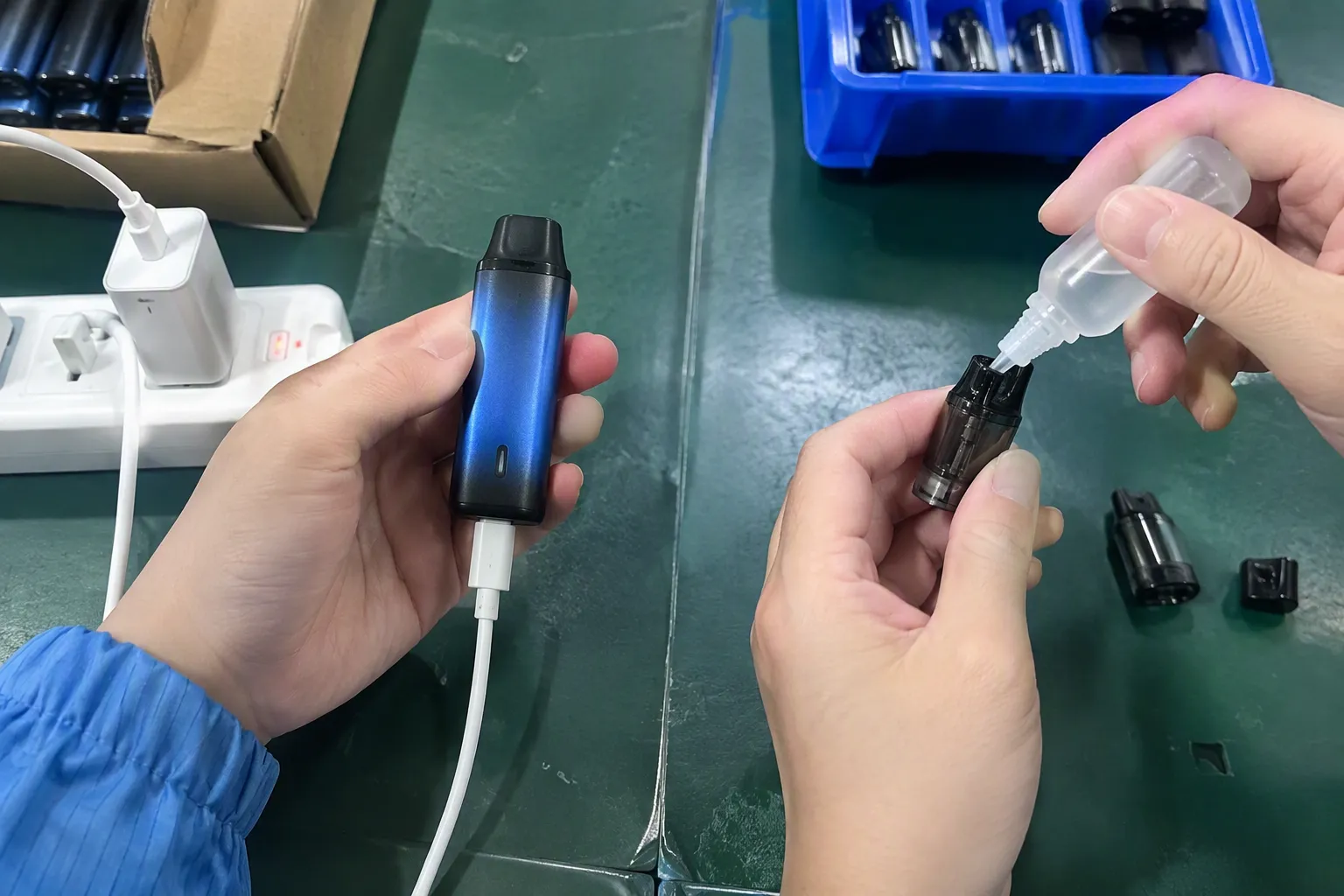
Why a rechargeable battery does not prove reusability
A rechargeable battery is one component. It can supply power again after charging, but it does not automatically establish the service life of the rest of the device.
For example, a vape may have:
- A rechargeable internal battery
- A sealed liquid reservoir
- A fixed coil that cannot be replaced
- No designed refill opening
- A pod that is not intended to be removed
- A mouthpiece or seal that is not designed for repeated disassembly
In that situation, the battery may recharge, but the product may still have a limited usable life because another component reaches its intended end first. The battery is only one part of the system.
From a factory and product-development perspective, I look at how the components are designed to work together. A charging port tells me that the battery can receive power. It does not tell me whether the heating component can be maintained, whether the liquid section can be opened safely, or whether the seals are intended to withstand repeated removal and reassembly.
This is important for UK buyers because customer expectations often follow simple visual cues. A customer may see Type-C charging and assume that the device can be kept for a long time. If the product is actually designed around a limited-life consumable section, the retailer should explain that clearly before sale.
Rechargeable, refillable, replaceable, and reusable are different terms
I recommend that buyers avoid treating these terms as interchangeable. Each term answers a different question.
| Product term | What it may indicate | What it does not automatically prove |
|---|---|---|
| Rechargeable | The battery can be charged again | The pod, coil, tank, or entire vape can be used long term |
| Refillable | The liquid reservoir may be designed to accept refill liquid | The coil, battery, seals, or full product have unlimited service life |
| Replaceable pod | A pod or cartridge can be removed and changed | The pod itself can be refilled or the coil can be replaced |
| Replaceable coil | The heating coil can be changed | The tank or battery can be used without care limits |
| Reusable | The product is presented as supporting continued use | Exactly which components are reusable, replaceable, or refillable |
A genuinely reusable vape should have a clear answer for each important component. A buyer should be able to ask: “What do I keep, what do I replace, what do I refill, and what do I discard?”
If a supplier cannot give a clear written answer, I would not rely only on a sales description or product photo.
A practical rule is simple: the more a product depends on replaceable or refillable parts, the more clearly the supplier should explain the replacement path and care instructions.
What I would inspect on the physical device
When I review a vape design, I do not start with the marketing name. I start with the structure. Physical inspection often reveals whether the claim has practical support.
1. Inspect the charging design
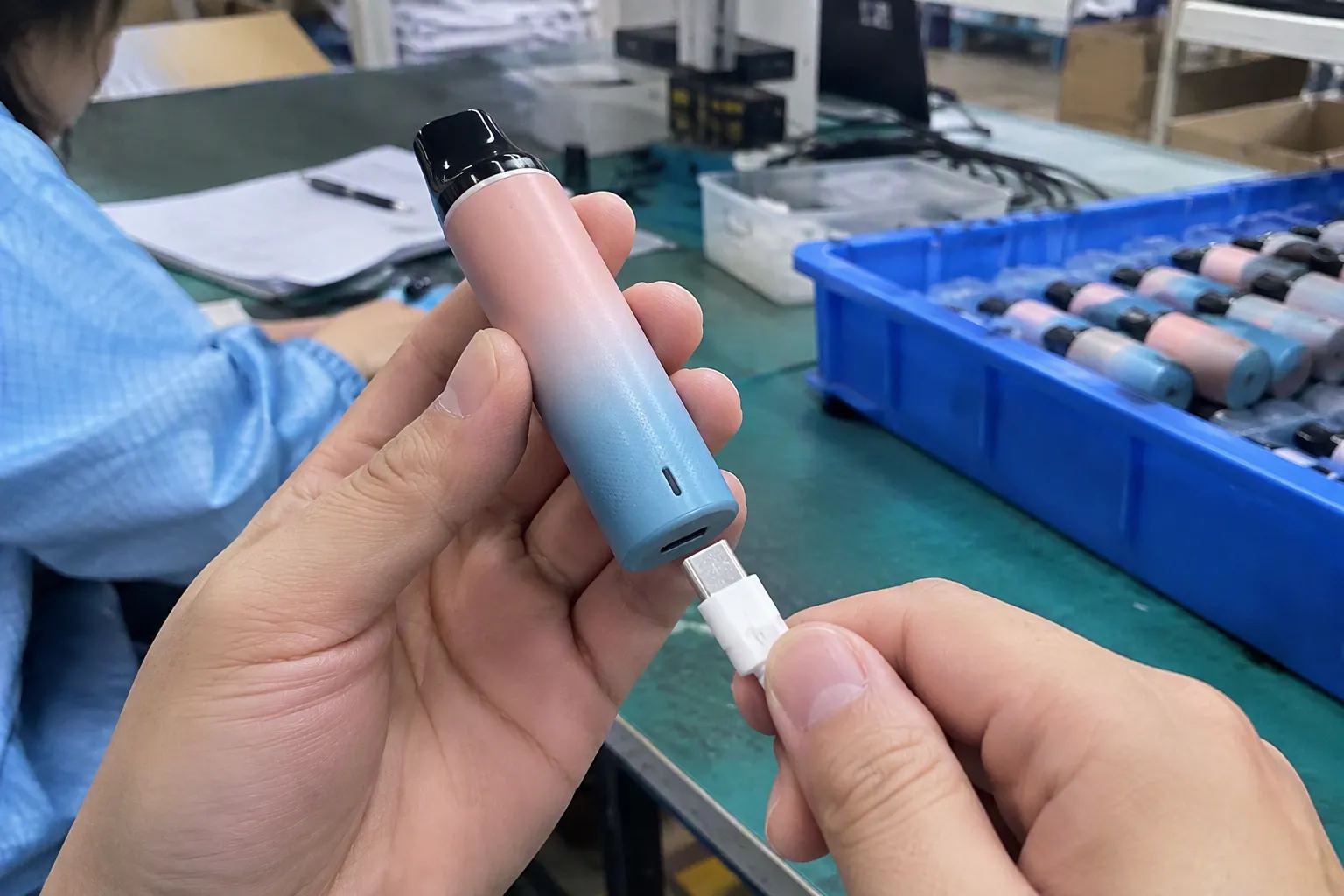
A charging port should be checked, but it should not be treated as final proof.
I would confirm:
- Whether the device has a USB charging port
- Whether the port is protected by a cover or clearly accessible
- Whether charging information appears in the instructions
- Whether the packaging identifies the charging cable type, if applicable
- Whether the battery is part of a device with other replaceable or refillable components
A buyer should also compare the product sample with the supplier specification. If the supplier describes a rechargeable device but the sample has unclear charging instructions, that is a reason to ask further questions.
2. Identify the pod, cartridge, tank, or reservoir
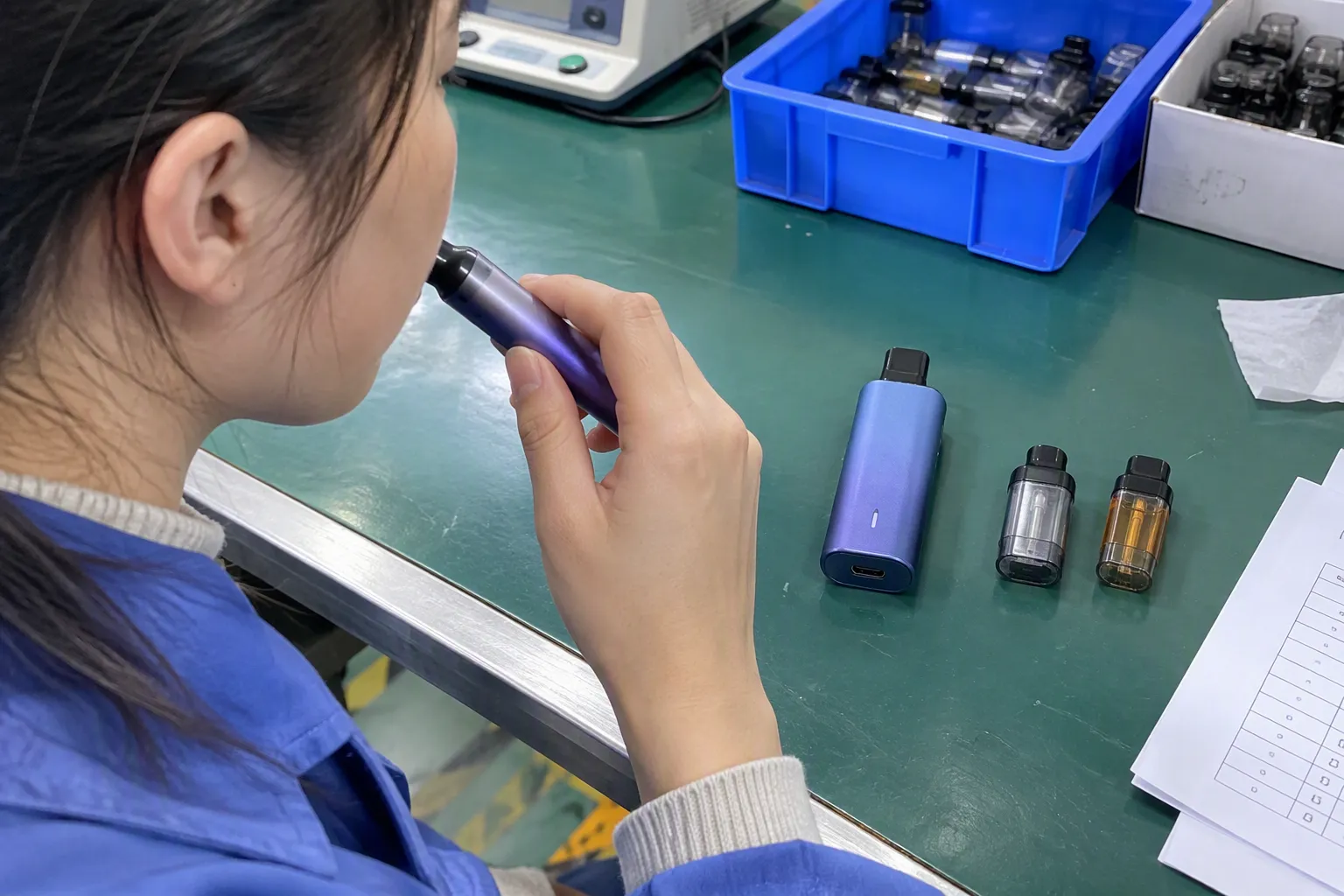
The liquid-holding section is often where buyer confusion starts. A pod can look removable without being refillable. A tank can look refillable without having a replaceable coil. A sealed reservoir may sit inside a rechargeable device but still be designed as a consumable component.
I would ask:
- Is the pod removable from the battery body?
- Is the pod intended to be replaced?
- Is there a designated refill port?
- Does the refill port have a designed seal or stopper?
- Is the reservoir sealed permanently?
- Does the product instruction explain how to remove or replace the pod?
- Is the pod sold separately as an ongoing replacement item?
A removable pod may support continued use of the battery body.[6] However, that does not mean the pod itself is reusable forever. Buyers should understand whether the pod is a replaceable consumable, a refillable component, or both.
3. Check the coil arrangement
The coil is a key working component because it is involved in heating.[4] In many product designs, the coil may be built into the pod. In others, the coil may be separately replaceable.[5] These are different systems.
A buyer should establish whether:
- The coil is integrated into a disposable pod
- The coil can be removed and replaced separately
- The coil is intended to be used with refillable liquid
- The product instructions explain when the pod or coil should be changed
- Replacement coils or pods are available from the supplier
I do not suggest that buyers assume a fixed coil is automatically a problem. A fixed coil can be part of a designed replaceable-pod system. The important point is that the seller should describe the system accurately. If the coil is fixed inside the pod, then the pod may be the consumable part even if the battery body remains in service.
4. Examine seals, closures, and connection points
A refillable or replaceable design depends on more than an opening. It also depends on how the parts fit, close, and seal.
I would look for:
- A purpose-designed refill opening
- A stopper, cap, or sliding closure intended for repeated operation
- A clear pod-to-battery connection
- Contacts that align consistently
- A mouthpiece or tank section that is not being forced open against its intended design
- Clear instructions for handling the device
Buyers should not encourage customers to open sealed products simply because the device appears rechargeable. A product should only be refilled, dismantled, or maintained in the way its product instructions state.[7]
A practical verification sequence for UK buyers
I recommend using a consistent sequence before a store buys a new vape line or before an importer places a larger order. This can reduce confusion between the sales team, warehouse team, retailer, and end customer.[8]
Step 1: Ask what remains after the first liquid or pod is finished
This question is direct and useful:
“When the original liquid or pod is finished, which part of this product remains in use?”
The answer may reveal the actual product system.
For example:
- If the entire device is discarded, it is not a long-term reusable system.
- If the battery body remains and a new pod is inserted, it is a replaceable-pod system.
- If the reservoir is opened through a designed refill port, it may be a refillable system.
- If the coil can be changed separately, it may be a replaceable-coil system.
The supplier should explain this in plain language. A buyer should not have to infer the answer from photos.
Step 2: Request product instructions, not only packaging images
Packaging can be helpful, but it is not enough on its own. A product instruction sheet, user manual, or written specification can show how the supplier expects the product to be used.
I would ask the supplier for:
- Product name and model number
- Product photographs from multiple angles
- User instructions
- Charging instructions
- Pod, coil, or cartridge replacement instructions
- Refill instructions, where applicable
- Product warnings and stated usage limits
- Details of replacement parts available for purchase
- Written clarification of what is reusable, refillable, replaceable, and consumable
If the supplier sends only a front-facing package image with a broad “reusable” label, I would ask for more information before making a buying decision.
Step 3: Match the instruction to the physical sample
A sample is valuable because the buyer can compare written claims with the actual design.
I would check whether:
- The charging port shown in the instructions exists on the product.
- The pod or cartridge can be removed in the stated way.
- The refill port is clearly identifiable, if the product is described as refillable.
- The product has the replacement mechanism described by the supplier.
- The supplied accessories match the documentation.
- The model number on the product, packaging, and specification is consistent.
This process is especially useful for importers and wholesalers who buy several product categories at once. A small mismatch in a product description can become a larger customer-service problem after a shipment arrives.
Step 4: Ask for written confirmation using exact language
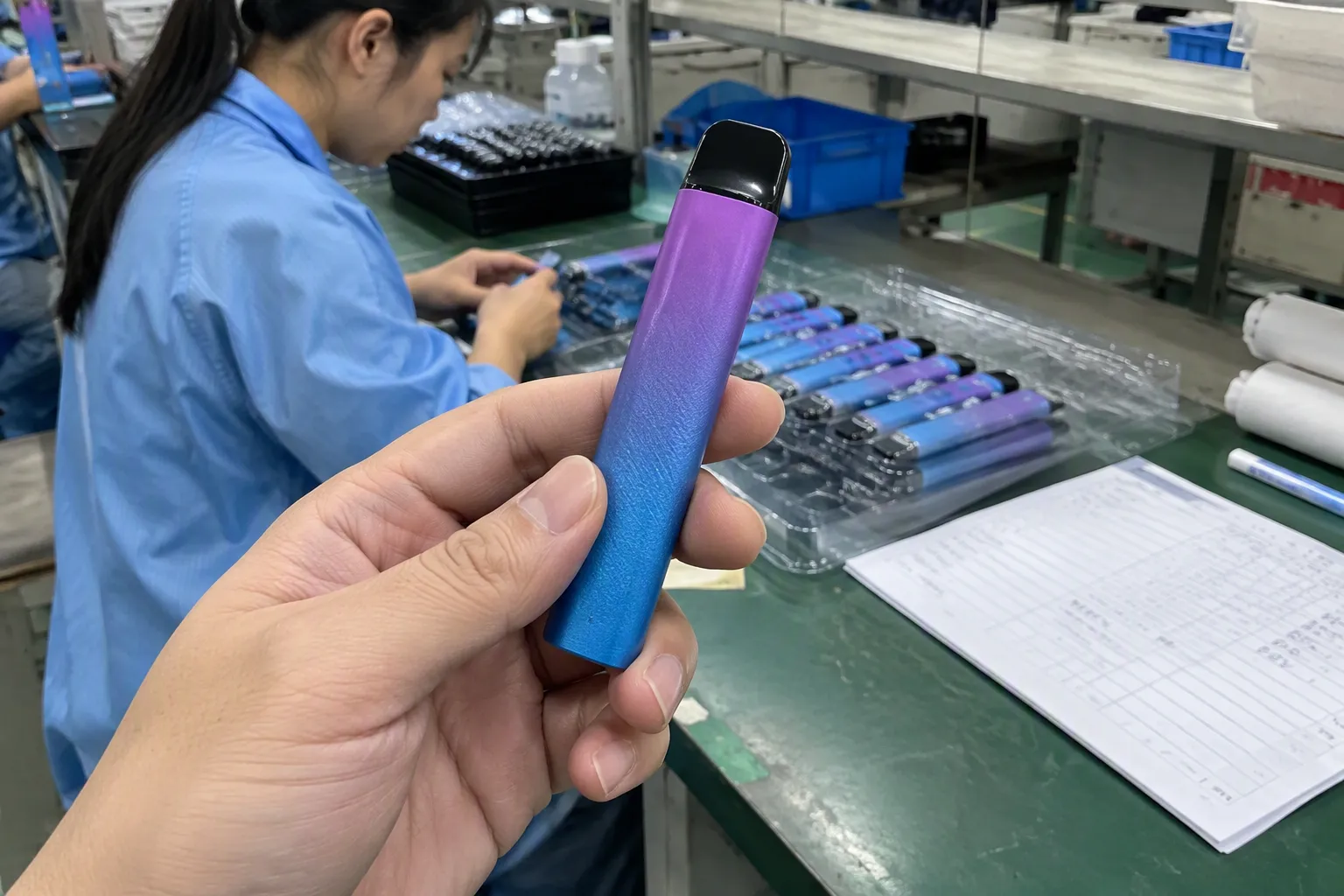
I recommend avoiding vague questions such as “Is this reusable?” Different people may interpret that phrase differently.
Instead, I would ask the supplier to confirm these points in writing:
- Is the battery rechargeable?
- Is the pod or cartridge removable?
- Is the pod or cartridge replaceable?
- Is the pod or cartridge refillable?
- Is the coil replaceable separately?
- Is the reservoir sealed or refillable?
- Which components are consumable?
- What care instructions should the buyer provide to customers?
- Which replacement parts can the supplier provide?
A written response helps the buyer build accurate product listings, train staff, and reduce customer misunderstandings. It also gives the buyer a clearer record of what was offered at the time of purchase.
How retailers can reduce complaints and returns
A vape shop, smoke shop, convenience store, or wholesale customer often faces the same problem: a customer buys a product based on a short label, then later discovers that their expectation does not match the design.
I believe a small amount of product education before sale can make a major difference. Staff do not need to provide technical lectures. They only need to communicate the product type accurately.
For example, a staff member can say:
- “This model has a rechargeable battery, but the pod is the consumable part.”
- “This device uses replacement pods. The battery body remains, and you replace the pod.”
- “This product is refillable through the designated refill port. Please follow the included instructions.”
- “This coil is built into the pod, so the full pod is replaced when needed.”
- “Please check the instructions because this product is not designed to be opened beyond the stated method.”
These explanations are clearer than simply saying “reusable.”
Retailers can also improve product presentation by grouping products according to their actual system:
| Store category | Clear customer explanation |
|---|---|
| Rechargeable device with sealed consumable section | “Rechargeable battery; check product instructions for the usable life of other parts.” |
| Replaceable-pod vape | “Keep the battery device and replace the pod.” |
| Refillable pod system | “Refill through the designed refill port and follow care instructions.” |
| Replaceable-coil tank system | “Keep the device and tank, then replace the coil as instructed.” |
This approach can help staff answer questions consistently. It can also help wholesale buyers create more accurate shelf labels, online listings, and product descriptions.
What importers and wholesalers should confirm before placing volume orders
For larger UK buyers, product verification should be part of supplier evaluation rather than an afterthought. A low unit price has limited value if the product description is unclear and the buyer later faces returns, account disputes, or stock that staff cannot confidently explain.
I suggest using a simple pre-order checklist.
Product-system checklist
- Confirm the exact model number.
- Confirm whether the battery is rechargeable.
- Confirm whether the pod is replaceable, refillable, or sealed.
- Confirm whether the coil is integrated or separately replaceable.
- Confirm whether replacement pods, cartridges, coils, or accessories are available.
- Review product instructions before purchase.
- Request samples where suitable.
- Compare samples with the written product specification.
- Confirm packaging language and supplied instructions.
- Ask the supplier to explain stated usage limits and care requirements.
- Keep supplier confirmations with the purchase record.
Supplier-selection checklist
A suitable supplier should be able to explain the product design without relying on broad labels. I would look for a supplier that can provide consistent model information, product images, instructions, and replacement-part details.
For B2B buyers, I also believe it is useful to ask:
- Can the supplier provide matching replacement pods or coils later?
- Does the supplier maintain regular stock for the model?
- Can the supplier support mixed product orders?
- Can the supplier provide product videos for buyer verification?
- Can the supplier explain the difference between models with similar names?
- Can the supplier support after-sales communication if a product issue is reported?
These questions do not guarantee product performance. However, they can show whether the supplier understands the product system and can support the buyer after shipment.
Why packaging claims should be checked carefully
Packaging is part of the product communication, but it should not be treated as independent proof. I have seen many products where buyers focus on one visible word while missing the more important details in the instructions or product structure.
A “reusable” claim should lead to further questions:
- Reusable in which way?
- Which part is reused?
- What is replaced?
- What is refilled?
- What is the designed maintenance method?
- What limitations are stated?
- Does the physical device support the description?
A genuinely reusable vape should make sense as a complete system. The label, instructions, design, replacement parts, and supplier explanation should all point in the same direction.
If the information conflicts, I recommend that the buyer pause before ordering. For example, a package may use reusable language while the instruction sheet only describes charging. In that case, the buyer should ask the supplier to clarify whether the pod, coil, or reservoir is designed for any continued use after the original contents are finished.
A note on UK requirements and product claims
I recommend that UK buyers independently verify current legal, trading, compliance, packaging, and product requirements with relevant official sources and qualified advisers. Requirements can change, and they may depend on the exact product version, nicotine content, sales channel, packaging, and intended market.
My guidance here is based on how I evaluate product design and product descriptions from a manufacturing and development perspective. I do not treat factory experience as laboratory testing, legal advice, regulatory approval, or proof of compliance.
For that reason, I encourage buyers to keep the following areas separate:
- Product design verification: What the device is physically designed to do.
- Supplier documentation review: What the supplier states in writing.
- Commercial evaluation: Whether replacement parts, stock availability, and support fit the buyer’s business model.
- Independent compliance review: Whether the exact product is suitable for the buyer’s target market.
That separation gives buyers a more disciplined basis for purchasing decisions.
Frequently Asked Questions
Does a USB charging port mean that a vape is reusable?
No. A USB port generally indicates that the battery can be recharged. It does not prove that the pod, coil, reservoir, seals, or full device are designed for continued use. Buyers should check the instructions and ask which components can be replaced or refilled.
Is a replaceable-pod vape the same as a refillable vape?
No. A replaceable-pod vape uses pods that can be removed and changed. A refillable vape has a designated method for adding liquid to the reservoir or pod. Some products may have both features, but buyers should verify each feature separately.
How can a vape shop explain a genuinely reusable vape clearly?
A vape shop can explain what the customer keeps and what the customer replaces. For example: “The battery body is rechargeable, and the pod is replaced separately.” This is clearer than using “reusable” without explaining the product system.
What should a wholesale buyer ask a vape supplier before ordering?
A wholesale buyer should ask whether the battery is rechargeable, whether the pod is replaceable or refillable, whether the coil is built into the pod, and which parts are consumable. The buyer should also request instructions, specifications, photos, and written confirmation.
Can packaging alone prove that a vape is genuinely reusable?
No. Packaging is only one source of information. Buyers should cross-check the packaging against the physical product, user instructions, product specification, and supplier’s written description. If the information does not match, the buyer should request clarification before stocking the product.
Conclusion
A genuinely reusable vape is more than a rechargeable battery and more than a word on a package. UK buyers should verify the complete product system: battery, pod, coil, reservoir, seals, replacement parts, instructions, and stated limitations. I recommend asking suppliers direct written questions and comparing every answer with a physical sample where possible. At Shenzhen Kingfuji Tech. Co., Ltd., I can help B2B buyers review product categories, compare rechargeable and replaceable systems, source suitable vape products, and build clearer purchasing decisions for their market.
Sources
- Tobacco: E-cigarettes - World Health Organization (WHO)", Official e-cigarette product guidance distinguishes rechargeable battery units from cartridges, tanks, and other consumable components; a charging feature therefore does not by itself establish reuse of the entire product
- Single-use vapes ban: information for businesses - GOV.UK", Public-health and regulatory classifications commonly distinguish rechargeable devices from refillable systems and from products using replaceable cartridges or pods, because these features concern different parts of the product design
- Electronic cigarettes: product characterisation and design ... - PMC", Reviews of e-cigarette construction describe systems in which the rechargeable power unit is separate from the cartridge, pod, reservoir, or atomizer assembly, some of which are consumable or replaced during use
- Effect of Heating on Physicochemical Property of Aerosols during ...", Scientific descriptions of electronic cigarettes explain that electrical power heats an atomizer or coil, which aerosolizes the e-liquid for inhalation
- Design Features in Multiple Generations of Electronic Cigarette ...", Technical literature describes both pod or cartridge systems with integrated heating elements and tank-based systems in which atomizer heads or coils may be replaced separately
- Relationship Between Product Features and the Prices of e ... - PMC", Descriptions of modular electronic-cigarette systems show that a cartridge or pod can be exchanged while the associated battery unit is retained and recharged
- Take charge of battery safety when using e-cigarettes - GOV.UK", Consumer-safety guidance advises users to follow manufacturers' instructions for electronic-cigarette operation, charging, and handling, rather than modifying products beyond their intended use
- Consumer Knowledge about Food Labeling and Fraud - PMC", Research on consumer information and labeling indicates that clear, consistent product descriptions can improve understanding of product characteristics and reduce avoidable confusion