Quick Answer
Warranty support for devices, pods, and coils can become expensive and difficult when buyers use one broad promise for every product category. A leaking pod, a worn coil, and a device that will not power on do not have the same causes or the same claim process. Clear rules protect your retailer relationships, stock position, and cash flow.
The best warranty support plan separates devices, pods, and coils into different claim categories, then defines evidence requirements, claim deadlines, and replacement procedures before you buy. Importers and wholesalers should treat after-sales handling as part of purchasing and inventory planning, not as a vague promise of “full warranty.”
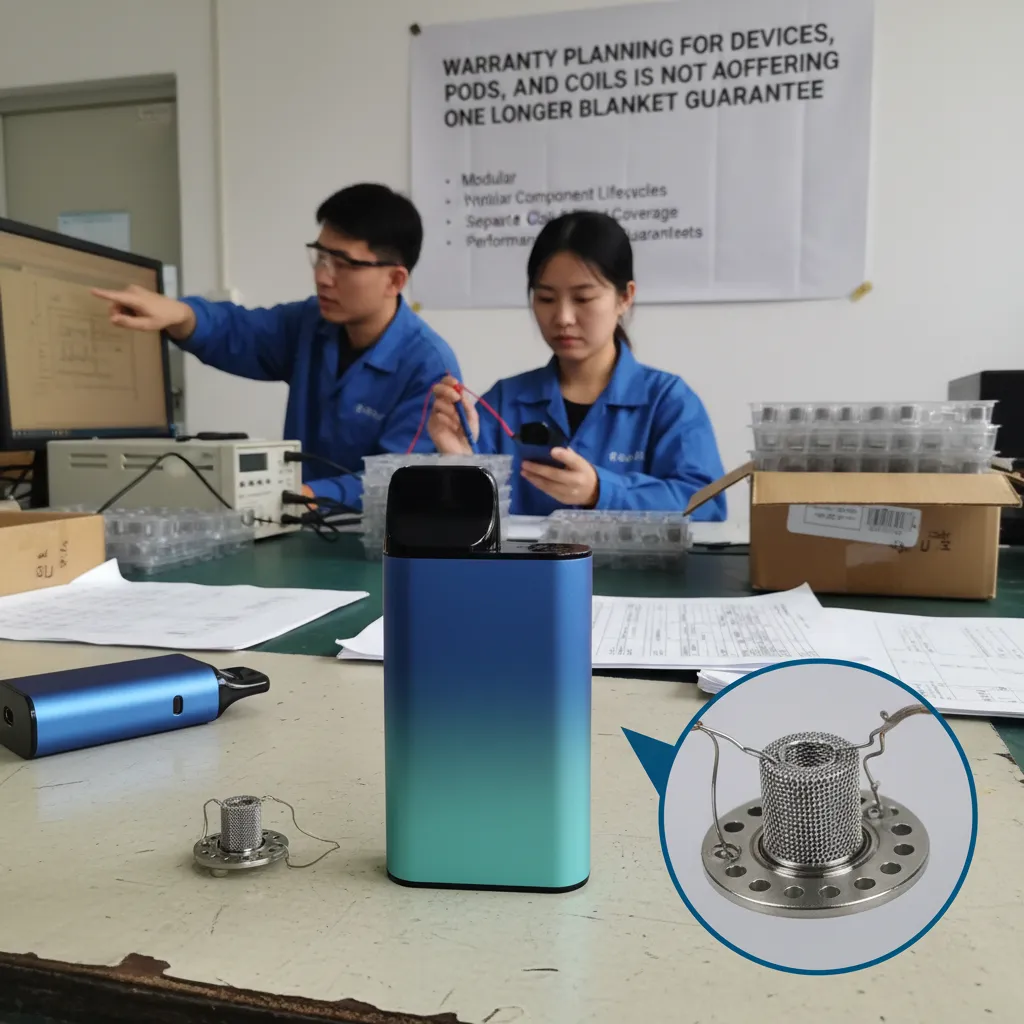
When I coordinate after-sales requests for distributors, vape shops, smoke shops, and importers, I see the same problem often: a complaint arrives, but nobody agreed on the product category, evidence standard, or replacement route in advance. A structured process makes claims easier to review and helps buyers keep their own customers supplied.
Warranty Planning for Devices, Pods, and Coils Is Not About Offering One Longer Blanket Guarantee
A broad warranty policy may sound simple, but it often creates more disputes than it solves. Retailers may expect replacement for normal consumable wear, while suppliers may need batch details and clear evidence before they can verify a fault. The result is delayed answers, frustrated customers, and emergency reorders.
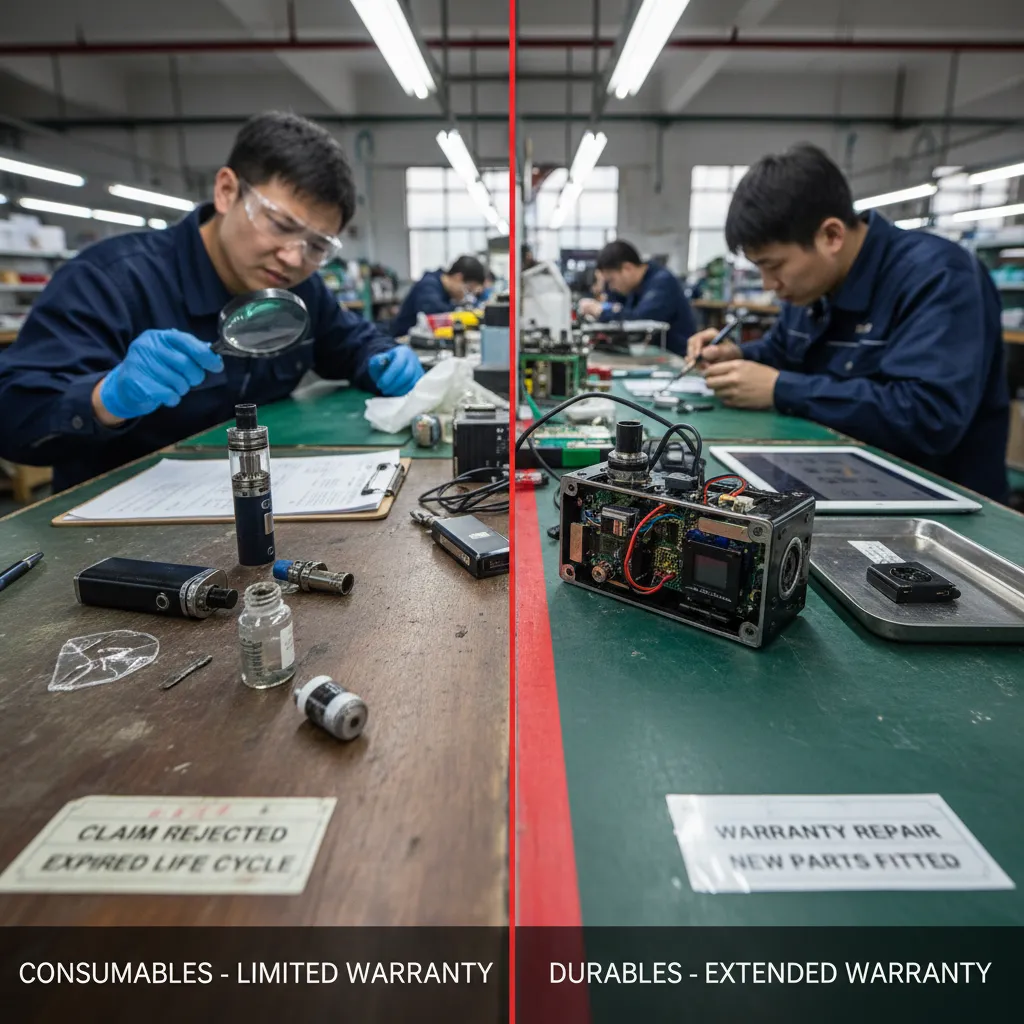
Warranty support should use separate rules for devices, pods, and coils because each category has different expected use, failure scenarios, and evidence needs. Devices may require functional verification, while pods and coils require a closer review of leakage, filling, storage, liquid compatibility, usage conditions, and consumable wear.
Start With the Product Category, Not the Complaint
A buyer should not begin with a general statement such as “the product is defective.” That language is too broad for practical warranty support. Instead, the buyer should first identify the product category and the observed issue.
For example:
- A device may not charge, may not activate, may have a display issue, or may fail to recognize a pod.
- A pod may leak, have a damaged seal, have poor connection contact, or arrive physically damaged.
- A coil may have reduced flavor, burnt taste, low vapor output, leakage through the coil area, or no vapor.
These complaints can look similar from a retailer’s point of view, but they should not automatically be treated the same way during an after-sales review.
In my experience coordinating claims across brands, factories, and product categories, the fastest cases are usually the ones with clear product information from the beginning. The buyer can identify the order number, brand, model, batch or production reference where available, quantity affected, and the specific failure observed.
A practical warranty support plan can use a simple category framework:
| Product category | Typical role | Common complaint types | Review approach |
|---|---|---|---|
| Devices | Durable hardware | No power, no charging, no activation, connection issue | Functional evidence, order details, video verification |
| Pods | Replaceable cartridge or tank component | Leakage, crack, seal issue, poor fit, connection issue | Photos, video, packaging/batch information, usage review |
| Coils | Consumable heating component | Burnt taste, flavor decline, no vapor, leakage | Evidence review, liquid and usage context, claim timing |
This structure does not mean that every device problem qualifies for a replacement. It also does not mean that every pod leak or burnt coil is caused by incorrect use. It means the buyer and supplier have a shared method for reviewing the issue fairly.
Why Consumables Need Different Warranty Boundaries
Pods and coils are usually consumable components.[1] Their performance can depend on several conditions that may need verification before a claim decision is made.[2]
For coils, these conditions may include:
- The type of liquid used
- Liquid thickness and ingredients
- Power setting or device compatibility
- Priming and filling practices
- Puff frequency and chain vaping
- Storage conditions
- Time between opening the product and reporting the issue
- Whether the coil was used with the intended device or pod
A burnt taste, for example, should not automatically be classified as a factory fault.[3] The same applies to flavor decline after use. These outcomes can sometimes relate to normal consumable wear or operating conditions. A supplier should review the available evidence and the agreed policy before confirming any replacement, credit, or compensation.
Pods also need category-specific treatment. Leakage can happen because of a damaged pod, a poor seal, transport pressure changes, filling practices, condensation, storage orientation, or compatibility issues.[4] A retailer may simply report, “The pod leaked.” However, the claim review should establish whether the leak came from the mouthpiece, filling port, seam, airflow channel, bottom contact area, or packaging.
That level of detail may feel slow at first. In reality, it saves time. It prevents the buyer from sending unclear complaints back and forth while a retailer waits for an answer.
A good warranty policy does not deny complaints. It creates a clear route for identifying which complaints can be verified, which need more evidence, and which may fall outside the agreed consumable policy.
For devices, the review is often more direct. A short video can show whether the unit charges, lights up, activates, recognizes a pod, or displays an error. However, even device claims should include order details and timely reporting. A video without an order reference may be difficult to link to the correct shipment or batch.
Set Evidence Requirements Before the First Order
The strongest warranty support process begins before the goods ship. Buyers should agree on evidence requirements during supplier selection and purchasing discussions, not after a retailer reports a problem.
I recommend that importers and wholesalers keep a basic claim checklist for every product line. The checklist does not need to be complicated. It needs to be realistic enough that store staff, sales representatives, and warehouse teams can actually follow it.
For most claims, the buyer should retain:
- Purchase order or invoice reference
- Product name, model, color, resistance, or relevant version
- Brand and supplier information
- Shipment date and receiving date
- Batch, production, or packaging code where available
- Photos of the product and packaging
- A clear video for functional issues
- Quantity affected
- A short written description of the issue
- The date when the issue was first reported
The evidence standard should match the product. A device that does not charge normally needs different evidence from a coil with a burnt taste. A buyer should avoid requesting unnecessary information, but the buyer should also avoid accepting vague reports that cannot be reviewed.
For example, a useful device claim video may show:
- The device exterior and product identifier
- The charging cable connected
- The charging indicator, if present
- The activation attempt
- A pod insertion or connection test, if relevant
- The failure clearly visible in one continuous clip
A useful pod leakage claim may show:
- The sealed retail packaging, if still available
- The location of the leakage
- The pod exterior and seal area
- The device and pod combination used
- Any visible damage, crack, or deformation
- The number of units affected from the same carton or batch
A useful coil claim may include a photo of the coil packaging, model information, the compatible device used, and a short explanation of when the issue occurred. The review may still require more questions because coil performance depends on use conditions.
Agree Claim Deadlines That Retailers Can Follow
Claim timing is one of the most important parts of warranty support. If a buyer waits too long to report an issue, the product may already be sold, used, mixed with other batches, or unavailable for inspection.[5] The supplier may then have limited ability to verify what happened.
A workable policy should set different reporting windows for different situations:
| Claim stage | Practical purpose |
|---|---|
| Arrival inspection period | Identifies visible transport damage, missing goods, wrong items, or obvious packaging issues |
| Early functional check period | Identifies device failures soon after receiving stock |
| Consumable claim window | Sets a reasonable reporting period for pods and coils while recognizing use conditions |
| Batch escalation period | Allows buyers to report repeated patterns from the same product run or shipment |
| Final resolution timeline | Defines when replacement, credit, replenishment, or another agreed solution will be reviewed |
The exact timeline depends on the supplier policy, product category, shipment method, and commercial agreement. Buyers should verify these details before they place an order. They should also communicate the same deadlines to downstream retailers.
This is especially important for wholesalers supplying many small stores. A regional distributor may sell products to vape shops, smoke shops, convenience stores, gas stations, or other retail accounts over several weeks.[6] If those retailers do not report issues until much later, the wholesaler may struggle to collect batch information or demonstrate a recurring issue.
I advise buyers to create a simple internal rule: retailers should report product issues as soon as they identify them, with photos or video attached. This does not guarantee approval, but it gives the buyer a much better chance of reviewing the problem with the supplier while details are still available.
Build Warranty Support Into Your Inventory Plan
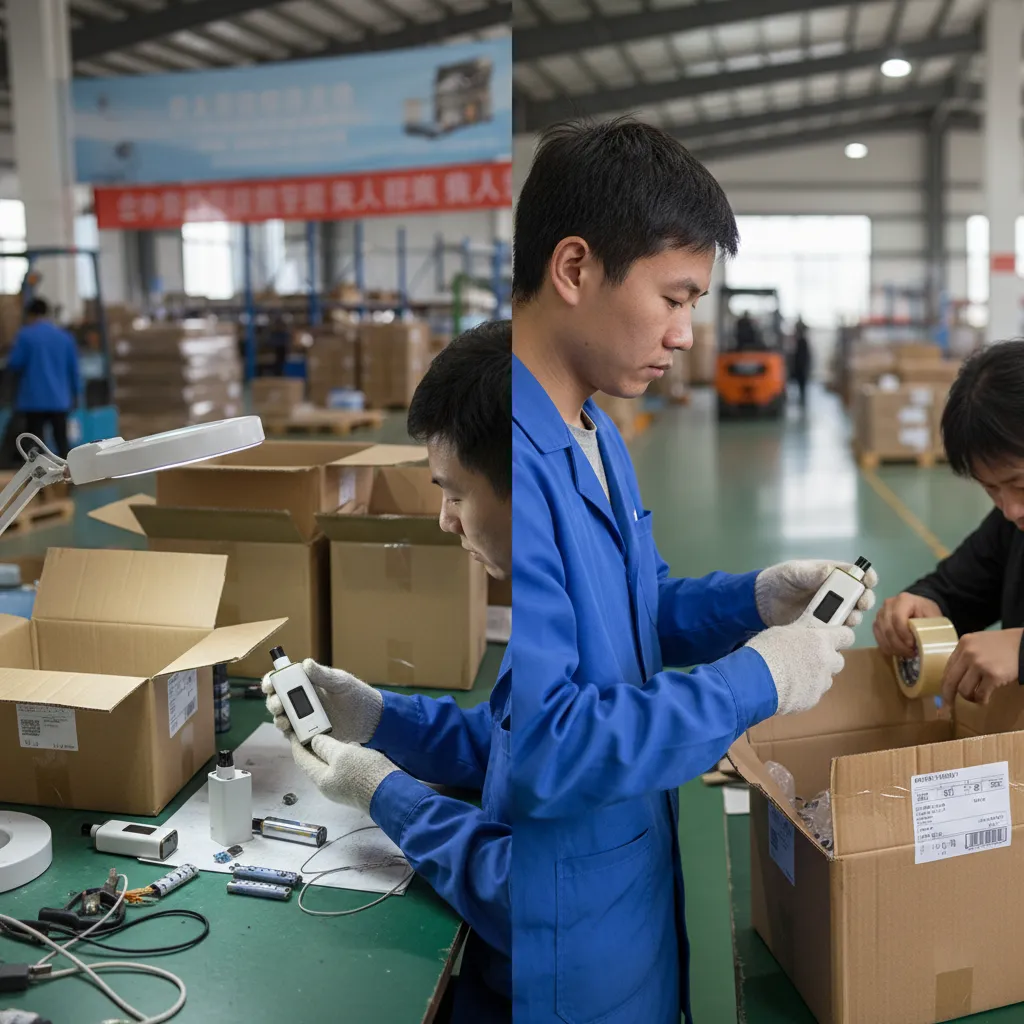
Many buyers think of warranty support only as a compensation discussion. However, after-sales handling is also an inventory and cash-flow issue.[7]
If a fast-selling device or pod line has no replacement stock, even a small number of complaints can hurt retailer trust.[8] The retailer may not want to wait for a claim review, a factory response, or a future shipment. The retailer may simply replace the unit from their own shelf and then expect the wholesaler to resolve the cost later.
That is why I encourage buyers to plan replacement stock before the order is delivered. The buyer does not need to assume that every claim will be approved. The buyer needs enough operational flexibility to keep key accounts satisfied while the evidence review continues.
A buyer can choose several approaches:
Option 1: Keep a Small Replacement Reserve
The importer or distributor holds a limited quantity of popular devices, pods, or coils for verified after-sales handling. This approach can be helpful for fast-moving products and important retail accounts.
The reserve stock should be tracked separately from normal sellable inventory. Otherwise, teams may use it for regular sales and have nothing available when an urgent replacement is needed.
Option 2: Use Replacement Units From the Next Replenishment
Some buyers prefer to resolve approved claims through the next shipment. This option may work for stable import programs with frequent reorder cycles. It may be less suitable for retailers who need an immediate solution.
Before using this approach, the buyer should confirm:
- How often the product is reordered
- Whether the model is likely to remain available
- Whether the supplier can identify approved replacement quantities clearly
- Whether the buyer can absorb the waiting period without losing retailer confidence
Option 3: Use an Agreed Credit or Compensation Method
In some cases, an approved claim may be resolved by credit, compensation, or another agreed commercial arrangement. This depends on the supplier policy, the evidence, the product category, and the specific order terms.
Buyers should not assume that a credit method is automatic. They should ask how claims are handled before purchase and document the agreement in the order communication.
Option 4: Combine Local Replacement Stock With Supplier Review
For many wholesalers, this is the most practical model. The wholesaler helps the retailer quickly when the issue is clear and documented, then submits the claim through the agreed supplier process. This keeps the retail relationship moving while preserving evidence and cost control.
| Warranty support approach | Best suited for | Main advantage | Main risk |
|---|---|---|---|
| Local replacement reserve | Fast-moving items and key accounts | Quick retailer response | Requires inventory planning |
| Next-shipment replacement | Regular import programs | Lower immediate stock burden | Retailer may wait too long |
| Credit or compensation | Larger documented claims | Can support cash-flow planning | Requires clear agreement and approval |
| Hybrid model | Established distributors | Balances service and control | Needs disciplined recordkeeping |
For small and medium-sized buyers, overseas warehouse stock can also reduce pressure. Where eligible products are available from European warehouse inventory, buyers may be able to receive stock more quickly for normal replenishment needs. However, buyers should still confirm product availability, order terms, delivery coverage, and the applicable after-sales policy before relying on warehouse stock for replacement planning.
For larger importers, a direct China import program may offer stronger unit-cost planning and more OEM or ODM flexibility. In that case, warranty support should be included in the procurement discussion from the sample stage through mass production, shipment inspection, and post-sale handling.
Train Retailers So They Can Prevent Avoidable Claims
A warranty plan works better when retailers understand basic product handling. This does not shift all responsibility to the retailer or end user. It simply reduces preventable confusion and helps the buyer collect better evidence when a genuine problem occurs.
Retailer guidance can cover:
- How to identify the correct device, pod, and coil combination
- How to store products before sale
- How to check packaging and product condition at receiving
- How to explain basic use to end customers
- How to recognize a visible hardware fault
- How to collect photos and videos for a claim
- How quickly a complaint should be reported
- Which information must be retained from the product packaging
For coils and pods, the retailer should avoid making promises that go beyond the supplier’s agreed policy. A retailer should not tell an end user that every flavor change, leak, or burnt taste will receive a free replacement. That creates uncontrolled after-sales cost for the wholesaler.
Instead, the retailer can use clear language such as: “Please keep the product and packaging, take a photo or video, and report the issue promptly so we can review it under the applicable warranty support process.”
This approach sounds more professional than a vague guarantee. It also helps protect the retailer’s reputation because the customer receives a clear next step.
Select Suppliers Based on Their Claim Process, Not Only Price
Price matters, especially for importers and wholesalers working in competitive vape and smoke-shop markets. However, the lowest quoted price may not represent the lowest total cost if the supplier cannot support clear after-sales coordination.
During supplier selection, I suggest buyers ask direct questions:
- How are devices, pods, and coils treated differently under the warranty policy?
- What evidence is required for each category?
- Are batch or order references needed?
- What is the claim reporting timeline?
- Who reviews photos and videos?
- What happens when a claim is approved?
- Is replacement stock, credit, compensation, or future replenishment used?
- How are repeated issues from one batch escalated?
- Who communicates with the brand or factory when multiple parties are involved?
- What responsibilities remain with the buyer, retailer, and end user?
These questions are useful whether a buyer is sourcing branded products, factory products, private-label goods, or OEM/ODM projects.
At Shenzhen Kingfuji Tech. Co., Ltd., I coordinate one-stop sourcing across vape products and related smoking accessories, while also helping buyers organize after-sales communication with brands and factories. My role is not to label every customer complaint as a manufacturing defect. My role is to help buyers collect the right records, submit the issue clearly, and follow the agreed process for replacements, compensation, or other resolutions where applicable.
For importers with their own brand projects, the warranty discussion should begin even earlier. OEM and ODM buyers should define packaging records, quality expectations, sample confirmation, product identification, and post-sale evidence rules before mass production. A buyer should also obtain qualified professional advice for product-specific quality, safety, compliance, and market-entry decisions.
Warranty Support FAQs
Should devices, pods, and coils have the same warranty period?
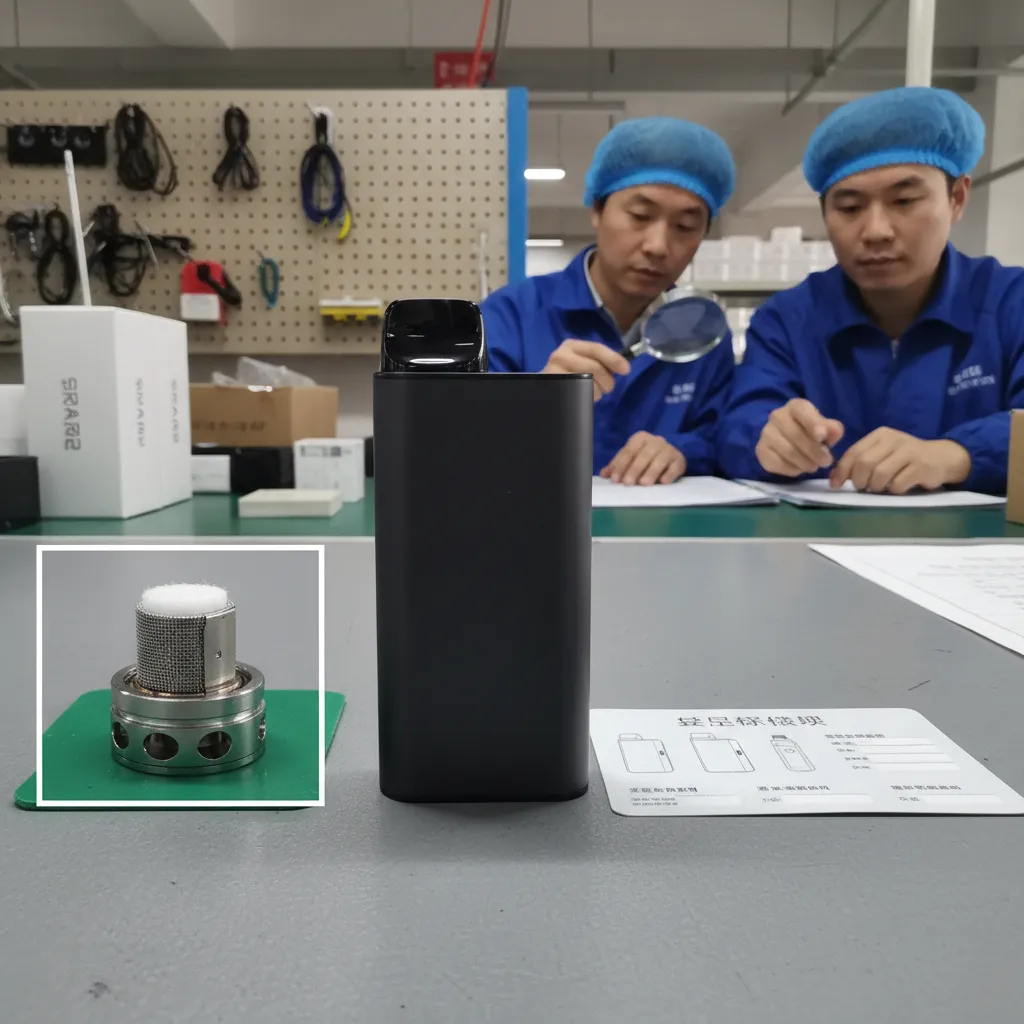
No. Devices, pods, and coils have different usage patterns and potential failure scenarios. Devices are generally reviewed as hardware products, while pods and coils are consumable components. Buyers should agree separate reporting deadlines, evidence requirements, and resolution methods for each category.
Does a leaking pod always qualify for free replacement?
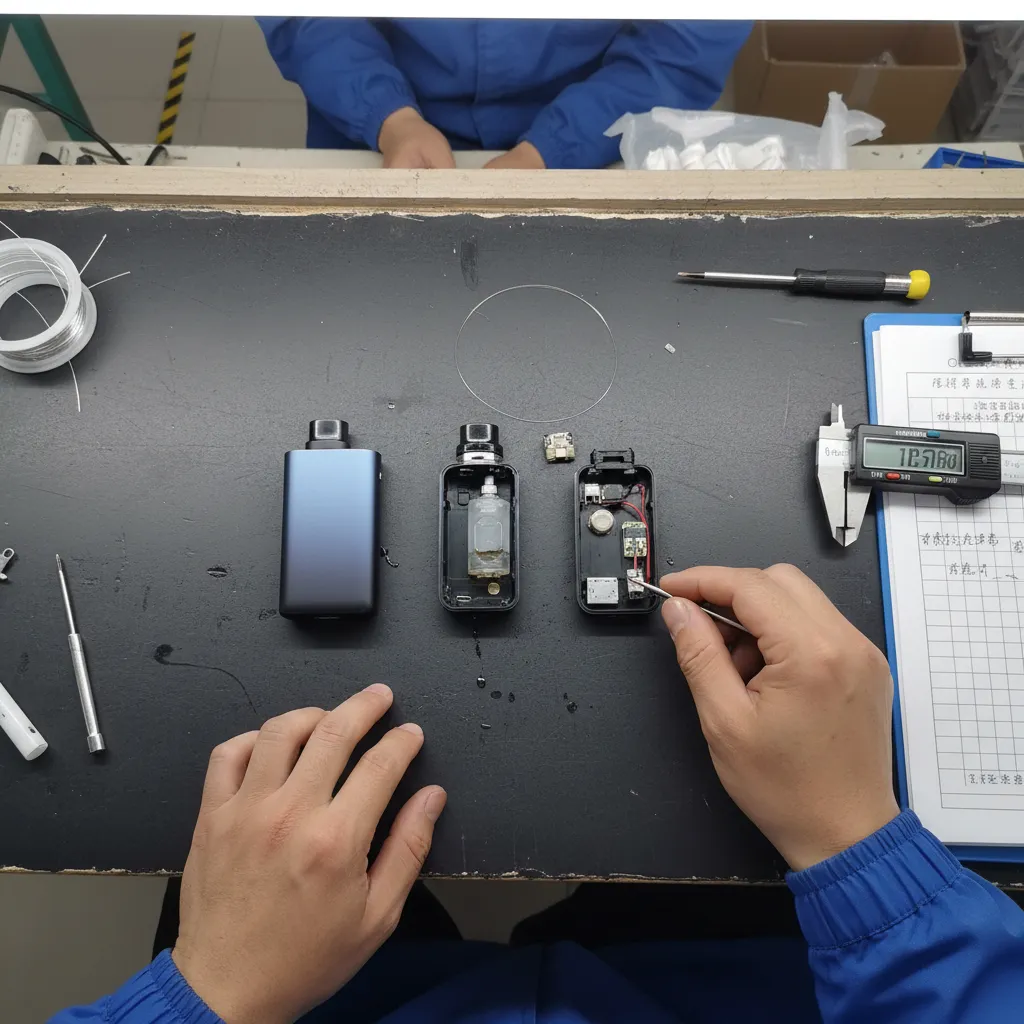
No. A leaking pod should be reviewed based on the available evidence and the agreed supplier policy. Leakage may relate to a visible product fault, but it can also depend on filling, storage, transport conditions, compatibility, or usage. Photos, videos, packaging, and batch details can help support a fair review.
What evidence should a wholesaler collect for a vape device claim?
A wholesaler should collect the order reference, product model, quantity affected, photos, and a clear video showing the issue. The buyer should also retain any batch or packaging information where available and report the claim within the agreed timeline.
How can distributors avoid losing retailers while warranty claims are under review?
Distributors can reserve limited replacement stock for key products, use a clear claim intake process, and keep retailers informed about the review timeline. A hybrid model often works well: provide a practical local solution when appropriate while submitting complete evidence to the supplier for review.
Should warranty support be discussed before placing an OEM or ODM order?
Yes. OEM and ODM buyers should define claim rules before production. The discussion should cover product identification, approved samples, packaging records, evidence requirements, claim deadlines, replacement arrangements, and communication responsibilities. This reduces confusion when products reach distributors and retailers.
Warranty Support Conclusion
Reliable warranty support for devices, pods, and coils is not a broad promise that every complaint will receive the same outcome. It is a practical purchasing-risk system built around product categories, evidence, reporting deadlines, replacement stock, and clear supplier communication. I help importers, wholesalers, and distributors organize these steps while sourcing vape products, related accessories, and OEM/ODM projects. Contact Shenzhen Kingfuji Tech. Co., Ltd. to discuss a supply plan that supports both sales growth and manageable after-sales operations.
Sources
- Smokeless J Vape Shop East Liverpool, Oh: Your Ultimate Guide To ...", Electronic-cigarette references describe the atomizer or coil as the replaceable heating component that vaporizes e-liquid, supporting its treatment as a consumable part distinct from the main device
- Variations in coil temperature/power and e-liquid ...", Experimental e-cigarette studies show that device power, atomizer characteristics, and e-liquid properties affect aerosol production and thermal operating conditions, providing a technical basis for considering use context when assessing coil or pod performance
- Measurement of heating coil temperature for e-cigarettes with a “top ...", Research on e-cigarette dry-puff conditions indicates that insufficient liquid delivery and coil overheating can produce undesirable sensory effects, so a burnt taste alone is not conclusive evidence of a manufacturing defect
- Electronic Cigarette Harms: Aggregate Evidence Shows ...", Technical research on e-cigarette fluid systems indicates that leakage is influenced by sealing integrity, pressure differentials, and liquid-flow pathways, supporting the need to distinguish physical defects from handling or environmental causes
- Q7A Good Manufacturing Practice Guidance for Active ... - FDA", Product-safety and quality-system guidance emphasizes lot traceability, complaint records, and investigation of affected products; delayed reporting can reduce the availability of these records and specimens
- E-cigarette Unit Sales, by Product and Flavor Type - CDC", Public-health and regulatory sources document e-cigarette sales through specialty vape shops and broader retail channels, including convenience stores, in several markets
- [PDF] Successful Inventory Management Strategies in the Office Supply ...", Supply-chain research on product returns and warranty service identifies replacement inventory, reverse logistics, and the timing of reimbursements as factors that affect operational costs and working-capital planning
- (PDF) Measuring and Mitigating the Cost of Stockouts - ResearchGate", Service-recovery and stockout research finds that delayed fulfillment and inadequate resolution of product problems can reduce customer satisfaction and relationship loyalty, supporting the operational value of timely replacement capacity