Quick Answer
vape product launch compliance gate** should come before a purchase order, tooling payment, packaging approval, or shipping booking. Many buyers can manufacture and move a product quickly, but speed becomes expensive when the exact device, formula, labeling, claims, or sales channel has not been properly reviewed. vape product launch compliance gate is a documented pre-order review that confirms whether the exact product configuration has a defensible path to U.S.
A **U.S.
A U.S. market entry and assigns responsibility for every key task. It should cover the device, consumables, packaging, labeling, claims, importer role, records, and future product changes. A factory can support preparation, but qualified U.S. regulatory and legal professionals should verify applicable requirements before launch.
I have seen many OEM and ODM discussions start with battery capacity, puff count, flavor direction, packaging artwork, target price, and delivery date. Those points matter, but they should come after a buyer has decided whether the proposed product can be responsibly introduced into the intended U.S. market and channel.
Why Should a U.S. Vape Product Launch Compliance Gate Begin Before Production, Packaging, or Shipping?
A U.S. vape product launch can look simple when a buyer finds a fast-moving product and receives a factory quotation. The risk grows when the buyer commits capital to stock before confirming the product’s market-entry path, documentation needs, and responsible parties.
A U.S. vape product launch compliance gate should begin before production because manufacturing capability, export shipping experience, laboratory reports, and packaging warnings do not by themselves establish that a product may be legally or commercially introduced in the United States[1]. Buyers should review the precise product and assign ownership for compliance work before approving artwork, opening tooling, or scheduling shipment.
In my work with U.S. importers, wholesalers, and brand owners, I often see the same early questions. A buyer may ask:
- Can this device be made with a certain capacity?
- Can the logo be printed on the body and box?
- Can the factory match a sample or develop a new flavor direction?
- Can the order ship within a certain production window?
- Can the goods be delivered to a freight forwarder or warehouse?
These are normal commercial questions. However, they are not the first questions that should be answered for a U.S. vape product launch.
The earlier question is more fundamental:
That question is not answered by one generic certificate, one old test report, or a supplier statement. It requires a product-specific review.
I can help customers prepare manufacturing information, product specifications, packaging files, production records, and documentation that a qualified reviewer may request. However, I do not treat factory support, export experience, shipping arrangements, or test coordination as a substitute for U.S. regulatory or legal analysis.
Manufacturing Readiness Is Not Market Readiness
A product can be technically ready for production while still being commercially unsuitable for a U.S. launch.
For example, a factory may be able to produce a disposable vape with a requested device shape, battery size, tank format, branding method, and outer box. A supplier may also be able to provide component information, quality-control records, or testing-related documents. None of those facts alone confirms that the product is ready for a specific U.S. sales environment.
A buyer should separate two different questions:
| Question | What It Means | Who Usually Supports It |
|---|---|---|
| Can the product be manufactured? | The factory can make the requested product configuration. | Factory, engineering team, purchasing team |
| Can the product be shipped? | A logistics route may be available for the shipment. | Freight provider, exporter, importer |
| Can the product enter and remain in the intended market? | The exact product and business model have been reviewed against applicable requirements. | Brand owner, importer, qualified U.S. compliance/legal professionals |
| Can the product be sold through the target channel? | Retailer, distributor, state, local, marketplace, and internal channel rules have been evaluated. | Brand owner, importer, distributor, channel manager |
| Can future changes be controlled? | Product, packaging, supplier, and claim changes can be tracked and reviewed. | Brand owner, importer, factory, quality team |
This distinction matters because inventory can create pressure. Once a buyer has paid deposits, approved packaging, arranged shipping, and promised delivery to customers, it becomes harder to stop and ask whether the launch plan is defensible.
A practical compliance gate prevents the team from treating compliance as an emergency task after production has already started.
Review the Exact Product Configuration, Not Only the Brand
A common mistake is to evaluate a brand name, a product category, or a previous model instead of the exact product being ordered.
A U.S. vape product launch compliance gate should review the complete configuration. Small changes can matter.[3] A revised device design, new consumable formulation, new packaging statement, different product name, altered component source, or new sales claim may require additional review.
I recommend that buyers create a product configuration file before they issue a purchase order. This file should identify what is actually being launched, not what the team generally intends to sell.
A practical file can include the following items:
-
Product identity
- Brand name
- Product name
- Internal model number
- Device version or revision number
- Color, finish, and visual design
- Intended product category
-
Device configuration
- Device type
- Battery specification
- Charging method, if applicable
- Heating system or atomizer type
- Tank or pod structure
- Material list for key components
- Child-resistance or other physical design features, where relevant for review
-
Consumable information
- Formula identifier
- Ingredient or material documentation available from the supply chain
- Nicotine-related specifications, if applicable
- Flavor or variant name
- Fill volume
- Batch-control method
-
Packaging and labeling
- Unit box artwork
- Master carton artwork
- Warnings and required statements for verification
- Barcode and product identifiers
- Country-of-origin markings, where applicable
- Age-related language or symbols
- Instructions, warnings, and contact information
-
Commercial presentation
- Website copy
- Product catalog descriptions
- Distributor sales sheets
- Retail display materials
- Social media wording
- Influencer scripts or promotional campaigns, if used
-
Planned sales channel
- Importer distribution
- Regional wholesale
- Vape shops
- Smoke shops
- Convenience stores
- Gas stations
- Online sales
- Marketplace sales
- Direct-to-consumer activity, if applicable
The purpose is not to create paperwork for its own sake. The purpose is to ensure that the compliance reviewer, importer, brand owner, factory, and sales team are discussing the same product.
Without this discipline, a team may approve one version of a device while production uses another version. The marketing team may describe the product differently from the packaging. A distributor may make claims that the brand owner never reviewed. These gaps create avoidable exposure.
Assign Owners Before Anyone Places the Order
A U.S. vape product launch can fail because everyone assumes another party is handling the important work.
The factory may assume the importer owns U.S. market-entry analysis. The importer may assume the brand owner has reviewed packaging and product status. The brand owner may assume a freight provider has checked everything because the shipment was accepted for transport.
These assumptions are dangerous.
I recommend a written responsibility map before the first purchase order. The document does not need to be complicated. It should clearly state who owns each decision, who supplies supporting documents, and who must approve changes.
| Launch Activity | Recommended Primary Owner | Factory Support Role |
|---|---|---|
| U.S. market-entry analysis | Brand owner/importer with qualified U.S. professional review | Provide accurate product information |
| Product specification approval | Brand owner/importer | Prepare drawings, samples, specifications |
| Packaging and labeling approval | Brand owner/importer | Coordinate artwork files and production execution |
| Claims review | Brand owner/importer | Avoid adding unapproved claims to materials |
| Importer obligations | U.S. importer | Supply relevant export and product documents |
| Production records | Factory and brand owner, based on agreed scope | Maintain agreed manufacturing and QC records |
| Shipment coordination | Importer/exporter/freight provider | Prepare packing and export documents |
| Post-launch change control | Brand owner/importer | Notify buyer before approved changes are made |
| Complaint and defect process | Brand owner/importer with supplier support | Investigate manufacturing-related issues |
The exact allocation will vary by business model. A small U.S. retailer buying stock from a domestic distributor has a different role from a large importer placing a private-label OEM order directly with a China factory.
Still, every business needs clarity.
For a smaller buyer, the key question may be: “What documentation and launch support can my distributor provide, and what remains my responsibility?”
For a regional wholesaler, the question may be: “Can I verify that the products I distribute match the reviewed configuration and approved packaging?”
For a large importer with a private label, the question becomes broader: “Who controls the full product file, the supplier chain, the artwork, the market claims, the records, and the change approvals?”
Do Not Treat a Test Report as a Launch Approval[4]
Many buyers ask whether a test report, a battery report, a material report, or a factory document is enough to support a U.S. vape launch.
The answer is usually no.
A report can be useful evidence for a defined purpose. However, buyers should ask what the document actually covers. They should also ask whether it matches the exact product version, materials, formula, packaging, and intended use.
A document may be limited because:
- It covers a component rather than the finished product.
- It applies to an older device revision.
- It does not identify the exact factory, production run, or configuration.
- It addresses technical performance but not market-entry requirements.
- It does not cover marketing claims or channel requirements.
- It was prepared for another country or another customer.
- It does not address the buyer’s importer responsibilities.
I encourage customers to treat every document as a question rather than a conclusion.
For example:
- What exact item does this report identify?
- What date was it issued?
- Who commissioned it?
- Does it match this production version?
- What does it test or verify?
- What does it not cover?
- Does a qualified U.S. professional consider it relevant to the intended launch?
This approach saves time. It also reduces the risk of relying on a document that sounds reassuring but does not answer the actual business question.
Build a Gate Before Tooling and Artwork Approval
Tooling, packaging, and printed materials can lock a buyer into a product direction. Once custom molds, boxes, labels, retail displays, and carton printing are approved, changes can become costly.
That is why I recommend a formal stop-or-go gate before irreversible spending.
A simple gate can use four possible outcomes:
| Gate Outcome | Meaning | Next Step |
|---|---|---|
| Proceed | The responsible parties have reviewed the product and assigned required tasks. | Move to approved production planning. |
| Proceed with conditions | Some actions remain open but are controlled with written deadlines and owners. | Do not release uncontrolled artwork or mass production. |
| Hold | Key questions remain unresolved. | Pause tooling, packaging, purchase orders, or shipment. |
| Stop or redesign | The current concept does not support the intended launch plan. | Change the product, channel, package, or commercial strategy. |
A buyer should not view a “hold” decision as failure. A hold can prevent a much larger loss.
I have found that buyers benefit when they separate commercial excitement from approval discipline. A new product may look attractive because a competitor is selling a similar item, a retailer requests it, or social media creates demand. That does not remove the need to verify the product’s specific path.
The best time to stop a weak launch is before the buyer has inventory sitting in a warehouse.
Packaging Needs More Than Warnings and Attractive Artwork[5]
Packaging is often treated as a design project. For a U.S. vape product launch, packaging should also be treated as a controlled compliance item.
A box can contain warnings, age-related language, QR codes, barcodes, and product specifications, yet still require further review. The review should consider the full package presentation, not a single warning panel.
Buyers should control:
- Product name and variant name
- Brand identity and trademarks
- Nicotine-related statements, where applicable
- Quantity and product specifications
- Warning language that requires verification
- Instructions and intended-use wording
- Health, wellness, reduced-risk, cessation, or performance claims[6]
- Youth-appealing visual elements or language[7]
- Carton and display-box consistency
- Online product listing consistency
- Revision number and artwork approval date
The sales team also matters. A compliant-looking package can be undermined by uncontrolled claims made in a catalog, product video, distributor message, or retail conversation.
I recommend keeping a “claim library” for every launch. The brand owner should decide what language sales representatives, distributors, and retailers may use. The team should also record language that must not be used without qualified review.
This is especially important for OEM and private-label projects. The customer may own the final brand and market message, while the factory supports product production and packaging execution. Both sides need a clear approval process so that unreviewed wording does not enter the artwork at the last minute.
Change Control Is Part of the U.S. Vape Product Launch Compliance Gate
A launch gate is not completed forever on the day the first shipment leaves the factory.
Products change. Supply chains change. Packaging changes. Sales channels change. A flavor name may be revised. A component supplier may be replaced. A new warehouse may handle distribution. A distributor may request different marketing copy.
Each of these events can create a new review need.
A useful change-control system should cover at least five areas:
1. Product Changes
The buyer should require notice before changes to:
- Battery supplier or specification
- Atomizer or coil structure
- Device housing material
- Charging port or charging behavior
- Pod, tank, or mouthpiece design
- E-liquid or consumable formulation
- Fill volume
- Flavor profile or product variant
- Manufacturing location for key parts
2. Packaging Changes
The team should review changes to:
- Product names
- Claims
- Warnings
- Images
- Colors and design style
- Instructions
- SKU numbers
- Barcodes
- Retail display materials
3. Supplier Changes
A factory may need to replace a component supplier because of availability, cost, lead time, or quality concerns. That can be commercially reasonable, but the buyer should not allow undocumented substitutions for a controlled U.S. launch.
4. Channel Changes
A product that is planned for one channel may later be offered through another. A launch for regional wholesale is not identical to a launch involving online sales, national retail, or marketplace distribution.[8]
The brand owner and importer should reassess channel-specific requirements with qualified U.S. advisors before expanding.
5. Complaint and Quality Information
Post-launch complaints should be collected and reviewed. Not every complaint proves a manufacturing defect, but repeated patterns can reveal issues with instructions, product use, packaging, logistics, storage, or production consistency.
I recommend that buyers keep records of:
- Batch numbers
- Production dates
- Shipment records
- Customer complaints
- Product returns
- Investigation findings
- Corrective actions
- Packaging revisions
- Approved change notices
This process also helps buyers manage supplier relationships. When a customer reports an issue, the buyer can identify which batch was involved and communicate with the factory using clear information instead of general complaints.
Use Factory Support Correctly
As a China-based vape manufacturer and brand owner, I can support the commercial and production side of launch preparation. My team can help buyers discuss product concepts, OEM or ODM development, samples, specifications, packaging coordination, production planning, quality-control expectations, and available product documentation.
For qualified buyers, we can also support practical supply-chain needs such as:
- New product development discussions
- Private-label and OEM/ODM project coordination
- Product sample preparation
- Packaging file coordination
- Production scheduling
- Batch and shipment documentation within the agreed scope
- Quality issue communication
- Delivery arrangements to a buyer’s nominated forwarder
- One-stop sourcing for vape and related smoking-accessory categories
For many small and medium buyers in Europe, our overseas warehouse model can support lower-MOQ purchasing and faster delivery within eligible European locations. Larger importers and distributors may prefer direct China purchasing for broader OEM/ODM options and scale-based pricing discussions.
However, I want to be clear about the boundary: production support is not U.S. legal approval. Logistics support is not market authorization. A test document is not a complete regulatory conclusion.
A responsible buyer should use factory support as one part of a larger launch system. The buyer should still engage qualified U.S. compliance and legal professionals to verify current requirements that apply to the exact product and business model.
Frequently Asked Questions About a U.S. Vape Product Launch Compliance Gate
Does a factory test report mean my vape product can be sold in the United States?
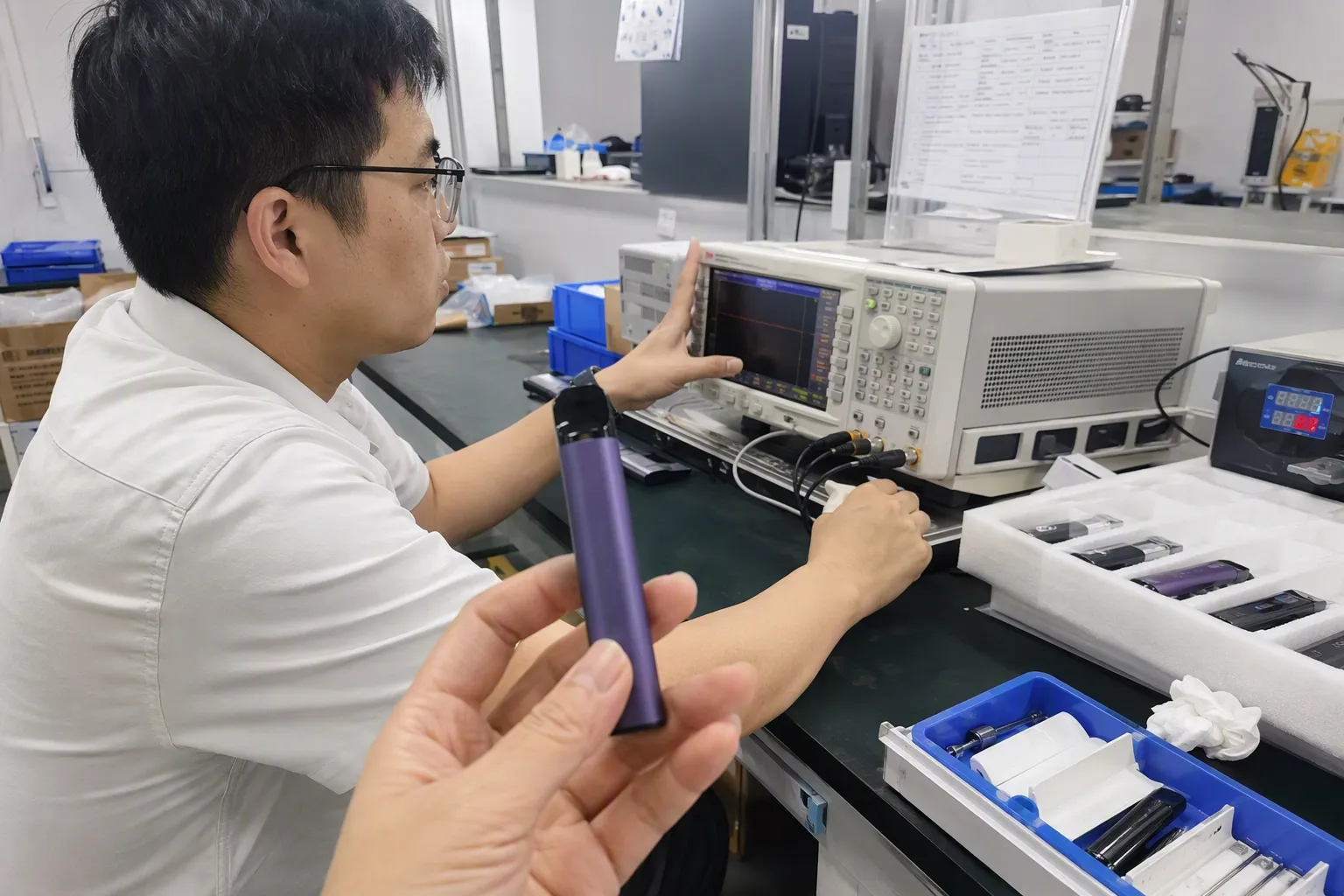
No. A factory or laboratory report may provide useful technical information, but it does not automatically confirm U.S. market eligibility. You should verify what the report covers, whether it matches the exact product configuration, and whether qualified U.S. compliance or legal professionals consider it relevant.
Should I complete a U.S. vape product launch compliance gate before paying for packaging?
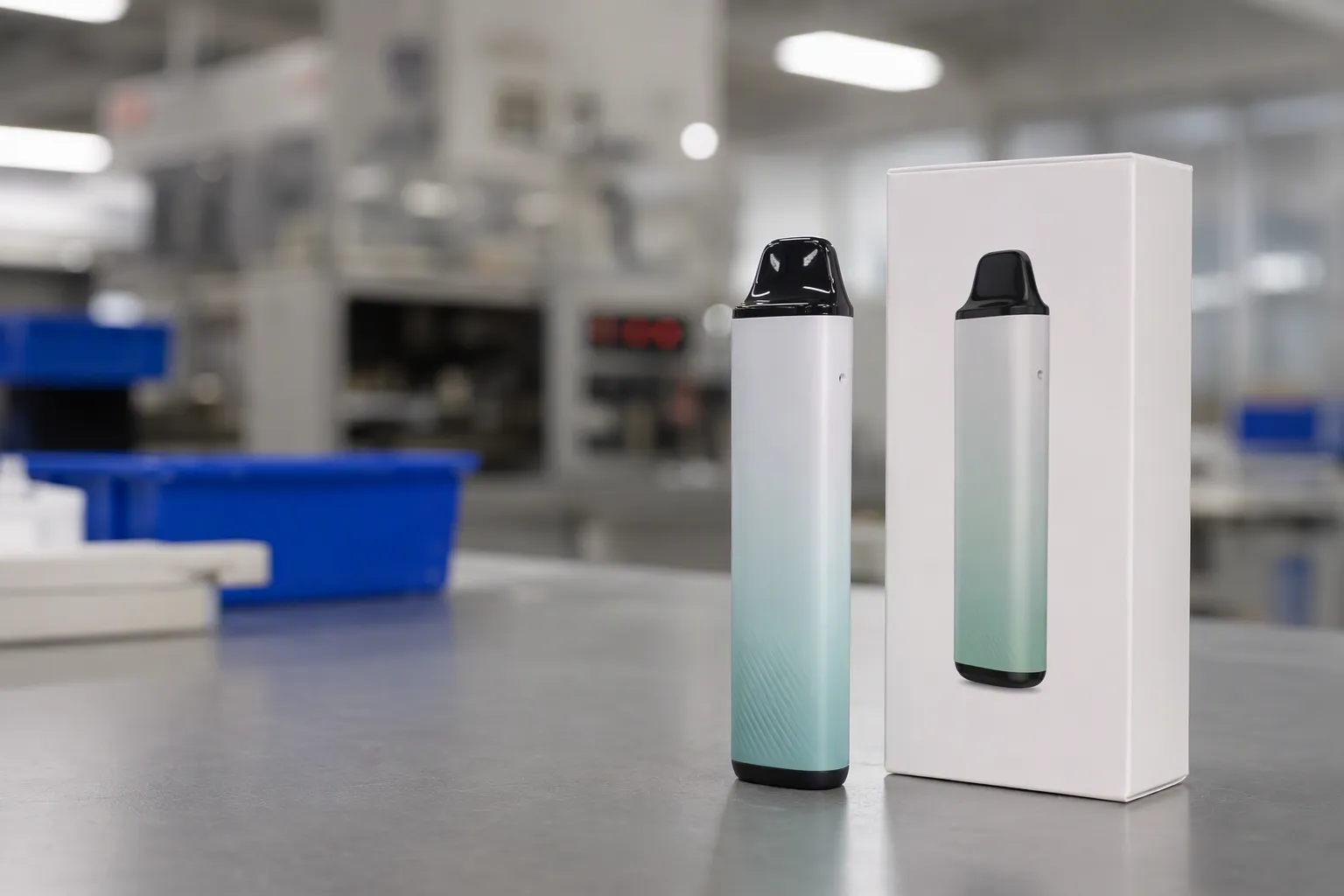
Yes. Packaging can lock in product names, claims, warnings, graphics, and product details. I recommend completing the core compliance gate before approving final artwork, printing retail boxes, paying for custom tooling, or placing a large production order.
Who should own compliance responsibilities for an imported vape product?
The brand owner and importer should assign responsibilities in writing before launch. The exact allocation depends on the business model, but market-entry analysis, labeling approval, importer obligations, records, and post-launch changes should never be left to assumptions between the factory, shipper, importer, and distributor.
Can a freight forwarder confirm that a vape product is compliant for U.S. sale?
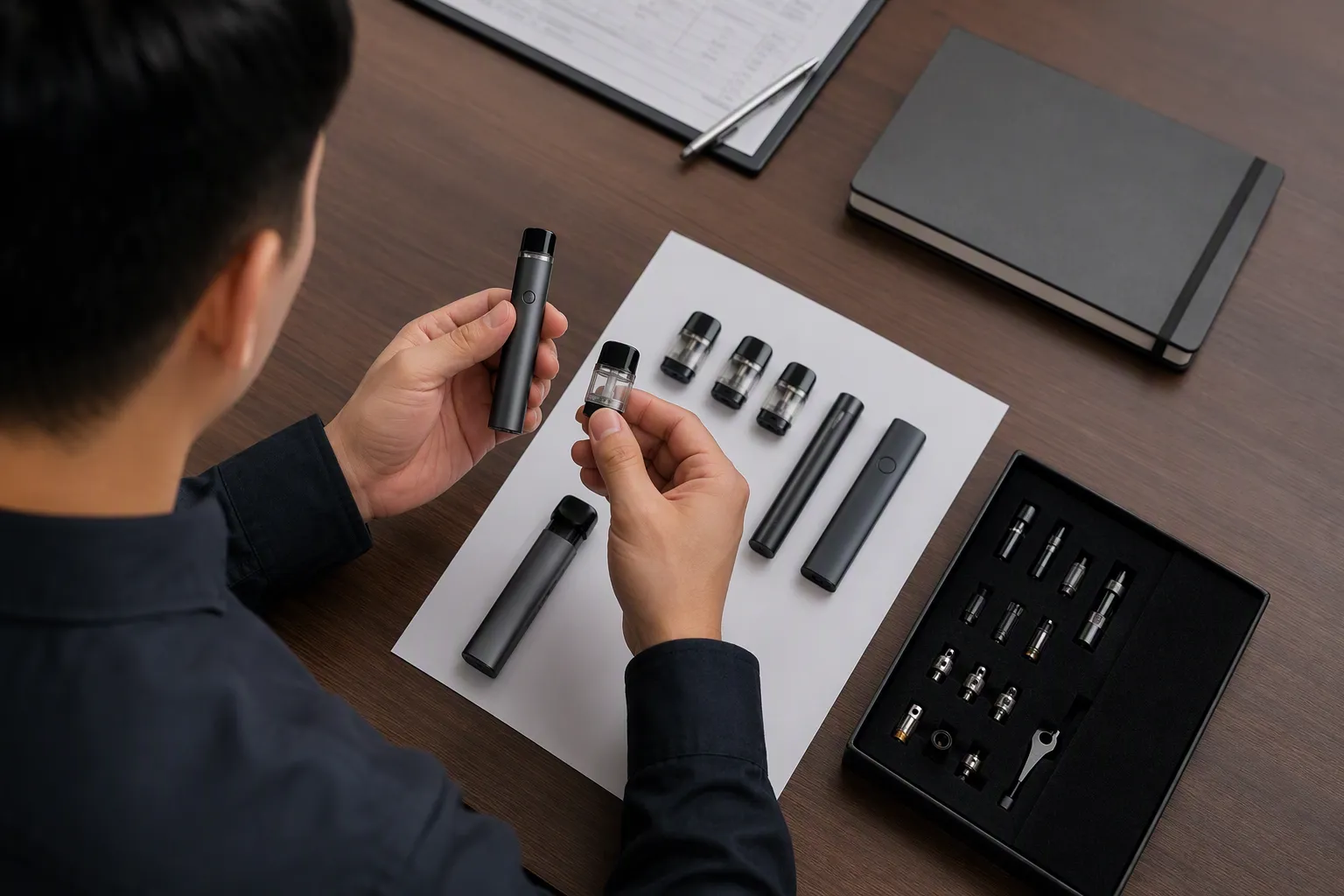
A freight provider may support transportation and customs-related processes, but freight acceptance does not replace a product-specific U.S. regulatory or legal review. Shipping feasibility and market-entry suitability are separate questions that require different expertise.
Do product changes require another compliance review?
They can. Changes to device design, components, consumables, packaging, product names, claims, suppliers, or sales channels may create new review needs. A documented change-control process helps buyers identify changes before they create inventory, labeling, or market problems.
Conclusion: Build the U.S. Vape Product Launch Compliance Gate Before You Build Inventory
A U.S. vape product launch compliance gate helps brand owners, importers, wholesalers, and distributors make a disciplined decision before capital is committed to tooling, packaging, inventory, and shipping. I recommend reviewing the exact product configuration, assigning owners, controlling claims and artwork, maintaining records, and planning for future changes. My team at Shenzhen Kingfuji Tech. Co., Ltd. can support product development, sourcing, OEM/ODM coordination, production preparation, and supply-chain communication. Before launch, buyers should also obtain qualified U.S. compliance and legal review for their specific product and sales plan.
Sources
- Premarket Tobacco Product Applications - FDA", FDA states that, subject to statutory exceptions, a new tobacco product may not be legally marketed in the United States without a marketing authorization order; technical testing, shipment arrangements, and labeling materials do not themselves constitute such an order
- Preparing and Submitting a Premarket Tobacco Product Application", FDA's PMTA framework calls for information about the specific tobacco product, including its components and materials, labeling, and proposed marketing, reflecting that market authorization is evaluated in relation to a defined product and its presentation
- Modified Risk Tobacco Products - FDA", Under the Federal Food, Drug, and Cosmetic Act, a tobacco product modified in design, components, parts, constituents, or ingredients may be treated as a "new tobacco product," making the regulatory relevance of product changes a matter for product-specific assessment
- Tobacco Products Marketing Orders - FDA", FDA describes scientific and technical information as evidence submitted for premarket review, whereas legal marketing authorization follows only when FDA issues the relevant marketing order; a laboratory report is therefore not, by itself, a marketing authorization
- Labeling and Warning Statements for Tobacco Products - FDA", FDA requires covered tobacco products, including ENDS products subject to the rule, to bear a specified nicotine warning where applicable and treats labeling and advertising as regulated elements of tobacco-product marketing
- Modified Risk Tobacco Products - FDA", FDA states that tobacco products marketed with claims of reduced harm, reduced risk, or reduced exposure may be modified risk tobacco products and generally require FDA authorization before such claims are used in marketing
- Misleadingly Labeled E-Liquids that Appeal to Youth - FDA", FDA identifies youth uptake of e-cigarettes as a major public-health concern and evaluates, in tobacco-product review and enforcement contexts, whether marketing is appropriate for the protection of public health, including effects on youth
- Prevent All Cigarette Trafficking (PACT) Act | ATF", Federal PACT Act requirements applicable to ENDS impose duties on covered remote sellers and delivery arrangements, illustrating that online distribution can entail obligations not present in the same form in conventional wholesale transactions