Quick Answer
New-product access can look like a major opportunity for vape importers and wholesalers, but early information alone does not protect your cash flow. If product status, available stock, shipping timing, and local channel preparation are unclear, a “new launch” can become delayed inventory and disappointed customers. A shared launch plan helps you buy at the right stage and prepare your market with more control.
New-product access should be agreed as a practical supply-and-launch process, not as a promise that being first will create sales. Before placing an order, I recommend that buyers and brands confirm the product stage, sample approval, production or stock status, order window, shipping plan, expected arrival range, and the buyer’s channel rollout date. A controlled first order can then test demand before a larger commitment.
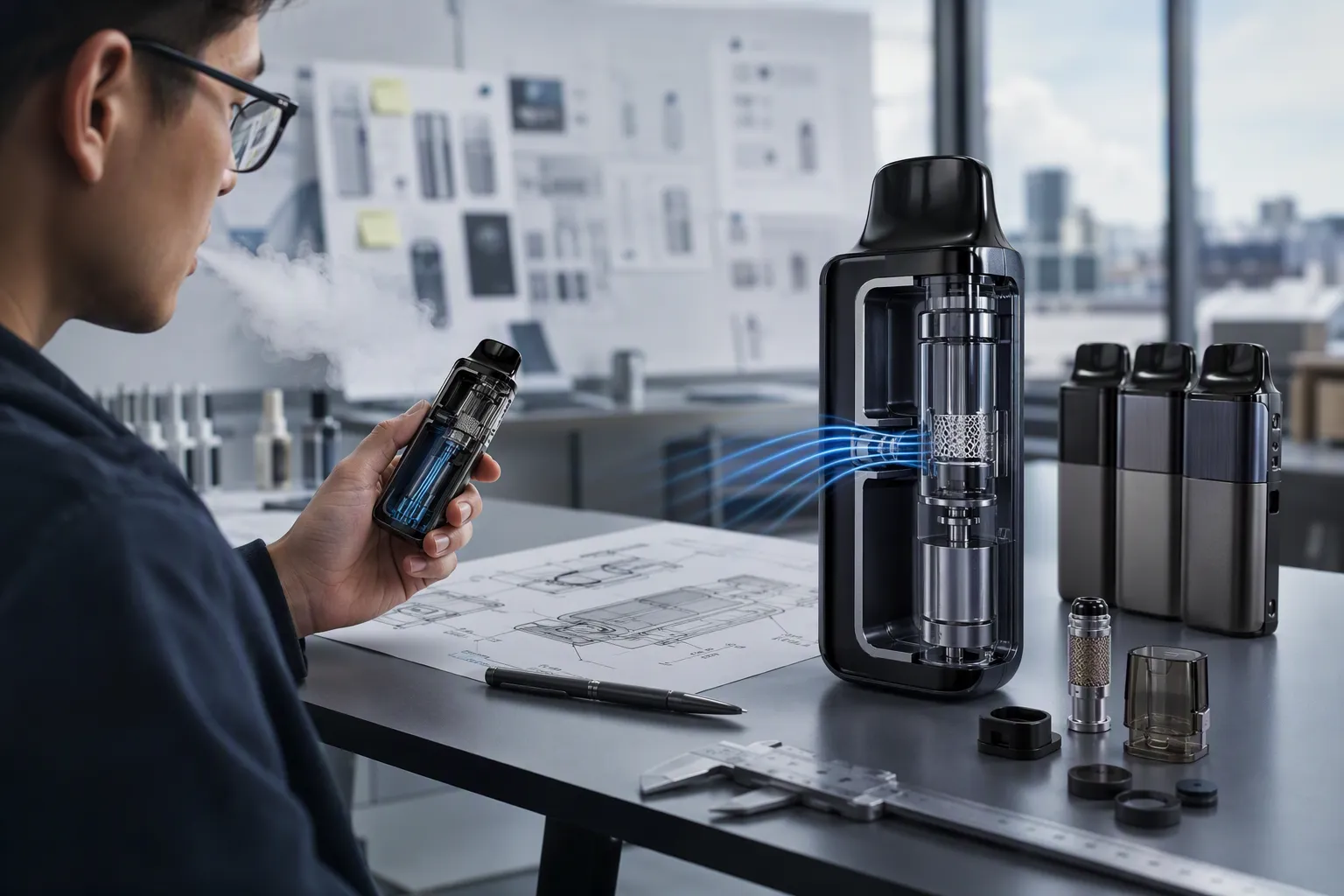
In my work coordinating vape supply, OEM, and ODM projects from Shenzhen, I have seen that the most useful launch conversations are rarely about who gets a product first. The better question is whether every part of the commercial chain is ready when the product reaches the buyer’s market.
Why Is New-Product Access Not a “First Launch” Badge?
Many buyers worry that competitors will get a new vape product before them. That concern is understandable, especially when local shops ask for trending items. However, rushing to claim new-product access without checking readiness can leave you with stock that arrives late, lacks channel support, or does not match your customers’ needs.
New-product access is not a “first launch” badge because a successful launch depends on more than early availability. Buyers need to confirm the product’s development stage, production readiness, inventory position, logistics window, market compliance requirements, and channel plan. Early access may be useful, but it does not guarantee fast sales, profit, or a successful local rollout.
Ask What Must Be True Before You Order
I encourage importers, regional wholesalers, vape shops, smoke-shop suppliers, and chain-store distributors to reframe the first conversation.
Instead of asking only:
“Can I get this product before other buyers?”
Ask:
“What needs to be confirmed for this product to arrive, launch, and sell through our channels on a workable schedule?”
That question changes the discussion from excitement to execution.
For example, a new disposable vape may look ready in a product photo or catalog. Yet the commercial reality can be very different. The product may still be at concept stage, sample stage, pilot production, mass-production planning, or shippable-stock stage. Each stage carries a different level of purchasing risk.[1]
I do not treat these stages as the same promise when I coordinate customer projects. A buyer should not treat them as the same either.
| Product status | What it usually means | Buyer action before ordering |
|---|---|---|
| Concept stage | Product direction, design, or requirements are still being discussed | Clarify target market, features, packaging, and expected development path |
| Sample stage | A sample may be available for evaluation | Test samples and record required changes before approving a larger plan |
| Pilot or trial production | Initial production may be under review | Confirm whether quality checks, packaging, and component supply are stable |
| Production-ready | Production can be planned or scheduled | Confirm order timing, capacity allocation, lead-time range, and payment milestones |
| Shippable stock | Finished goods are available for dispatch | Verify actual SKU, quantity, packaging, destination documents, and shipment arrangement |
A sample is not automatically a production commitment.[2] Production-ready status is not automatically shippable stock. Shippable stock is also not the same as stock cleared for every country.[3] Buyers should verify the requirements for their own destination market and current regulations before importing or distributing any vape-related product.
This distinction matters for several reasons:
- Your customers may already be waiting for the item. If a vape shop expects delivery next week and the product is still in sample review, your reputation can suffer.
- Your capital can be tied up for longer than planned.[4] A delayed launch can interrupt your normal buying cycle.
- Your sales team needs accurate information. They should not promise retailers a confirmed arrival date when the supply milestones are still open.
- Your first order may need different packaging or labeling. This is especially relevant for OEM and private-label projects.
- Your logistics plan may change. Available stock in China, a European warehouse, or another location can create very different arrival windows.
For smaller and medium-sized buyers, a lower-risk launch may sometimes be possible through available European warehouse stock, where applicable. This can support a smaller opening order and a faster replenishment cycle within Europe.[5] However, buyers should still confirm SKU availability, quantities, warehouse location, delivery coverage, and current shipping conditions before committing.
For larger importers and distributors, direct shipment from China can offer broader product selection, pricing flexibility, and OEM/ODM options. Yet a larger direct-import order needs more disciplined planning because it normally involves longer purchasing, production, freight, and customs timelines.
Build a Shared Launch Calendar, Not a Verbal Promise
A launch calendar does not need to be complicated. It simply needs to show what each party must do, when each milestone can be reviewed, and which dates are estimates rather than confirmed commitments.
In practical terms, I recommend that buyers create one document that both the supplier or brand side and the buyer side can understand. It should cover the entire route from product approval to local retail rollout.
| Launch milestone | What should be agreed | Main responsibility |
|---|---|---|
| Product requirement alignment | Product version, flavor or specification selection, packaging, and target market | Buyer and supplier/brand |
| Sample review | Sample quantity, review points, feedback deadline, and approval process | Buyer |
| Production or stock confirmation | Whether stock exists, production status, estimated capacity, and order acceptance | Supplier/brand |
| First-order decision | SKU mix, opening quantity, payment terms, and purchase timing | Buyer |
| Shipment planning | Shipping method, pickup point, documents, and estimated dispatch window | Buyer and logistics partner |
| Arrival planning | Estimated arrival range, customs responsibilities, and warehouse receiving plan | Buyer |
| Channel rollout | Which customers receive stock first, sales materials, staff briefing, and feedback process | Buyer |
The calendar should include estimated windows, not artificial certainty. I have learned that supply-chain work becomes more reliable when everyone understands the difference between a target date and a confirmed milestone.
For instance, a buyer may want stock in local stores before a holiday period or a seasonal tourist rush. That is a valid commercial goal. But the buyer should work backward from the desired store delivery date:
- Set the local rollout date. Decide when retailers, vape shops, smoke shops, convenience stores, or gas stations should receive product.
- Allow time for warehouse receiving. Your team needs time to count stock, check packaging, prepare orders, and handle any exceptions.
- Allow an arrival range. International freight and customs processes can vary, particularly during busy periods.[6]
- Confirm the shipment readiness point. Do not assume a product can ship until stock or completed production is actually confirmed.
- Set the purchase approval date. This is the date when your team must finalize the SKU selection and payment process.
- Work back to sample or product approval. If the product requires your packaging, branding, or specification changes, this step may need more time.
This process helps buyers avoid a common mistake: launching the marketing campaign before supply is sufficiently clear. Your sales team can still prepare product education, retailer lists, and promotional plans early. However, your external promises should match the evidence available at that time.
Separate Supply Readiness From Channel Readiness
A product can be ready to ship while your market is not ready to receive it.[7] The reverse can also happen: your retailers may be ready, but stock is not yet available. New-product access works best when these two forms of readiness meet at the right time.
Supply readiness may include:
- Product version confirmation
- Packaging completion
- Available finished inventory or a confirmed production plan
- Required product documents, where relevant
- Shipping arrangement and pickup readiness
- Clear communication about lead-time ranges
Channel readiness may include:
- A selected group of first retailers or wholesale customers
- Basic product knowledge for your sales staff
- Clear pricing and margin planning
- A plan for displaying or presenting the product
- A customer-feedback process
- A replenishment decision process if demand is stronger than expected
I have supported customers whose business depends on quick-moving inventory. They do not want capital sitting in a warehouse while the market moves on to another item. At the same time, I do not believe that the answer is simply to order every new product at the earliest possible moment.
A better approach is to define the role of the first order. Is it a market test? Is it a launch for selected existing customers? Is it a broader regional release? The answer should affect the quantity, SKU mix, logistics method, and sales preparation.
For a regional wholesaler, a first order might focus on a limited group of established retail accounts that can provide quick feedback. For an importer with several warehouses, the opening order may be allocated by region so that the buyer can compare local demand before placing a larger replenishment order.
Use a Controlled First Order to Test Local Demand
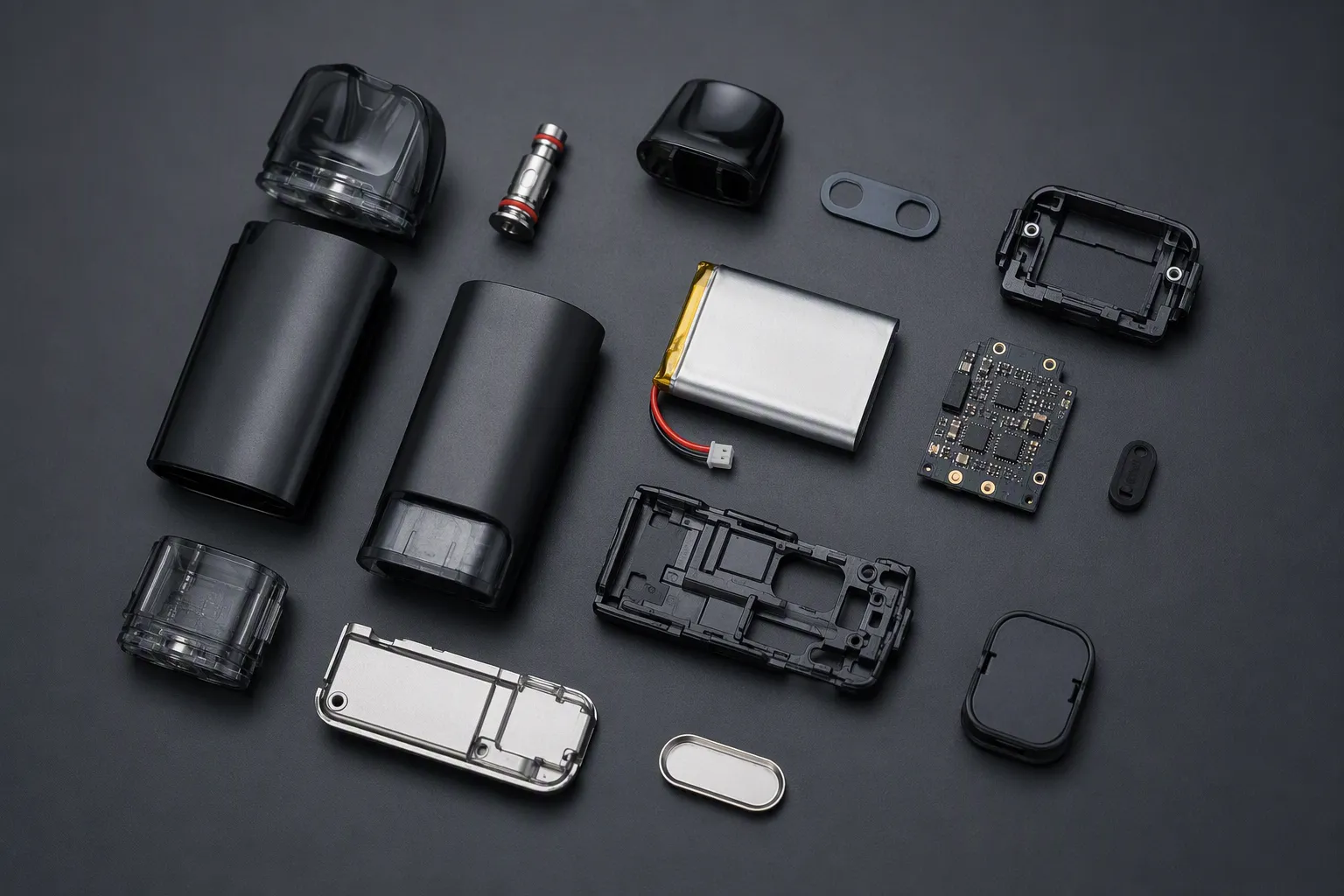
A controlled first order is not a sign that you lack confidence. It is a commercial tool for reducing uncertainty.
A controlled first order lets a vape importer test product acceptance, collect retailer feedback, review sell-through, and check supply performance before increasing inventory. The order size should reflect the buyer’s customer base, storage capacity, cash-flow limits, shipping method, and ability to reorder—not only the excitement around a new launch.
When I discuss new products with buyers, I encourage them to identify what they want to learn from the first order. The goals should be clear before the goods arrive.
Useful questions include:
- Which flavors, colors, capacities, or product versions are most likely to move in our market?
- Which customer types should receive the first allocation?
- How quickly can our team collect meaningful retailer feedback?
- What product questions will end users ask our retail customers?
- What level of reorder signal will justify a larger purchase?
- If demand is slower than expected, how will we protect cash flow and avoid overstock?
For some smaller B2B buyers in Europe, available warehouse stock may support lower opening quantities, subject to current inventory and product availability. This can be useful for wholesalers serving local vape shops, smoke shops, convenience stores, or tourist-area retailers. A smaller trial can reduce the risk of committing too much cash to an unproven SKU.
For medium and larger importers, a direct China order may be more suitable when the buyer has stronger demand visibility, a wider distribution network, or an OEM/ODM plan. Direct orders can support custom branding, packaging development, and broader SKU planning. However, they require earlier decisions and more coordination across production, freight, receiving, and local rollout.
A controlled first order should also include a feedback loop. I recommend that buyers track more than basic sales volume:
| Feedback area | Why it matters |
|---|---|
| Retailer reorder interest | Shows whether the product has repeat-purchase potential in your channel |
| SKU-level movement | Helps identify which versions deserve replenishment |
| Product-use questions | Reveals where staff training or customer guidance may be needed |
| Packaging comments | Can be important for future private-label or OEM projects |
| Defect or after-sales reports | Helps the buyer document issues and coordinate follow-up properly |
| Delivery and receiving experience | Helps improve the next order’s timing and logistics process |
No single trial order can predict the whole market.[8] Local competition, pricing, regulation, retailer behavior, and consumer preferences can all change. Still, a structured trial gives you better information than buying large quantities based only on a product announcement.
Clarify Responsibilities Before the Launch Window Opens
The fastest way to create frustration is to leave responsibilities vague. A buyer may assume the supplier will provide a confirmed stock date. The supplier may assume the buyer will approve samples quickly. The logistics partner may wait for shipping instructions. Meanwhile, the intended launch date approaches.
I prefer to write down responsibility points early, even in a simple email or order checklist.
The buyer should normally clarify:
- Target market and intended sales channel
- Required product versions and packaging details
- Sample feedback and approval timing
- Purchase decision maker and payment schedule
- Preferred logistics method
- Destination receiving capacity
- Local compliance verification for the destination country
The supplier, manufacturer, or brand side should clarify:
- Current product stage
- What is available now versus what is still planned
- Available inventory, where confirmed
- Production coordination status, where applicable
- Packaging and customization dependencies
- Documents that can be provided for buyer review, where applicable
- Shipment preparation requirements
I want to be clear: I do not represent every vape brand’s launch policy, inventory policy, exclusivity terms, or allocation process. Each brand and product line may operate differently. Buyers should ask for the specific commercial terms that apply to the product they want to purchase.
For OEM and ODM projects, the coordination becomes even more important. A private-label product can involve requirements alignment, artwork, packaging, samples, development feedback, production planning, and delivery coordination. I have practical experience supporting this kind of project coordination, but every project needs its own written confirmation of scope, timeline, and responsibilities.
Frequently Asked Questions
Does new-product access mean I will be the first seller in my market?
No. New-product access does not automatically mean exclusivity or first-to-market status. Each brand may have different distribution and allocation policies. You should ask whether any territory, channel, stock allocation, or launch condition applies, and request clear written confirmation before making commercial commitments.
What is the safest stage to place a first order for a new vape product?
The safest stage depends on your business model. Shippable stock usually provides more certainty than concept or sample-stage information. However, buyers should still verify the exact SKU, available quantity, shipping conditions, destination requirements, and expected arrival range before confirming an order.
How can a small wholesaler test a new product without tying up too much cash?
A small wholesaler can use a controlled opening order, focus on selected retail customers, and set clear reorder criteria. Where suitable stock is available in a European warehouse, lower-quantity purchases may be possible. Buyers should confirm current stock, delivery coverage, and pricing before relying on this option.
Should I launch marketing before my vape order ships?
You can prepare sales materials, customer lists, and staff training early. However, you should avoid making fixed delivery promises until product readiness and shipping arrangements are confirmed. Your external launch messaging should match the level of supply certainty you actually have.
Do I need to check regulations before importing a new vape product?
Yes. Vape-related regulations can differ by country and can change over time. Product compliance, labeling, nicotine rules, registration, import procedures, taxes, and retail restrictions require separate verification for your target country and current regulations. Qualified local compliance and legal professionals can help with application-specific decisions.
Conclusion
New-product access works best when it is treated as a coordinated commercial process rather than a race for a “first launch” label. I recommend that buyers confirm product stage, supply readiness, stock or production status, shipment windows, local arrival planning, and channel preparation before they commit capital. A controlled first order can help you learn from real local feedback before increasing inventory. If you are sourcing vape products, planning an OEM/ODM project, or looking for China and European warehouse supply options, contact me at info@kingvapecig.com to discuss a practical purchasing and launch plan.
Sources
- [PDF] Product Development Resilience Through Innovation Management ...", Product-development and production-readiness frameworks distinguish concept, prototype, pilot, and full-production phases because technical, quality, and supply uncertainty is progressively evaluated before wider commercial commitment
- Prototype vs Pre-Production Sample: Complete Guide", In structured product-development practice, prototypes and samples are used for evaluation and validation, whereas serial production requires separate readiness, process-validation, and release decisions
- Tobacco: E-cigarettes - World Health Organization (WHO)", Electronic-cigarette products may be subject to jurisdiction-specific requirements concerning product notification, nicotine content, labeling, packaging, and market placement; physical availability for shipment does not itself establish compliance in a destination market
- Financial statement analysis and interpretation: 5.4.2 Inventory days", Inventory held for longer periods increases the funds committed to working capital and can lengthen the cash-conversion cycle, all else being equal
- Free movement of goods | Fact Sheets on the European Union", Within the EU customs union, goods in free circulation generally move between Member States without internal customs duties, which can remove an international-border step from subsequent regional distribution
- Publication: Reforming Customs Clearance in Pakistan", International shipment transit and clearance times can be affected by port congestion, transport capacity, documentary processing, and customs performance, producing variability in delivery schedules
- Mastering New Product Launch Readiness in the ...", New-product-launch research identifies coordination between upstream supply capabilities and downstream marketing and distribution activities as a determinant of launch execution and performance
- A Comprehensive Study of Market Prediction from Efficient ...", Market-test and demand-forecast evidence is inherently uncertain because observed results may vary across customer segments, time periods, competitive environments, prices, and distribution conditions