
Quick Answer
Normal and Boost modes can confuse buyers when a device shows one large puff number but offers two different output settings. That confusion can lead to customer complaints, returns, and unnecessary after-sales work[1]. I recommend comparing the two modes by output, battery-and-liquid endurance, and customer preference—not by puff count alone.
Normal and Boost modes should be evaluated as different use experiences, not as two settings that guarantee the same puff count. Normal mode may suit customers who prefer steadier, more predictable use time, while Boost mode may suit customers who want stronger output and accept faster battery and e-liquid consumption. Buyers should confirm each model’s specifications with the brand or manufacturer before selling it.
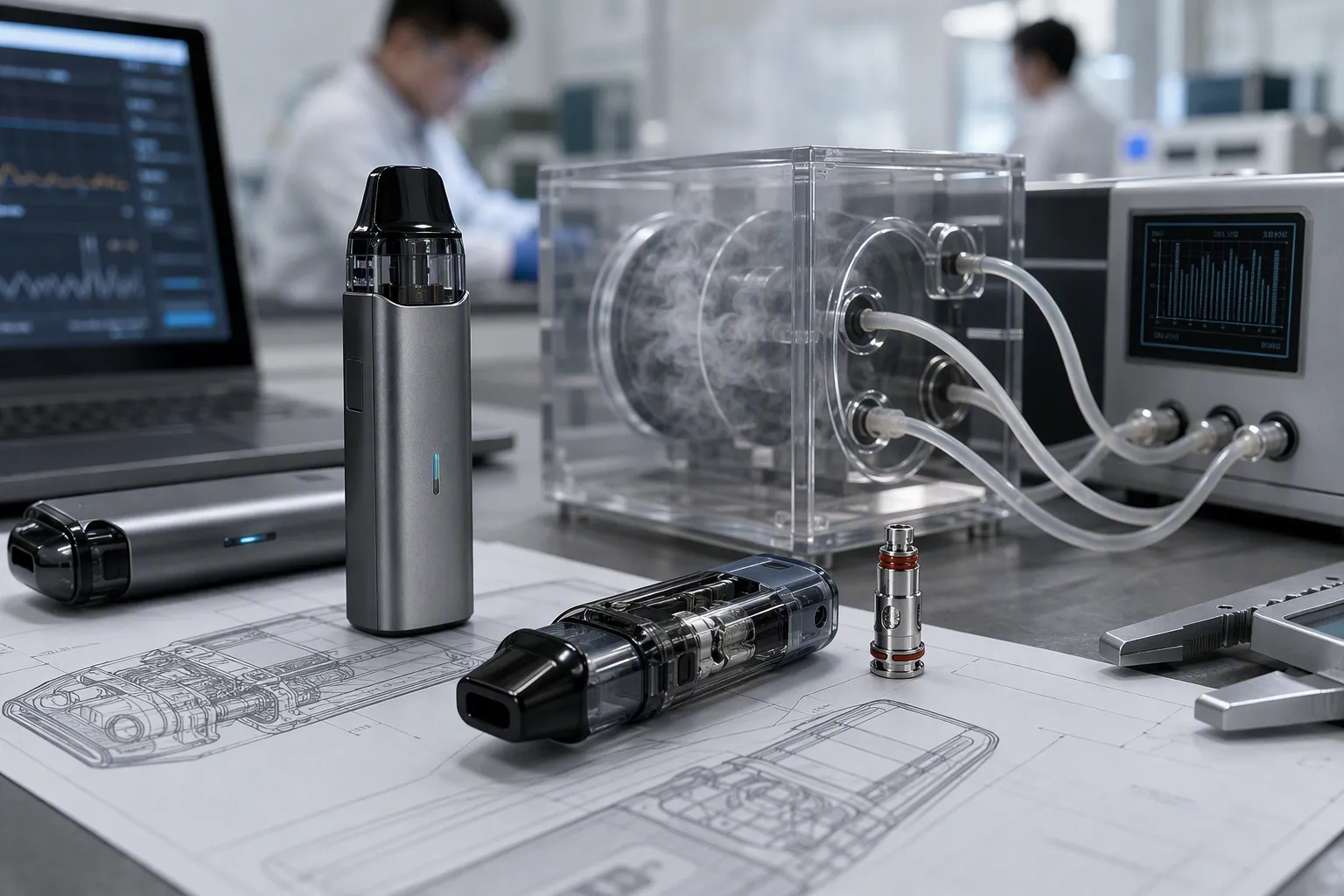
For wholesalers, importers, vape shops, and smoke shops, the right decision is usually about channel fit. I have seen that the best-selling device is not always the one with the biggest advertised number. It is often the one that your staff can explain clearly and your end customers can use with the right expectations.
Why Should Normal and Boost Modes Not Be Compared by Puff Count Alone?
Many buyers look at puff count first because it is simple, visible, and easy to compare across product listings. However, Normal and Boost modes can change how a device uses power and e-liquid. If a shop sells a dual-mode device as though both settings provide the same practical longevity, the customer may feel disappointed later.
Puff count is only a reference figure for a specific device configuration and usage pattern. Normal mode and Boost mode can produce different output levels, which may affect battery use, e-liquid consumption, and practical use time. I advise buyers to compare the two modes by experience, endurance, and customer fit before using puff count as a selling point.
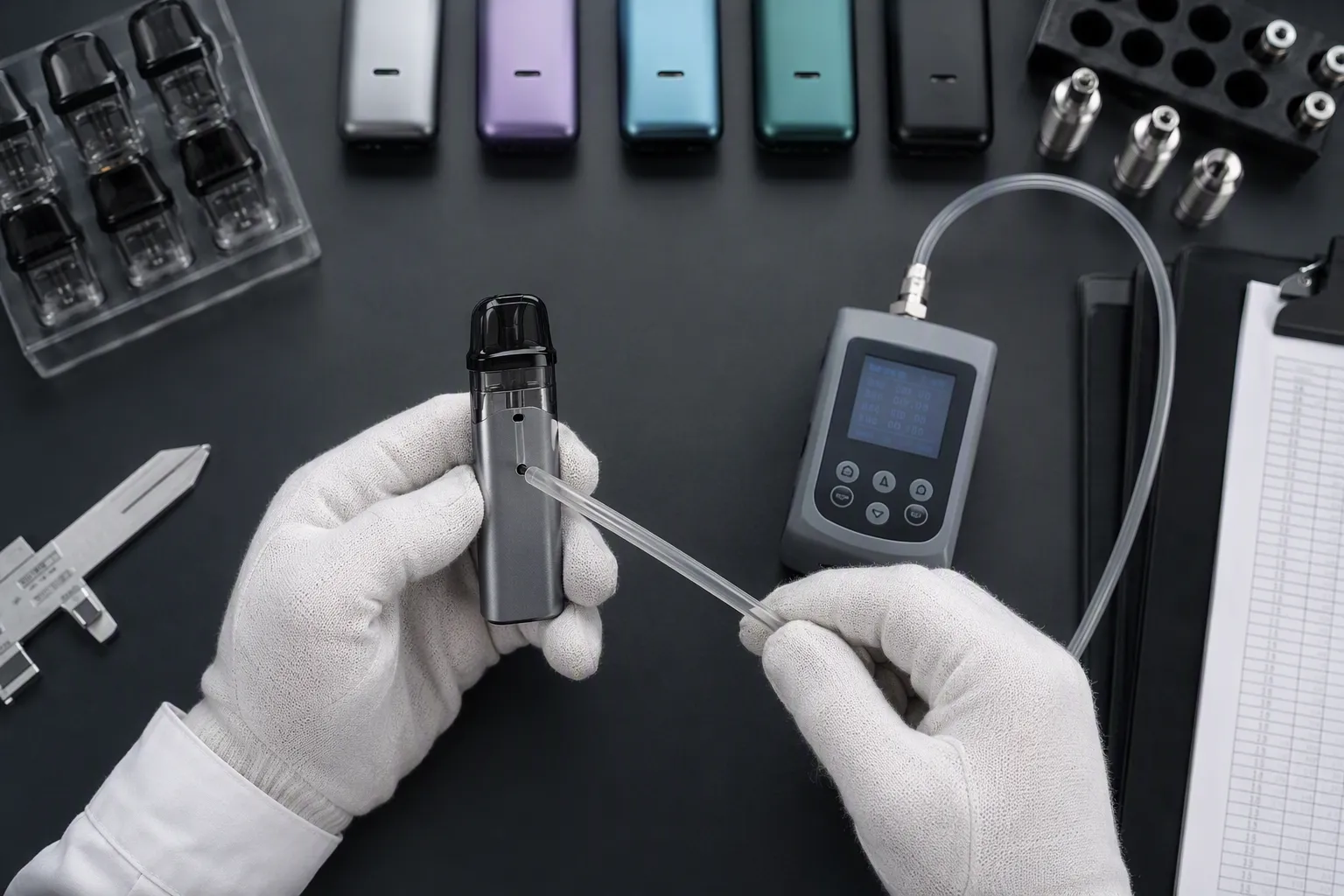
Puff Count Is a Marketing Reference, Not a Universal Promise
I often explain to B2B customers that an advertised puff count should not be treated like a guaranteed number for every user. It is usually based on assumptions that may include a certain puff duration, a specific operating mode, a particular airflow setting, and a defined device configuration.[2]
Real-world use can vary because different people inhale differently.[3] One customer may take short, light puffs. Another customer may take longer draws or use the device more frequently. A third customer may choose the stronger setting most of the time because that is the experience they prefer.
This is especially important for products with Normal and Boost modes. A buyer may see an advertised puff count and assume it applies equally to both settings. That assumption can create an avoidable gap between what the customer expects and what the product is designed to deliver.
I do not present supplier specifications or market feedback as independent laboratory evidence. Instead, I treat them as information that buyers should verify model by model with the relevant brand, factory, or manufacturer. Before placing an order, I recommend that buyers ask clear questions such as:
- Which mode is used for the advertised puff-count reference?
- Does the product have a fixed or adjustable output level?
- Does Boost mode use a different coil, heating profile, or power setting?
- Is the battery capacity the same across versions of the device?
- Is the e-liquid capacity the same across versions?
- Does the manufacturer provide a user guide that explains mode selection?
- What claims are permitted on packaging in the destination market?
- What after-sales handling process applies if customers misunderstand the mode difference?
These questions matter because buyers are not only purchasing a device. They are also purchasing a customer-service responsibility.
I believe the safest sales message is simple: a listed puff count is a reference, while actual use depends on the selected mode, the device configuration, and individual behavior.
What Changes When a Customer Uses Boost Mode?
Boost mode is usually positioned as a stronger-output option. Depending on the specific model, the customer may notice a warmer vapor, stronger flavor delivery, denser vapor, or a more immediate draw response[4]. However, the exact result depends on the product design. I recommend that every buyer confirm the actual mode behavior with the manufacturer instead of assuming that all Boost settings work in the same way.
The commercial point is more important than the technical label. If Boost mode offers stronger output, customers should understand that stronger output can involve trade-offs. In practical terms, it may use battery power and e-liquid faster than a lower-output setting.[5] That does not make Boost mode bad. It simply means that the mode fits some customer preferences better than others.
| Comparison Area | Normal Mode | Boost Mode | Buyer Question |
|---|---|---|---|
| Output experience | Often positioned as steadier or lower output | Often positioned as stronger output | What does the end customer value most? |
| Battery demand | May support longer practical use under similar conditions | May increase power demand depending on the model | Is battery endurance a key selling point? |
| E-liquid use | May be more moderate under similar use | May consume liquid faster depending on the model | Will customers understand the trade-off? |
| Customer expectation | Often focused on consistency and duration | Often focused on intensity and performance | Can shop staff explain both settings clearly? |
| Complaint risk | Can arise if advertised puffs are treated as guaranteed | Can arise if customers expect the same puffs as Normal mode | Is the sales message accurate and simple? |
I have seen that complaints often begin with an unclear expectation rather than a confirmed product defect. A customer may say, “This device did not last as long as expected.” The shop may then ask whether the device was faulty. But the first useful question is often: “Which mode was used most of the time?”
That question should not be used to dismiss a genuine quality concern. A supplier and retailer should still review the issue carefully. However, it helps separate a potential product defect from a normal difference in usage pattern.
The Three-Part Comparison I Recommend to Buyers
When I help importers, wholesalers, and shop owners review a dual-mode device, I suggest a simple three-part comparison. It keeps the discussion focused on commercial fit instead of only on headline specifications.
1. Output and User Experience
The first question is not “Which mode has more puffs?” The first question is “What kind of experience does the customer expect?”
Some retail customers want a smooth and consistent experience. They may care about a product that feels predictable throughout the day. Other customers actively seek stronger output. They may be less concerned about maximum practical longevity if they feel the product gives them the experience they want.
A buyer should consider the likely end user:
- Is the product for customers who ask for stronger output?
- Is the product for casual users who care more about straightforward operation?
- Is the product for tourists, convenience-store customers, or quick-purchase shoppers?
- Is the product for experienced vape users who already understand adjustable settings?
- Is the product being sold in a shop where staff can explain the modes?
- Is the product being sold in a fast-moving channel where the packaging must do most of the explaining?
For example, a specialist vape shop may have staff who can explain Normal and Boost modes during the sale. A customer can ask questions, test the device where lawful and appropriate, and select the setting that matches personal preference. In that setting, a dual-mode product may add value because the customer has more control.
A convenience-focused channel may work differently. Customers may want a simple product with fewer choices. If the retail environment is busy and staff have little time for product education, a mode switch can become a source of misunderstanding. In that situation, I would not say dual-mode devices are unsuitable. I would say the buyer should have a clearer shelf card, packaging explanation, or staff script before listing the product.
2. Battery and E-Liquid Endurance
The second question is about practical endurance. Buyers should assess how the selected mode may influence battery consumption and e-liquid use. They should not assume a fixed percentage difference unless the specific manufacturer has documented it for that model.
I recommend reviewing the following information in the product specification sheet:
| Item to Verify | Why It Matters for Procurement |
|---|---|
| Battery capacity | It helps buyers understand the device’s available power storage. |
| E-liquid capacity | It helps buyers assess the liquid supply available within the product. |
| [Coil resistance or heating configuration | It may influence output behavior, depending on the design.](https://pmc.ncbi.nlm.nih.gov/articles/PMC10583227/)[6] |
| Mode-switch method | It affects how easily users can change settings by accident or on purpose. |
| Display or indicator system | It helps customers identify which mode is active. |
| Charging capability | It affects the user journey for rechargeable devices. |
| Manufacturer’s mode description | It gives the buyer a documented basis for sales training and packaging review. |
| Warranty and defect policy | It supports a consistent response when a real quality issue occurs. |
The practical issue is balance. A customer who uses Boost mode regularly may receive a stronger experience, but that customer should not automatically expect the same endurance associated with a lower-output setting. A customer who values longer use time may prefer Normal mode, assuming the device is designed and documented that way.
I encourage buyers to avoid phrases such as:
- “Boost mode gives the same number of puffs, only stronger.”
- “The puff count is guaranteed for every customer.”
- “This mode always lasts longer.”
- “Boost mode is better for everyone.”
- “Normal mode is weak.”
These statements create unnecessary risk because they oversimplify a product that is affected by user behavior and model-specific design.
A better sales explanation is:
“This device has two modes. Normal mode is intended for a steadier experience, while Boost mode is intended for stronger output. Actual use time can vary based on the selected mode and how the device is used.”
That message is clear, fair, and easier for staff to repeat accurately.
3. End-Customer Preference and Channel Fit
The third question is the most commercial one: which mode setup fits the customers in your sales channel?
I work with buyers who serve vape shops, smoke shops, grocery importers, wholesalers, gas stations, convenience stores, and local distribution networks. These channels do not all sell products in the same way. Their customers do not all make decisions for the same reasons.
A retailer with experienced vape customers may benefit from products that offer more choice. A distributor selling to many small shops may need products that are easier to explain in one sentence. An importer with a private-label plan may need a device where the mode explanation can be built into packaging, user instructions, and sales materials from the beginning.
Here is a practical channel-fit view:
| Buyer Type | What Customers Often Prioritize | How to Position Normal and Boost Modes |
|---|---|---|
| Vape shop | Experience, flavor, output, device features | Train staff to explain both modes and the endurance trade-off. |
| Smoke shop | Easy sale, visual appeal, reliable turnover | Use simple counter cards and avoid overpromising puff count. |
| Gas station or convenience store | Fast decisions and simple product choice | Ensure packaging or staff guidance explains the active mode clearly. |
| Local wholesaler | Low complaint rate and easy resale | Provide a short product explanation sheet for downstream retailers. |
| Importer or distributor | Margin, repeat orders, channel consistency | Confirm specifications, packaging language, and after-sales process before launch. |
| OEM/ODM buyer | Brand differentiation and long-term customer loyalty | Build mode explanations into product design, packaging, and customer education. |
I have learned from after-sales communication that a customer’s dissatisfaction is often harder to solve after the sale than before the sale. A simple explanation at the counter can prevent a long discussion later. This matters for small retailers because one complaint can affect reviews and repeat business[8]. It matters for wholesalers because the same misunderstanding can spread across many downstream shops.
How Can Buyers Reduce Complaints Before They Start?
I recommend treating product education as part of procurement. Buyers should not wait until a shipment arrives before asking how to explain Normal and Boost modes. A mode-based device needs a clear communication plan before it enters the sales channel.
Confirm the Product Information in Writing
The first step is to collect written information from the brand or manufacturer. I recommend asking for the current specification sheet, product manual, packaging artwork, and mode description. Buyers should check that all documents refer to the same version of the product.
This is important because product revisions can happen. A device may have different capacities, packaging, coils, displays, or operational details across versions.[7] Buyers should confirm the exact SKU, color options, nicotine format where relevant, market version, and packaging language before making sales claims.
For larger import orders, I recommend that the buyer keeps a product-confirmation checklist:
- Confirm the product model and SKU.
- Confirm the Normal mode description.
- Confirm the Boost mode description.
- Ask which mode is associated with any advertised puff reference.
- Confirm battery and e-liquid specifications for that exact model.
- Review the user manual and package warnings.
- Confirm destination-market compliance requirements with qualified local professionals.
- Agree on the defect-reporting and after-sales process.
- Save approved product images and sales wording for downstream customers.
- Train the sales team before the product reaches retailers.
I do not treat certifications, compliance statements, or product documents as automatic proof that a product is suitable for every market. Buyers should verify documents directly and obtain qualified legal, regulatory, and technical advice for the intended application and destination market.
Give Sales Staff a Short, Consistent Script
A long technical explanation usually does not work at a retail counter. Staff need a short answer that is accurate enough to manage expectations.
I would suggest a script like this:
“This device has Normal and Boost modes. Normal mode is for a steadier experience, while Boost mode is for stronger output. The actual number of puffs depends on the setting used and personal puffing habits.”
This script does not promise too much. It does not make unsupported technical claims. It also helps the staff member start a useful conversation.
If the customer says, “I want the strongest option,” the staff member can explain that Boost mode may suit that preference. If the customer says, “I want it to last as long as possible,” the staff member can explain that Normal mode may be the better starting point, subject to the specific product instructions.
Use Packaging and Shelf Communication Carefully
A dual-mode product should not depend only on verbal explanation. I recommend that buyers review whether the product packaging clearly shows:
- That the device has more than one mode
- How the user changes the mode
- How the active mode is indicated
- A simple explanation of the difference
- A reminder that actual use time varies
- Safety, age, and market-required information where applicable
For wholesalers supplying many shops, a one-page product card can reduce repeated questions. The card can include product images, the mode explanation, key confirmed specifications, and simple after-sales guidance.
This is particularly useful for distributors serving small independent retailers. Those retailers may not have time to study every new product in detail. A clear support document helps them sell with more confidence and reduces the chance that they will make their own inaccurate puff-count claims.
When Does a Dual-Mode Device Make Commercial Sense?
I do not believe Normal and Boost modes are universally better than a single-mode product. The right choice depends on the buyer’s customer base, staff capability, and product strategy.
A dual-mode device may make sense when:
- Your customers actively ask for stronger output options.
- Your sales staff can explain the setting difference.
- Your product range already includes feature-driven devices.
- Your brand wants to offer users more control.
- Your packaging can communicate the mode function clearly.
- Your after-sales team can handle basic usage questions.
- You are prepared to verify specifications model by model.
A simpler device may make more sense when:
- Your customers want quick, uncomplicated purchases.
- Your channel has limited staff training.
- Your sales team relies heavily on one-number comparisons.
- Your retail partners need very simple shelf communication.
- Your main customer priority is straightforward operation.
- You want to minimize mode-related questions and misunderstandings.
For OEM and ODM projects, I recommend discussing the commercial story before finalizing the product. The mode switch, display, packaging, user guide, and sales training should all support the same message. A product can look attractive in a catalog, but it should also make sense in the hands of the final customer.
As a Shenzhen-based supplier and OEM/ODM partner, I focus on helping buyers review products in a practical way. For smaller customers, stock availability and fast delivery options can matter because they want to test market demand with lower inventory pressure. For larger importers and distributors, factory sourcing, volume pricing, private-label development, and structured specification confirmation may be more relevant. In both cases, clear communication around Normal and Boost modes helps protect the buyer’s reputation.
Frequently Asked Questions
Does Boost mode always reduce puff count?

Boost mode may affect practical longevity because stronger output can require more battery power and e-liquid use. However, I would not state a fixed reduction without confirmed information for the exact model. Actual results also vary with user behavior, puff duration, and device configuration.
Is Normal mode always better for customers who want longer use time?
Normal mode may be more suitable for customers who prioritize steadier and more predictable use time. However, buyers should confirm the manufacturer’s specifications for the exact device. I would avoid presenting Normal mode as universally better because customer preferences and product designs differ.
Can retailers advertise the same puff count for both Normal and Boost modes?
Retailers should be cautious. I recommend confirming with the brand or manufacturer which mode and test conditions relate to the advertised puff count. A clearer message is that puff count is a reference figure and actual use depends on mode selection and individual usage behavior.
What should a wholesaler tell downstream shops about Normal and Boost modes?
I recommend giving downstream shops a short written explanation: Normal mode is intended for a steadier experience, while Boost mode is intended for stronger output. Shops should explain that actual use time can vary and should avoid treating puff count as a guaranteed result.
How should buyers evaluate a dual-mode vape before placing an order?

Buyers should confirm the exact model specifications, mode descriptions, battery and e-liquid information, packaging language, user instructions, and after-sales process. I also recommend evaluating whether the sales channel can explain the mode trade-off clearly enough to reduce customer confusion.
Conclusion
Normal and Boost modes should be compared by more than a puff-count number. I recommend that buyers assess output experience, battery-and-liquid endurance, and the preferences of their end customers. The best product is not automatically the strongest or the longest-lasting option. It is the option that your channel can explain honestly and sell with fewer avoidable complaints. If you are sourcing dual-mode devices, OEM/ODM products, or a broader vape and smoking-accessory range, contact me at info@kingvapecig.com to discuss product selection, specification confirmation, and supply options for your market.
Sources
- Determining the Effect of the Returns Management ...", Consumer-behavior research indicates that perceived performance falling below prior expectations can increase dissatisfaction and complaint behavior, providing a mechanism by which unclear product-use expectations may create after-sales burdens
- Puffing Topography: A Tool to Evaluate Vaping Behavior and ...", Technical guidance for electronic-cigarette testing specifies controlled puffing regimens and device conditions, illustrating why measured use or emissions results depend on defined test parameters rather than a universal user outcome
- Circadian Puffing Behavior and Topography Among E ... - PMC", Studies of e-cigarette puff topography find substantial between-user variation in puff duration, volume, flow, and frequency, supporting the conclusion that real-world use patterns are not uniform
- Understanding the influence of atomizing power on electronic ...", Laboratory studies show that e-cigarette electrical power and heating conditions influence aerosol temperature and aerosol output, which can contribute to differences in users' sensory experience
- Effects of Electronic Cigarette E-liquid and Device Wattage on ...", Controlled e-cigarette research reports that increased electrical power raises energy delivery and often increases aerosol mass and e-liquid consumption, supporting a potential endurance trade-off between lower- and higher-output operation
- Carbonyls and Aerosol Mass Generation from Vaping Nicotine ...", Electronic-cigarette aerosol studies describe how coil resistance and electrical operating conditions influence heating power and aerosol-generation behavior
- Configuration Change Management", Configuration-management guidance emphasizes identifying product versions and documenting changes to specifications and components so that purchasers can distinguish the configuration being supplied
- Customer Loyalty, Repurchase and Satisfaction: A Meta ...", Research on online word of mouth finds that negative consumer reviews can influence prospective buyers' purchase intentions and may affect firms' customer-retention outcomes