
Mixed-source branded vape inventory can create expensive after-sales confusion when cartons from different suppliers, arrivals, or order terms are treated as one identical stock pool. This can slow complaint handling, weaken supplier accountability, and tie up cash.[^1] I recommend keeping every inbound shipment linked to its original source, batch details, and outbound customer records.
Quick Answer
I manage mixed-source branded vape inventory by maintaining source boundaries in my records, even when similar products are stored in the same warehouse area. Each receiving shipment should connect to a supplier or purchase-order reference, arrival date, SKU, carton or batch identifier where available, storage location, and the customer order it was later dispatched against.[^2]
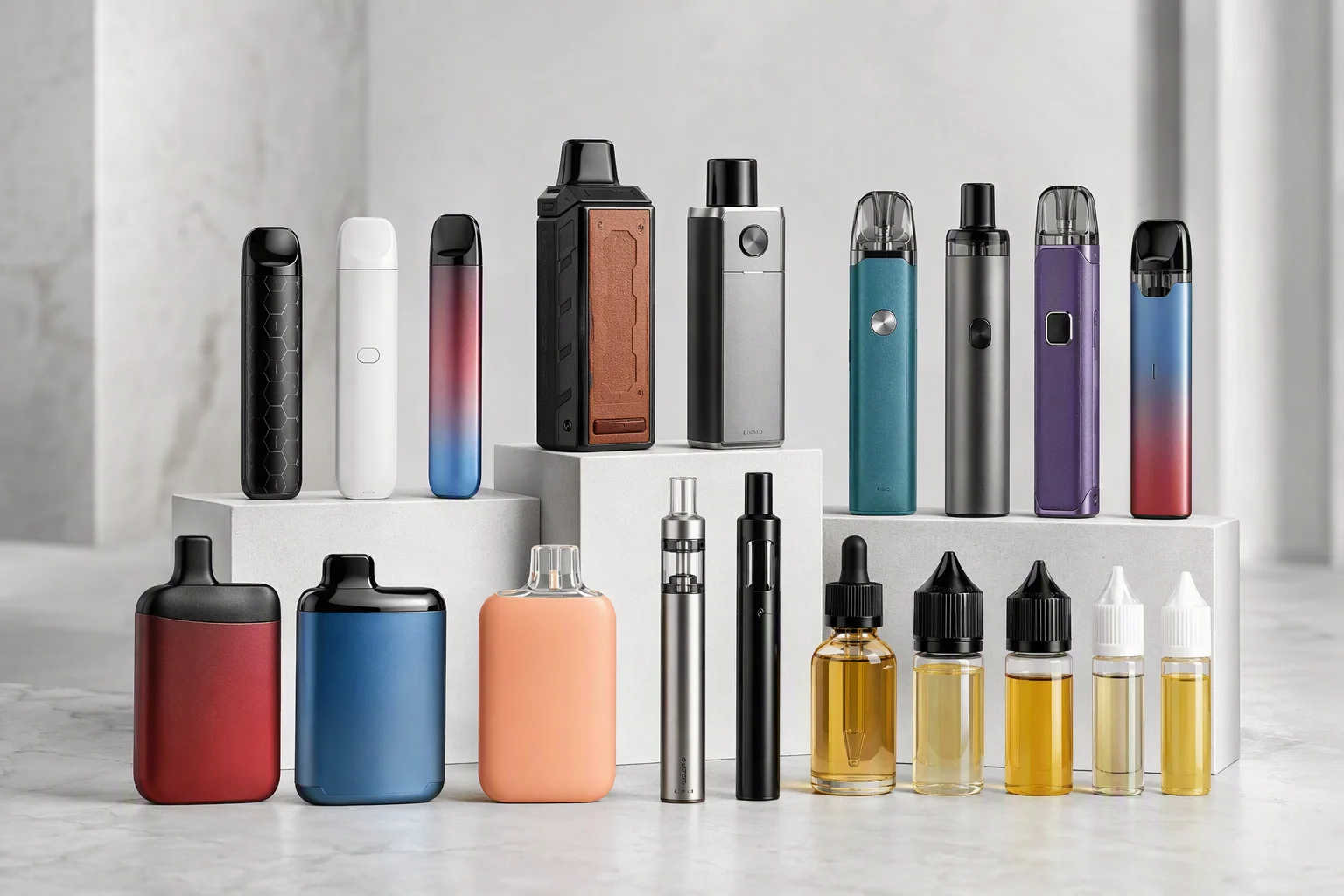
For fast-moving vape wholesalers, the goal is not to create unnecessary warehouse paperwork. The goal is to protect response speed when a retailer reports a defect, requests a return, questions a version difference, or needs help identifying where a carton came from. Good traceability helps me protect both customer relationships and supplier claims.
Mixed-source branded vape inventory is not primarily a storage problem
When I speak with importers and vape wholesalers, I often hear that mixed-source branded vape inventory becomes difficult because warehouse staff have limited space, products move quickly, and similar cartons look almost identical. Those issues are real. However, the bigger problem usually appears later, when someone asks: “Which supplier is responsible for this product?”
Mixed-source branded vape inventory is mainly a responsibility-control problem. Products with the same brand name, similar packaging, and matching SKU descriptions may still arrive through different supply channels, at different times, under different commercial terms. If the receiving records are lost or cartons are mixed without source references, the distributor may struggle to identify the correct supplier, purchase order, version, or after-sales process.

Similar packaging does not always mean identical commercial responsibility[^6]
I do not assume that products from different sources are counterfeit, inferior, unsafe, or unsuitable simply because they came through different channels. That would be inaccurate. However, I do know from repeated order coordination and after-sales communication that the following details can differ:
- The supplier or authorized sales channel involved
- The original purchase order and invoice reference
- The arrival date and shipment route
- The production or packaging version, where visible
- The carton label, batch mark, barcode, or internal identifier
- The return window or after-sales terms
- The party responsible for reviewing a complaint
- The documentation available to support a supplier claim
A distributor may sell two cartons of the same branded disposable vape to two different retail customers on the same day. If one carton came from Supplier A and the other came from Supplier B, the product may look operationally identical at the point of sale. But when a complaint arises, the commercial path may be very different.
The real cost appears after the sale[^3]
In a fast-turnover vape business, most problems do not begin at receiving. Problems begin after goods are already sold downstream.
For example, a smoke shop may report that several units from one carton have an issue. The wholesaler may need to check:
- Which customer received the carton
- Which outbound invoice covered the shipment
- Which inbound shipment supplied that carton
- Which supplier or channel handled that inbound shipment
- What evidence the supplier requires for an after-sales review
- Whether other customers received stock from the same source or arrival batch
Without these links, the distributor may have to contact several suppliers, search old chat records, inspect warehouse stock manually, or absorb the cost of the claim. That delay can affect cash flow, retailer confidence, and the wholesaler’s reputation.
I view traceability as a commercial operating tool. It helps me respond clearly instead of guessing.
How can I preserve mixed-source branded vape inventory boundaries?
Many buyers worry that source separation will reduce warehouse efficiency. I take a more practical approach. Mixed-source branded vape inventory does not always need separate rooms, separate warehouses, or complicated software. It does need records that preserve the relationship between the goods, the source, and the final customer.
The most practical method is to assign an internal receiving reference to every inbound shipment before staff put it into available storage. That reference should remain connected to the product until the stock is dispatched or fully sold through.
Create a receiving identity for every inbound shipment
I recommend giving each receiving shipment an internal code. The code does not need to be complex. It simply needs to be unique and used consistently.
For example:
Receiving Reference: BRD-SEP26-SUP03-001
Meaning: Branded product / September 2026 / Supplier 03 / first receipt
The exact code format can vary. What matters is that the code connects the physical cartons and the business record.
At a minimum, I would record the following information when goods arrive:
| Record field | Why it matters in vape wholesale operations |
|---|---|
| Internal receiving reference | Connects cartons to one identifiable inbound shipment |
| Supplier name or supply-channel reference | Clarifies who supplied the goods and who should receive a claim inquiry |
| Purchase order, invoice, or order reference | Supports commercial reconciliation and after-sales communication |
| Product name, brand, model, and SKU | Distinguishes similar products and packaging formats |
| Quantity received | Helps identify the scale of a potential issue |
| Arrival date | Helps review stock age and shipment sequence |
| Visible carton, batch, barcode, or label details | Provides useful evidence when available |
| Storage location | Allows staff to find the right cartons quickly |
| Outbound customer and invoice reference | Connects stock forward to the retailer, reseller, or distributor that received it |
This is the minimum system I would expect for mixed-source branded vape inventory. A spreadsheet can work for a smaller operation. Larger importers may use an ERP, WMS, barcode scanner, or warehouse management application.[^7] The tool matters less than the discipline of recording every handoff.
Use physical labels that match your records
I also recommend placing an internal warehouse label on each pallet, carton group, or storage bin. The label can include:
- Receiving reference
- SKU or product description
- Quantity
- Storage location
- Receiving date
- Carton identifier, if available
The label does not replace the supplier’s original carton label. It adds a simple operational link for your own staff.
This matters when a customer calls months later. A warehouse manager should not need to depend on memory, old messaging apps, or assumptions. They should be able to search the outbound order, find the receiving reference, and identify the relevant source quickly.
Do not merge records simply because the SKU matches[^4]
A common mistake is to merge two inbound shipments into one inventory line because the brand, flavor, model, or device count appears identical. This may make stock reporting look cleaner, but it can erase the source history that matters during a dispute.
I may sell inventory across channels efficiently, but I do not want my records to lose the ability to trace a carton backward to its supply source and forward to its sales destination.
Which records make mixed-source branded vape inventory easier to control?
When mixed-source branded vape inventory moves quickly, staff often focus only on quantities: how many units arrived, how many units remain, and how many units were sold. Quantity control is necessary, but it is not enough for after-sales control.
The best records answer two questions quickly: Where did this carton come from? and Where did it go?
A practical traceability workflow should connect receiving, storage, dispatch, customer service, and supplier communication. I find that even a simple process can make a major difference when all departments follow it consistently.
Track backward and forward
I use the phrase “trace backward and trace forward.”
- Trace backward: Start with a customer complaint and identify the outbound invoice, receiving reference, supplier, and purchase order.
- Trace forward: Start with an inbound shipment and identify all customers who received products from that shipment.
Both directions matter.
If a retailer reports an issue, backward tracing helps the distributor identify the correct supply source. If a supplier asks whether other cartons from a specific shipment are still in stock or have been sold, forward tracing helps the distributor review exposure without stopping all inventory unnecessarily.
Build the workflow around normal wholesale activity
A traceability system should fit daily work. It should not become a process that staff avoid because it takes too long.
I would structure the workflow around five normal moments:
-
Purchase confirmation
Record the supplier, product details, agreed terms, and order reference before goods arrive. -
Receiving inspection
Count cartons, note visible carton or batch identifiers where available, photograph obvious external shipping damage if relevant, and assign a receiving reference. -
Put-away and storage
Record the warehouse location and attach the internal reference to the stored goods. -
Outbound dispatch
Record which receiving reference or carton group was used for each customer order. -
After-sales review
Ask the customer for the order number, photos, unit code or carton label where available, quantity affected, and a clear issue description.
This process helps the wholesaler avoid a vague response such as, “We are not sure which shipment this came from.” That type of uncertainty can create avoidable friction with both customers and suppliers.
Keep evidence proportionate and organized
I do not recommend collecting unnecessary documents. I recommend collecting evidence that helps resolve normal commercial questions.
Useful records can include:
- Purchase orders and supplier invoices
- Receiving photos for outer cartons when needed
- Packing lists and shipment references
- Internal warehouse receiving labels
- Customer invoices and dispatch records
- Customer complaint photos or videos
- Return quantities and disposition notes
- Supplier communication relating to the claim
For branded vape products, requirements can vary by brand, product category, and market. Buyers should verify any brand-specific authorization, warranty, authenticity, labeling, tax, import, or regulatory requirements directly with qualified parties and the relevant official authority.
How should I handle returns and complaints in mixed-source branded vape inventory?
A complaint can become costly when the wholesaler responds emotionally, replaces stock without records, or sends a claim to the wrong supplier. I prefer a calm process that protects the customer experience while preserving commercial evidence.
For mixed-source branded vape inventory, I recommend treating every complaint as a traceability event first. The first goal is not to assign blame immediately. The first goal is to identify the exact sales path, product reference, and affected quantity.

Ask for the right information from the customer
When a vape shop, smoke shop, convenience store, or downstream wholesaler reports a problem, I would request practical details before making conclusions:
- Customer name and invoice number
- Product name, SKU, flavor, model, or device specification
- Quantity affected
- Photos of the product and outer carton
- Any visible barcode, batch mark, carton code, or internal label
- A short video when the issue is operational and a video can help show it
- Date of sale or date of complaint
- Whether the issue affects a single unit, one carton, or multiple cartons
Separate customer service from supplier responsibility
A wholesaler still needs to look after the customer relationship. At the same time, the wholesaler should avoid making unsupported promises about supplier approval, brand warranty outcomes, authenticity assessments, safety, or regulatory status.
I would communicate in a practical way:
“We are reviewing the shipment reference and your order details so we can identify the correct after-sales route. Please send the carton photos and invoice number, and we will check the records promptly.”
That message gives the customer confidence without promising an outcome before the facts are reviewed.
Protect cash flow with fast internal decisions
Fast-moving distributors cannot leave every complaint open for weeks. I recommend setting an internal review target, such as checking order records within one business day when possible. The final supplier response may take longer, but the distributor can still provide a quick status update.
A clear traceability process supports better decisions:
- Replace an isolated unit under your own customer-service policy, if appropriate
- Hold a small remaining portion of the relevant receiving reference for review
- Submit evidence to the correct supplier
- Continue selling unrelated stock when records show it came from another source
- Notify affected customers if there is a verified commercial reason to do so
- Improve receiving or dispatch procedures if the issue came from internal handling
Traceability does not guarantee that a supplier, brand owner, or third party will approve a claim.[^8] It does give the buyer a stronger factual basis for a professional discussion.
Can one-stop sourcing reduce documentation gaps in mixed-source branded vape inventory?
Importers often source branded vape products through several channels because they need variety, availability, pricing options, or access to different product lines. That can be a valid business strategy. I do not believe one-stop sourcing is the only correct model.
However, fewer supplier handoffs can reduce documentation gaps and responsibility confusion[^9]. This is especially useful for wholesalers that need to buy multiple vape brands, disposable vapes, atomizers, 510 batteries, CBD batteries, vaporizers, grinders, glass pipes, and related smoke-shop products in one purchasing cycle.
At KingVape, I work with customers who need both speed and control. Some smaller and medium-sized European customers prefer to purchase available stock through overseas warehouse arrangements because lower quantities can reduce upfront capital pressure and help them test demand[^10]. Other established importers, distributors, and wholesalers prefer larger imports from China because larger orders may offer stronger purchasing advantages and more OEM or ODM options.
One supplier contact can simplify the operating chain
When a buyer works with a coordinated one-stop supplier, the buyer may reduce the number of separate invoices, freight handoffs, supplier chats, after-sales contacts, and order references that staff need to manage.
This can provide practical benefits:
- Fewer supplier records to reconcile
- A more centralized after-sales communication channel
- Easier consolidation of different product categories
- Reduced time spent comparing multiple supplier responses
- Better visibility over dispatch timing and shipment preparation
- A clearer contact point for product sourcing and new-product development
At the same time, I encourage buyers to keep their own internal receiving and outbound records. Even when one supplier manages a broad product range, the distributor still needs to know which inbound shipment supplied which downstream customer.
Use supplier selection as part of traceability control
When I evaluate a supply partner, I would not look only at unit price. I would also ask practical procurement questions:
- Can the supplier provide clear order references and packing details?
- Can the supplier identify which shipment relates to an after-sales inquiry?
- Does the supplier communicate clearly about stock availability and dispatch timing?
- Can the supplier support consolidated orders across product categories?
- Does the supplier explain what evidence is needed for a claim review?
- Can the supplier support OEM or ODM development when the buyer’s volume and project conditions are suitable?
- Can the supplier coordinate delivery to the buyer’s freight forwarder, if the buyer has an established logistics partner?
For market-specific requirements, buyers should verify applicable rules before purchasing or importing. For example, businesses selling into the United States should review information from the U.S. Food and Drug Administration, while businesses selling into the United Kingdom should consult the MHRA. EU-market buyers should also confirm the relevant national implementation and product obligations under the European Commission’s tobacco policy information. These checks require qualified legal, regulatory, and product-specific evaluation.
Frequently Asked Questions
Should I physically separate the same branded vape product from different suppliers?
I recommend keeping physical carton groups identifiable, but I do not believe every source needs a separate warehouse area. The essential requirement is that your records preserve the receiving reference, supplier source, storage location, and outbound customer link for each carton group.
Can I sell mixed-source branded vape inventory through the same sales channel?
Yes, you can sell through the same channel if your internal records retain the source history. The issue is not whether products are sold through one channel. The issue is whether you can trace a complaint backward to the relevant inbound shipment and forward to the affected customer.
What is the minimum information I should collect at receiving?
I recommend recording the supplier or channel reference, purchase-order or invoice number, product SKU, quantity, arrival date, visible carton or batch identifiers where available, internal receiving reference, and storage location. This gives your team a practical starting point for future claims.
Does traceability guarantee supplier compensation or brand warranty approval?
No. Traceability does not guarantee a claim outcome. Supplier terms, product condition, evidence quality, market requirements, and brand policies may all affect the result. However, clear records help you submit the correct information to the correct party without unnecessary delay.
Is a spreadsheet enough for vape inventory traceability?
A spreadsheet can be enough for a smaller operation if staff update it consistently and every inbound and outbound movement is recorded. As order volume grows, barcode tools, inventory systems, or warehouse software may reduce manual errors and improve response speed.
Conclusion
Mixed-source branded vape inventory requires more than shelf space and stock counts. It requires a clear chain of responsibility from supplier to receiving record, warehouse location, outbound order, and customer complaint. I recommend assigning a receiving reference to every inbound shipment, preserving carton and source details, and linking dispatch records to the original supply source. This approach helps distributors protect cash flow, respond faster, and manage supplier discussions with better evidence. If you need a more coordinated vape, smoke-shop, OEM, or wholesale sourcing workflow, I welcome you to contact KingVape at info@kingvapecig.com.
[^1]: "Supply chain management in times of crisis: a systematic review", https://pmc.ncbi.nlm.nih.gov/articles/PMC9362030/. Supply-chain traceability literature describes how linking product movements and transactions can improve identification of affected goods and trading partners during quality incidents, thereby reducing the scope and delay of investigations. Evidence role: general_support; source type: research. Supports: Supply-chain traceability can improve the speed and precision of identifying affected products and responsible supply-chain parties during quality incidents.. Scope note: This support addresses traceability generally and does not quantify the financial effect for a particular vape wholesaler. [^2]: "FSMA Final Rule on Requirements for Additional Traceability Records", https://www.fda.gov/food/food-safety-modernization-act-fsma/fsma-final-rule-requirements-additional-traceability-records-certain-foods. GS1 traceability guidance explains that interoperable tracing depends on recording key events and data attributes that identify products, locations, trading partners, and their movement through the supply chain. Evidence role: mechanism; source type: institution. Supports: Recognized traceability frameworks use recorded supply-chain events and data elements to link products, lots, locations, trading partners, and movements.. Scope note: GS1 guidance is cross-sectoral; implementation details for vape products depend on the applicable jurisdiction and business model. [^3]: "[PDF] Hello. And welcome to today's CDRH Industry Basics workshop. I'm", https://www.fda.gov/media/109424/download. Post-market quality guidance treats complaint investigation as a record-based process in which firms identify the affected product, assess the issue, and determine whether additional corrective action is needed. Evidence role: general_support; source type: government. Supports: Post-market complaint systems commonly require firms to investigate reported product problems using records that identify the affected product and distribution history.. Scope note: Such guidance may be written for regulated product sectors and is not direct evidence of the frequency of complaints in vape wholesale. [^4]: "Traceability Lot Code - FDA", https://www.fda.gov/food/food-safety-modernization-act-fsma/traceability-lot-code. Traceability standards distinguish product identification from lot- or batch-level identification: an SKU can identify a product type, whereas lot and event records are needed to trace a specific group of goods through the supply chain. Evidence role: definition; source type: institution. Supports: An SKU identifies an inventory item or product variant, while lot, batch, or shipment identifiers provide the additional granularity needed to trace a particular production or receipt group.. Scope note: The level of lot or shipment granularity required is determined by product risk, regulation, and the organization’s operating model. [^5]: "How to Report a Cosmetic Product Related Complaint - FDA", https://www.fda.gov/cosmetics/cosmetics-compliance-enforcement/how-report-cosmetic-product-related-complaint. Quality-system guidance on complaint investigation calls for documenting the affected product and complaint details so that firms can investigate causes and assess whether similar products or lots may be affected. Evidence role: mechanism; source type: government. Supports: Complaint investigations use product identifiers, complaint descriptions, quantities, and supporting evidence to assess whether a reported problem is isolated or potentially systematic.. Scope note: The exact evidence required for a commercial return is set by the seller’s policy, supplier terms, and applicable law. [^6]: "2-314. Implied Warranty: Merchantability; Usage of Trade.", https://www.law.cornell.edu/ucc/2/2-314. Commercial-law reference materials explain that sale warranties and contractual remedies arise from the terms of the relevant transaction and the parties responsible under it, rather than from product appearance alone. Evidence role: general_support; source type: education. Supports: Warranty and remedy obligations generally arise from the relevant sale contract and the parties to that transaction.. Scope note: The precise allocation of responsibility varies by contract, jurisdiction, and any applicable consumer-protection law. [^7]: "[PDF] The Financial Impact of Manual Inventory Record Errors", https://digitalcommons.liberty.edu/cgi/viewcontent.cgi?article=4267&context=doctoral. Research on warehouse information systems reports that barcode-based and integrated inventory systems can improve the timeliness and accuracy of inventory transaction records compared with more manual processes. Evidence role: general_support; source type: research. Supports: Digital warehouse and barcode systems can improve the capture and retrieval of inventory movement data relative to manual recordkeeping, particularly as transaction volume increases.. Scope note: The appropriate tool depends on transaction volume, process design, staff training, and data discipline; a spreadsheet is not inherently inadequate. [^8]: "implied warranty | Wex | US Law | LII / Legal Information Institute", https://www.law.cornell.edu/wex/implied_warranty. Legal reference materials on sales warranties indicate that a claim depends on the applicable contractual or statutory obligations and the facts supporting the alleged defect; traceability records can document those facts but do not independently establish entitlement to a remedy. Evidence role: general_support; source type: education. Supports: Warranty and commercial claim outcomes depend on the governing terms, parties, product condition, and available evidence.. Scope note: Legal rights and remedies differ across jurisdictions and may be modified by mandatory consumer-protection rules. [^9]: "The Supply-Chain Management Effect", https://sloanreview.mit.edu/article/the-supplychain-management-effect/. Supply-chain research finds that greater network complexity and more organizational interfaces can increase coordination and information-sharing challenges, conditions that can complicate end-to-end traceability. Evidence role: general_support; source type: paper. Supports: Greater supply-chain complexity and a larger number of organizational interfaces can increase information-sharing and coordination challenges.. Scope note: Fewer handoffs do not automatically produce complete records; documentation quality also depends on agreed data practices and execution. [^10]: "The Importance of Inventory Management for Supply Chain ...", https://haslam.utk.edu/gsci/news/inventory-management-in-supply-chain/. Inventory-management theory recognizes that lower inventory commitments reduce capital invested in stock and can limit overstock risk when demand is uncertain, although they may involve higher replenishment frequency or unit costs. Evidence role: mechanism; source type: education. Supports: Lower inventory commitments generally reduce capital tied up in stock and can limit exposure when demand is uncertain.. Scope note: The net effect depends on freight costs, lead times, stockout risk, payment terms, and the buyer’s demand forecast.