I see buyers hesitate when one vape page says too much. The promise sounds strong, but the real order risk becomes unclear.
Mixing global and market-specific vape claims creates trust problems because buyers cannot tell which delivery, stock, product, or compliance promise applies to their country and order. A clear page should separate global capability, local warehouse support, and order-specific conditions before a buyer makes a procurement decision.
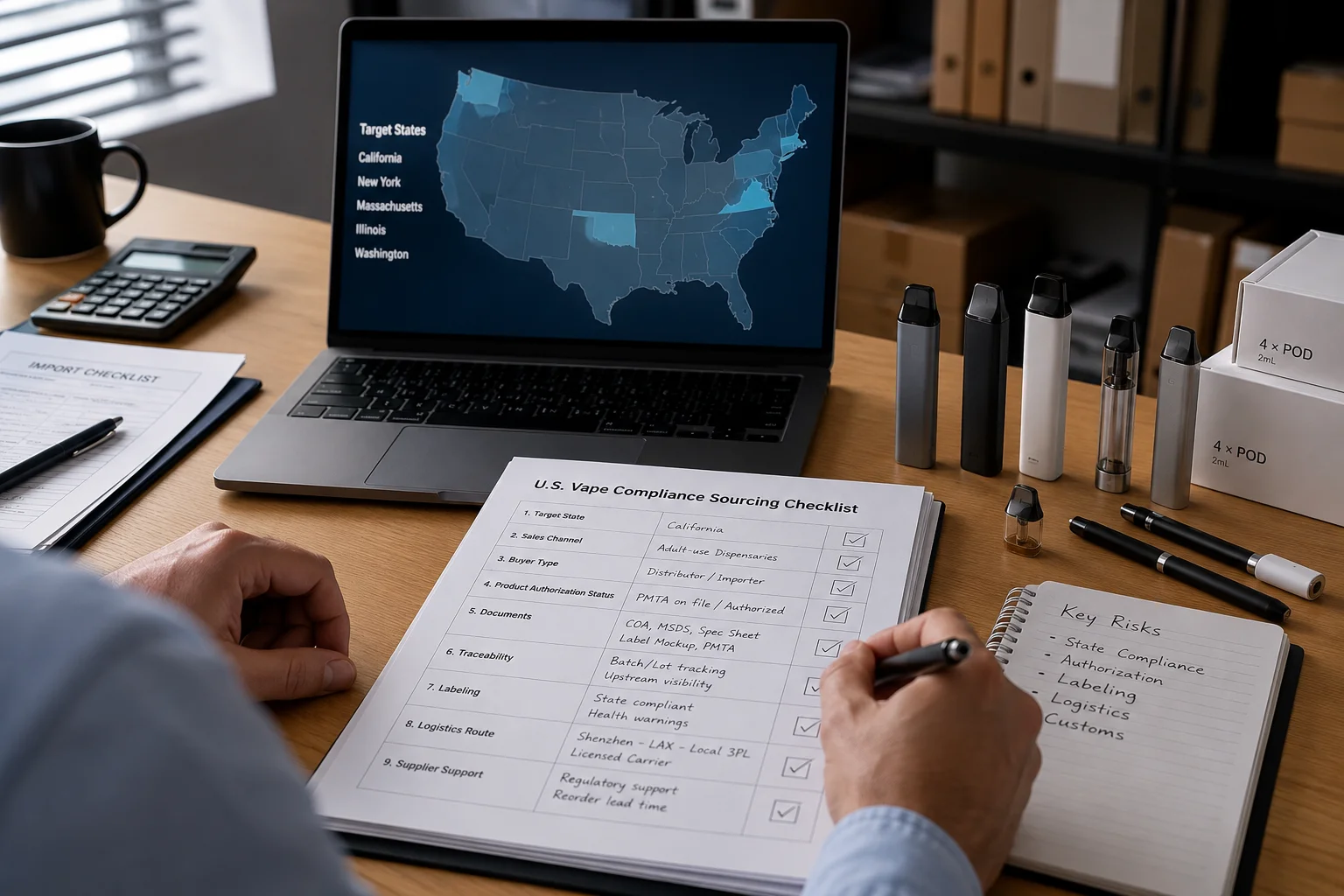
I have seen this problem many times in real buyer talks. A buyer reads “global shipping” and then asks if the same delivery time applies to Germany, the UK, the United States, and the Middle East. Another buyer sees “EU warehouse fast delivery” and asks if all flavors, nicotine strengths, and device models are in that warehouse. These questions are not small website questions. They are buying-risk questions. If I do not separate the claim clearly, the buyer cannot plan his selling schedule, customer promise, or stock budget with confidence.
1. Why Vape Buyers Care About Clear Market Claims?
I see buyers worry when a page sounds confident but not specific. They fear delay, wrong stock, and customer complaints after payment.
Vape buyers care about clear market claims because each market can have different delivery routes, stock locations, product versions, and order conditions.[^1] Buyers need to know what applies to their own country before they promise products to shops, wholesalers, or online customers.
What buyers are really checking
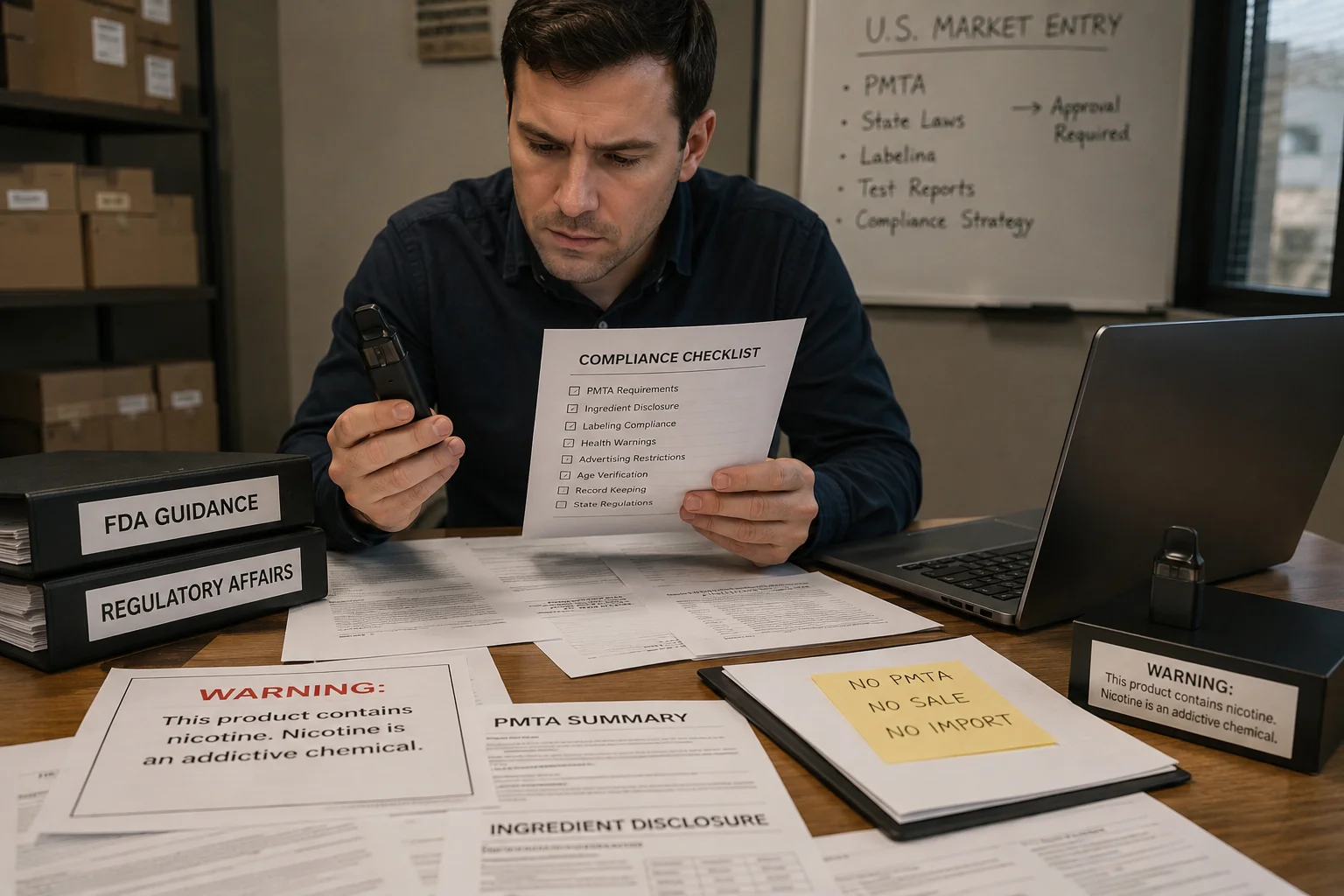
When I talk with importers and distributors, I find that they do not only ask, “What is the price?” They ask where the goods are, how long delivery may take, what product version is available, and whether the product can match their market needs. A vague claim makes them slow down.
| Buyer concern | What I need to clarify | Why it matters |
|---|---|---|
| Delivery route | China shipment, EU warehouse, US warehouse, or other route | The buyer needs to plan selling time |
| Stock status | Ready stock or production order | The buyer needs real lead time |
| Product scope | Which models, flavors, and nicotine levels | The buyer needs market fit |
| Market boundary | Which country or region the claim applies to | The buyer needs lower risk |
| Order condition | MOQ, payment term, and final confirmation | The buyer needs a workable deal |
I have learned that clear market claims reduce back-and-forth messages. They also protect the buyer’s reputation. If a smoke shop owner tells his customers that new vape products will arrive next week, he needs the supplier claim to be real for his exact order. A general sentence cannot support that promise. I prefer to write claims with country, warehouse, product range, and stock status, because that makes the buyer feel safe enough to continue.
2. Global Vape Claims vs Market-Specific Vape Claims: What Is the Difference?
I see many pages use “global” as a shortcut. The word looks big, but it can hide the details buyers need most.
Global vape claims describe broad supplier capability, while market-specific vape claims describe support for a certain country or region. The difference is important because a global claim does not always mean the same delivery speed, product availability, or order condition in every market.[^2]
The two claim types must not be mixed
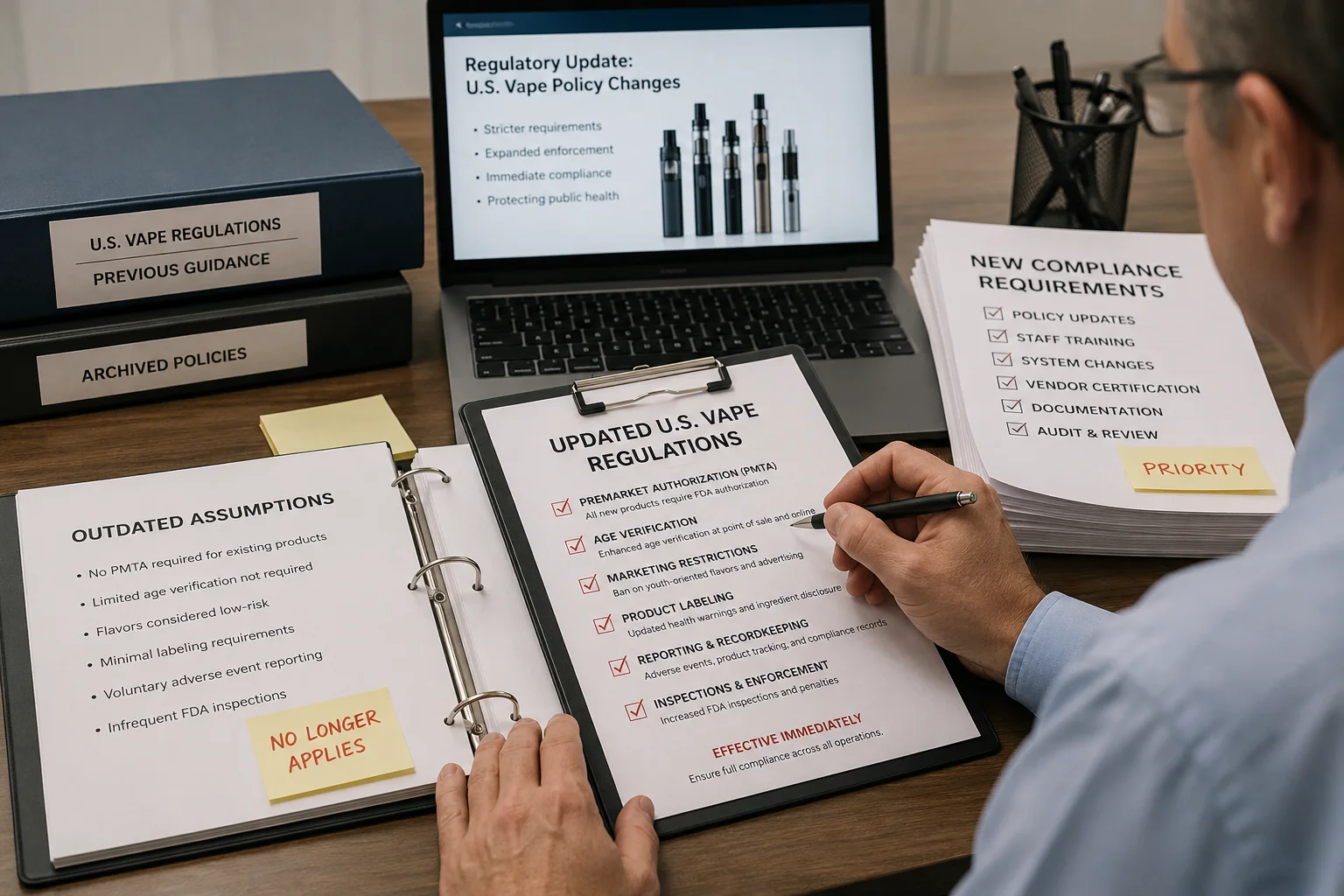
I treat global claims and market-specific claims as two different layers. A global claim can show that I can work with many buyers and discuss many routes. A market-specific claim must be tighter. It should say where the stock is, which products are included, and what still needs checking before order confirmation.
| Claim type | Example | What the buyer may think | What I should add |
|---|---|---|---|
| Global claim | “We support global shipping” | Shipping is easy to every country | Routes depend on country and order |
| Market-specific claim | “EU warehouse fast delivery” | All EU orders ship fast | Which EU countries, products, and stock |
| Product claim | “Hot-selling disposable vape” | The same version fits all markets | Product version needs market check |
| Stock claim | “Ready stock available” | All SKUs are in stock | SKU list and quantity need confirmation |
I have seen buyers misunderstand “global shipping” as “same delivery speed and same customs risk everywhere.[^3]” I do not think that is a safe way to write. I prefer to say that I can discuss global supply options, but final route and delivery depend on the country, order size, product type, and current logistics status. This wording may look less exciting, but it builds stronger trust. Buyers know I am not hiding the boundary. They also know I will check their order before I confirm a promise.
3. How Mixed Claims Create Confusion for Importers, Distributors, and Retailers?
I see confusion start when one sentence promises global reach and the next sentence promises local speed. The buyer cannot know which one rules.
Mixed claims create confusion because buyers may assume that the same product, stock, delivery route, and order condition apply everywhere. Importers, distributors, and retailers then risk making downstream promises that the supplier’s page cannot actually support.[^4]

Where the confusion appears
In my daily work, the confusion often appears after the buyer reads the page, not before. The buyer says, “Your page says EU warehouse. Can I get this model tomorrow?” Then I need to ask which country, which quantity, which SKU, and which product version. The buyer may feel the page already promised too much.
| Mixed message on page | Buyer assumption | Real question I must answer |
|---|---|---|
| “Global shipping + EU fast delivery” | Every market gets fast delivery | Which country and route? |
| “All models available” | All models are in local stock | Which SKUs are actually there? |
| “Suitable for many markets” | No market check is needed | What is the target market? |
| “Low MOQ worldwide” | Same MOQ for all products | Which product and packaging? |
Why downstream promises matter
A distributor does not buy only for himself. He may sell to vape shops, smoke shops, online sellers, and convenience stores. If he promises a launch date and the goods do not arrive, his own customer trust gets hurt. A retailer may plan a weekend promotion. A small trader may post products online before stock is confirmed. These buyers need clear supplier claims because they carry the risk in front of their customers. I try to remember that my page is not just marketing. It becomes part of the buyer’s planning document. If the claim is not clear, the buyer may either delay the order or ask the same questions again and again.
4. Why Compliance Statements Must Match the Target Market?
I see buyers become careful when a page talks about compliance in a broad way. They know one country is not the same as another.
Compliance statements must match the target market because vape rules, documentation needs, product limits, and import checks can differ by country or region.[^5] A supplier should not present broad compliance wording as a universal guarantee[^6] for every buyer and every order.
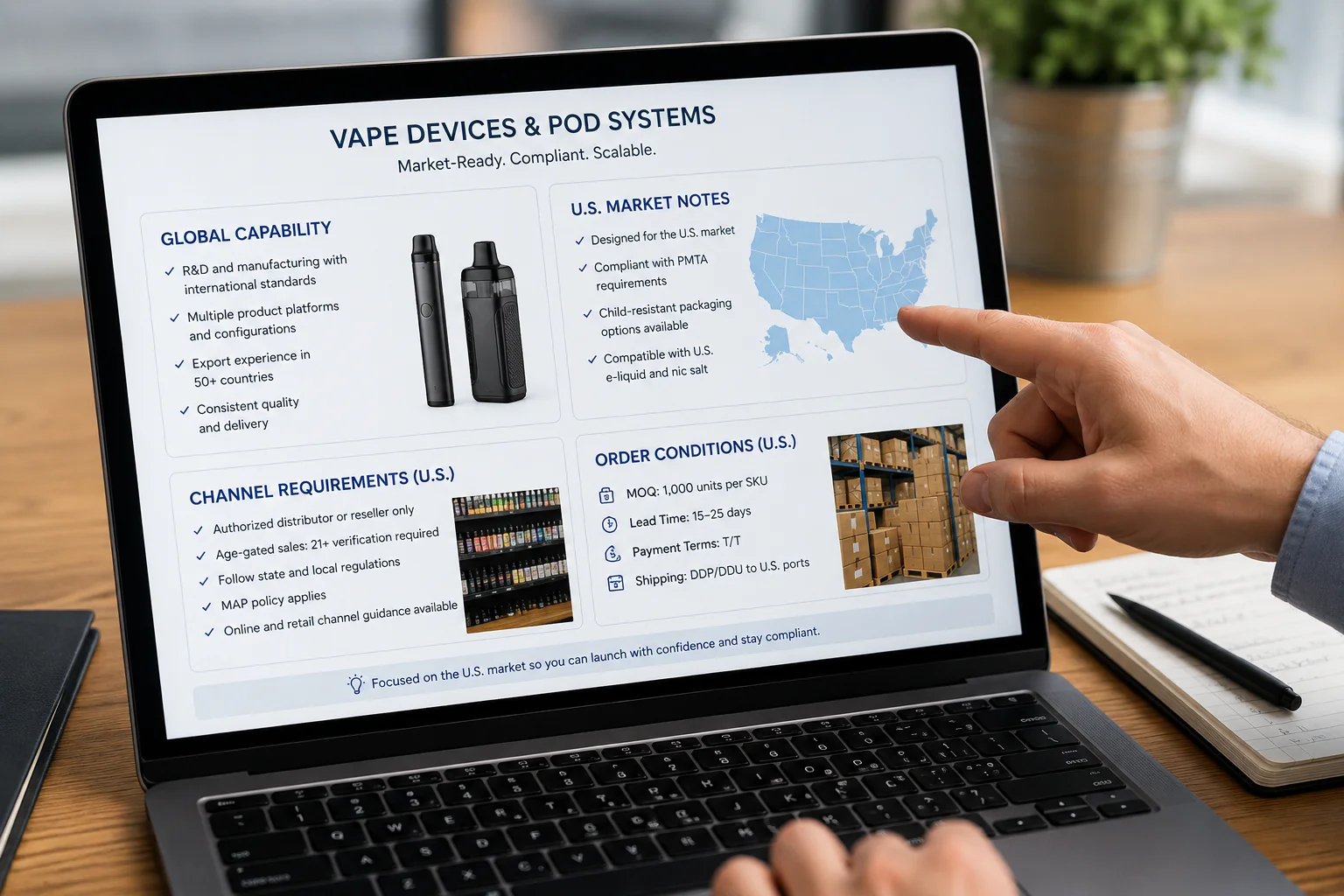
I keep compliance wording cautious
I am not a legal authority, and I do not present myself as one. I can support buyers with product information, available documents, and order details. I can also discuss past supply experience. But I still need to confirm every order by target market, product version, and current requirement.
| Statement style | Trust level | Better supplier wording |
|---|---|---|
| “Compliant everywhere” | Low trust | Avoid this wording |
| “Suitable for EU market” | Medium trust | State product scope and check status |
| “Documents available” | Better | List documents and confirm per order |
| “Market requirements need order check” | Stronger trust | Explain what will be checked |
Why broad compliance claims create risk
A broad compliance sentence may sound helpful, but it can create danger for the buyer. If the buyer imports a product and later finds that the exact SKU, label, nicotine level, packaging, or document set does not match his market need, the problem becomes expensive. The problem may include delay, extra cost, returned goods, or customer loss.[^7] I prefer to separate marketing information from final order confirmation. I can say that some product lines have certain documents or can be prepared for certain markets, but I should not say that every product is always fit for every market. This careful language helps serious buyers. They do not want a supplier who promises everything. They want a supplier who checks details before money and shipment.
5. Common Trust Problems Caused by One-Page Global Vape Marketing?
I see one-page global marketing create a strong first impression. Then trust drops when the buyer asks for exact details.
One-page global vape marketing causes trust problems when it blends broad ability, local stock, fast delivery, product range, and market fit without clear boundaries. Buyers may question whether the supplier understands their real procurement risk.[^8]
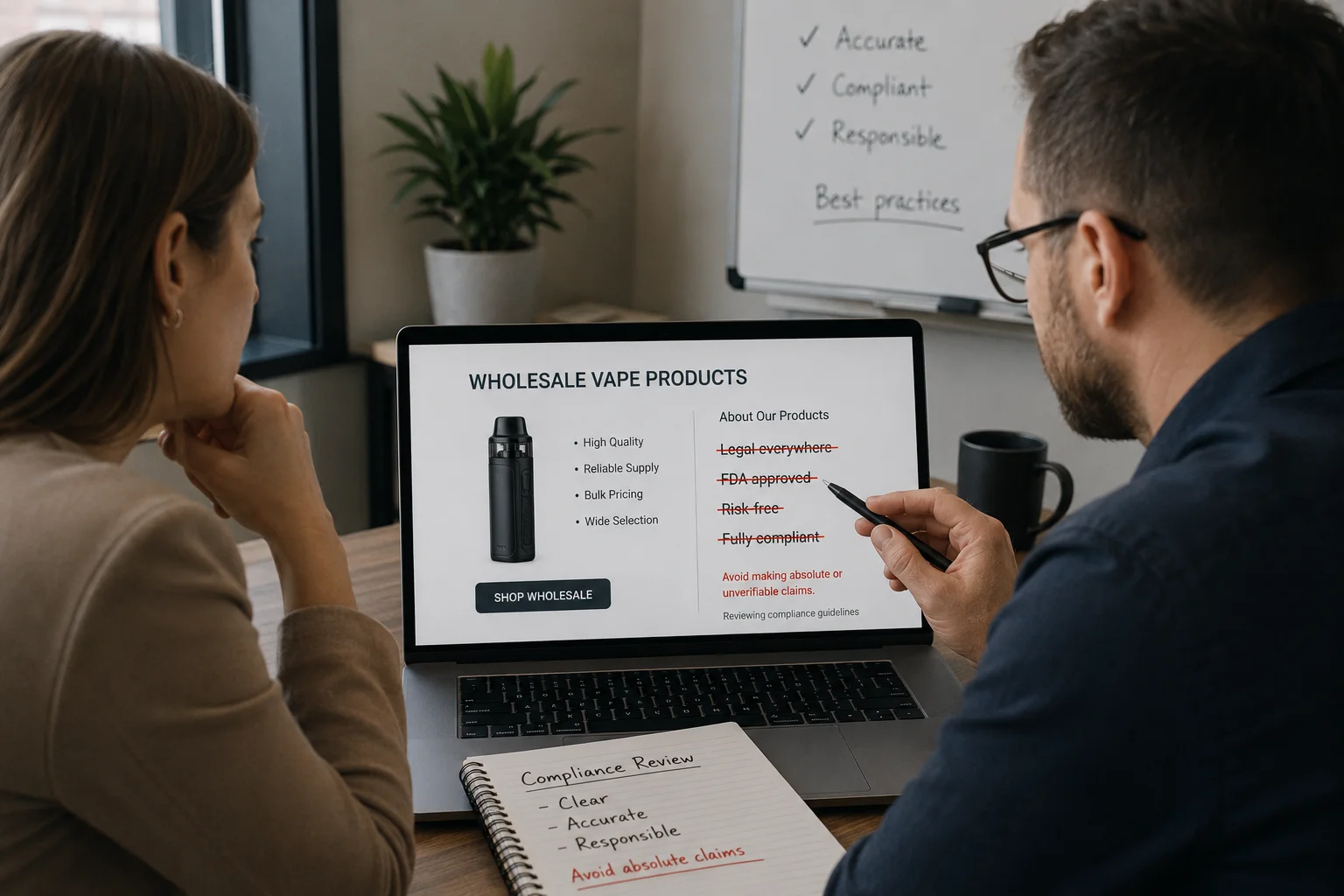
The trust problems I often see
A single page can be useful, but it must not push every claim into one place without structure. When I see too many promises in one block, I know buyers will start checking each one. They may not say they distrust the supplier directly. They may just ask repeated questions, slow the order, or request proof again.
| Trust problem | What causes it | Buyer reaction |
|---|---|---|
| Delivery doubt | “Fast shipping worldwide” | Buyer asks route and time again |
| Stock doubt | “Warehouse stock available” | Buyer asks SKU list and quantity |
| Product doubt | “Best for all markets” | Buyer asks market version details |
| Compliance doubt | Broad certification wording | Buyer asks documents and limits |
| Service doubt | No order condition listed | Buyer asks MOQ, lead time, and after-sales |
Why repeated questions are a warning sign
I do not see repeated questions as a buyer problem. I see them as a page problem. If three buyers ask whether EU warehouse stock applies to the same model, then the page is not clear enough. If two buyers ask whether “global shipping” includes their country, then the route wording is too broad. Clear pages reduce doubt before the first message.[^9] They also make sales talks more useful. I can spend less time correcting assumptions and more time confirming the real order. In vape B2B trade, trust is built from small details. A page that sounds exciting but cannot answer basic order questions may create more hesitation than orders.
6. How to Structure Vape Product Pages for Different Countries and Regulations?
I see better buyer response when the page separates each promise. Buyers can read the part that fits their market and ignore the rest.
A vape product page should separate global capability, local warehouse capability, market-specific notes, product scope, stock status, shipping route, and order conditions. Each section should state the country or region where the promise applies and what still needs confirmation.[^10]

A clear page structure I prefer
I like to build vape product pages in layers. The first layer explains who I can serve in a broad way. The next layer explains local stock or warehouse support. The next layer explains the exact product range and order condition. This structure helps buyers check fast.
| Page section | What I include | What I avoid |
|---|---|---|
| Global capability | Markets I can discuss and supply experience | Universal safety claims |
| Local warehouse | Warehouse region, available SKUs, stock status | Saying all products are local |
| Product scope | Model, puffs, flavor, nicotine, packaging | “All versions available” without list |
| Shipping route | Main route options and need for confirmation | Same speed for every country |
| Order terms | MOQ, lead time, customization, after-sales | Hidden conditions |
How I make market boundaries visible
I use clear labels such as “EU warehouse stock,” “China factory shipment,” “US market discussion,” or “order-by-order route confirmation.” These labels are simple, but they help buyers avoid wrong assumptions. I also place stock tables near the claim. If a product is in local stock, I list the exact model and quantity range when possible. If the stock changes often, I say that the buyer should confirm before payment. This is not weak selling. This is safer selling. Vape products move quickly, and stock can change daily. A clear page should help the buyer move fast without guessing. I also keep compliance-related wording next to the target market note, not inside a global claim.
7. What Information Wholesale Buyers Expect Before Placing Vape Orders?
I see wholesale buyers move faster when I give practical order facts early. They do not want to chase basic information.
Wholesale vape buyers expect clear information about product version, price range, MOQ, stock status, warehouse location, shipping route, delivery estimate, customization options, documents, and after-sales process before they place orders[^11] or promise goods to their customers.
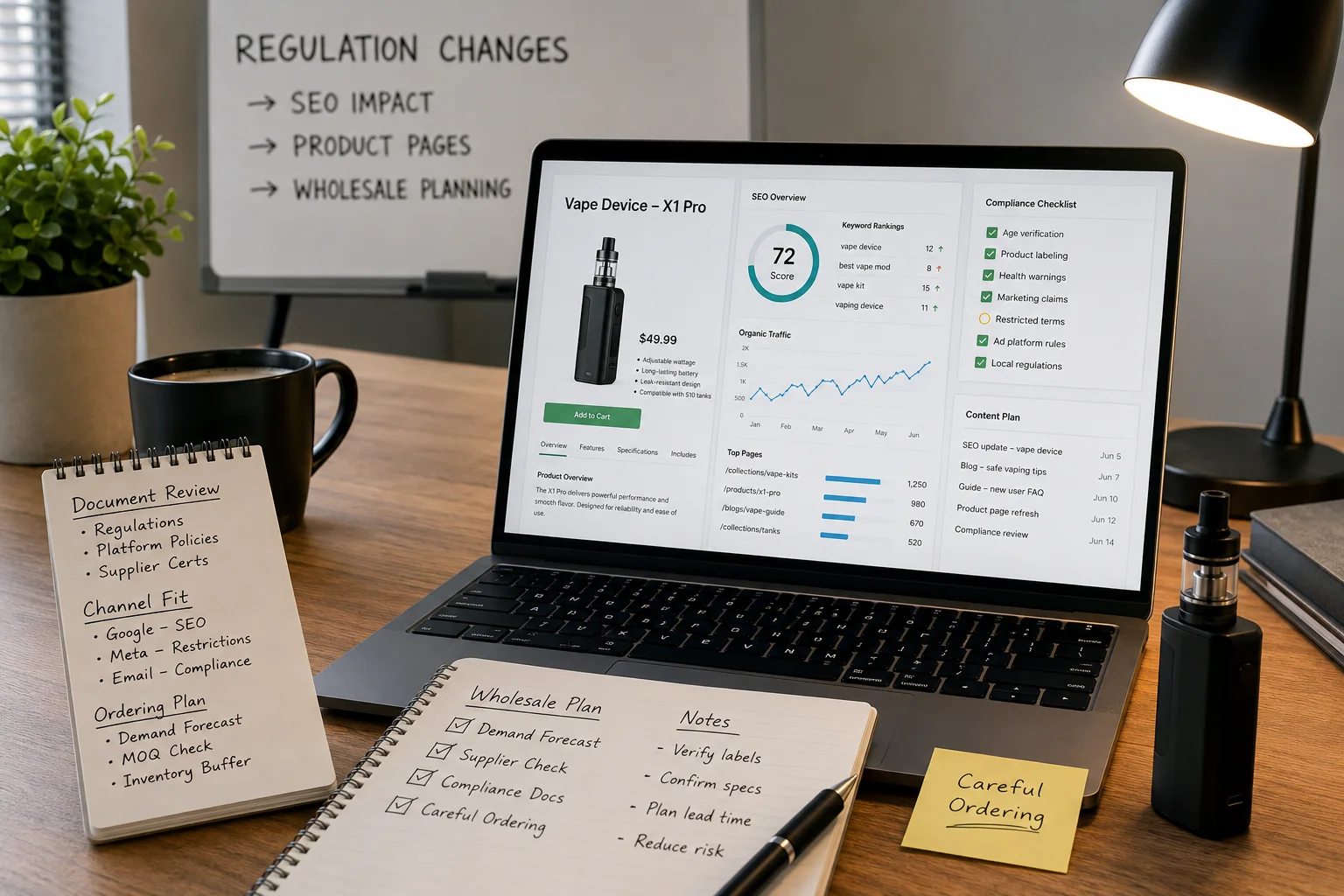
The order facts buyers ask me for
A serious buyer does not only ask for the cheapest price. He needs a complete picture. He may compare suppliers, but he also compares risk. If my information is clear, he can decide faster. If my page hides basic details, he may think the order will be hard later.
| Information type | Buyer question | My best answer style |
|---|---|---|
| Product version | Which model and specification? | Give exact SKU and version |
| MOQ | What is the minimum order? | State MOQ by product or packaging |
| Stock | Is it ready now? | Confirm SKU and quantity |
| Warehouse | Where will it ship from? | Name the warehouse region |
| Delivery | How long may it take? | Give route-based estimate |
| Documents | What documents are available? | List and confirm per order |
| Customization | Can I use my brand? | Explain logo, package, and lead time |
| After-sales | What happens if there is a problem? | State process and proof needed |
Why these details protect the buyer
I have worked with buyers who needed goods for a promotion, a new shop opening, or a distributor order. In those cases, the wrong delivery assumption can damage their plan. A buyer may also need to check flavor list, language label, warning text, or packaging before he confirms with his own customer. I try to send these details early because they reduce pressure on both sides. Clear information also helps me qualify the buyer. If his target market does not match the product version, we can discuss another option before production or shipment. This saves time. It also helps avoid disputes after the order starts.
8. How a Transparent Vape Supplier Builds Long-Term Buyer Confidence?
I see long-term trust grow when I tell buyers both what I can do and what still needs checking.
A transparent vape supplier builds buyer confidence by separating broad capability from market-specific promises, confirming stock and routes before payment, using cautious compliance wording, and giving clear order conditions[^12] that help buyers protect their downstream customers.

Transparency is a supply chain habit
For me, transparency is not only a sentence on a website. It is a working habit. I need to check stock, confirm warehouse, review route options, explain product scope, and tell the buyer when something may change. This habit makes the buyer feel that I am helping him reduce risk.
| Transparent action | What I do | How it helps the buyer |
|---|---|---|
| Separate claims | I split global and local promises | Buyer knows what applies |
| Confirm stock | I check SKU before payment | Buyer avoids false planning |
| Explain route | I discuss country and order route | Buyer understands delivery risk |
| Use cautious words | I avoid universal compliance claims | Buyer can verify properly |
| Record order terms | I confirm MOQ, lead time, and scope | Buyer avoids later dispute |
The buyer confidence I want to create
I want buyers to feel that my page is useful before they contact me. I also want them to feel that my message matches the page after they contact me. If the page says one thing and the sales chat says another thing, trust drops. If the page sets clear boundaries and the sales chat confirms the exact order, trust grows. I have seen buyers return because they remember that I did not overpromise. They may still negotiate price, but they also care about certainty. Vape buyers often move fast, and they need suppliers who can move fast without creating hidden risk. A transparent page helps me start the relationship in the right way. It tells the buyer that I respect his market, his customers, and his reputation.
Conclusion
I build stronger vape buyer trust when I separate global ability, local support, stock facts, route details, and market-specific order checks.
[^1]: "Import Regulations - International Trade Administration", https://www.trade.gov/import-regulations. Institutional trade-facilitation sources such as the World Customs Organization and International Trade Centre explain that import procedures, documentary requirements, and clearance conditions depend on the destination jurisdiction and consignment details. Evidence role: general_support; source type: institution. Supports: Cross-border trade procedures and import requirements vary by destination country and shipment characteristics, supporting the need to qualify market-specific delivery and order claims.. Scope note: This supports the broader logistics and market-qualification point, but it does not prove conditions for any specific vape order or warehouse. [^2]: "Efficiency of customs clearance process (1=low to 5=high) | Data", https://data.worldbank.org/indicator/LP.LPI.CUST.XQ. International logistics indicators, including country-level measures of customs and infrastructure performance, show that border processing and delivery environments vary by market, supporting the need to qualify global delivery claims. Evidence role: general_support; source type: institution. Supports: International logistics performance and border procedures differ across countries, so a global shipping capability does not imply identical delivery time or order conditions everywhere.. Scope note: The evidence is about international logistics generally and does not directly measure vape-product delivery performance. [^3]: "Trade facilitation - OECD", https://www.oecd.org/en/topics/sub-issues/trade-facilitation.html. International customs and trade-facilitation data document country-level differences in customs procedures and clearance performance, supporting the claim that customs risk cannot be assumed to be the same in every market. Evidence role: general_support; source type: institution. Supports: Customs administration, clearance efficiency, and border-control practices vary by country, making uniform customs-risk assumptions unreliable.. Scope note: The source would support variation in customs environments generally, not the risk profile of a specific shipment. [^4]: "Evaluating the drivers of B2B performance: An empirical ... - PMC - NIH", https://pmc.ncbi.nlm.nih.gov/articles/PMC11244795/. Peer-reviewed supply-chain research links supplier communication, delivery reliability, and information sharing to downstream planning performance and buyer trust, supporting the claim that vague supplier promises can create risks for resellers. Evidence role: mechanism; source type: paper. Supports: Supplier information quality and delivery reliability affect downstream planning, commitments, and buyer trust in supply-chain relationships.. Scope note: The evidence is likely to concern supply chains broadly rather than the vape sector specifically. [^5]: "Electronic Nicotine Delivery Systems - PMC - NIH", https://pmc.ncbi.nlm.nih.gov/articles/PMC3627474/. Public-health and regulatory sources such as the WHO and European Commission describe jurisdiction-specific rules for electronic nicotine delivery systems, including product limits, notifications, labeling, and market restrictions. Evidence role: expert_consensus; source type: institution. Supports: E-cigarette and electronic nicotine delivery system regulation differs across jurisdictions, including limits, notifications, labeling, and restrictions.. [^6]: "FTC Policy Statement Regarding Advertising Substantiation", https://www.ftc.gov/legal-library/browse/ftc-policy-statement-regarding-advertising-substantiation. Advertising-substantiation guidance from government regulators states that objective marketing claims must have a reasonable basis and should not mislead consumers or buyers about the scope of the claim. Evidence role: expert_consensus; source type: government. Supports: Objective marketing claims, including compliance-type claims, should be substantiated and not presented in a misleadingly broad way.. Scope note: This supports the principle of scoped and substantiated compliance language; it is not specific legal advice for vape products or B2B transactions. [^7]: "Penalties Program - U.S. Customs and Border Protection", https://www.cbp.gov/trade/programs-administration/penalties. Government customs and import-enforcement guidance explains that noncompliant goods may be detained, refused entry, penalized, returned, or destroyed, supporting the article’s description of delay and added cost risks. Evidence role: case_reference; source type: government. Supports: Import noncompliance can result in detention, refusal of entry, penalties, or return/export of goods, creating delay and cost.. Scope note: The source would substantiate regulatory and logistics consequences, while customer loss remains a downstream commercial inference. [^8]: "The Impact of Perceived Risk on Consumers' Cross-Platform Buying ...", https://pmc.ncbi.nlm.nih.gov/articles/PMC7673429/. Research on B2B purchasing and buyer-supplier relationships finds that incomplete or ambiguous supplier information increases perceived risk and can weaken trust during supplier evaluation. Evidence role: mechanism; source type: paper. Supports: Information quality, uncertainty, and perceived risk influence buyer trust and supplier evaluation in B2B purchasing contexts.. Scope note: The evidence is contextual and may not examine vape-product pages specifically. [^9]: "The Impact of Perceived Risk on Consumers' Cross-Platform Buying ...", https://pmc.ncbi.nlm.nih.gov/articles/PMC7673429/. Studies of online information quality and trust show that clearer and more complete product information is associated with lower perceived risk and greater buyer confidence before purchase or inquiry. Evidence role: mechanism; source type: paper. Supports: Clear, complete, and high-quality online product information reduces perceived uncertainty and supports trust before purchase or inquiry.. Scope note: This supports the communication mechanism generally; it does not quantify message reduction for this article’s vape buyers. [^10]: "E-commerce - OECD Legal Instruments", https://legalinstruments.oecd.org/en/instruments/OECD-LEGAL-0422. Institutional guidance on online commerce states that sellers should disclose material transaction terms, including delivery conditions and geographic limitations, before purchase decisions are made. Evidence role: expert_consensus; source type: institution. Supports: Online transaction guidance emphasizes clear disclosure of material terms, geographic limitations, delivery conditions, and other pre-contract information.. Scope note: Most such guidance is written for consumer or general e-commerce contexts, so its use here is contextual for B2B vape pages. [^11]: "[PDF] EFFECTIVE METHODOLOGIES FOR SUPPLIER SELECTION AND ...", https://etda.libraries.psu.edu/files/final_submissions/419. Supplier-selection research consistently identifies multiple evaluation criteria beyond price, including product quality, delivery reliability, service support, technical capability, and transaction terms. Evidence role: expert_consensus; source type: paper. Supports: B2B supplier selection commonly considers price, product specifications, delivery reliability, service, documentation, and other risk-related criteria.. Scope note: The evidence supports B2B wholesale purchasing generally rather than proving the exact information checklist for vape buyers. [^12]: "Supply chain transparency, explained | MIT Sloan", https://mitsloan.mit.edu/ideas-made-to-matter/supply-chain-transparency-explained. Buyer-supplier relationship research shows that transparency and information sharing reduce uncertainty and are positively associated with trust in supply-chain partners. Evidence role: mechanism; source type: paper. Supports: Transparency, information sharing, and clear communication are associated with trust and confidence in buyer-supplier relationships.. Scope note: The support is for supply-chain relationships broadly and does not directly test the specific page-structure practices described for vape suppliers.