
Are you seeing disposable vapes with insane puff counts and feeling confused? The numbers keep getting bigger. It's a race that distracts from what truly matters: quality and real value.
The short answer is that puff counts like 300,000 are not real. They are marketing numbers designed to grab attention. The actual performance is limited by physical constraints like e-liquid capacity and coil lifespan[^1], making the real maximum puff count much, much lower.
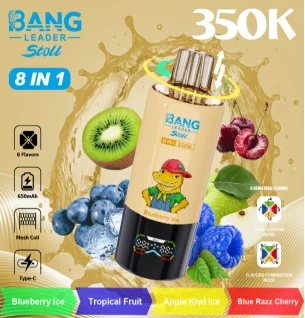
I've been in the vaping industry for over 15 years, and I've seen it all. I talk to buyers like you every single day. We've gone from simple 600-puff sticks to these wild claims of hundreds of thousands of puffs. It's created a lot of confusion in the market. So, I want to pull back the curtain and show you what's really going on. Let's talk about what professional buyers should be looking for instead of getting caught in this numbers game.
Why Are Disposable Vape Puff Counts Getting So High?
Feeling overwhelmed by the race for the highest puff count? You see a new product every week with a bigger number. It's a simple marketing war that's getting out of hand.
Disposable vape puff counts are getting so high purely because of intense market competition. Brands use bigger numbers on the packaging as a simple way to stand out on the shelf and seem like a better value, even if the number is not physically possible to achieve.
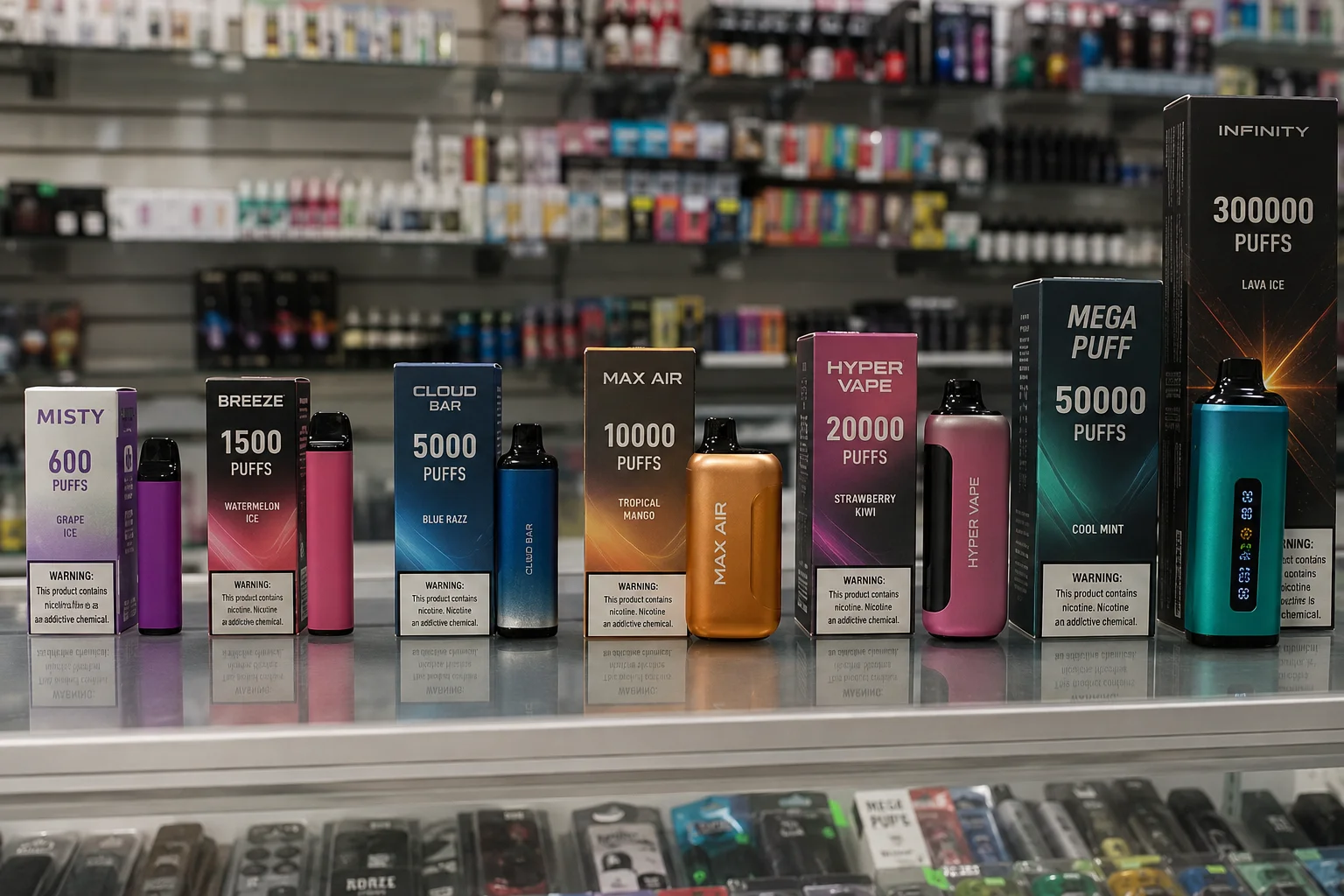
I remember when the first popular disposable, the Puff Bar, came out. It looked like a cigarette, was easy to carry, and offered about 600 puffs from 2ml of liquid[^2]. It was straightforward. But as more companies entered the market, the fight for customer attention began. How do you make your product look better than the one next to it? The easiest way was to increase the puff count. First, it went to 800 puffs, then 1,500, then 5,000. It felt like a logical progression. But then, the numbers just exploded. We quickly saw 10,000, 20,000, and now these completely unrealistic figures in the hundreds of thousands. It has become a pure numbers game. Brands feel they have to put a bigger number on the box just to keep up, even if it has no connection to the actual performance of the device inside.
Are 100K, 300K, or 350K Puff Disposable Vapes Real?
Do you see a vape promising 300,000 puffs and wonder if it's even possible? You're right to be skeptical. These numbers defy the basic physics of how these devices work.
No, disposable vapes claiming 100,000 puffs or more are not real. A disposable vape's puff count is limited by its e-liquid capacity and coil life. These massive numbers are just a marketing tactic, a "digital game" played on the packaging to attract uninformed buyers.
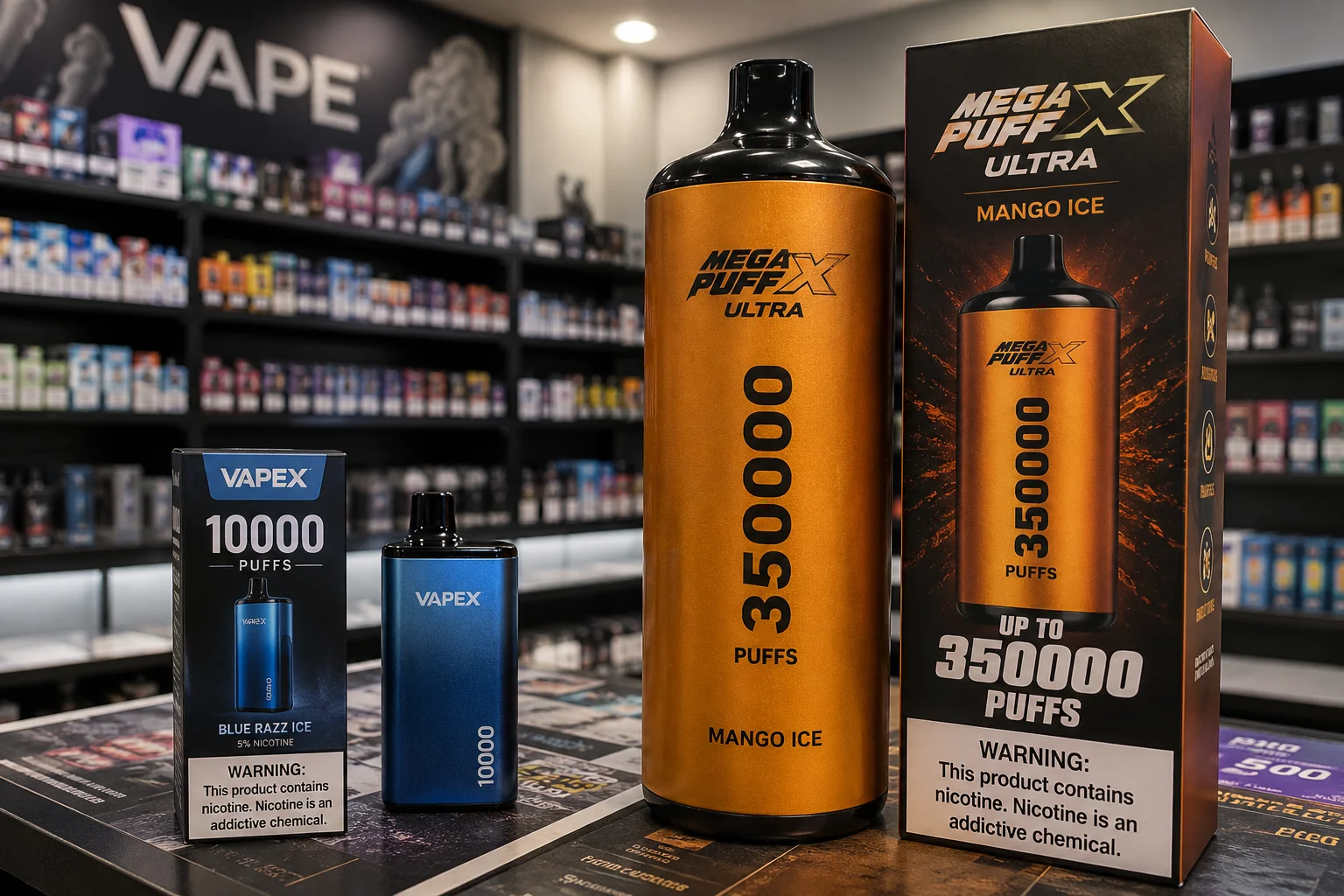
Let's be very direct here. It's a fantasy. A disposable vape is designed to be portable, something you can hold in your hand. This simple fact limits its physical size. You can only fit so much battery and so much e-liquid into a device that fits in your pocket. No one is going to carry around a disposable vape the size of a water bottle or a hookah that you have to set on a table. Because the physical size is limited, the e-liquid capacity is limited. And if the e-liquid capacity is limited, the puff count is limited. These products claiming hundreds of thousands of puffs are playing a game with numbers on a box. The number is not connected to the hardware inside. As a professional, you need to see past this and focus on the real specifications of the product, not the marketing hype.
How Many Puffs Can a Disposable Vape Actually Have?
You're tired of the crazy marketing numbers and just want the truth. So what's the real limit? It all comes down to simple math and the physical components inside the device.
A disposable vape's true puff count is determined by its e-liquid volume. A good rule of thumb is that 1ml of e-liquid delivers around 200 puffs[^3]. Therefore, even a very large disposable with 50ml of liquid would only provide about 10,000 real puffs[^4].
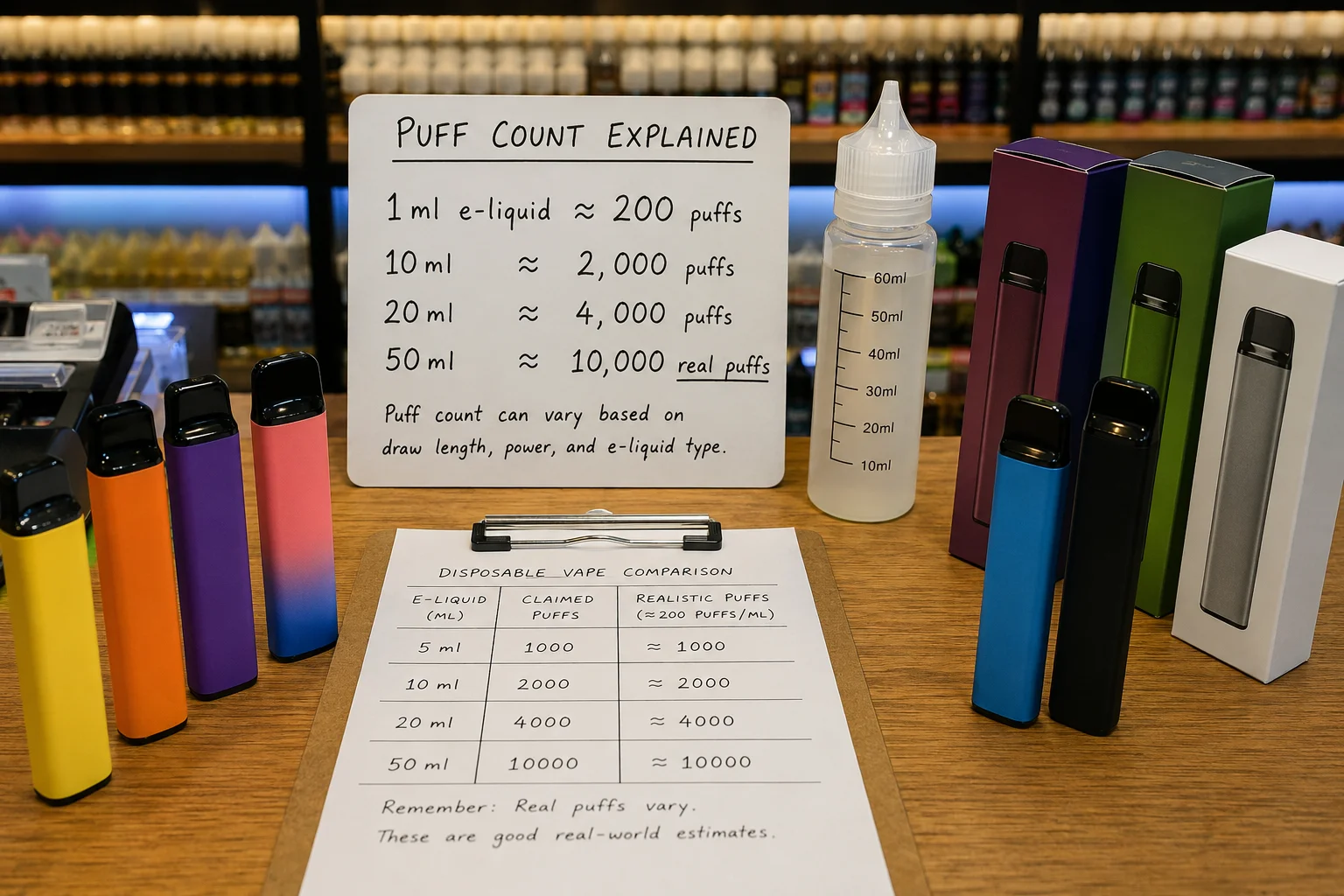
Let's break down the math because it's the key to cutting through all the noise. The industry standard is that 1 milliliter (ml) of e-liquid provides roughly 200 puffs. This can vary a little based on the coil and how a person vapes, but it's a very solid baseline. Now, think about the largest disposable vapes you've seen. Some of the biggest ones on the market, like the ones designed to attach to a hookah, might hold up to 50ml of e-liquid. If we do the math (50ml x 200 puffs/ml), we get 10,000 puffs. This is the realistic maximum for even the most giant disposable devices. So when you see a standard, hand-held vape claiming 20,000, 50,000, or even 300,000 puffs, you know it's not based in reality. It's just a number printed on the packaging to win a marketing battle.
What Is the Relationship Between E-Liquid Capacity and Puff Count?
You want to make smart buying decisions. Understanding the direct link between the amount of liquid and the number of puffs is the most important step. Forget the box; look at the specs.
The relationship is direct and mathematical: more e-liquid allows for more puffs. The most reliable way to estimate a vape's real performance is to multiply its e-liquid capacity in milliliters (ml) by 200. This formula gives you a realistic puff count, not a marketing one.
To make this crystal clear, let's look at some common e-liquid volumes and what they translate to in the real world. I always advise my clients to ignore the big number on the front of the box and find the e-liquid capacity in the specifications. That's where the truth is.
Here's a simple table to help you estimate:
| E-Liquid Capacity (ml) | Realistic Puff Count (Approximate) | What the Box Might Claim |
|---|---|---|
| 10 ml | 2,000 Puffs | 5,000 - 8,000 Puffs |
| 15 ml | 3,000 Puffs | 10,000 - 15,000 Puffs |
| 20 ml | 4,000 Puffs | 18,000 - 25,000 Puffs |
| 30 ml | 6,000 Puffs | 30,000 - 50,000 Puffs |
| 50 ml | 10,000 Puffs | 75,000 - 100,000+ Puffs |
As you can see, the gap between reality and marketing grows larger as the numbers get bigger. A professional buyer uses this simple math to assess the true value of a product.
Why Does Real E-Liquid Volume Matter More Than the Puff Number on the Box?
You're trying to figure out what to trust. Is it the big, bold puff count or the small print listing the milliliters? The answer separates the amateurs from the pros.
Real e-liquid volume (ml) is a physical measurement, while the puff count on the box is often just a marketing number. Focusing on the milliliters gives you a much more accurate idea of a vape's lifespan and value, even if the ml number itself is sometimes slightly inflated[^5].
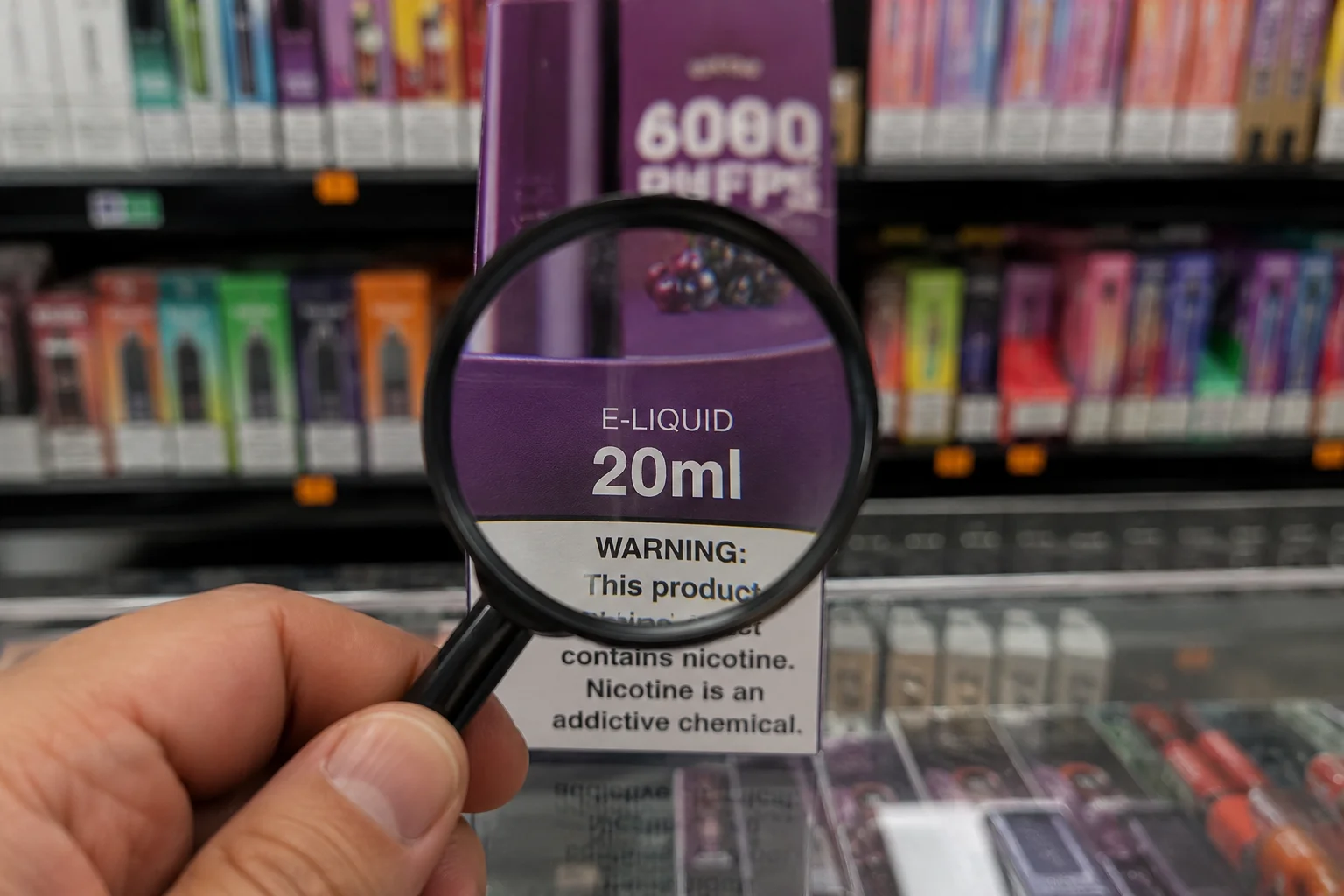
When I consult with new wholesale buyers, this is the first lesson I teach them: become obsessed with the milliliters. Why? Because it's a number that's at least tied to something physical. You can't just invent milliliters of liquid in the same way you can invent a puff count. Now, to be completely honest, some factories do misrepresent the e-liquid volume. They might say a device contains 30ml when it only has 15ml. But even if they double the real number, that's still much more honest than claiming a 15ml device gives you 100,000 puffs. An inflated ml spec is a small lie; an inflated puff count is a complete fantasy. By focusing on the ml, you are grounding your assessment in a physical reality. It's the single most important number to check when you are evaluating a new disposable vape product for your business.
Why Do Bigger Disposable Vapes Not Always Mean Better Quality?
You might think that a larger device must be better. It looks more impressive and probably holds more liquid, right? But size can be just as deceptive as the puff count.
A bigger disposable vape does not guarantee better quality. While it may hold more e-liquid, the overall user experience depends on the quality of the components, especially the coil. A cheap, oversized vape will still deliver a poor, burnt taste once the coil fails.
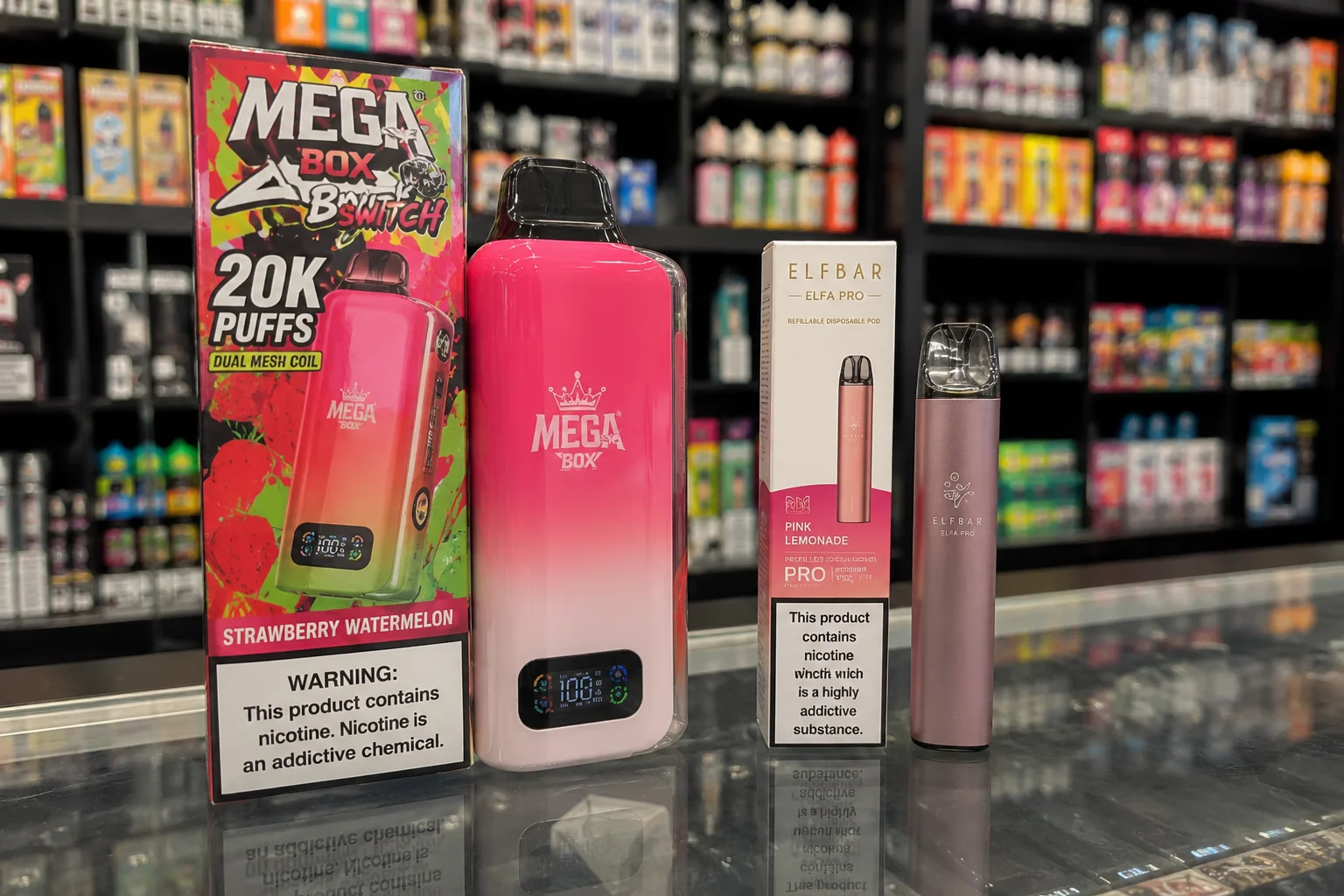
I've seen many buyers fall into this trap. They see a big, chunky device and assume it's a premium product with a long life. But the size of the plastic shell is easy to change. What's harder, and more expensive, is engineering a high-quality experience from start to finish. The most critical component for flavor and performance is the atomizer coil[^6]. You can have a device with a huge tank of e-liquid, but if the coil is low-quality, it will burn out long before the liquid is gone. This leaves your customer with a device that still produces vapor but tastes terrible. A smaller, well-made device from a reputable brand with a high-quality coil will always provide a better experience than a giant, poorly made device with a cheap coil. Don't judge a vape by its cover; judge it by the quality of its heart, which is the coil.
How Does Coil Lifespan Limit the Real Use of a Disposable Vape?
Ever had a disposable vape that started tasting great but ended up tasting burnt? This isn't a problem with the liquid; it's a problem with the hardware. The coil has a very real, physical limit.
The coil, or heating element, in a disposable vape degrades with use. After a certain number of heat cycles, it becomes carbonized and burns the cotton wick[^7], creating a harsh, burnt taste. This lifespan limit means the coil will fail long before you could ever reach an exaggerated puff count.
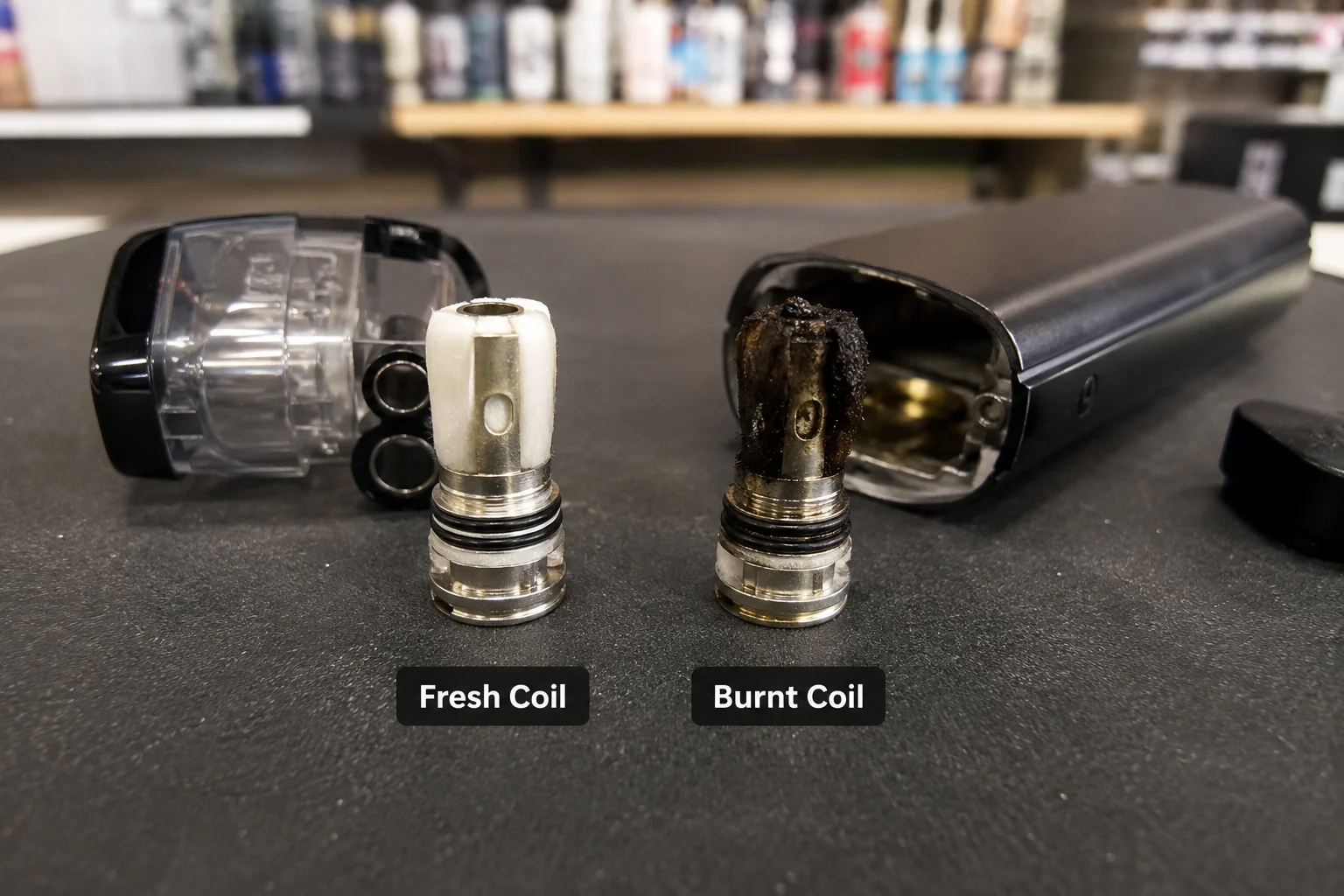
Think of the coil like the engine in a car and the e-liquid like the gas in the tank. You can have a massive gas tank, but it's useless if the engine is only designed to run for a limited number of miles before it breaks down. That's exactly what happens inside a disposable vape. The coil is a small wire that heats up hundreds of times to vaporize the liquid. This repeated heating, in contact with the e-liquid and cotton wick, causes residue to build up. Eventually, the coil gets so gunked up that it stops vaporizing the liquid cleanly and starts burning the wick instead. This is called carbonization, and it's what creates that awful burnt taste[^8]. No matter how much e-liquid is left in the tank, once the coil is dead, the vape is finished. This is the ultimate limiting factor that makes claims of 50,000+ puffs on a single coil impossible.
Why Do High-Puff Disposable Vapes May Taste Burnt Near the End?
You're wondering why that vape with a huge puff count started to taste bad halfway through. The problem is a mismatch between the amount of "fuel" and the life of the "engine."
High-puff disposable vapes often taste burnt because their single, non-replaceable coil cannot survive long enough[^9] to vaporize the large amount of e-liquid they contain. The coil degrades and carbonizes, creating a burnt flavor long before the liquid runs out.
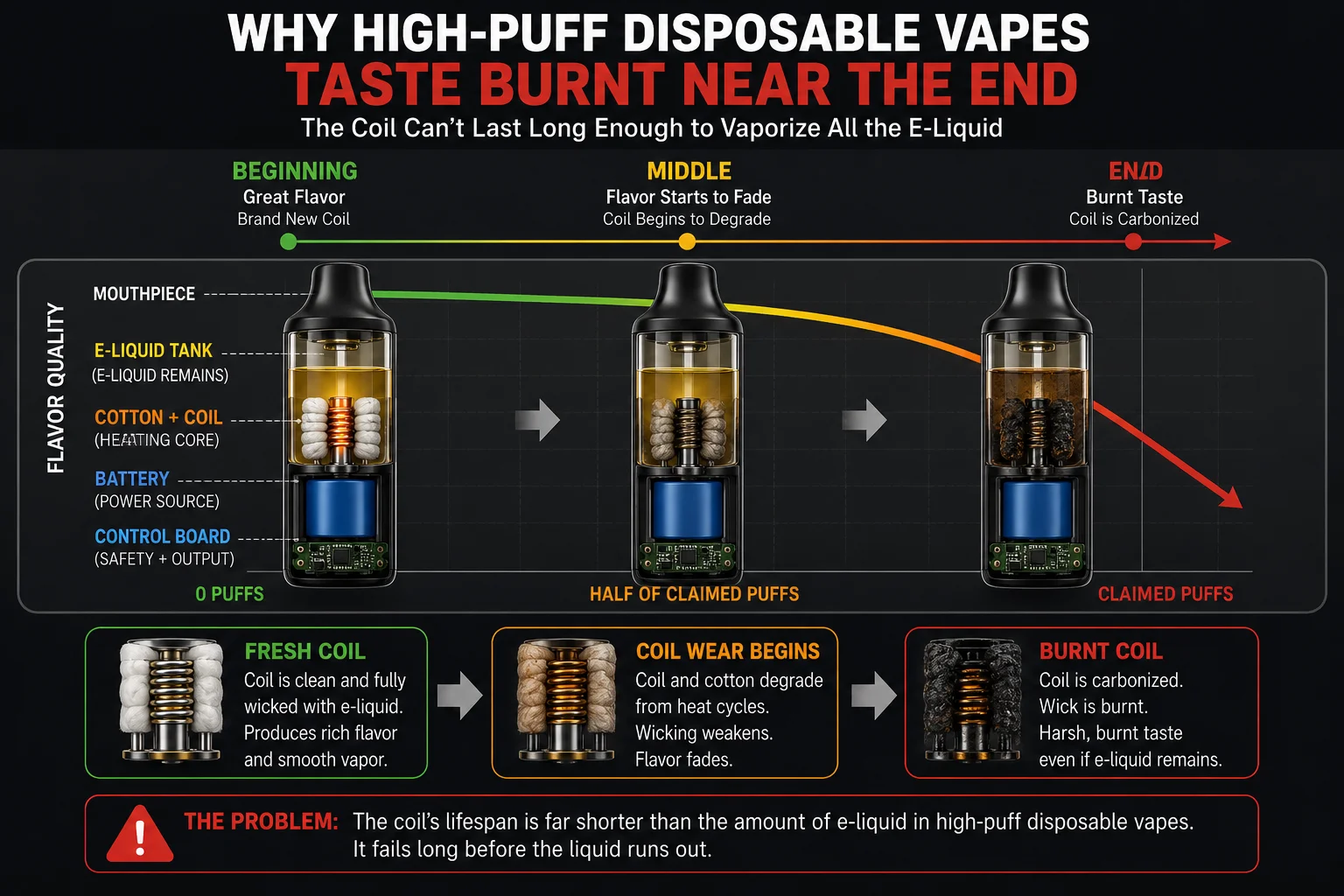
The promise of a high-puff vape is a long-lasting, consistent experience. The reality is often very different. The core issue is that the product is unbalanced. The manufacturer has put a huge "gas tank" (a large volume of e-liquid) into a device with a standard, short-lived "engine" (a basic atomizer coil). For the first few thousand puffs, everything works great. The flavor is clean and strong. But the coil is working hard, heating and cooling constantly. The residue builds up. Eventually, you cross a threshold where the coil can no longer function properly. It starts to burn. So even though you might have 50% or more of your e-liquid left, every puff from that point on is harsh and unpleasant. For your customers, this is a terrible experience. They feel cheated because the product didn't deliver on its promise of a long, enjoyable use.
What Should Vape Wholesalers Check Before Buying High-Puff Products?
You want to protect your business and your customers from these misleading products. So, what practical steps can you take? You need to become a detective and ask the right questions.
Wholesalers should ignore the advertised puff count and investigate the core specs. Ask for the real e-liquid capacity (ml), battery size (mAh), and coil specifications. Most importantly, always test samples thoroughly to check for flavor consistency from the first puff to the very last.
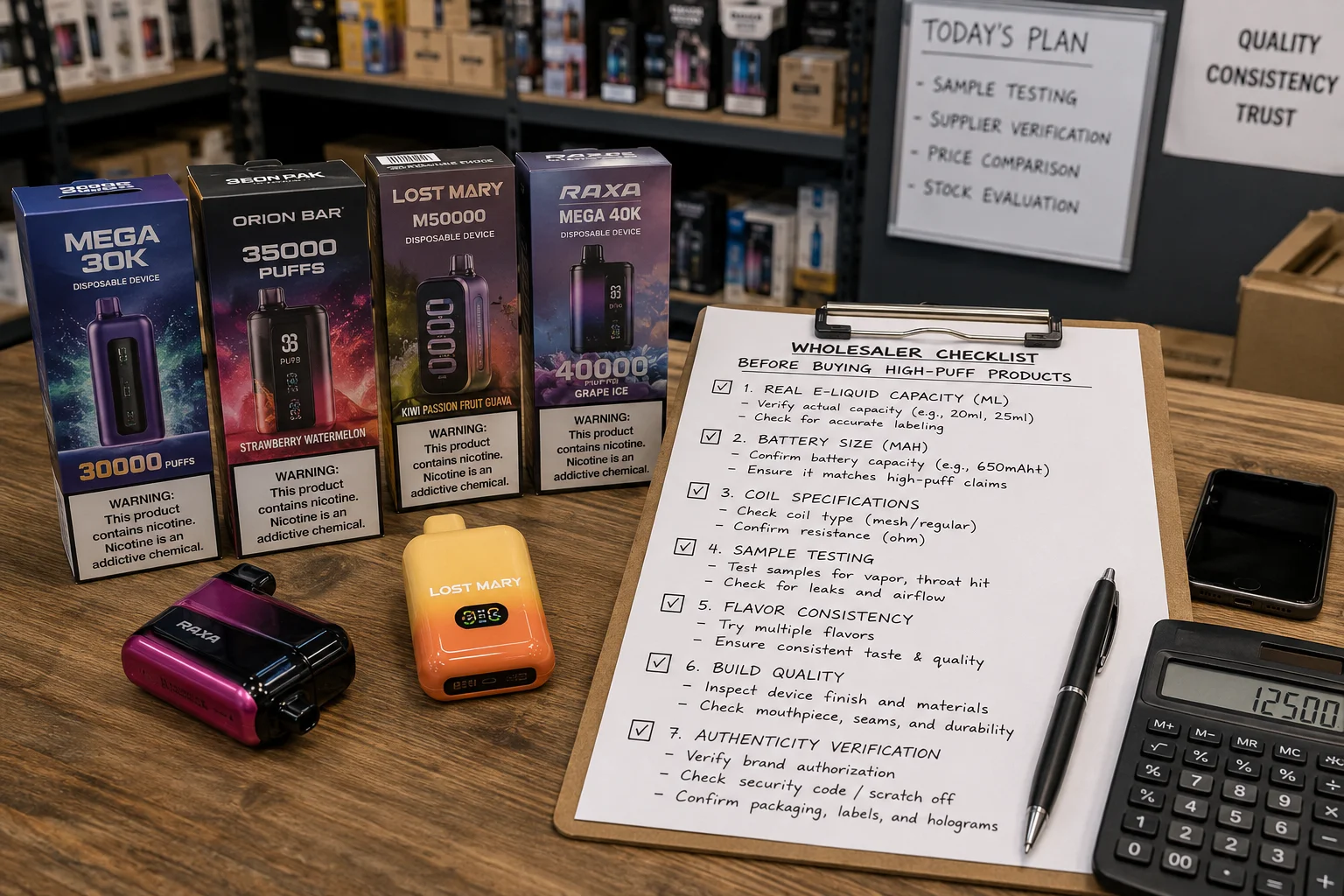
When a supplier presents me with a new "high-puff" product, I have a standard checklist I run through. This is what you should be doing too.
Your Pre-Order Checklist:
- Ask for True E-Liquid Capacity: "Ignore the puff count on the box. What is the actual, verifiable volume of e-liquid in milliliters inside this device?"
- Verify Battery Capacity: "What is the battery's mAh rating?" A tiny battery with a huge liquid capacity is a red flag. The battery must be powerful enough[^10] to last until the liquid is realistically used.
- Inquire About the Coil: "What type of coil are you using (e.g., mesh, ceramic)? What is its expected lifespan in terms of puffs or ml vaped?" A good manufacturer will have this data.
- Demand Thorough Sampling: "Please send samples. I need to test them myself." Don't just take one puff. Use the device for a few days. See for yourself if and when the flavor starts to degrade or taste burnt.
A reliable supplier will be happy to provide this information. If they are evasive or can't answer these basic technical questions, it's a major warning sign.
What Puff Count Range Is More Reliable for Wholesale Buyers?
You're ready to avoid the hype and focus on products that actually work. So, what's the sweet spot? Where can you find reliability and quality without the misleading marketing?
For a consistently good user experience from start to finish, the most reliable disposable vapes are those with a realistic puff count of under 10,000. This often corresponds to products marketed in the 10,000 to 50,000 puff range, with real e-liquid volumes of 15-30ml.
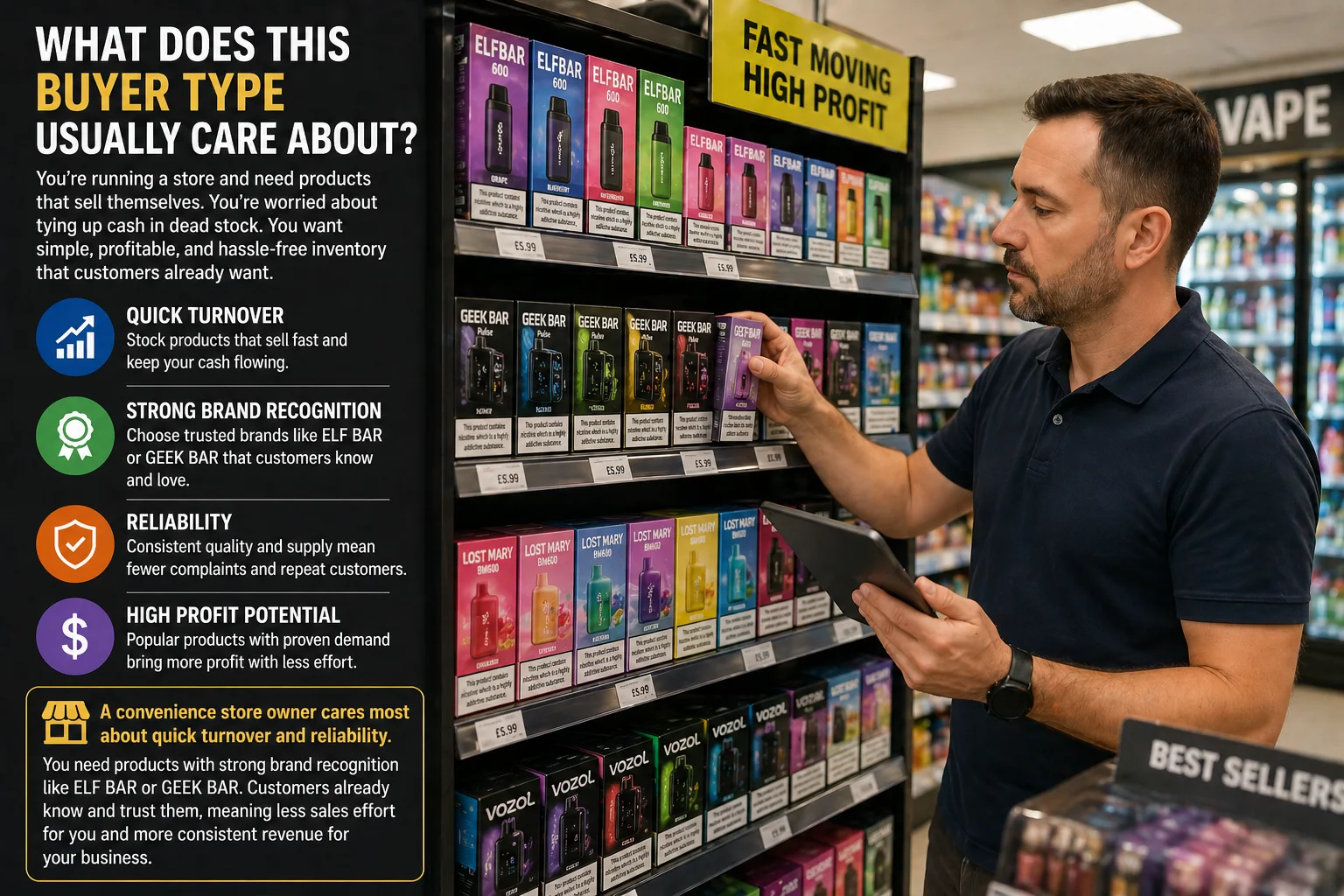
Based on my 15 years of experience and feedback from countless clients, the products that deliver the best, most consistent quality are not the ones with astronomical numbers on the box. The goal is to find a balanced device where the e-liquid capacity, battery life, and coil lifespan are all in sync. This balance ensures that the flavor on the last puff is just as good as the first. In today's market, this sweet spot is usually found in devices that contain a real e-liquid volume of around 20ml. These devices will provide a genuine 4,000 to 6,000 high-quality puffs. On the box, they might be labeled as 15,000 or 25,000, but the underlying hardware is solid. When you go far beyond this, you are buying a promise that the technology simply cannot deliver yet.
How Can You Avoid Misleading Puff Count Claims When Buying Disposable Vapes?
You're now armed with the knowledge to see through the hype. How do you put this into practice to protect your investment and reputation? It's about changing your mindset from a consumer to a professional analyst.
To avoid misleading claims, you must shift your focus from the advertised puff count to the verifiable technical specifications. Prioritize e-liquid volume (ml), battery capacity (mAh), and coil technology[^11]. Partner with transparent and reliable suppliers who value quality over marketing gimmicks.
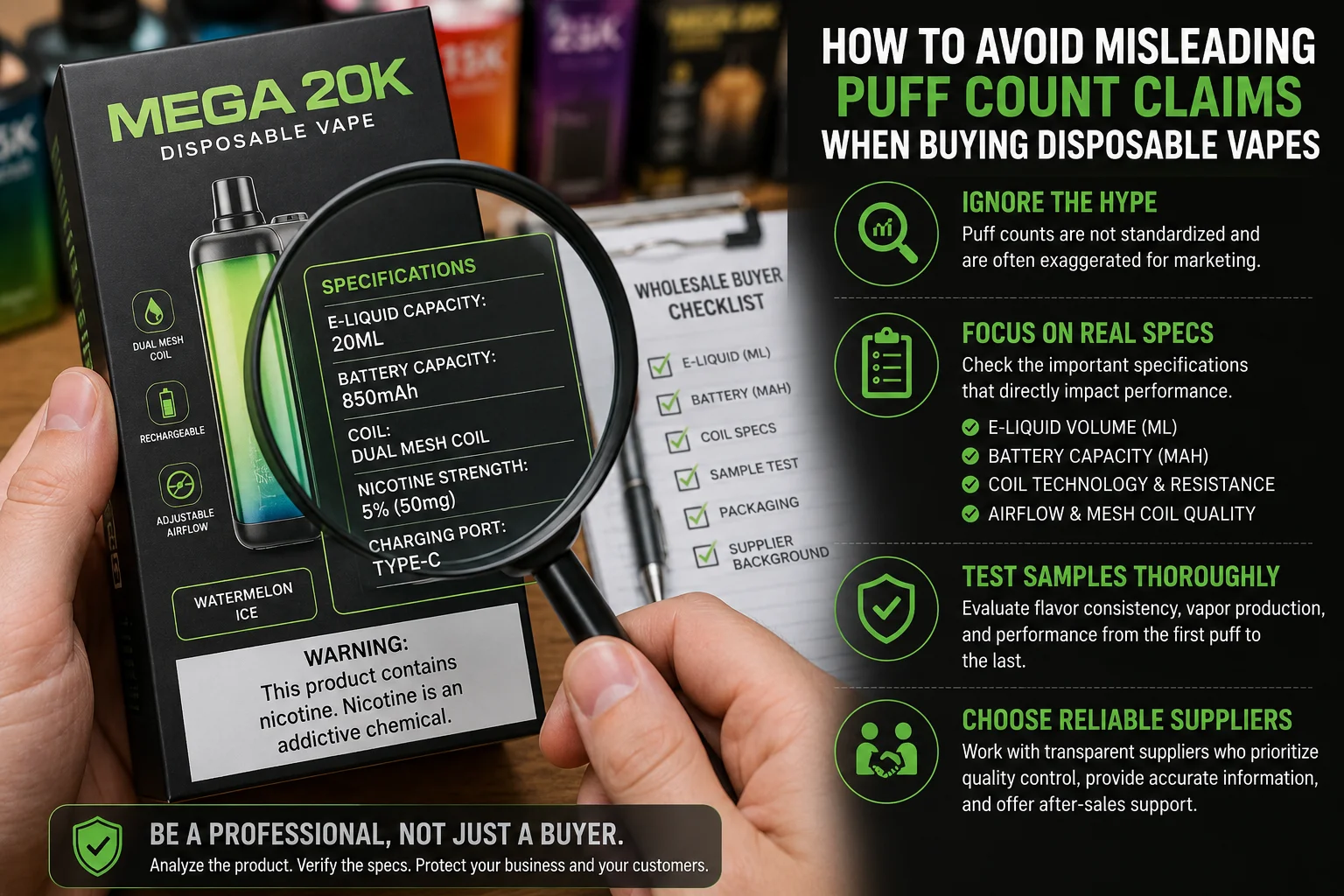
Here is your new strategy, simplified. When you evaluate a new disposable vape, your thought process should be:
- Ignore the Big Number: The first thing you do is completely disregard the giant puff number on the front of the packaging. It is marketing, not a technical spec.
- Find the Milliliters: Turn the box over and find the real data. Your primary focus is the e-liquid capacity in ml. This is your new anchor for judging value.
- Do the Math: Multiply the ml number by 200 to get a realistic estimate of the device's lifespan.
- Question Your Supplier: Ask your supplier direct questions about the coil and battery. A good partner will respect your technical questions.
- Test, Test, Test: Never place a bulk order without testing samples yourself. The taste test from start to finish is the ultimate proof of quality.
By following these steps, you take control. You are no longer tricked by the marketing game. You are making an informed business decision based on data and real-world performance.
Final Advice: Choose Real Capacity and Stable Quality Over Big Numbers?
So, what is the final takeaway? After all this discussion, what is the one principle you should remember? It's about being a smart, professional buyer, not an amateur chasing trends.
Absolutely. Your success depends on providing customers with a great, consistent experience. This comes from vapes with real capacity and stable quality, not from a box with an impossible number on it. Choose reliable brands and real specs over marketing fantasy.
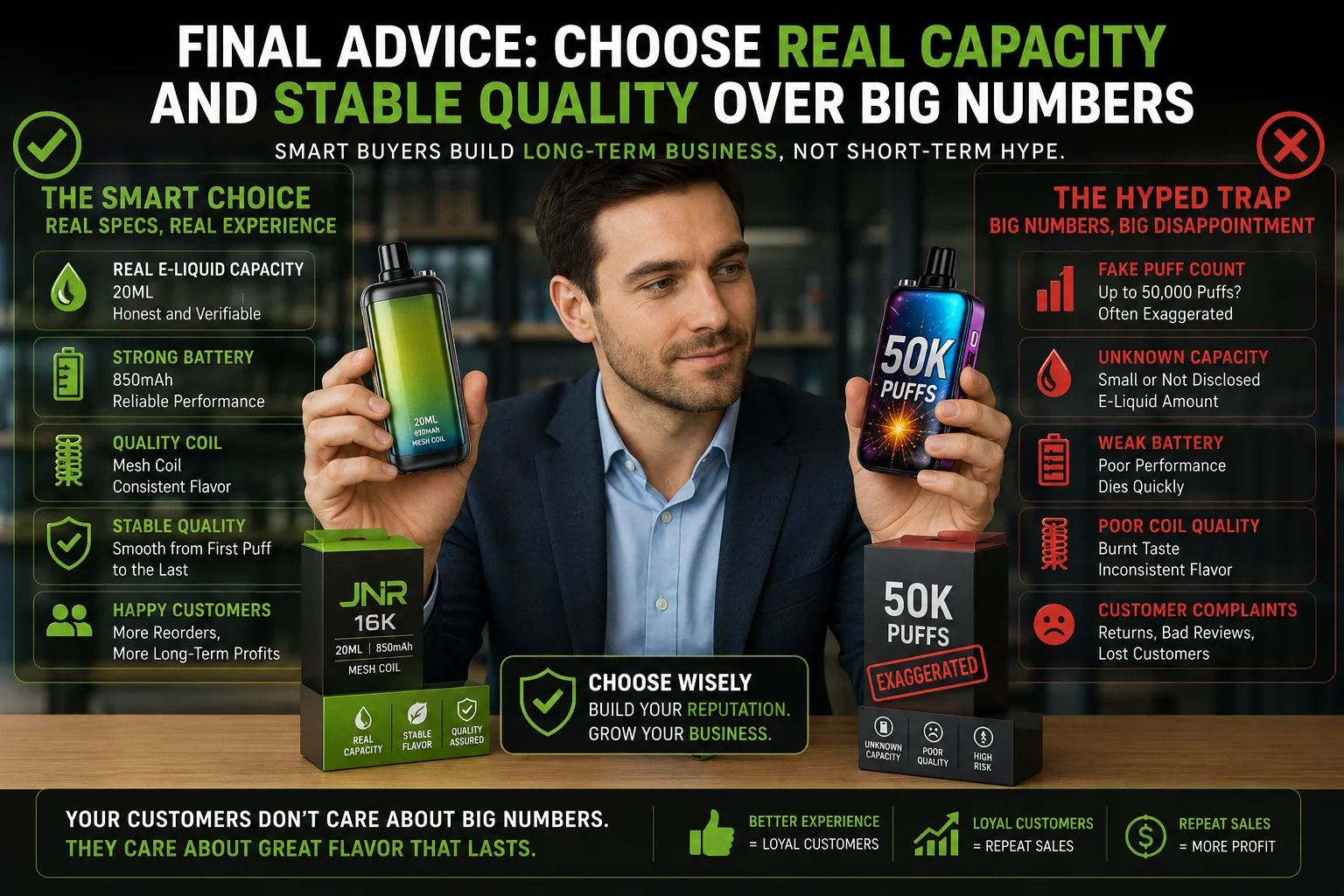
Let me be blunt. The people who are still blindly chasing 300,000 or 1,000,000 puff vapes are the novices in this market. Professionals know it's a silly game. Your customers might be impressed by the number once, but they won't come back if the product tastes burnt after two days. Your reputation is built on the quality and reliability of the products you sell. By focusing on the real e-liquid volume, ensuring the coil quality is high, and working with trustworthy suppliers, you are building a sustainable business. You are giving your customers a product that delivers on its promise. That is how you win in the long run. Be the expert your customers can trust. You know the truth now, so use it to your advantage.
Conclusion
Stop chasing impossible puff counts. Focus on the real e-liquid volume and coil quality to ensure you're buying a product that provides a great experience from the first puff to the last.
[^1]: "The Potential Impact of E-cigarettes on the Life-Years Lost ... - PMC", https://pmc.ncbi.nlm.nih.gov/articles/PMC10159831/. A source can explain that disposable e-cigarettes are self-contained systems where the total number of puffs is determined by finite consumables, primarily the volume of e-liquid available for aerosolization and the durability of the atomizer coil, which degrades over time. Evidence role: mechanism; source type: encyclopedia. Supports: The claim that a disposable vape's operation is fundamentally constrained by the amount of e-liquid it contains and the operational life of its heating coil.. [^2]: "Disposable Puff Bar Electronic Cigarettes: Chemical Composition ...", https://pmc.ncbi.nlm.nih.gov/articles/PMC9382667/. A source can provide historical context, noting the product specifications of early, widely-used disposable vapes, which established an initial market benchmark for e-liquid volume and associated puff count. Evidence role: historical_context; source type: other. Supports: The claim that early popular disposable vapes like the Puff Bar were marketed with specifications of approximately 600 puffs and 2ml of e-liquid.. Scope note: Sources would likely be industry news or product reviews from the time, rather than academic or governmental reports. [^3]: "E-cigarette use behaviors and device characteristics of daily ... - PMC", https://pmc.ncbi.nlm.nih.gov/articles/PMC7668279/. A source can provide a commonly used estimation, noting that 1ml of e-liquid typically yields between 100 and 300 puffs, depending on factors like device power, coil design, and user puffing topography. The 200-puff figure represents a common industry average. Evidence role: statistic; source type: research. Supports: The claim that there is a generally accepted conversion rate for estimating puff count from e-liquid volume.. Scope note: The exact number of puffs per ml can vary significantly based on user behavior and device settings, making any single number an approximation. [^4]: "Advantages and Disadvantages of Electronic Cigarettes - PMC - NIH", https://pmc.ncbi.nlm.nih.gov/articles/PMC9861996/. A source can support this by noting that based on typical e-liquid consumption rates and the physical volume of current devices, realistic maximum puff counts are in the range of 10,000–15,000, limited by both e-liquid capacity and the lifespan of other components like the coil and battery. Evidence role: general_support; source type: institution. Supports: The claim that even the largest disposable vapes have a realistic puff count far lower than what is often advertised.. [^5]: "Market survey of disposable e-cigarette nicotine content and e-liquid ...", https://pmc.ncbi.nlm.nih.gov/articles/PMC9482302/. A source such as a regulatory agency report or warning letter can provide evidence of instances where manufacturers have been cited for discrepancies between the labeled and actual e-liquid content of their products. Evidence role: case_reference; source type: government. Supports: The claim that the stated e-liquid volume on disposable vape packaging is not always accurate.. Scope note: Such sources would support that mislabeling occurs but may not indicate how widespread the practice is across the entire industry. [^6]: "E-Cigarette Palatability in Smokers as a Function of Flavorings ...", https://pmc.ncbi.nlm.nih.gov/articles/PMC6358501/. A source can explain that the atomizer's heating element (coil) is responsible for the thermal process that turns e-liquid into an aerosol. The coil's material, design, and condition directly impact the efficiency of vaporization and the chemical composition of the aerosol, which are key factors in flavor fidelity and user experience. Evidence role: mechanism; source type: paper. Supports: The claim that the atomizer coil is a critical determinant of a vape's performance and flavor quality.. [^7]: "Carbonyls and Aerosol Mass Generation from Vaping Nicotine Salt ...", https://pmc.ncbi.nlm.nih.gov/articles/PMC10583227/. Research can show that repeated heating of e-liquids causes thermal decomposition, leading to the accumulation of carbonaceous deposits (residue or 'gunk') on the heating coil. This buildup can insulate the coil, leading to overheating and the subsequent thermal degradation (burning) of the wick material. Evidence role: mechanism; source type: paper. Supports: The claim that vape coils degrade through a process of carbonization.. [^8]: "E-cigarettes generate high levels of aldehydes only in 'dry puff ...", https://pubmed.ncbi.nlm.nih.gov/25996087/. A source can explain that when a coil overheats or a wick is not saturated, the thermal decomposition of e-liquid components and the wick material itself can produce aldehydes, such as formaldehyde and acrolein, which are associated with a harsh, unpleasant, or 'burnt' taste and are known respiratory irritants. Evidence role: mechanism; source type: research. Supports: The claim that the burnt taste from a failing vape is caused by the chemical byproducts of coil and wick degradation.. [^9]: "The chemistry and toxicology of vaping - PMC - NIH", https://pmc.ncbi.nlm.nih.gov/articles/PMC8263470/. A source from an independent testing body or a technical review site can provide evidence that in many devices marketed with very high puff counts, flavor quality degrades significantly and a burnt taste emerges long before the e-liquid is depleted, indicating coil failure is the primary limiting factor. Evidence role: general_support; source type: other. Supports: The claim that in many high-capacity disposable vapes, the coil's lifespan is shorter than the time required to vaporize the entire e-liquid reservoir.. Scope note: This would likely come from industry-focused testing rather than peer-reviewed academic research. [^10]: "Effects of Electronic Cigarette E-liquid and Device Wattage on ... - PMC", https://pmc.ncbi.nlm.nih.gov/articles/PMC10534201/. A source can explain the relationship between battery capacity (measured in mAh), coil resistance, and power output, demonstrating that a certain amount of energy is required to vaporize a given volume of e-liquid. An undersized battery would be depleted before the e-liquid is consumed, rendering the device inoperable. Evidence role: mechanism; source type: education. Supports: The claim that a disposable vape requires a battery capacity appropriately matched to its e-liquid volume to function for its intended lifespan.. [^11]: "E-Cigarettes, Vapes, and other Electronic Nicotine Delivery Systems ...", https://www.fda.gov/tobacco-products/products-ingredients-components/e-cigarettes-vapes-and-other-electronic-nicotine-delivery-systems-ends. A source from a consumer advocacy or public health group can corroborate this advice, recommending that consumers look past marketing claims and examine concrete specifications such as e-liquid volume and battery capacity to make more informed purchasing decisions. Evidence role: general_support; source type: institution. Supports: The claim that evaluating a disposable vape's technical specifications is a more reliable method of assessing its value and potential lifespan than relying on the advertised puff count..