
Struggling to source Al Fakher vapes in Europe? Worried about fakes and high MOQs? You need a smarter, lower-risk way to buy and test the market before you invest.
For Al Fakher and similar top brands in Europe, start with a supplier who has a local warehouse. This gives you low MOQs (like 50 units), fast EU shipping, and avoids customs risks. This is the smartest way for new or small wholesalers to test products.
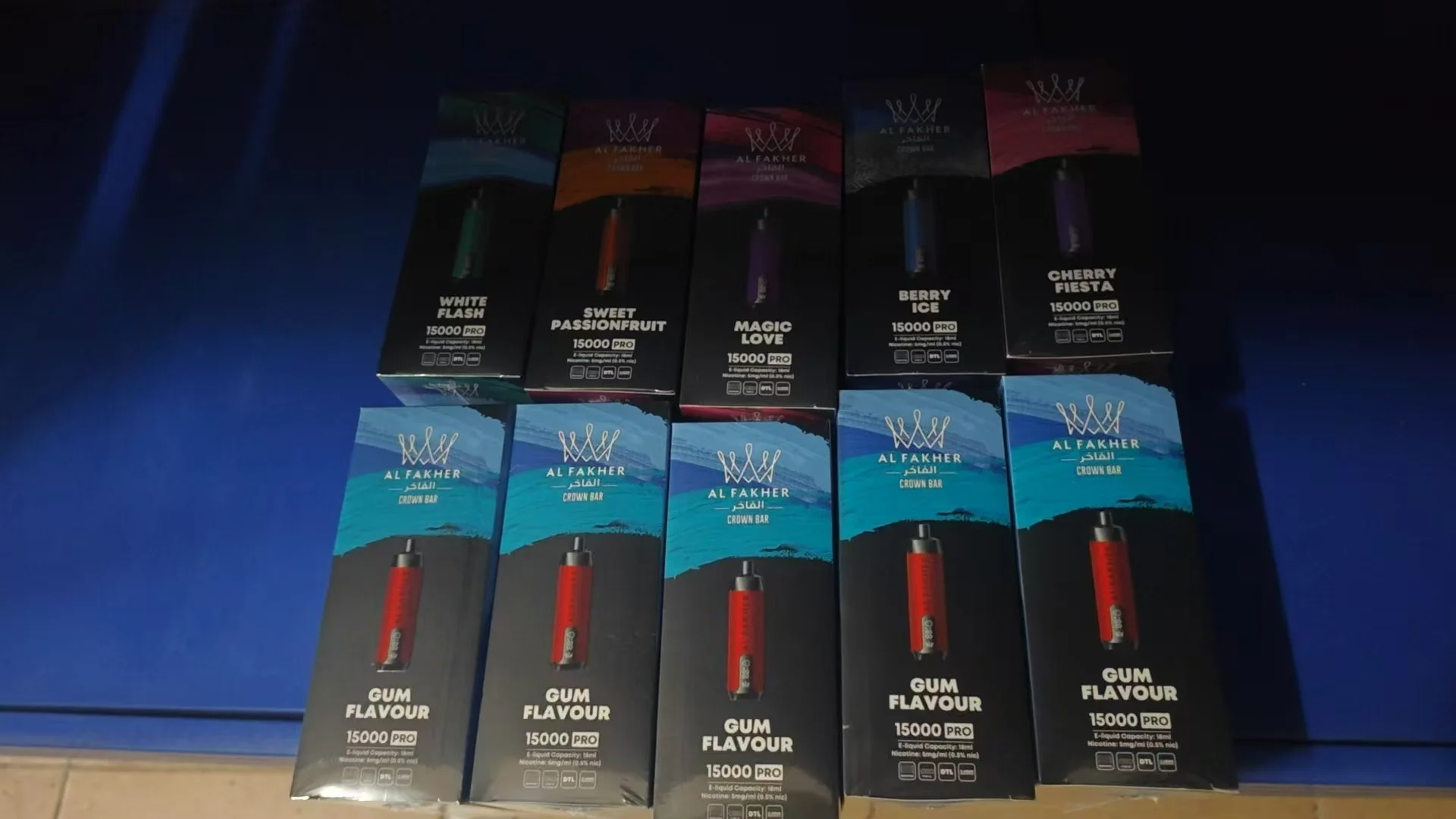
I've been exporting electronics from Shenzhen for over 15 years, and I talk to European buyers every single day. The vape market is full of questions, especially around big names like Al Fakher. Many buyers think sourcing is just about finding the lowest price from China. But the real game is about managing risk and moving your inventory fast. A container of cheap vapes stuck in your garage is not profit; it's a problem. Let’s break down how you can buy smarter, based on what I’ve learned from hundreds of conversations with buyers just like you.
Why Is Everyone Looking for Brands Like Al Fakher and What's the Big Mistake They Make?
Heard a brand is hot and want to sell it? You're not alone, but this path is full of traps. Jumping in without understanding the market can cost you your investment.
Wholesalers search for brands like Al Fakher[^1] because they are popular and promise quick sales. They want a reliable source to capitalize on the trend but often face high minimum orders and a market flooded with counterfeits[^2], making the search for a trustworthy supplier incredibly difficult.
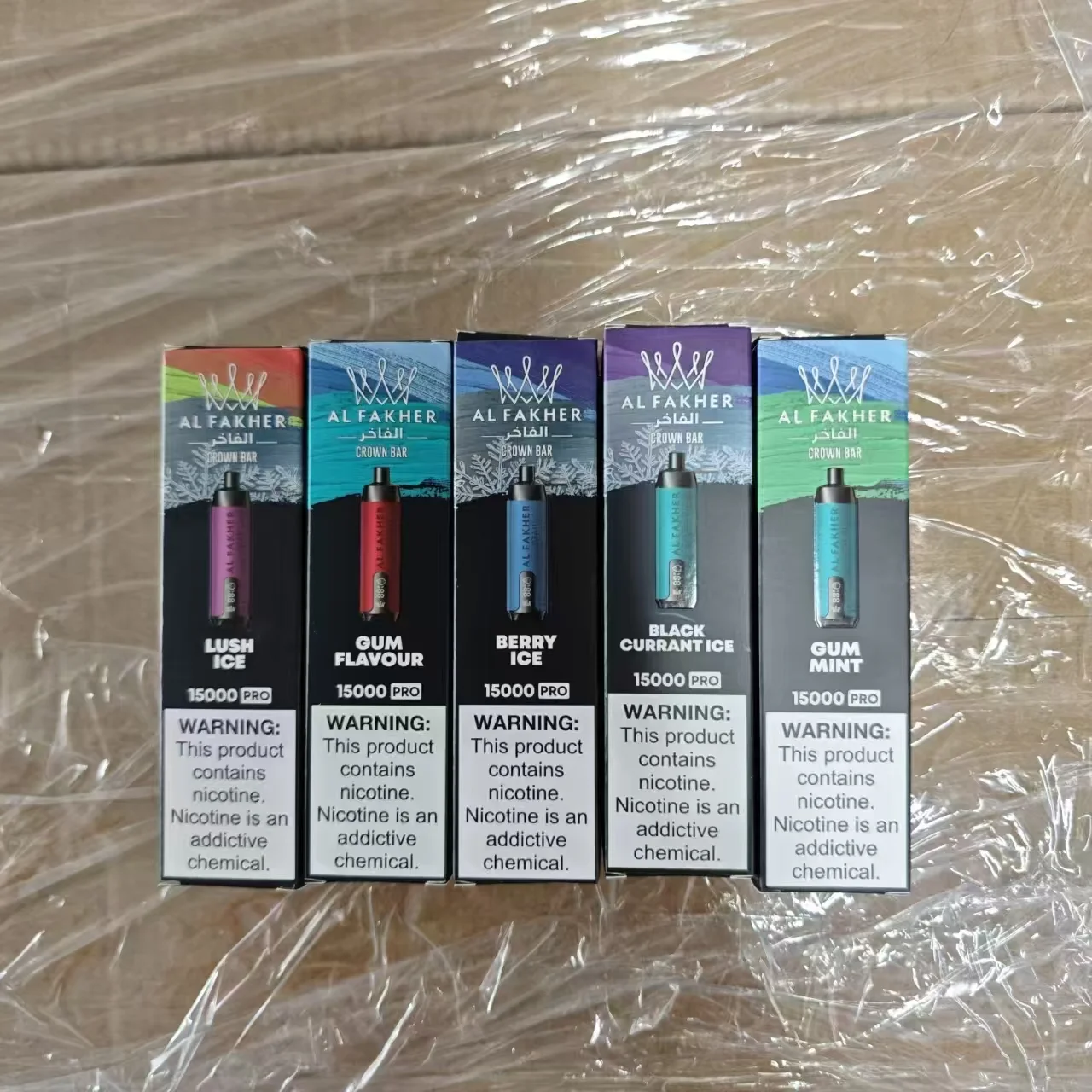
The logic seems simple: find a popular product, buy it cheap, and sell it. That's why my inbox is full of requests for Al Fakher, ELF BAR, and other top-tier brands. But this is where the first, and most expensive, mistake happens. Buyers assume that if they just search hard enough, they'll find a secret factory source with rock-bottom prices.
The Reality of Top-Tier Brands
Here’s a piece of inside information. Big brands like Al Fakher, VOZOL, RAZZ BAR, and GEEK BAR don't sell to just anyone. They operate on an exclusive national agent model[^3]. They pick one massive distributor for an entire country, who must commit to buying hundreds of thousands, or even millions, of units every month[^4]. This structure protects their brand value and keeps prices stable. So, if you're a small or medium-sized business, you simply cannot buy directly from them. The search for a "direct price" is often a dead end that leads you straight to scammers.
The Most Common Mistake: Chasing the Lowest Price
The biggest mistake I see is buyers getting obsessed with price. A client from France recently told me he found a supplier for JNR vapes at €2 per unit. I had to be honest with him: the original JNR doesn't leave the factory for less than €4. A €2 price isn't a good deal; it's a giant red flag. It's either a very poor-quality fake or an outright scam. You send your €2,000 for 1,000 units, and you never hear from them again. It happens every week. You think you're saving money, but you're risking everything.
How Can You Practically Compare Brands and Spot Fakes?
Is a €3 vape really better than a €4 one? Price is a trap. You need a practical way to judge products that protects your money and your business reputation.
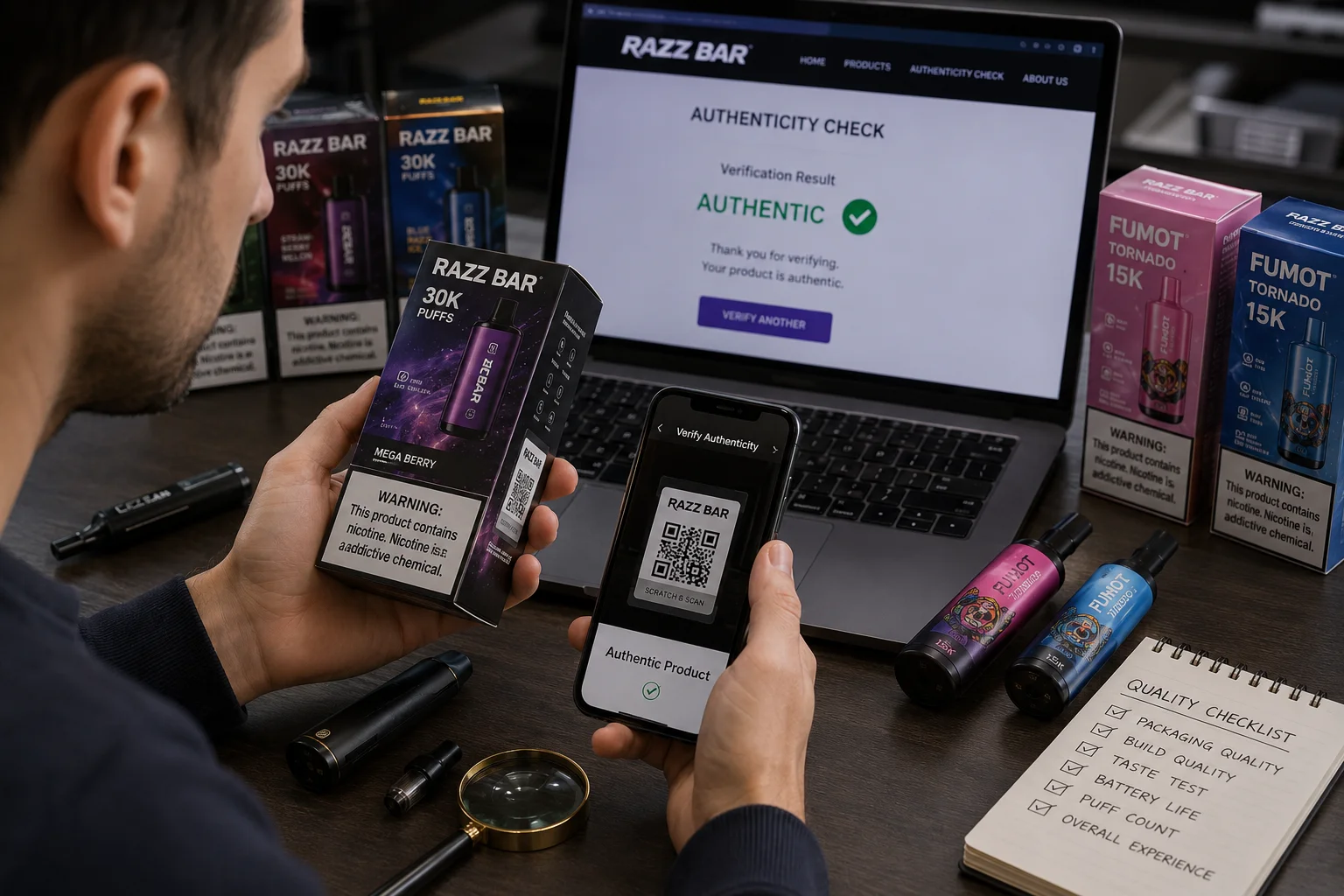
Compare brands by testing samples for consistency in flavor, battery life, and build quality. Check for official website verification. A reliable product has stable performance, while fakes often have bad taste, poor battery life, or start leaking, leading to angry customers and lost money.
Since the technology in vapes is very mature now[^5], the quality difference between major authentic brands is small. The real difference is between authentic products and fakes. A fake product isn't just a trademark issue; it's a completely different, inferior product made with the cheapest possible components. Your customers will notice immediately.
How to Tell a Real Product from a Fake One
First, forget the idea that you can tell just by looking at a picture. You need to get your hands on a sample. Here’s what to check:
- Weight and Feel: This is the easiest first check. Authentic products use quality materials and proper lithium batteries. They have a solid, balanced weight. Fakes use the cheapest, lightest materials and terrible manganese batteries[^6]. They feel light, hollow, and cheap.
- The QR Code Test (The Right Way): Almost all fakes now have QR codes that you can scan. But here's the trick: they create a fake website that looks real[^7], and when you scan their code, it takes you to their fake site and says "Authentic." Don't fall for this. The correct way to verify is to Google the brand's official website yourself, find their verification page, and manually type in the code from the package.
- The Supplier Test: A professional supplier is part of the product. I always tell my clients, "How the supplier talks to you tells you everything."
- A Scammer/Fake Seller: Pushes you to pay constantly. Offers a price that's too good to be true. Avoids questions about customs risks. Can't provide recent, verifiable shipping details.
- A Real Partner: Asks about your market. Warns you about risks (like secondary customs clearance in certain EU countries[^8]). Wants to build a long-term relationship. Is happy to provide a warehouse video with your name on a paper to prove they have the stock.
| Factor | What You See on the Surface | The Hidden Reality (The Real Cost) |
|---|---|---|
| Price | "This one is €2 cheaper!" | The cost of handling returns and angry customers. |
| Battery | The box says "10,000 Puffs." | The cheap battery dies after 1,000 puffs or won't work in the cold. |
| E-Liquid | The flavor name sounds good. | The taste is harsh, inconsistent, or has a chemical aftertaste. |
| Supplier | "He gave me the best price." | He took my money and disappeared, or sent me a box of junk. |
As a New or Small Wholesaler, What's the Safest Way to Start?
Feeling overwhelmed by MOQs, shipping, and customs? Don't try to solve everything at once. Focus on the one thing that matters most for starting small and growing safely.
Small wholesalers should first focus on cash flow and speed. Use a local EU warehouse to buy small batches (e.g., 50-100 units). This minimizes your initial investment, eliminates customs risks, and lets you restock popular items quickly. Fast turnover is more important than the lowest unit price.
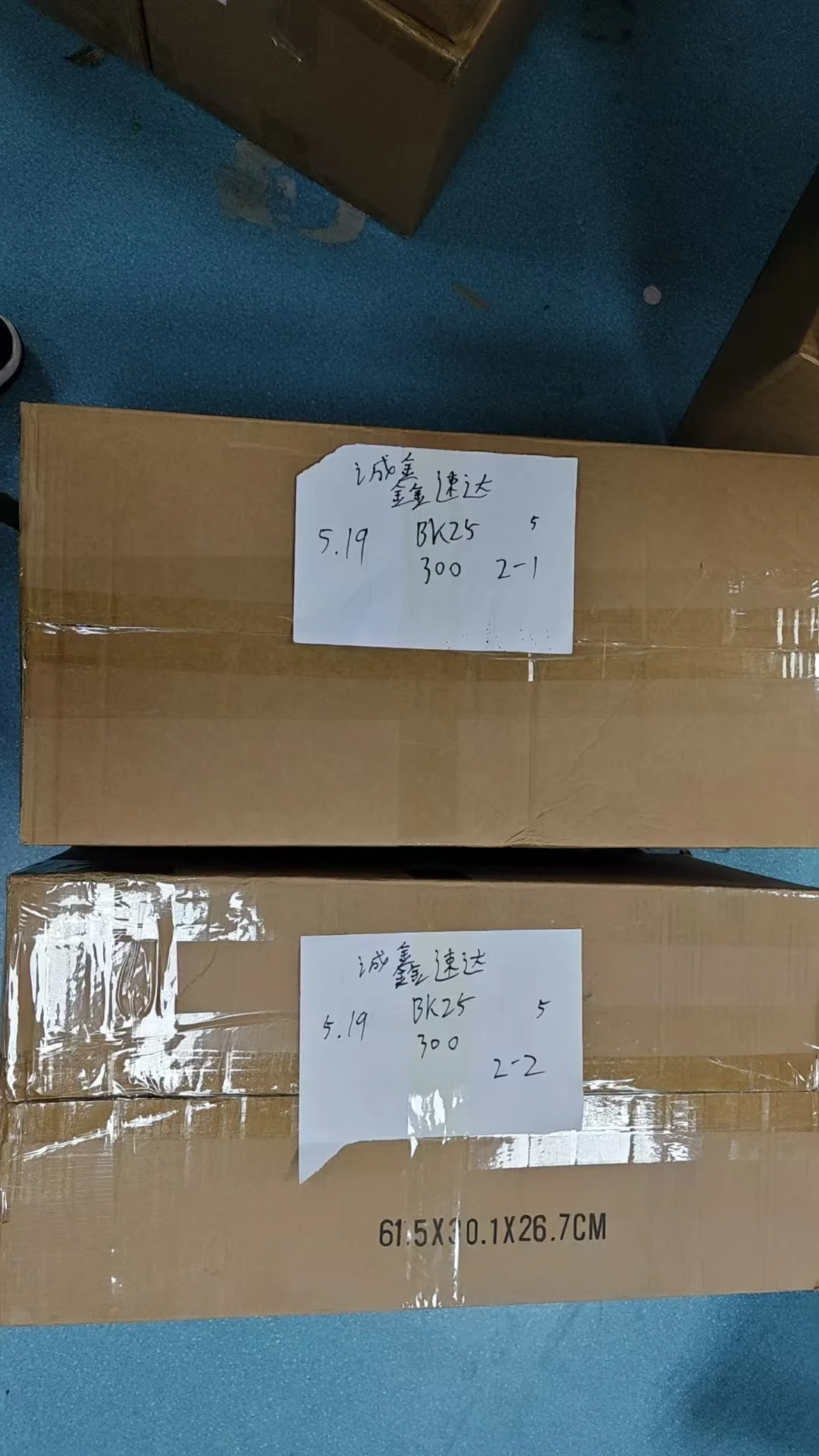
I talk to many people who are just starting out. They have a bit of money saved up and want to build a business. My advice is always the same: do not place a large order from China for your first time. The business world is filled with stories of people who spent €5,000 on their first shipment, only for it to get seized by customs[^9] or arrive three months late filled with unsellable products.
The Germany Warehouse Strategy
This is exactly why we set up our warehouse in Germany. We took on the hard parts ourselves. We use our 15 years of experience and large capital to order huge batches from factories (over 200,000 units at a time) to get the best possible price. We handle the complicated shipping, the import duties, and the risk of customs seizures. We store everything in Germany.
This allows our clients to do the easy part: sell. You can start with an order as small as 50 units. That's a total investment of less than €400. You place the order, we ship it with DHL, and you receive it in 1-2 days if you're in Germany, or 3-5 days anywhere else in the EU. There is zero customs risk for you[^10]. You can test different brands and flavors, see what your customers actually buy, and then reorder the winners.
The Real Engine of Profit: Capital Turnover
A cheap product that sits on a shelf for three months is a loss. A product with a smaller margin that you sell and reorder every week is a cash machine. Let's do some simple math.
- Scenario A: You spend €4,000 to import from China. It takes 2 months to arrive. You make a 50% margin, but it takes you another 2 months to sell it all. In 4 months, you turned €4,000 into €6,000.
- Scenario B: You spend €400 from our Germany warehouse. The stock arrives in 3 days. You make a 20% margin and sell out in one week. You reinvest. You do this 16 times in 4 months. Your small €400 investment has generated far more profit than the "cheaper" direct import.
This is the secret. Business isn't about profit margin; it's about the speed at which your money works for you[^11].
How Do You Choose the Right Products Without Getting Overwhelmed?
Staring at a long list of brands and flavors? The fear of choosing the wrong product mix can stop you from starting. Here’s how to simplify your choices and reduce your risk.
For your first order, don't try to guess the single "best" product. Instead, choose a few different popular models from a reliable brand. Your goal isn't to be perfect; it's to gather real sales data from your customers. Start small and let your sales tell you what to reorder.
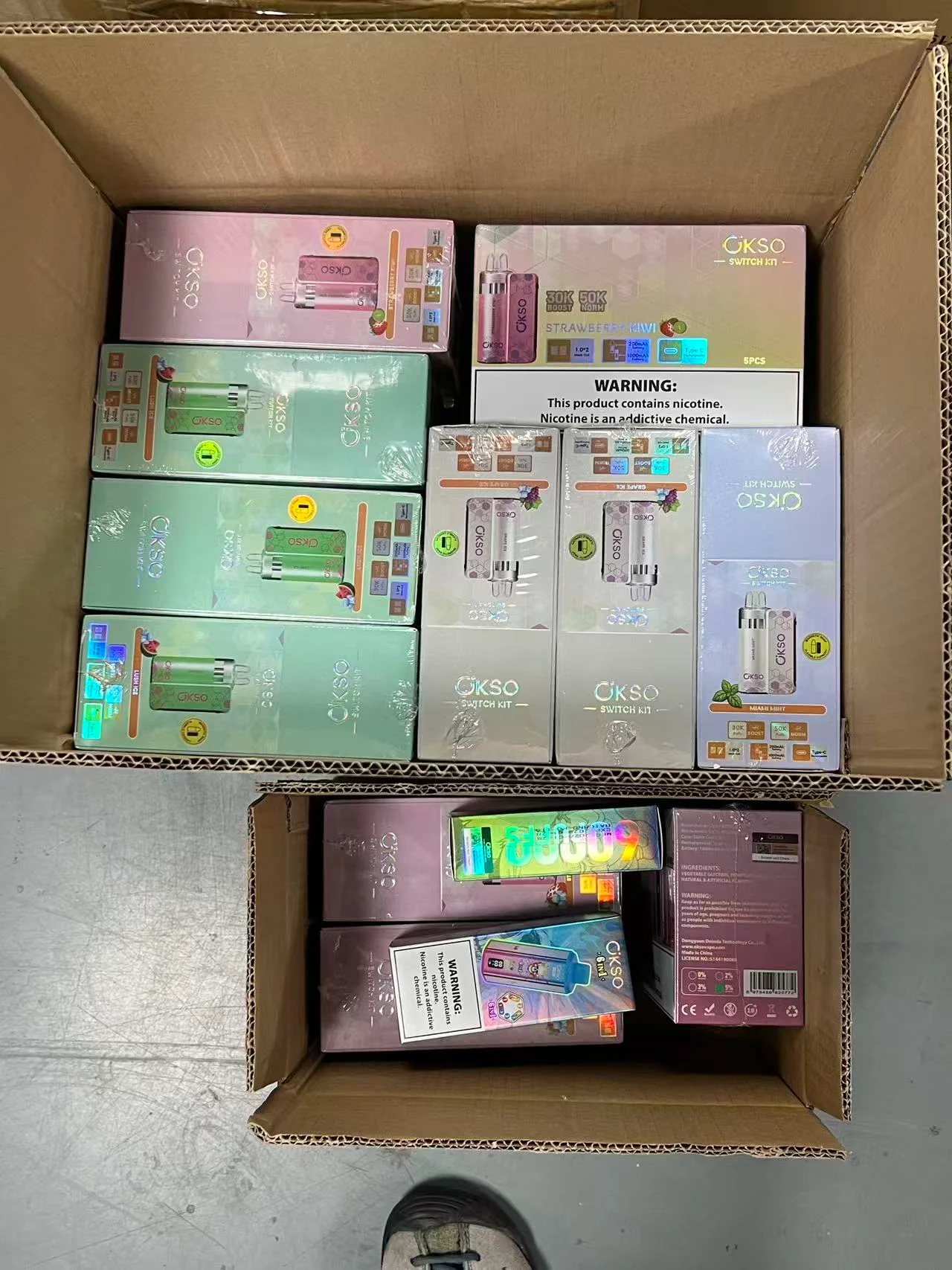
Many new sellers get stuck here. They ask me, "Should I start with one strong brand or mix them?" or "Which flavors are the safest bet?" My answer is based on the principle of low-risk testing.
Your First Order Should Be a Test
Don't think of your first purchase as stocking your store for the next six months. Think of it as a small, cheap experiment. With a low MOQ of 50 units from a European warehouse, you can afford to test. I would suggest this strategy:
- Choose One or Two Reputable Brands: Pick brands that are known for quality and are readily available from your warehouse supplier. Don't chase a brand that's impossible to get.
- Select a Mix of Flavors: Instead of buying 50 units of a single flavor, get 10 units each of 5 popular flavors (like Blueberry Ice, Watermelon, etc.)[^12].
- Sell and Listen: Put them out for sale. See what disappears first. Pay attention to what customers ask for. The one that sells out in three days is your winner.
- Reorder the Winner, Test a New One: On your next order, buy 30-40 units of the proven winner, and use the remaining 10-20 units to test a new flavor or model.
This iterative process removes the guesswork. You're not gambling; you're using small, calculated steps to build a product catalog that you know sells. Don't worry about missing out on a "hot" brand. The truly hot product is the one that consistently moves out of your inventory and puts money back in your pocket.
Conclusion
Sourcing vapes like Al Fakher isn't about the lowest price. It’s about finding a reliable partner, managing your risk, and keeping your cash flowing with fast-selling, authentic products.
[^1]: "AIR launches Crown Switch vape in Germany as Al Fakher enters ...", https://www.investing.com/news/stock-market-news/air-launches-crown-switch-vape-in-germany-as-al-fakher-enters-portable-market-4367789. Market analyses and industry reports often cite Al Fakher, traditionally known for shisha tobacco, as a significant and popular brand in the growing disposable vape market in Europe. Evidence role: general_support; source type: institution. Supports: The source should provide evidence of Al Fakher's brand recognition and popularity within the European vape market.. [^2]: "Adolescents' Perceptions, Experiences, and Reactions to “Fake ...", https://pmc.ncbi.nlm.nih.gov/articles/PMC11812520/. Reports from European customs authorities and intellectual property offices frequently highlight the significant and growing problem of counterfeit e-cigarettes entering the EU market, posing risks to consumers and businesses. Evidence role: statistic; source type: government. Supports: The source should provide statistics or official reports on the prevalence and seizure of counterfeit vape products in Europe.. [^3]: "Exclusive Dealing or Requirements Contracts", https://www.ftc.gov/advice-guidance/competition-guidance/guide-antitrust-laws/dealings-supply-chain/exclusive-dealing-or-requirements-contracts. The exclusive distributor model is a common channel strategy for popular global brands to control pricing, maintain brand integrity, and manage logistics within a specific country or region. Evidence role: general_support; source type: other. Supports: The source should describe the use of exclusive national or regional distributorships as a common strategy for major consumer electronics brands, including vape manufacturers.. [^4]: "[PDF] A Performance and Economic Analysis of Distributed Power ...", https://docs.nrel.gov/docs/fy11osti/50003.pdf. Securing exclusive distribution rights for popular consumer goods typically requires substantial capital investment and commitments to high monthly minimum order quantities (MOQs), often running into hundreds of thousands of units. Evidence role: general_support; source type: other. Supports: The source should provide context on the high-volume purchasing commitments required to become a national-level distributor for high-demand consumer goods.. Scope note: Specific figures vary by brand and market, so the source would provide general context rather than confirming the exact numbers mentioned. [^5]: "[PDF] History and characteristics of vaping", https://phd5.idaho.gov/Documents/Community-Health/Vaping-page/History-and-Characteristics.pdf. The core technology for disposable vapes, including battery and atomizer design, has largely standardized in recent years, leading to incremental rather than revolutionary changes between product generations from established manufacturers. Evidence role: historical_context; source type: research. Supports: The source should describe the development and standardization of key components in disposable e-cigarettes, such as batteries, coils, and e-liquid formulations.. [^6]: "Tips to Help Avoid Vape Battery Fires or Explosions - FDA", https://www.fda.gov/tobacco-products/products-ingredients-components/tips-help-avoid-vape-battery-fires-or-explosions. Analyses of counterfeit electronics often reveal the use of lower-cost and lower-performance components, such as manganese dioxide (LMO) batteries, which can offer less capacity and stability compared to the lithium-ion batteries used in authentic products. Evidence role: mechanism; source type: research. Supports: The source should provide a technical comparison of battery chemistries used in disposable electronics, highlighting the lower cost and performance of manganese-based cells versus lithium-ion.. [^7]: "Scam alert: QR code on an unexpected package | Consumer Advice", https://consumer.ftc.gov/consumer-alerts/2025/01/scam-alert-qr-code-unexpected-package. Cybersecurity and anti-counterfeiting organizations have issued warnings about scams where fraudulent QR codes on packaging direct consumers to clone websites designed to falsely 'authenticate' a counterfeit product. Evidence role: case_reference; source type: institution. Supports: The source should document the tactic of counterfeiters using fraudulent QR codes that link to convincing but fake verification websites.. [^8]: "Regulation of Electronic Cigarette Use in Public and Private Areas in ...", https://pmc.ncbi.nlm.nih.gov/articles/PMC8824658/. While the EU single market ensures the free movement of goods, products subject to excise duties, such as tobacco and vaping products, may still be subject to inspection and specific regulations by national authorities to ensure compliance with local tax and public health laws. Evidence role: definition; source type: government. Supports: The source should explain how certain goods, like tobacco and vaping products, may be subject to national excise duties and regulations, potentially leading to checks even when shipped within the EU.. [^9]: "FDA and CBP Seize Nearly $34 Million Worth of Illegal E-Cigarettes ...", https://www.fda.gov/news-events/press-announcements/fda-and-cbp-seize-nearly-34-million-worth-illegal-e-cigarettes-during-joint-operation. Annual reports from European customs agencies and the EU Intellectual Property Office (EUIPO) detail the seizure of millions of illicit items at the border, with e-cigarettes being a frequently confiscated product category. Evidence role: statistic; source type: government. Supports: The source should provide data or reports on the seizure of illicit, counterfeit, or non-compliant e-cigarette products by customs agencies in the European Union.. [^10]: "Free Movement of Goods | European Free Trade Association - Efta.Int", https://www.efta.int/eea/policy-areas/goods. The European Union's single market is founded on the principle of the free movement of goods, meaning that products sold and shipped from one member state to another are not subject to customs duties, tariffs, or import procedures. Evidence role: definition; source type: government. Supports: The source should be an official EU publication explaining the principles of the single market and the absence of customs duties on goods traded between member states.. Scope note: This does not preclude compliance with national regulations for specific product categories, such as age restrictions or excise taxes on vape products. [^11]: "Word of the Week: Cash Conversion Cycle - HBS Online", https://online.hbs.edu/blog/post/word-of-the-week-cash-conversion-cycle. In finance and business management, capital turnover is a key efficiency ratio that measures how effectively a company uses its capital to generate sales. A higher turnover rate indicates that capital is being used more productively to create revenue. Evidence role: definition; source type: education. Supports: The source should define capital turnover (or asset turnover) and explain its importance as a measure of a company's efficiency in generating revenue from its assets.. [^12]: "A systematic review of consumer preference for e-cigarette attributes", https://pmc.ncbi.nlm.nih.gov/articles/PMC5854347/. Market research consistently shows that fruit and ice/menthol-based flavors, such as Blueberry Ice and Watermelon Ice, are among the most popular choices for consumers of disposable vapes in Europe and other Western markets. Evidence role: statistic; source type: research. Supports: The source should provide market research data or analysis identifying the top-selling or most popular e-liquid flavors in the European market..